The Importance of Bowing (Rei) and Etiquette Within Judo Competition Rules
🙏 Mastering Judo competition bowing etiquette is crucial, as it embodies respect and discipline. This foundational aspect of Judo competition rules reflects…
Read article
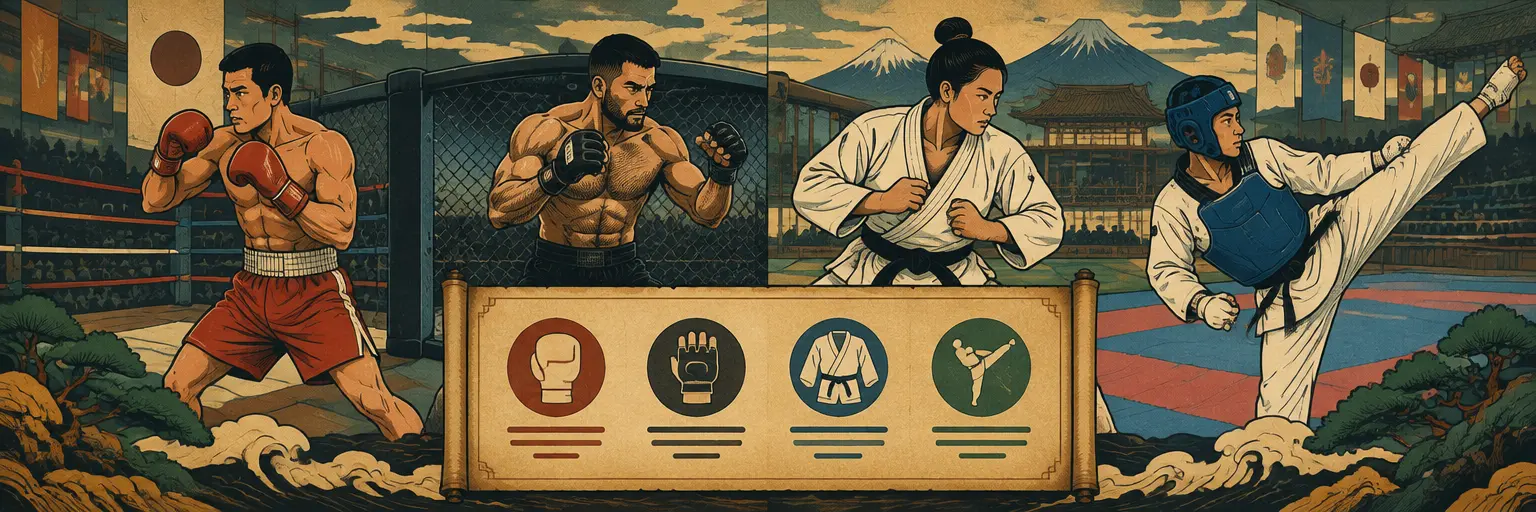
Every combat sport speaks its own language of rules, and mastering them is the first step to true mastery—whether you’re stepping into the ring, the cage, or the dojo. From boxing’s strict emphasis on punches above the belt to MMA’s blend of striking, grappling, and submission, each discipline enforces its own safety protocols, scoring criteria, and ethical boundaries. In judo, the art of throwing with control and respect for the opponent’s fall is as vital as the point itself, while taekwondo rewards dynamic kicks, speed, and precision targeting under WTF or ITF variations. Understanding these regulations—such as weight classes, prohibited techniques, fouls, and referee authority—not only sharpens your strategic approach but also deepens your appreciation for the sport’s heritage and integrity. Whether you’re a competitor aiming to optimize your game plan or a fan wanting to read the action more intelligently, knowing the do’s and don’ts transforms every match into a richer, safer, and more thrilling experience.
🙏 Mastering Judo competition bowing etiquette is crucial, as it embodies respect and discipline. This foundational aspect of Judo competition rules reflects…
Read article
🚨 "The Doctor's Call" on MartialArtsMastery.org explores crucial medical stoppages and safety rules in MMA. Discover how these measures are vital for…
Read article
🥋 Master the legal Taekwondo hand attack rules on MartialArtsMastery.org. Discover which punches score points and the precise techniques to dominate the…
Read article
🌟 Delve into "The Referee's Call: Unpacking Officiating and Rule Enforcement Across Combat Disciplines" on MartialArtsMastery.org. Discover how critical referee decisions shape…
Read article
🥊 A boxing low blow, an illegal strike below the belt, carries significant consequences. Understanding the precise definition and rules surrounding this…
Read article
🤔 In MMA, when do referees "stand them up"? This article explores MMA referee reset techniques, explaining the strategic reasons and conditions…
Read articleUnderstanding the intricate rules and regulations in different combat sports is essential for any athlete, coach, or enthusiast aiming to excel in Martial Arts Competitions & Sports. Whether you are stepping into the ring for boxing, the cage for MMA, or the mat for Judo and Taekwondo, each discipline has unique scoring systems, prohibited techniques, and safety protocols. This guide breaks down the core regulatory frameworks, helping you navigate competitions with confidence and strategic insight, while ensuring you respect the spirit and letter of each sport's official rulebook.
Boxing regulations are governed by bodies like the WBC, WBA, IBF, and WBO, focusing on clean punching above the belt with closed gloves. Fighters must follow the 10-point must system, where judges award rounds based on effective aggression, defense, and ring generalship. Rules prohibit hitting below the belt, holding, headbutting, and using the ropes for leverage. Professional bouts typically last 10-12 rounds, each three minutes long, with one-minute rest intervals.
Safety is paramount, with mandatory standing-eight counts and medical suspensions for knockouts. The referee's authority is absolute, enforcing warnings, point deductions, and disqualifications for fouls. Amateur boxing, governed by AIBA, uses headgear and a different scoring system that rewards clean landings over power. Understanding these nuances helps you adapt your training—focusing on footwork and defense for professionals or volume punching for amateurs, ensuring you never lose a point due to avoidable infractions.
Modern MMA operates under the Unified Rules of Mixed Martial Arts, established by the Association of Boxing Commissions (ABC). Fights are contested in a fenced area, with three five-minute rounds for non-title bouts and five rounds for championships. Legal techniques include strikes, takedowns, and submissions, yet headbutts, eye gouging, groin strikes, and small joint manipulation are strictly prohibited. Fighters must be proficient in striking and grappling, as the ref can stand the fight up for inactivity.
Scoring uses the 10-9 system (occasionally 10-8 or 10-7 for dominance), evaluating effective striking, grappling, aggression, and control. Fouls result in warnings, point deductions, or disqualification, especially for repeated infractions or illegal knees to a grounded opponent. Weight classes ensure fair matchmaking, with strict weigh-in rules. Understanding these rules dictates your fight strategy—for example, legalizing ground-and-pound changes your approach to takedowns versus Judo or Taekwondo, where ground fighting is absent or limited.
Judo, an Olympic sport, is defined by the IJF (International Judo Federation) rules, emphasizing clean throws (waza-ari and ippon) and ground control (osae-komi). A match lasts four minutes for senior competitors, with scores awarded for a throw that lands the opponent largely on their back (ippon) or a hold for 20 seconds. Only chokes and arm locks are legal for submissions; leg locks and wrist locks are forbidden. Penalties (shido) are given for non-combativity, false attacks, and defensive posturing, leading to disqualification (hansoku-make) after multiple infractions.
These rules radically shape technique selection—sacrifice throws and grip fighting are heavily regulated, with immediate grip-breaking restrictions. Matches can be won by a single perfect throw, promoting explosive speed and precision over prolonged exchanges. For competitors, understanding penalty thresholds and grip strategies is crucial. Judges award points dynamically, and referees communicate in Japanese, so learning terms like ossanaitta and yuko (now combined) is essential for tactical adjustments during live bouts.
World Taekwondo (WT) Olympic rules focus on spinning, back, and head kicks for high scores. Fights consist of three rounds of two minutes, with points for valid kicks to the torso (two points, three for a turning kick) and head (three points, four for a turning kick). Punches to the trunk protector score one point, but not to the face. The electronic hogu scoring system detects impact strength, minimizing subjective judging. Face contact, low kicks, and attacking before the referee’s “shi-jak” are fouls, with penalties for stepping out of bounds (gam-jeom) or holding.
This framework prioritizes agility, distance management, and deceptiveness over raw power. Athletes must master the mumeyo (pushing) technique to gain favorable angles for rear-leg or spinning attacks. The rule against excessive clinching forces continuous, high-tempo exchanges, so cardio endurance is vital. Additionally, the instant video replay (IVR) system allows coaches to challenge marginal calls, making awareness of scoring thresholds crucial for close matches. Understanding these regulations transforms training from pure kicking drills to strategic point-hunting.
Combat athletes who transition between sports face unique regulatory hurdles. Illlegal techniques in one sport (e.g., head strikes in Judo, elbow in boxing) may be legal in another, requiring mental rewiring. In MMA, for instance, a Judo player must learn to avoid the grounded opponent rule, while a boxer must adjust to low kicks and takedown defense. Referee expectations differ—MMA refs prioritize safety with early stoppages, while Judo refs allow more ground time.
Training methodologies must pivot accordingly, with a focus on periodized rule-aware sparring. For coaches, teaching strategic compliance—such as exploiting scoring zones—is as vital as technique mastery. Additionally, each sport has strict doping and anti-doping policies (WADA), mandatory weigh-in regulations, and gear certifications (gloves, shin guards, blue/white uniforms). Navigating these rules is not optional; it’s a competitive edge. As you study each code, integrate scenario-based drills that simulate rule-forced decisions, preparing you to maximize legal advantages without risking disqualification.
Boxing permits only punches above the belt, with strict prohibitions on elbow strikes, kicks, and clinch-based knees. MMA, under the Unified Rules, allows punches, kicks, knees, and elbows while standing, but bans kicks or knees to the head of a grounded opponent, plus groin strikes and headbutts. This makes MMA more versatile but requires constant awareness of grounded opponent positions, unlike boxing’s simpler striking restrictions.
Judo’s IJF rules prioritize safety and the sport’s philosophical focus on throwing and controlling via traditional locks. Leg locks are deemed high-risk for knee injuries and stray from Judo’s identity. In MMA, submission grappling embraces a wider range including leg attacks, as the sport’s rulebook values finishing techniques and respects multiple grappling styles like Brazilian Jiu-Jitsu, for which leg locks are integral.
The WT scoring system heavily rewards spinning, head, and turning kicks with higher point values. This pushes athletes to prioritize such kicks over simple front or roundhouse ones, fostering longer reach techniques and timing to land at distance. Fighters often use feints to set up spinning attacks, and also exploit the electronic hogu by using full extension to ensure activation, rather than merely touching the target.
Yes, penalties can determine outcomes, especially in close bouts. In Judo, a single shido can shift a draw in the opponent’s favor, while hansoku-make ends the match. In boxing, a point deduction in a narrow round often flips the score. MMA referees can be conservative, but repeated fouls or a blatant illegal strike can lead to disqualification, making rule knowledge a defensive necessity.
The referee is the enforcer and protector: they start and stop the action, judge control positions (in Judo), manage the fight distance (boxing), and intervene for safety (MMA). They issue warnings, apply point deductions, and can disqualify fighters for egregious violations. Referees also check gear compliance and use video replay in some sports, ensuring the clean, fair spirit of competition is upheld.