
Bassai Dai vs. Tomari Bassai: A Comparative Study of Variations

Welcome to Martial Arts Mastery! Delve into the rich tapestry of combat traditions from across the world. Today, we unravel a fascinating comparison: Bassai Dai vs. Tomari Bassai. Prepare to explore the subtle yet significant differences in these powerful kata variations, uncovering the historical context and practical applications that distinguish them. What secrets do these forms hold, and which one resonates most with your martial arts journey? Let's begin...
- Shotokan Bassai Dai vs. Shorin-Ryu Bassai Dai: A Comparative Study
- Introduction to Bassai Dai Kata and its Lineage
- Shotokan Bassai Dai: Exploring the Core Techniques and Principles
- Shorin-Ryu Bassai Dai: Unveiling the Unique Characteristics of the Shorin-Ryu Variation
-
Shotokan vs. Shorin-Ryu Bassai Dai: A Detailed Side-by-Side Comparison
- Stance Work: Comparing Stances in Shotokan and Shorin-Ryu Bassai Dai
- Hand Techniques: Analyzing the Differences in Strikes and Blocks
- Footwork and Movement: Examining the Application of Footwork Strategies
- Power Generation: A Comparative Analysis of Power Generation Methods
- Timing and Rhythm: Understanding the Variances in Timing and Rhythm
- Strategic and Tactical Applications of Shotokan and Shorin-Ryu Bassai Dai
- Advantages and Disadvantages of Shotokan and Shorin-Ryu Bassai Dai
- Shotokan vs. Shorin-Ryu Bassai Dai: A Deeper Dive into Specific Sequences
- Which Bassai Variation is Right for You? Factors to Consider
- Conclusion: Appreciating the Nuances of Shotokan and Shorin-Ryu Bassai Dai
-
Frequently Asked Questions
- What are the key differences between Bassai Dai and Tomari Bassai?
- Why are there variations within Bassai Dai Tomari?
- How do the stances differ between Bassai Dai and Tomari Bassai variations?
- What are the self-defense applications emphasized in each variation?
- Where can I learn more about the historical context of these kata?
- Final Reflection: Embracing the Evolution of Bassai
- Unleash Your Bassai Potential!
Shotokan Bassai Dai vs. Shorin-Ryu Bassai Dai: A Comparative Study
Introduction to Bassai Dai Kata and its Lineage
The Origins of Bassai Dai in Shuri-te Karate
Bassai Dai, meaning "To Penetrate a Fortress," is a foundational kata with deep roots in the Okinawan martial art of karate. Its origins are traced back to the Shuri region of Okinawa, a historical center for the development of martial techniques that would later evolve into Shuri-te and eventually influence major styles like Shotokan and Shorin-Ryu. While the exact lineage is debated, many historians point to influences from figures associated with Shuri-te masters like Sokon "Bushi" Matsumura (c. 1809–1898). Matsumura is credited with passing down numerous kata that formed the basis of modern karate.
The kata existed in various forms within the Shuri-te tradition before being codified and adapted by later masters. These early versions were characterized by dynamic movements, powerful techniques aimed at breaking through an opponent's defenses, and a strategic flow designed to emulate attacking and overcoming a strong position. It is understood that these forms were part of a curriculum designed for developing robust body mechanics and effective self-defense strategies against determined attackers, embodying the "penetrate a fortress" concept through powerful, decisive action.
The Significance of Bassai Dai in Karate Styles
Bassai Dai holds a significant place in the curriculum of many major karate styles, serving as a bridge between intermediate and advanced levels. It is often one of the first advanced kata taught, introducing practitioners to complex sequences, dynamic changes in rhythm, and sophisticated body mechanics. Its importance lies in its comprehensive nature, encompassing a wide range of stances, blocks, strikes, and movements that challenge and develop the practitioner's power, speed, balance, and coordination.
Across styles such as Shotokan, various Shorin-Ryu branches, Wado-ryu, and others, Bassai Dai is studied for its practical applications (bunkai) and its role in cultivating internal energy (kime) and physical structure. The existence of distinct Bassai Dai variations, including those from Shuri-te and Tomari lineages (giving rise to Bassai Dai Tomari variations found in some Shorin-Ryu related styles), underscores its adaptability and the different interpretations applied by various masters over time. Mastering Bassai Dai is often seen as a benchmark of a practitioner's ability to execute powerful, focused techniques within a complex, flowing structure.
Shotokan Bassai Dai: Exploring the Core Techniques and Principles
Overview of Shotokan Bassai Dai's Fundamental Movements
Shotokan Bassai Dai is renowned for its powerful, dynamic movements and strong, deep stances. The kata typically begins with a powerful downward block (gedan-barai) followed by a rising block (age-uke), setting a tone of strong defense and immediate counter-attack. It features characteristic Shotokan techniques such as the double-hand block (morote-uke), powerful linear strikes (oi-zuki, gyaku-zuki), and distinctive open-hand blocks and strikes like tate-shuto-uke and yama-zuki (mountain punch), although the latter is a complex combination.
The kata involves approximately 42 to 44 movements, depending on the specific lineage and count method. Practitioners navigate through various stances including deep zenkutsu-dachi (front stance), stable kiba-dachi (horse riding stance), and dynamic kokutsu-dachi (back stance). The embusen (performance line) of Shotokan Bassai Dai is relatively linear with sharp, decisive turns, emphasizing forward momentum and direct engagement. The sequence of techniques often involves transitioning from a strong defensive posture to a powerful offensive action, reflecting the kata's theme of penetrating defenses.
Key Principles of Power Generation and Body Mechanics in Shotokan Bassai Dai
Power generation in Shotokan Bassai Dai heavily relies on the principle of kime (focus) and the effective use of hip rotation (koshi). Techniques are executed with maximum force concentrated at the point of impact, achieved through simultaneous muscle contraction and precise timing. The deep stances provide a stable base from which to launch powerful linear attacks and absorb force. Driving from the legs and hips is crucial, transferring energy up through the core and out through the technique.
Body mechanics emphasize maintaining a strong, connected structure from the ground up. The spine is kept relatively erect, and the connection between the upper and lower body is vital for transferring power generated by the hips. Movements often involve shifting weight decisively between deep stances, utilizing the transition itself to add momentum and power. The rhythm of the kata often includes distinct pauses and changes in tempo, allowing for the coiling and releasing of energy, culminating in explosive techniques that embody the Shotokan ideal of "ikken hissatsu" (one punch, certain death).
Shorin-Ryu Bassai Dai: Unveiling the Unique Characteristics of the Shorin-Ryu Variation
Historical Context of Shorin-Ryu Bassai Dai and its Development
Shorin-Ryu Bassai Dai variations also trace their lineage back to the Shuri-te tradition of Okinawa, sharing a common ancestor with the Shotokan version but developing along distinct paths within different Shorin-Ryu schools. Masters such as Choshin Chibana (Kobayashi-ryu), Chotoku Kyan (Shobayashi-ryu), and Shoshin Nagamine (Matsubayashi-ryu) inherited and adapted Bassai Dai, each infusing it with the specific principles and techniques characteristic of their respective lineages. These variations, along with Bassai Dai Tomari variations preserved in styles like Matsumora-ha Shorin-ryu, represent the diverse interpretations stemming from Okinawan masters.
The development within Shorin-Ryu often emphasized natural body movement, fluidity, and techniques applicable at closer ranges. While preserving the core "penetrating the fortress" concept, the interpretation often leaned towards adaptability, quick transitions, and utilizing the opponent's force. This historical development reflects the varied training methods and tactical preferences that emerged within different Okinawan communities and schools, contributing to the rich tapestry of Bassai Dai variations practiced today.
Distinctive Techniques and Stances in Shorin-Ryu Bassai Dai
Shorin-Ryu Bassai Dai typically features higher, more natural stances compared to Shotokan. Stances like shiko-dachi (square stance) and neko-ashi-dachi (cat stance) are utilized frequently, facilitating quicker transitions and greater mobility. The techniques often incorporate more circular movements, whipping actions, and open-hand strikes (e.g., nukite, haito). Blocks might initially be softer, yielding movements that redirect force before becoming firm.
Specific sequences might involve unique joint manipulations, throws (or movements that imply them), and techniques aimed at disrupting balance. For instance, some Shorin-Ryu variations include distinctive hand movements that could be interpreted as seizing or controlling an opponent's limbs. The overall feel is often one of continuous motion and fluid power, contrasting with the more segmented, explosive nature often seen in Shotokan. The number of movements can also vary slightly between Shorin-Ryu lineages, but the core strategic principles remain focused on effective close-range engagement and dynamic defense-to-offense transitions.
Shotokan vs. Shorin-Ryu Bassai Dai: A Detailed Side-by-Side Comparison
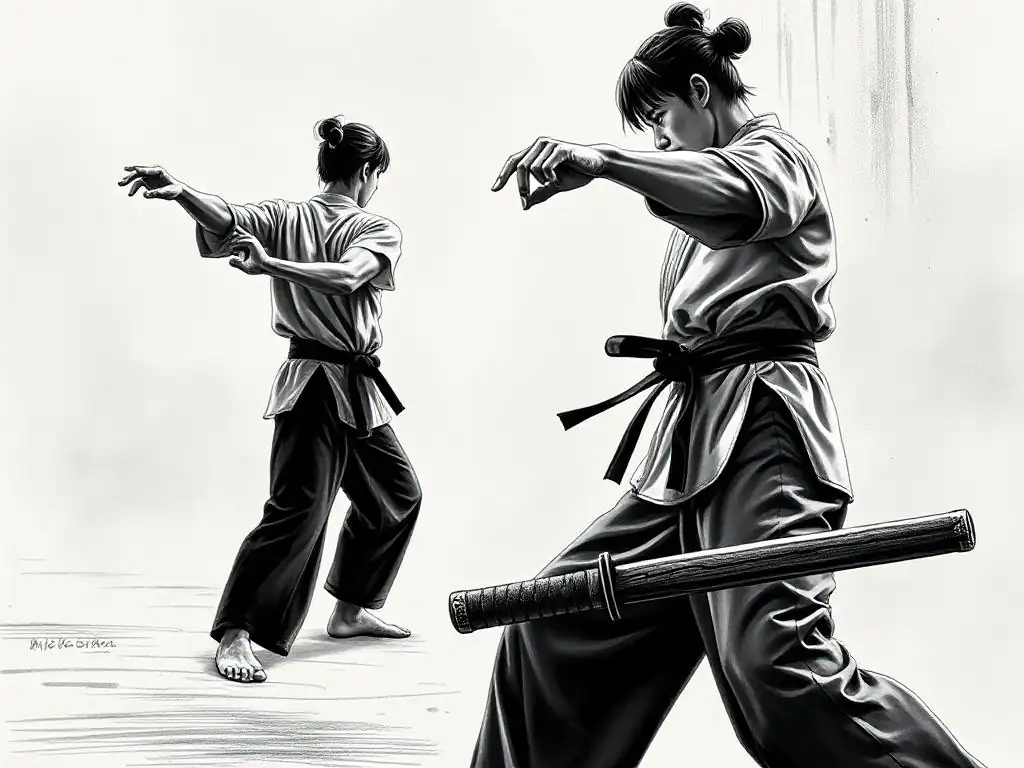
Stance Work: Comparing Stances in Shotokan and Shorin-Ryu Bassai Dai
The most immediately noticeable difference between Shotokan and Shorin-Ryu Bassai Dai lies in their stance work. Shotokan heavily relies on deep, long stances like zenkutsu-dachi, where the front knee is typically bent to approximately 90 degrees, and kiba-dachi, often performed very low. These stances provide a stable, rooted base, crucial for generating powerful linear force and absorbing impact. The emphasis is on strength, stability, and driving power from the legs.
In contrast, Shorin-Ryu Bassai Dai utilizes higher, more mobile stances such as a less deep zenkutsu-dachi, a higher shiko-dachi, and frequent use of neko-ashi-dachi. For example, a Shotokan kiba-dachi might have the hips just inches from the ground, while a Shorin-Ryu shiko-dachi or kiba-dachi might be significantly higher, allowing for faster lateral movement and adjustments.
This difference reflects a tactical preference: Shotokan's stances are optimized for generating maximum linear power and maintaining a strong structure under pressure, while Shorin-Ryu's stances prioritize mobility, quick changes in direction, and the ability to transition smoothly between techniques and ranges, including effective close-quarters work.
Hand Techniques: Analyzing the Differences in Strikes and Blocks
Differences in hand techniques further distinguish the two variations. Shotokan Bassai Dai features a strong emphasis on closed-fist techniques (tsuki, uchi) delivered with focused kime, and powerful, direct linear blocks (gedan-barai, age-uke, soto-uke, uchi-uke). Techniques like the morote-uke (augmented block) are executed with significant tension and rootedness. The focus is on delivering decisive, penetrating strikes and immovable blocks.
Shorin-Ryu Bassai Dai incorporates a wider variety of hand techniques, including more open-hand strikes (nukite, haito) and whipping actions. Blocks might utilize more circular or yielding movements initially, redirecting force before applying a firm counter. For example, a rising block might have a slightly different trajectory or follow-through. Techniques implying seizing, controlling, or manipulating an opponent's limbs are more prevalent in the bunkai interpretations of Shorin-Ryu variations. This diversity in hand techniques reflects Shorin-Ryu's broader tactical approach, which includes close-range trapping, joint manipulation, and using the opponent's balance.
Footwork and Movement: Examining the Application of Footwork Strategies
The footwork and overall movement patterns in Shotokan and Shorin-Ryu Bassai Dai reveal differing strategic approaches. Shotokan emphasizes strong, decisive linear movements – stepping forward with oi-zuki, retreating with age-uke, and utilizing powerful pivots from deep stances to change direction. The movement is often described as "heavy" or "rooted," focusing on driving power through the ground and maintaining stability.
Shorin-Ryu, with its higher stances, utilizes more fluid and agile footwork. This includes shuffling steps (suri-ashi), quick adjustments, and movement patterns that facilitate circular evasion or closing distance rapidly. The transitions between techniques are often smoother, with less emphasis on the distinct pauses seen in Shotokan. This lighter, more adaptable footwork supports Shorin-Ryu's focus on mobility, evading direct force, and positioning for close-range techniques or off-balancing, complementing the diverse hand techniques and higher stances.
Power Generation: A Comparative Analysis of Power Generation Methods
While both variations of Bassai Dai are powerful, they achieve power generation through different primary mechanisms. Shotokan relies heavily on the explosive snap of the hips (koshi) and the driving force from the legs in deep stances, combined with kime (muscle contraction at impact). The power is typically generated linearly and focused into a single point. A strong core connection transfers the energy from the lower body through the technique.
Shorin-Ryu utilizes power generation methods that are often described as more "whipping" or "fluid." This involves using body weight transfer through more mobile stances, relaxation followed by sudden tension, and sometimes leveraging gravity and rotational momentum from higher stances. The focus is less on a single, explosive contraction and more on generating speed and impact through smooth, continuous motion and efficient body mechanics. This method allows for rapid successive techniques and adaptability in dynamic situations.
Timing and Rhythm: Understanding the Variances in Timing and Rhythm
The timing and rhythm of Shotokan and Shorin-Ryu Bassai Dai are distinct and reflect their underlying principles. Shotokan Bassai Dai often features a dynamic, sometimes segmented rhythm with noticeable pauses (kyakudō) and sharp changes in tempo. These pauses build tension and allow for the coiling of energy before an explosive release. The kata moves from slow, deliberate movements to rapid, powerful bursts, creating a dramatic and powerful performance.
Shorin-Ryu Bassai Dai generally exhibits a more continuous, flowing rhythm. While there are still variations in speed and emphasis, the transitions between techniques tend to be smoother and less punctuated than in Shotokan. The focus is on maintaining momentum and fluidity, allowing for rapid combinations and adjustments. This reflects a tactical approach where constant pressure and adaptability are prioritized, enabling the practitioner to react and flow with an opponent's movements rather than relying solely on overcoming them with brute force.
Strategic and Tactical Applications of Shotokan and Shorin-Ryu Bassai Dai
Self-Defense Applications: Practical Scenarios for Each Variation
The distinct characteristics of Shotokan and Shorin-Ryu Bassai Dai lend themselves to different practical self-defense applications. Shotokan's emphasis on strong stances, powerful linear techniques, and rootedness is highly effective for direct confrontations, breaking through an opponent's guard, and delivering decisive counter-attacks from a stable base. Imagine a scenario where you need to quickly and powerfully shut down a direct, frontal assault; the driving force and kime of Shotokan techniques are well-suited for this.
Shorin-Ryu's higher stances, mobility, circular movements, and diverse hand techniques are particularly applicable in close-quarters situations, dealing with grabs, and scenarios requiring quick adjustments or off-balancing. For instance, a sequence involving shuffling footwork and simultaneous block-and-strike could effectively counter a grappling attempt or deal with an opponent in confined spaces. The techniques also offer more options for controlling an opponent's limbs or disrupting their balance, offering a wider tactical palette for varied self-defense scenarios, including those less about direct impact and more about control and manipulation.
Tournament Performance: Analyzing the Suitability of Each Variation for Competition
In the realm of competitive karate, Shotokan Bassai Dai is a popular and often successful choice, particularly in formats that emphasize power, focus (kime), and sharp, dynamic movements. Its clear stances, strong techniques, and dramatic changes in rhythm are typically well-understood and highly scored by judges looking for these specific attributes. The kata's structure allows practitioners to showcase explosive power and technical precision effectively under pressure.
Shorin-Ryu Bassai Dai, while equally effective in application, may face challenges depending on the judging criteria and familiarity of the judges. Its higher stances, more fluid movements, and techniques that imply throws or joint locks (rather than purely striking) might be less emphasized or understood in some competitive rule sets that prioritize the aesthetic of deep stances and linear power. However, in traditional or style-specific tournaments, Shorin-Ryu Bassai Dai can be highly appreciated for its complexity, fluidity, and sophisticated body mechanics. Ultimately, execution quality is paramount in any competition.
Training Methodologies: Different Approaches to Mastering Each Form
Training methodologies for mastering Bassai Dai often differ between Shotokan and Shorin-Ryu, reflecting the kata's unique demands in each style. Shotokan training typically involves rigorous repetition of stances and techniques to build strength, stability, and precise linear movement. Emphasis is placed on perfecting hip rotation and achieving maximum kime in each technique. Bunkai (application) practice often focuses on powerful, direct responses to attacks, breaking down sequences into decisive actions.
Shorin-Ryu training might incorporate more dynamic movement drills, focusing on smooth transitions between stances and techniques. Body conditioning might emphasize flexibility and endurance alongside strength. Bunkai practice often explores multi-layered applications, including close-range techniques, joint locks, and off-balancing, integrating the kata's movements into more fluid, responsive scenarios. While both styles emphasize detailed analysis of the kata, the focus shifts – Shotokan often drilling for explosive power and structure, Shorin-Ryu for fluid motion and versatile application.
Advantages and Disadvantages of Shotokan and Shorin-Ryu Bassai Dai
Shotokan Bassai Dai: Strengths and Weaknesses for the Karate Practitioner
Shotokan Bassai Dai offers significant strengths for the practitioner. It builds tremendous lower body strength and stability through its deep stances, develops powerful hip rotation and core engagement, and cultivates explosive power and kime. The kata's dynamic rhythm and powerful techniques are excellent for developing physical conditioning and mental focus. Furthermore, its widespread recognition makes it a valuable kata for demonstrating skill in many contexts, including competition.
However, it also presents challenges. The deep stances can be physically demanding on the knees and hips if not executed correctly, potentially leading to strain. The strong emphasis on linear movement and direct techniques might lead to less development in circular evasion or fluid close-range tactics compared to styles that prioritize them. While its bunkai is effective, the primary focus within the kata's interpretation often leans towards powerful striking and blocking, potentially de-emphasizing other aspects like joint manipulation or throws found in some other Bassai Dai variations.
Shorin-Ryu Bassai Dai's strengths lie in its promotion of mobility, fluid transitions, and adaptability. The higher stances and dynamic footwork enhance balance and the ability to move quickly in various directions. The inclusion of diverse hand techniques and movements applicable at close range provides a broader tactical vocabulary for self-defense. The kata's continuous flow helps develop endurance and the ability to execute complex sequences smoothly.
Conversely, the higher stances, while promoting mobility, might be perceived as less stable by practitioners accustomed to deeper stances, potentially requiring more refined balance and body control. Generating maximum power might rely more on timing and whipping action than brute force from a rooted base, requiring a different understanding of body mechanics. While versatile, the nuances of Shorin-Ryu Bassai Dai, including its implied joint locks or throws, might require dedicated bunkai study and may not be immediately apparent or appreciated in all competitive settings compared to the more universally recognized power of the Shotokan version.
Shotokan vs. Shorin-Ryu Bassai Dai: A Deeper Dive into Specific Sequences
Analyzing the Initial Block and Counter in Both Shotokan and Shorin-Ryu Bassai Dai
The opening sequence of Bassai Dai provides an immediate insight into the stylistic differences. In Shotokan Bassai Dai, the kata typically begins with a strong, chambered gedan-barai (downward block) performed from a stable stance (often heisoku-dachi transitioning to zenkutsu-dachi or kiba-dachi), immediately followed by a powerful age-uke (rising block). This sequence emphasizes meeting force with force, establishing a strong defensive posture before preparing for a counter. The transition is often sharp and powerful, setting the tone for the kata's dynamic rhythm.
Shorin-Ryu Bassai Dai variations may begin differently. Some versions start with a more preparatory movement or a different type of initial block, perhaps a rising block (age-uke) that is softer or more circular initially, or a combination of hand movements that imply receiving or redirecting force. The stances may be higher, facilitating quicker adjustments. The emphasis is often on blending with or redirecting the incoming force rather than a purely head-on block, reflecting a strategy of adaptability and using the opponent's energy. This opening sequence immediately signals the differing tactical priorities and body mechanics employed by each style.
Comparing the Turning Sequence and its Execution in Each Kata
A key sequence for comparison is often a major turn within the kata that changes the direction of engagement. In Shotokan Bassai Dai, a common turning sequence involves pivoting from a deep stance (like zenkutsu-dachi or kiba-dachi) to face a new direction, often executing a powerful block (e.g., soto-uke or uchi-uke) or strike simultaneously. The pivot is typically executed from the ball of the foot, maintaining a strong core and lower body connection to generate power for the subsequent technique. This emphasizes stability and the ability to generate force even while changing orientation.
In Shorin-Ryu Bassai Dai, similar turning sequences might involve different mechanics. Due to higher stances, the pivot might feel lighter or incorporate a slight shuffle (suri-ashi) to facilitate the turn. The technique executed during or immediately after the turn might be more fluid, perhaps an open-hand block or a whipping strike. The focus is often on maintaining flow and balance throughout the turn, ensuring readiness for the next movement without the distinct pause often seen in Shotokan's powerful pivots. This highlights Shorin-Ryu's emphasis on continuous motion and adaptable positioning.
Examining the Final Embusen: Unique Elements and Interpretations
The final embusen (performance line or sequence) of Bassai Dai offers another point of comparison. Shotokan Bassai Dai often concludes with powerful, decisive techniques, sometimes involving a complex combination like yama-zuki (mountain punch) or a series of strong blocks and strikes, finishing in a deep, stable stance like zenkutsu-dachi or kiba-dachi facing the original starting direction. The ending is typically sharp and final, symbolizing the successful penetration and securing of the "fortress."
Shorin-Ryu Bassai Dai variations can have different final sequences. Some might end with open-hand techniques, a different type of stance (like shiko-dachi), or a sequence that implies control or finishing techniques beyond a simple strike. The final posture or facing direction might also vary slightly depending on the specific lineage. These differences in the final movements reflect the varied interpretations of the kata's ultimate application and the specific techniques prioritized in each style, from Shotokan's emphasis on decisive power to Shorin-Ryu's potential inclusion of more varied finishing methods.
Which Bassai Variation is Right for You? Factors to Consider
Assessing Your Skill Level and Training Goals
Choosing which Bassai Dai variation is "right" for you largely depends on your current skill level and what you hope to achieve through your training. Bassai Dai, in any major variation, is considered an advanced kata, requiring a solid foundation in basic techniques, stances, and body mechanics.
If you are new to karate, focusing on fundamental kata first is essential. For experienced practitioners, consider your training goals: are you primarily focused on developing powerful linear techniques and stability (potentially aligning with Shotokan), or are you more interested in mobility, fluid transitions, and a wider range of close-range applications (potentially aligning with Shorin-Ryu or Bassai Dai Tomari variations)?
Your existing proficiency in different types of body mechanics also plays a role. If you naturally generate power through rootedness and hip drive, Shotokan's approach might feel more intuitive initially. If you are more adept at fluid, whipping motions and maintaining balance while moving, Shorin-Ryu's methods might resonate more. Discussing your goals with your instructor is crucial, as they can provide guidance based on your progress and the specific curriculum of your dojo.
Understanding Your Body Mechanics and Physical Strengths
Your natural body type and physical strengths can influence which Bassai Dai variation might feel more natural or be easier to adapt to. Individuals with a naturally strong lower body and stable core might find the deep stances and powerful linear movements of Shotokan Bassai Dai highly effective and relatively comfortable over time, provided proper technique is used to avoid strain. The ability to generate explosive power from a rooted position is a key physical strength utilized here.
Practitioners with natural agility, flexibility, and good dynamic balance might find the higher stances, quicker footwork, and fluid transitions of Shorin-Ryu Bassai Dai more suited to their physical attributes. The ability to generate power through whipping motions and body weight transfer while in motion is a different kind of physical strength emphasized in these variations. While training can certainly develop the necessary attributes for any style, understanding your inherent physical tendencies can offer insight into which approach might feel more harmonious with your body's natural movement patterns.
The Importance of Instructor Guidance and Personal Preference
Ultimately, the most significant factor in determining which Bassai Dai variation is right for you is the guidance of your instructor and your personal preference. The specific style and lineage taught in your dojo will dictate which version of Bassai Dai you learn. A qualified instructor can provide the detailed corrections and insights necessary to master the nuances of their particular variation, ensuring you understand not just the movements but the underlying principles and applications. Their guidance is invaluable for safe and effective training.
Beyond instruction, personal preference plays a vital role. As you progress in your training and perhaps have the opportunity to observe different styles (respectfully, of course), one variation of Bassai Dai might simply resonate with you more deeply than others. The feel of the movements, the rhythm, the underlying philosophy, or the practical applications might align better with your personal understanding and expression of karate. This personal connection is a powerful motivator for dedicated practice and mastery.
Conclusion: Appreciating the Nuances of Shotokan and Shorin-Ryu Bassai Dai
The Enduring Legacy of Bassai Dai in Karate History
Bassai Dai stands as a testament to the rich history and evolutionary nature of karate. Originating in the Shuri-te tradition of Okinawa centuries ago, its concept of "penetrating a fortress" has been a guiding principle for developing powerful and effective techniques. The kata's survival and adaptation across numerous styles, giving rise to diverse Bassai Dai variations including those found in Shotokan, various Shorin-Ryu schools, and distinct Bassai Dai Tomari variations, highlight its fundamental importance and the different ways masters have interpreted its core principles over time.
Its enduring legacy lies in its role as a vehicle for transmitting sophisticated body mechanics, strategic thinking, and effective self-defense techniques from generation to generation. Regardless of the specific variation practiced, studying Bassai Dai connects practitioners to this deep historical lineage and the accumulated wisdom of past masters who sought to refine the art of overcoming adversity, both physical and metaphorical. It remains a cornerstone kata for advanced practitioners worldwide.
Exploring Future Research and Training in Bassai Dai Variations
The study of Bassai Dai is a lifelong journey of discovery. For practitioners of any variation, continued exploration of its bunkai (applications) is essential to fully understand the kata's practical relevance. This involves analyzing how each movement and sequence can be applied in realistic self-defense scenarios, adapting the techniques to various angles and types of attacks. Understanding the why behind the movements deepens one's appreciation and execution of the form.
Furthermore, respectfully researching and observing other Bassai Dai variations, such as different Shorin-Ryu lineages or Bassai Dai Tomari variations, can provide valuable insights into the broader family of this kata. While focusing on mastering one's own style is paramount, understanding the diverse interpretations enriches one's perspective on the kata's potential and the different paths taken in its evolution. This comparative study fosters a deeper appreciation for the complexity and adaptability of Bassai Dai, encouraging continuous learning and refinement in one's karate journey.
Frequently Asked Questions
What are the key differences between Bassai Dai and Tomari Bassai?
The primary differences lie in their kata structure and emphasis. Bassai Dai often emphasizes power and stability, while Tomari Bassai focuses on speed and agility. The lineage and historical development also diverge.
Why are there variations within Bassai Dai Tomari?
Variations exist due to different lineages and interpretations passed down through generations of instructors. Each school or style might emphasize specific techniques or applications, leading to unique adaptations.
How do the stances differ between Bassai Dai and Tomari Bassai variations?
Bassai Dai typically uses stronger, lower stances for power generation. Tomari Bassai often employs higher, more mobile stances to facilitate quicker movements and evasions.
What are the self-defense applications emphasized in each variation?
Bassai Dai often focuses on direct, powerful techniques for close-quarters combat. Tomari Bassai emphasizes evasion, redirection, and rapid counter-attacks, taking advantage of speed and agility.
Where can I learn more about the historical context of these kata?
MartialArtsMastery.org provides detailed historical overviews of various martial arts and kata, including information on the Bassai Dai and Tomari Bassai lineages. You can also find profiles of legendary practitioners who shaped these styles.
Final Reflection: Embracing the Evolution of Bassai
The journey through the variations of Bassai Dai, particularly when comparing the Shotokan and Tomari-te lineages, reveals more than just differing techniques; it highlights the dynamic nature of martial arts traditions. This exploration underscores that kata are not static relics but living expressions, constantly evolving through interpretation and application, a truth that resonates deeply within the modern martial arts landscape.
The subtle shifts and distinct emphases between Bassai Dai and Tomari Bassai demonstrate the power of individual interpretation within a shared framework. This understanding is crucial for practitioners seeking to truly internalize the principles of their art, moving beyond rote memorization to genuine comprehension. The goal of practice is not perfection. It is to understand the art.
This quote, though unattributed, perfectly encapsulates the spirit of continuous learning and adaptation that should guide every martial artist.
As you reflect on the nuances explored in this comparative study, consider how you can apply this understanding to your own practice. Embrace the evolution, question the dogma, and strive to understand the underlying principles that give rise to these variations. Let the spirit of Bassai Dai, in all its forms, inspire you to deepen your connection to the art and to forge your own unique path within its rich tapestry.
Unleash Your Bassai Potential!
Thank you for delving into the intricacies of Bassai Dai and Tomari Bassai. We hope this comparison has deepened your understanding and appreciation for these powerful kata. Now, take your knowledge to the next level!
- Practice the subtle differences: Focus your next training session on the key variations highlighted in this article, aiming to refine your technique and deepen your understanding. This is the most important action you can take.
- Research the history: Uncover the historical lineage of each kata, tracing its roots and the influences that shaped its development.
- Share your insights: Discuss your findings with fellow martial artists on our forums to enrich understanding within our community and learn more.
How will you apply these insights to your next Bassai practice?