
From Beginner to Black Belt: The Progression of Kata Learning

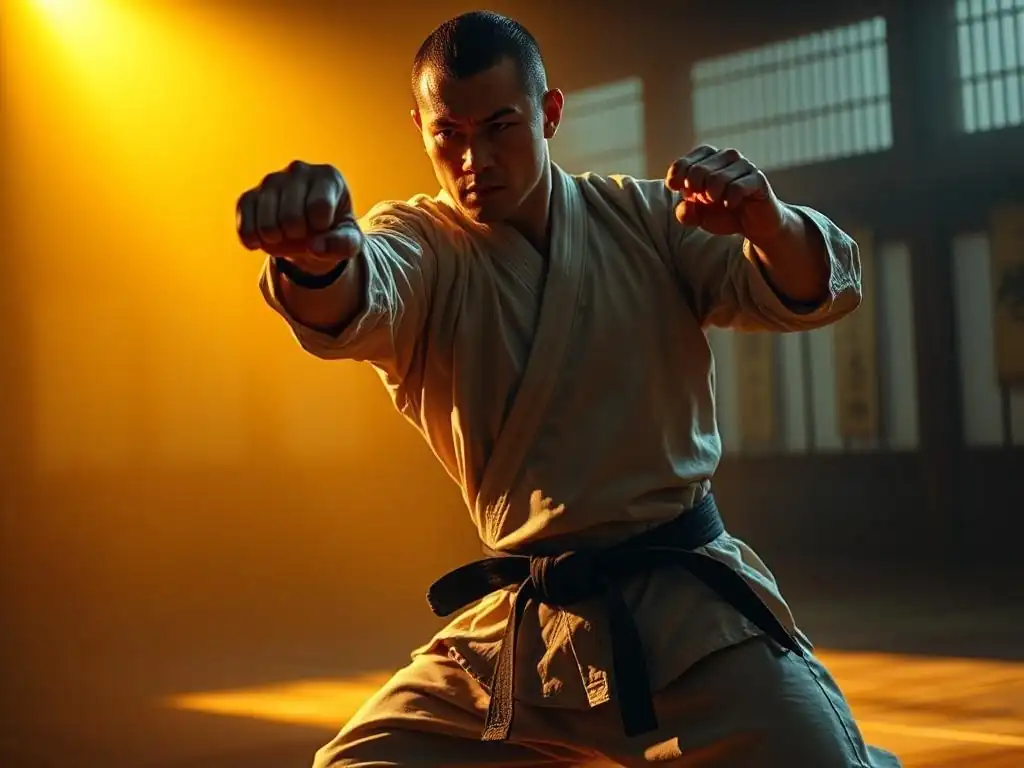
Welcome to Martial Arts Mastery, your ultimate guide to the profound world of martial arts! Are you ready to embark on a transformative journey? This article delves into the intricate art of Kata, exploring the Kata learning progression from beginner to black belt. Discover the secrets behind mastering these forms, and unlock the hidden knowledge they hold. But what truly separates a student from a master? Read on to find out...
- Understanding the Kata Learning Journey in Karate
- Kata Learning Progression: Beginner Level (White to Yellow Belt)
- Intermediate Kata Learning: (Orange to Green Belt)
- Advanced Kata Learning: (Blue to Brown Belt)
- Black Belt Kata Mastery: Refining and Personalizing Your Art
- Optimizing Your Kata Learning Progression: Tips for Success
- Kata Learning for Self-Defense: Practical Applications
- The Philosophical Underpinnings of Kata Training
-
Frequently Asked Questions
- What is kata and why is it important in martial arts training?
- What does a kata learning progression from beginner to black belt look like?
- How does kata learning contribute to practical self-defense skills?
- Are there different styles of kata depending on the martial art?
- How can MartialArtsMastery.org help me with my kata learning journey?
- Final Reflection: Embracing the Journey of Kata
- Unleash Your Inner Kata Master!
Understanding the Kata Learning Journey in Karate
What is Kata and its Significance in Martial Arts Mastery?
Kata, meaning "form" in Japanese, is a structured sequence of movements performed solo, representing a simulated fight against multiple opponents. In Karate, Kata is one of the three core pillars of training, alongside Kihon (basics) and Kumite (sparring). These pre-arranged forms encapsulate centuries of martial knowledge, preserving techniques, principles, and strategic concepts passed down through generations. Practicing Kata develops fundamental skills such as balance, coordination, timing, power generation, and focus, forming the bedrock upon which practical application is built.
The significance of Kata extends far beyond mere physical exercise. It is a dynamic meditation, requiring intense concentration and mental discipline. Through repetitive practice, practitioners internalize techniques and develop a deep understanding of body mechanics. Kata also serves as a historical archive, containing the "DNA" of various Karate styles. Mastery of Kata is often a prerequisite for advancement, especially in the Kata learning progression beginner black belt path, signifying not just technical proficiency but also a commitment to the art's traditions and philosophical depth. It's the solo training method that hones the individual warrior.
The Importance of a Structured Kata Learning Progression
A structured Kata learning progression is crucial for effective development in Karate. Starting with simpler forms and gradually advancing to more complex ones allows practitioners to build a solid foundation of basic movements, stances, and transitions before tackling intricate sequences. This systematic approach ensures that each new Kata introduces new principles and techniques incrementally, preventing overwhelm and facilitating deeper understanding. Without a clear progression, students might develop bad habits or fail to grasp the underlying concepts contained within the forms.
Following a defined Kata learning progression, typically aligned with belt ranks, provides a clear roadmap for students from beginner to black belt. This path is designed to progressively challenge the practitioner, introducing elements like advanced stances, complex joint locks, throws, and vital point strikes found in higher-level Kata. For instance, a student mastering the five Heian Kata (often required for Kyu grades) develops proficiency in foundational movements necessary before attempting the longer and more demanding Bassai Dai or Kanku Dai (typically required for brown or black belt). This structured journey is fundamental to achieving true martial arts mastery.
Kata Learning Progression: Beginner Level (White to Yellow Belt)
Foundational Kata: Mastering Basic Stances and Movements
At the beginner level, the focus is on mastering the absolute fundamentals of movement and posture, which is the initial phase of the Kata learning progression beginner black belt path. Kata like Taikyoku Shodan (First Cause, first level) are specifically designed for this purpose.
These forms are intentionally simple, often involving only one or two basic stances (like Zenkutsu Dachi - front stance, and Kokutsu Dachi - back stance) and a limited set of techniques (such as Gedan Barai - down block, and Oi Tsuki - stepping punch). The repetition inherent in these foundational Kata helps beginners develop muscle memory and understand the importance of stable stances and proper body alignment.
Mastering these foundational Kata involves meticulous attention to detail on basic transitions and techniques. The goal is not speed or power, but correctness and stability. Students learn to execute a strong Zenkutsu Dachi, ensuring the front knee is bent and the back leg is straight, or a balanced Kokutsu Dachi with weight primarily on the back leg. Practicing the basic Oi Tsuki in Taikyoku Shodan instills the principle of body movement and hip rotation driving the technique. This initial phase of the Kata learning progression is slow and deliberate, laying the essential groundwork for all future learning.
Essential Kata for Beginners: Heian Shodan, Heian Nidan
Following the Taikyoku series (or sometimes starting directly with them, depending on the style), the Heian Kata are the next crucial step in the beginner's Kata learning progression. Heian Shodan (Peaceful Mind, first level) introduces a slightly more complex sequence, including Age Uke (rising block) and Shuto Uke (knife hand block), along with basic stances and strikes. This Kata builds upon the stability learned in Taikyoku, adding more varied upper-body techniques and requiring smoother transitions between stances. It is often a requirement for advancing from white to yellow belt.
Heian Nidan (Peaceful Mind, second level) further expands the beginner's repertoire. This Kata is typically learned around the yellow or orange belt level. It introduces new elements such as Yoko Empi Uchi (side elbow strike), Nukite (spear hand), and transitions involving shifting weight and changing direction more frequently than Heian Shodan. Mastering Heian Nidan is a significant step in the beginner's Kata learning progression, demonstrating the ability to handle more complex sequences and integrate a wider range of fundamental techniques effectively.
Common Mistakes in Early Kata Learning and How to Avoid Them
Beginners often make several common mistakes in the early stages of Kata learning. One prevalent issue is unstable stances; the student may not sink low enough, distribute weight incorrectly, or allow their knees to buckle. This compromises both balance and power generation.
To avoid this, focus intensely on holding each stance correctly for a brief pause before moving, feeling the connection to the ground. Another mistake is lack of focus or kime (focus of power) at the end of techniques; movements can appear floppy or weak. This can be improved by practicing individual techniques repeatedly with sharp, focused energy and exhaling sharply at the point of impact.
Another frequent error is rushing through the Kata. Beginners often prioritize finishing the form over executing each movement correctly. This leads to sloppy transitions, incorrect timing, and a failure to understand the rhythm and tempo of the Kata. To counteract this, practice slowly and deliberately, focusing on the path of each movement and the proper body mechanics. Breaking down the Kata into smaller sequences and practicing them in isolation before linking them together can also be highly effective in correcting these early stage errors in the Kata learning progression.
Intermediate Kata Learning: (Orange to Green Belt)
Expanding Your Kata Repertoire: Introducing More Complex Movements
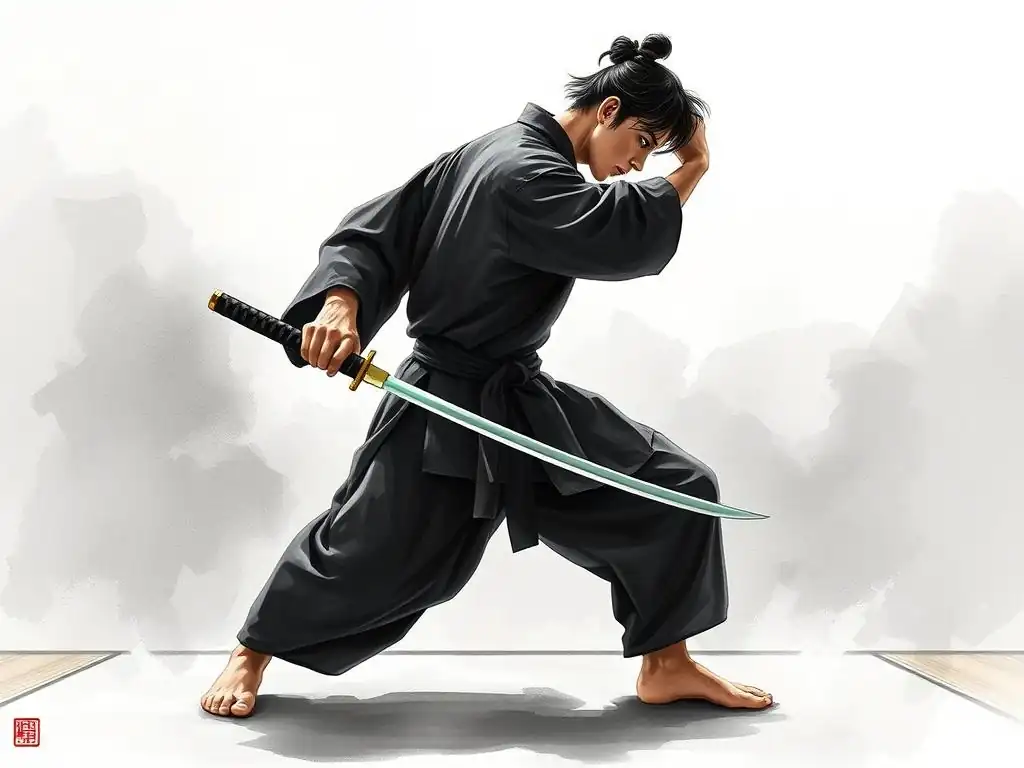
As students progress to the intermediate levels (typically orange to green belt), their Kata learning progression introduces forms that are significantly more complex than the foundational Heian series. Kata like Heian Sandan, Yondan, and Godan, as well as potentially Pinan variants or early Sanchin/Tensho depending on the style, are common at this stage. These Kata incorporate a wider variety of stances, including Kiba Dachi (horse riding stance) and Shiko Dachi (square stance), and introduce more intricate hand techniques such as combinations of blocks and strikes, joint manipulations, and even basic throws hidden within the movements.
Intermediate Kata require greater coordination and control. For instance, Heian Yondan features complex sequences involving simultaneous blocks and strikes, as well as jumps (in some style variations). Heian Godan often includes techniques executed from a single leg or requires rapid changes in direction and level. Mastering these forms involves not just memorizing the sequence, but understanding the flow and timing between movements. This phase of the Kata learning progression challenges practitioners to refine their basic skills while integrating new, more dynamic elements.
Developing Power and Precision in Intermediate Kata
The intermediate stage of Kata learning shifts the emphasis from mere correctness to developing power and precision. While foundational techniques must still be accurate, the goal is now to execute them with greater force (chikara) and sharpness (kime). This involves learning to effectively use hip rotation (koshi) and body weight to generate power in strikes and blocks. Techniques like Mawashi Empi (roundhouse elbow) or Uraken Uchi (backfist strike), often found in intermediate Kata, require precise body mechanics to deliver maximum impact.
Precision in intermediate Kata also means executing techniques on the correct line of movement, maintaining proper depth in stances, and ensuring that blocks and strikes finish exactly at their intended target point. For example, in Heian Godan, the final sequence involves a jump and simultaneous Shuto Uke; executing this with both power and precision requires significant practice and control. Developing this blend of power and precision is a key milestone in the Kata learning progression towards black belt.
Understanding Bunkai (Application) for Intermediate Kata Techniques
At the intermediate level, students begin to delve deeper into the practical application, or Bunkai, of Kata movements. While beginners might touch upon basic applications for simple blocks and punches, intermediate training explores the more complex sequences found in Kata like the later Heian forms. For example, the series of movements in Heian Sandan can be interpreted as defenses against grabs or locks, leading into counter-strikes or joint controls.
Studying Bunkai for intermediate Kata helps students understand the why behind the movements. It transforms the Kata from a series of abstract steps into a library of potential self-defense techniques. For instance, the unique sequence in Heian Godan involving pulling the hands back can be interpreted as controlling an opponent's limbs before executing a strike or throw. Understanding these applications not only enhances the practical self-defense aspect but also improves the performance of the Kata itself, as the practitioner executes movements with greater intent and understanding of their purpose, a vital step in the Kata learning progression.
Advanced Kata Learning: (Blue to Brown Belt)
Advanced Kata Selection: Bassai Dai, Kanku Dai
Reaching the advanced levels, typically blue to brown belt, marks a significant leap in the Kata learning progression. This stage introduces the 'Daikyu' or major Kata, which are considerably longer, more physically demanding, and technically complex than the Heian series. Bassai Dai (To Penetrate a Fortress) is a prime example. Often a requirement for brown belt or first Dan black belt, it is known for its powerful, dynamic movements, emphasizing breaking through an opponent's guard or defense. It features complex blocking sequences, powerful hammerfist strikes, and intricate footwork.
Kanku Dai (To View the Sky) is another cornerstone of advanced Kata, frequently required at brown belt or first Dan level. This Kata is one of the longest in many styles and is characterized by its expansive movements, including a notable opening sequence where the hands are raised to view the sky and a significant jump. Kanku Dai incorporates a wide range of techniques, from sweeping blocks to intricate hand movements and powerful strikes, requiring exceptional balance, coordination, and stamina. Mastering these advanced Kata is a major milestone in the Kata learning progression beginner black belt journey.
Enhancing Kata Performance: Focus on Speed, Power, and Kime
At the advanced level, Kata performance transcends mere execution; it becomes about embodying the spirit and effectiveness of the techniques. The focus shifts heavily towards maximizing speed, power, and kime (focused energy). Speed isn't just moving fast, but executing transitions and techniques with efficient, explosive movement. Power is generated through refined body mechanics, utilizing hip rotation, ground force, and proper breathing techniques (kiai).
Kime is the culmination of speed, power, and focus, representing the sharp, instantaneous convergence of energy at the end of a technique. In advanced Kata like Bassai Dai, the powerful blocks and strikes demand intense kime to be effective. Achieving high levels of speed, power, and kime requires dedicated practice, often focusing on isolated movements or short sequences within the Kata. This refinement is essential for showcasing the martial effectiveness embedded within these complex forms during the Kata learning progression.
Analyzing and Interpreting Kata: Deeper Bunkai Exploration
Advanced practitioners delve into a much deeper analysis and interpretation of Kata, exploring intricate Bunkai applications. At this stage, Bunkai moves beyond basic block-and-counter scenarios to include joint locks, throws, vital point strikes (atemi-waza), and complex grappling exchanges hidden within the Kata's movements. For example, the opening sequence of Bassai Dai, with its powerful blocks, can be interpreted not just as defense against strikes, but as breaking an opponent's grip or unbalancing them.
Analyzing advanced Kata Bunkai often involves studying variations and multiple possible interpretations for a single movement or sequence. This requires critical thinking and a deep understanding of body mechanics and martial principles. Exploring the Bunkai of Kata like Kanku Dai reveals sophisticated strategies for dealing with multiple attackers, manipulating an opponent's balance, and transitioning between striking and grappling ranges. This deep analytical work is crucial for truly understanding the practical value of the Kata learning progression.
Black Belt Kata Mastery: Refining and Personalizing Your Art
Black Belt Kata Requirements: Gojushiho Sho, Unsu
Achieving black belt (Shodan) is a significant milestone, but it is also the beginning of a new phase of Kata mastery. First Dan black belt requirements often include a selection from the advanced Kata repertoire, solidifying the practitioner's understanding of complex forms like Bassai Dai or Kanku Dai. As practitioners move to higher Dan grades (Nidan, Sandan, etc.
), they typically learn even more advanced and technically demanding Kata. Gojushiho Sho (Fifty-Four Steps, Minor) and Gojushiho Dai (Fifty-Four Steps, Major) are examples of very high-level Kata, often required for Sandan or higher. These Kata are long, intricate, and contain numerous open-hand techniques and subtle movements.
Unsu (Cloud Hands) is another exceptionally advanced Kata, frequently required for higher Dan grades. It is known for its extreme technical difficulty, featuring unique movements such as a 360-degree jump, ground techniques, and rapid transitions between different levels. Mastering Kata like Gojushiho or Unsu signifies a deep understanding of the art's most complex principles and techniques. This stage of the Kata learning progression demands years of dedicated practice and refinement.
Exploring Advanced Concepts: Flow, Timing, and Strategy in Kata
At the black belt level, the focus in Kata shifts from merely executing techniques correctly to embodying advanced concepts like flow, timing, and strategy. Flow refers to the seamless transition between movements, ensuring that the Kata is performed as a continuous, dynamic sequence rather than a series of disconnected steps. This requires perfect control of balance, weight distribution, and muscle tension.
Timing in Kata involves understanding the rhythm and tempo of the form, knowing when to move slowly and deliberately and when to explode with speed and power. It also relates to the implied timing of the Bunkai – knowing when to block, when to counter-attack, and when to transition. Strategy refers to understanding the underlying combative principles and scenarios that the Kata represents. Black belts perform Kata not just as physical forms, but as strategic blueprints, demonstrating their deep comprehension of the art's tactical dimensions. These concepts are paramount in advanced Kata learning progression.
Personalizing Your Kata: Developing Your Unique Expression
While Kata are fixed sequences, black belt mastery involves developing a unique expression within the form. This doesn't mean changing the movements, but rather performing them with personal interpretation based on years of training and physical capabilities. Subtle variations in emphasis, rhythm, or the intensity of kime can reflect the individual practitioner's understanding and personality. This personalization is a natural outcome of deep internalization of the Kata.
Developing a unique expression involves refining the Kata to suit one's own body type and strengths while remaining true to the form's core principles. It's about finding the most efficient way for you to generate power, maintain balance, and transition between techniques. This level of personalization comes only after years of disciplined practice and a profound understanding of the Kata's mechanics and Bunkai, marking the pinnacle of the Kata learning progression from beginner to black belt.
Optimizing Your Kata Learning Progression: Tips for Success
The Role of the Sensei in Guiding Your Kata Development
The guidance of an experienced Sensei (instructor) is paramount throughout the entire Kata learning progression. A good Sensei provides crucial feedback on technique, posture, timing, and power generation. They can identify subtle errors that a student might not notice and offer specific corrections tailored to the individual's needs. Sensei also provide context and deeper meaning to the Kata, explaining the Bunkai and the philosophical principles behind the movements.
Beyond technical correction, a Sensei offers motivation and structure. They set clear goals for each belt level, guiding the student through the appropriate Kata learning progression. Their encouragement during challenging stages and their insights into the art's deeper aspects are invaluable. Regular one-on-one feedback sessions and demonstrations from the Sensei are essential tools for optimizing Kata development from beginner through to black belt and beyond.
Utilizing Video Analysis for Kata Improvement
In the modern era, utilizing video analysis is a highly effective tool for optimizing one's Kata learning progression. Recording yourself performing a Kata allows for objective self-assessment. You can review your performance critically, comparing it against your Sensei's demonstrations or instructional videos. This helps identify issues with stances, transitions, hand positions, hip rotation, and overall flow that are difficult to spot while you are performing the Kata.
Specific points to look for in video analysis include maintaining a consistent stance depth, ensuring proper alignment of joints (knees over toes, shoulders relaxed), and checking the timing and snap of techniques. Slow-motion playback can reveal subtle errors in weight transfer or the sequence of movements. By regularly reviewing video and correlating observations with your Sensei's feedback, you can target specific areas for improvement, accelerating your Kata learning progression.
Cross-Training and its Impact on Kata Performance
Engaging in complementary training activities, or cross-training, can significantly impact and improve Kata performance. Activities that enhance core strength, flexibility, balance, and body awareness are particularly beneficial. For example, practicing Yoga or Pilates can improve flexibility and core stability, both critical for maintaining strong stances and executing dynamic movements in Kata like Kanku Dai or Unsu.
Strength and conditioning exercises, such as bodyweight training or weightlifting focusing on functional movements, build the power and stamina required for performing longer, more demanding Kata with intensity. Plyometric exercises can improve explosiveness, beneficial for jumps and sharp transitions. Running or other cardiovascular training enhances stamina, allowing practitioners to maintain focus and power throughout longer forms. Integrating smart cross-training supports the physical demands of the Kata learning progression, enabling practitioners to perform at a higher level.
Kata Learning for Self-Defense: Practical Applications
Bridging the Gap Between Kata and Real-World Self-Defense
Bridging the gap between the structured movements of Kata and the unpredictable nature of real-world self-defense is a crucial aspect of martial arts training. Kata provides a library of techniques and strategic principles, but they are presented in a formalized, idealized sequence. Understanding Bunkai is the key to unlocking these applications for practical use. Training Bunkai involves practicing the techniques found in Kata against a partner, simulating realistic attack scenarios.
This practical application phase of the Kata learning progression allows practitioners to feel the effectiveness of a technique against resistance, understand proper distance and timing in a dynamic situation, and learn how to transition between techniques based on an opponent's reaction. For example, practicing the Shuto Uke from Heian Shodan as a defense against a grab, followed by a counter-strike, helps bridge the theoretical movement in the form to a functional self-defense action.
Applying Kata Techniques in Sparring and Kumite
While Kata is solo, its principles and techniques are intended to be applicable in partner work and sparring (Kumite). Basic stances and movements learned in early Kata form the foundation for stable movement and effective technique execution in free fighting. More advanced Kata contain techniques that can be directly or indirectly applied in Kumite, depending on the ruleset. For instance, the powerful hip rotation used in a Gyaku Tsuki in Kata is the same mechanism used for a strong punch in sparring.
Certain Kata movements can inspire tactics in Kumite. The evasive footwork or angle changes found in forms can be used to create openings or avoid attacks. Advanced Bunkai, such as joint manipulations or throws, might be practiced in controlled grappling or self-defense scenarios, though they are often not legal in sport Kumite. Nevertheless, the principles of timing, distance, and kime developed through rigorous Kata practice are directly transferable and highly beneficial in any form of combative application.
Adapting Kata for Different Self-Defense Scenarios
Understanding Kata for self-defense involves recognizing that the forms offer adaptable principles, not rigid solutions for every situation. A single movement in Kata might have multiple potential applications depending on the type of attack, the environment, or the size and strength of the opponent. This requires a flexible approach to Bunkai, exploring various interpretations and practicing them in different contexts.
For example, a block from a Kata might be used to deflect a punch, break a grip, or even as a striking technique. A stance might be used for rooted power or as a brief transition into a throw. Adapting Kata for different scenarios means understanding the underlying mechanics and principles (like leverage, balance disruption, vital points) and applying them creatively within the context of a real self-defense situation. This level of adaptability is a hallmark of advanced understanding in the Kata learning progression.
The Philosophical Underpinnings of Kata Training
Kata as a Vehicle for Mental and Spiritual Development
Beyond its physical and combative aspects, Kata serves as a profound vehicle for mental and spiritual development in martial arts mastery. The repetitive, focused nature of Kata practice is a form of moving meditation. It requires intense concentration, shutting out external distractions and focusing solely on the present moment and the execution of the movements. This process cultivates mindfulness and improves the ability to concentrate, skills valuable both inside and outside the dojo.
The discipline required to practice Kata consistently, especially the same Kata thousands of times, builds mental fortitude and perseverance. Facing the challenges of learning complex forms or refining subtle movements teaches patience and resilience. Kata encourages introspection, prompting practitioners to look inward and confront their physical and mental limitations. This holistic development is an integral part of the Kata learning progression.
Cultivating Discipline, Focus, and Perseverance Through Kata
Kata training is inherently demanding and requires significant discipline. Memorizing long sequences, practicing them correctly, and striving for continuous improvement instills a strong work ethic. The requirement to perform Kata with precision and intensity, even when tired, cultivates mental and physical toughness. This disciplined approach to training translates into other areas of life, fostering a habit of setting goals and working diligently to achieve them.
Focus is another key attribute honed by Kata practice. Each movement must be executed with intent and attention to detail. The mind must be fully engaged to remember the sequence, maintain proper form, and apply kime. This sustained concentration improves mental clarity and the ability to maintain focus under pressure. Perseverance is built through overcoming the frustration of difficult techniques or the plateauing of progress, pushing through challenges to continue refining the forms. These virtues are fundamental outcomes of the long Kata learning progression from beginner black belt aspirations to true mastery.
The Enduring Legacy of Kata in Martial Arts
Kata represents the enduring legacy of martial arts. These forms are living history, preserving the techniques and strategies developed by masters over centuries. By practicing Kata, contemporary practitioners connect with the lineage and traditions of their style. They are not just learning movements; they are participating in a historical continuum, carrying forward the knowledge of past generations.
The continued relevance of Kata in modern martial arts training speaks to its fundamental value. Despite the evolution of sport combat and self-defense methodologies, Kata remains a cornerstone because it systematically develops essential physical attributes, mental discipline, and a deep understanding of martial principles that are difficult to achieve through other training methods alone. The Kata learning progression, from beginner to black belt and beyond, is a journey through the heart and history of the art itself.
Frequently Asked Questions
What is kata and why is it important in martial arts training?
Kata are prearranged sequences of movements simulating combat scenarios. They are important for developing technique, form, muscle memory, and understanding bunkai (application).
What does a kata learning progression from beginner to black belt look like?
It typically starts with basic stances and blocks, progressing to more complex techniques and sequences as skill increases. Black belt kata often incorporate advanced techniques, strategy, and deeper understanding of principles.
How does kata learning contribute to practical self-defense skills?
Through kata, practitioners learn proper body mechanics, timing, and distancing, which are crucial for effective self-defense. Understanding bunkai allows for applying kata movements to real-world situations.
Are there different styles of kata depending on the martial art?
Yes, each martial art has its own unique kata rooted in its history and philosophy. Kata can differ significantly in techniques, rhythm, and emphasis across styles like Karate, Judo, and Aikido.
How can MartialArtsMastery.org help me with my kata learning journey?
MartialArtsMastery.org provides historical overviews, training techniques, and philosophical underpinnings related to kata. It offers resources to understand the deeper meaning and practical applications of kata from beginner to black belt.
Final Reflection: Embracing the Journey of Kata
The journey of kata, as we've explored, is far more than just memorizing movements; it's a profound exploration of self-discipline, physical mastery, and mental fortitude. This dedication to continuous improvement, from the hesitant steps of a beginner to the refined power of a black belt, resonates deeply in a world increasingly demanding adaptability and lifelong learning. The principles of kata – precision, focus, and unwavering commitment – are not confined to the dojo; they are transferable skills applicable to any pursuit.
The impact of kata learning extends beyond physical prowess, shaping character and fostering a deep appreciation for tradition and self-improvement. Personally, witnessing the transformation of students from clumsy novices to confident practitioners has been incredibly rewarding, highlighting the transformative power of consistent effort and mindful practice. The journey of a thousand miles begins with a single step.
This ancient proverb perfectly encapsulates the essence of kata, reminding us that even the most daunting goals are achievable through persistent dedication and a willingness to embrace the learning process.
Now, as you reflect on the progression of kata learning, consider how its principles can inform your own life. How can you apply the dedication, focus, and perseverance required in kata to your personal and professional endeavors? Embrace the journey, celebrate the small victories, and never underestimate the power of consistent effort. The path to mastery, in any field, begins with a single, deliberate step.
Unleash Your Inner Kata Master!
Thank you for delving into the world of Kata! We hope this article has illuminated the path from beginner to mastery and inspired you to deepen your practice. Ready to take the next step in your Kata journey?
Here's how you can continue your evolution:
- Commit to mastering one foundational Kata. Choose a single Kata relevant to your style and dedicate the next month to perfecting its form, understanding its principles, and applying its techniques.
- Explore the history and philosophy behind your chosen Kata. Understanding its origins can enrich your practice and provide deeper insights.
- Share your Kata journey with the Martial Arts Mastery community! Post a video of your Kata performance on our forum ( martialartsmastery.org ) and receive feedback from fellow practitioners.
What new perspective will you bring to your Kata practice this week?