
Bunkai for Women's SelfDefense: Adapting Kata Applications for Maximum Effectiveness

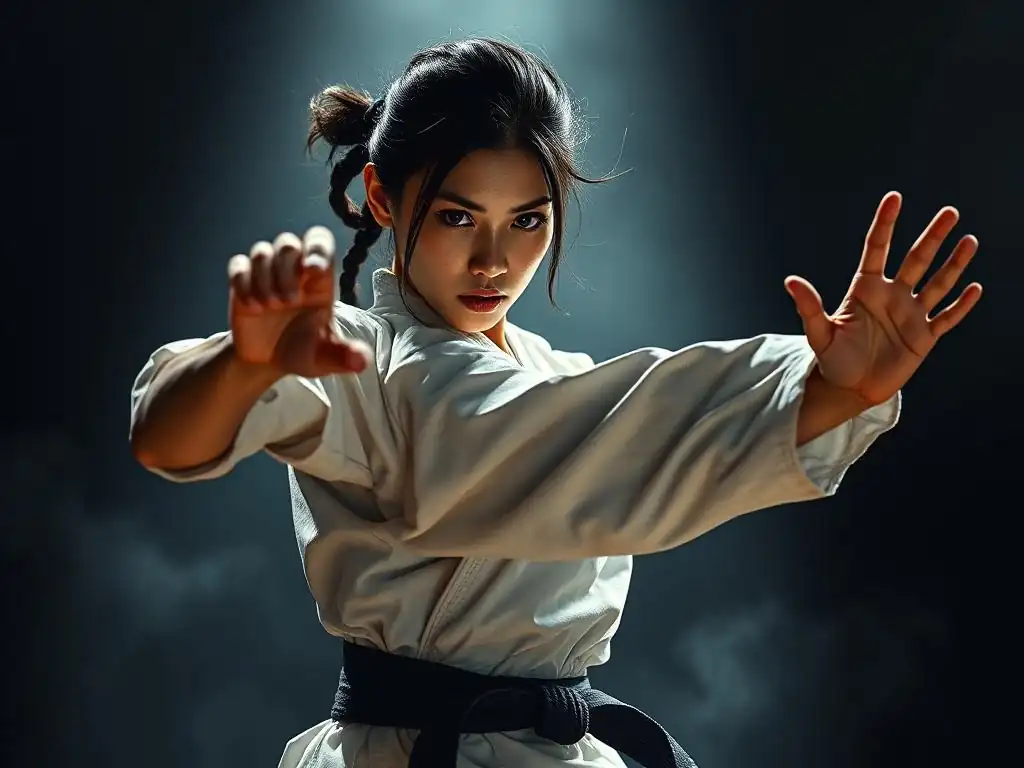
Welcome to Martial Arts Mastery!
Delve into the fascinating world of martial arts, where tradition meets practical application. In this article, we unravel the secrets of Women's Kata Bunkai Self Defense, exploring how these ancient forms can be adapted for modern self-defense scenarios. Curious about unlocking the hidden power within seemingly intricate movements? Read on to discover effective strategies and techniques for maximizing your defensive capabilities.
- Women’s Kata Bunkai Self Defense: Unlocking the Power of Karate Forms
- What is Bunkai and How Does it Apply to Women’s Self-Defense?
- Selecting the Right Kata for Women’s Self-Defense Training
- Key Principles of Women's Kata Bunkai Self Defense
- Practical Applications: Women’s Kata Bunkai Techniques
- Modifying Kata Bunkai for Women’s Specific Needs
- Case Studies: Women Effectively Using Kata Bunkai in Self-Defense Situations
- The Importance of Realistic Training and Sparring
- Common Mistakes to Avoid in Women’s Kata Bunkai Self Defense Training
- Conclusion: The Empowering Potential of Women’s Kata Bunkai Self Defense
-
Frequently Asked Questions
- What is kata bunkai and how does it relate to women's self-defense?
- Why is kata bunkai particularly relevant for women's self-defense?
- How can kata bunkai be adapted specifically for women's self-defense needs?
- What are some examples of kata movements that can be translated into effective self-defense techniques for women?
- Where can I learn more about adapting kata bunkai for women's self-defense?
- Final Reflection: Empowering Through Movement
- Unleash Your Inner Strength: Start Defending Yourself Today!
Women’s Kata Bunkai Self Defense: Unlocking the Power of Karate Forms
Understanding Kata Bunkai for Self-Defense
Kata, the formal exercises of Karate, are often seen as beautiful, ritualistic dances. However, their true purpose lies in "bunkai," which translates to "analysis" or "application." Bunkai is the process of deciphering the practical self-defense techniques hidden within the movements of a kata. For centuries, martial artists used kata as a living library of combat principles, encoding striking, blocking, joint locks, throws, and escapes within seemingly abstract sequences. Understanding bunkai transforms kata from a performance into a dynamic tool for personal protection.
Focusing on bunkai for self-defense, particularly for women, involves selecting and interpreting kata movements through the lens of real-world threats. This means analyzing how a specific block isn't just a block, but potentially a joint manipulation or a redirection leading to a counter-strike. It involves seeing a seemingly simple stance transition as an opportunity for evasion or creating leverage. Effective women’s kata bunkai self defense training emphasizes practicality, efficiency, and adaptability, ensuring that the techniques learned in the dojo can be applied effectively outside of it.
The Importance of Kata in Women's Self-Protection
Traditional self-defense courses often teach isolated techniques that, while useful, may lack the depth and interconnectedness found within a comprehensive system like kata. Kata, through its bunkai, offers a structured and layered approach to self-protection. It provides a framework that links multiple movements together, allowing practitioners to flow from defense to counter-attack to escape seamlessly. For women, who may face assailants larger or stronger than themselves, this strategic flow and the principles of leverage and timing embedded in kata bunkai are invaluable.
Furthermore, the repetitive practice of kata builds crucial physical attributes like balance, coordination, stamina, and body control – all essential components of effective self-defense. The mental discipline required to learn and perform kata also fosters focus, concentration, and resilience. Integrating bunkai into this practice ensures that these physical and mental benefits are directly channeled towards practical self-protection, equipping women not just with techniques, but with the physical and mental preparedness to handle stressful situations.
What is Bunkai and How Does it Apply to Women’s Self-Defense?
Defining Bunkai: Beyond Traditional Interpretations
Bunkai is the analytical study of kata to extract its practical self-defense applications. It's not simply demonstrating a single technique from a kata movement in isolation. True bunkai explores multiple potential applications for each movement or sequence of movements, considering different angles of attack, types of threats, and the principle of renzoku waza (continuous technique). Traditional interpretations often focus on idealized scenarios against a compliant partner, which can be limiting for real-world self-defense.
Modern, practical bunkai for women’s self defense moves beyond these rigid interpretations. It encourages practitioners to question the movements, experiment with variations, and adapt the techniques to their own body mechanics and potential real-life scenarios. This might involve interpreting a high block not just as defense against a head strike, but also as a way to break a grip on the hair, or interpreting a low block as a check against a leg attack or a means to disrupt balance. This adaptive approach makes bunkai a dynamic and highly relevant tool for personal safety.
Adapting Kata Movements for Real-World Scenarios
Adapting kata movements for real-world scenarios requires understanding the underlying principles of each technique rather than just mimicking the form. For instance, a forward stance and punch might be interpreted not just as a linear attack, but as a way to generate power for a short-range strike or to drive through an opponent's guard. A turning movement might be analyzed as a method for evading a grab, creating space, or setting up a throw or joint lock. The emphasis shifts from the aesthetic performance of the kata to the functional effectiveness of its components.
This adaptation process often involves simplifying or modifying the classical movements to make them more direct and explosive for self-defense. Elaborate stances might be adjusted for stability on uneven ground, and complex hand movements might be distilled into their core function – impacting, controlling, or disrupting. Training drills that simulate common street encounters, such as dealing with grabs from behind, attacks in confined spaces, or multiple assailants, are crucial for effectively translating kata bunkai into practical, usable skills for women’s self defense.
Why Kata Bunkai is Effective for Women's Self-Defense
Kata bunkai provides women with a comprehensive toolkit derived from centuries of combat experience. It teaches not just individual strikes or blocks, but integrated sequences designed to neutralize threats efficiently. Many kata movements are inherently designed to use leverage and body structure, which are critical when facing a larger or stronger attacker. Techniques like joint manipulations, balance disruption, and close-quarters control, all embedded within bunkai, rely on physics and timing rather than brute strength.
Moreover, the systematic nature of kata bunkai training builds muscle memory for complex defensive and offensive actions. Under stress, the body tends to revert to ingrained patterns. By repeatedly practicing bunkai applications within the kata framework, women can develop automatic responses that are more sophisticated and effective than isolated techniques. This deep physical and mental integration makes women’s kata bunkai self defense a powerful and reliable system for personal protection.
Selecting the Right Kata for Women’s Self-Defense Training
Criteria for Choosing Effective Kata
When selecting kata for women's self-defense training, several factors are paramount. Firstly, the kata should contain a variety of practical, applicable techniques that address common self-defense scenarios, such as grabs, strikes, and holds. Look for kata with movements that emphasize close-quarters combat, balance disruption, joint manipulation, and efficient striking using body structure. Secondly, the complexity of the kata is a consideration; while advanced kata offer deep applications, foundational kata often contain the most fundamental and universally applicable principles.
Thirdly, the kata should align with the practitioner's physical capabilities and training goals. Some kata are physically demanding or require significant flexibility, while others are more accessible. A focus on women’s kata bunkai self defense means prioritizing kata whose movements can be realistically adapted to neutralize threats faced by women, often involving dealing with size differences and maintaining personal space. Finally, the quality of instruction and the ability of the instructor to teach practical bunkai are crucial, regardless of the specific kata chosen.
Kata That Lend Themselves Well To Women's Self-Defense
While almost any kata can be analyzed for self-defense applications, some are particularly rich in techniques suitable for women’s self-protection. Beginner kata, like the Heian series in Shotokan or Pinan in other styles, are excellent starting points as they contain fundamental blocks, strikes, and stances that form the basis of many self-defense movements. More advanced kata often build upon these principles, adding complexity and specialized techniques.
Heian Shodan: Basic Yet Powerful
Heian Shodan, a foundational kata in many Karate styles, is surprisingly rich in practical bunkai for women’s self defense. Its simple movements include essential low blocks (gedan barai), high blocks (age uke), middle blocks (chudan uke), and forward stance punches (oi zuki).
The low block, for instance, can be interpreted not just as a defense against a low kick, but as a technique to break a grip on the arm or wrist, or to sweep an attacker's leg. The simple forward movement and punch can be adapted for a quick, explosive strike to a vulnerable target after a defensive action.
The turning movements in Heian Shodan (mawatte) teach crucial principles of pivoting and shifting weight, vital for evading attacks or creating angles for counter-strikes. Even the seemingly basic ready stance (yoi) and attention stance (musubi dachi) instill posture and awareness. By focusing on the practical applications of these fundamental movements, Heian Shodan provides a solid and accessible entry point into women’s kata bunkai self defense.
Bassai Dai: Strength and Stability
Bassai Dai, meaning "to penetrate a fortress," is known for its powerful movements and emphasis on breaking grips and overcoming obstacles – principles highly relevant to women’s self-defense. This kata features strong blocking sequences, dynamic shifting, and techniques that can be interpreted as joint locks or throws. The initial movements, involving powerful blocks and hand techniques, can be analyzed as defenses against grabs or attempts to control the upper body, offering ways to disrupt an attacker's hold.
The kata's emphasis on rooted stances and powerful hip rotation (koshi) provides stability and the ability to generate significant force even from close range. Techniques involving simultaneous blocks and strikes (e.g., morote uke followed by a strike) teach coordination and efficiency. Bassai Dai's bunkai offers robust solutions for dealing with direct assaults, using body structure and explosive power to overcome a larger opponent, making it a valuable kata for women’s kata bunkai self defense training focused on resilience and breaking free.
Seienchin: Ground Fighting and Close Quarters
Seienchin, found in styles like Goju-ryu and Shito-ryu, is notable for its lower stances, emphasis on close-quarters fighting, and techniques applicable to ground situations – areas often overlooked but critical in real-world self-defense. The kata features numerous techniques performed from kneeling or low stances, which can be interpreted as defenses against being pushed to the ground or techniques to use once on the ground. It also includes powerful open-hand techniques, joint manipulations, and grappling-like movements.
The unique movements of Seienchin, such as those involving seizing and controlling an opponent's limbs or using body weight for leverage, are highly applicable to scenarios where physical strength is less of a factor than technique and positioning. Its focus on stability in low postures and transitions makes it particularly useful for developing skills to prevent being taken down or to effectively defend oneself if a confrontation ends up on the ground. Studying Seienchin bunkai can significantly enhance a woman's ability to handle close-range threats and potential ground assaults within the context of women’s kata bunkai self defense.
Key Principles of Women's Kata Bunkai Self Defense
Leverage Over Strength: Using Technique Effectively
A cornerstone principle in women’s kata bunkai self defense is the prioritization of leverage and technique over brute strength. Recognizing that an attacker may be significantly larger or stronger, bunkai focuses on utilizing physics – angles, balance points, and body structure – to overcome a size disadvantage. Many kata movements, when properly analyzed, reveal techniques designed to disrupt an opponent's balance, use their own weight against them, or apply pressure to vulnerable joints or points.
For example, a simple kata movement involving extending the arm might be interpreted as applying pressure to an elbow joint to force a release from a grab, rather than attempting to pull away with muscular strength. Similarly, shifting weight and pivoting, common in kata transitions, are fundamental to evading grabs and creating opportunities to strike vulnerable targets without needing immense power. Effective women’s kata bunkai self defense teaches practitioners to look for and exploit these leverage-based opportunities within the kata's structure.
Targeting Vulnerable Areas: Groin, Eyes, and Knees
Self-defense is not a fair fight; it is about survival. Women’s kata bunkai self defense emphasizes targeting an attacker's most vulnerable areas to quickly and effectively neutralize the threat, regardless of size or strength difference. Kata movements, when applied with this principle in mind, can be devastatingly effective. A simple stepping punch from a kata, for instance, can be redirected to target the groin or solar plexus. An open-hand movement might become a strike to the eyes or ears.
Techniques involving kicks or leg movements in kata can be adapted to target the knees or shins, disrupting an attacker's mobility and balance. The principle is to deliver maximum impact with minimal effort by striking points that are inherently weak or cause debilitating pain. Training in women’s kata bunkai self defense explicitly links kata movements to these vulnerable targets, ensuring that practitioners understand where and how to apply techniques for maximum effect in a real confrontation.
Maintaining Balance and Stability: Grounding Techniques
Maintaining one's own balance and stability is crucial in any physical confrontation, especially for women facing a stronger assailant who may attempt to push, pull, or throw them off balance. Kata practice inherently develops a strong sense of balance through its stances and transitions. Bunkai analysis reinforces this by showing how specific stances provide a solid base for delivering power or resisting force, and how transitions can be used to regain balance or improve positioning.
Techniques within kata that involve dropping body weight, lowering the center of gravity, or using rooted stances (like kiba dachi or sanchin dachi) are directly applicable to resisting being moved or taken down. Women’s kata bunkai self defense training teaches how to use these "grounding" techniques to stay stable while executing defenses or counters, or even how to effectively recover if balance is lost. This focus on stability is a vital layer of protection provided by kata bunkai.
Evasion and Escape Strategies: Creating Distance
While striking and grappling are important, the primary goal of self-defense is often to escape the situation safely. Women’s kata bunkai self defense incorporates principles of evasion and creating distance. Many kata movements involve stepping, shifting, and turning, which are fundamental to avoiding strikes, escaping grabs, and moving out of the line of attack. Bunkai interprets these movements as opportunities to create space between oneself and the attacker.
For example, a retreating step combined with a block in kata can be applied as a method to break contact from a grab and simultaneously move out of range of follow-up attacks. Turning movements can be used to pivot away from a threat or to put an obstacle between oneself and the assailant. Training in women’s kata bunkai self defense emphasizes recognizing these evasive possibilities within kata and practicing them until they become instinctive reactions, enabling a quick and safe exit from a dangerous encounter.
Practical Applications: Women’s Kata Bunkai Techniques
Bunkai for Common Attacks: Grabs, Punches, and Chokes
Applying kata bunkai to common self-defense scenarios like grabs, punches, and chokes demonstrates the practical utility of formal training. By analyzing specific kata sequences, practitioners can find effective, leverage-based solutions. This moves beyond generic responses and provides a system rooted in proven martial principles.
Defending Against a Wrist Grab: Bunkai Example from Heian Shodan
A common attack is a simple wrist grab. In Heian Shodan, the initial low block (gedan barai) performed with a forward step offers a powerful bunkai application for this. If an attacker grabs your wrist, the gedan barai movement, when applied with proper body mechanics and a sharp hip rotation, can be used to break the grip. Instead of just blocking downwards, the movement is used to rotate the arm out of the grab while simultaneously stepping forward or to the side.
The key is not just the arm movement, but the whole-body action. The forward step helps pull the body away from the grab, while the hip rotation adds power to the arm's rotational escape. Following the grip break, the subsequent forward punch (oi zuki) in the kata can be immediately applied as a counter-strike to a vulnerable target like the attacker's face or solar plexus. This sequence demonstrates how two simple, consecutive movements in a basic kata provide a complete defensive and offensive response within women’s kata bunkai self defense.
Responding to a Punch: Using Bassai Dai Techniques for Evasion and Counterattack
Bassai Dai contains numerous dynamic movements suitable for defending against strikes. The opening sequence, involving powerful inward blocks (uchi uke) and outward blocks (soto uke) often performed with shifting weight, can be interpreted as defenses against punches. Rather than just meeting force with force, the bunkai emphasizes redirecting the punch and simultaneously moving offline. For example, an uchi uke can be used to deflect an incoming straight punch while stepping slightly to the side, taking you out of the line of fire.
Following such a block and evasion, Bassai Dai offers various counter-attack options. A common sequence involves a powerful elbow strike or a sharp hand technique immediately after the block. These movements, often performed with strong hip engagement, allow a smaller person to generate significant impact. The principle here is to use the block for redirection and control, the footwork for evasion and positioning, and the subsequent movement for an explosive counter-strike – all seamlessly linked within the kata's structure, providing robust women’s kata bunkai self defense against strikes.
Escaping a Chokehold: Kata-Based Solutions from Seienchin
Seienchin's emphasis on close-quarters techniques and grappling-like movements makes it highly relevant for escaping chokeholds. While a direct choke escape isn't always a single, isolated kata movement, the principles and sequences within Seienchin offer solutions. For instance, movements involving seizing, pulling, and using body weight can be applied to disrupt an attacker's balance or grip during a choke. Techniques performed from low stances or involving dropping body weight can help create space or leverage.
Consider a front chokehold. Movements in Seienchin that involve powerful upward or outward hand techniques combined with lowering the body or stepping can be interpreted as striking upwards under the chin (an effective distraction) while simultaneously dropping your weight or stepping back to create slack in the grip. Other movements involving seizing an arm or wrist can be used to control one of the attacker's limbs, further disrupting their hold and setting up an escape or counter. Seienchin bunkai provides nuanced, physically integrated strategies for dealing with such close-range, high-threat situations in women’s kata bunkai self defense.
Adapting Bunkai for Different Body Types and Strengths
One of the strengths of practical bunkai is its adaptability. While kata provides a blueprint, the actual execution must be tailored to the individual practitioner's body type, size, and natural strengths. A taller person might naturally favor techniques involving longer limbs or higher targets, while a shorter, sturdier person might excel at low stances, grounding techniques, or close-range power generation. Effective women’s kata bunkai self defense training encourages practitioners to explore variations of the standard bunkai application to find what works best for them.
This adaptation might involve adjusting the angle of a block, modifying a stance for better balance, or changing a strike from a punch to an open-hand slap or finger jab depending on the target and the practitioner's hand structure. The goal is to make the kata's principles work for the individual, not force the individual to conform rigidly to a single interpretation. This personalized approach ensures that the techniques learned are not just theoretically sound but practically effective for the woman applying them.
Training Drills for Realistic Self-Defense Scenarios
Translating kata bunkai from theory to practical application requires realistic training drills. These drills should simulate the unpredictability and intensity of real-world encounters. Instead of practicing bunkai against a cooperative, static partner, drills should involve resisting opponents, unexpected attacks, and scenarios that change rapidly. Examples include practicing grip breaks against a partner who is actively resisting, defending against multiple simulated punches or grabs, or applying techniques while moving or recovering from being pushed off balance.
Pressure testing techniques from kata bunkai in light sparring or scenario-based training is also crucial. This allows practitioners to experience the techniques under stress and adjust their execution. Incorporating elements like verbal de-escalation, awareness exercises, and practicing techniques while wearing everyday clothing further enhances the realism. These practical drills are essential for bridging the gap between the structured environment of kata practice and the chaotic nature of a real self-defense situation, solidifying women’s kata bunkai self defense skills.
Modifying Kata Bunkai for Women’s Specific Needs
Addressing Size and Strength Differences
Addressing the inherent size and strength differences often present in self-defense situations is central to women’s kata bunkai self defense. This isn't about trying to become physically stronger than a potential attacker, but about using smart techniques that neutralize strength advantages. Bunkai analysis focuses on principles like joint manipulation (applying pressure to weak points in limbs), balance disruption (using leverage to unbalance an opponent), and targeting vulnerable areas (where strength is irrelevant).
For example, a technique derived from a kata movement that looks like a traditional block might be modified into an upward strike under the chin or a sharp impact to the collarbone – areas where a woman's power can be highly effective regardless of the attacker's size. Similarly, grappling-like movements in kata can be interpreted as ways to control an attacker's limbs or use their own momentum against them, rather than engaging in a strength-based struggle. The modifications prioritize efficiency and leverage to overcome physical disparities, making women’s kata bunkai self defense highly practical.
Utilizing Everyday Objects as Weapons: Keys and Kata Integration
Self-defense isn't limited to empty-hand techniques. Women often carry everyday objects that can be utilized for self-protection. Integrating the use of these objects, such as keys, pens, or even a rolled-up magazine, into kata bunkai training enhances preparedness. Kata movements that involve hand strikes or jabbing motions can be practiced while holding keys or a pen, turning a simple striking technique into a more effective, potentially pain-inducing method of creating distance or opportunity for escape.
For example, a forward thrusting motion from kata could be practiced as a strike to the eyes or throat using keys held between the fingers. A downward block could be modified to incorporate a sharp, downward stab with a pen to the hand or arm that is grabbing you. Women’s kata bunkai self defense training should explore how the principles and movements within kata can be adapted to incorporate these improvised tools, adding another layer of practicality to the self-defense repertoire.
Psychological Aspects of Self-Defense: Confidence and Awareness
Beyond physical techniques, effective women’s kata bunkai self defense significantly impacts the psychological aspects of self-protection: confidence and awareness. Regular practice of kata and its bunkai builds physical capability, which in turn fosters self-confidence. Knowing that you possess the skills to defend yourself can change your demeanor, making you less likely to be perceived as an easy target. This increased confidence can be a powerful deterrent.
Furthermore, the mental discipline required for kata practice enhances focus and awareness. Training teaches you to be present and observant, skills directly transferable to situational awareness – noticing potential threats before they escalate. Bunkai training, by analyzing scenarios, encourages proactive thinking about potential dangers and how to respond. This combination of heightened awareness and increased confidence, cultivated through women’s kata bunkai self defense, is arguably the most crucial element of personal safety.
Case Studies: Women Effectively Using Kata Bunkai in Self-Defense Situations
Real-Life Scenarios of Kata Application
While specific, publicly detailed case studies directly linking a street self-defense incident to the application of a precise kata bunkai movement are rare due to privacy and reporting styles, the principles and techniques derived from kata are frequently cited by martial artists who have successfully defended themselves. Consider a scenario where a woman is grabbed from behind. A common kata principle involves dropping weight, turning into the grab, and striking. This mirrors techniques found in kata bunkai designed to break holds and create space.
Another example might involve defending against a push. Kata often contain movements that involve stepping back while executing a block or parry. In a real situation, a woman using this principle could step back to absorb the force of the push, simultaneously using the 'blocking' motion to disrupt the attacker's balance or set up a quick counter-strike. While not always explicitly labeled as "kata bunkai" in news reports, the underlying physics and body mechanics are direct applications of principles trained through kata analysis, demonstrating the efficacy of women’s kata bunkai self defense.
Analyzing the Application of Kata Techniques
Analyzing self-defense incidents through the lens of kata bunkai reveals how seemingly simple actions can be rooted in sophisticated martial principles. For instance, a woman escaping a headlock might instinctively use a sharp elbow strike to the ribs – a common counter-attack found in the bunkai of several kata, often following a defensive posture. Or, breaking a wrist grab might involve a sudden rotation of the wrist combined with body movement, mirroring the application of a gedan barai or similar low-level technique from kata.
These real-life applications, whether consciously recognized as kata bunkai or acting as ingrained responses, underscore the value of training in a structured system. The patterns and principles practiced repeatedly in kata, when understood through bunkai, become available under pressure. The ability to generate power from hip rotation (koshi), maintain balance in a struggle, or execute a sharp, focused strike to a vulnerable point are all skills honed through kata and its practical women’s kata bunkai self defense interpretation.
Lessons Learned from Successful Self-Defense Encounters
Successful self-defense encounters where martial arts principles were applied highlight several key lessons relevant to women’s kata bunkai self defense. Firstly, effective defense is often about quick, decisive action rather than prolonged struggle. Techniques derived from bunkai are typically designed for efficiency and rapid neutralization of the threat. Secondly, maintaining composure and awareness is paramount; training in kata helps build the mental fortitude needed to act under duress.
Thirdly, utilizing leverage and targeting vulnerabilities is consistently more effective than relying on strength, validating the core principles of women’s kata bunkai self defense. Finally, escape is always the priority after creating an opportunity. The bunkai analysis that includes evasion and creating distance is critical. These real-world outcomes reinforce the importance of training bunkai realistically, focusing on principles, and developing both physical skills and mental preparedness.
The Importance of Realistic Training and Sparring
Integrating Kata Bunkai into Sparring Sessions
Integrating kata bunkai applications into sparring sessions is essential for developing practical self-defense skills. While traditional point sparring may not always reflect real-world scenarios, controlled contact sparring with a focus on self-defense applications allows practitioners to test techniques under pressure. This means practicing bunkai sequences against a partner who is actively resisting, moving, and offering unpredictable reactions.
For example, instead of just demonstrating a grip break bunkai technique, the drill involves a partner attempting a realistic grab while the practitioner uses the bunkai application to escape and follow up. Light, scenario-based sparring where the goal is to defend and escape rather than score points provides a safe environment to pressure-test women’s kata bunkai self defense techniques and develop the timing, distance, and adaptability needed in a real confrontation.
Pressure Testing Techniques: Simulation Exercises
Pressure testing techniques through simulation exercises is a vital step in making kata bunkai effective for self-defense. These exercises go beyond basic drills by creating scenarios that mimic potential real-life dangers. This could involve practicing techniques while fatigued, in low light conditions, or against multiple simulated attackers. The goal is to introduce elements of stress and unpredictability to see how the techniques hold up.
Using protective gear, instructors can simulate common attacks like pushes, grabs, or even padded strikes, allowing practitioners to apply their women’s kata bunkai self defense techniques with more force and realism than in traditional partner drills. These simulations help identify weaknesses in technique or timing under stress and build the confidence required to act decisively when faced with a genuine threat.
Finding a Qualified Instructor: What to Look For
Finding a qualified instructor is perhaps the most critical factor in effective women’s kata bunkai self defense training. A good instructor should not only have deep knowledge of kata but also a practical understanding of self-defense principles and real-world scenarios. They should be able to clearly explain the bunkai applications of kata movements, demonstrating multiple interpretations and variations suitable for different body types and situations.
Look for an instructor who emphasizes practical application, incorporates realistic training drills and scenario-based practice, and focuses on principles like leverage, targeting, and escape rather than just rote memorization of techniques. A qualified instructor fosters a safe and supportive training environment, encourages critical thinking about kata movements, and tailors instruction to the specific needs and goals of women seeking self-defense skills through kata bunkai.
Common Mistakes to Avoid in Women’s Kata Bunkai Self Defense Training
Over-Reliance on Traditional Interpretations
A common mistake in women’s kata bunkai self defense training is an over-reliance on overly traditional or ritualistic interpretations of kata movements. While understanding the historical context is valuable, sticking rigidly to applications designed for dueling in feudal Japan may not be effective against modern street assaults. These traditional interpretations often assume a compliant partner, specific uniform grabs, or idealized attack angles that are rarely encountered in reality.
To make bunkai practical for self-defense, it is essential to move beyond these limitations and explore dynamic, adaptable interpretations. This means questioning the movements, considering multiple possible applications for each technique against various types of attacks (grabs, strikes, weapons), and adapting the execution to be quick, powerful, and efficient for survival. Focusing on the principles behind the movements rather than just the exact historical form is crucial for practical women’s kata bunkai self defense.
Neglecting Realistic Application
Another significant pitfall is neglecting realistic application training. Practicing kata movements and even demonstrating bunkai in a controlled, low-intensity environment is only the first step. Without testing these techniques against resisting partners or in simulated stressful scenarios, the skills will likely fail under pressure. It's easy to perform a technique perfectly when a partner is standing still and offering minimal resistance, but real self-defense requires adaptability and resilience.
Effective women’s kata bunkai self defense demands consistent practice of techniques under increasing levels of resistance and stress. This includes drilling against active grabs, defending against unpredictable movements, and practicing escapes while dealing with physical pressure. Ignoring this crucial step leaves a significant gap between theoretical knowledge and practical capability, potentially rendering the learned techniques ineffective when they are needed most.
Insufficient Training Frequency and Intensity
Like any physical or mental skill, proficiency in women’s kata bunkai self defense requires consistent, dedicated practice. Insufficient training frequency and intensity are major obstacles to developing reliable self-defense capabilities. Sporadic practice does not build the muscle memory, physical conditioning, or mental toughness necessary to react effectively and powerfully in a sudden, violent encounter.
Regular, focused training sessions are needed to internalize the kata movements and their bunkai applications. Training should also include periods of higher intensity, simulating the physical and emotional stress of a real attack. This doesn't mean training unsafely, but incorporating drills that elevate heart rate and require quick, decisive action. Consistent, intense practice ensures that the techniques from women’s kata bunkai self defense become automatic responses rather than conscious, slow decisions under duress.
Conclusion: The Empowering Potential of Women’s Kata Bunkai Self Defense
Embracing the Art of Self-Protection Through Kata
Embracing the art of self-protection through kata bunkai offers women a unique and powerful pathway to personal safety. Kata, far from being an outdated ritual, is a repository of time-tested combat principles and techniques. By delving into its bunkai, women can unlock a sophisticated system of self-defense that emphasizes leverage, strategy, and efficiency over brute strength. This approach respects the individual's capabilities while providing tools to effectively counter larger or stronger assailants.
Training in women’s kata bunkai self defense is a journey of empowerment. It builds not only physical skills like balance, coordination, and power generation but also crucial psychological attributes such as confidence, awareness, and resilience. It provides a structured framework for learning complex defensive and offensive strategies, ensuring that responses become instinctive under pressure. Embracing kata bunkai means transforming traditional forms into dynamic, life-saving skills.
Continuing the Journey of Martial Arts Mastery
The study of women’s kata bunkai self defense is an ongoing journey within the broader path of martial arts mastery. There is always more to learn, refine, and adapt. As practitioners gain experience, they can delve deeper into more complex kata, discover new bunkai applications, and continue to refine their techniques for maximum effectiveness. The principles learned from basic kata bunkai provide a solid foundation for exploring more advanced strategies for dealing with diverse threats.
Continuing this journey involves consistent practice, seeking qualified instruction, engaging in realistic training, and maintaining a mindset of continuous improvement. The skills developed through dedicated women’s kata bunkai self defense training are not just for physical protection; they contribute to overall personal development, fostering discipline, perseverance, and a profound sense of capability and self-reliance. It is a path that offers enduring benefits, both inside and outside the dojo.
Frequently Asked Questions
What is kata bunkai and how does it relate to women's self-defense?
Kata bunkai refers to the practical application of movements within a kata (a prearranged sequence of martial arts techniques). It provides realistic self-defense strategies by interpreting these movements for real-world scenarios, especially for women facing potential threats.
Why is kata bunkai particularly relevant for women's self-defense?
Kata bunkai offers techniques that leverage body mechanics and leverage rather than relying solely on strength, making it effective for women of all sizes and abilities. It focuses on practical, accessible self-defense skills.
How can kata bunkai be adapted specifically for women's self-defense needs?
Adaptation involves analyzing kata movements to identify techniques applicable to common attacks faced by women, such as grabs, pushes, or chokes. It's about understanding the principles and applying them creatively in realistic situations.
What are some examples of kata movements that can be translated into effective self-defense techniques for women?
Many kata include techniques that can be used for escapes from holds, strikes to vulnerable areas (eyes, groin, knees), and takedowns. The key is understanding the underlying principles and adapting the movement.
Where can I learn more about adapting kata bunkai for women's self-defense?
MartialArtsMastery.org offers resources on various martial arts disciplines, training tips, and self-defense strategies. Look for content specifically addressing women's self-defense and practical kata bunkai applications.
Okay, here's a final reflection designed to close your article "Bunkai for Women's Self-Defense: Adapting Kata Applications for Maximum Effectiveness," optimized for the keyword "Women's kata bunkai self defense" and following the structure you outlined:
Final Reflection: Empowering Through Movement
The exploration of Women's kata bunkai self defense is not merely an academic exercise in martial arts; it's a vital contribution to empowering women with practical self-defense skills. In a world where personal safety remains a pressing concern, understanding how to adapt traditional kata movements for real-world scenarios offers a tangible path towards increased confidence and security.
The journey through kata bunkai reveals a deeper understanding of movement and intention, transforming ancient forms into relevant tools for modern self-defense. This process of adaptation and empowerment resonates deeply with the need for accessible and effective self-defense strategies for women. The best defense is not to be there, but if you are there, be ready.
This quote encapsulates the spirit of bunkai: preparation and readiness through understanding.
Now, consider how you can integrate these principles into your own life or the lives of women you know. Reflect on the power of movement, the importance of awareness, and the potential for self-defense to foster a sense of inner strength. Embrace the knowledge you've gained, share it with others, and contribute to a future where women feel empowered and safe, equipped with the skills to protect themselves.
Unleash Your Inner Strength: Start Defending Yourself Today!
Thank you for diving into the world of practical bunkai and its powerful applications for women's self-defense. We hope you've gained valuable insights into adapting kata movements for real-world scenarios. Now, it's time to put that knowledge into action and empower yourself.
Here are some steps you can take right now:
- Commit to practicing at least one bunkai application from this article for 15 minutes, three times a week. Consistency is key to building muscle memory and confidence!
- Explore related styles of martial arts or self-defense to broaden your understanding and skillset. Consider researching Krav Maga or Wing Chun to complement your kata knowledge.
- Share this article with your friends and family to spread awareness about effective self-defense techniques. Let's build a community of empowered individuals!
Which bunkai technique are you most excited to incorporate into your self-defense practice, and how do you plan to adapt it to your unique needs?