
InDepth Analysis of Tensho: Techniques, Breathing, and Bunkai

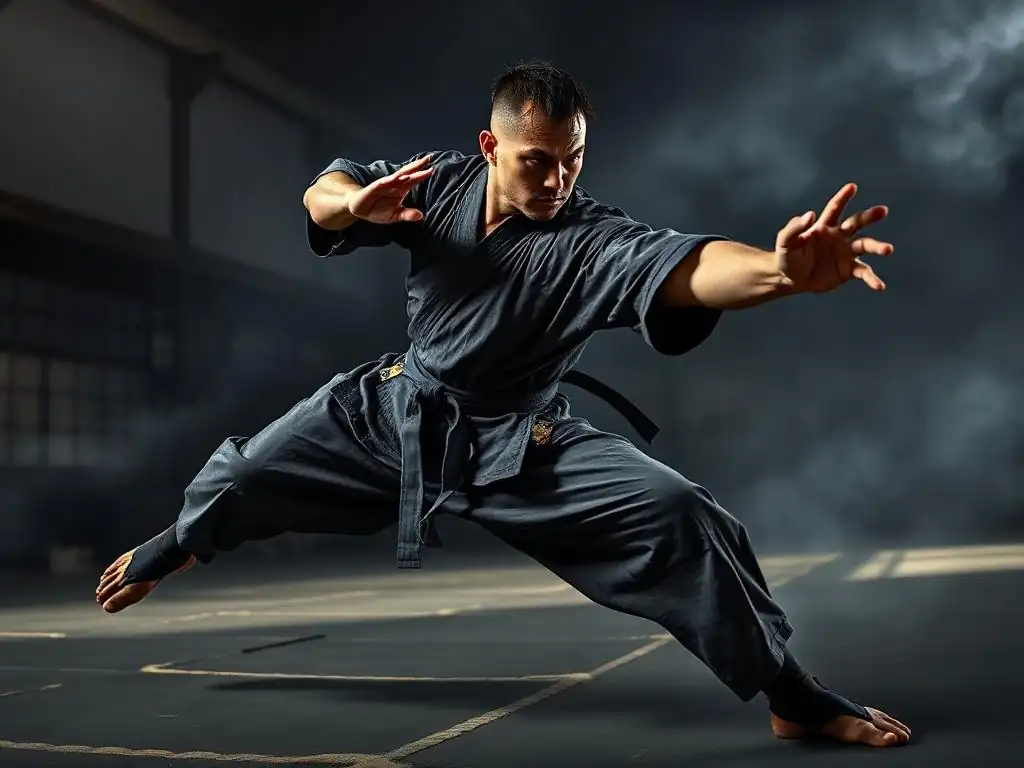
Welcome to Martial Arts Mastery, your gateway to unlocking the secrets of the world's fighting arts! Are you ready to delve deep into the heart of a powerful technique? This article offers an in-depth analysis of Tensho, exploring its techniques, crucial breathing aspects, and practical bunkai. Discover how this seemingly simple form holds profound applications, and prepare to unravel its mysteries. What hidden power awaits within its movements? Read on to find out!
- Introduction to Tensho Kata: A Deep Dive for Martial Arts Mastery
- Tensho Techniques Breakdown: A Detailed Examination
- Breathing and Internal Power (Kokyu) in Tensho
- Bunkai (Application) of Tensho: Unlocking the Kata's Secrets
- Advanced Concepts in Tensho: Mastering the Kata's Nuances
- Comparison with Other Karate Kata: Tensho's Unique Characteristics
- Conclusion: Tensho as a Complete Martial Art Form
-
Frequently Asked Questions
- What are the core components of Tensho as analyzed by MartialArtsMastery.org?
- How does MartialArtsMastery.org approach the breathing aspect of Tensho?
- What type of bunkai analysis does MartialArtsMastery.org offer for Tensho?
- Where does Tensho originate, according to MartialArtsMastery.org's historical overview?
- How can MartialArtsMastery.org help me improve my Tensho practice?
- Final Reflection: Embracing the Flow of Tensho
- Unlock Your Tensho Potential Now!
Introduction to Tensho Kata: A Deep Dive for Martial Arts Mastery
The Significance of Tensho in Karate History
Tensho kata holds a unique and pivotal place within the historical development of Okinawan Karate, particularly in the styles that trace their lineage back to Naha-te. Developed by Chojun Miyagi, the founder of Goju-ryu, Tensho is not merely a sequence of movements but a profound synthesis of hard and soft principles, combining elements of Naha-te with influences from Chinese martial arts, notably the White Crane system.
Its creation marked a significant step in formalizing and transmitting the internal aspects of Okinawan martial arts, moving beyond purely physical techniques to integrate breath control and internal energy. This focus on internal power distinguishes it from many kata developed solely for physical conditioning or linear striking.
Historically, Tensho was designed as a companion kata to Sanchin, representing the 'soft' (Ju) aspect to Sanchin's 'hard' (Go). While Sanchin builds a strong, rooted foundation and emphasizes muscular tension and external power, Tensho cultivates fluidity, circular motion, and internal strength derived from coordinated breathing and relaxed yet powerful movements. This duality was central to Miyagi's vision for Goju-ryu, creating a complete system that could adapt to various combat situations. The kata's emphasis on open-hand techniques and circular blocks also reflects its practical application in close-quarters self-defense, making its Tensho techniques breathing bunkai analysis crucial for practitioners seeking depth.
Tensho's Place Within Goju-Ryu Karate
Within the Goju-ryu curriculum, Tensho is considered one of the highest kata, typically introduced after practitioners have developed a solid foundation through Sanchin and other foundational forms. Its placement signifies its importance in developing advanced internal power (kokyu ryoku) and understanding the soft principles of the style. Mastery of Tensho is often seen as essential for unlocking the deeper levels of Goju-ryu, allowing practitioners to move beyond mere physical execution to embody the flow and adaptability characteristic of the style's 'Ju' aspects.
Tensho serves as a practical manual for applying the principles of circular defense and soft neutralization against aggression. Its techniques are designed to receive, redirect, and control an opponent's force rather than meeting it head-on. This focus on yielding and blending requires a sophisticated understanding of body mechanics and breath control, which the kata meticulously trains. For any serious student undertaking a Tensho techniques breathing bunkai analysis, understanding its role as the 'soft' counterpart to Sanchin is fundamental to grasping the complete Goju-ryu methodology and achieving true mastery.
Tensho Techniques Breakdown: A Detailed Examination
Core Techniques and Movements in Tensho Kata
Tensho kata is characterized by a relatively short sequence of movements compared to some other kata, but each movement is packed with intricate detail and purpose. The core techniques revolve around open-hand movements, circular blocks, palm heel strikes, and seizing/controlling actions. Unlike many Pinan or Heian kata which emphasize linear blocks and strikes, Tensho's methodology is predominantly circular and yielding. This circularity is applied in both defensive and offensive contexts, allowing practitioners to redirect incoming force and generate power from rotational movement rather than purely linear drive.
The movements in Tensho demand precise body coordination, integrating hand techniques with subtle shifts in weight and posture. Common techniques include various forms of shotei (palm heel strikes), haishu (back hand strikes), kake uke (hooking block), and intricate wrist and arm manipulations. The execution of these techniques is intrinsically linked to the kata's distinctive breathing pattern, making a comprehensive Tensho techniques breathing bunkai analysis essential for understanding how the body and breath work together to generate power and apply the movements effectively in self-defense scenarios.
Shotei (Palm Heel) Techniques in Tensho: Application and Variations
Shotei, or palm heel striking, is a prominent feature in Tensho kata, appearing in multiple variations. Unlike a closed-fist punch that focuses force on a small area, the palm heel strike distributes force over a larger surface area, making it highly effective for striking soft tissues, the chin, or even less focused targets. In Tensho, shotei is often delivered with a spiraling motion, integrating the rotation of the forearm and torso to generate significant power.
Applications of the shotei in Tensho bunkai are diverse. One common application is a rising palm heel strike to the chin or nose, often combined with a defensive movement or body shift. Another variation involves a downward shotei used to break an opponent's balance or strike downwards onto a limb or collarbone. The palm heel can also be used for pushing, controlling, or even joint manipulation, demonstrating the versatility inherent in these Tensho techniques. The precision required for these applications highlights why detailed Tensho techniques breathing bunkai analysis is vital for practical understanding.
Circular Blocking and Deflection Techniques Analysis
Circular blocking and deflection are cornerstones of Tensho's defensive strategy, embodying the kata's 'soft' principle. Instead of rigid, forceful blocks designed to stop an attack dead, Tensho utilizes flowing, circular movements to absorb, redirect, or deflect an opponent's force. Techniques like kake uke (hooking block) or sweeping arm movements are used to guide an incoming strike away from the body or to control the opponent's limb.
This approach minimizes the chance of injury to the defender's blocking limb and allows for immediate follow-up techniques, often transitioning directly from the block into a strike, control, or joint lock. The effectiveness of these circular techniques relies heavily on timing, distance management, and relaxed but powerful execution, all of which are trained through dedicated practice of the kata. Understanding this aspect is crucial when undertaking a Tensho techniques breathing bunkai analysis, as the circular motions are deeply intertwined with the kata's strategic intent.
Unique Hand Formations and Their Tactical Purpose
Tensho employs several distinctive hand formations beyond the standard open hand. One notable formation is the 'crane hand' ( tsuru no te or kakushu), where the fingers are held together and slightly curved, and the thumb is tucked. This formation is used for striking sensitive points, seizing, or controlling limbs. The precise tension and shape of the hand are critical for generating focused power or achieving a secure grip.
Another important formation involves using the fingertips ( nukite) or the ridge of the hand ( keito). While nukite is less prominent than in some other kata, the potential for fingertip strikes or presses to vital points is embedded within the kata's movements. The keito (chicken head hand) can be used for striking or manipulating. The specific shape and usage of these hand formations in Tensho are directly linked to the kata's emphasis on close-quarters combat, control, and attacking vulnerable areas, making their study essential for a complete Tensho techniques breathing bunkai analysis.
Stance and Body Mechanics in Tensho
The Importance of Sanchin Dachi in Tensho
Tensho kata is performed almost entirely from the sanchin dachi (three-battles stance). While the stance in Tensho is often slightly more relaxed and fluid than the highly tensed version used in Sanchin kata itself, its fundamental principles remain crucial. Sanchin dachi provides a stable base, allows for subtle weight shifts, and facilitates the generation of power through core engagement and ground connection. This stance promotes stability while simultaneously enabling dynamic movement and rotation from the hips.
Maintaining correct sanchin dachi throughout Tensho ensures that the practitioner is always rooted and balanced, ready to receive or deliver force. The inward tension of the legs and the forward tilt of the pelvis characteristic of the stance help to protect the groin and lower abdomen while consolidating power in the core. The subtle adjustments within this stance during the kata are key to transitioning between techniques and generating the whip-like power seen in the circular movements. A deep understanding of sanchin dachi is non-negotiable for effective Tensho techniques breathing bunkai analysis.
Body Shifting and Power Generation in Tensho
Power generation in Tensho relies heavily on coordinated body shifting and rotational movement, distinct from the linear power often emphasized in other kata. The subtle shifts within sanchin dachi allow the practitioner to adjust distance, evade attacks, and reposition for counter-attacks. Rotation of the hips and torso is fundamental to generating power for strikes and blocks, allowing force to be channeled from the ground up through the core and out through the limbs.
The principle of muchimi (sticky or heavy) is also vital in Tensho's body mechanics. This refers to a relaxed but connected body state, where movements are fluid but possess underlying power and weight. This allows techniques to feel heavy and rooted upon impact or contact. The coordination of breath (as discussed later) with these body mechanics is paramount; exhale during engagement adds power and stability, while inhalation facilitates relaxation and preparation. Mastering this integration of body shifting, rotation, and muchimi is central to a complete Tensho techniques breathing bunkai analysis.
Breathing and Internal Power (Kokyu) in Tensho
The Role of Ibuki Breathing in Tensho's Execution
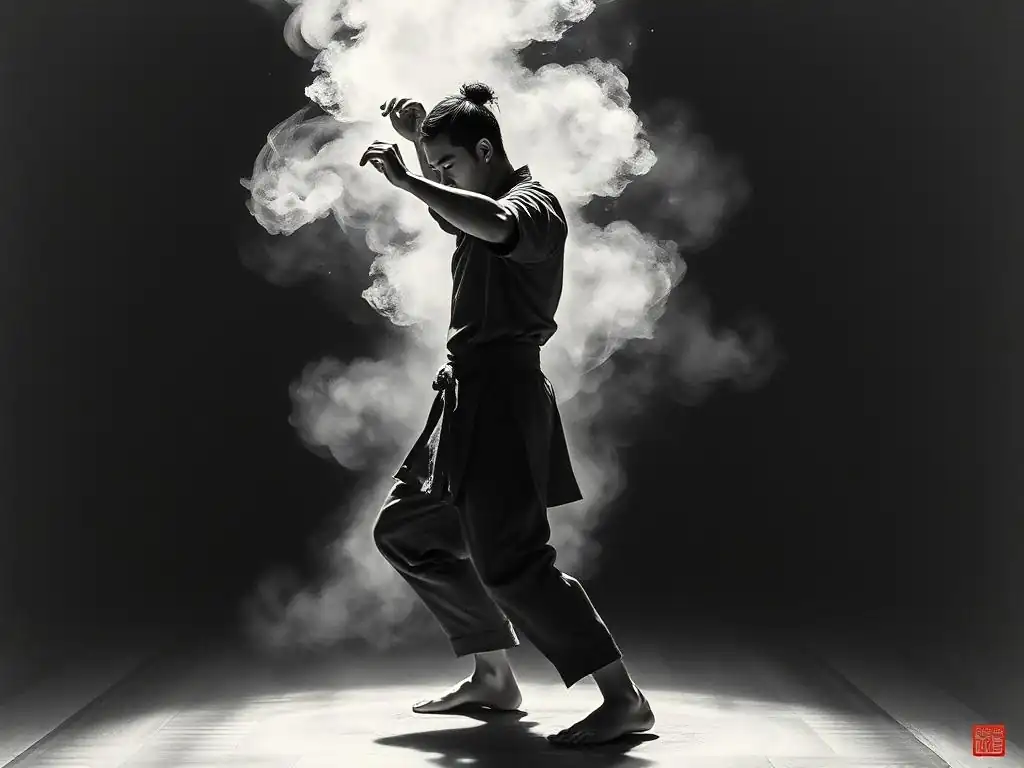
Ibuki breathing, a form of controlled, forceful exhalation, is a signature element of Tensho kata, just as it is in Sanchin. However, its application in Tensho is often described as slightly different – potentially less outwardly tense and more focused on internal cultivation and coordination with fluid movement. Ibuki involves inhaling deeply, often through the nose, holding the breath briefly, and then exhaling slowly and powerfully through the mouth, often accompanied by muscular tension in the core and limbs.
In Tensho, Ibuki is synchronized with specific movements, typically the points of greatest tension or impact, such as the completion of a block or strike. This coordination serves multiple purposes: it stabilizes the body during physical exertion, focuses internal energy (ki), and can even serve as a form of kiai (spirit shout) to startle or intimidate an opponent. The continuous, controlled nature of the breathing throughout the kata builds incredible internal stamina and power, which is a key focus of any Tensho techniques breathing bunkai analysis.
Coordinating Breathing with Movement for Maximum Power
The precise coordination of ibuki breathing with Tensho's techniques is essential for generating maximum power and efficiency. The exhale phase of ibuki is typically timed to coincide with the moment of impact or the completion of a powerful defensive technique. This synchronized exhale helps to tense the core musculature, locking the body together to deliver force or withstand impact, a principle known as kime.
Furthermore, the controlled tension and release associated with ibuki breathing help to regulate the flow of energy within the body, promoting a state of focused relaxation followed by explosive power. The inhalation phase allows for recovery and preparation for the next movement. This constant interplay between relaxed inhalation and powerful, focused exhalation is what gives Tensho its unique internal quality and makes the Tensho techniques breathing bunkai analysis incomplete without a deep understanding of its respiratory component.
Developing Internal Strength (Ki) Through Tensho Breathing
Beyond physical power, ibuki breathing in Tensho is deeply connected to the development of ki or internal energy. Traditional Okinawan and Japanese martial arts place great emphasis on cultivating this internal force, which is distinct from mere muscular strength. Practicing ibuki correctly is believed to strengthen the body's internal organs, improve circulation, and build internal resilience and power that can be projected outwards.
The focused concentration required for controlled ibuki also trains the mind, linking mental focus directly to physical action and breath. This integration of mind, body, and breath is fundamental to developing kokyu ryoku (internal power) – the ability to generate significant force with minimal apparent muscular effort, often described as 'heavy' or 'sticky' power. This cultivation of internal strength through breathing is a core objective of Tensho practice and a vital aspect to consider in any comprehensive Tensho techniques breathing bunkai analysis.
Linking Breath Control to Offensive and Defensive Applications
The breath control practiced in Tensho has direct and practical applications in both offensive and defensive scenarios. On the defensive side, a sharp, powerful exhale during a block or deflection helps to brace the body against impact, reducing the risk of injury and allowing the practitioner to absorb or redirect force effectively. This controlled tension acts as a natural body armor.
Offensively, synchronizing the exhale with a strike adds significant power to the technique, channeling energy from the core through the striking limb. The focused exhale can also serve as a psychological tool, enhancing the practitioner's resolve and potentially disrupting the opponent's focus. Furthermore, the ability to control one's breath under stress, honed through Tensho practice, is invaluable in real-life self-defense situations, maintaining composure and stamina. Thus, understanding the practical link between breath control and the application of Tensho techniques is crucial for effective Tensho techniques breathing bunkai analysis.
Bunkai (Application) of Tensho: Unlocking the Kata's Secrets
Understanding the Practical Applications of Tensho Techniques
Bunkai, the analysis and application of kata movements, is where the true genius of Tensho becomes apparent. While the kata might seem abstract or stylized in its solo performance, its movements are rooted in highly practical self-defense scenarios, primarily focusing on close-quarters engagements, grappling range, and dealing with grabs and holds. The circular movements, open-hand techniques, and emphasis on control are designed to be effective when space is limited and brute force may not be the optimal solution.
Studying Tensho bunkai reveals how seemingly simple movements can be adapted to defend against common attacks like punches, grabs, and pushes. The kata teaches practitioners to use their body structure and leverage, guided by breath control, to neutralize threats and create opportunities for counter-attack. A thorough Tensho techniques breathing bunkai analysis is essential to translate the kata's forms into functional self-defense skills, demonstrating that Tensho is far more than just a physical exercise.
Self-Defense Scenarios and Tensho Bunkai Examples
Tensho's bunkai is particularly effective in scenarios involving grabs or close-range attacks.
- Wrist Grab Escape: The initial movements of Tensho, involving circular hand motions and body rotation, can be applied directly to escaping various wrist grabs. By rotating the wrist against the opponent's thumb and using body weight and a downward or outward circular motion, the practitioner can often break free.
- Close-Quarters Push/Grab Defense: Techniques like the palm heel strike ( shotei) or circular blocks ( kake uke) are ideal for defending against pushes or grabs to the torso or shoulders. A shotei can be used to strike upwards under the chin as the opponent closes distance, or a circular block can redirect a grabbing arm, allowing for a follow-up control or strike.
- Dealing with Holds: Later movements in Tensho involve arm manipulations and control techniques. These can be interpreted as defenses against holds like lapel grabs or even attempted locks, using the kata's principles of yielding, redirecting, and applying pressure to vulnerable points.
These examples illustrate how the specific Tensho techniques are designed for practical self-defense, emphasizing control and subtle power over brute force. A deep Tensho techniques breathing bunkai analysis unlocks these layers of application.
Adapting Tensho Techniques for Modern Self-Defense
While Tensho's origins are historical, its underlying principles and techniques remain highly relevant for modern self-defense. The emphasis on close-quarters combat, dealing with grabs/holds (common in altercations), and using the body efficiently makes it practical. Adapting Tensho for today means understanding the core principle behind each movement and applying it flexibly to contemporary threats.
For instance, the circular defenses are excellent for dealing with haymaker punches common in street fights. The palm heel strikes are effective for creating distance or stunning an attacker without risking hand injury on harder targets like the skull. The control techniques are useful if physical restraint or de-escalation is needed before escape. Modern Tensho techniques breathing bunkai analysis focuses on translating the classical movements into responses that are both effective and legally defensible, emphasizing control and escape where possible.
Partner Drills for Practicing Tensho Bunkai
Practicing Tensho bunkai with a partner is crucial for developing timing, distance, and the feel of applying techniques against resistance. Drills help bridge the gap between the solo kata performance and real-world application.
Wrist Grab Escape Drill
This drill focuses on the initial movements of Tensho.
- Partner 1 grabs Partner 2's wrist (either single or double hand).
- Partner 2 applies the circular wrist escape movements from the start of Tensho, focusing on rooting through sanchin dachi and using body rotation and breath.
- Vary the type of grab (same side, cross side, two-on-one) and the resistance level.
- Focus on the feeling of the escape and the coordination of breath and movement.
Close Quarters Defense Drill
This drill incorporates palm heel strikes and circular blocks.
- Partner 1 stands close and attempts a two-hand push to Partner 2's chest or shoulders, or a lapel grab.
- Partner 2 uses a circular block ( kake uke) to deflect or redirect the hands while simultaneously executing a palm heel strike ( shotei) to the chin or chest, as found in Tensho.
- Practice synchronizing the exhale ( ibuki) with the strike/block.
- Vary the angle and force of the push/grab. Focus on maintaining balance and generating power from the core.
These drills are just a starting point for exploring the extensive bunkai hidden within Tensho, allowing practitioners to make their Tensho techniques breathing bunkai analysis practical and functional.
Advanced Concepts in Tensho: Mastering the Kata's Nuances
The Philosophical Underpinnings of Tensho
Beyond its physical techniques, Tensho kata embodies profound philosophical principles central to Okinawan martial arts. It represents the integration of the 'hard' (Go) and 'soft' (Ju), demonstrating that true strength lies not just in brute force but in adaptability, yielding, and internal cultivation. The kata teaches the practitioner to be rooted yet fluid, strong yet yielding, embodying the principle of the reed that bends in the wind rather than the oak that breaks.
Tensho also emphasizes the importance of internal harmony – the coordination of mind, body, and breath. The rigorous practice of ibuki breathing and the focus required to execute the intricate movements cultivate mental discipline and self-awareness. The kata becomes a moving meditation, a path to understanding oneself and one's connection to the universe, reflecting deeper philosophical ideas often found in Zen or Taoism, which influenced Okinawan martial arts. This philosophical depth is crucial for a complete Tensho techniques breathing bunkai analysis, moving beyond mere physical mechanics.
Connecting Tensho to Go No Sen
Tensho kata is a masterclass in the concept of Go No Sen (receiving and countering). While some kata emphasize Sen No Sen (simultaneous attack and defense) or Sen Sen No Sen (attacking before the opponent initiates), Tensho primarily trains the body and mind to effectively deal with an incoming attack after it has been initiated but before it reaches its conclusion. The circular blocks and redirection techniques are prime examples of Go No Sen, allowing the practitioner to absorb or deflect the opponent's energy and use it against them.
This principle is evident in how Tensho techniques flow from defense to counter-attack. A circular block isn't just a block; it's often simultaneously a control or a setup for an immediate strike or joint manipulation. Practicing Tensho cultivates the ability to remain calm under pressure, assess an incoming threat, and respond effectively by yielding and redirecting, demonstrating a high level of martial skill and strategic thinking. Understanding its connection to Go No Sen is vital for a deep Tensho techniques breathing bunkai analysis.
Common Mistakes and How to Avoid Them in Tensho Practice
Practicing Tensho effectively requires attention to detail, and several common mistakes can hinder progress and understanding. One frequent error is performing the kata with excessive muscular tension throughout, confusing the focused tension of ibuki with overall rigidity. This inhibits the fluid, circular movements essential to Tensho's power generation and defensive strategy. Practitioners should focus on relaxation except during the timed exhalations and points of impact.
Another mistake is neglecting the coordination of breathing with movement. Simply going through the motions without integrating ibuki diminishes the kata's internal power development and practical application. The breath should drive the movement, not merely accompany it. Additionally, practitioners sometimes fail to grasp the bunkai, performing the techniques as abstract shapes rather than functional self-defense actions. Regular bunkai practice and partner drills are necessary to understand the purpose behind the movements and make the Tensho techniques breathing bunkai analysis truly practical.
Tensho Kata: Beyond the Physical – Mental and Spiritual Benefits
Tensho practice extends far beyond physical conditioning. The intense focus required for ibuki breathing and precise movement cultivates mental discipline, concentration, and mindfulness. The repetitive, yet intricate, nature of the kata can become a form of moving meditation, calming the mind and reducing stress. This mental training is invaluable both inside and outside the dojo.
Furthermore, dedicated practice of Tensho can lead to significant spiritual benefits. By constantly working to harmonize mind, body, and breath, practitioners can develop a deeper connection with themselves and a greater sense of internal peace and resilience. The kata's philosophical underpinnings encourage introspection and the development of virtues like humility, perseverance, and respect. Thus, a complete Tensho techniques breathing bunkai analysis acknowledges these profound mental and spiritual dimensions alongside the physical and technical aspects.
Comparison with Other Karate Kata: Tensho's Unique Characteristics
Tensho vs. Sanchin: Similarities and Differences
Tensho and Sanchin are often discussed together as the foundational pillars of Goju-ryu's hard and soft principles. Both kata are performed primarily from sanchin dachi and heavily emphasize ibuki breathing and the development of kokyu ryoku (internal power). They share a lineage tracing back to Higaonna Kanryo and were central to Chojun Miyagi's system. Both are physically demanding and require intense focus and rootedness.
However, their differences are significant and intentional. Sanchin focuses on linear movements, direct blocks (like age uke, uchi uke), and powerful, often externally visible muscular tension, representing the 'Go' (hard) aspect. Its techniques are more geared towards direct confrontation and building an unyielding structure.
Tensho, conversely, emphasizes circular movements, yielding blocks ( kake uke), open-hand techniques ( shotei, haishu), and a more fluid, internally focused power generation, representing the 'Ju' (soft) aspect. While Sanchin builds the 'iron body,' Tensho cultivates the 'willow tree' that bends but does not break. This contrast is fundamental to understanding the complete Goju-ryu system and provides context for any Tensho techniques breathing bunkai analysis.
Tensho's Relationship to Other Goju-Ryu Kata
Tensho's principles permeate many other kata within the Goju-ryu system, particularly the higher-level forms known as Kaishu kata (open-hand kata). Kata like Seipai, Seisan, Shisochin, and Suparinpei all incorporate elements of circular movement, open-hand techniques, close-quarters applications, and coordinated breathing that find their concentrated expression in Tensho.
Tensho acts as a training ground for the internal power and fluid body mechanics required to perform these more complex kata effectively. The ability to transition smoothly between hard and soft techniques, to generate power from subtle body shifts and breath, and to apply circular defenses developed in Tensho are essential for unlocking the practical applications within the Kaishu kata. Therefore, mastering Tensho provides a crucial key to understanding and performing the entire Goju-ryu curriculum, making Tensho techniques breathing bunkai analysis a valuable endeavor for all Goju-ryu practitioners.
Conclusion: Tensho as a Complete Martial Art Form
Integrating Tensho into Your Karate Training Regimen
Integrating dedicated Tensho practice into a regular karate training regimen is essential for unlocking its profound benefits. It should not be treated as just another kata to learn and perform superficially. Instead, approach Tensho with a focus on understanding its internal principles, the coordination of breath and movement, and its practical applications.
Regular, focused practice sessions dedicated solely to Tensho, paying meticulous attention to posture, breathing, timing, and the subtle shifts in weight and tension, are crucial. Supplementing solo practice with partner drills for bunkai helps to internalize the practical use of the techniques. Seeking guidance from experienced instructors who understand the deeper nuances of Tensho and ibuki breathing is also highly recommended. Consistent effort in these areas will transform Tensho from a set of movements into a powerful tool for developing internal strength, practical self-defense skills, and mental fortitude, solidifying the value of diligent Tensho techniques breathing bunkai analysis.
Further Resources for Studying Tensho Kata
For those wishing to deepen their understanding of Tensho, several avenues exist. Consulting classic texts or instructional materials by Goju-ryu masters can provide valuable historical context and technical detail. Seeking out seminars or workshops specifically focused on Tensho or ibuki breathing led by reputable instructors is also highly beneficial, offering hands-on guidance that is difficult to replicate through solo study alone.
Engaging with the martial arts community, discussing interpretations of bunkai with fellow practitioners, and exploring the connections between Tensho and other kata or martial arts principles can also enrich one's understanding. While this article provides a detailed Tensho techniques breathing bunkai analysis, the journey of mastering Tensho is a lifelong pursuit that rewards continuous study, dedicated practice, and an open mind.
Frequently Asked Questions
What are the core components of Tensho as analyzed by MartialArtsMastery.org?
Tensho primarily involves techniques, breathing, and bunkai analysis. MartialArtsMastery.org breaks down each element to understand its practical application.
How does MartialArtsMastery.org approach the breathing aspect of Tensho?
The website explores the connection between breathing and energy flow (Ki) in Tensho. It examines how controlled breathing enhances power and stability.
What type of bunkai analysis does MartialArtsMastery.org offer for Tensho?
MartialArtsMastery.org provides practical applications of Tensho movements. The analysis reveals self-defense strategies hidden within the kata.
Where does Tensho originate, according to MartialArtsMastery.org's historical overview?
The website will likely trace Tensho's origins within Goju-ryu Karate. It will provide a historical context for understanding its development and purpose.
How can MartialArtsMastery.org help me improve my Tensho practice?
The site offers insights into technique refinement, breathing exercises, and practical bunkai applications. This knowledge can enhance your overall understanding and skill.
Final Reflection: Embracing the Flow of Tensho
The preceding analysis of Tensho – its techniques, breathing, and bunkai – reveals more than just a kata; it unveils a profound philosophy of movement and inner strength. The enduring relevance of Tensho lies in its ability to cultivate a harmonious balance between power and fluidity, a principle applicable not only in martial arts but also in navigating the complexities of modern life. Understanding the intricacies of Tensho allows us to appreciate its depth and potential for personal growth, moving beyond mere physical execution to embrace its underlying principles.
The practice of Tensho, with its emphasis on circular motion and controlled breathing, has deeply influenced the martial arts landscape, fostering a greater understanding of internal power and efficient movement. Its subtle yet powerful techniques encourage practitioners to connect with their inner energy, transforming defensive maneuvers into opportunities for counter-attack. The ultimate aim of martial arts is not to win battles, but to avoid them entirely.
This quote, often attributed to Miyamoto Musashi, resonates deeply with the spirit of Tensho, emphasizing the importance of self-control and harmonious interaction with the world.
As we conclude this exploration of Tensho, I invite you to reflect on its principles and consider how they might enrich your own life. Can you find ways to incorporate the fluidity and balance of Tensho into your daily actions? Can you harness the power of controlled breathing to navigate stressful situations with greater calm and clarity? Embrace the flow, cultivate your inner strength, and discover the transformative potential of Tensho within yourself.
Unlock Your Tensho Potential Now!
Thank you for diving deep into the art of Tensho with us! We hope this exploration has illuminated the profound techniques, breathing, and bunkai hidden within this powerful kata. Ready to take the next step in your martial arts journey?
Here are a few ways to put your newfound knowledge into action:
- Master the Flow: Dedicate your next three training sessions solely to perfecting the Tensho kata, focusing on smooth transitions and mindful breathing.
- Share the Wisdom: Discuss your insights and any questions you have about Tensho with a fellow martial artist to deepen your understanding and theirs.
- Beyond the Kata: Research the origins of Tensho and its connection to other martial arts forms to appreciate its historical significance.
What's one specific aspect of Tensho you're most excited to incorporate into your training?