
Bunkai for Multiple Opponents: Kata Strategies for Surviving the Unthinkable

Welcome to Martial Arts Mastery, where we delve into the profound depths of combat traditions from across the globe! Ever wondered how seemingly intricate kata movements translate into real-world survival against multiple attackers? In this article, we'll unravel the secrets of Bunkai multiple opponent survival techniques, revealing how these ancient forms hold the key to defending yourself when the odds are stacked against you. Prepare to unlock the hidden applications and tactical brilliance woven into the fabric of kata. Let's begin your journey to mastery...
- Introduction: Adapting Karate Kata Bunkai for Real-World Multiple Attacker Scenarios
- Understanding the Core Principles of Bunkai for Self-Defense
- Applying Kata Bunkai to Multiple Opponent Scenarios: Practical Techniques
- Developing Strategies for Multiple Opponent Survival Using Kata Bunkai
- Drills and Training Methods for Multiple Opponent Bunkai
- Case Studies: Analyzing Real-World Applications of Kata Bunkai in Multiple Opponent Situations
- The Importance of Awareness and De-escalation in Multiple Opponent Encounters
- Conclusion: Mastering Bunkai for Enhanced Self-Defense Capabilities in Multiple Attacker Situations
-
Frequently Asked Questions
- What exactly is Bunkai in the context of martial arts, particularly when discussing multiple opponents?
- How does Bunkai training help in surviving a multiple opponent attack when kata are typically solo forms?
- What are some key strategies or principles of Bunkai that are particularly useful for multiple opponent survival?
- How does the website MartialArtsMastery.org approach the topic of Bunkai for multiple opponent scenarios?
- Is Bunkai enough for multiple opponent survival, or are other skills necessary?
- Final Reflection: Embracing the Chaos of Combat
- Unleash Your Inner Warrior: Transform Kata into Real-World Defense!
Introduction: Adapting Karate Kata Bunkai for Real-World Multiple Attacker Scenarios
Facing multiple opponents is arguably the most challenging scenario in self-defense. Unlike a one-on-one confrontation, the threat comes from different directions simultaneously, requiring constant awareness, rapid decision-making, and strategic movement. Traditional Karate kata, often practiced solo, contains movements and principles originally intended for practical application against various threats. Bunkai, the analysis and application of these kata movements, provides a rich source of techniques and strategies. However, applying bunkai effectively in a multiple assailant situation demands a deeper understanding and adaptation of these principles.
This article explores how the structured movements and underlying strategies within Karate kata can be interpreted and applied as bunkai multiple opponent survival techniques. We will delve into selecting appropriate kata, adapting techniques for multi-directional threats, developing tactical strategies for survival, and incorporating specific training methods. The goal is not to encourage engaging multiple attackers unnecessarily, but to equip practitioners with the knowledge to utilize their kata training for enhanced self-preservation and escape in the direst of circumstances.
Understanding the Core Principles of Bunkai for Self-Defense
Defining Bunkai: Beyond Traditional Interpretation
Bunkai, literally meaning "analysis" or "decomposition," refers to the study and practice of the practical applications of the movements within kata. Traditionally, bunkai was often taught as a direct, step-by-step response to a single, specific attack, such as a front punch or a grab. This approach, while valuable for understanding basic technique mechanics, often falls short when considering the dynamic and unpredictable nature of real-world violence, especially against multiple opponents.
A more comprehensive understanding of bunkai involves interpreting kata movements not just as singular blocks or strikes, but as principles of body mechanics, movement, timing, and strategy applicable to a variety of situations. For example, a rising block might be interpreted as a defense against an overhead attack, but its bunkai could also encompass principles of redirecting force, creating space, or even setting up a joint lock.
This deeper analysis allows practitioners to extract universal combative principles from kata, making them adaptable bunkai multiple opponent survival techniques. This expanded view is crucial when the threat isn't a single, predictable action but a chaotic swarm from several directions.
Prioritizing Survival: The Mindset for Multiple Opponent Encounters
The primary objective when facing multiple opponents is survival and escape, not defeating every attacker. This fundamental shift in mindset is paramount. Unlike a sporting match or a one-on-one duel where victory might be the goal, a multiple assailant scenario is an emergency where the odds are inherently against you. The focus must be on minimizing damage, creating opportunities to break contact, and getting to safety.
This survival mindset influences every aspect of bunkai application in such a scenario. Techniques are used not necessarily to knock out an opponent, but to disrupt their attack, create momentary openings, or use them to impede others. Situational awareness becomes hyper-critical – constantly scanning, identifying the most immediate threats, and processing information rapidly under extreme stress. Managing fear and maintaining a degree of composure are also vital; panic can lead to tunnel vision and poor decision-making, severely hindering the ability to effectively apply bunkai multiple opponent survival techniques.
Recognizing Common Attack Patterns in Multiple Assailant Situations
While seemingly chaotic, attacks by multiple assailants often follow certain patterns, though these can vary significantly based on the attackers' intent (e.g., robbery, assault, gang violence) and coordination. A common pattern is the "swarm," where attackers rush the target simultaneously or in quick succession from different angles, attempting to overwhelm through sheer numbers. Another might involve flanking, where one or two attackers engage from the front while others move to the sides or rear.
Less coordinated attacks might involve staggered assaults, where individuals attack one after another, perhaps waiting for their turn or reacting to the defender's movements. Understanding these potential patterns, even in theory, allows a practitioner to anticipate likely angles of attack and position themselves defensively.
For instance, knowing attackers might attempt to flank reinforces the need for constant movement and avoiding being pinned against a wall or in a corner. While precise statistics on the frequency of specific multiple attack patterns are difficult to quantify definitively across all contexts, general observations from self-defense experts suggest that frontal assaults combined with attempts to surround are prevalent, highlighting the need for 360-degree awareness and the ability to react to threats from any direction using bunkai multiple opponent survival techniques.
Applying Kata Bunkai to Multiple Opponent Scenarios: Practical Techniques
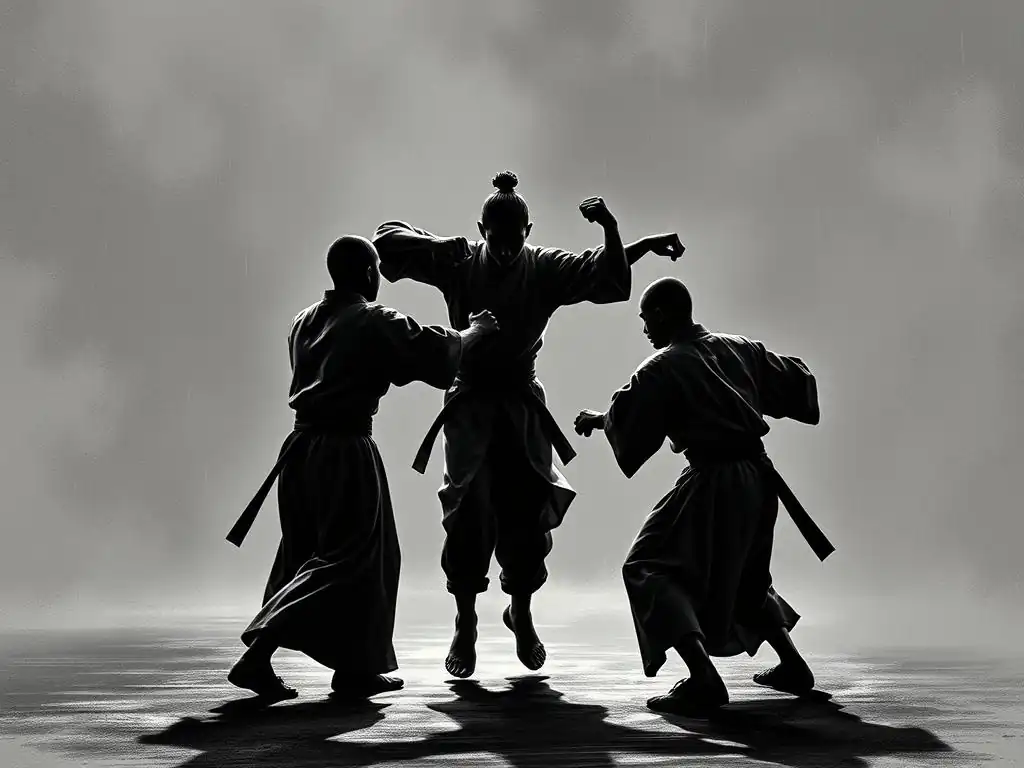
Selecting Appropriate Kata for Multiple Opponent Bunkai Training
Not all kata are equally suited for analyzing bunkai multiple opponent survival techniques. Some kata emphasize linear movement and powerful, forward-driving techniques, which are excellent for one-on-one encounters but less ideal for dealing with threats from multiple directions. Kata that incorporate frequent changes in direction, circular movements, and techniques that allow for controlling space or dealing with attacks from the side or rear tend to be more relevant.
When selecting kata for this specific type of bunkai, practitioners should look for forms that feature diverse stances, pivots, and sequences that don't solely rely on moving directly forward or backward. Kata that include techniques applicable at varying ranges – close-quarters trapping and striking, mid-range blocks and counters, and techniques for creating distance – are also highly valuable. Analyzing the transitions between movements in these kata can reveal strategies for shifting focus and energy rapidly from one threat to another, a core component of effective bunkai multiple opponent survival techniques.
Identifying Kata with Multi-Directional Movements and Strategic Positioning
Kata featuring movements that turn 90, 180, or even 270 degrees are inherently more applicable to multi-opponent scenarios than those that primarily involve forward and backward motion. These directional changes within the kata are not merely aesthetic flourishes; they represent responses to threats emerging from different angles. The stances adopted during these turns, such as kiba dachi (horse riding stance) or kokutsu dachi (back stance), often provide stability while allowing the practitioner to observe and engage threats to the side or rear.
Furthermore, the positioning dictated by the kata's structure – where you end up after a sequence of movements – often implies placing yourself in a more advantageous position relative to potential threats. For example, moving off the line of attack or positioning oneself to face a new direction after dealing with a perceived threat in the kata.
Analyzing bunkai in this context involves understanding the strategic intent behind these movements, such as using a turn to evade an attack while simultaneously preparing to engage another opponent or using a deep stance to absorb force while remaining stable against pushes or pulls from multiple directions. This strategic positioning is a key element of bunkai multiple opponent survival techniques.
Heian Godan: Bunkai for Positional Advantage and Evasion
Heian Godan, the fifth kata in the Heian series, is often cited for its diverse movements and potential applications in varied situations, including multiple opponent bunkai. The kata features movements in multiple directions, including a unique jump and sequences that involve shifting weight and changing angles rapidly. The jump, for instance, can be interpreted as an evasion technique to clear distance or overcome a low obstacle, potentially allowing escape or repositioning away from multiple attackers.
Other movements, such as the simultaneous block and strike or the various turns and shifts in stance, can be analyzed as ways to defend against an attack from one direction while simultaneously setting up a response to a threat from another. The sequence involving the low block followed by a rising block and strike, performed while turning, can be interpreted as dealing with a low attack (like a kick or grab) from one opponent, while the subsequent rising block and strike address a higher threat (like a punch) potentially coming from a different direction or the same opponent changing levels.
These elements provide valuable bunkai multiple opponent survival techniques focused on evasion and maintaining a dynamic position.
Bassai Dai: Bunkai for Power Generation and Controlling Multiple Attackers
Bassai Dai, a more advanced kata, is known for its powerful movements, strong stances, and techniques designed to "penetrate a fortress." While often interpreted for overcoming strong, single opponents, its principles can be adapted for bunkai multiple opponent survival techniques, particularly in generating force and controlling space. The kata's emphasis on generating power through hip rotation and body weight can be applied to deliver decisive strikes or blocks that can momentarily incapacitate or disrupt an attacker, buying precious time.
Movements involving seizing or controlling an opponent, such as those resembling joint manipulations or throws, can be interpreted as ways to neutralize one attacker temporarily or even use them as a barrier or weapon against others. For instance, a technique that looks like a block followed by a pull could be applied as controlling one attacker's arm to prevent them from attacking while dealing with another.
The strong, rooted stances and powerful blocks found throughout Bassai Dai are essential for maintaining stability when potentially being pushed or pulled by multiple individuals, enabling the application of bunkai multiple opponent survival techniques under physical stress.
Adapting Single-Technique Bunkai for Multiple Attackers
Traditional bunkai often focuses on applying a single kata movement against a single, specific attack. However, in a multiple opponent scenario, techniques must be fluidly chained together and adapted on the fly. A block might immediately transition into a strike against a different attacker, or a joint lock applied to one opponent might serve to control their movement while you address another.
This adaptation requires understanding the underlying principle of the kata movement rather than just its surface application. A forward lunge punch, for example, isn't just a punch; it embodies principles of forward momentum, weight transfer, and targeting. In a multiple opponent context, this principle might be adapted into a powerful burst forward to break through a weak point in the attackers' formation, or the forward momentum could be used to drive one attacker into another. Effective bunkai multiple opponent survival techniques rely on this flexible interpretation and seamless transition between adapted techniques.
Utilizing Angles and Evasion: Creating Space for Effective Counter-Attacks
Against multiple opponents, standing still is a death sentence. Constant movement is crucial for survival. Kata movements often imply shifting angles and evading incoming attacks. Applying bunkai here means using footwork derived from kata stances and transitions – pivots, slides, and steps – to avoid being surrounded and to constantly present a smaller, moving target.
Instead of meeting force head-on, evasion and angling allow you to make attackers miss, potentially causing them to interfere with each other. A simple sidestep or angle change, drawn from a kata movement like shifting from zenkutsu dachi to kiba dachi, can put you in a position to deal with one attacker while making it difficult for another to reach you. Creating space through movement and angles is a primary defensive strategy and a key component of bunkai multiple opponent survival techniques.
Employing Joint Locks and Throws for Disabling and Controlling Opponents
While striking is necessary, techniques that control or disable opponents momentarily can be highly effective in multiple assailant situations. Many kata contain movements interpreted as joint locks, throws, or takedowns. These techniques, when applied as bunkai, aren't necessarily used to finish a fight but to take one attacker out of the immediate picture, creating an opportunity to deal with others or escape.
For example, a movement resembling a wrist lock or arm bar could be used to control one attacker's limb, preventing them from striking. A throw or sweep, derived from a kata movement, could momentarily put an attacker on the ground, buying a few seconds.
The key is that these techniques are applied decisively and transitioned out of quickly, allowing the practitioner to immediately address the next threat. Using one attacker as a shield or obstacle for others is also a potential application derived from bunkai principles involving control and positioning, forming a critical part of bunkai multiple opponent survival techniques.
Turning Linear Movements into Circular Techniques for Multi-Directional Defense
Many fundamental kata techniques appear linear, such as a straight punch or a block moving directly forward. However, interpreting these movements through a bunkai lens for multiple opponents often involves applying them in a circular manner. A linear block might become a sweeping deflection that redirects an attacker's limb while simultaneously disrupting another attacker approaching from the side.
Similarly, a seemingly linear strike can be adapted into a circular motion, allowing the practitioner to strike at an opponent to their side while pivoting to face a new threat. This circular application allows a single movement to potentially address threats from multiple angles or transition smoothly between targets. This fluid, multi-directional application of techniques, transforming linear kata movements into dynamic circular actions, is a sophisticated aspect of applying bunkai multiple opponent survival techniques.
Integrating Footwork and Body Shifting for Enhanced Mobility
Effective footwork and body shifting are the foundation of applying bunkai multiple opponent survival techniques. Kata movements inherently involve precise steps, slides, and pivots. Practicing these movements diligently builds the muscle memory necessary for agile and responsive mobility in a chaotic environment. The ability to quickly change direction, retreat, advance, or move laterally is far more important than powerful static techniques.
Body shifting, utilizing the weight transfer and hip rotation inherent in kata, allows for generating power while moving and presenting a constantly shifting target. It also enables smooth transitions between techniques directed at different opponents. Mastering the integrated use of footwork and body shifting allows the practitioner to control the distance, avoid being trapped, and constantly seek a more advantageous position relative to the attackers.
Maintaining Balance and Stability Under Pressure
Maintaining balance is critical when facing multiple opponents who may push, pull, or strike from various angles simultaneously. Kata practice, with its emphasis on strong stances and controlled transitions, builds the core strength and proprioception needed to remain stable even when under duress. A low, wide stance can make it harder to be knocked off balance, while the ability to quickly regain balance after a jolt or impact is vital.
Many kata movements involve rooting oneself firmly before executing a technique. This principle translates directly to the need for stability when applying bunkai multiple opponent survival techniques. A practitioner must be able to deliver a technique effectively without compromising their base, which would leave them vulnerable to other attackers. Training in maintaining balance while moving and absorbing force is an often-understated benefit of diligent kata practice.
Maximizing Evasion and Minimizing Target Area
Effective footwork and body shifting, derived from kata movements, are used to maximize evasion and minimize the target area exposed to attackers. By constantly moving, changing angles, and presenting a side or angled view rather than a frontal one, the practitioner makes themselves a harder target to hit and harder to surround. The principle is to be a moving, unpredictable threat rather than a stationary post.
Movements in kata that involve quickly retracting limbs, tucking the chin, or turning the body away from a perceived threat are all examples of minimizing target area. Applying these as bunkai multiple opponent survival techniques means instinctively using these body mechanics while maneuvering. The goal is to make yourself as difficult to hit as possible while looking for opportunities to escape or disrupt the attackers.
Developing Strategies for Multiple Opponent Survival Using Kata Bunkai
Prioritizing Targets: Identifying the Greatest Threat
In a multiple assailant scenario, you cannot engage everyone equally. A crucial survival strategy, informed by situational awareness, is prioritizing threats. This involves quickly assessing who poses the greatest immediate danger – perhaps the one closest, the one with a weapon, the most aggressive, or potentially the leader directing others. Your bunkai applications should be directed towards neutralizing or disrupting this primary threat first, creating a cascade effect or buying time to deal with others or escape.
Kata bunkai, while not explicitly teaching threat assessment, provides the tools for rapid, decisive action once a threat is identified. The powerful, focused techniques found in kata are designed for quickly incapacitating an opponent. When applying bunkai multiple opponent survival techniques, this focus is narrowed to the most critical target at any given moment, ensuring that limited time and energy are spent effectively against the most pressing danger.
Controlling the Environment: Using Obstacles to Your Advantage
The surrounding environment is a critical factor in a multiple opponent encounter. Walls, corners, doorways, vehicles, or even furniture can be used strategically to limit the attackers' ability to surround you or to create bottlenecks. Kata movements often involve shifting position relative to an imagined line of attack or obstacle. Applying bunkai here means actively seeking out and utilizing real-world environmental features.
By positioning yourself with your back to a wall, for instance, you eliminate the threat from behind. Using a doorway or narrow passage can force attackers to approach single file, turning a multiple opponent problem into a series of one-on-one encounters, albeit rapid ones. Kata bunkai principles related to positioning and movement can guide a practitioner in maneuvering to these advantageous locations, effectively turning the environment into an ally in bunkai multiple opponent survival techniques.
Creating Opportunities for Escape: Tactical Retreat and Evasion
Ultimately, the best outcome in a multiple opponent situation is often escape. Kata bunkai is not just about fighting; it's about effective movement and positioning. Many kata sequences involve retreating or moving laterally, which can be interpreted as creating distance or changing the angle of engagement. Applying bunkai for survival means using techniques not to stand and fight, but to disrupt the attackers long enough to create an opening for escape.
A powerful block followed by a rapid backward or lateral movement, derived from kata, can break contact. Using a throw or joint lock (as discussed earlier) can momentarily disable an attacker, creating a window to run. The emphasis shifts from finishing techniques to disruptive actions that facilitate escape. Tactical retreat, using bunkai multiple opponent survival techniques to disengage safely, is a core survival strategy.
Implementing Preemptive Strikes: Disrupting the Attack Before it Begins
If escape is impossible and confrontation is imminent, sometimes a preemptive action is necessary to disrupt the attackers' plan and gain a momentary advantage. Recognizing pre-attack cues (discussed later) is vital here. Kata bunkai provides powerful, direct techniques that can be applied decisively as a first strike if absolutely necessary.
Choosing the most dangerous or closest attacker and applying a focused, damaging technique derived from bunkai – like a strong punch to a vulnerable area or a powerful kick – can momentarily stun or disable them. This can disrupt the attackers' coordination, potentially causing hesitation in others and creating that crucial window for escape or dealing with the remaining threats. While a high-risk strategy, employing preemptive action using bunkai multiple opponent survival techniques is a last resort when all other options are exhausted.
Drills and Training Methods for Multiple Opponent Bunkai
Training specifically for multiple opponent scenarios is essential because it differs significantly from one-on-one practice. Standard kata practice builds the fundamental movements and body mechanics, but applying bunkai multiple opponent survival techniques requires drills that simulate the pressure, angles, and unpredictability of facing more than one attacker. These methods help bridge the gap between solo kata performance and practical self-defense application.
Incorporating multiple training partners is key. These partners should be instructed to attack from different directions, at varying speeds, and with differing levels of intensity (gradually increasing as skill develops). The focus is on the practitioner's ability to maintain awareness, move effectively, transition between targets, and apply adapted bunkai techniques under duress. Safety is paramount, especially when simulating throws or joint locks; control and communication are vital.
Partner Drills: Simulating Realistic Multiple Attacker Scenarios
Partner drills are the most direct way to practice bunkai multiple opponent survival techniques. Start with two partners attacking non-simultaneously from different angles (e.g., one from the front, then one from the side). Progress to simultaneous attacks from two or more partners (e.g., one grabs while another punches). Drills can focus on specific scenarios, like being surrounded, being pushed into a corner, or dealing with attacks from specific directions (e.g., front and rear).
These drills should emphasize constant movement, defensive positioning, and applying bunkai principles derived from kata to disrupt, evade, or create space. For example, a drill might involve two partners attacking from the sides; the practitioner must use footwork (like a kata shift) to avoid being trapped and apply blocking/striking combinations (from bunkai) to keep attackers at bay or create an escape route. Feedback from partners and instructors is crucial for refining timing, distance, and technique adaptation.
Shadow Bunkai: Practicing Techniques Against Imaginary Opponents
Shadow bunkai involves practicing kata movements and their applications against imaginary opponents, specifically visualizing multiple attackers. This solo practice allows practitioners to refine their footwork, body shifting, and transitions between techniques for multi-directional threats without the physical pressure of partners.
While performing kata or individual movements, the practitioner visualizes attackers approaching from different angles and practices reacting using bunkai multiple opponent survival techniques. This could involve practicing pivoting rapidly to face a new threat, chaining together techniques directed at different points in space, or practicing movement patterns to avoid being surrounded. This method is excellent for developing awareness of 360-degree space and refining the flow between techniques adapted for multiple targets. It requires significant mental engagement and visualization skills.
Pad Work: Developing Power and Accuracy in Multi-Directional Strikes
Pad work is invaluable for developing power, speed, and accuracy when applying bunkai strikes against multiple targets. In a multiple opponent drill, several partners hold pads simulating different attackers at various positions and distances around the practitioner. The practitioner must move between the pad holders, applying strikes and combinations derived from kata bunkai.
This type of pad work forces the practitioner to practice striking while moving, changing targets rapidly, and generating power from different angles. For instance, a drill might involve striking a pad in front, then pivoting quickly to strike a pad to the side, then retreating to strike a pad held behind. This simulates the need to deliver effective strikes against threats coming from anywhere, honing the physical application of bunkai multiple opponent survival techniques under dynamic conditions.
Incorporating Sparring: Testing Bunkai in a Dynamic Environment
Light, controlled sparring with multiple partners (e.g., two partners attacking one practitioner) is an advanced training method for testing bunkai multiple opponent survival techniques in a dynamic, unpredictable environment. The focus is not on winning, but on survival, evasion, and applying adapted bunkai principles under realistic pressure.
Sparring partners should work cooperatively to provide realistic, but safe, challenges. This might involve attempting to surround the practitioner, applying light grabs or pushes, or delivering controlled strikes. The practitioner must use their footwork, awareness, and adapted kata bunkai to evade, defend, create openings, and seek escape routes. This type of sparring reveals how well the theoretical bunkai applications hold up under pressure and highlights areas for further training and adaptation. Safety gear is essential, and intensity must be carefully controlled.
Case Studies: Analyzing Real-World Applications of Kata Bunkai in Multiple Opponent Situations
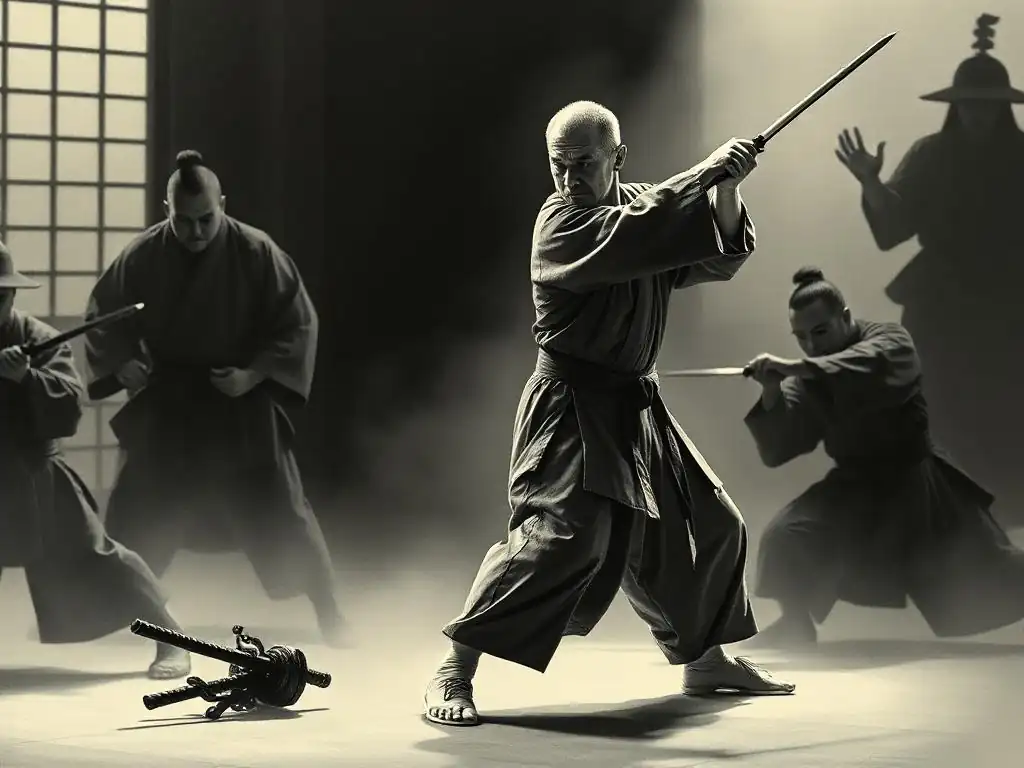
While specific, documented instances of individuals explicitly stating they used "kata bunkai" to survive a multiple opponent attack are rare due to the nature of real-world violence and reporting, the underlying principles and movements found in kata are consistent with effective strategies observed in self-defense scenarios. Analyzing approximated cases or general principles can illustrate how the concepts within bunkai multiple opponent survival techniques manifest in reality.
For example, accounts of individuals successfully fending off multiple attackers often involve constant movement, avoiding being surrounded, using the environment, and delivering rapid, disruptive strikes to vulnerable areas – all principles found within kata bunkai. A well-executed sidestep followed by a decisive strike, common in kata applications, can be the action that creates the necessary space to escape a swarm. The ability to maintain balance while being grabbed or pushed, refined through kata stances, is critical when facing multiple individuals attempting to subdue you.
Bunkai Application in a Confined Space: Utilizing Walls for Leverage and Defense
Consider an approximated scenario where an individual is attacked by two assailants in a narrow alleyway. Instead of attempting to fight in the open, the individual quickly maneuvers to place their back against one of the alley walls. This immediately reduces the angles of attack from 360 degrees to roughly 180 degrees, eliminating the threat from behind. This strategic positioning is a direct application of environmental control principles found in bunkai multiple opponent survival techniques.
From this position, techniques derived from kata bunkai are employed. A movement resembling a block and grab from kata could be used to trap one attacker's arm against the wall, using the wall for leverage and limiting that attacker's mobility. Powerful, close-range strikes (like elbows or knees, often found as hidden applications in kata) are delivered to the closest attacker.
The wall also prevents the attackers from easily flanking the defender. The goal isn't to defeat both, but to use the environment and adapted bunkai techniques to hold a defensive position or create a momentary gap to burst through and escape the confined space. This scenario highlights how kata principles of positioning and using structure can be vital.
Bunkai Application Against Armed Attackers: Employing Disarms and Evasion
Facing armed attackers significantly raises the stakes. While kata bunkai contains movements interpreted as defenses against weapons, the primary bunkai multiple opponent survival technique against multiple armed assailants is evasion and escape. However, if escape is impossible and a confrontation occurs, principles from kata can be adapted.
In an approximated scenario involving one or more attackers with bladed weapons, movements resembling sweeping blocks or parries in kata can be interpreted as deflections to redirect the weapon away from the body. Techniques involving controlling an opponent's limb, derived from bunkai applications of grabs or joint locks, could be adapted to control the weapon-bearing arm, albeit with extreme caution and only if distance is closed. The emphasis from kata on powerful hip rotation and body mechanics is used to generate force for rapid, disruptive strikes to vulnerable targets (eyes, throat, groin) if forced to engage.
Crucially, any engagement is immediately followed by an attempt to evade and escape, using footwork derived from kata to create distance and change angles rapidly. The application of bunkai multiple opponent survival techniques against weapons is high-risk and relies heavily on simultaneous evasion and decisive action.
The Importance of Awareness and De-escalation in Multiple Opponent Encounters
While kata bunkai provides physical techniques and strategies for survival, the most effective approach to multiple opponent situations begins long before any physical contact. Awareness and the ability to de-escalate are the first and most important layers of defense. No amount of bunkai multiple opponent survival techniques can guarantee safety if the situation could have been avoided or defused entirely.
Karate training instills discipline and focus, which can translate into heightened awareness in daily life. Understanding how to read situations and people can help identify potential threats before they materialize. Similarly, while martial arts training provides the confidence to defend oneself if necessary, it also teaches control and the value of avoiding unnecessary conflict. These non-physical skills are integral to true self-defense and complement the physical applications derived from kata bunkai.
Recognizing Pre-Attack Indicators: Avoiding Confrontation When Possible
Avoiding a multiple opponent confrontation is always the preferred outcome. This requires recognizing potential danger signs, known as pre-attack indicators. These can include changes in body language (e.g., aggressive posturing, clenching fists, scanning for witnesses), verbal cues (e.g., aggressive questioning, insults, threats), or environmental factors (e.g., being isolated, being in a high-crime area).
Training awareness means actively observing your surroundings and the behavior of people nearby. Just as a karateka learns to read an opponent's posture in sparring, developing the skill to read potential attackers' intentions is vital. Recognizing these cues early allows the opportunity to take evasive action – changing direction, crossing the street, or leaving the area – before the situation escalates to a physical confrontation. This proactive avoidance is the ultimate bunkai multiple opponent survival technique.
Verbal De-escalation Techniques: Diffusing Aggression and Avoiding Violence
If confronted, but before physical violence erupts, verbal de-escalation can sometimes diffuse the situation. This involves using calm, non-confrontational language, maintaining a non-threatening posture (e.g., open hands, avoiding direct challenges), and attempting to understand or appease the aggressors without compromising safety or dignity.
The goal of verbal de-escalation is to reduce the attackers' aggression, create confusion or hesitation, or buy time for escape or for help to arrive. While not always effective, particularly against individuals intent on violence, it is a crucial skill to attempt before resorting to physical bunkai multiple opponent survival techniques. It requires emotional control and the ability to communicate under stress, qualities that can be indirectly enhanced by the discipline of martial arts training.
Conclusion: Mastering Bunkai for Enhanced Self-Defense Capabilities in Multiple Attacker Situations
Mastering bunkai extends the practical utility of Karate kata far beyond traditional interpretations, providing valuable strategies and techniques for navigating the extremely dangerous scenario of facing multiple opponents. It requires moving beyond the literal application of individual kata movements to understand the underlying principles of body mechanics, movement, positioning, and strategy. By selecting appropriate kata, adapting techniques for multi-directional threats, developing strategic thinking, and engaging in specific multi-opponent training drills, practitioners can significantly enhance their bunkai multiple opponent survival techniques.
While the physical skills derived from kata are essential, true survival in such encounters also hinges on crucial non-physical aspects: maintaining a survival-focused mindset, exercising heightened situational awareness, and employing pre-emptive avoidance and de-escalation when possible. Integrating these physical and mental components allows the Karate practitioner to transform their kata training into a comprehensive system for self-preservation, offering the best possible chance of surviving the unthinkable. Consistent, realistic training is key to making these bunkai multiple opponent survival techniques instinctive under pressure.
Frequently Asked Questions
What exactly is Bunkai in the context of martial arts, particularly when discussing multiple opponents?
Bunkai is the application of kata (prearranged forms) movements to real-world self-defense scenarios. In multiple opponent situations, it involves adapting these movements for dealing with several attackers simultaneously.
How does Bunkai training help in surviving a multiple opponent attack when kata are typically solo forms?
Bunkai teaches you to dissect kata movements, understanding their hidden applications. This allows you to adapt and apply those techniques in dynamic, unpredictable situations involving multiple attackers, focusing on control and evasion.
What are some key strategies or principles of Bunkai that are particularly useful for multiple opponent survival?
Key strategies include using the environment for cover, controlling distance to manage threats, and prioritizing targets to neutralize the most immediate dangers first. Effective Bunkai also emphasizes evasive footwork.
How does the website MartialArtsMastery.org approach the topic of Bunkai for multiple opponent scenarios?
MartialArtsMastery.org provides historical overviews of Bunkai, training techniques specific to multiple attackers, and practical self-defense strategies derived from kata analysis, promoting a deeper understanding of the art.
Is Bunkai enough for multiple opponent survival, or are other skills necessary?
While Bunkai provides a foundation, supplementary training is crucial. This includes sparring, conditioning, and developing situational awareness to effectively apply Bunkai principles under real-world pressure.
Final Reflection: Embracing the Chaos of Combat
The exploration of Bunkai for multiple opponents, as detailed in this article, transcends mere martial arts technique; it speaks to the very essence of preparedness in the face of overwhelming adversity. It's a reminder that even in the most chaotic and unpredictable situations, strategic thinking and adaptable skills can offer a path to survival. This isn't just about physical combat; it's about cultivating a mindset that allows us to navigate the complexities of life with resilience and resourcefulness.
The principles of Bunkai, particularly its application to multiple opponents, have profoundly influenced my understanding of conflict resolution, both on and off the mat. It's a constant reminder that true strength lies not just in physical prowess, but in the ability to anticipate, adapt, and leverage every available advantage. As Sun Tzu wisely stated: Every battle is won before it is ever fought.
This quote encapsulates the spirit of Bunkai – the meticulous preparation and strategic thinking that precedes any confrontation.
Now, I invite you to consider how these principles of Bunkai can be applied to your own life. How can you cultivate a mindset of preparedness and adaptability? How can you anticipate potential challenges and develop strategies to overcome them? Embrace the chaos, learn from every encounter, and remember that the true art of survival lies in the ability to think, adapt, and persevere. Let the lessons of Bunkai guide you towards a more resilient and resourceful future.
Unleash Your Inner Warrior: Transform Kata into Real-World Defense!
Thank you for exploring the strategic depth of Kata and its application to multiple opponent scenarios. You've now unlocked a deeper understanding of how these ancient forms can be a powerful tool for modern self-defense. What's next?
Here are a few actions you can take to truly integrate these lessons:
- Immediately dedicate 15 minutes to drilling one specific Bunkai technique from your favorite Kata. Focus on smooth transitions and power generation.
- Share this article with fellow martial artists to spark discussion and collaborative learning within your dojo.
- Consider experimenting with adapting seemingly impractical kata moves into defenses against multiple imagined attackers, and journal your findings.
What's one surprising Kata technique you'll be exploring this week to prepare for the unpredictable?