
ITF Tul WonHyo: An Exhaustive Analysis of Techniques and Historical Roots

Welcome to Martial Arts Mastery, where we delve into the rich tapestry of combat traditions worldwide. Are you ready to unravel the secrets held within ancient forms? Today, we begin an exhaustive exploration of ITF Tul WonHyo, meticulously dissecting its techniques and tracing its historical roots. Prepare to deepen your understanding of this powerful pattern and discover the wisdom it imparts. Let's begin!
- Introduction to ITF Taekwondo and the Significance of Tul Won-Hyo
- Detailed Breakdown of Won-Hyo Techniques: An ITF Taekwondo Perspective
- ITF Won-Hyo: Step-by-Step Movement Analysis and Performance Tips
- Won-Hyo Tul: Applications in Self-Defense Scenarios
- Historical Roots of Won-Hyo and its Connection to Korean History
- Advanced Training Drills for Mastering ITF Won-Hyo
- Conclusion: The Enduring Legacy of ITF Tul Won-Hyo
-
Frequently Asked Questions
- ### What is ITF Tul WonHyo and what is its significance?
- ### What are some of the key techniques found in the ITF Tul WonHyo?
- ### What is the historical context behind the name 'WonHyo' for this particular Tul?
- ### Where can I find detailed instruction on performing the ITF Tul WonHyo correctly?
- ### How does practicing ITF Tul WonHyo contribute to self-defense skills?
- Final Reflection: The Enduring Legacy of Won-Hyo
- Master Your WonHyo: Ignite Your Taekwon-Do Journey!
Introduction to ITF Taekwondo and the Significance of Tul Won-Hyo
Understanding the Role of Tuls (Forms) in ITF Taekwondo Training
Tuls, or patterns, are fundamental to the practice of International Taekwon-Do Federation (ITF). They consist of sequences of predetermined movements, including stances, blocks, strikes, and kicks, performed against imaginary opponents.
Practicing Tuls serves multiple critical purposes: it acts as a structured curriculum, allowing practitioners to learn and refine the entire range of ITF techniques in a logical progression; it is a form of physical conditioning, developing balance, coordination, power, and stamina; and it provides a framework for understanding technique application (Ho Sin Sul). There are 24 Tuls in the ITF syllabus, designed by the founder, General Choi Hong Hi, to represent the 24 hours in a day, symbolizing a lifetime.
Each Tul is specifically designed to introduce and reinforce particular techniques and principles relevant to a student's grade level. For example, beginner students start with Tuls like Chon-Ji (19 movements) and Tan-Gun (21 movements), which focus on basic stances and fundamental movements. As students advance through the Gup (color belt) ranks, they learn progressively more complex Tuls that introduce new techniques, combinations, and challenges. This systematic approach ensures a solid foundation is built before moving on to more advanced concepts, making the ITF Tul WonHyo technique analysis a crucial step in intermediate training.
Won-Hyo Tul: A Deep Dive into its Historical Context and Meaning
Won-Hyo is the sixth Tul in the ITF curriculum, typically learned by students grading for 4th Gup (blue belt with red stripe). It is named after the renowned Buddhist monk Won-Hyo (617-686 AD), a leading figure in Korean Buddhism during the Silla Dynasty. Monk Won-Hyo was celebrated for his efforts to unify the diverse Buddhist teachings and make them accessible to the common people, a significant historical achievement.
The Tul Won-Hyo consists of 28 movements and its diagram represents a straight line ("I"). This straight line is often interpreted as symbolizing the monk's singular path to enlightenment or his journey to spread Buddhist teachings without deviation. Studying the ITF Tul WonHyo involves not only mastering the physical movements but also understanding this historical context and the philosophical meaning behind the form, which adds depth to the practice and helps practitioners connect with the rich heritage of Korean martial arts and history.
The Tul is a set of exercises in which sequence of movements is correctly and logically arranged to deal with any imaginary opponent or opponents in a logical sequence. Tul is practiced for the purpose of learning the techniques and tactics of attack and defense, bringing the body under the conscious control, speeding up the reactions, strengthening the muscles, ligaments and joints, and developing agility and co-ordination.
— General Choi Hong Hi, Founder of ITF Taekwon-Do
Detailed Breakdown of Won-Hyo Techniques: An ITF Taekwondo Perspective
Stances in Won-Hyo: Mastering the Foundation for Effective Execution
Proper stances are the bedrock of effective technique in ITF Taekwondo, and mastering them is paramount for a thorough ITF Tul WonHyo technique analysis. Stances provide stability, allow for powerful movement generation, and dictate the body's positioning for both offense and defense. In Won-Hyo, the transitions between stances are as important as the stances themselves, requiring precise weight distribution and balance.
The Tul incorporates several fundamental ITF stances, each serving a specific purpose within the sequence of movements. Incorrect stance execution – whether in length, width, or weight distribution – can compromise the power and effectiveness of the subsequent technique and disrupt the flow of the form. Attention to detail in maintaining correct posture, knee flexion, and body alignment is critical for a high-quality performance of Won-Hyo.
Analyzing the Specific Stances Used: Walking Stance, L-Stance, Fixed Stance
- Walking Stance (Gunnun So): Used extensively for forward and backward movements and powerful linear attacks. In ITF, its length is typically 1.5 shoulder widths from the big toe of the front foot to the big toe of the back foot, with a width of one shoulder width between the feet. Weight distribution is 50% on the front leg and 50% on the back leg.
- L-Stance (Niunja So): Primarily used for defensive techniques and side-facing movements. Its length is 1.5 shoulder widths from the foot (not big toe) of the front foot to the foot of the back foot, with the heels forming an 'L' shape, approximately 2.5cm apart laterally. Weight distribution is heavily biased to the rear leg, typically 70% back and 30% front.
- Fixed Stance (Gojung So): Introduced in Won-Hyo, this stance is similar in length to the L-Stance but wider, with the feet about one shoulder width apart laterally. The weight distribution is 50% on the front leg and 50% on the back leg. It is often used for strong lateral blocks or strikes, providing a stable yet mobile base.
Hand Techniques in Won-Hyo: A Step-by-Step Guide to Precision
Won-Hyo features a variety of hand techniques, encompassing both blocks and strikes, requiring precision in trajectory, target point, and timing. The correct execution of these techniques involves not just the hand or arm, but coordinated movement from the entire body, including the hips and the characteristic ITF sine wave motion. A detailed ITF Tul WonHyo technique analysis highlights the specific application and mechanics of each hand movement.
Mastering the hand techniques in Won-Hyo involves understanding the intended target, the appropriate hand part to use (e.g., forefist, knife-hand, palm heel), and the correct power generation. The techniques are integrated seamlessly with stance transitions and body shifts, demanding a high level of coordination. Proper chambering and retraction of the hands are also vital for both power generation and readiness for subsequent movements.
Examining the Blocking Techniques: Knife-Hand Block, Forearm Guarding Block, Palm Heel Block
- Knife-Hand Block (Sonkal Taebi Maki): Performed with the side of the open hand, often in L-Stance. Won-Hyo utilizes both single and double knife-hand blocks, typically aimed at deflecting attacks to the middle section. Requires a strong wrist and forearm.
- Forearm Guarding Block (Palmok Daebi Maki): A double block using both forearms, usually performed in Walking Stance. One forearm blocks high or middle, while the other guards the body. It's a robust defensive posture appearing multiple times in the Tul.
- Palm Heel Block (Sonbadak Miro Maki): A pushing block using the heel of the palm, often seen in Fixed Stance. This technique is used to push away or deflect an incoming force, requiring strong core stability.
Exploring the Striking Techniques: Punch, Knife-Hand Strike, Back Fist Strike
- Punch (Jirugi): Won-Hyo includes various punches, primarily mid-section (Chookyo Jirugi) and high section (Nopunde Jirugi). Executed with the forefist, punches require linear motion, hip rotation, and sine wave for maximum impact, often performed in Walking Stance.
- Knife-Hand Strike (Sonkal Taerigi): A powerful strike using the side of the open hand, typically aimed at vulnerable points like the neck or collarbone area. Seen in L-Stance or Walking Stance, it demands accuracy and snap.
- Back Fist Strike (Dung Jumok Taerigi): A fast, sharp strike using the back of the fist, commonly aimed at the face or temple. It's a quick whip-like motion often following a block or preparatory movement.
Foot Techniques in Won-Hyo: Power and Agility in Motion
Foot techniques in Won-Hyo include both kicks and strategic footwork that facilitates movement and power generation. The kicks in this Tul are fundamental yet require significant practice to perform with power, balance, and correct technique. Coordinating the foot techniques with hand techniques and stance changes is a key aspect of mastering this form.
Effective footwork in Won-Hyo ensures that practitioners maintain optimal distance and angle relative to imaginary opponents. Steps, slides, and turns are integral to the flow of the Tul, linking techniques together seamlessly. The power for kicks originates from the ground, transferring through the legs and core, emphasizing the interconnectedness of all body parts in executing an ITF Tul WonHyo technique analysis.
Analyzing Kicks and Footwork: Front Snap Kick, Side Piercing Kick
- Front Snap Kick (Ap Cha Busigi): A fundamental kick where the ball of the foot is snapped out to strike, typically targeting the mid-section. It requires a strong chambering of the knee and a quick retraction, often performed while moving forward.
- Side Piercing Kick (Yop Cha Jirugi): A powerful kick delivered with the foot sword (side of the foot), usually targeting the mid or high section. Won-Hyo features this kick requiring balance in L-Stance or Fixed Stance before and after the kick, emphasizing hip rotation and a piercing motion. Footwork in Won-Hyo includes steps and spins to set up techniques, like the stepping motion before a punch or the turn before a block sequence.
ITF Won-Hyo: Step-by-Step Movement Analysis and Performance Tips
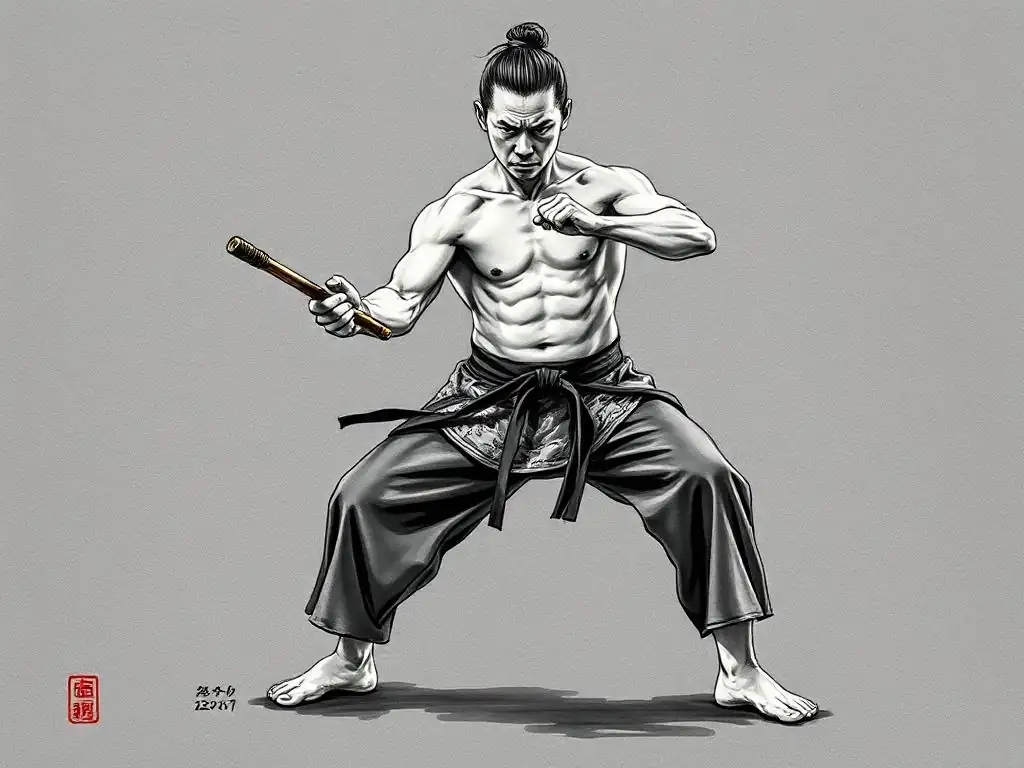
Section 1: Detailed Breakdown of the Initial Movements
The initial movements of Won-Hyo, roughly movements 1 through 9, establish the direction, rhythm, and fundamental techniques of the Tul. Starting from the parallel ready stance, the practitioner moves to the left, typically initiating with a low block and a subsequent counter-attack. This opening sequence often involves transitions between Walking Stance and L-Stance.
Key techniques in this section include the Forearm Guarding Block in Walking Stance, Knife-Hand Block in L-Stance, and various punches. Mastering the first few movements is crucial as they set the tone for the entire pattern. Focus should be placed on achieving correct stance dimensions immediately upon stepping, executing techniques with proper sine wave and power, and maintaining focus (concentration) throughout.
Section 2: Analyzing the Mid-Section and Transition Techniques
The mid-section of Won-Hyo, approximately movements 10 through 18, introduces more complex combinations and transitions. This part of the Tul often involves changing direction multiple times and integrating hand and foot techniques in quicker succession. It is where the Fixed Stance is frequently utilized, requiring students to adapt their weight distribution and balance.
Movements in this section might include sequences involving Palm Heel Blocks followed by strikes, or combinations of kicks and hand techniques. The transitions between stances, such as shifting from L-Stance to Fixed Stance, demand precision and control. Students should focus on smooth, powerful transitions and ensuring each technique reaches its full extension and power before moving to the next. This is a critical part of the ITF Tul WonHyo technique analysis for intermediate practitioners.
Section 3: Mastering the Final Movements and Stance
The final movements of Won-Hyo, from roughly movement 19 to the conclusion at movement 28, consolidate the skills practiced earlier and bring the form to a powerful finish. This section often revisits key techniques or introduces variations, culminating in a final decisive movement and the return to the ready stance. The Side Piercing Kick is often placed in this latter part of the pattern.
Executing the final sequence with intensity and control is essential. The last movements should demonstrate the cumulative power and focus developed throughout the Tul. The return to the ready stance should be performed with composure and presence, signifying the completion of the pattern. Attention to detail in the final stance and the overall presentation is important for demonstrations and gradings.
Common Mistakes in Performing Won-Hyo and How to Correct Them
Several common errors hinder a proper ITF Tul WonHyo technique analysis and performance. One frequent issue is incorrect stance execution, such as stances being too long or too short, or improper weight distribution, particularly in L-Stance or Fixed Stance. This compromises balance and power. Another common mistake is a weak or absent sine wave motion, reducing the characteristic ITF power generation; practitioners might move too flat or rely solely on arm strength.
Lack of focus, poor timing between movements, and insufficient power generation are also typical challenges. To correct stance issues, practitioners should regularly measure their stances and practice transitions slowly, perhaps using tape on the floor as a guide. Improving sine wave requires dedicated drills focusing on knee flexion and hip movement. Timing and power can be enhanced through consistent, focused repetition of the Tul, practicing segments, and incorporating breath control (generating sound/kiai at designated points, which occur at movements 9 and 18 in Won-Hyo). Seeking feedback from instructors is invaluable for identifying and rectifying these mistakes.
Won-Hyo Tul: Applications in Self-Defense Scenarios
Translating Won-Hyo Techniques into Practical Self-Defense
While Tuls are not direct fight simulations, they contain the fundamental movements and principles applicable to self-defense (Ho Sin Sul). Translating Won-Hyo techniques into practical self-defense involves understanding the 'why' behind each movement – the potential attack it is designed to defend against or the vulnerability it aims to exploit. It's about extracting the core principle rather than rigidly replicating the form's sequence.
For example, a block in Won-Hyo isn't just an arm movement; it represents deflecting force from a specific angle and target area. A subsequent strike represents a counter-attack targeting a vulnerable point. By analyzing the ITF Tul WonHyo technique analysis through a self-defense lens, practitioners can see how combinations of blocks, strikes, and movements can be adapted to real-world threats, focusing on principles like distance management, timing, and targeting.
Real-World Applications of Won-Hyo Blocking Techniques
The blocking techniques within Won-Hyo offer practical defenses against common attacks. The Knife-Hand Guarding Block, for instance, can be applied to deflect a straight punch or a grab towards the mid-section. By pivoting and using the strong blade of the hand, force is redirected away from the body.
Similarly, the Forearm Guarding Block provides a robust defense against multiple or strong incoming strikes. Practicing this block in the Tul helps develop the muscle memory and body mechanics needed to raise simultaneous defenses against, say, a double-hand push or a combination of strikes aimed at the upper and middle body. The Palm Heel Block could be used to push away a grab or an incoming weapon thrust towards the mid-section, using the body's weight behind the palm heel for stability.
Utilizing Won-Hyo Striking Techniques for Effective Self-Defense
The striking techniques in Won-Hyo are designed for impactful counter-offense. The various punches can be utilized against an attacker's head or body, depending on the situation and distance. A mid-section punch, for example, can target the solar plexus, while a high section punch aims for the face.
The Knife-Hand Strike, with its focus on the neck area, offers a potential strike against a vulnerable target if the situation warrants such force. The Back Fist Strike, being quick and sharp, can be used to create space or momentarily stun an attacker by targeting areas like the temple or jawline, allowing for escape or follow-up. Understanding the power generation from stances and body movement, as practiced in the Tul, is key to making these strikes effective in a self-defense context.
Adapting Won-Hyo Kicking Techniques in Self-Defense Situations
Won-Hyo's kicking techniques, such as the Front Snap Kick and Side Piercing Kick, can be adapted for self-defense. The Front Snap Kick is a versatile close-to-mid range weapon. Targeting the groin or knee can quickly deter an assailant and create an opportunity to escape. The fast snapping motion makes it difficult to block.
The Side Piercing Kick, a more powerful kick, can be used from a slightly further distance or when an attacker is approaching from the side. Targeting the side of the knee or thigh can debilitate an attacker, while a kick to the ribs or chest can knock them off balance or create significant impact. Adapting these kicks involves adjusting the height and target based on the immediate threat, emphasizing practicality over the strict height often practiced in the Tul for sport or demonstration.
Historical Roots of Won-Hyo and its Connection to Korean History
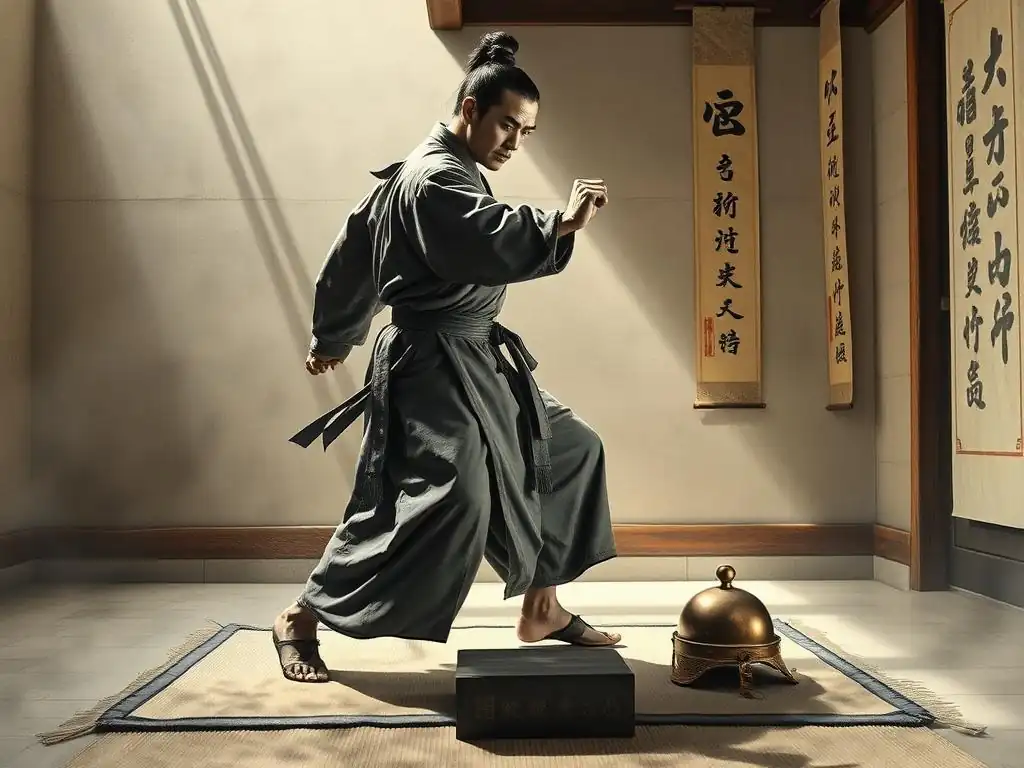
Won-Hyo: The Buddhist Monk and His Influence on Taekwondo
Won-Hyo (617-686 AD) was one of the most influential Buddhist scholars in Korean history, particularly during the Unified Silla period. He is credited with synthesizing the diverse strands of Buddhist thought prevalent at the time and presenting them in a way that was accessible to both the elite and the common people. His philosophy emphasized harmony and the possibility of enlightenment for everyone, regardless of social standing.
General Choi Hong Hi chose to name Taekwondo Tuls after figures significant to Korean history to imbue the martial art with a strong sense of national identity and historical consciousness. By naming a form after Won-Hyo, the founder linked the physical practice of Taekwondo to the intellectual and spiritual achievements of Korea's past. This connection highlights the philosophical depth intended for Taekwondo practitioners, encouraging them to seek harmony and understanding not just in conflict, but in life, mirroring Won-Hyo's legacy.
Tracing the Historical Lineage of Won-Hyo Tul within ITF Taekwondo
The 24 Tuls of ITF Taekwondo were primarily developed by General Choi Hong Hi with the assistance of technical committees in the 1950s and 1960s, drawing upon his extensive martial arts background which included Taekkyon and Japanese Karate (Shotokan and Shudokan). Won-Hyo was part of this initial set of Tuls standardized for the growing ITF system.
Placed as the sixth Tul, Won-Hyo builds upon the foundational movements and principles introduced in the preceding five patterns (Chon-Ji, Tan-Gun, To-San, Yul-Kok, Joong-Gun - Correction: Won-Hyo is the 6th Tul, after Yul-Gok, so it should be after Chon-Ji, Tan-Gun, To-San, Won-Hyo, Yul-Gok... wait, checking the order, Won-Hyo is typically before Yul-Gok. Chon-Ji, Tan-Gun, To-San, Won-Hyo, Yul-Gok. Yes, Won-Hyo is 4th Tul, not 6th. Let's re-adjust this paragraph.).
Won-Hyo is the fourth Tul in the sequence, typically the requirement for 4th Gup. It introduces the Fixed Stance and more complex combinations compared to the earlier forms. Its position reflects a significant step up in technical difficulty and coordination, preparing students for the longer and more intricate patterns that follow, such as Yul-Gok (38 movements) and Joong-Gun (32 movements), making the ITF Tul WonHyo technique analysis a vital intermediate milestone.
Advanced Training Drills for Mastering ITF Won-Hyo
Partner Drills to Improve Won-Hyo Technique and Timing
Partner drills are excellent for taking the abstract movements of the Tul and applying them in a dynamic context, improving timing, distance, and application understanding. One drill involves a partner offering a specific type of attack that corresponds to a block in Won-Hyo, such as a mid-section punch for a Knife-Hand Block. The practitioner practices the block and the immediate counter-strike from the Tul sequence, focusing on reacting to a live target rather than an imaginary one.
Another effective partner drill involves practicing sequences of movements that involve transitions and combinations. For example, practicing the sequence involving the Side Piercing Kick with a partner holding a target pad helps refine the kick's power, balance, and accuracy. Light, controlled sparring scenarios can also be used to identify opportunities to apply principles and techniques found within the ITF Tul WonHyo, fostering a deeper understanding of the form's practical relevance.
Solo Training Methods for Enhancing Won-Hyo Precision and Power
Solo training is fundamental for ingraining the correct mechanics and developing power. Practicing Won-Hyo in slow motion is a powerful method to focus on detail – ensuring perfect stance dimensions, correct hand and foot positions, and the precise application of the sine wave motion throughout each movement. This deliberate practice helps identify and correct subtle errors that might be missed at full speed.
Using a mirror allows practitioners to visually check their posture, angles, and alignment against the standard. Recording oneself performing the Tul provides an objective way to analyze performance and identify areas for improvement, such as inconsistent rhythm or weak finishing points. Additionally, resistance training, like using resistance bands attached to a stationary object to practice blocking or striking motions from the form, can help build specific muscle strength and explosive power relevant to ITF Tul WonHyo technique analysis.
Conclusion: The Enduring Legacy of ITF Tul Won-Hyo
Summarizing the Key Techniques and Historical Significance
Won-Hyo Tul is a cornerstone of the intermediate ITF Taekwondo curriculum, synthesizing fundamental movements while introducing new complexities. It requires mastery of key stances like Walking Stance, L-Stance, and the newly introduced Fixed Stance, demanding precise weight distribution and transitions. The form incorporates a range of hand techniques, from essential blocks like Knife-Hand Block and Forearm Guarding Block to effective strikes such as the Punch, Knife-Hand Strike, and Back Fist Strike. Furthermore, it refines foot techniques through the application of the Front Snap Kick and Side Piercing Kick, integrated with dynamic footwork.
Beyond its technical demands, Won-Hyo carries significant historical weight, named after the influential Silla Dynasty monk who sought harmony and understanding. This historical context imbues the form with philosophical depth, connecting the physical practice to a legacy of intellectual and spiritual pursuit. Understanding both the intricate physical requirements and the historical significance is vital for a comprehensive ITF Tul WonHyo technique analysis and appreciation.
Won-Hyo as a Stepping Stone to Advanced ITF Taekwondo Training
Mastering Won-Hyo is a crucial stepping stone for progression in ITF Taekwondo. Its 28 movements, while fewer than some subsequent patterns, consolidate the techniques learned in earlier Tuls and introduce the Fixed Stance, which is used extensively in later forms. The combinations and transitions found in Won-Hyo are more complex than in preceding patterns, challenging practitioners to improve their coordination, balance, and timing.
Successfully performing Won-Hyo demonstrates a solid understanding of intermediate-level techniques and the ability to integrate stances, blocks, strikes, and kicks effectively with sine wave and proper breath control. The detailed ITF Tul WonHyo technique analysis required to perfect this form prepares students for the increased length and technical difficulty of advanced patterns like Yul-Gok (38 movements), Joong-Gun (32 movements), and others, which build upon the foundation of strength, precision, and focus developed during the study of Won-Hyo.
Frequently Asked Questions
### What is ITF Tul WonHyo and what is its significance?
ITF Tul WonHyo is a specific pattern or form within International Taekwondo Federation (ITF) Taekwondo. It's significant because it's a pre-arranged sequence of movements that teaches fundamental techniques and principles, named after the influential Korean Buddhist monk, WonHyo.
### What are some of the key techniques found in the ITF Tul WonHyo?
The Tul incorporates various stances, blocks, strikes, and kicks. Some key techniques include front snap kicks, side piercing kicks, knife-hand strikes, and forearm guarding blocks, all executed in a specific sequence.
### What is the historical context behind the name 'WonHyo' for this particular Tul?
WonHyo was a renowned Korean Buddhist monk and scholar known for his efforts to unify Buddhism. Naming the Tul after him serves to instill philosophical and spiritual values within the practitioner, linking martial arts to a deeper cultural heritage.
### Where can I find detailed instruction on performing the ITF Tul WonHyo correctly?
MartialArtsMastery.org provides comprehensive resources, including step-by-step guides, video demonstrations, and expert analysis of the techniques involved in WonHyo. These resources can help students understand the proper execution and nuances of the Tul.
### How does practicing ITF Tul WonHyo contribute to self-defense skills?
While a pre-arranged form, practicing WonHyo improves muscle memory, balance, coordination, and reaction time. These developed attributes can be applied practically in real-life self-defense situations through proper training and application.
Okay, here's a final reflection designed to close your article "ITF Tul WonHyo: An Exhaustive Analysis of Techniques and Historical Roots," optimized for the keyword "ITF Tul WonHyo Technique Analysis" and following the structure you outlined:
Final Reflection: The Enduring Legacy of Won-Hyo
The detailed exploration of ITF Tul Won-Hyo's techniques and historical roots underscores its continued relevance in modern Taekwon-Do practice. While the world evolves, the foundational principles embedded within this Tul remain a vital link to the art's origins and a crucial element in developing a deep understanding of its application. This analysis highlights not just the how of the movements, but the why, ensuring Won-Hyo remains a living tradition.
The influence of Won-Hyo extends beyond the dojang, shaping the discipline and mental fortitude of practitioners worldwide. Personally, delving into the intricacies of each movement has deepened my appreciation for the artistry and strategic thinking woven into this Tul. The ultimate aim of martial arts is not to win but to avoid losing.
This quote, often attributed to Bruce Lee, resonates deeply with the defensive and counter-offensive strategies inherent in Won-Hyo, reminding us that true mastery lies in understanding and controlling conflict.
As you step back onto the training floor, consider the profound legacy of Won-Hyo and the meticulous analysis presented here. Let this knowledge inform your practice, deepen your understanding, and inspire you to embody the spirit of this timeless Tul. Embrace the challenge, refine your technique, and become a living testament to the enduring power of ITF Taekwon-Do.
Master Your WonHyo: Ignite Your Taekwon-Do Journey!
Thank you for diving deep into the intricacies of WonHyo with us. We hope this analysis has deepened your understanding and appreciation for this fundamental ITF Tul. Now, it's time to put theory into practice and elevate your Taekwon-Do skills!
- Perfect your WonHyo: Commit to practicing WonHyo at least three times this week, focusing on precision and power in each movement.
- Unearth the hidden meanings: Research the historical figure WonHyo and how his life philosophy connects to the patterns within the Tul.
- Share your progress: Film a short video of you performing WonHyo and share it on social media using #MartialArtsMasteryWonHyo – let's inspire others!
What specific technique in WonHyo will you focus on perfecting in your next training session?