
Ninjutsu Beyond Myth: Documented Espionage Tactics in Feudal Military Japan

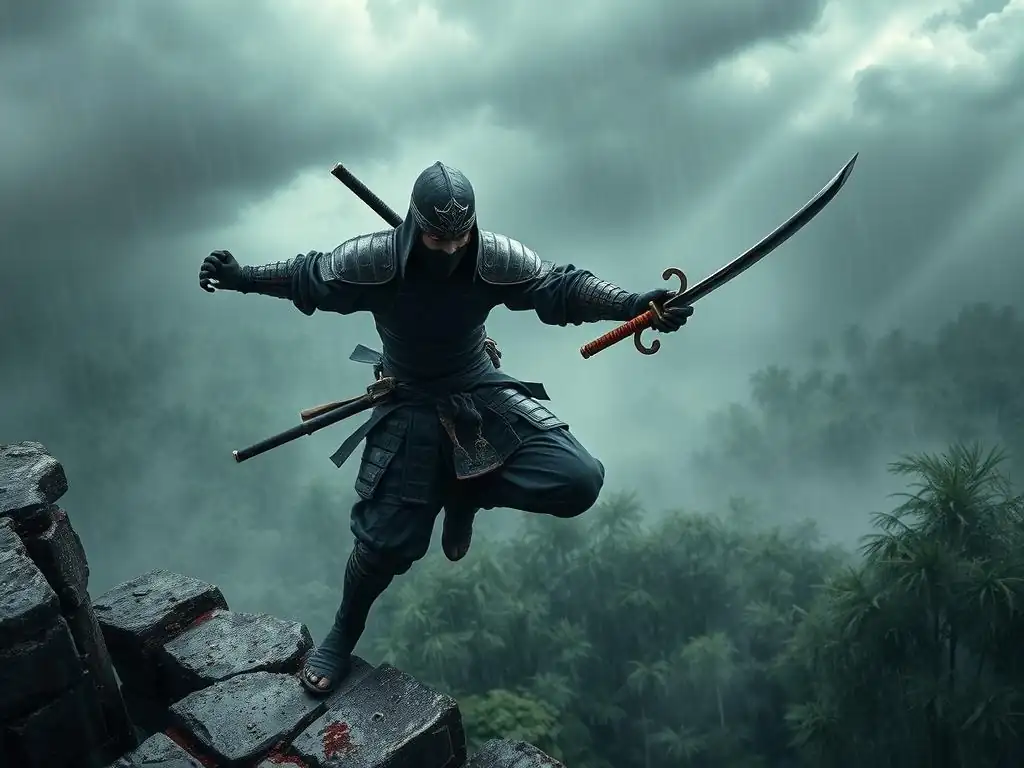
Welcome to Martial Arts Mastery, your gateway to the world's fighting traditions!
Delve into the shadows and uncover the historical realities behind the legendary ninja. Forget the myths; this article unveils documented Ninjutsu tactics employed in feudal Japan, exploring the espionage strategies that made them feared and effective warriors. Ready to separate fact from fiction and discover the truth? Let's begin...
- Introduction: Unveiling the Reality of Ninjutsu in Feudal Japan
- The Core Principles of Ninjutsu Tactics in Feudal Japan
- Documented Ninjutsu Espionage Techniques Employed in Feudal Japan
- Tools and Equipment Utilized in Ninjutsu Espionage Missions
- The Role of Ninjutsu in Specific Battles and Campaigns of Feudal Japan
- Ninjutsu Training and Development in Feudal Japan
- Ninjutsu's Legacy: From Feudal Espionage to Modern Martial Arts
- Conclusion: The Enduring Relevance of Ninjutsu's Espionage Tactics
-
Frequently Asked Questions
- What exactly are Ninjutsu tactics, as understood in the context of feudal Japan?
- How does the historical reality of Ninjutsu tactics differ from popular myths and legends?
- What role did Ninjutsu tactics play in the feudal military strategies of Japan?
- What types of historical documentation support the existence of specific Ninjutsu tactics?
- Besides espionage, what other practical self-defense strategies were associated with Ninjutsu tactics?
- Final Reflection: Unveiling Shadows, Inspiring Resilience
- Unlock Your Inner Ninja: Begin Your Journey Now!
Introduction: Unveiling the Reality of Ninjutsu in Feudal Japan
Debunking the Myths Surrounding Ninjutsu
Popular culture often portrays ninja as mystical assassins with supernatural abilities, capable of invisibility and impossible feats of agility. This perception, largely shaped by modern fiction and film, significantly deviates from the historical reality of Ninjutsu practitioners in feudal Japan. While they were undoubtedly masters of specialized skills, their effectiveness stemmed not from magic, but from rigorous training in espionage, infiltration, sabotage, and information gathering – practical skills vital in the turbulent Sengoku period. The historical ninja were highly trained agents, often employed by samurai lords, utilizing sophisticated Ninjutsu tactics feudal Japan relied upon for strategic advantage in warfare.
The reality is that ninja were primarily intelligence operatives and specialists in irregular warfare. They were experts in disguise, survival, and exploiting weaknesses in enemy defenses, rather than front-line warriors or spectral assassins. Their methods were grounded in deep knowledge of human behavior, terrain, and the practical application of tools and techniques for clandestine operations. Understanding the true nature of these historical Ninjutsu tactics feudal Japan utilized reveals a fascinating aspect of its military history, far more complex and intriguing than the fantastical portrayals.
The Historical Context: Feudal Warfare and the Need for Espionage
Feudal Japan, particularly during the Sengoku Jidai (Warring States period, roughly 1467-1615), was characterized by constant conflict between competing daimyo (feudal lords). Military success depended not only on the strength of one's samurai army but also on strategic intelligence and the ability to weaken the enemy indirectly. Castles were the centers of power, heavily fortified and difficult to take by direct assault. This environment created a high demand for individuals skilled in gathering information, disrupting enemy operations, and influencing the outcome of battles through non-conventional means – the very domain of Ninjutsu tactics feudal Japan required.
In this era of shifting alliances and frequent betrayals, reliable intelligence was paramount. Lords needed to know the size and disposition of enemy forces, their supply routes, their morale, and even their internal political struggles. Furthermore, the ability to sow discord, destroy resources, or eliminate key figures without open confrontation could turn the tide of a campaign. The development and refinement of Ninjutsu tactics feudal Japan saw during this period were a direct response to these strategic necessities, offering a clandestine edge in a landscape dominated by overt military power.
The Core Principles of Ninjutsu Tactics in Feudal Japan
Stealth and Infiltration: The Art of Unseen Movement
A fundamental aspect of Ninjutsu tactics feudal Japan employed was the mastery of stealth and infiltration. Ninja trained extensively in methods of moving silently and undetected through various environments, including forests, mountains, urban areas, and, most critically, enemy fortifications. Techniques involved understanding how to walk without making noise (e.g., shifting weight carefully, using specific foot placement), blending with shadows, utilizing natural cover, and moving during times of low visibility, such as deep night or during adverse weather conditions like fog or heavy rain.
Infiltration of castles and enemy camps was a primary mission, often conducted under the cover of darkness. Ninja studied the architecture of fortresses, identifying weak points like drainage systems, unguarded walls, or times when patrols were lax. Historical accounts, though sometimes embellished, describe ninja scaling walls using specialized tools, slipping through narrow openings, or even entering through wells. This focus on unseen movement was not merely about avoiding detection but about gaining access to sensitive areas to gather information or carry out sabotage, making these Ninjutsu tactics feudal Japan's lords highly valued.
Disguise and Deception: Blending into the Environment
Disguise was a cornerstone of Ninjutsu tactics feudal Japan's agents perfected. Unlike the stereotypical black suits of popular myth, historical ninja rarely wore such conspicuous attire for missions. Instead, they were masters of blending in, adopting the appearance of commoners appropriate to the location and situation they were infiltrating. This could include posing as merchants, traveling monks (komusō), farmers, entertainers, or even low-ranking samurai from a friendly or neutral domain. The goal was to move freely within enemy territory without arousing suspicion.
Effective disguise went beyond merely wearing different clothes; it involved adopting the mannerisms, speech patterns, and local knowledge of the assumed identity. Ninja trained in observation and mimicry to convincingly pass as someone else, allowing them to gather information through eavesdropping, casual conversation, or direct questioning without revealing their true purpose. This ability to deceive and blend in was crucial for long-term intelligence operations and was a sophisticated element of Ninjutsu tactics feudal Japan's spies relied upon.
Evasion and Escape: Surviving Capture in Feudal Japan
Given the inherent dangers of espionage and infiltration, a critical component of Ninjutsu tactics feudal Japan's agents mastered was the ability to evade capture and escape from perilous situations. Ninja were trained to react quickly to unexpected encounters, utilizing their environment, knowledge of terrain, and specialized tools to disappear or create diversions. Techniques included running over difficult ground, climbing obstacles rapidly, swimming underwater for extended periods, and using smoke or blinding powders (metsubushi) to disorient pursuers.
Should capture seem imminent, ninja were often prepared to fight defensively or create a momentary opportunity to escape. Their training included unarmed combat and the use of small, concealable weapons for self-defense, prioritizing survival over engaging in prolonged battles. The ability to escape meant preserving valuable intelligence and ensuring the agent could continue their mission or return to their lord, highlighting the emphasis on survival as a core outcome of Ninjutsu tactics feudal Japan valued.
Documented Ninjutsu Espionage Techniques Employed in Feudal Japan

Information Gathering: Intelligence Networks and Methods
Information gathering was arguably the most vital function of ninja in feudal Japan. They established sophisticated networks, utilizing various methods to collect intelligence on enemy activities. This involved not just direct observation and eavesdropping by agents infiltrated into enemy territory, but also cultivating informants among local populations, merchants, or even disaffected individuals within enemy ranks. The data collected ranged from troop numbers and movements to supply levels, fortifications, and the political climate within the enemy domain.
These intelligence networks were often decentralized, with agents reporting back through intermediaries or using pre-arranged signals and dead drops to pass information securely. The ability to synthesize disparate pieces of information into actionable intelligence was a key skill. For instance, observing increased activity around a specific port combined with reports of large food purchases could indicate preparations for a naval campaign or a major troop movement by sea. Such detailed and timely intelligence derived from these Ninjutsu tactics feudal Japan employed could provide a decisive strategic advantage.
Gathering Intelligence on Enemy Movements
A primary objective of Ninjutsu tactics feudal Japan's spies was to track the movements of enemy forces. This involved observing armies on the march, noting their size, composition (infantry, cavalry, artillery), direction of travel, and estimated speed. Agents would scout ahead or trail behind, using their stealth skills to remain unseen while gathering critical data. Knowledge of local geography was essential for predicting routes and potential ambush points.
Reports on troop movements were often relayed back swiftly using various methods, including carrier pigeons, signal fires, or trusted couriers traveling along pre-determined routes. For example, during the campaigns of Oda Nobunaga, intelligence on the location and movements of rival daimyo armies was crucial for his rapid, decisive strikes. The accuracy and timeliness of this information, gathered through persistent observation and infiltration using Ninjutsu tactics feudal Japan's military leaders came to rely on, directly influenced strategic decisions and battle outcomes.
Assessing Enemy Strengths and Weaknesses
Beyond mere numbers, ninja were tasked with assessing the overall strengths and weaknesses of the enemy. This included evaluating the quality and morale of troops, identifying key commanders and their strategic tendencies, and understanding the logistical capabilities of the enemy domain. Agents would observe training exercises, listen to conversations among soldiers, and analyze the condition of equipment and fortifications.
Identifying weaknesses was particularly valuable. This could involve locating poorly defended sections of a castle wall, discovering discontent or factionalism within the enemy leadership, or identifying vulnerabilities in supply lines. For instance, knowledge of an enemy's reliance on a single bridge for supply could make it a prime target for sabotage. Such comprehensive assessments, derived from thorough application of Ninjutsu tactics feudal Japan's intelligence operatives mastered, allowed their employers to plan campaigns that exploited these discovered frailties.
Sabotage and Subversion: Weakening the Enemy from Within
Sabotage was another critical application of Ninjutsu tactics feudal Japan utilized to disrupt and weaken adversaries. Ninja were trained to identify and target key infrastructure, resources, or personnel to cause maximum disruption with minimal risk of open confrontation. This could range from destroying food or weapon stockpiles to damaging fortifications or spreading misinformation.
The goal was to undermine the enemy's ability to wage war effectively, forcing them to divert resources to dealing with internal problems rather than focusing on the battlefield. Successful acts of sabotage carried out using these specific Ninjutsu tactics feudal Japan's lords commissioned could significantly hamper an enemy's military operations, potentially preventing an invasion or weakening a besieged force.
Incendiary Tactics: Setting Fires for Disruption
Setting fires was a common and highly effective sabotage tactic employed by ninja. Fire could cause widespread destruction of buildings, supplies, and equipment, as well as sow panic and chaos within enemy ranks or civilian populations supporting them. Ninja developed specialized incendiary devices and techniques for starting fires discreetly and effectively, often targeting vulnerable structures like wooden storehouses or barracks.
Historical accounts mention ninja using fire arrows, delayed ignition fuses, or flammable powders to start blazes within enemy camps or castles. A well-placed fire could destroy critical resources like rice stores or gunpowder, forcing the enemy to abandon a position or retreat. For example, disrupting an enemy's winter provisions through arson using Ninjutsu tactics feudal Japan's agents employed could effectively cripple their ability to sustain a campaign.
Disrupting Supply Lines: Targeting Resources
Targeting enemy supply lines was a strategic priority, as armies are dependent on a constant flow of food, water, weapons, and other provisions. Ninja would identify key points in the supply chain, such as bridges, roads, ports, or storage depots, and carry out acts of sabotage to interrupt the flow of resources. This could involve destroying bridges, poisoning wells, raiding supply convoys (often in conjunction with local bandits or disaffected villagers), or destroying stored goods.
Successful disruption of supply lines could force an enemy army to halt its advance, retreat due to lack of provisions, or even face starvation and desertion. The ability to cripple an army indirectly by cutting off its lifeline was a powerful application of Ninjutsu tactics feudal Japan's military strategists appreciated, often achieving significant results without the need for large-scale battles.
Assassination and Infiltration: Eliminating Key Targets
While not as pervasive as popular culture suggests, assassination was indeed one of the potential Ninjutsu tactics feudal Japan's agents might be tasked with. However, it was typically a high-risk, high-reward mission aimed at eliminating key enemy figures whose death would cause significant disruption or political instability. Targets were usually military commanders, political leaders, or strategic advisors.
Infiltration was almost always a prerequisite for assassination missions, requiring the ninja to gain access to heavily guarded locations. This involved meticulous planning, exploiting security weaknesses, and often utilizing disguise and deception to get close to the target. The goal was a swift, silent elimination, minimizing the chance of detection and escape after the act.
Targeting Enemy Leadership
Eliminating enemy leaders was a strategic objective that could decapitate an army's command structure or plunge a rival domain into chaos. Ninja tasked with such missions required exceptional skill in infiltration and discretion. Accounts exist, though often difficult to verify definitively, of ninja attempting or succeeding in assassinating daimyo or generals within their own residences or camps.
These missions were incredibly dangerous, with a high probability of failure and death if discovered. The methods used would vary depending on the target's security, but often involved gaining access to private quarters during vulnerable moments. Successful targeting of enemy leadership using these extreme Ninjutsu tactics feudal Japan saw employed could drastically alter the course of a conflict or prevent one from even starting.
Infiltrating Enemy Strongholds
Infiltration of enemy strongholds, particularly castles, was a core skill and a common objective for a variety of missions, including intelligence gathering, sabotage, and assassination. Castles were the nerve centers of feudal domains, heavily guarded and designed to be impregnable to direct assault. Ninja specialized in finding and exploiting the often overlooked vulnerabilities.
Techniques involved scaling walls using grappling hooks and ladders, entering through hidden passages or drainage systems, or even posing as legitimate personnel or visitors to gain entry. Once inside, the ninja would navigate the complex layout, avoiding patrols and sentries, often using their knowledge of the castle's design gleaned from prior intelligence or reconnaissance. Successful infiltration using these advanced Ninjutsu tactics feudal Japan's lords relied on was a testament to the agent's training and planning.
Tools and Equipment Utilized in Ninjutsu Espionage Missions
Specialized Weapons for Silent Elimination
Ninja utilized a range of tools and weapons, many of which were adapted from farming implements or everyday objects to be inconspicuous or multi-functional. While they were trained in combat, their primary focus was on avoiding detection, so weapons were often designed for stealth, quick use, or creating distractions rather than open battle.
The popular image of ninja armed with large swords and shuriken is partly mythological. Their actual arsenal was more practical and geared towards their specific missions of infiltration, sabotage, and discreet self-defense, reflecting the practical nature of Ninjutsu tactics feudal Japan's agents employed.
The Ninjato: Myth vs. Reality
The iconic straight-bladed sword often depicted as the "ninjato" is largely a modern invention with little historical basis. While ninja certainly carried swords for self-defense or as part of a disguise (such as a samurai's katana), there is scant historical evidence for a distinct sword specifically used by ninja with the characteristics often attributed to the ninjato (straight blade, square guard, short length).
Historical ninja likely used whatever swords were available and appropriate for their cover, often shorter blades or even disguised weapons that would not draw attention. The emphasis in Ninjutsu tactics feudal Japan developed was on avoiding sword fights, not engaging in them, making the idea of a specialized combat sword less central to their historical role.
Shuriken and Caltrops: Disrupting and Distracting
Shuriken (throwing stars or blades) and caltrops (tetsubishi - small, spiked objects) were indeed part of the ninja's arsenal, but their use was primarily for distraction, harassment, or creating obstacles rather than lethal combat. Shuriken, depending on the type, could be thrown to momentarily stun or distract a guard, providing an opportunity to escape or close distance.
Caltrops were scattered on the ground to impede pursuers, particularly in darkness or narrow passages. Their sharp spikes would injure the feet of anyone stepping on them, whether they were wearing sandals or even thin-soled boots. These tools were simple yet effective components of the defensive and evasive Ninjutsu tactics feudal Japan's agents used to escape dangerous situations.
Tools for Climbing and Concealment
Given the frequent need to infiltrate fortifications or navigate difficult terrain, ninja utilized specialized tools for climbing and concealment. These tools were designed to be portable, effective, and often multi-functional, reflecting the ingenuity inherent in Ninjutsu tactics feudal Japan saw developed.
These tools were not magical devices but practical aids developed through experience and necessity, allowing agents to overcome physical barriers and remain hidden while conducting their missions.
Kaginawa: The Grappling Hook
The kaginawa, or grappling hook, was a vital tool for ninja, used extensively for climbing walls, trees, or other obstacles. It typically consisted of a weighted metal hook (often with three or four prongs) attached to a long rope or chain. Ninja trained to throw the kaginawa accurately and securely, testing its hold before ascending.
This tool was essential for scaling the high walls of castles or fortifications, providing access to areas that were otherwise inaccessible. The kaginawa was a practical application of engineering principles for infiltration, a key element of the physical Ninjutsu tactics feudal Japan's agents mastered for gaining entry to enemy strongholds.
Shikoro: Concealing Face and Identity
While not a single specific item like a mask, "shikoro" refers more generally to methods and tools used for concealing the face and identity. This could involve using scarves, hoods, or even applying mud or charcoal to the skin to blend into darkness. During infiltration missions at night, concealing the face was critical to avoid recognition if briefly spotted.
Beyond physical concealment, disguise itself was a form of "shikoro," hiding the agent's true identity and purpose behind a convincing facade. This dual approach – physical concealment for stealth and social concealment through disguise – was fundamental to the success of many Ninjutsu tactics feudal Japan's spies employed to operate undetected within enemy territory.
The Role of Ninjutsu in Specific Battles and Campaigns of Feudal Japan
Battle of Okehazama: How Ninjutsu Tactics Influenced the Outcome
The Battle of Okehazama in 1560 is a famous example where intelligence and surprise, potentially aided by Ninjutsu tactics feudal Japan's forces employed, played a crucial role. Oda Nobunaga, facing a vastly superior army led by Imagawa Yoshimoto, relied on detailed intelligence to execute a daring surprise attack. While the specific role of ninja is debated by historians, the type of intelligence gathered—information about Imagawa's army's movements, its relaxed state, and the terrain around its camp—aligns perfectly with the documented capabilities of ninja agents.
Nobunaga's forces, guided by this precise intelligence, were able to traverse difficult terrain undetected and strike the unsuspecting Imagawa main camp during a thunderstorm. The element of surprise, achieved through meticulous planning and potentially clandestine reconnaissance, led to Imagawa's death and the rout of his army, a victory largely attributed to strategic intelligence gathering and rapid execution, hallmarks of effective Ninjutsu tactics feudal Japan's lords sometimes leveraged.
Siege of Osaka: The Impact of Espionage on Military Strategy
The Sieges of Osaka (Winter 1614, Summer 1615) are considered major conflicts where espionage and counter-espionage were heavily employed by both Tokugawa Ieyasu's forces and the defenders loyal to Toyotomi Hideyori. Historical records indicate both sides utilized agents for gathering intelligence, spreading rumors, and conducting sabotage within the opposing camps and the castle itself. Ninja clans, particularly those from Iga and Koka, were known to have been employed by the Tokugawa side.
These agents gathered information on the castle's defenses, troop numbers, supply levels, and the morale of the defenders. They also engaged in psychological warfare, spreading misinformation to sow discord among the defenders. While the castle ultimately fell to the Tokugawa, the prolonged and difficult nature of the sieges highlighted the effectiveness of espionage and sabotage as defensive and offensive Ninjutsu tactics feudal Japan saw used on a large scale, influencing strategic decisions throughout the campaigns.
Ninjutsu Training and Development in Feudal Japan
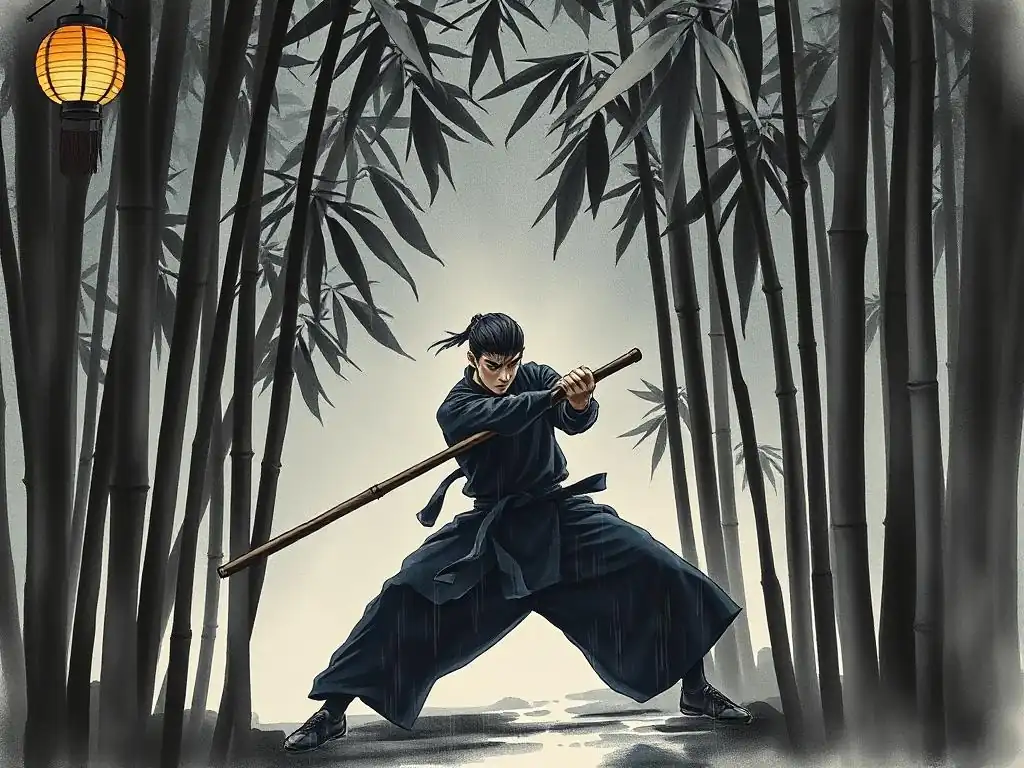
The Rigorous Training Regimen of Ninja Clans
Training in Ninjutsu tactics feudal Japan required was incredibly rigorous and began at a young age within specific clans or families, primarily in the Iga and Koka regions. This training encompassed a wide range of skills far beyond just combat. Students learned survival in the wilderness, tracking, disguise, impersonation, cryptography (for secure communication), map reading, explosives, poisons, and the use of specialized tools.
Physical conditioning was intense, focusing on endurance, agility, climbing, swimming, and silent movement. Mental discipline was equally crucial, emphasizing patience, observation, memory, and the ability to remain calm under pressure. This comprehensive training prepared agents for the diverse and dangerous missions inherent in utilizing Ninjutsu tactics feudal Japan's warring states demanded.
Psychological Warfare: Mastering Fear and Deception
Psychological warfare was an integral, though often overlooked, aspect of Ninjutsu tactics feudal Japan's agents employed. This involved methods aimed at demoralizing the enemy, spreading fear, and causing confusion without direct engagement. Techniques included spreading terrifying rumors about the ninja's abilities, leaving cryptic messages or symbols, or creating diversions that seemed inexplicable or supernatural to sow panic.
By manipulating the enemy's perceptions and fears, ninja could weaken their resolve, make them hesitant to act, or cause internal strife. For example, creating the impression that a castle was haunted or cursed could significantly impact the morale of its garrison. This mastery of deception and psychological manipulation was a sophisticated element of Ninjutsu tactics feudal Japan used to gain an intangible advantage.
Ninjutsu's Legacy: From Feudal Espionage to Modern Martial Arts
The Evolution of Ninjutsu Techniques
While the historical role of ninja as feudal spies and saboteurs faded with the unification of Japan under the Tokugawa Shogunate, the techniques and principles of Ninjutsu did not entirely disappear. Some aspects of the training were preserved within certain lineages, evolving over time. The focus shifted away from active espionage for warring lords towards personal development, self-defense, and the preservation of traditional knowledge.
Modern martial arts schools claiming lineage to historical Ninjutsu often emphasize a broader curriculum than just combat, including elements of survival, strategy, and psychological awareness, reflecting the comprehensive nature of the original Ninjutsu tactics feudal Japan's agents practiced. While the specific historical context is gone, the underlying principles of adaptability, efficiency, and understanding one's environment continue to resonate.
The Influence of Ninjutsu on Modern Special Operations
The historical Ninjutsu tactics feudal Japan saw developed for clandestine operations bear striking similarities to principles employed in modern special forces and intelligence agencies. Concepts like stealth, infiltration, disguise, intelligence gathering, sabotage, and psychological operations are fundamental to unconventional warfare and espionage today.
While there's no direct lineage, the operational methodologies of historical ninja—operating in small, highly trained units behind enemy lines, gathering intelligence, and disrupting operations—parallel the core functions of modern special forces. The study of historical Ninjutsu tactics feudal Japan utilized offers valuable insights into the enduring principles of clandestine operations and irregular warfare that remain relevant in contemporary military and security contexts.
Conclusion: The Enduring Relevance of Ninjutsu's Espionage Tactics
Understanding the Historical Significance of Ninjutsu in Feudal Japan
Moving beyond the popular myths, the historical significance of Ninjutsu in feudal Japan lies in its role as a sophisticated system of espionage, intelligence gathering, and irregular warfare. Ninja were highly specialized agents who provided feudal lords with a crucial strategic advantage in an era of constant conflict. Their skills in infiltration, disguise, sabotage, and information management were vital complements to the more conventional military forces of the time.
The documented Ninjutsu tactics feudal Japan's historical records hint at reveal a pragmatic and effective approach to warfare that prioritized achieving objectives through clandestine means. Studying these historical realities offers a deeper understanding of the complexities of warfare during this period and the diverse roles played by different types of operatives.
Ninjutsu: More Than Just Myths and Legends
While the legends surrounding ninja are captivating, the true story of Ninjutsu tactics feudal Japan employed is rooted in the practical realities of espionage and survival. Historical ninja were not mystical warriors but highly trained professionals who mastered a unique set of skills for clandestine operations. Their contributions to warfare, through intelligence, sabotage, and psychological tactics, were significant, even if often hidden from public view.
The legacy of Ninjutsu, stripped of its fantastical elements, is one of adaptability, resourcefulness, and the strategic power of information and indirect action. Understanding the historical Ninjutsu tactics feudal Japan utilized provides a valuable perspective on the art of espionage and unconventional warfare, demonstrating their enduring relevance beyond the realm of myth and legend.
Frequently Asked Questions
What exactly are Ninjutsu tactics, as understood in the context of feudal Japan?
Ninjutsu tactics encompass a range of espionage and unconventional warfare techniques used by ninja. These included infiltration, sabotage, and assassination, all aimed at disrupting enemy operations.
How does the historical reality of Ninjutsu tactics differ from popular myths and legends?
While myths often portray ninja as superhuman warriors, documented tactics reveal a focus on practical skills like disguise, information gathering, and avoiding direct combat when possible.
What role did Ninjutsu tactics play in the feudal military strategies of Japan?
Ninjutsu tactics provided valuable intelligence and disruptive capabilities to feudal lords. They were often used to weaken enemies before large-scale battles.
What types of historical documentation support the existence of specific Ninjutsu tactics?
Surviving military manuals and clan records contain descriptions of infiltration techniques, weaponry, and communication methods used by ninja during the feudal period.
Besides espionage, what other practical self-defense strategies were associated with Ninjutsu tactics?
Ninjutsu incorporated evasion techniques, unarmed combat skills, and the use of specialized tools for self-protection when facing overwhelming odds.
Final Reflection: Unveiling Shadows, Inspiring Resilience
The exploration of Ninjutsu tactics in feudal Japan, as documented beyond the romanticized myths, reveals a profound truth: ingenuity and adaptability are timeless weapons. The strategies employed by these shadow warriors, born from necessity and honed through rigorous training, resonate even today in fields ranging from cybersecurity to strategic negotiation, proving that the principles of stealth, deception, and resourcefulness transcend historical context.
The enduring fascination with Ninjutsu stems not just from its mystique, but from its embodiment of human potential under pressure. The ability to overcome seemingly insurmountable odds, to operate in the shadows and achieve strategic victories, speaks to a deep-seated desire for empowerment and resilience within us all. The supreme art of war is to subdue the enemy without fighting.
- Sun Tzu. This quote, though not directly about Ninjutsu, perfectly encapsulates the core philosophy of avoiding direct confrontation and achieving objectives through cunning and strategic maneuvering, a principle deeply embedded in the ninja's way.
As we step away from the historical accounts and documented tactics, let us carry forward the spirit of the ninja: a spirit of relentless pursuit of knowledge, unwavering adaptability, and the courage to think outside the conventional. Embrace the shadows, not to hide, but to find new perspectives and to cultivate the inner strength to overcome any challenge. Let the lessons of Ninjutsu tactics in feudal Japan inspire you to become a more resourceful, resilient, and ultimately, more effective individual in your own life.
Unlock Your Inner Ninja: Begin Your Journey Now!
Thanks for diving deep into the world of historical ninjutsu! We hope you've gained valuable insights into the documented espionage tactics employed in feudal Japan. Now, it's time to put that knowledge into action and explore this fascinating subject further.
- Delve deeper: Embark on your own research project, starting with primary source translations available online. Uncover hidden details and form your own conclusions.
- Discuss and share: Share this article with fellow history and martial arts enthusiasts. Let's build a community dedicated to uncovering historical accuracy in martial arts.
- Explore the tangible: Visit a museum exhibit featuring Edo period artifacts or weaponry (if accessible). See history come alive through the objects of the past.
What's one specific tactic or historical detail from this article that you're most eager to research further? Share your thoughts in the comments!