
The Rise of Martial Arts Tournaments: From Local Contests to International Spectacles

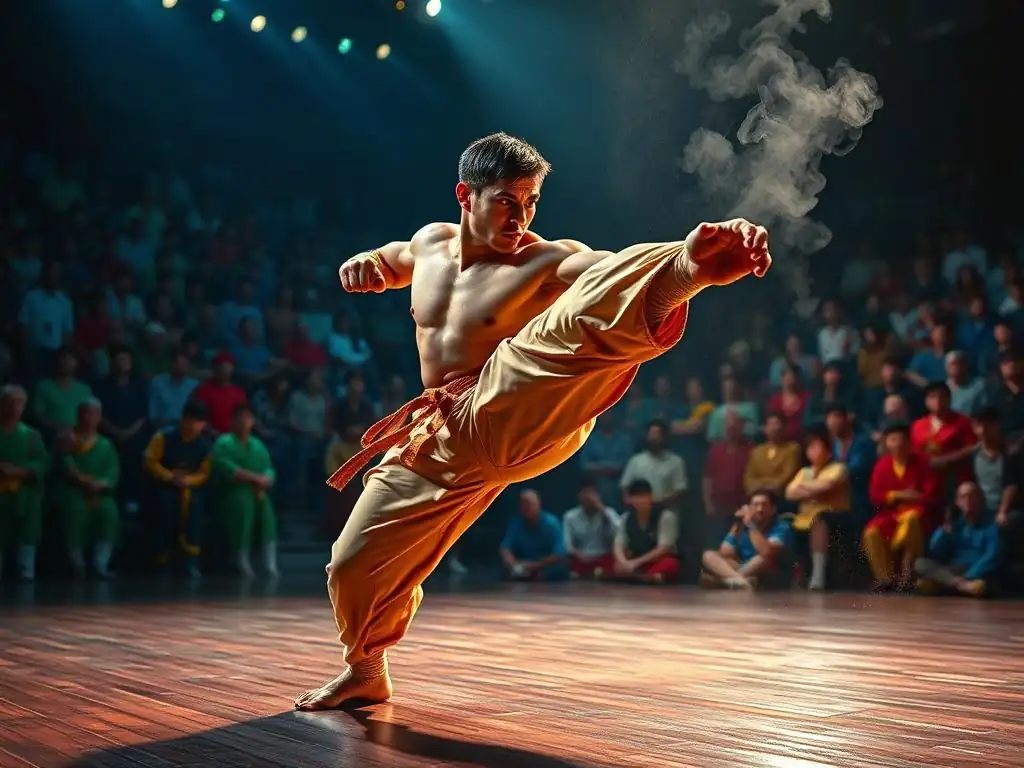
Welcome to Martial Arts Mastery, your gateway to unlocking the profound depths of combat traditions worldwide. Ever wondered how the spirit of the dojo translated into the global phenomenon of modern competition? Delve into our exploration of martial arts tournament growth trends and discover the fascinating evolution from ancient local contests to the electrifying international spectacles we know today. Prepare to be captivated by the history, strategy, and cultural impact that fuels this dynamic arena.
- The Rise of Mixed Martial Arts: From Underground Brawls to Global Sport
- Introduction: Tracing MMA Growth Trends
- Early Forms of Mixed Combat: Roots and Traditions
- The Development of Modern MMA Tournaments
- The Globalization of MMA Tournaments
- MMA Tournament Growth Trends: Key Factors Driving Expansion
- Different Types of MMA Tournaments: A Comparative Analysis
- The Impact of MMA Tournaments on Training and Technique
- Challenges and Controversies in MMA Tournament Culture
- The Future of MMA Tournaments: Trends and Predictions
- Conclusion: The Enduring Legacy of Mixed Martial Arts Tournaments
-
Frequently Asked Questions
- What factors have contributed to the growth of martial arts tournaments globally?
- How have martial arts tournaments evolved from local events to international spectacles?
- What are some of the key benefits of participating in martial arts tournaments?
- What role does technology play in the growth and expansion of martial arts tournaments?
- What are some emerging trends we can expect to see in future martial arts tournaments?
- Final Reflection: The Enduring Spirit of Competition
- Embrace Your Inner Warrior: Ignite Your Tournament Journey!
The Rise of Mixed Martial Arts: From Underground Brawls to Global Sport
Introduction: Tracing MMA Growth Trends
The Evolution of Combat Sports: A Historical Overview
The lineage of combat sports stretches back millennia, predating written history. Ancient civilizations practiced forms of wrestling, boxing, and weapon-based combat for sport, military training, and ritual. The Greek Olympics featured pankration, a brutal blend of wrestling and boxing, often cited as an early precursor to modern mixed martial arts due to its permissive rules allowing striking and grappling on the ground.
Over the centuries, various cultures developed their distinct fighting systems, from the wrestling of Persia and India to the striking arts of East Asia. These disciplines often evolved in isolation or through limited exchange, focusing intensely on specific ranges or techniques.
The late 19th and early 20th centuries saw the rise of codified modern sports like boxing and freestyle wrestling, gaining international prominence. However, the idea of pitting practitioners of different styles against each other persisted, often in informal challenges or underground contests. These early cross-style bouts lacked standardized rules, weight classes, or regulatory oversight, making them unpredictable and often dangerous. Despite the lack of formal structure, these challenges fueled curiosity about the efficacy of different martial arts styles and laid the groundwork for the eventual emergence of organized mixed combat competitions, hinting at future MMA tournament growth trends.
Sherdog.com: Exploring the Global Phenomenon of MMA Culture
Sherdog.com stands as a prime example of how dedicated platforms have documented and fostered the growth of mixed martial arts culture. Launched in 1997, relatively early in the sport's modern resurgence, the website quickly became a central hub for news, fighter profiles, fight results, and forums dedicated to MMA. Its comprehensive fight database, chronicling thousands of bouts across numerous promotions globally, became an invaluable resource for fans, journalists, and researchers alike, providing empirical data points on the sport's expansion.
The platform's longevity and depth of coverage reflect the increasing global interest in MMA. Beyond just reporting results, Sherdog helped build a community, allowing fans to discuss events, analyze techniques, and debate fighter rankings. This digital infrastructure played a significant role in connecting disparate parts of the emerging MMA world, contributing to the awareness and understanding of the sport as it transitioned from a niche interest to a mainstream spectacle, significantly impacting how MMA tournament growth trends were perceived and tracked by enthusiasts worldwide.
Early Forms of Mixed Combat: Roots and Traditions
Ancient Pankration: Precursors to Modern MMA
Pankration, meaning "all of might," was an ancient Greek combat sport introduced into the Olympic Games in 648 BC. It combined elements of ancient Greek boxing (pygmachia) and wrestling (pale), allowing virtually any technique except biting and gouging eyes. Competitors could strike with their hands and feet, employ throws, joint locks, and chokeholds, and the fight continued until one participant surrendered or was incapacitated. This 'anything goes' philosophy, while brutal, is often cited as the most direct historical parallel to modern MMA's early, less-regulated forms.
Matches often ended quickly but could also become grueling tests of endurance, sometimes lasting for hours. The sport was not just a physical contest but also tested a fighter's strategic thinking and ability to adapt their techniques under pressure.
Famous pankratiasts like Arrichion of Phigalia, who allegedly won an Olympic title posthumously by forcing his opponent to submit as he himself died from a broken neck, highlight the extreme nature of the competition. The legacy of pankration underscores the ancient human fascination with pitting diverse combative skills against one another, a fundamental driver behind the MMA tournament growth trends we observe today.
Vale Tudo in Brazil: A Lawless Beginning
Vale Tudo, Portuguese for "anything goes," represents a significant modern antecedent to mixed martial arts, particularly originating in Brazil in the 20th century. These contests were often held in circuses or small arenas, pitting practitioners of different martial arts – notably Brazilian Jiu-Jitsu against Luta Livre, Capoeira, or other striking disciplines – with minimal rules. There were typically no weight classes, no time limits in the early days, and few restrictions on techniques, creating intense, raw confrontations focused on proving the superiority of one style over another.
The Gracie family, pioneers of Brazilian Jiu-Jitsu, were central figures in the Vale Tudo scene, using these challenges to demonstrate the effectiveness of their grappling system against striking arts. Helio Gracie and his sons, like Rickson Gracie, participated in numerous such matches, building the reputation of BJJ. While often chaotic and lacking formal organization, the Vale Tudo environment provided a proving ground for cross-training and strategy development, directly influencing the techniques and competitive spirit that would later define modern MMA tournaments and contribute to the initial understanding of MMA tournament growth trends within the martial arts community.
The Role of Dojo Challenges in Fostering Competition
Throughout the history of martial arts, challenges between different dojos or schools have been a traditional method for practitioners to test their skills and the efficacy of their style against others. These challenges, sometimes formal and sometimes informal, served as early, localized forms of mixed combat. A karate dojo might challenge a judo dojo, or a kung fu school might test its techniques against a wrestling club. These encounters were driven by pride in one's art and the desire to prove its superiority in practical application.
While not always resulting in full-contact fights in the way we understand them today (sometimes involving sparring under specific rules, or demonstrations), these challenges fostered a competitive spirit and encouraged practitioners to think beyond the confines of their own style. They highlighted the strengths and weaknesses of different approaches when applied against a resisting opponent from a different discipline. This historical tradition of testing styles against each other provided a cultural foundation for the acceptance and eventual popularity of organized tournaments that explicitly mixed martial arts, influencing the early trajectory of MMA tournament growth trends.
The Development of Modern MMA Tournaments
The Influence of Japanese Shooto and Pancrase on MMA Structures
While the Ultimate Fighting Championship (UFC) is often credited with bringing MMA to mainstream attention in the West, Japanese promotions like Shooto and Pancrase played crucial roles in developing structured, rule-based mixed martial arts competitions in the late 1980s and early 1990s. Shooto, founded by Satoru Sayama (a former pro wrestler and martial artist), established weight classes, specific rounds, and a more defined rule set than the 'anything goes' Vale Tudo. It was initially designed to be a combat sport for professional martial artists.
Pancrase, founded by pro wrestlers Masakatsu Funaki and Minoru Suzuki, also featured rule sets that blended elements of professional wrestling and legitimate combat. While it initially had unique rules like prohibiting closed-fist strikes to the head when standing (though this evolved), it emphasized submissions and grappling exchanges. These Japanese organizations demonstrated that mixed-style fighting could be organized into a legitimate sport with rules, weight divisions, and scheduled events, providing a template that would influence promotions globally and contribute significantly to the formal structure underlying MMA tournament growth trends.
The Emergence of Unified Rules and Weight Classes
A critical turning point in the development of modern MMA tournaments was the establishment of unified rules and standardized weight classes. Early promotions, including the initial UFC events, had minimal rules, leading to unpredictable and sometimes controversial outcomes. As the sport sought legitimacy and wider acceptance, particularly in the United States, there was a push for greater regulation. This effort culminated in the development of the Unified Rules of Mixed Martial Arts, first drafted in New Jersey in 2000 and later adopted by various athletic commissions across North America.
These rules standardized fouls (like eye-gouging, biting, groin strikes), defined legal striking areas, regulated ground fighting, and implemented a scoring system for judges. Crucially, the Unified Rules also mandated specific weight classes (e.g., Lightweight at 155 lbs, Welterweight at 170 lbs, Middleweight at 185 lbs, etc. ), ensuring fairer competition by preventing significant size disparities between opponents. This standardization was vital for the sport's widespread legalization and acceptance by regulatory bodies, paving the way for more organized, safer, and professional tournaments, directly fueling subsequent MMA tournament growth trends.
Key Figures in Shaping Early MMA Tournament Formats: Art Davie and Rorion Gracie
The early structure of the Ultimate Fighting Championship, which significantly shaped modern MMA tournaments, owes much to figures like Art Davie and Rorion Gracie. Art Davie, a marketing executive, conceived the idea of an eight-man single-elimination tournament pitting different martial arts styles against each other. He sought out Rorion Gracie, a prominent figure in Brazilian Jiu-Jitsu in the United States, who was already promoting challenge matches to showcase BJJ's effectiveness.
Gracie's involvement provided the martial arts credibility and access to fighters, particularly the dominant Royce Gracie, who would become the face of the early UFC tournaments by defeating larger opponents from various disciplines. Davie provided the business acumen and vision for a pay-per-view spectacle.
Together, they (along with others like John Milius and Bob Meyrowitz) launched UFC 1 in 1993, which featured a single-night tournament format. While the rules were minimal, the tournament structure was a clear, dramatic way to frame the "style vs. style" question, captivating audiences and setting a precedent for competitive formats that would evolve into the sophisticated tournaments driving current MMA tournament growth trends.
The Globalization of MMA Tournaments
The Spread of MMA to the West and its Impact on Competition
While Japan had structured MMA promotions like Shooto and Pancrase in the late 1980s and early 90s, the launch of the Ultimate Fighting Championship (UFC) in the United States in 1993 marked a pivotal moment in bringing mixed martial arts to a wider Western audience. Early UFC events, with their 'no holds barred' marketing and emphasis on style vs. style, generated controversy but also significant curiosity. Though initially facing regulatory hurdles and negative perceptions, the sport gradually gained traction.
As MMA spread across North America and Europe, it stimulated the development of local fighting scenes, gyms specializing in cross-training, and regional promotions. The demand for skilled fighters increased, leading to greater professionalization of training and competition. The spread wasn't just about promotions; it involved the establishment of training academies, the adaptation of traditional martial arts curricula to include cross-training, and the development of support industries like sports medicine for combat athletes. This foundational spread was essential for building the global athlete pool and fanbase necessary to support the accelerating MMA tournament growth trends seen today.
The Rise of International MMA Organizations: UFC, Bellator, ONE Championship
The global landscape of MMA tournaments is dominated by several major international organizations, each playing a crucial role in the sport's expansion. The UFC, following its acquisition by Zuffa in 2001 and subsequent adoption of the Unified Rules, transformed into the world's premier MMA promotion. Through savvy marketing, international expansion (holding events in Europe, Asia, South America, and Australia), and signing top talent, the UFC became synonymous with elite-level MMA.
Other promotions like Bellator MMA in the United States and ONE Championship based in Singapore have also emerged as significant players. Bellator often utilizes tournament formats within weight divisions to crown contenders or champions, while ONE Championship promotes a broader range of combat sports (including Muay Thai and Kickboxing) alongside MMA, with a strong focus on the Asian market. These organizations run regular, high-profile events globally, creating a continuous stream of competitive opportunities for fighters and entertainment for fans, directly powering the international aspect of MMA tournament growth trends.
The Pursuit of Olympic Recognition for MMA
The aspiration for mixed martial arts to be recognized as an Olympic sport reflects its increasing global legitimacy and structured nature. Achieving Olympic status would represent the ultimate validation for MMA as a mainstream athletic competition, placing it alongside sports like boxing, wrestling, and judo. Organizations like the International Mixed Martial Arts Federation (IMMAF) have been working towards this goal by advocating for standardized rules, promoting amateur MMA competition, and establishing national federations in numerous countries.
The path to Olympic inclusion is challenging, requiring widespread participation, a strong anti-doping program, and adherence to Olympic charter principles. While full inclusion may still be years away, the pursuit itself drives greater formalization and regulatory compliance within the sport at the amateur level. This push for global standardization and amateur development is a significant factor influencing the long-term trajectory of MMA tournament growth trends, encouraging grassroots participation and building a broader foundation for the sport worldwide.
MMA Tournament Growth Trends: Key Factors Driving Expansion
Media Coverage and its Influence on Popularity: ESPN, Fox Sports
The significant increase in media coverage has been a primary catalyst for the rapid MMA tournament growth trends over the past two decades. Early MMA events struggled to find broadcast partners, often relegated to pay-per-view or niche cable channels. However, landmark broadcast deals, such as the UFC's partnership with Fox Sports starting in 2011 and the subsequent long-term deal with ESPN in 2019, dramatically increased the sport's visibility.
Being featured on major sports networks exposed MMA to millions of potential new fans who might not have sought out pay-per-view events. Regular broadcasts of fights, pre-fight shows, analysis, and fighter profiles on mainstream sports channels helped normalize the sport and build star power around its athletes. This consistent, widespread media presence transformed MMA from a subculture phenomenon into a widely recognized and followed sport, directly fueling the acceleration of MMA tournament growth trends globally.
Sponsorship and Commercialization of MMA Events: Monster Energy, Reebok
As MMA tournaments gained popularity and media exposure, they became increasingly attractive platforms for corporate sponsorship and commercialization. Major brands, ranging from energy drinks like Monster Energy to athletic apparel companies like Reebok (which had an exclusive outfitting deal with the UFC for several years), began investing heavily in the sport. This influx of sponsorship revenue provided promotions with the capital needed to host larger events, pay fighters more, and invest in production quality and marketing.
The commercialization extends beyond direct sponsorships to merchandise sales, video games, and other ancillary products, further embedding MMA into the broader sports and entertainment industry. This financial growth cycle allows promotions to expand into new markets, build state-of-the-art training facilities, and enhance the overall presentation of their tournaments, making them more appealing to both participants and spectators. The increasing commercial viability is a clear indicator and driver of the positive MMA tournament growth trends.
The Appeal of MMA Tournaments to Spectators and Participants: Thrill of Competition
At its core, the appeal driving MMA tournament growth trends lies in the inherent human fascination with competition and combat. For spectators, MMA offers a unique blend of athletic prowess, strategic depth, and unpredictable drama. The possibility of a fight ending instantly via knockout or submission, combined with the visible struggle and resilience of the athletes, creates a compelling and often thrilling viewing experience unmatched by many other sports.
For participants, MMA tournaments offer a challenging and rewarding path to test their skills against diverse opponents. The sport demands a comprehensive skillset – proficiency in striking, grappling, wrestling, and conditioning – pushing athletes to become well-rounded martial artists. The opportunity to compete on increasingly large stages, gain recognition, and potentially earn a living doing what they love serves as a powerful motivator. This mutual appeal to both viewers and fighters forms the fundamental engine behind the sustained growth and popularity of MMA tournaments.
Different Types of MMA Tournaments: A Comparative Analysis
Regional MMA Promotions: Local Talent Development
Regional MMA promotions are the bedrock of the sport's ecosystem, serving as vital proving grounds for aspiring fighters. Organizations like Cage Warriors in Europe, Legacy Fighting Alliance (LFA) in the US, or numerous smaller shows across continents operate at a local or national level. These promotions provide opportunities for amateur fighters to turn professional and for professional fighters to gain experience, hone their skills, and build a record before potentially moving to larger international stages.
These regional tournaments are crucial for identifying and developing talent. They offer a platform for fighters who may not yet have the experience or name recognition for major promotions but possess significant potential. The competition level is high, providing realistic competitive pressure and allowing fighters to adapt their training and strategies based on real fight outcomes. The health and vibrancy of these regional circuits are essential indicators of the grassroots strength contributing to overall MMA tournament growth trends.
Championship-Focused MMA: The Pursuit of Titles
The most common format in major MMA organizations like the UFC and ONE Championship is centered around championship titles. Fighters compete in non-tournament bouts to climb the rankings within their respective weight classes, aiming to earn a title shot against the reigning champion. This structure builds narratives around individual fighters' journeys, creating anticipation for title fights which represent the pinnacle of achievement in the sport.
While not a traditional bracketed tournament, the entire competitive structure is geared towards identifying the best fighter in each division. Fighters often have to defeat multiple top contenders to earn or defend a belt. This model emphasizes consistent performance and strategic matchmaking over the rapid-fire nature of single-night tournaments. The prestige associated with these championships is a major driver for both fighter ambition and fan interest, significantly contributing to the overall value and visibility reflected in MMA tournament growth trends.
Tournament-Based MMA: Single-Night and Multi-Event Competitions
While championship bouts dominate the major promotions, explicit tournament formats still exist and contribute to the diversity of MMA competition. Single-night tournaments, reminiscent of the early UFC events, test a fighter's endurance and ability to compete multiple times in one evening, often with significant stakes or prizes. Promotions like Rizin Fighting Federation in Japan occasionally host such events, adding a unique element of unpredictability.
Multi-event tournaments, where fights occur over several weeks or months leading to a final, are also employed by some promotions, notably Bellator MMA with its "Grand Prix" series. These tournaments allow for more recovery time between bouts while still providing the clear progression and dramatic arc of a bracketed competition. Both formats offer distinct challenges and appeal, providing alternative pathways for fighters and varied viewing experiences for fans, diversifying the landscape and contributing to the multifaceted nature of MMA tournament growth trends.
The Impact of MMA Tournaments on Training and Technique
Cross-Training in Multiple Martial Arts Disciplines
The advent and evolution of MMA tournaments fundamentally changed how martial artists train. Early 'style vs. style' contests quickly demonstrated that proficiency in only one discipline was insufficient against a well-rounded opponent. A pure striker would be vulnerable to takedowns and ground fighting, while a pure grappler might struggle against effective striking defense. This led to the widespread adoption of cross-training as an essential component of preparing for MMA competition.
Modern MMA fighters typically train in a combination of striking arts (like boxing, Muay Thai, kickboxing), grappling arts (like Brazilian Jiu-Jitsu, judo, Sambo), and wrestling (folkstyle, freestyle, Greco-Roman). They learn to integrate these different ranges and techniques seamlessly, transitioning from striking to wrestling to grappling and back. This emphasis on developing a diverse skillset is a direct consequence of the demands imposed by the competitive environment of MMA tournaments, profoundly influencing martial arts training globally.
The Evolution of Training Methods to Meet Competitive Demands: Strength and Conditioning
Beyond technical skill development, MMA tournaments have driven a significant evolution in fighter training methods, particularly in the areas of strength and conditioning. The high-intensity, intermittent nature of rounds, combined with the physical demands of grappling, striking, and wrestling, requires a unique blend of power, endurance, speed, and injury resilience. Early fighters often relied on traditional martial arts conditioning, which was not always optimized for the specific physiological demands of MMA.
Today, professional MMA fighters employ sophisticated strength and conditioning programs developed by sports science experts. These programs focus on building explosive power for takedowns and strikes, developing muscular endurance for grappling exchanges, improving anaerobic capacity for intense bursts of activity, and enhancing overall athleticism and injury prevention. The rigorous physical demands of competing in modern MMA tournaments have made specialized strength and conditioning an indispensable part of fighter preparation, highlighting how competition drives training innovation.
The Influence of Tournaments on MMA Styles and Philosophies: Constant Evolution
The continuous competitive environment of MMA tournaments fosters a dynamic and ever-evolving landscape of fighting styles and philosophies. As fighters test different combinations of techniques in real bouts, successful strategies are adopted and refined, while less effective ones are discarded. For example, the early dominance of Brazilian Jiu-Jitsu led to fighters developing strong takedown defense and ground-and-pound. As striking improved, wrestling became crucial for controlling where the fight takes place.
This ongoing arms race of techniques and strategies means that the "meta" of MMA is constantly shifting. Fighters and coaches must continually analyze past fights, identify emerging trends, and adapt their training to stay competitive. What was effective five years ago might be less so today. This constant pressure to innovate and evolve, driven by the need to win in the tournament setting, ensures that MMA remains a cutting-edge combat sport and is a fundamental factor shaping the observed MMA tournament growth trends in terms of technical proficiency and strategic depth.
Challenges and Controversies in MMA Tournament Culture
Issues of Safety and Regulation in Combat Sports: Concussion Protocols
Safety remains a paramount concern and a subject of ongoing debate within MMA tournament culture. While significant strides have been made since the early, less-regulated days, the inherent nature of combat sports carries risks. Head trauma and concussions are particularly serious issues. Regulatory bodies and promotions have implemented various measures to enhance fighter safety, including mandatory medical testing, pre-fight physicals, ringside doctors, and immediate medical attention protocols.
Specific efforts include stricter rules against certain dangerous techniques (like strikes to the back of the head or downed opponents), improved referee training to recognize and stop fights appropriately, and concussion protocols similar to those in other contact sports. Despite these measures, the long-term effects of repeated head impacts remain a significant area of research and concern. Ensuring fighter safety is crucial for the sport's long-term sustainability and public acceptance, directly impacting the perception and responsible management of MMA tournament growth trends.
The Debate Over Weight Cutting and its Impact on Fighter Health
Weight cutting, the practice of rapidly losing a significant amount of weight (primarily water) before a weigh-in, is a widespread yet controversial aspect of MMA tournaments. Fighters often compete in divisions significantly below their natural walking weight, dehydrating themselves to make weight and then rehydrating rapidly before the fight. While intended to gain a size advantage, extreme weight cutting poses serious health risks, including kidney damage, cardiovascular strain, and impaired cognitive function.
Tragic incidents, though rare, have occurred due to complications from severe dehydration. Regulatory bodies and promotions are exploring various solutions, such as stricter weigh-in protocols (e.g., early weigh-ins, multiple weigh-ins), hydration testing, or even proposing alternative weigh-in systems like same-day weigh-ins (which have their own drawbacks). Addressing the dangers associated with weight cutting is critical for fighter welfare and the ethical development of the sport, influencing how MMA tournament growth trends are viewed from a health and safety perspective.
Ethical Considerations in MMA Competition: Sportsmanship and Performance-Enhancing Drugs
Ethical considerations are crucial to maintaining the integrity and spirit of MMA tournaments. Sportsmanship, while generally high among professional fighters who respect the demanding nature of their sport, can sometimes be tested in the heat of competition or during pre-fight promotion. Promoting respect between competitors, coaches, and officials is vital for fostering a positive culture.
A more significant ethical challenge is the issue of performance-enhancing drugs (PEDs). The use of PEDs undermines fair competition, poses health risks to the users and their opponents, and damages the sport's credibility. Major promotions like the UFC have implemented rigorous anti-doping programs, often partnering with independent bodies like the U.S. Anti-Doping Agency (USADA) or instituting internal programs with strict testing protocols and penalties. Combating PEDs is an ongoing battle essential for ensuring a level playing field and maintaining public trust, which is fundamental for the continued positive trajectory of MMA tournament growth trends.
The Future of MMA Tournaments: Trends and Predictions
The Role of Technology in Enhancing the Tournament Experience: Replay Technology
Technology is increasingly playing a significant role in enhancing both the performance and viewing experience of MMA tournaments. Advanced replay technology, including multiple camera angles and slow-motion capabilities, is now standard in broadcasts, allowing officials, commentators, and fans to dissect the action with unprecedented detail. This technology is crucial for reviewing controversial moments, confirming fight-ending sequences, and assisting referees and judges.
Beyond broadcasting, technology is impacting training (e.g., motion capture analysis, physiological monitoring), fighter safety (e.g., advanced medical imaging, concussion detection research), and fan engagement (e.g., virtual reality experiences, interactive statistics). As technology continues to evolve, expect it to be further integrated into the production, analysis, and consumption of MMA tournaments, making the sport more accessible, understandable, and safe, thereby supporting future MMA tournament growth trends.
The Potential for New Weight Classes and Rule Sets to Emerge
The structure of MMA tournaments, including weight classes and specific rule sets, is not static and may continue to evolve in the future. Discussions periodically arise about the potential need for additional weight classes, particularly between existing ones (e.g., a 'Super Lightweight' or 'Super Middleweight') to mitigate extreme weight cutting and provide more options for fighters. This could lead to fairer matchups and potentially reduce health risks.
Furthermore, while the Unified Rules are widely adopted, variations exist in different jurisdictions or promotions (e.g., knees to a downed opponent). Future rule adjustments might be made based on safety research, competitive balance, or to differentiate promotions. The potential for new rule sets could also allow for variations of MMA that emphasize different aspects of combat, similar to how combat sambo differs from sport sambo. Such structural changes could influence competitive strategies and open up new avenues for MMA tournament growth trends.
The Continued Growth of MMA Tournament Growth Trends: A Global Perspective
Looking ahead, the overall trajectory for MMA tournament growth trends appears positive, driven by increasing global penetration and professionalization. The sport continues to gain popularity in new markets, particularly in Asia, Africa, and South America, where dedicated promotions and fanbases are developing. The pipeline of talent is widening as more individuals worldwide take up mixed martial arts training.
The professionalization of the sport continues, with improved fighter pay, better medical support, and more sophisticated management structures. As the sport matures, it becomes a more viable and attractive career path for athletes. While challenges related to safety, regulation, and athlete welfare persist, the fundamental appeal of mixed combat, combined with expanding media reach and commercial investment, suggests that MMA tournaments will continue to grow in scale, sophistication, and global reach in the coming years, solidifying their place in the international sports landscape.
Conclusion: The Enduring Legacy of Mixed Martial Arts Tournaments
Frequently Asked Questions
What factors have contributed to the growth of martial arts tournaments globally?
Several factors are at play, including increased media exposure, the professionalization of martial arts, and the growing popularity of mixed martial arts (MMA). These trends have broadened the appeal of martial arts competitions.
How have martial arts tournaments evolved from local events to international spectacles?
Initially, tournaments were small, community-based affairs. Increased sponsorship, global broadcasting rights, and the rise of recognizable martial arts organizations have elevated them to international levels.
What are some of the key benefits of participating in martial arts tournaments?
Tournaments offer opportunities for skill development, building confidence, and networking with other martial artists. They also provide a platform for testing one's abilities under pressure.
What role does technology play in the growth and expansion of martial arts tournaments?
Technology facilitates live streaming, instant replay analysis, and improved judging systems. This enhances the viewing experience and increases the transparency and fairness of the competitions.
What are some emerging trends we can expect to see in future martial arts tournaments?
Expect to see more diverse martial arts disciplines represented, enhanced virtual reality (VR) viewing experiences, and a greater emphasis on athlete safety and fair competition practices.
Final Reflection: The Enduring Spirit of Competition
The journey of martial arts tournaments, as we've explored, is a testament to the enduring human desire for competition and self-improvement. From humble beginnings in local dojos to the dazzling spectacle of international events, the growth of these tournaments reflects a deeper societal shift towards embracing discipline, skill, and the pursuit of excellence. This evolution isn't just about bigger venues and larger audiences; it's about the globalization of ancient traditions and the democratization of access to martial arts training and competition.
The impact of this growth on the cultural landscape is undeniable. Martial arts tournaments, once niche events, now serve as powerful platforms for cultural exchange, personal growth, and community building. They offer opportunities for individuals from all walks of life to test their mettle, learn from others, and forge lasting bonds. As Bruce Lee so eloquently stated: Adapt what is useful, reject what is useless, and add what is specifically your own.
This sentiment perfectly encapsulates the spirit of martial arts and the evolving nature of these tournaments, where tradition meets innovation.
Now, as you reflect on the remarkable growth trends of martial arts tournaments, consider how you can apply the principles of discipline, perseverance, and continuous improvement to your own life. Embrace the challenge, seek out opportunities for growth, and never underestimate the power of dedication. The spirit of competition, the pursuit of excellence, and the unwavering commitment to self-improvement are not confined to the martial arts arena; they are universal values that can empower you to achieve your full potential in any endeavor.
Embrace Your Inner Warrior: Ignite Your Tournament Journey!
Thank you for exploring the exciting evolution of martial arts tournaments with us! We hope you’ve gained valuable insights into the dedication, strategy, and global camaraderie that fuels these spectacular events. Now, it’s time to translate that knowledge into action.
Here's how you can continue your journey:
- Find and attend a local martial arts tournament. Witness the skill and passion firsthand and maybe even discover a new favorite style!
- Share this article with fellow martial arts enthusiasts to spark conversations about the future of these competitions.
- Consider volunteering at a tournament near you. It's a fantastic way to support the community and get an inside look at the organizational aspects.
Ready to step into the vibrant world of martial arts tournaments?