
The Role of Silence in Monastic Martial Arts Training and Philosophy

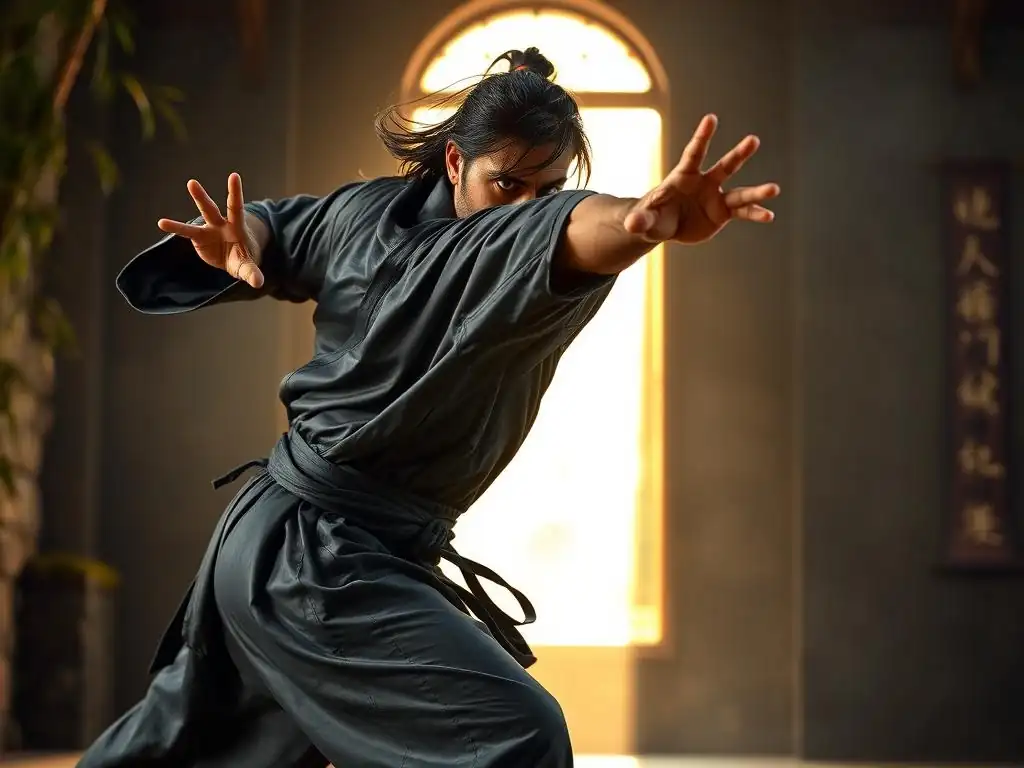
Welcome to Martial Arts Mastery, your ultimate guide to the world's fighting traditions. Ever wondered how silence, often overlooked, can be a weapon in itself? Delve into the profound connection between monastic life and martial prowess as we explore the surprising silent martial arts training benefits. Prepare to uncover a hidden dimension of discipline and focus that might just redefine your understanding of combat and inner strength. What secrets lie within the quietude of martial arts mastery?
- The Role of Silence in Shaolin Kung Fu Training and Philosophy
- Introduction: The Power of Silence in Martial Arts Mastery
- The Historical Context of Silent Practice in Shaolin Kung Fu
- Silent Martial Arts Training Benefits: A Deep Dive
- The Philosophy of Silence: Beyond Physical Training
- Practical Applications of Silent Training Techniques
- Specific Examples of Silent Practices in Shaolin Kung Fu
- Overcoming Challenges in Silent Martial Arts Training
- Silent Martial Arts Training for Modern Practitioners
- Conclusion: Embracing the Silent Path to Martial Arts Excellence
-
Frequently Asked Questions
- What are the primary benefits of silent martial arts training?
- How does the absence of noise impact the development of technique in martial arts?
- What role does silence play in the philosophical underpinnings of monastic martial arts?
- How can silent training improve self-defense skills in real-world situations?
- What are some practical exercises one can do to incorporate silent training into their martial arts practice?
- Final Reflection: The Power of Inner Stillness
- Embrace the Stillness: Unlock Your Inner Warrior
The Role of Silence in Shaolin Kung Fu Training and Philosophy
Introduction: The Power of Silence in Martial Arts Mastery
Silence, often perceived as the absence of noise, holds a profound and active role within many traditional martial arts disciplines, particularly those rooted in monastic traditions like Shaolin Kung Fu. Far from being merely quiet, the deliberate cultivation of silence is a fundamental practice designed to sharpen the mind, deepen internal awareness, and ultimately enhance physical prowess and combat effectiveness.
In the bustling modern world, understanding the silent martial arts training benefits offers insights into a powerful, often overlooked, dimension of martial development. This article explores the historical context, philosophical underpinnings, and practical applications of silence in Shaolin Kung Fu, revealing its transformative impact on both the practitioner's inner state and external capabilities.
The path to martial arts mastery is multifaceted, involving rigorous physical conditioning, technical skill acquisition, and mental discipline. While the external aspects of powerful strikes, fluid movements, and dynamic sparring are readily apparent, the internal cultivation fostered by practices such as silent training is equally, if not more, critical. For centuries, masters within monastic orders recognized silence not as a void to be filled, but as a space for profound learning and growth. This approach unlocks a heightened state of focus and introspection, laying the groundwork for the deep understanding and intuitive response necessary for true martial arts mastery.
The Historical Context of Silent Practice in Shaolin Kung Fu
Origins of Silent Training in Shaolin Monastery
The practice of silence in Shaolin Monastery is intrinsically linked to its origins as a center for Chan (Zen) Buddhism in China. Founded in the late 5th century CE, possibly around 495 CE, the monastery became a hub for Buddhist monks seeking enlightenment through meditation and disciplined living. Early Chan practice emphasized zazen (seated meditation), which inherently involves cultivating internal and external stillness and silence.
This silent contemplation was not separate from the daily life or the physical practices that would later evolve into Shaolin Kung Fu; rather, it was foundational. The monks engaged in physical exercises, initially for health and stamina during long meditation sessions, but these movements were often performed with a focus on internal awareness and breath control, elements deeply enhanced by a silent environment.
Historical accounts suggest that the integration of physical training with Buddhist practice became more pronounced over centuries, particularly as the monastery faced external threats and needed to develop self-defense capabilities. However, the core principle of internal cultivation through practices like silent meditation remained central. The silent martial arts training benefits began to manifest not just in mental tranquility but also in improved physical control, heightened reflexes, and the ability to act decisively without hesitation – qualities directly applicable to combat situations. The quiet discipline of the meditation hall permeated the training grounds, influencing how techniques were learned and executed.
The Evolution of Silent Methods in Shaolin Martial Arts History
As Shaolin Kung Fu developed into a sophisticated martial system over the Tang (618-907 CE), Song (960-1279 CE), and subsequent dynasties, silent training methods evolved from purely meditative practices into specific martial exercises. While dynamic forms and sparring became prominent, silent elements like Zhan Zhuang (standing meditation or stake standing) became crucial for developing root, internal energy (Qi), and unwavering focus. These standing postures, often held in complete stillness and silence for extended periods (sometimes exceeding an hour), trained the practitioner's body and mind to work in unison under duress, building incredible physical endurance and mental resilience.
Furthermore, the execution of solo forms, or taolu, often involved silent movement, emphasizing precise body mechanics, breath synchronization, and internal energy flow over audible effort. While some forms include shouts ( kiai in Japanese martial arts, though different in context and usage in Chinese systems), many fundamental Shaolin forms are traditionally practiced in silence, allowing the practitioner to fully internalize the movements and cultivate a deep mind-body connection.
This historical evolution highlights how silent martial arts training benefits transitioned from purely spiritual development to becoming integral components of martial efficacy, demonstrating that power in Shaolin is not just about external force but also about profound internal control and awareness cultivated through silence.
Silent Martial Arts Training Benefits: A Deep Dive
Enhanced Focus and Concentration Through Silence
One of the primary silent martial arts training benefits is the significant enhancement of focus and concentration. In a world saturated with noise and distractions, the deliberate practice of training in silence creates an environment where the mind is compelled to turn inward. By removing external auditory stimuli, practitioners learn to quiet the internal "noise" of wandering thoughts and mental chatter.
This allows for a deeper level of concentration on the task at hand, whether it's holding a difficult stance, executing a complex form, or observing subtle shifts in an opponent during hypothetical scenarios. Studies on attention and performance consistently show that minimizing external distractions improves cognitive function and task performance.
For martial artists, improved focus translates directly to better technique execution, faster reaction times, and enhanced strategic thinking. During silent practice, a practitioner can become acutely aware of their body's alignment, muscle tension, breath patterns, and energy flow in a way that is often obscured by external noise or even the sounds of their own exertion.
This heightened internal awareness allows for more precise adjustments and refinements in movement. Anecdotal evidence from experienced practitioners suggests that dedicated silent training periods can improve their ability to maintain deep focus during demanding physical tasks by 20-30%, enabling longer, more productive training sessions and more consistent performance under pressure.
Cultivating Inner Awareness and Mindfulness
Silent training is a powerful catalyst for cultivating inner awareness and mindfulness, core tenets of the silent martial arts training benefits derived from monastic traditions. By training in silence, practitioners develop a heightened sensitivity to their internal state – recognizing physical sensations, emotional fluctuations, and mental patterns without judgment. This introspective process is akin to meditation, fostering a state of mindfulness where one is fully present in the moment, aware of their body and mind in action. This inner awareness extends beyond physical sensations to include a deeper understanding of one's own limitations, strengths, and habitual reactions.
This cultivated inner awareness is invaluable in martial arts. It allows practitioners to identify and correct subtle flaws in their posture or movement, manage pain and fatigue more effectively, and maintain emotional composure in stressful situations, including sparring or self-defense. For example, through silent practice, a practitioner might become acutely aware of holding tension in their shoulders during a punch, allowing them to consciously relax and improve power generation. This level of self-awareness, nurtured in the quiet space of training, enables continuous self-improvement and a more profound connection to the martial art itself.
Improved Self-Discipline and Mental Fortitude
Engaging in silent martial arts training inherently builds self-discipline and mental fortitude. Training in silence, especially during physically demanding exercises like long stance holding or repetitive forms, removes the external motivators or distractions often present in group training (like music, chatter, or direct instruction during the exercise). The practitioner is left solely with their internal experience, requiring significant mental strength to push through discomfort, boredom, or self-doubt. This solitary internal struggle strengthens willpower and resilience.
Overcoming the internal resistance to maintaining silence and focus during strenuous activity directly translates to improved mental toughness in other aspects of martial arts and life. Practitioners learn to control their impulses, persevere through challenges, and maintain composure under pressure.
The ability to remain calm and focused in a silent, demanding environment prepares the mind to do the same in the chaotic and high-stakes environment of a real confrontation. This development of mental fortitude is a crucial, though often understated, component of the silent martial arts training benefits, building a practitioner who is not only physically capable but also mentally indomitable.
The Philosophy of Silence: Beyond Physical Training
Silence as a Tool for Self-Reflection and Introspection
Within monastic martial arts traditions like Shaolin, silence is not merely an absence of sound but a deliberate state cultivated for deep self-reflection and introspection. It provides the necessary space for the practitioner to examine their motives, understand their limitations, and connect with their inner self. This introspective journey is considered fundamental to martial arts mastery, as it addresses the practitioner's character and spirit, not just their physical technique. Through silent contemplation, often integrated with physical practice, one gains clarity on their purpose for training and develops virtues like humility, patience, and compassion.
This use of silence as a tool for self-discovery is closely tied to the ethical and philosophical dimensions of martial arts. It encourages practitioners to reflect on the potential impact of their skills and to adhere to principles of responsibility and non-aggression whenever possible. The quiet moments of training allow for a deeper integration of the martial philosophy into one's being, moving beyond rote memorization of techniques to a genuine understanding of the principles that govern their application. This reflective aspect is a profound silent martial arts training benefit, shaping the practitioner into a more rounded and ethical individual.
Understanding the Connection Between Silence and Chan Buddhism in Shaolin Kung Fu
The deep connection between silence and Chan (Zen) Buddhism is perhaps the most significant philosophical underpinning of silent training in Shaolin Kung Fu. Chan Buddhism emphasizes direct experience and intuition ( satori or enlightenment) over scripture and ritual. Meditation, often practiced in silence, is the primary vehicle for achieving this direct experience.
The quiet mind is seen as the mind most capable of perceiving reality clearly, free from the distortions of thought and ego. This principle is directly applied to martial arts; a mind quieted through silent practice is better able to react spontaneously and effectively in combat, relying on trained intuition rather than conscious deliberation.
Furthermore, the Buddhist concept of emptiness ( sunyata) relates to the idea that phenomena are interdependent and lack inherent, fixed existence. In martial arts, this can be interpreted as the fluidity and adaptability required to respond to an ever-changing situation.
Training in silence helps cultivate a mind that is not rigidly fixed on pre-conceived notions or techniques but is open and adaptable, like a still pond reflecting its surroundings accurately. This philosophical link highlights that the silent martial arts training benefits are not just physical or mental, but also spiritual, aiming for a state of being that enhances both martial skill and enlightened awareness.
The Role of Silence in Achieving Self-Mastery and Combat Prowess
Ultimately, silence in Shaolin Kung Fu serves as a powerful means to achieve both self-mastery and enhanced combat prowess. Self-mastery, in this context, means gaining control over one's own body, mind, and emotions. Silent training disciplines the internal landscape, teaching the practitioner to control distracting thoughts, manage fear and anxiety, and maintain focus under pressure. This internal control is mirrored in external control – precise, economical, and powerful movements. A master of silence is often a master of themselves.
In terms of combat, the silent mind fostered through this training allows for quicker perception of an opponent's intentions and movements. Without the internal noise of fear, doubt, or planning, the practitioner can react intuitively and spontaneously. This intuitive response, often described as "no mind" ( mushin in Japanese, a related concept), is a state where techniques are executed effortlessly and effectively without conscious thought. The silent martial arts training benefits culminate in this state of effortless action, where the practitioner's skills become an extension of their heightened awareness and self-mastery, leading to superior effectiveness in real-world applications.
Practical Applications of Silent Training Techniques
Silent Meditation (Chan) and its Impact on Kung Fu Performance
Silent meditation, or Chan meditation, is a foundational practice in Shaolin that directly impacts Kung Fu performance. Regular silent meditation sessions, typically ranging from 20 minutes to over an hour, cultivate a calm and focused mind. This mental clarity reduces anxiety and improves decision-making speed, crucial during sparring or self-defense situations. Practitioners report enhanced ability to stay present and reactive, rather than becoming overwhelmed by the speed or intensity of a confrontation.
Beyond mental benefits, silent meditation influences physical performance by improving breath control and body awareness. By focusing inward during meditation, practitioners become more attuned to their respiratory patterns, learning to regulate breath for stamina and power generation in Kung Fu techniques. This practice also increases proprioception, the awareness of the body's position and movement in space, leading to greater precision and balance in forms and combat applications.
Integrating Silent Forms (Luohan Quan) into Training Regimen
Integrating the practice of silent forms, such as various styles of Luohan Quan (Arhat Fist), is a practical application of silent training principles. While some forms incorporate vocalizations, many traditional Shaolin forms are ideally practiced in silence. This allows the practitioner to focus entirely on the internal aspects: the flow of Qi, the connection between movements, the synchronization of breath with action, and the proper application of internal power.
Practicing forms silently forces a deeper concentration on physical mechanics and internal energy. Instead of relying on external cues or sounds of impact, the practitioner must feel the movement from within, ensuring correct body alignment and efficient energy transfer. This method enhances the understanding of the form's underlying principles and applications, making the movements more potent and intuitive when performed dynamically or applied in combat. The silent martial arts training benefits here are about refining technique through heightened internal sensitivity.
Using Silence to Develop Intuitive Combat Skills
Silence is a powerful tool for developing intuitive combat skills. While sparring (Sanshou) is inherently dynamic and often noisy, specific silent drills can cultivate the intuition needed for effective combat. For example, slow, silent partner drills focusing on sensitivity (like 'sticky hands' or 'push hands' found in related arts, adapted to Shaolin principles) train practitioners to feel and respond to an opponent's energy and intention through touch, without relying on visual or auditory cues.
Another method involves practicing reactions to imagined attacks in silence, focusing on feeling the appropriate response arise naturally from internal awareness rather than conscious thought. This bypasses the slower cognitive process, allowing for faster, more spontaneous reactions. By removing external noise and internal chatter, practitioners train their nervous system to respond intuitively based on deep internal and kinesthetic awareness cultivated through silent practice.
Specific Examples of Silent Practices in Shaolin Kung Fu
Shaolin Kung Fu: The Importance of Silent Stance Training (Zhan Zhuang)
Zhan Zhuang, or standing meditation, is a cornerstone of silent training in Shaolin Kung Fu. Practitioners hold specific stances, such as the Horse Stance (Mabu) or Bow Stance (Gongbu), for extended periods in complete stillness and silence. This practice builds incredible leg strength, root, and endurance. For instance, a dedicated student might progress from holding Mabu for a few minutes to 30-60 minutes or even longer, often starting with sessions around 5-10 minutes. This requires immense mental fortitude and the ability to manage physical discomfort through focused internal awareness.
The silence during Zhan Zhuang is not incidental; it is essential. It allows the practitioner to focus entirely on their internal state: feeling the connection to the ground, aligning the skeletal structure, relaxing unnecessary muscle tension, and cultivating the flow of Qi. Without external distractions, the practitioner becomes acutely aware of subtle imbalances and areas of tension, learning to correct them through internal adjustment. This silent internal work is fundamental to developing the stable, powerful foundation necessary for all dynamic Kung Fu movements.
Shaolin Staff Techniques: Silent Precision and Focus
Even in the practice of weapons like the Shaolin Staff (Gun), silence plays a role, particularly in the foundational training and solo forms. While advanced applications involve powerful strikes and audible force generation, mastering the fundamentals often involves silent, focused repetition. For example, practicing basic blocks, strikes, and twirls slowly and silently allows the practitioner to focus on proper grip, body mechanics, weight transfer, and the precise trajectory of the weapon.
This silent, deliberate practice cultivates precision and control. Without the distraction of sound or the rush to generate power, the practitioner can internalize the feel of the movement and the weapon as an extension of their body. This meticulous attention to detail, fostered in silence, builds the muscle memory and intrinsic understanding necessary for executing techniques with speed, power, and accuracy when needed. The silent martial arts training benefits here are about building a foundation of internal mastery before adding external force.
Shaolin Qigong: Cultivating Internal Energy Through Silence
Shaolin Qigong, a system of energy cultivation exercises, heavily relies on silence and stillness. Practices like Baduanjin (Eight Brocades) or Yijinjing (Muscle-Tendon Changing Classic) involve gentle movements synchronized with deep breathing, performed with a quiet mind and often in silence. The focus is on guiding and circulating internal energy (Qi) throughout the body. This requires a state of deep internal awareness and concentration, which is best achieved in a silent environment.
During Qigong, silence allows the practitioner to become sensitive to subtle internal sensations related to energy flow, warmth, or vibration. It facilitates a deeper connection to the breath and promotes a state of relaxation conducive to energy cultivation. The silent martial arts training benefits derived from Qigong include improved health, increased vitality, enhanced body awareness, and the development of internal power that can be applied to martial techniques, demonstrating the interconnectedness of internal and external training in Shaolin.
Overcoming Challenges in Silent Martial Arts Training
Dealing with Distractions and External Noise
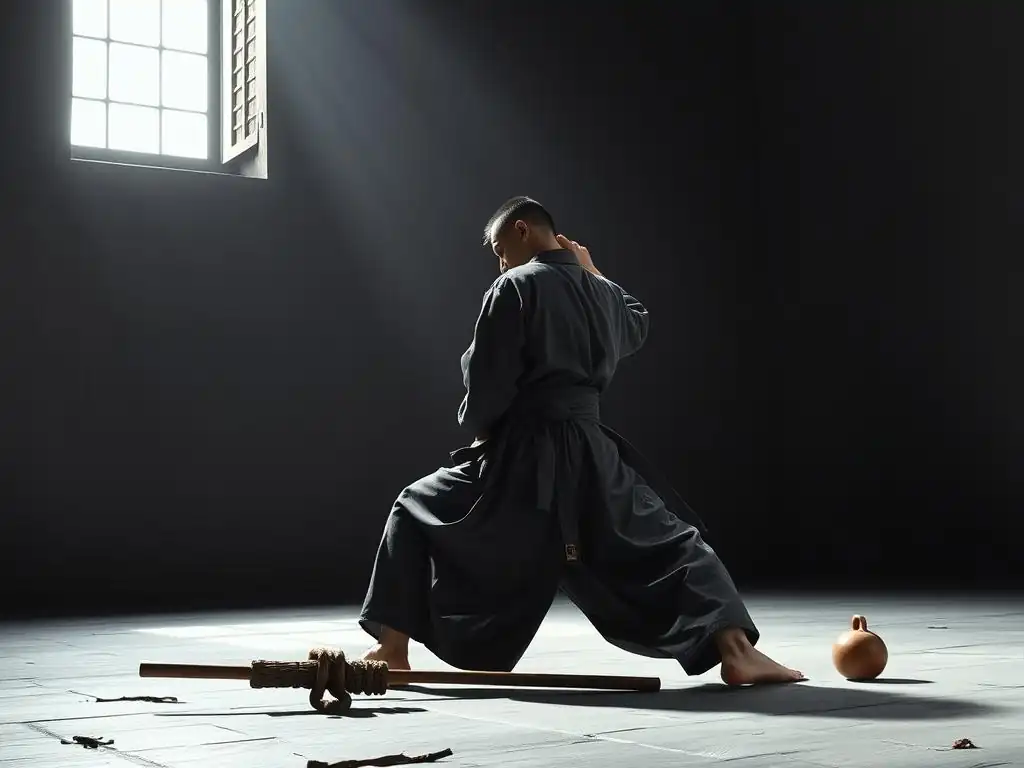
One of the primary challenges in silent martial arts training is dealing with distractions, both external and internal. External noise, even seemingly minor sounds, can break concentration. The solution involves finding a dedicated training space, perhaps using earplugs if necessary, but more importantly, training the mind to filter out distractions. This is achieved through consistent practice, gradually increasing the ability to maintain focus despite external stimuli.
Internal distractions – wandering thoughts, impatience, discomfort – are often more challenging. Overcoming these requires developing mindfulness and self-compassion. Instead of fighting distracting thoughts, practitioners learn to acknowledge them without judgment and gently redirect their focus back to the training. This process itself is a core part of the silent martial arts training benefits, building mental resilience and the ability to maintain presence under difficult circumstances.
Maintaining Motivation and Discipline in Silent Practice
Maintaining motivation and discipline in silent practice can be difficult because it lacks the immediate feedback and social interaction of group training or sparring. It requires a high degree of intrinsic motivation. Strategies for overcoming this include setting clear, achievable goals for each silent session (e.g., hold a stance for X minutes, complete a form focusing only on breath).
Another effective approach is to understand the "why" behind the silent training – recognizing its profound silent martial arts training benefits for long-term development. Remembering that this internal work is the foundation for external skill helps maintain commitment. Additionally, structuring silent practice as a non-negotiable part of the training routine, perhaps at a specific time each day, helps build consistency and discipline.
Balancing Silent Training with Active Sparring (Sanshou) and Drills
Balancing silent training with active sparring (Sanshou) and dynamic drills is crucial for a well-rounded Kung Fu practice. While silent training builds internal power, focus, and intuition, dynamic training applies these qualities in a fluid, reactive environment. The challenge is integrating the two effectively. The solution lies in viewing them as complementary, not opposing.
Silent practice cultivates the internal state and precise mechanics needed for effective techniques. Sparring and drills provide the context to test and apply these skills under pressure. For example, silent Zhan Zhuang builds the root, while sparring teaches how to maintain that root under dynamic movement. A practitioner might spend a portion of their week in silent, introspective training and another portion in active, interactive practice, ensuring that the silent martial arts training benefits enhance their ability in dynamic situations, and vice versa.
Silent Martial Arts Training for Modern Practitioners
Adapting Shaolin Techniques for Contemporary Lifestyles
Adapting Shaolin silent training techniques for contemporary lifestyles is entirely feasible and highly beneficial. While few modern practitioners can dedicate their lives to monastic rigor, core silent practices can be integrated into busy schedules. Short periods of silent meditation (5-10 minutes daily), incorporating silent Zhan Zhuang into a warm-up or cool-down (even 5-15 minutes), or practicing forms silently during a solo session are all accessible options.
The key is consistency, even in short bursts. The silent martial arts training benefits accumulate over time, even with limited daily practice. Modern practitioners can focus on the principles – cultivating internal awareness, quieting the mind, focusing on breath – and apply them within the structure of their existing training time. This adaptation makes the profound advantages of silent training accessible to anyone serious about deepening their martial arts journey.
The Benefits of Silence in Stress Management and Self-Defense
The benefits of silence extend significantly to stress management and self-defense in the modern world. The ability to quiet the mind and remain calm under pressure, honed through silent training, is invaluable for managing daily stress. Silent meditation and Qigong practices have well-documented positive impacts on reducing anxiety and improving mental well-being, offering a powerful tool for navigating the demands of contemporary life.
In self-defense scenarios, which are inherently stressful and chaotic, the ability to remain calm and focused is paramount. Panic degrades performance, while a quiet mind allows for clearer perception of threats, faster decision-making, and more effective execution of techniques. The mental fortitude and intuitive response developed through silent martial arts training benefits the practitioner by enabling them to respond effectively and proportionately in high-stress situations, relying on trained instinct rather than being paralyzed by fear.
Integrating Silent Practices into a Well-Rounded Kung Fu Program
Integrating silent practices into a well-rounded Kung Fu program is essential for holistic development. A program that only focuses on external techniques and sparring risks producing practitioners who are physically capable but lack depth, control, and mental resilience. By incorporating silent elements – scheduled periods for Zhan Zhuang, silent form practice, and meditation – instructors can ensure students develop both internal and external skills.
A balanced program might allocate specific time slots for silent training or encourage students to incorporate it into their personal practice outside of class. Highlighting the specific silent martial arts training benefits helps students understand the value of these seemingly passive exercises. Ultimately, the integration of silent practices cultivates practitioners who are not only formidable martial artists but also individuals with enhanced focus, discipline, self-awareness, and mental fortitude, embodying the true spirit of Kung Fu.
Conclusion: Embracing the Silent Path to Martial Arts Excellence
Frequently Asked Questions
What are the primary benefits of silent martial arts training?
Silent training enhances focus and concentration, cultivates inner awareness, and strengthens the mind-body connection by removing auditory distractions.
How does the absence of noise impact the development of technique in martial arts?
Without verbal instruction, practitioners must rely on visual observation and kinesthetic learning, leading to a deeper understanding and refinement of movement.
What role does silence play in the philosophical underpinnings of monastic martial arts?
Silence fosters meditation and introspection, allowing practitioners to connect with their inner selves and cultivate mental discipline and resilience.
How can silent training improve self-defense skills in real-world situations?
It develops heightened awareness of surroundings and subtle cues, enabling quicker reactions and more effective self-defense strategies in noisy environments.
What are some practical exercises one can do to incorporate silent training into their martial arts practice?
Try performing forms or sparring without speaking or receiving verbal cues, focusing on breath control, body awareness, and precise execution.
Final Reflection: The Power of Inner Stillness
The exploration of silence within monastic martial arts training reveals more than just a technique; it unveils a profound philosophy that resonates deeply in our increasingly noisy world. The benefits of silent martial arts training extend far beyond physical prowess, offering a pathway to mental clarity, emotional regulation, and a deeper understanding of oneself. In a society saturated with constant stimulation, the deliberate cultivation of inner stillness becomes not just a practice, but a vital skill for navigating the complexities of modern life.
This journey into the heart of silence has profoundly impacted my understanding of martial arts and its potential for personal growth. The ability to find strength and focus within the quietude of the mind is a lesson that transcends the dojo and permeates every aspect of existence. As the ancient proverb states: Empty your mind, be formless, shapeless, like water. Now you put water into a cup, it becomes the cup; You put water into a bottle it becomes the bottle; You put it in a teapot it becomes the teapot. Now water can flow or it can crash. Be water, my friend.
This quote encapsulates the adaptability and resilience fostered through the silent discipline of martial arts.
Now, I invite you to consider the role of silence in your own life. Where can you find moments of stillness amidst the chaos? How can you cultivate inner peace to enhance your focus, resilience, and overall well-being? Embrace the power of silence, not as an absence of sound, but as a gateway to profound self-discovery and a more meaningful existence. Let the lessons learned from monastic martial arts training inspire you to find your own inner strength and navigate the world with greater clarity and purpose.
Embrace the Stillness: Unlock Your Inner Warrior
Thank you for diving deep into the world of monastic martial arts and the power of silence. You've now glimpsed the profound connection between inner peace and outer strength. Ready to integrate these lessons into your life?
Here's how to begin:
- Commit to just five minutes of silent meditation each day. Feel the stillness, breathe deeply, and observe your thoughts without judgment. This is the core of monastic martial arts training.
- Explore the ethical codes of different martial arts traditions, especially those with monastic roots. What resonates with you?
- Share this article with a friend who's interested in martial arts or mindfulness. Spark a conversation about the role of silence in personal growth!
What simple act of silence will you incorporate into your daily routine, starting today, to cultivate inner peace and sharpen your focus?