
High Section Roundhouse: Reaching New Heights with Your Dollyo Chagi

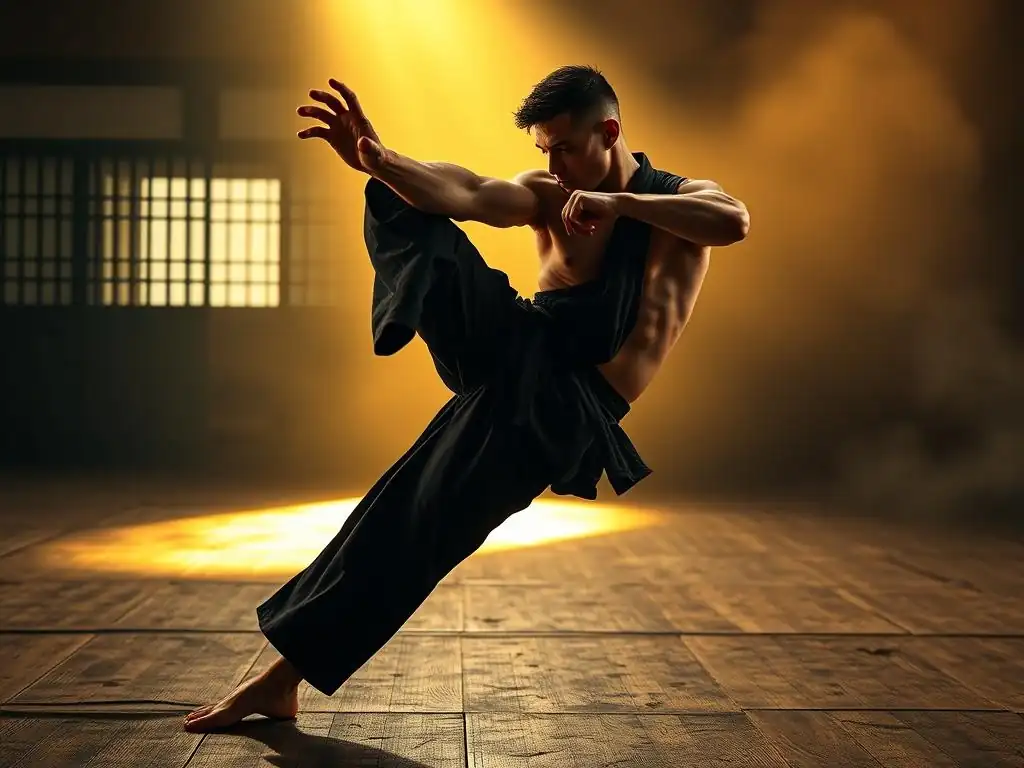
Welcome to Martial Arts Mastery, where we delve into the rich tapestry of combat traditions worldwide. Ever wondered how to truly master the Dollyo Chagi Roundhouse Technique? Prepare to unlock its secrets. This article explores the intricacies of achieving a powerful and precise high section roundhouse, blending technique with practical application. Are you ready to elevate your martial arts journey?
- Mastering the High Dollyo Chagi: A Taekwondo Guide
- Elevating Your Dollyo Chagi: Targeting the Head
- Techniques for Executing a Powerful Head-Height Roundhouse Kick
- Drills and Exercises to Improve Your High Dollyo Chagi
- Common Mistakes to Avoid in Head-Height Roundhouse Techniques
- Advanced Dollyo Chagi Variations for Head-Height Targets
- Safety Considerations and Injury Prevention for High Kicks
- The Head-Height Dollyo Chagi in Taekwondo Sparring
- Dollyo Chagi Mastery: Beyond the Basics
-
Frequently Asked Questions
- What is the Dollyo Chagi?
- What is the focus of High Section Roundhouse: Reaching New Heights with Your Dollyo Chagi?
- Why is mastering the Dollyo Chagi important in martial arts?
- What are some key elements to consider when practicing the Dollyo Chagi technique?
- Where can I find more information about the Dollyo Chagi and other martial arts techniques?
- Final Reflection: Mastering the Spinning Ascent
- Elevate Your Kick: Master the Dollyo Chagi!
Mastering the High Dollyo Chagi: A Taekwondo Guide
Understanding the Fundamentals of Dollyo Chagi
The Dollyo Chagi, often translated as the roundhouse kick, stands as one of the most fundamental and powerful techniques in the Taekwondo arsenal. At its core, this kick involves pivoting on the supporting foot, rotating the hips, and extending the striking leg in a circular motion to impact the target with the instep or ball of the foot. Mastering the basic Dollyo Chagi Roundhouse Technique is the essential prerequisite before attempting to elevate its trajectory.
This foundational movement relies on a coordinated kinetic chain. Power originates from the ground up, driven by a strong pivot of the supporting foot, typically 180 degrees or more. This pivot allows for the hips to turn powerfully, transferring rotational energy through the core and into the chambered leg. The leg then extends rapidly outwards, striking the target, before quickly retracting back to a guarded position. Understanding and perfecting this basic sequence is key to developing speed, power, and control in any variation of the Dollyo Chagi.
The Importance of Proper Form in Dollyo Chagi
Achieving a high section Dollyo Chagi is not merely about brute force or flexibility; it is profoundly dependent on proper form. Correct technique ensures that the kick is not only powerful but also efficient, allowing for faster execution and recovery. Poor form can lead to wasted energy, reduced power output, and telegraphing the movement to an opponent.
Moreover, maintaining precise form is critical for injury prevention. Incorrect alignment of the joints, particularly the knee and hip, or improper weight distribution on the supporting leg, can place undue stress on ligaments and tendons. Consistently executing the Dollyo Chagi Roundhouse Technique with proper body mechanics reduces the risk of strains, sprains, and long-term joint issues, allowing practitioners to train safely and effectively for years.
Elevating Your Dollyo Chagi: Targeting the Head
What is the Head Section in Taekwondo?
In Taekwondo, target areas are generally divided into sections: low (below the waist), middle (trunk/body), and high (head). The head section specifically refers to the area above the collarbone, encompassing the face and sides of the head. Targeting this area requires significant flexibility, balance, and precise control due to its height and the speed at which the head can move.
In sport Taekwondo, particularly under World Taekwondo (WT) rules, kicks to the head are highly valued, often scoring 3 points compared to 2 points for a kick to the body protector. This point differential makes a successful head-height Dollyo Chagi a potential game-changer in competitive matches. While the rules regarding head contact can vary slightly between different Taekwondo federations (e.g., ITF vs. WT), the head remains a primary target in many contexts.
Benefits of Targeting the Head with Dollyo Chagi
Targeting the head with your Dollyo Chagi offers several strategic advantages. From a self-defense perspective, a powerful, well-placed kick to the head can be immediately incapacitating. In a competitive setting, landing a clean head shot can drastically shift the score in your favor, potentially securing a victory with a single technique, as noted by the 3-point value in WT sparring.
Beyond the immediate points or incapacitation, successfully landing a head-height Dollyo Chagi can have a significant psychological impact on an opponent. It demonstrates a high level of skill, flexibility, and courage, potentially making the opponent more hesitant and defensive, creating further openings for other techniques. The threat of a high roundhouse kick forces the opponent to keep their guard high, potentially opening up the body for follow-up attacks.
Techniques for Executing a Powerful Head-Height Roundhouse Kick
Stance and Footwork for Head-Height Kicks
Executing a head-height Dollyo Chagi begins with your initial stance and footwork. A solid fighting stance provides the necessary base of support. Often, the rear leg is used for a power roundhouse kick due to the longer distance it travels, allowing for greater acceleration. Effective footwork, such as a quick step-slide or a shuffle, can help close the distance while maintaining balance and disguising your intent.
The pivot of the supporting foot is arguably the most critical element of the stance and footwork for a high kick. The supporting foot must pivot significantly, ideally around 180 degrees or more, so that the heel points towards the target. This deep pivot allows the hips to fully rotate, which is essential for generating the height and power needed to reach the head section. Without a proper pivot, the kick becomes a strained lift rather than a powerful rotation.
Generating Power: Hip Rotation and Core Engagement
The true power of a Dollyo Chagi, especially one aimed high, comes not just from the leg muscles, but from the explosive rotation of the hips and the engagement of the core. As the supporting foot pivots, the hips must snap around violently, leading the movement of the kicking leg. This hip snap is like the crack of a whip, transferring momentum from the lower body through the core and into the extended leg.
Simultaneously, the core muscles (abdominals, obliques, lower back) must be engaged to stabilize the body and act as a conduit for this rotational power. A strong, engaged core prevents the body from collapsing or losing balance during the kick and ensures that the energy generated by the hip rotation is efficiently transferred to the striking surface. Think of the core as the central hub that connects the driving force (hips) to the striking tool (leg).
Chambering and Extending the Leg for Optimal Height
Proper chambering is paramount for achieving head height with your Dollyo Chagi. The knee of the kicking leg must be brought up high towards the chest, across the body, before the leg extends. For a head-height kick, the knee must literally be chambered above the level of the intended target (the opponent's head) before extension begins. This high chamber allows the lower leg to unfold upwards and outwards towards the target.
Following the chamber, the leg extends rapidly, snapping out towards the target. The power generated by the hip rotation is channeled through this extension. The striking surface is typically the instep or the ball of the foot. After impact, immediate and rapid retraction of the leg is crucial. Pulling the leg back quickly reduces the time spent exposed and helps in recovering balance swiftly, preparing for follow-up techniques or defense.
Maintaining Balance During the Head-Height Kick
Executing a high Dollyo Chagi requires significant balance, especially on the supporting leg. The deep pivot of the supporting foot is essential for stability, providing a solid base. The upper body also plays a role; while the hips rotate, the upper body should remain relatively upright or slightly counter-rotate with the arms to help maintain equilibrium.
Core strength is fundamental to balance. A strong core stabilizes the torso and prevents wobbling during the dynamic movement of the kick. Focusing your eyes on the target or a fixed point can also help maintain orientation and balance. Practice maintaining balance on one leg and performing the pivot and chambering motion slowly before adding speed and full extension.
Drills and Exercises to Improve Your High Dollyo Chagi
Flexibility Training for High Kicks
Consistent flexibility training is non-negotiable for developing a high Dollyo Chagi. Focus on static and dynamic stretching targeting the hamstrings, hip flexors, groin, and quadriceps. Dynamic stretches like leg swings (forward/backward and side-to-side) performed for 10-15 repetitions per leg help warm up the muscles and increase range of motion.
Static stretches, held for approximately 30-60 seconds per stretch, should be performed after warm-up or training. Examples include seated hamstring stretches, butterfly stretch, and various hip flexor stretches (like the kneeling lunge stretch). Aim to incorporate flexibility work into your routine at least 3-4 times per week to see noticeable improvement in your high kicking ability.
Strength Training for Roundhouse Kick Power
Developing explosive power for your Dollyo Chagi Roundhouse Technique involves targeted strength training. Focus on exercises that build strength in the legs, hips, and core.
- Legs: Squats, lunges, and calf raises build foundational lower body strength. Aim for 3 sets of 10-15 repetitions.
- Hips: Hip flexor raises, hip abduction (moving leg away from midline), and hip adduction (moving leg towards midline) exercises strengthen the muscles responsible for lifting and controlling the leg during the kick. Perform 3 sets of 15-20 repetitions.
- Core: Planks (various types), Russian twists, and leg raises improve core stability and rotational power transfer. Hold planks for 30-60 seconds, perform rotational exercises for 3 sets of 15-20 repetitions per side.
Incorporating plyometric exercises like jump squats or box jumps can also improve explosive power for the extension phase of the kick.
Target Practice Drills for Accuracy and Precision
Practicing your high Dollyo Chagi on targets is essential for developing accuracy and precision. Use focus mitts, kicking paddles, or adjustable-height kicking targets set at head level.
- Single Kick Drill: Practice throwing one high roundhouse kick at the target, focusing purely on form, height, and snapping power, then recovering quickly. Perform 10-15 kicks per leg per round.
- Combination Drill: Practice throwing combinations that end with a high Dollyo Chagi, such as jab-cross-high roundhouse or a body kick followed by a high kick. This simulates setting up the kick in sparring.
- Movement Drill: Have a partner hold the target while moving, forcing you to time your kick and adjust distance using footwork. This improves your ability to land the Dollyo Chagi Roundhouse Technique on a moving target.
Partner-Assisted Stretching for Head-Height Flexibility
Partner-assisted stretching can help safely increase your range of motion for high kicks beyond what is possible with solo stretching. Common partner stretches include hamstring stretches (lying on back, partner gently pushes leg towards head), groin stretches (seated, partner gently pushes knees towards floor), and side splits stretches.
It is crucial to communicate clearly with your partner during these stretches. Never push beyond a comfortable stretch that you can control. The goal is gradual improvement, not forcing the body into positions it is not ready for, which can lead to injury. Aim for gentle, sustained pressure to increase flexibility over time for your Dollyo Chagi.
Sparring Drills Focusing on Head-Height Target Acquisition
Integrating head-height target practice into sparring drills helps bridge the gap between solo training and live application. Conduct light-contact or point-sparring rounds where the primary objective is to set up and attempt kicks to the head.
- Head-Only Target Drill: One partner focuses on guarding the head, the other attempts only head kicks. This forces the attacker to find subtle openings and the defender to maintain a high guard.
- Setup Drill: Practice specific combinations known to set up head kicks, such as feinting low before going high, or using hand techniques to distract the opponent's guard.
- Counter Drill: Practice countering an opponent's movement or attack with a quick, well-timed head-height Dollyo Chagi.
These drills help develop the timing, distance management, and strategic thinking required to land the Dollyo Chagi Roundhouse Technique effectively in a dynamic situation.
Common Mistakes to Avoid in Head-Height Roundhouse Techniques
Incorrect Foot Placement and Angle
A frequent error in executing a high Dollyo Chagi is improper placement and angle of the supporting foot. Not pivoting the supporting foot sufficiently (less than 180 degrees) severely limits hip rotation, reducing both height and power. The heel of the supporting foot should point directly at the target or even slightly past it.
Another mistake is allowing the supporting foot to be unstable or flat-footed during the kick. The weight should be primarily on the ball of the supporting foot, allowing for a smooth, powerful pivot. Incorrect angle or lack of pivot leaves the kick weak, off-balance, and difficult to retract quickly, hindering the overall Dollyo Chagi Roundhouse Technique.
Lack of Hip Rotation and Power Generation
Perhaps the most common pitfall in the Dollyo Chagi is failing to utilize proper hip rotation. Without the explosive snap of the hips, the kick becomes a weak, arm-like swing driven primarily by the leg muscles. This results in a kick that lacks penetration, speed, and the characteristic 'snap' needed for both power and quick retraction.
Symptoms of insufficient hip rotation include the upper body leaning too far back, the heel of the supporting foot not pointing towards the target, and the kick looking more like a side kick than a roundhouse. Actively focusing on driving the hip through the target area is crucial for generating the necessary force for a powerful, head-height Dollyo Chagi.
Overextension and Loss of Balance
While reaching high is the goal, overextending the kicking leg or leaning back too much during the kick can lead to a loss of balance and reduced control. Locking the knee fully at the point of impact can also be detrimental, potentially causing injury and making retraction slower.
A powerful Dollyo Chagi Roundhouse Technique involves controlled extension and immediate, sharp retraction. Leaning back excessively might feel like it helps gain height, but it compromises balance, makes you vulnerable to counters, and slows down your recovery. Focus on maintaining a relatively upright posture with a strong core throughout the kick.
Advanced Dollyo Chagi Variations for Head-Height Targets
Adding a Feint to Your Head-Height Roundhouse
An advanced tactic to increase the effectiveness of your head-height Dollyo Chagi is to precede it with a feint. A common feint is to initiate a kick towards the opponent's body or thigh, drawing their guard down, before snapping the kick up to the head. This can be done with the same leg or the opposite leg.
Another effective feint involves using hand techniques. A quick jab or cross aimed at the opponent's face can momentarily distract them or cause them to raise their hands, creating a brief opening for a fast, high roundhouse kick. The key is making the feint look convincing enough to draw a reaction without committing too heavily, allowing you to transition smoothly into the Dollyo Chagi Roundhouse Technique.
Combining Head-Height Roundhouse with Other Taekwondo Techniques
Combining the head-height Dollyo Chagi with other strikes makes it harder for your opponent to anticipate and defend. A well-executed combination can break down an opponent's guard or create openings that wouldn't exist with a single kick attempt.
Common combinations involve using hand techniques or lower kicks to set up the high kick. The element of surprise is often the most effective weapon when aiming for the head section, and combinations help mask your intention.
Jab - Roundhouse Combination
A classic and highly effective combination involves a quick jab followed immediately by a rear-leg head-height Dollyo Chagi. The jab serves multiple purposes: it can gauge distance, distract the opponent, or momentarily block their vision.
As the jab is retracting, the rear leg begins its pivot and chamber. The timing is crucial – the roundhouse kick should follow almost instantaneously after the jab lands or is blocked. This rapid sequence makes it difficult for the opponent to adjust their guard from defending against a punch to defending against a high kick, making the Dollyo Chagi Roundhouse Technique significantly more likely to land.
Lead Leg Roundhouse - Spinning Hook Kick Combination
This is a more advanced combination requiring good balance and coordination. It starts with a quick lead-leg Dollyo Chagi, often aimed at the body or even feinted towards the head. As the lead leg retracts, the momentum of the kick and the pivot of the supporting foot are used to transition directly into a spinning hook kick with the same leg or the opposite leg, targeting the head.
The initial lead-leg kick can draw the opponent's attention or cause them to shift their weight, making them vulnerable to the subsequent spinning attack. This combination leverages the rotational energy from the first kick to power the second, demonstrating a sophisticated application of the Dollyo Chagi Roundhouse Technique within a dynamic sequence.
Safety Considerations and Injury Prevention for High Kicks
Proper Warm-up and Cool-down Routines
Prioritizing proper warm-up and cool-down routines is fundamental to preventing injuries when practicing high kicks. A thorough warm-up, involving 10-15 minutes of light cardio (like jogging or jumping jacks) and dynamic stretching (leg swings, hip circles), prepares the muscles and joints for the dynamic movements of the Dollyo Chagi.
Cool-down routines, typically 5-10 minutes of static stretching held for 30-60 seconds per stretch, help improve flexibility over time and aid muscle recovery. Skipping these essential steps increases the risk of muscle strains, pulls, and other injuries, hindering your progress with the Dollyo Chagi Roundhouse Technique.
Gradual Progression in Training Intensity
Attempting to kick head-height before your body is adequately prepared in terms of flexibility and strength is a common cause of injury. A gradual progression approach is vital. Start by focusing on perfecting the form of the Dollyo Chagi at lower and middle sections. As your flexibility improves and you build strength in the supporting and kicking legs, gradually increase the height of your targets.
Do not force your body into positions it cannot comfortably reach. Listen to your body's signals. Consistency in training, focusing on proper technique and steady improvement in flexibility and strength, will allow you to safely reach higher targets over time without risking injury during your Dollyo Chagi Roundhouse Technique practice.
Listening to Your Body and Avoiding Overtraining
Paying close attention to how your body feels is paramount for long-term training success and injury prevention. Distinguish between normal muscle fatigue and pain that might indicate an impending or existing injury. Pushing through sharp or persistent pain can lead to more serious issues like tendonitis, sprains, or even stress fractures.
Ensure you incorporate adequate rest and recovery into your training schedule. Overtraining weakens muscles and ligaments, making you more susceptible to injury. If a specific movement in the Dollyo Chagi feels painful, stop and assess. Consulting with a qualified instructor or healthcare professional is advisable if pain persists. Smart training involves knowing when to push and when to rest, safeguarding your ability to practice the Dollyo Chagi Roundhouse Technique consistently.
The Head-Height Dollyo Chagi in Taekwondo Sparring
Utilizing Head-Height Roundhouse Kicks Effectively in Combat
In Taekwondo sparring, the head-height Dollyo Chagi is a high-risk, high-reward technique. It is most effective when used strategically rather than thrown randomly. Opportunities often arise when your opponent's guard is momentarily low, when they are off-balance, or during transitions (like retreating or stepping in).
The element of surprise is key. A well-timed head kick that appears suddenly is much harder to defend than one that is telegraphed. This is why combinations and feints are so valuable in setting up the Dollyo Chagi Roundhouse Technique in a sparring context.
Reading Your Opponent and Finding Opportunities
Successful application of the head-height Dollyo Chagi in sparring heavily relies on your ability to read your opponent. Observe their defensive habits: Do they drop their hands after attacking? Do they keep their guard low when retreating? Are they vulnerable when shifting weight?
Identifying these patterns allows you to time your high kick for maximum effect. Patience is important; wait for the right opening rather than forcing the technique. Sometimes, simply showing the threat of a high Dollyo Chagi can influence your opponent's movement and create openings elsewhere.
Developing Timing and Precision for Head-Height Strikes
Landing a head-height Dollyo Chagi on a moving opponent requires excellent timing and precision, in addition to height and power. Drills focusing on timing the kick with your opponent's movement are crucial. Practice stepping in and kicking as your opponent retreats, or countering their attack with a swift high roundhouse.
Target practice with a moving partner (holding a mitt) helps refine your ability to judge distance and trajectory against a non-stationary target. Developing this timing allows you to connect cleanly with the instep or ball of the foot, maximizing the impact and scoring potential of your Dollyo Chagi Roundhouse Technique in sparring.
Dollyo Chagi Mastery: Beyond the Basics
Continuous Improvement and Self-Assessment
Mastering the high Dollyo Chagi is a lifelong journey, not a destination. Continuous improvement requires regular self-assessment. Record your training sessions if possible to review your form, identify subtle errors, and track your progress. Are you maintaining balance? Is your hip rotation explosive? Is your retraction quick?
Set specific goals for improvement, whether it's increasing height by an inch, improving speed, or landing the technique more consistently in sparring drills. Actively seeking to refine the nuances of your Dollyo Chagi Roundhouse Technique will lead to greater efficiency, power, and control over time.
Seeking Guidance from Experienced Instructors
While self-assessment is valuable, the insights of an experienced Taekwondo instructor are invaluable for achieving mastery of the Dollyo Chagi. An instructor can spot flaws in your technique that you might not notice yourself, provide personalized feedback, and offer tailored drills to address your specific weaknesses.
They can also guide you through advanced variations and strategies for applying the high Dollyo Chagi effectively in different situations. Learning from someone who has spent years refining this technique can accelerate your progress and help you avoid developing bad habits, ensuring your Dollyo Chagi Roundhouse Technique reaches its full potential.
The Legacy of the Dollyo Chagi in Taekwondo
The Dollyo Chagi holds a significant place in the history and practice of Taekwondo. It is one of the most iconic and distinguishing techniques of the art, instantly recognizable by its powerful rotational motion. From its traditional forms applications to its prominence in modern Olympic sparring, the roundhouse kick embodies the dynamic and powerful spirit of Taekwondo.
Generations of practitioners have dedicated countless hours to perfecting this technique, pushing the boundaries of flexibility, power, and speed. The evolution of the Dollyo Chagi Roundhouse Technique continues today, with athletes constantly finding new ways to apply it effectively in competition, ensuring its legacy as a cornerstone of Taekwondo endures.
Frequently Asked Questions
What is the Dollyo Chagi?
The Dollyo Chagi, also known as the roundhouse kick, is a fundamental striking technique in many martial arts. It involves swinging the leg in a circular motion to strike an opponent.
What is the focus of High Section Roundhouse: Reaching New Heights with Your Dollyo Chagi?
The article specifically explores the high section or head-level roundhouse kick. It likely delves into techniques and strategies to effectively execute this advanced variation.
Why is mastering the Dollyo Chagi important in martial arts?
Mastering the Dollyo Chagi provides a versatile and powerful offensive weapon. It can be used for long-range attacks, creating distance, or delivering a decisive blow.
What are some key elements to consider when practicing the Dollyo Chagi technique?
Essential elements include maintaining proper balance, generating power from the hips, and ensuring accurate targeting. Focusing on flexibility and speed is also crucial.
Where can I find more information about the Dollyo Chagi and other martial arts techniques?
MartialArtsMastery.org offers a wealth of resources. The website covers historical overviews, training techniques, and much more related to various martial arts disciplines.
Okay, here's a final reflection crafted to fit your article "High Section Roundhouse: Reaching New Heights with Your Dollyo Chagi," targeting the keyword "Dollyo Chagi Roundhouse Technique," and adhering to the specified structure:
Final Reflection: Mastering the Spinning Ascent
The journey to perfecting the Dollyo Chagi Roundhouse Technique is not merely about physical prowess; it's about cultivating discipline, precision, and an unwavering commitment to self-improvement. This ancient martial art, when executed with mastery, transcends a simple kick, becoming a testament to the dedication and focus required to achieve peak performance, a principle that resonates deeply in all aspects of life.
The pursuit of the perfect Dollyo Chagi has profoundly shaped the martial arts landscape, inspiring countless practitioners to push their limits and redefine what's possible. This dedication to continuous improvement, both physically and mentally, is a lesson that extends far beyond the dojang. The journey of a thousand miles begins with a single step.
This ancient proverb reminds us that even the most complex techniques, like the Dollyo Chagi, are attainable through consistent effort and unwavering belief in our potential.
Now, as you step off the mat and back into the world, consider how the principles you've learned in mastering the Dollyo Chagi Roundhouse Technique can be applied to your own life. Embrace the discipline, the focus, and the unwavering commitment to excellence that this art demands. Let the spinning ascent of your kick inspire you to reach new heights in all your endeavors, transforming challenges into opportunities and limitations into stepping stones.
Elevate Your Kick: Master the Dollyo Chagi!
Thanks for exploring the secrets of the High Section Roundhouse! Now that you’ve unlocked the key to a more powerful and precise dollyo chagi, it’s time to put that knowledge into action.
Here’s how to take your kick to the next level:
- Immediately begin incorporating these techniques into your next training session. Focus on one adjustment at a time to build muscle memory.
- Share this article with your training partners and compare notes on your experiences with the High Section Roundhouse.
- Experiment with different entry points and setups to discover unique applications of the dollyo chagi in sparring.
What surprising improvement did you notice in your dollyo chagi after applying just one of these adjustments?