
The Eagle's Reign: Analyzing Khabib Nurmagomedov's Most Defining Victories

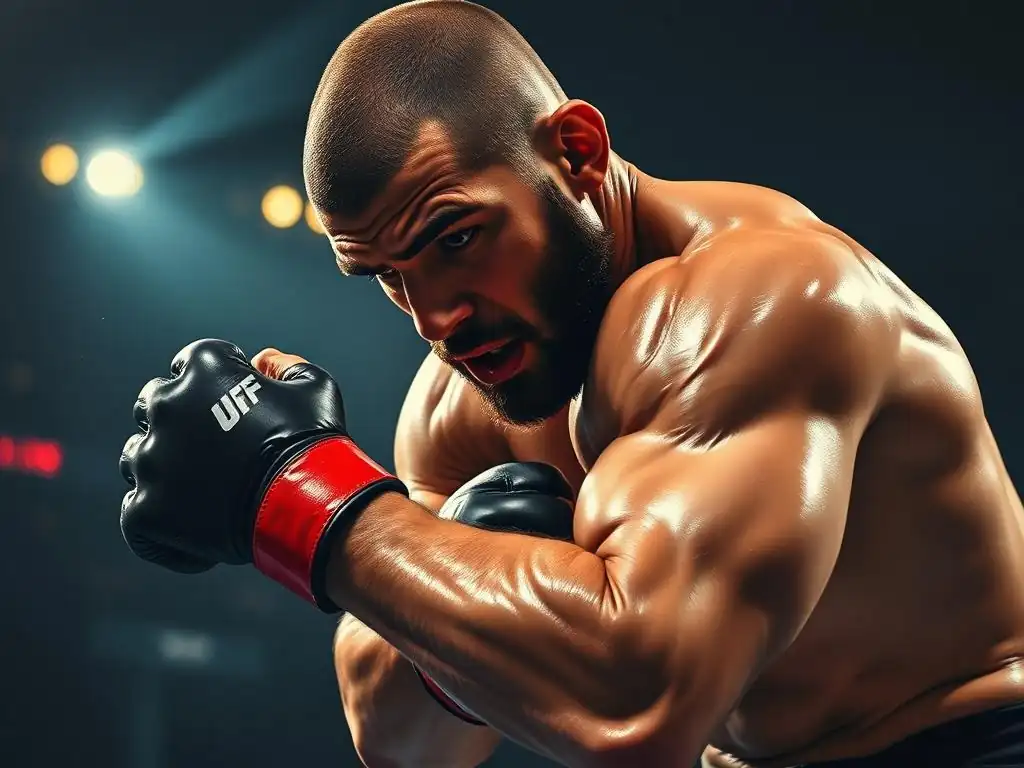
Welcome to Martial Arts Mastery, where we delve into the heart and soul of combat traditions worldwide. Ever wondered what made Khabib Nurmagomedov such an unstoppable force in the Octagon? Join us as we dissect the dominant fighting style that led "The Eagle" to legendary status, exploring the strategy and technique behind his most defining victories. Discover what secrets lie within his approach and how it echoes the broader principles of martial arts mastery.
- Introduction: Understanding Khabib Nurmagomedov's Dominant Fighting Style
- Khabib vs. Rafael Dos Anjos: A Statement Win Early in His Career
- Khabib vs. Michael Johnson: A Showcase of Unrelenting Pressure
- Khabib vs. Edson Barboza: Demonstrating Superior Grappling and Control
- Khabib vs. Al Iaquinta: Securing the Lightweight Title
- Khabib vs. Conor McGregor: The Pinnacle of MMA Dominance
- Khabib vs. Dustin Poirier: Unifying the Lightweight Championship
- Khabib vs. Justin Gaethje: The Final Masterpiece
- Analyzing Khabib's Fighting Style: Key Elements of His Dominance
- Conclusion: Khabib Nurmagomedov's Enduring Legacy in MMA
-
Frequently Asked Questions
- What were the key elements of Khabib Nurmagomedov's dominant fighting style?
- How did Khabib Nurmagomedov utilize dagestani wrestling in his fights?
- What made Khabib's ground game so effective against even elite fighters?
- Beyond wrestling, what other skills contributed to Khabib's success?
- What are some specific examples of Khabib's "dominant fighting style" in action?
- Final Reflection: The Undisputed Legacy of Dominance
- Embrace Your Inner Eagle: Soar to Martial Arts Mastery!
Introduction: Understanding Khabib Nurmagomedov's Dominant Fighting Style
A Legacy Forged in Dominance: Khabib's Undefeated Streak
Khabib Nurmagomedov retired from mixed martial arts with a perfect professional record of 29 wins and 0 losses, a rare feat in the highly competitive world of professional fighting. This undefeated streak is not just a number; it represents a legacy built on consistent, overwhelming dominance over a series of elite opponents.
His Khabib Nurmagomedov dominant fighting style, rooted in Sambo and wrestling, allowed him to control where the fight took place, neutralizing the strengths of dangerous strikers and grapplers alike. This unwavering ability to impose his will set him apart and cemented his place among the greatest fighters of all time.
His journey through the ranks of the UFC lightweight division saw him face a murderers' row of contenders, each one a significant challenge. Yet, fight after fight, Nurmagomedov found a way to impose his grappling-heavy attack. The sheer consistency of his performance, never once tasting defeat, speaks volumes about the effectiveness and resilience of his unique approach to MMA. It wasn't just about winning; it was about winning decisively, often without losing a single round on judges' scorecards, a testament to the overwhelming nature of his Khabib Nurmagomedov dominant fighting style.
The Rise of "The Eagle": From Dagestan to UFC Glory
Born in the Republic of Dagestan, Russia, a region renowned for its wrestling pedigree, Khabib Nurmagomedov's foundation in combat sports was laid from a young age. Training under the tutelage of his father, Abdulmanap Nurmagomedov, a highly respected coach, Khabib honed his skills in wrestling, Sambo, and judo. This rigorous upbringing in traditional grappling arts provided him with an unparalleled base that would become the cornerstone of his professional MMA career. His transition into mixed martial arts saw him quickly gain recognition on the regional circuit before signing with the Ultimate Fighting Championship (UFC).
His early fights in the UFC showcased glimpses of the suffocating pressure and relentless takedowns that would define his career. While still developing his striking, it was clear that his grappling was on another level compared to most of his contemporaries.
The moniker "The Eagle" became synonymous with his powerful takedowns and the way he seemed to control opponents from above, much like a bird of prey. This rise from the mountainous regions of Dagestan to becoming a global superstar and UFC champion is a compelling narrative, highlighting how a specialized and dominant skillset can conquer the diverse challenges of modern MMA.
Khabib vs. Rafael Dos Anjos: A Statement Win Early in His Career
Breaking Down the Takedowns: How Khabib Controlled Dos Anjos
Facing Rafael Dos Anjos in April 2014 was a significant step up in competition for Khabib Nurmagomedov. Dos Anjos was a highly-ranked lightweight known for his dangerous striking and capable Brazilian Jiu-Jitsu. Khabib's game plan was clear: negate Dos Anjos's strengths by keeping the fight on the ground. Throughout the three rounds, Khabib successfully landed multiple takedowns, estimated by commentators and analysts to be around 8-10 significant takedowns across the 15 minutes. These weren't just brief trips; they were powerful, chain-wrestling sequences that often ended with Dos Anjos pinned against the fence or flat on his back.
The key wasn't just the number of takedowns, but the timing and execution. Khabib consistently closed the distance, absorbed or evaded strikes, and initiated grappling exchanges. Once he secured a body lock or a leg, he would methodically work to drag Dos Anjos down, demonstrating exceptional control and balance. Even when Dos Anjos attempted to scramble back up, Khabib's relentless pressure and superior wrestling technique kept him grounded, showcasing the early signs of his suffocating Khabib Nurmagomedov dominant fighting style. This performance against a top-tier opponent proved his grappling could nullify high-level threats.
Ground and Pound Mastery: The Early Show of Khabib's Dominance
Once the fight hit the mat against Rafael Dos Anjos, Khabib Nurmagomedov didn't just hold position; he actively worked to inflict damage and maintain control. From top position, he employed a relentless ground and pound attack, landing short, sharp punches and elbows. While perhaps not fight-ending blows, these strikes accumulated, forcing Dos Anjos to constantly defend and expend energy, further solidifying Khabib's dominant position. He expertly transitioned between positions like side control, half guard, and mount, always looking to improve his angle for strikes or prevent his opponent from creating space.
Beyond the striking, Khabib's control from the top was suffocating. He used his weight effectively, pinning Dos Anjos's hips and limbs, making it incredibly difficult for the Brazilian to initiate sweeps or submission attempts. His ability to anticipate movements and shut down escape routes was evident. This fight served as an early masterclass in how Khabib used ground and pound not just for damage, but as a tool to control posture, drain his opponent's gas tank, and set up further offense, clearly displaying the foundations of his Khabib Nurmagomedov dominant fighting style at a high level.
Khabib vs. Michael Johnson: A Showcase of Unrelenting Pressure
Mental Warfare Inside the Cage: Khabib's Intimidation Tactics
The fight against Michael Johnson in November 2016 is often cited for a specific, chilling moment that highlighted Khabib Nurmagomedov's psychological impact on his opponents. During the second round, while in a dominant grappling position and delivering ground and pound, Khabib was notably vocal towards Johnson, reportedly telling him to "give up" and that he needed to quit. This wasn't just trash talk; it was a deliberate attempt to break Johnson's will while simultaneously inflicting physical punishment. This level of control, both physically and mentally, is a hallmark of his Khabib Nurmagomedov dominant fighting style.
This tactic goes beyond simple intimidation. By communicating directly with his opponent during the fight, especially from a position of complete control, Khabib amplified the feeling of helplessness. It demonstrated that he was not only physically superior in that moment but also mentally detached and focused on imposing his will. This psychological element, combined with his relentless physical pressure, created an environment where opponents often felt overwhelmed and defeated long before the final bell or a stoppage, contributing significantly to his overall dominance.
The Johnson Fight: A Clinically Dominant Performance
The fight itself against Michael Johnson was a brutal display of Khabib Nurmagomedov's grappling superiority. Despite Johnson landing some clean strikes early in the first round, Khabib quickly closed the distance and secured a takedown. From that point forward, the fight became a clinic in top control and ground and pound. Khabib spent significant portions of the fight in dominant positions, estimated to be over 7 minutes of control time in the first two rounds alone. He systematically wore Johnson down, landing heavy shots from above and constantly threatening submissions.
The end came in the third round via a kimura submission. This submission wasn't necessarily applied with lightning speed but was the result of accumulated damage and exhaustion from the relentless pressure. Johnson, battered and fatigued, was unable to defend the arm lock, forcing him to tap out. This fight showcased the full spectrum of Khabib's ground game: the takedowns, the suffocating top control, the damaging ground and pound, and the finishing ability via submission, solidifying the reputation of his Khabib Nurmagomedov dominant fighting style as one of the most effective in the sport.
Khabib vs. Edson Barboza: Demonstrating Superior Grappling and Control
Neutralizing a Dangerous Striker: The Barboza Game Plan
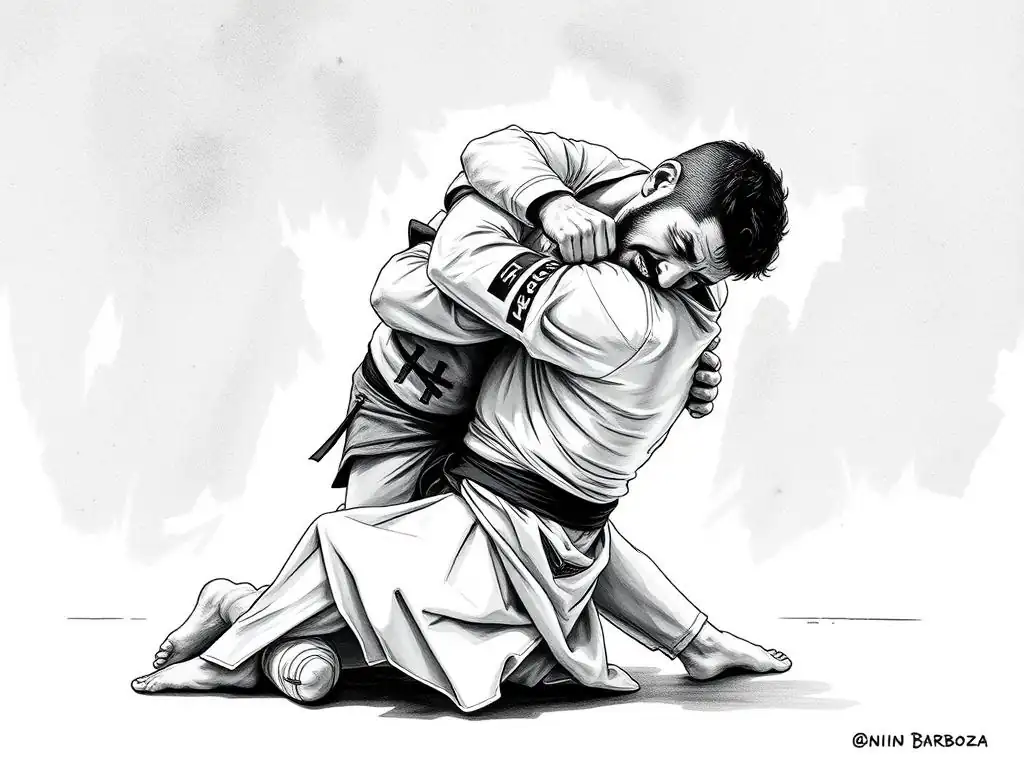
Edson Barboza is widely regarded as one of the most dangerous strikers in the lightweight division's history, known for his devastating leg kicks and spinning attacks. Facing him in December 2017 presented a clear challenge: how to negate Barboza's stand-up prowess. Khabib Nurmagomedov's game plan was executed with near perfection: close the distance immediately and initiate grappling. He showed little hesitation in wading through potential striking danger to get his hands on Barboza, trusting his chin and his defensive entries.
Once engaged in the clinch or after a shot, Khabib's focus was solely on getting the fight to the canvas. He didn't engage in prolonged striking exchanges, recognizing the risk. Instead, he used feints and movement to set up his entries, often driving Barboza towards the cage to limit his lateral movement and make takedowns easier. This strategic approach to neutralizing a specialist highlighted the intelligence behind his Khabib Nurmagomedov dominant fighting style – it wasn't just about being good at grappling, but knowing how and when to apply it against specific threats.
Khabib's Wrestling Prowess: Taking Barboza Down at Will
The fight against Edson Barboza was a stark illustration of the difference between high-level MMA grappling and elite, lifelong wrestling/Sambo. Khabib Nurmagomedov was able to take Barboza down seemingly at will. He secured his first takedown within the opening minute of the fight and continued to land multiple takedowns in each subsequent round. While specific numbers vary slightly depending on the source, estimates place his successful takedowns around 6-8 for the fight, with numerous other attempts that kept Barboza constantly defending.
What was remarkable was the ease with which he often completed these takedowns, sometimes lifting Barboza clean off his feet and slamming him to the canvas. Once on the ground, the fight followed a familiar pattern: Khabib in dominant top position, delivering heavy ground and pound, and draining Barboza's energy. Barboza, renowned for his striking, was rendered almost entirely ineffective on the ground, unable to create separation or mount any significant offense. This performance underscored the fundamental strength of Khabib's wrestling base as the core component of his Khabib Nurmagomedov dominant fighting style.
Khabib vs. Al Iaquinta: Securing the Lightweight Title
Overcoming Adversity: Iaquinta's Resilience Against Khabib's Pressure
Stepping in on short notice for multiple opponent changes, Al Iaquinta faced Khabib Nurmagomedov for the vacant lightweight title in April 2018. While the scorecard reflected a dominant performance from Khabib, Iaquinta showed remarkable toughness and defensive grappling prowess, particularly in the later rounds. He managed to defend a significant number of takedown attempts, especially in rounds four and five, forcing Khabib to engage in more striking than he typically preferred. This resilience from Iaquinta prevented the fight from being a complete shutout on the ground.
Despite Iaquinta's defensive efforts, Khabib still landed numerous takedowns throughout the fight, particularly in the earlier rounds where he secured multiple successful attempts and significant control time. However, Iaquinta's ability to pop back up or defend entries in the championship rounds provided a different look than many of Khabib's previous opponents.
It highlighted that even against someone who could defend takedowns effectively for periods, Khabib's persistence and diverse entries – from double legs to body locks to trips against the fence – made it incredibly difficult to avoid the ground entirely, a testament to the depth of his Khabib Nurmagomedov dominant fighting style.
Becoming Champion: A Pivotal Moment in Khabib's Career
Winning the UFC Lightweight Championship against Al Iaquinta marked the culmination of years of hard work and cemented Khabib Nurmagomedov's place at the pinnacle of the sport. While the fight wasn't a finish, the unanimous decision victory (50-44, 50-43, 50-43 on the scorecards, indicating he won every round decisively) demonstrated his ability to control a fight over 25 minutes and adapt when facing an unexpectedly durable and defensively sound opponent. He showcased improved striking in the later rounds, using it to set up grappling opportunities and score points.
This championship win was more than just a title; it was validation for his unique and often-criticized grappling-heavy approach in a sport increasingly focused on striking knockouts. It proved that a fundamentally dominant grappling base, combined with relentless pressure, could overcome the best the division had to offer. This pivotal moment set the stage for his reign as champion and the defining victories that would follow, further solidifying the reputation of his Khabib Nurmagomedov dominant fighting style globally.
Khabib vs. Conor McGregor: The Pinnacle of MMA Dominance
The Buildup and the Brawl: Contextualizing the McGregor Fight
The fight between Khabib Nurmagomedov and Conor McGregor in October 2018 was one of the most anticipated and controversial events in MMA history. The intense rivalry was fueled by personal animosity, cultural tensions, and McGregor's signature trash talk, which reached unprecedented levels. The infamous bus incident leading up to the fight further escalated tensions, turning the professional contest into a deeply personal grudge match. This extraordinary buildup created an electric atmosphere and placed immense pressure on both fighters.
While the pre-fight narrative was dominated by verbal warfare and spectacle, the fight itself was a raw display of conflicting styles and wills. The post-fight brawl, initiated by Khabib jumping out of the cage, added another layer of notoriety and consequence to the event. Understanding this volatile context is crucial to appreciating the significance of Khabib's victory; he not only had to contend with McGregor's elite striking and mental games but also the immense external pressure and personal stakes involved, showcasing his mental fortitude alongside his physical prowess inherent in the Khabib Nurmagomedov dominant fighting style.
Analyzing the Takedowns and Ground Control: Dominating McGregor
In the cage, Khabib Nurmagomedov executed his game plan against Conor McGregor with ruthless efficiency. After a relatively cautious first round where he secured a key takedown, the second round saw Khabib land a surprising knockdown with a right hand before quickly following up with a takedown. This transition from striking to grappling was seamless and devastating. Once on the ground, particularly in the second round, Khabib achieved overwhelming control, estimated to be over 3 minutes of control time in that round alone.
He moved into dominant positions like side control and mount, landing heavy ground and pound that visibly hurt McGregor. McGregor, known for his potent striking and ability to get back to his feet quickly against other opponents, was largely neutralized on the ground by Khabib's suffocating pressure and superior chain wrestling. Every attempt to scramble or create space was shut down. This comprehensive ground dominance was a clear demonstration of how Khabib's wrestling could completely negate the strengths of even the most dangerous strikers, highlighting the core of his Khabib Nurmagomedov dominant fighting style.
The Submission Victory: A Defining Moment in MMA History
The end of the fight against Conor McGregor came in the third round via a neck crank submission. After securing another takedown, Khabib Nurmagomedov transitioned to McGregor's back and applied the submission. While technically a neck crank and not a traditional rear-naked choke, the pressure was intense enough to force McGregor to tap out at 3:03 of the third round. This submission victory was incredibly significant, marking the first time McGregor had been submitted in the UFC and handing him a decisive loss.
The finish was a culmination of Khabib's relentless pressure and ground dominance throughout the fight. McGregor was exhausted and compromised from the ground and pound and the constant defensive grappling. The submission was the final act of a performance that saw Khabib thoroughly dominate the striking exchanges he initiated, land crucial takedowns, control the ground, and ultimately finish the fight. This victory solidified Khabib's reign as champion and became a defining moment in MMA history, showcasing the ultimate effectiveness of his Khabib Nurmagomedov dominant fighting style on the sport's biggest stage.
Khabib vs. Dustin Poirier: Unifying the Lightweight Championship
Poirier's Threat and Khabib's Response: A Tactical Breakdown
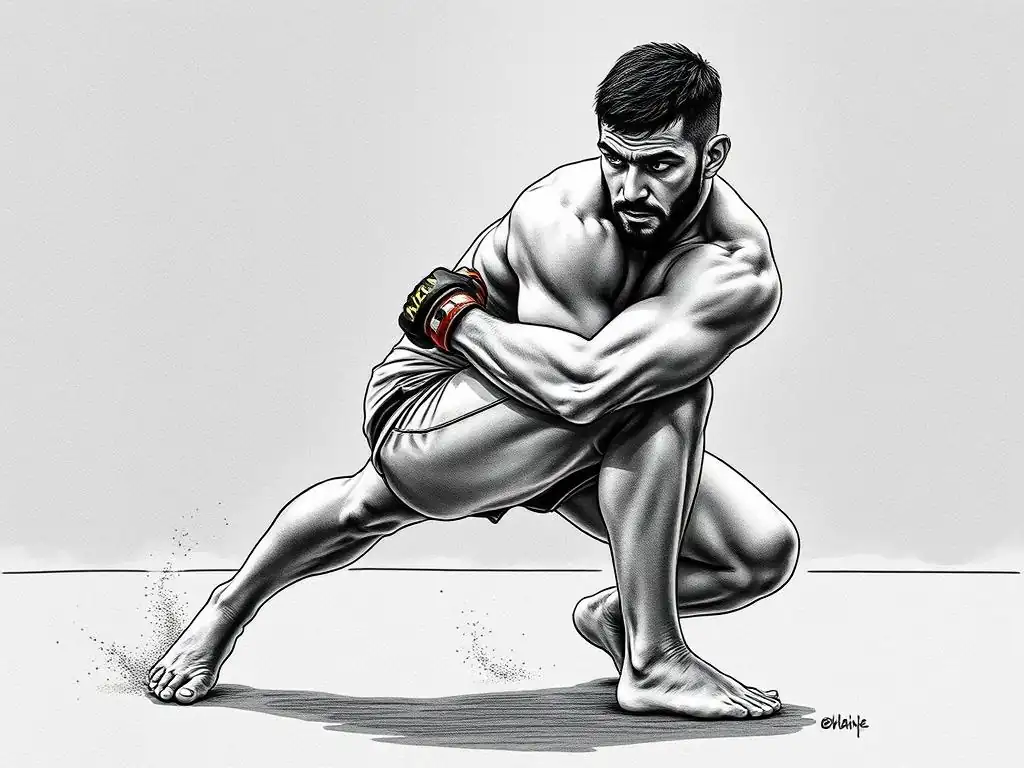
Facing interim champion Dustin Poirier in September 2019 presented Khabib Nurmagomedov with another elite challenge. Poirier was known for his durable striking, powerful boxing, and improved grappling under the tutelage of coaches like Firas Zahabi. He also possessed a dangerous guillotine choke. Khabib's tactical response was consistent with his philosophy: respect the striking threat but prioritize getting the fight to his domain – the ground. He engaged carefully on the feet, using feints and timing his entries to minimize exposure to Poirier's power.
Once he initiated grappling, Khabib's goal was clear: secure dominant position and wear Poirier down. While Poirier did attempt a few submission threats, notably a guillotine choke attempt in the third round that Khabib expertly defended, he was ultimately unable to keep Khabib off him. Khabib's relentless forward pressure and chain wrestling proved too much. This fight demonstrated Khabib's ability to adapt slightly, acknowledging a dangerous opponent's specific threats (like the guillotine) while still imposing his fundamental Khabib Nurmagomedov dominant fighting style.
The Rear-Naked Choke: Another Display of Submission Expertise
The fight against Dustin Poirier ended in the third round via a rear-naked choke submission at 2:06. After a scramble where Poirier attempted the guillotine, Khabib Nurmagomedov ended up in a dominant position, taking Poirier's back. From there, he expertly secured the body triangle to prevent Poirier from escaping and then worked to sink in the rear-naked choke. Poirier attempted to fight the hands but was ultimately trapped and forced to tap out.
This submission was a classic example of Khabib's finishing ability once he secured back control. It wasn't a flashy or sudden maneuver but the result of methodical positioning and application of pressure. Having softened Poirier up with ground and pound and constant grappling exchanges in the previous rounds, the submission became a viable finishing option. This victory further showcased that while his dominance was built on wrestling and control, Khabib possessed the submission skills to finish elite opponents, proving his Khabib Nurmagomedov dominant fighting style was multi-faceted in its ground application.
Khabib vs. Justin Gaethje: The Final Masterpiece
Gaethje's Explosiveness vs. Khabib's Calculated Approach
Justin Gaethje, the interim champion, was considered by many to be one of Khabib Nurmagomedov's toughest stylistic matchups due to his high-level wrestling background, devastating leg kicks, and incredible power. Their fight in October 2020 was a clash of Gaethje's controlled chaos and explosive striking/wrestling defense against Khabib's calculated, relentless pressure. Gaethje focused on attacking Khabib's legs with powerful kicks to potentially compromise his base and takedown ability, while also looking to defend takedowns with his strong wrestling stance and sprawl.
Khabib's approach was measured but persistent. He absorbed some significant leg kicks in the first round, showing remarkable toughness. However, he continued to press forward, looking for opportunities to enter the grappling range. He didn't rush his takedowns but waited for the right moment, often chaining attempts together. This fight highlighted Khabib's strategic patience and ability to withstand damage while sticking to his core game plan, proving that his Khabib Nurmagomedov dominant fighting style could overcome even the most dangerous and well-rounded striking threats.
The Triangle Choke Finish: A Farewell to the Sport
Khabib Nurmagomedov's final fight against Justin Gaethje ended with a surprise submission in the second round – a triangle choke at 1:34. After successfully taking Gaethje down, Khabib transitioned into a position where he could secure the rarely seen triangle choke from the top. This demonstrated a level of jiu-jitsu proficiency that often went unnoticed amidst his overwhelming wrestling dominance. Gaethje, caught in the submission, quickly went unconscious, prompting the referee to stop the fight.
This finish was particularly poignant as it was Khabib's last fight before retiring. It showcased not only his signature ability to take the fight to the ground but also his diverse submission arsenal, finishing a high-level opponent with a technique not typically associated with him.
The emotional aftermath, where Khabib announced his retirement, added significant weight to this performance. The victory over Gaethje, secured with a technical submission, served as a perfect encapsulation of his career – a blend of overwhelming grappling pressure and the ability to finish fights in unexpected ways, solidifying his Khabib Nurmagomedov dominant fighting style as one for the history books.
Analyzing Khabib's Fighting Style: Key Elements of His Dominance
Unrelenting Takedowns: The Foundation of His Success
The cornerstone of Khabib Nurmagomedov's success was undoubtedly his world-class wrestling and Sambo base, manifesting as unrelenting takedowns. He possessed a diverse arsenal of takedown entries, including powerful double and single leg shots, trips and throws from the clinch, and chain wrestling sequences against the cage. His ability to consistently close the distance, absorb or evade strikes, and initiate grappling exchanges set the tone for nearly all of his fights. Opponents knew the takedown was coming, but few could stop it consistently.
Statistics from his UFC career highlight this dominance. Across his 13 UFC fights, he averaged an astonishing 5.32 takedowns landed per 15 minutes, with a takedown accuracy often exceeding 50%. This isn't just about attempting takedowns; it's about successfully landing them against elite fighters who spend significant time drilling takedown defense. This consistent ability to put opponents on their back was the primary driver of his Khabib Nurmagomedov dominant fighting style, allowing him to dictate the terms of engagement and negate his opponents' strengths.
Devastating Ground and Pound: Controlling Opponents from Top Position
Once the fight reached the mat, Khabib Nurmagomedov's work was far from over. His ground and pound was not always about seeking an immediate knockout, but rather a systematic dismantling of his opponent. From dominant positions like side control, mount, and back control, he would deliver consistent, damaging strikes – short punches, elbows, and forearms. These strikes accumulated quickly, wearing down opponents, forcing them to cover up, and opening up opportunities for position advancement or submissions.
More importantly, his ground and pound was intrinsically linked to his control. By forcing opponents to defend strikes, he limited their ability to attempt sweeps, escape attempts, or submission defenses. He used strikes to create openings to transition to more dominant positions or set up submission holds. This combination of damage and control from top position made his ground game suffocating and demoralizing, a key element of the Khabib Nurmagomedov dominant fighting style. His estimated average control time in fights often exceeded 50% of the total fight duration, illustrating how much time he spent in these advantageous positions.
Submission Expertise: Finishing Fights with Precision
While widely known for his wrestling and ground and pound, Khabib Nurmagomedov also possessed dangerous submission skills. He secured 10 of his 29 professional victories by submission, including key finishes against elite opponents like Michael Johnson (kimura), Conor McGregor (neck crank), Dustin Poirier (rear-naked choke), and Justin Gaethje (triangle choke). These weren't random occurrences but the result of his ability to transition effectively from dominant positions.
His submission game was often set up by his relentless pressure and ground and pound. By tiring opponents out and forcing them into defensive postures, he created openings to attack limbs or the neck. His body triangle from the back was particularly strong, making escapes nearly impossible once he secured the position. The variety of submissions he used – from arm locks to chokes – demonstrated a well-rounded ground game that went beyond just positional control, adding another layer to his Khabib Nurmagomedov dominant fighting style.
Mental Fortitude and Pressure: Breaking Opponents' Will
Beyond the technical aspects, a defining characteristic of Khabib Nurmagomedov's style was his incredible mental fortitude and the psychological pressure he exerted on opponents. He was known for his calm demeanor in the cage, even in difficult moments, and his unwavering belief in his game plan. This mental strength allowed him to push through adversity and maintain his relentless pace for the entire fight duration.
The physical pressure he applied through grappling was also a form of mental warfare. Being constantly taken down, held down, and hit from dominant positions is incredibly draining and demoralizing. Opponents often looked visibly frustrated and exhausted when facing him. His reported in-fight dialogue, telling opponents to quit, further amplified this psychological effect. This combination of his own mental resilience and his ability to break the will of his opponents was a crucial, albeit less tangible, element of his Khabib Nurmagomedov dominant fighting style.
Conclusion: Khabib Nurmagomedov's Enduring Legacy in MMA
The Impact of Khabib's Dominant Fighting Style on Future Fighters
Khabib Nurmagomedov's reign had a significant impact on the landscape of mixed martial arts, particularly in the lightweight division. His overwhelming success with a grappling-first approach served as a powerful counterpoint to the prevailing focus on striking knockouts. He demonstrated that a fighter could reach the absolute pinnacle of the sport and achieve unprecedented dominance by mastering the wrestling and ground aspects of MMA. This has potentially influenced a new generation of fighters, highlighting the importance of a strong grappling base even in a striking-heavy era.
His style also emphasized the value of pressure and control over flashiness. While his fights might not have always been stand-up wars, they were masterclasses in imposing one's will and neutralizing an opponent's strengths. This has reinforced the strategic depth of MMA, showing that victory often comes down to control and execution rather than just highlight-reel moments. The blueprint laid out by Khabib's Khabib Nurmagomedov dominant fighting style will likely be studied and adapted by fighters and coaches for years to come, proving the timeless effectiveness of elite grappling in MMA.
Khabib: More Than Just a Fighter, A Global Icon
Khabib Nurmagomedov transcended the sport of MMA to become a global icon. His undefeated record and dominant performances captured the attention of millions worldwide, not just martial arts fans. His humble demeanor outside the cage, strong cultural and religious identity, and close relationship with his father resonated with many. He became a source of inspiration, particularly in his home region and the broader Muslim world.
Beyond his athletic achievements, Khabib used his platform to promote discipline, hard work, and respect. His retirement at the height of his career, fulfilling a promise to his mother after his father's passing, added a poignant and human element to his story. He is remembered not just for his perfect 29-0 record and his Khabib Nurmagomedov dominant fighting style, but for the values he represented and the global impact he had as an athlete and a person. His legacy extends far beyond the octagon, solidifying his status as one of the most influential figures in modern sports.
Frequently Asked Questions
What were the key elements of Khabib Nurmagomedov's dominant fighting style?
Khabib's dominance stemmed from his unrelenting grappling, superior wrestling, and suffocating top control. He would consistently take opponents down and control them on the ground.
How did Khabib Nurmagomedov utilize dagestani wrestling in his fights?
Dagestani wrestling formed the foundation of his style. He used it for powerful takedowns and to maintain control once on the ground, overwhelming opponents.
What made Khabib's ground game so effective against even elite fighters?
His ground game combined relentless pressure, superior positioning, and constant submission threats. Opponents struggled to escape his control or mount any offense.
Beyond wrestling, what other skills contributed to Khabib's success?
While wrestling was central, his cardio, mental fortitude, and developing striking played a role. He was incredibly difficult to break both physically and mentally.
What are some specific examples of Khabib's "dominant fighting style" in action?
His victories against Conor McGregor and Justin Gaethje clearly showcased his abilities. These fights highlighted his superior grappling and ability to impose his will.
Final Reflection: The Undisputed Legacy of Dominance
The echoes of Khabib Nurmagomedov's reign continue to reverberate throughout the MMA world, and our analysis of his most defining victories underscores the enduring power of his unrelenting grappling and suffocating pressure. Even in retirement, his influence on the sport is undeniable, shaping the strategies and aspirations of a new generation of fighters who strive to emulate his unparalleled control and unwavering focus.
The impact of Khabib's dominant fighting style extends beyond the octagon, influencing perceptions of what it means to be a champion. His humility, discipline, and unwavering faith resonated deeply with fans worldwide, transcending cultural boundaries and solidifying his status as a role model. It's very important to be disciplined. If you are not disciplined, you cannot achieve anything.
This quote encapsulates the essence of Khabib's approach, highlighting the importance of dedication and perseverance in achieving greatness, both in fighting and in life.
As we reflect on Khabib's legacy, let us not only admire his victories but also internalize the principles that underpinned his success. Consider how you can apply his unwavering discipline, strategic thinking, and relentless pursuit of excellence to your own endeavors. Embrace the challenge, cultivate your strengths, and strive for dominance in your own arena, remembering that true victory lies not just in achieving a goal, but in the journey of self-improvement and unwavering commitment along the way.
Embrace Your Inner Eagle: Soar to Martial Arts Mastery!
Thank you for exploring the defining moments of Khabib's legendary career. We hope this deep dive has ignited your passion for martial arts and inspired you to reach new heights. Now, let's take that inspiration and turn it into action!
- Commit to honing your ground game like "The Eagle" himself: dedicate 30 minutes this week to practicing wrestling or grappling techniques.:
- Share your favorite Khabib fight moment with a fellow martial arts enthusiast to spark engaging discussions and build a stronger community.
- Consider exploring a new martial arts discipline, even one outside your comfort zone, to broaden your skillset and perspective.
What specific grappling technique will you prioritize this week to elevate your martial arts journey?