
[Pioneer's Name]'s Vision: Establishing [Specific Martial Art] Against All Odds in the West

Welcome to Martial Arts Mastery!
Delve into the fascinating world where ancient traditions meet modern adaptation. Ever wondered how the spirit of martial arts transcends borders? Prepare to be captivated by our latest exploration, "[Pioneer's Name]'s Vision: Establishing [Specific Martial Art] Against All Odds in the West," a compelling story exploring [Martial Art] history Western influence. Uncover the challenges, triumphs, and enduring legacy of a pioneer who shaped the landscape of martial arts in the West. What unexpected obstacles did they face, and how did their vision transform the art itself? Start your journey of discovery now!
- Jigoro Kano's Vision: Establishing Judo Against All Odds in the West
- Introduction: Jigoro Kano and the Dawn of Judo in the Western World
- Overcoming Obstacles: The Challenges of Introducing Judo to a New Culture
- Jigoro Kano's Unique Approach to Teaching Judo in the West
- Building a Legacy: Jigoro Kano's Impact on the Western Judo Community
- Judo History: Jigoro Kano's Place in the Western Narrative
- Jigoro Kano's Influence on Modern Judo Practice in the West
- The Enduring Legacy of Jigoro Kano: A Testament to Passion and Perseverance
-
Frequently Asked Questions
- How did Western culture initially react to the introduction of [Specific Martial Art]?
- What were some of the major challenges [Pioneer's Name] faced in establishing [Specific Martial Art] in the West?
- In what ways did [Specific Martial Art] influence Western culture after its introduction?
- How did [Pioneer's Name] adapt the traditional teachings of [Specific Martial Art] to suit a Western audience?
- What role did [Pioneer's Name]'s personal philosophy play in shaping the growth of [Specific Martial Art] in the West?
- Final Reflection: The Enduring Legacy of [Martial Art]
- Embrace the Warrior Within: Start Your Martial Arts Journey!
Jigoro Kano's Vision: Establishing Judo Against All Odds in the West
Introduction: Jigoro Kano and the Dawn of Judo in the Western World
The Early Seeds of Judo in the West: A Look at Jigoro Kano's Initial Journey
Jigoro Kano, the founder of Judo, was a visionary educator and martial artist who meticulously developed his system from various forms of Jujutsu. While his primary focus was establishing the Kodokan in Tokyo in 1882, Kano harbored a strong desire to share Judo's principles and practices with the world, including the burgeoning Western nations. His initial interactions with Westerners often occurred through foreign residents in Japan or during his own travels abroad, which began relatively early in his career. These early encounters were crucial in planting the first seeds of Judo history Western influence.
Kano's first significant journey to Europe was in 1889, primarily for educational purposes related to physical education, but he also used the opportunity to demonstrate and discuss Judo. He visited countries like France and England, interacting with academics, educators, and those interested in physical culture.
While formal Judo schools weren't established during this initial trip, these demonstrations and theoretical discussions were pivotal in introducing the core concepts of Judo – emphasizing technique over brute strength and promoting physical, mental, and moral development – to a Western audience largely unfamiliar with systematic Japanese martial arts. This early exposure, though limited, marked the very beginning of Judo's complex journey into Western culture.
Martial Arts Mastery: Celebrating Western Pioneers of Judo
The spread of Judo in the West wasn't solely the work of Kano himself; it relied heavily on dedicated Western pioneers who embraced his vision. Figures like Ernest J. Harrison, a British journalist and diplomat stationed in Japan, became early students at the Kodokan and later became instrumental in promoting Judo back in his home country. His book "The Fighting Spirit of Japan" (1912) included a section on Judo, offering one of the first detailed accounts available to the English-speaking public and serving as a foundational text for understanding Judo history Western influence.
Another key figure was Gunji Koizumi, a Japanese immigrant to the UK who, while not Western by birth, was a crucial early promoter of Judo in the West, founding the Budokwai in London in 1918. This institution became a central hub for Judo in Europe and attracted many early Western practitioners. Similarly, individuals in other Western nations, often those who had trained in Japan or encountered Kano during his visits, took on the mantle of teaching and organizing Judo clubs, laying the groundwork for national Judo associations and contributing significantly to the burgeoning landscape of Western martial arts.
Overcoming Obstacles: The Challenges of Introducing Judo to a New Culture
Cultural Differences and Misconceptions: Bridging the Gap for Judo Acceptance
Introducing a complex Japanese martial art like Judo to early 20th-century Western societies presented significant cultural hurdles. Many Westerners at the time viewed Asian martial arts through a lens of exoticism or saw them primarily as methods of combat rather than comprehensive systems of physical and moral education. The philosophical underpinnings of Judo, such as Jita Kyoei (mutual welfare and benefit) and Seiryoku Zenyo (maximum efficiency, minimum effort), were concepts that required careful explanation and often clashed with prevailing Western competitive or purely combative perspectives on physical activities.
Bridging this gap required patient demonstration and education. Kano and his early proponents had to actively counter misconceptions, explaining that Judo was not just about throws and grappling but was a discipline aimed at personal improvement and harmonious interaction. Early demonstrations often focused on the safety and educational aspects of randori (free practice) and the structured learning within kata (pre-arranged forms), showcasing Judo's systematic nature. This deliberate effort to translate not just the techniques but the spirit of Judo was fundamental in shaping Judo history Western influence.
Limited Resources and Support: Kano's Resourcefulness in Spreading Judo
Beyond cultural barriers, the practical challenges of establishing Judo in the West were considerable. Resources were scarce; there were few qualified instructors outside of Japan, limited training facilities equipped with appropriate mats ( tatami), and a lack of standardized teaching materials in Western languages. Early Western practitioners often learned from fragmented sources, occasional visits from Japanese instructors, or from individuals who had spent time training at the Kodokan.
Kano addressed these limitations through various resourceful means. He personally undertook several extensive global tours (in 1912, 1922, 1928, and the 1930s, among others), conducting seminars, giving lectures, and assessing the progress of Judo in different regions. He also dispatched trusted Kodokan instructors, albeit in small numbers initially, to key Western cities to help establish dojos and train local teachers. Furthermore, the Kodokan began producing instructional materials, such as diagrams and written explanations, which were eventually translated, providing much-needed resources for Western practitioners learning about Judo history Western influence.
Jigoro Kano's Unique Approach to Teaching Judo in the West
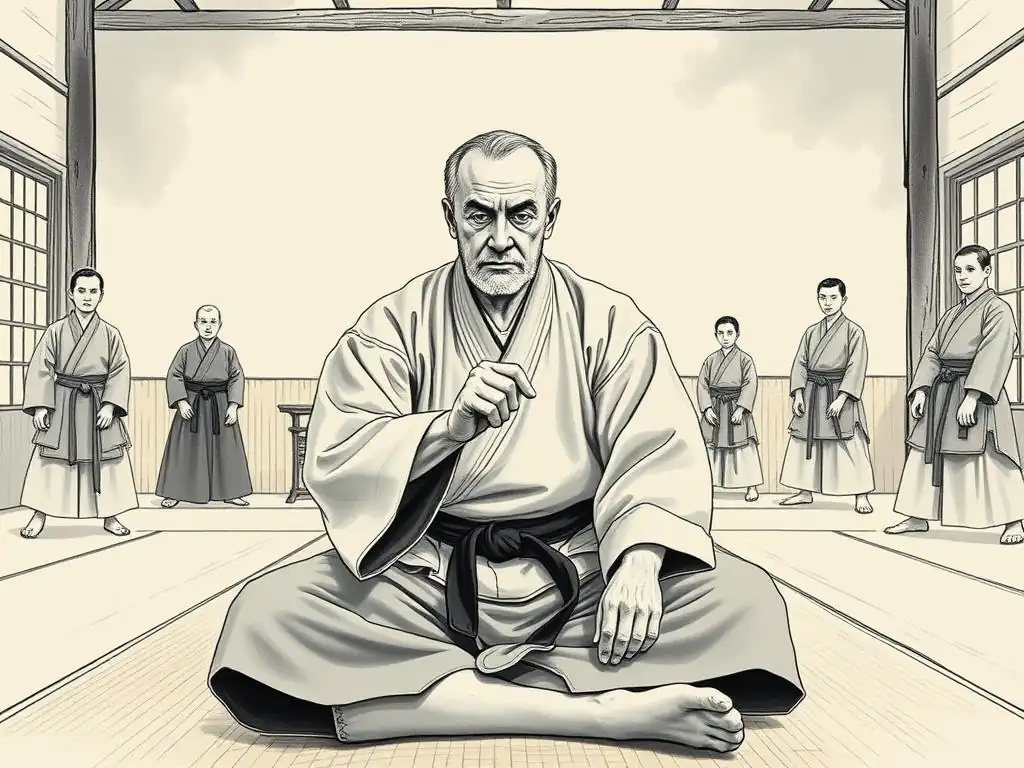
Adapting Traditional Techniques for Western Students: Kano's Pedagogical Innovations
Jigoro Kano was not a rigid traditionalist when it came to teaching outside of Japan. Recognizing the different physical builds, cultural norms, and learning styles of Western students compared to their Japanese counterparts, he was willing to adapt his pedagogical methods. While the core techniques and principles of Judo remained constant, the emphasis and progression of teaching might be adjusted. For instance, early lessons might spend more time on breakfalls ( ukemi) due to the novelty of grappling on mats, or explanations might be more verbose to articulate concepts that were implicitly understood within Japanese culture.
Kano also saw the potential for Judo within Western educational systems and sports frameworks. He actively promoted Judo as a form of physical education and a competitive sport, tailoring his explanations to resonate with Western ideas about fitness, discipline, and fair play. This adaptability was key to Judo's successful integration. Rather than simply transplanting the Kodokan system wholesale, Kano facilitated a process of cultural exchange where Judo could take root and flourish in new soil, significantly shaping Judo history Western influence through its teaching methodologies.
Emphasizing the Philosophical Underpinnings of Judo: Beyond the Physical Aspects
Crucially, Kano understood that Judo's appeal and value extended far beyond its techniques for throwing or grappling. He consistently stressed the importance of the philosophical and moral aspects of Judo – the development of character, respect for others, self-control, and the application of Judo principles to daily life. When introducing Judo in the West, he made a conscious effort to articulate these non-physical dimensions, often in lectures delivered to diverse audiences including educators, philosophers, and social reformers.
He would speak about Judo as a path ( Do) to self-perfection and contribution to society, not merely a fighting art ( Jutsu). This emphasis helped elevate Judo in the eyes of many Western intellectuals and educators, distinguishing it from more combative or purely physical pursuits. By highlighting Judo's potential for moral and intellectual growth, Kano broadened its appeal and laid a strong foundation for its acceptance as a legitimate discipline, influencing the way Judo was perceived and taught and adding a profound layer to Judo history Western influence.
Building a Legacy: Jigoro Kano's Impact on the Western Judo Community
Founding the Kodokan: Establishing a Foundation for Future Generations
Although the Kodokan Institute was founded in Japan, its establishment was arguably the single most important factor in building the global Judo community, including that in the West. The Kodokan served as the central authority, standardizing techniques, developing the ranking system (kyu/dan grades), and training the core instructors who would eventually travel the world. Kano's vision for the Kodokan was not limited to Japan; he saw it as the heart of Judo worldwide.
The Kodokan's curriculum, grading system, and ethical code became the blueprint for Judo organizations established in Western countries. Early Western dojos and national associations sought affiliation with or recognition from the Kodokan, adopting its standards. This provided a unified structure and legitimacy that was vital for Judo's growth abroad. The Kodokan's influence provided consistency and a sense of shared heritage for disparate Judo groups emerging across Europe, North America, and other Western regions, profoundly shaping Judo history Western influence through its organizational model.
Notable Students and Their Contributions: The Ripple Effect of Kano's Teaching
Kano's direct and indirect teaching produced a ripple effect through the Western world, largely carried by notable students. Beyond Ernest J. Harrison and Gunji Koizumi in the UK, figures emerged in other nations. In the United States, early pioneers included individuals like Captain Alfred T. Mahan (though his interaction was brief and early) and later, President Theodore Roosevelt, who practiced a form of Jujutsu influenced by Kano's work and even invited instructors to the White House around 1904-1905, giving early exposure to grappling arts.
Later, figures like Charles Yerkow in the US became prominent instructors and authors, helping to popularize Judo. In France, Professor Moshe Feldenkrais, initially known for his self-defense systems, became a dedicated Judo practitioner and teacher, contributing significantly to its development in Europe before developing his own method. These individuals, trained directly or indirectly through the Kodokan lineage, established dojos, wrote books, and organized competitions, becoming the key figures who translated Kano's vision into tangible reality for thousands of Western practitioners, solidifying Judo history Western influence practitioner by practitioner.
Judo History: Jigoro Kano's Place in the Western Narrative
Documenting and Preserving Judo Heritage in the West
The preservation of Judo history in the West owes much to the efforts of early practitioners and scholars who documented its arrival and development. Unlike ancient martial arts whose origins can be shrouded in myth, Judo's spread occurred within a period of increasing literacy and record-keeping. Early Western Judo clubs and national associations began keeping registers of members, grading records, and minutes of meetings as early as the 1910s and 1920s, such as the detailed records maintained by the Budokwai in London.
Furthermore, pioneers like E.J. Harrison published some of the first English-language books on Judo, translating techniques and philosophy for a Western audience. Later authors built upon this foundation, creating a body of literature that chronicles the growth of Judo outside Japan. These written accounts, coupled with photographic evidence and the institutional archives of early dojos, provide invaluable resources for understanding the unique trajectory of Judo history Western influence, detailing everything from the first public demonstrations to the establishment of national governing bodies.
The Evolution of Judo in the West: Influenced by Kano's Vision
Kano's vision provided the initial blueprint, but Judo in the West evolved as it integrated into different national cultures and sporting landscapes. While the core techniques and principles remained rooted in the Kodokan curriculum, the emphasis often shifted. In some Western countries, the competitive aspect of Judo, particularly shiai (contests), gained prominence relatively quickly, driven by Western sports traditions. This focus led to the development of specific training methodologies geared towards competition success.
Conversely, in other regions or specific dojos, the educational and philosophical aspects highlighted by Kano remained central. The integration into school physical education programs in some European countries, for example, reflected this emphasis on Judo's developmental benefits. This divergence and adaptation, while sometimes leading to debates about the "purity" of Western Judo, demonstrates Kano's success in creating a robust system capable of adapting while retaining its fundamental identity. The ongoing story of Judo history Western influence is one of dynamic evolution from Kano's foundational principles.
Jigoro Kano's Influence on Modern Judo Practice in the West
Contemporary Training Methods and Techniques Rooted in Kano's Teachings
Modern Judo training methods in the West remain fundamentally rooted in Jigoro Kano's original pedagogical approach. The standard practice involves learning basic movements and postures ( shisei, tai sabaki), mastering breakfalls ( ukemi), practicing throwing techniques ( nage waza) and grappling techniques ( katame waza) through structured drills ( uchikomi, yakusoku geiko), and applying them in free practice ( randori) and pre-arranged forms ( kata). This progression from fundamental safety and technique to live application is a direct legacy of Kano's Kodokan methodology.
While sports science and modern conditioning have added layers to contemporary training – incorporating strength and conditioning exercises, nutritional advice, and psychological preparation – the core technical curriculum taught in Western dojos today is remarkably consistent with the principles outlined by Kano over a century ago. The emphasis on efficient use of energy and mutual welfare, even within a competitive context, continues to guide teaching, underscoring the deep connection between modern Western Judo practice and its founder's vision, illustrating the enduring Judo history Western influence.
Judo Competitions and Demonstrations: Showcasing the Western Evolution
The landscape of Judo in the West is prominently defined by its vibrant competition scene, from local club tournaments to international championships like the Judo World Championships and the Olympic Games. Kano himself recognized the value of competition as a means of testing skills and promoting the art, though his initial emphasis was balanced with kata and philosophical study. The Western embrace of competitive sport significantly accelerated Judo's growth and shaped its technical evolution.
Today, Western judoka regularly stand on international podiums, showcasing high levels of technical skill developed through structured training programs that trace their lineage back to Kano's system. Major events held in Western countries, such as the Paris Grand Slam or the Düsseldorf Grand Slam (formerly), attract top athletes and large audiences, demonstrating Judo's firm establishment in the Western sporting world. These competitions are a testament to how Kano's initial introduction blossomed into a global sport, providing a clear narrative within Judo history Western influence.
The Enduring Legacy of Jigoro Kano: A Testament to Passion and Perseverance
Lessons Learned from Kano's Journey: Inspiring Future Martial Artists
Jigoro Kano's journey to establish Judo, particularly in the challenging environment of the early West, offers invaluable lessons for martial artists and educators today. His unwavering passion for his art, his meticulous approach to its development, and his perseverance in the face of cultural skepticism and limited resources are deeply inspiring. Kano demonstrated the importance of having a clear vision and the dedication required to see it through, even when introducing something entirely new to a foreign culture.
His willingness to adapt his teaching methods while staying true to Judo's core principles of efficiency and mutual welfare shows the power of flexibility and strategic thinking. Kano's emphasis on the moral and educational aspects of Judo, beyond mere combat, highlights the potential for martial arts to contribute positively to individual character and society. These lessons resonate strongly within the Martial Arts Mastery community, encouraging practitioners to look beyond technique alone and appreciate the deeper impact of their training, reflecting on the rich Judo history Western influence.
Celebrating Jigoro Kano's Contributions to Martial Arts Mastery and Western Judo History
Jigoro Kano's contributions to the world of martial arts are immeasurable, and his specific impact on the development of Judo in the West is a cornerstone of that legacy. He didn't just invent a martial art; he created a comprehensive system of physical, mental, and moral training and possessed the foresight and drive to share it globally. The thriving Judo communities found across Europe, North America, Oceania, and other Western regions today are direct descendants of the seeds he planted and nurtured.
From the early, tentative demonstrations in the late 19th century to Judo's status as an Olympic sport practiced by millions in the 21st century, Kano's influence is palpable. His vision, carried forward by dedicated pioneers and generations of practitioners, overcame significant odds. Celebrating Jigoro Kano means recognizing not only his genius as a martial artist and educator but also his role as a global ambassador whose efforts fundamentally shaped Judo history Western influence and enriched the tapestry of martial arts worldwide.
Frequently Asked Questions
How did Western culture initially react to the introduction of [Specific Martial Art]?
Early reactions were often characterized by misunderstanding and skepticism, viewing it as foreign and sometimes even a barbaric practice. Over time, demonstrations and practical applications began to shift perceptions.
What were some of the major challenges [Pioneer's Name] faced in establishing [Specific Martial Art] in the West?
[Pioneer's Name] encountered challenges such as cultural barriers, the need to adapt training methods for Western physiques, and securing financial support to establish dojos.
In what ways did [Specific Martial Art] influence Western culture after its introduction?
[Specific Martial Art] has influenced Western culture through fitness trends, self-defense methodologies, and the incorporation of its philosophical principles into personal development programs.
How did [Pioneer's Name] adapt the traditional teachings of [Specific Martial Art] to suit a Western audience?
Adaptations often involved modifying training regimens to suit Western body types, explaining philosophical concepts in Western terms, and emphasizing practical self-defense applications.
What role did [Pioneer's Name]'s personal philosophy play in shaping the growth of [Specific Martial Art] in the West?
[Pioneer's Name]'s philosophy, likely emphasizing discipline, respect, and perseverance, provided a strong ethical foundation and attracted individuals seeking more than just physical skills. This helped build a dedicated community.
Final Reflection: The Enduring Legacy of [Martial Art]
The journey of [Pioneer's Name] in establishing [Specific Martial Art] in the West is more than just a historical account; it's a testament to the power of vision and perseverance. The seeds planted by [Pioneer's Name] have blossomed into a vibrant community, demonstrating the profound and lasting impact of Eastern martial arts on Western culture. This influence, initially met with skepticism, now resonates deeply within the fitness, self-defense, and philosophical landscapes of the West.
The story of [Pioneer's Name] is a reminder that cultural exchange is a dynamic and transformative process. It highlights the importance of individuals who dare to bridge divides and share their passions with the world. The dedication and resilience displayed by [Pioneer's Name] in the face of adversity serve as an inspiration to us all. The best fighter is never angry,
a common saying in [Specific Martial Art], encapsulates the discipline and mental fortitude that [Pioneer's Name] instilled in their students, values that continue to resonate far beyond the dojo.
As we reflect on the [Martial Art] history Western influence, let us consider the lessons learned from [Pioneer's Name]'s journey. How can we, in our own lives, embody the same spirit of dedication, resilience, and cultural understanding? Let us strive to embrace new perspectives, overcome challenges with grace, and contribute to a world where the wisdom of different cultures enriches us all.
Embrace the Warrior Within: Start Your Martial Arts Journey!
Thank you for diving into the inspiring story of how our pioneering founder fearlessly brought this unique martial art to the West. Now it's your turn to keep the legacy alive and experience the transformative power of this art form.
Here's how you can take action today:
- Find a local dojo or instructor and schedule your first introductory class. Don't wait – discover the discipline, strength, and inner peace this martial art offers.
- Dive deeper into the philosophy and history of this discipline by exploring rare books and documentaries. Unearth the hidden wisdom behind the movements!
- Share our founder's incredible journey with your friends and family to inspire others to embrace the challenge and rewards of martial arts.
Ready to step onto the mat and begin your own adventure?