
Beyond the Moves: Unlocking Bunkai and Practical Applications in Weapon Forms

Welcome to Martial Arts Mastery!
Delve deeper into the world of martial arts, where tradition meets practical application. Are you ready to go beyond mere rote memorization? Our latest exploration uncovers the hidden depths of Bunkai weapon form applications, revealing the strategic insights embedded within each movement. Prepare to unlock the secrets and practical self-defense strategies woven into these ancient forms, and transform your understanding of martial arts weaponry.
- Introduction: Deeper Understanding of Weapon Kata
- What is Bunkai in Weapon Forms? Decoding Hidden Techniques
- Common Misconceptions About Bunkai and Weapon Forms
- Analyzing Weapon Forms for Bunkai: A Step-by-Step Approach
- Bunkai Weapon Form Applications: Practical Examples
- Bridging the Gap: From Kata to Sparring with Weapons
- Enhancing Your Training: Drills and Exercises for Bunkai Mastery
- The Role of Timing and Distance in Weapon Bunkai
- Safety Considerations for Bunkai Weapon Form Applications Training
- Conclusion: Elevating Your Martial Arts Through Bunkai
-
Frequently Asked Questions
- What is Bunkai in the context of weapon forms?
- Why is Bunkai important for understanding weapon forms?
- How does MartialArtsMastery.org approach the topic of Bunkai?
- What kind of weapon form applications can be derived through Bunkai?
- Can anyone learn Bunkai weapon form applications, or is it only for advanced practitioners?
- Final Reflection: Embracing the Living Art of Bunkai
- Ignite Your Training: Master the Hidden Depths!
Introduction: Deeper Understanding of Weapon Kata
Martial arts weapon forms, often known as kata, are meticulously choreographed sequences of movements passed down through generations. On the surface, they appear as beautiful, often complex, dances or demonstrations of skill. However, their true value lies far beyond mere aesthetic performance.
These forms are repositories of practical combat knowledge, encoding defensive and offensive strategies, timing, distance management, and weapon handling principles. To unlock this hidden knowledge, practitioners must delve into the concept of Bunkai – the analysis and interpretation of the movements within a kata to understand their practical applications. This exploration is crucial for transforming rote memorization into genuine combat understanding and developing effective Bunkai weapon form applications.
Understanding the historical context of weapon forms is also vital. Many traditional weapon kata were developed in eras where the ability to effectively use tools like staffs, swords, or sickles for self-defense was a matter of survival. The movements codified in these forms reflect the tactical realities of those times, addressing common threats and scenarios. Without Bunkai, these intricate sequences remain abstract; with Bunkai, they reveal their original purpose as dynamic systems for engaging with an opponent, demonstrating tangible Bunkai weapon form applications derived directly from the form's structure.
Bunkai, literally translating to "analysis" or "disassembly," is the process of breaking down the movements, postures, and transitions within a martial arts form (kata) to understand their practical meaning and application against an opponent. In the context of weapon forms, Bunkai involves interpreting how each specific motion – a block, a strike, a stance, a step – would be used in a real combat situation involving weapons. It's moving past the surface choreography to uncover the underlying fighting principles and techniques embedded within the form's structure. This decoding process is fundamental to grasping the functional Bunkai weapon form applications.
The process of Bunkai is not static; it's a dynamic and ongoing inquiry. Different schools or instructors may have varying interpretations of the same kata movement, reflecting different tactical priorities or historical lineages. A single movement might represent a block followed by a counter-strike, a joint lock using the weapon as a lever, or even a disarm. The practitioner must explore these potential meanings through partnered drills and analysis, testing hypotheses and refining their understanding of the intended Bunkai weapon form applications. It requires critical thinking, creativity, and a deep appreciation for the form's history and context.
Understanding Bunkai Principles for Weapons Training
Bunkai principles in weapons training revolve around several core concepts. Firstly, every movement, no matter how small or seemingly insignificant, potentially holds a practical application. A simple shift in weight, a subtle hand position, or the angle of the weapon can indicate a specific defensive maneuver, an offensive strike, or a transition to a different technique.
Interpreting these details is key to unlocking the full spectrum of Bunkai weapon form applications. For example, a low stance might not just be for stability; it could be interpreted as positioning to defend against a low attack or to sweep an opponent's legs with the weapon.
Secondly, Bunkai often involves understanding the 'hidden' techniques or transitions that aren't immediately obvious. These might include joint manipulations, throws, or control techniques that are masked within the larger, more prominent striking or blocking movements. A seemingly large, circular Bo staff movement might contain a subtle wrist control application at its apex. Recognizing these less apparent techniques requires a keen eye and a willingness to look beyond the most obvious interpretations. Effective Bunkai weapon form applications often combine these overt and subtle movements into cohesive sequences.
The Importance of Practical Bunkai in Weaponry
The importance of practical Bunkai in weaponry cannot be overstated. Without Bunkai, weapon forms are reduced to physical exercises or demonstrations, lacking their original combat purpose. A practitioner who only performs the movements without understanding their application is like a musician who can play the notes but doesn't understand the melody or the emotion. Practical Bunkai transforms the kata from a series of isolated movements into a living, breathing system of combat strategy. It provides context and meaning to every technique, making training more purposeful and effective.
Focusing on practical Bunkai weapon form applications is essential for developing functional skills. It allows practitioners to understand how to use their weapon not just to strike or block, but to control distance, create openings, defend against various attacks (both armed and unarmed), and manage an opponent in a dynamic environment. This understanding is critical for bridging the gap between solo form practice and partnered drills or even sparring. It ensures that the techniques learned in the kata can actually be applied effectively and safely in a simulated combat scenario, demonstrating the true utility of Bunkai weapon form applications.
Common Misconceptions About Bunkai and Weapon Forms
Several common misconceptions surround Bunkai, particularly in the context of weapon forms. One prevalent myth is that Bunkai is a rigid, fixed system with only one correct interpretation for each movement. In reality, Bunkai is highly interpretive and adaptable. While some core applications are widely accepted within specific lineages, the beauty of Bunkai lies in exploring multiple possibilities for each movement, considering different angles of attack, types of opponents, and environmental factors. The most effective Bunkai weapon form applications are often those that are flexible and responsive.
Another misunderstanding is that Bunkai is solely about finding direct, one-to-one self-defense applications for every single movement. While self-defense is a significant aspect, Bunkai encompasses a broader understanding of combat principles. It includes learning how to generate power, manage distance (Maai), develop timing, understand body mechanics for both offense and defense, and even psychological strategies. Reducing Bunkai to just a list of self-defense techniques misses the deeper lessons embedded in the forms about the art of combat itself and the myriad of potential Bunkai weapon form applications.
Separating Traditional Kata from Practical Application
A significant misconception is the perceived separation between the traditional, often stylized, performance of kata and its practical application. Some view kata purely as a historical or meditative practice, distinct from actual fighting. This perspective fundamentally misunderstands the purpose of classical kata. Traditional forms were designed as training methodologies to embed combat principles and techniques into the practitioner's muscle memory and subconscious. The stylized movements, while not always identical to how they'd appear in a chaotic fight, serve to isolate, exaggerate, or combine techniques for effective learning and transmission.
The challenge for the modern practitioner is to bridge this gap. This involves understanding why a movement is performed a certain way in the kata (e.g., a large, deliberate swing) and how that principle translates to a more condensed, explosive, or nuanced application in a real scenario. For example, a wide, sweeping Bo staff block in kata might teach the principle of covering a large area and generating force, which in application might manifest as a much shorter, sharper deflection or parry. Recognizing this translation is key to developing functional Bunkai weapon form applications.
Bunkai is Not Just Self-Defense: Exploring Broader Applications
While self-defense is a critical component, limiting Bunkai solely to direct defensive responses is shortsighted. Bunkai also teaches offensive strategies, counter-offensives, follow-up techniques, and how to transition between different phases of combat. A movement that looks like a block might also be interpreted as a setup for a strike, a control point, or a feint. The forms contain lessons on creating openings, exploiting weaknesses, and maintaining tactical advantage.
Furthermore, Bunkai explores concepts beyond simply hitting or blocking. It delves into leveraging the weapon for balance disruption, joint manipulation, throws, and even ground fighting scenarios involving the weapon. A staff technique might involve using the weapon to sweep an opponent's leg or to apply pressure to a joint. A sword movement could be interpreted as using the blunt edge for control or a disarm. Exploring these broader Bunkai weapon form applications provides a more complete and sophisticated understanding of the kata's embedded knowledge.
Analyzing Weapon Forms for Bunkai: A Step-by-Step Approach
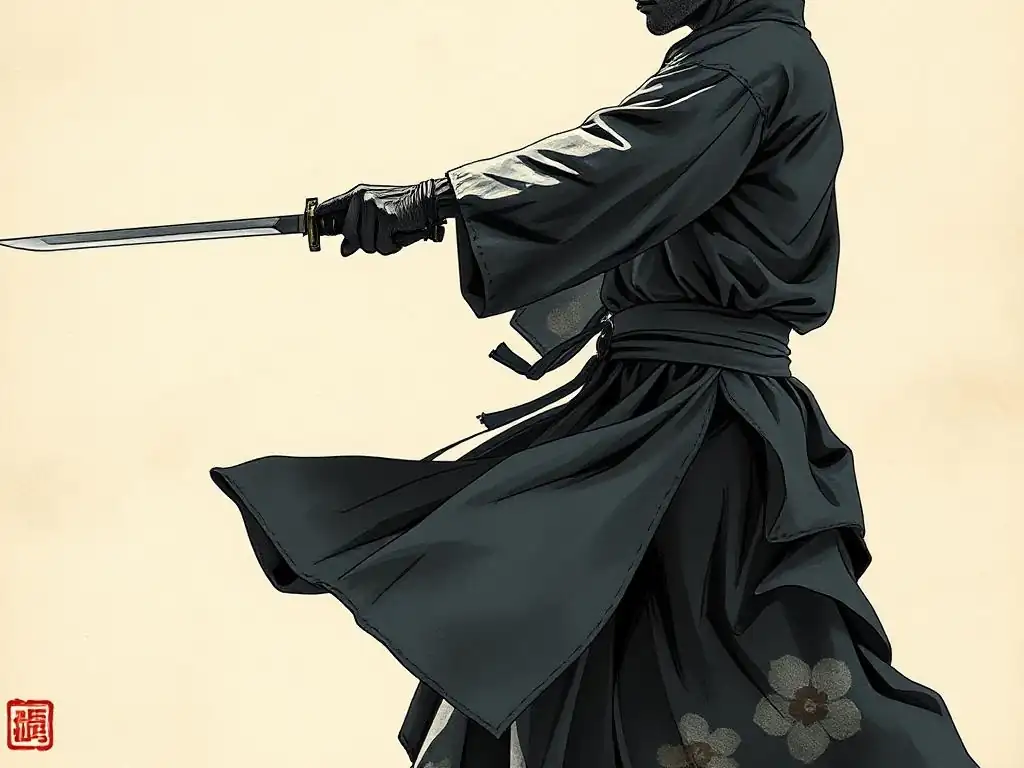
Analyzing weapon forms for Bunkai requires a systematic approach. It begins with mastering the kata itself, performing the movements correctly and understanding the intended path and timing. Once the form is internalized, the analysis can begin, often movement by movement or sequence by sequence. Practitioners might visualize potential attacks coming from different directions and angles, then interpret how the kata's movement addresses that threat. This analytical process is fundamental to uncovering potential Bunkai weapon form applications.
A useful method involves asking "what if?" questions for each significant movement or transition. What if the opponent attacks high? What if they attack low? What if they grab the weapon? What if they are closer or further away? By exploring various scenarios, the practitioner can uncover multiple layers of interpretation within the same sequence. Documenting these interpretations, perhaps through notes or simple diagrams, can help organize the analysis and facilitate discussion with instructors or training partners.
Identifying Striking, Blocking, and Joint Locking Techniques
The most apparent Bunkai weapon form applications often involve striking and blocking techniques. Identifying these typically involves analyzing the direction and power generation of movements. A rapid extension of a staff or sword is likely a strike (Tsuki or Uchi). A movement designed to intercept or deflect an incoming force is a block (Uke). Pay attention to the point of impact or interception indicated by the form's mechanics. For instance, a specific Bo movement where the staff is held horizontally across the body is a clear indication of a block against a mid-level attack.
Beyond the obvious, look for movements that could facilitate joint locks or controls. Using the weapon as a lever against an opponent's wrist, elbow, or shoulder is a common application found in many forms. A staff might wrap around an arm for a lock, or a sword's pommel could be used for striking or controlling a joint.
Analyzing the points of contact between the weapon and a potential opponent's anatomy, as suggested by the movement's trajectory and final position, helps reveal these less obvious Bunkai weapon form applications. For example, a specific transition in a Sai kata might involve trapping an opponent's arm against your body using the Sai's prongs.
Recognizing Grappling and Control Elements in Weapon Kata
Weapon forms also contain elements related to grappling, throws, and control, though these are often more subtle than strikes or blocks. Look for movements that involve closing distance, off-balancing, or using the weapon to hook, trap, or manipulate the opponent's body. A stepping pattern combined with a specific weapon movement might indicate an entry into close range or a method for breaking the opponent's balance. For instance, a low sweep with a Bo staff could be interpreted as a technique to unbalance or take down an opponent.
Control elements are also vital Bunkai weapon form applications. These involve using the weapon to pin, restrain, or manipulate an opponent without necessarily causing injury. This could involve using a staff to pin an arm against the body, using a Sai to trap a limb, or using a sword's scabbard for control. Analyzing movements that involve the weapon making contact with the practitioner's own body or limbs can sometimes reveal these control applications, as they might mimic holding or trapping an opponent's limb against oneself.
Deciphering Stances and Movement Patterns for Combat Effectiveness
Stances and movement patterns (Ashi Sabaki) are not just transitional elements; they are integral to the Bunkai weapon form applications. A deep, rooted stance might be necessary for generating maximum power for a strike or for absorbing the impact of a block. A narrow, mobile stance might facilitate rapid evasion or entering techniques. Analyze how the stances position the body in relation to a potential opponent and how they facilitate the subsequent movements. For example, a quick shift from a forward stance to a backward stance might indicate a strategy for retreating while simultaneously blocking or preparing a counter.
Movement patterns, including steps, pivots, and body evasion (Tai Sabaki), are critical for managing distance (Maai), creating angles of attack, and avoiding incoming techniques. A circular step might be used to move offline from a linear attack, while a shuffling step might maintain distance while closing in. Deciphering the purpose of these movement patterns within the context of the weapon's use is essential for understanding the kata's tactical principles. The seamless integration of footwork and weapon movements is a hallmark of effective Bunkai weapon form applications.
Bunkai Weapon Form Applications: Practical Examples
To illustrate the concept, let's explore specific Bunkai weapon form applications for common weapons. These examples are illustrative and can vary based on the specific kata and lineage.
Bunkai Applications for the Bo Staff: Defense and Offense
The Bo staff, a weapon approximately 6-9 feet long, offers numerous Bunkai weapon form applications focusing on range management, powerful strikes, and leverage. A common movement involves sweeping the staff horizontally at waist level. In Bunkai, this could be interpreted as a block against a low attack (like a kick or a weapon sweep), or as a sweep to an opponent's legs to unbalance them. Another typical movement is a vertical strike downwards (Furi Mondo). This could be a powerful strike to the head or collarbone, or, interpreted differently, a technique to break an opponent's guard or weapon.
Consider the technique where the practitioner spins the staff rapidly around their body. While visually impressive, its Bunkai can include creating a defensive barrier against multiple opponents, generating momentum for a powerful strike, or even a method for disarming or controlling an opponent's limb caught in the rotation. The two ends of the Bo can be used for striking (Tsuki or Uchi), while the shaft can be used for blocking (Uke), sweeping (Harai), trapping (Hiji Ate), or applying pressure (Osae). Exploring these facets reveals the rich potential for Bunkai weapon form applications within Bo kata.
Sword Bunkai: From Kata to Real-World Scenarios
Sword Bunkai, particularly from traditions like Kenjutsu or Iaido, focuses heavily on timing, distance, and the psychological aspects of combat. A fundamental movement in many sword kata is the draw and cut (Nuki Tsuke). In Bunkai, this is interpreted as a rapid, defensive-offensive action against a sudden, close-range attack, often before the practitioner has fully drawn the sword. The initial draw itself becomes a defensive block or parry, immediately followed by a decisive cut. This emphasizes the principle of simultaneous defense and offense, a critical element of many Bunkai weapon form applications.
Another example is a diagonal cut followed by a step and a vertical cut. This could be interpreted as cutting down a guarding weapon (diagonal cut), stepping in to close distance, and then delivering a finishing blow (vertical cut) to the opponent's head or torso. Many sword kata also contain movements interpreted as parries, thrusts (Tsuki), and techniques for controlling the opponent's blade or body using the sword's tsuba (guard) or tsuka (handle). Understanding the angles of attack and defense inherent in the kata's movements is key to practical sword Bunkai weapon form applications.
Knife Bunkai: Close-Quarters Combat Strategies
Knife Bunkai, often found in arts like Eskrima, Silat, or specialized self-defense systems, deals with extremely close-quarters combat. Movements in knife forms might appear small and subtle compared to staff or sword, but their Bunkai is direct and often brutal. A common sequence might involve a rapid series of short, angled strikes. In Bunkai, this translates to targeting vulnerable points such as wrists, elbows, neck, or torso in rapid succession to quickly incapacitate an attacker. The focus is on economy of motion and overwhelming the opponent with speed and precision.
Knife forms also contain techniques for defense against knife attacks, including parries, deflections, and trapping. A specific blocking movement might be interpreted as using the non-weapon hand to deflect the attack while simultaneously using the knife for a counter-strike or control technique. Disarming techniques are also prevalent, often involving using the knife hand or the non-weapon hand in conjunction with body movement to strip the opponent's weapon. These Bunkai weapon form applications highlight the dangerous and immediate nature of knife combat.
Nunchaku Bunkai: Flowing Movements for Control and Restraint
Nunchaku forms are known for their fast, flowing, and often circular movements. While striking applications are obvious (e.g., hitting with the ends or the connecting rope/chain), Nunchaku Bunkai also emphasizes control, trapping, and restraint. Many of the circular movements can be interpreted as methods for trapping an opponent's limbs or even their weapon. For instance, a rapid spin around the head could be used to wrap the chain around an opponent's wrist or neck for control.
Techniques involving striking with the connecting section or using it to hook are also common Bunkai weapon form applications. A movement where one stick is held while the other swings can be interpreted as a strike, or as using the held stick to block while the other prepares to trap or strike. The unpredictable motion of the Nunchaku makes it effective for distraction and creating openings. Understanding how to use the weapon's unique structure for both impact and control is central to Nunchaku Bunkai.
Bridging the Gap: From Kata to Sparring with Weapons
Performing a weapon kata perfectly is one skill; applying those movements effectively against a resisting opponent is another. Bridging this gap requires dedicated training that moves beyond solo practice into partnered drills and controlled sparring. The purpose is to take the theoretical Bunkai weapon form applications learned from analysis and test them in a dynamic, interactive environment. This transition is crucial for developing functional combat ability.
This bridging process involves several stages. Initially, partnered drills focus on specific Bunkai sequences from the kata, practiced slowly and cooperatively. As proficiency increases, resistance is added, speed is increased, and the scenarios become less predictable. The ultimate goal is to be able to fluidly apply Bunkai principles and techniques within the context of free-flowing movement or sparring, adapting them to the opponent's actions rather than simply executing pre-planned sequences.
Drills for Practicing Bunkai Weapon Form Applications
Effective drills are essential for internalizing Bunkai weapon form applications. These drills should isolate specific techniques or short sequences from the kata and practice their application against a partner simulating an attack.
Examples of such drills include:
- Attack/Defense Specific Drills: Partner A executes a pre-determined attack (e.g., a mid-level Bo thrust). Partner B responds with the corresponding Bunkai defense from the kata (e.g., a Jodan Uke - upper block), often followed by the counter-attack indicated by the kata sequence.
- Sequential Bunkai Drills: Practice a short sequence of 2-3 movements from the kata as a combined Bunkai application. For example, a block followed by a strike and then a control technique, practicing the flow and transitions with a partner.
- Scenario-Based Drills: Practice Bunkai applications within a specific, realistic scenario, such as defending against a grab while holding the weapon, or responding to an attack from a specific angle.
These drills help develop timing, distance, and the physical mechanics required for effective Bunkai weapon form applications.
Sparring Considerations: Safety and Control
Sparring with weapons, even training weapons, carries inherent risks, making safety paramount. Controlled sparring, often called Yakusoku Kumite (prearranged sparring) or light free sparring with strict rules and protective gear, is necessary to test Bunkai weapon form applications in a more realistic setting.
Key considerations for weapon sparring:
- Use Appropriate Training Weapons: Employ padded weapons, foam swords, or wooden weapons with rounded edges, depending on the intensity and rules.
- Wear Protective Gear: Headgear, hand protection, torso protectors, and groin protection are often mandatory. Eye protection is highly recommended.
- Establish Clear Rules: Define target areas, acceptable techniques, and intensity levels.
- Focus on Control: The goal is application and learning, not causing injury. Techniques should be pulled or stopped short of full impact, especially in initial stages.
- Supervision: Training should ideally be supervised by an experienced instructor knowledgeable in weapon safety and Bunkai weapon form applications.
Adapting Bunkai to Different Combat Situations
A critical aspect of practical Bunkai is the ability to adapt the techniques learned from the kata to various combat situations. The kata provides a blueprint, but real encounters are fluid and unpredictable. Practitioners must learn to modify their Bunkai based on the opponent's size, speed, skill level, and the environment.
This adaptation involves:
- Adjusting Distance (Maai): A technique effective at long range might need modification for close quarters.
- Varying Power and Speed: Some situations require maximum power; others call for speed and finesse.
- Combining or Modifying Techniques: Bunkai from different parts of the kata, or even different kata, might be combined, or techniques might be subtly altered to fit the immediate need.
- Responding to Unexpected Actions: Learning to react instinctively when the opponent does not follow the expected pattern, using Bunkai principles to improvise.
Developing this adaptability is a high level of skill in Bunkai weapon form applications, moving beyond rote application to true combat fluidity.
Enhancing Your Training: Drills and Exercises for Bunkai Mastery
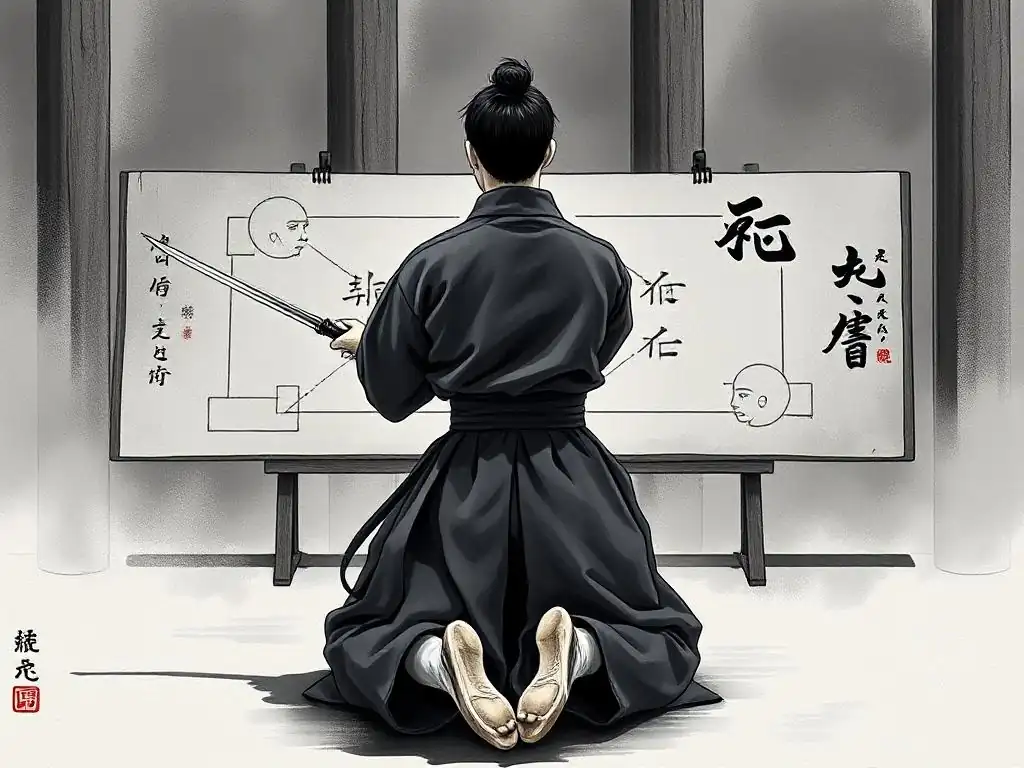
Achieving mastery in Bunkai weapon form applications requires diverse and consistent training. Incorporating a variety of drills helps develop different aspects of skill, from fundamental technique to reactive application.
Solo Drills for Refining Technique and Understanding
Solo drills are foundational for developing precision, power, and flow in your weapon handling. They allow you to focus on the mechanics of each movement as it appears in the kata before adding an opponent.
Examples:
- Basic Strikes and Blocks: Practice fundamental techniques like overhead cuts, horizontal sweeps, or vertical blocks repeatedly, focusing on proper body mechanics and power generation.
- Transitional Flow: Practice moving smoothly between different stances and techniques within a sequence from the kata, ensuring balance and readiness for the next movement.
- Visualization: Perform the kata while visualizing potential opponents and applying Bunkai in your mind. Imagine defending against an attack and executing the counter. This mental rehearsal enhances your understanding of Bunkai weapon form applications.
Partner Drills for Testing and Refining Bunkai Applications
Partner drills are where Bunkai comes alive. They provide resistance, feedback, and a dynamic element that solo practice cannot replicate.
Examples:
- Specific Bunkai Sequence Drill: Partner A throws a specific attack. Partner B executes the Bunkai sequence from the kata designed to counter that attack. Repeat with varying speed and intensity.
- Reaction Drill: Partner A offers a random attack (from a pre-defined set). Partner B must identify the attack and apply the appropriate Bunkai from their repertoire.
- Continuous Flow Drill: Practice a short sequence of Bunkai applications where the "defender" becomes the "attacker" after their counter, creating a flowing exchange based on the kata's movements.
Bo Staff Drill: Figure Eight Transitions and Counters
A specific and highly effective Bo staff drill for developing flow and Bunkai transitions is the Figure Eight. This drill involves continuously swinging the staff in a figure-eight pattern, either horizontally or vertically, changing levels and directions.
- Basic Figure Eight: Practice the continuous motion, focusing on smooth transitions and maintaining control of the staff. This builds wrist strength, coordination, and familiarizes you with the weapon's path.
- Adding Steps: Incorporate footwork (shuffling, stepping) while performing the Figure Eight. This develops the ability to move while manipulating the weapon, crucial for managing distance in Bunkai weapon form applications.
- Integrating Counters: While performing the Figure Eight, a partner can lightly touch the staff at various points. The practitioner must immediately transition the continuous motion into a specific block or strike Bunkai application relevant to where the touch occurred (simulating an incoming attack), then return to the Figure Eight flow. This drill hones reaction time and the ability to seamlessly transition from fluid movement to targeted application.
The Role of Timing and Distance in Weapon Bunkai
Timing (Hyoshi or Timing) and distance (Maai) are arguably the most critical elements in the successful application of Bunkai weapon form applications. A technique performed with perfect form but incorrect timing or distance will fail. Kata inherently teaches these concepts through the rhythm of the movements and the stepping patterns, but Bunkai makes their application explicit.
Understanding when to move and where to be in relation to the opponent is paramount in weapon combat. Weapons extend reach but also create vulnerabilities. Incorrect distance can leave you exposed or render your technique ineffective. Incorrect timing means your block is too late or your strike misses its opportunity. Bunkai analysis helps decode how the kata's structure addresses these crucial factors.
Understanding Maai (Distance) in Weapon Combat
Maai in weapon combat is more complex than in empty-hand situations due to the weapon's length. It involves understanding the effective range of your own weapon and the opponent's (whether they are armed or unarmed). Weapon forms teach Maai through their stepping and reaching movements. A deep lunge strike indicates a technique designed for maximum reach, while a short, sharp movement might be for very close quarters.
Analyzing the kata's movements in terms of Maai helps identify:
- The optimal distance for each technique (e.g., a Bo staff thrust is best at a different range than a close-in strike with the end).
- How to close or create distance effectively (e.g., a specific step might be for entering range, another for evading).
- How to use the weapon itself to control distance (e.g., keeping a staff extended to maintain distance).
Mastering Maai is fundamental to executing practical Bunkai weapon form applications.
Developing Sensitivity to Timing and Rhythm
Timing involves executing a technique at the precise moment it will be most effective – intercepting an attack at its weakest point, striking when an opening is created, or moving when the opponent is off-balance. Kata's inherent rhythm, the pauses and bursts of speed, are intended to teach timing principles.
Developing sensitivity to timing requires partnered drills and sparring. You must learn to read your opponent's intentions, anticipate their actions, and synchronize your movements accordingly. Bunkai analysis helps by identifying the intended timing of techniques within the kata – for example, a block immediately followed by a counter suggests a timing principle of simultaneous defense and offense. Practicing Bunkai weapon form applications with a focus on reacting to a partner's timing is crucial for developing this sensitivity.
Safety Considerations for Bunkai Weapon Form Applications Training
Training Bunkai weapon form applications involves inherent risks, as it simulates combat with potentially dangerous tools. Prioritizing safety is non-negotiable to prevent injuries to yourself and your training partners. Responsible training allows for consistent progress without the setbacks caused by accidents.
Importance of Controlled Training Environments
Training should always occur in a controlled environment free from distractions and hazards. This means ensuring sufficient space, a clear floor area, and no unnecessary obstacles. Training partners should be aware of their surroundings and maintain focus.
A controlled environment also implies a structured training methodology. Techniques, especially those involving contact or close proximity, should be practiced slowly and deliberately initially, gradually increasing speed and power only as proficiency and trust between partners develop. An instructor's guidance is invaluable in setting appropriate boundaries and progression for Bunkai weapon form applications practice.
Proper Equipment and Safety Gear
Using appropriate training equipment is crucial. Live blades or sharpened weapons should never be used for Bunkai practice with a partner. Wooden, padded, or synthetic training weapons designed for contact are essential.
Depending on the intensity of the drills or sparring, protective gear is mandatory. This includes:
- Eye protection (glasses or goggles)
- Padded gloves or hand protectors
- Headgear
- Groin protector
- Body armor or chest protector (especially for weapons like staff or sword)
The level of gear should match the risk involved in the specific Bunkai weapon form applications being practiced.
Respecting the Power and Danger of Weapons
Finally, training with weapons requires a deep respect for their power and inherent danger. Even training weapons can cause serious injury if used carelessly or without control. Practitioners must cultivate a mindset of responsibility and awareness at all times.
This respect translates to:
- Handling weapons safely, always assuming they could cause harm.
- Maintaining control of the weapon throughout every movement.
- Communicating clearly with training partners.
- Prioritizing their safety as much as your own.
Approaching Bunkai weapon form applications training with this level of respect ensures a safe and productive learning environment for everyone involved.
Conclusion: Elevating Your Martial Arts Through Bunkai
Understanding and applying Bunkai is the key to unlocking the true depth and practicality of martial arts weapon forms. It transforms the kata from a historical performance into a dynamic system of combat principles and techniques. By analyzing movements, deciphering applications, and practicing with partners, practitioners can bridge the gap between solo form and functional skill, developing effective Bunkai weapon form applications.
The Ongoing Journey of Learning and Applying Bunkai
Bunkai is not a destination but a continuous journey of discovery. As your understanding of martial arts principles deepens and your physical skills improve, new interpretations and applications within the kata will reveal themselves. The forms are deep wells of knowledge, and consistent study is required to draw from them effectively. Engaging with instructors, fellow practitioners, and historical resources can further enrich this ongoing process of learning and applying Bunkai weapon form applications.
Continued Study and Dedicated Practice
Elevating your martial arts through Bunkai requires dedication. It demands more than just memorizing movements; it requires critical thinking, experimentation, and rigorous practice. Regularly reviewing kata, analyzing movements from different perspectives, and consistently practicing partnered Bunkai drills are essential steps. Through continued study and dedicated practice, the secrets held within the weapon forms will unfold, allowing you to truly master the practical Bunkai weapon form applications and deepen your connection to the rich heritage of martial arts.
Frequently Asked Questions
What is Bunkai in the context of weapon forms?
Bunkai refers to the analysis and practical application of movements within a martial arts form, specifically how those movements can be used in real combat scenarios. It's about moving beyond simply memorizing the form.
Why is Bunkai important for understanding weapon forms?
Understanding Bunkai allows practitioners to transform abstract movements into effective techniques. It provides a deeper understanding of the form's purpose and improves overall martial arts skill.
How does MartialArtsMastery.org approach the topic of Bunkai?
MartialArtsMastery.org explores Bunkai by providing detailed breakdowns of weapon form movements, offering insights into their historical origins, and demonstrating practical self-defense applications against various threats.
What kind of weapon form applications can be derived through Bunkai?
Bunkai can reveal applications like striking techniques, joint locks, disarming maneuvers, and evasion strategies, all hidden within the apparent choreography of the weapon form.
Can anyone learn Bunkai weapon form applications, or is it only for advanced practitioners?
While advanced practitioners may grasp nuances more quickly, the fundamentals of Bunkai are accessible to all levels. A structured approach and guidance from experienced instructors are crucial for effective learning.
Final Reflection: Embracing the Living Art of Bunkai
The journey through weapon forms, as we've explored, is far more than a rote memorization of movements; it's a deep dive into the strategic and tactical principles that underpin martial arts. Understanding Bunkai weapon form applications transforms these forms from static sequences into dynamic, adaptable tools for self-defense and personal growth. This understanding is particularly relevant today, as we seek practical skills and a deeper connection to our heritage in an increasingly complex world.
The true power of Bunkai lies in its ability to bridge the gap between tradition and application. It's a constant reminder that martial arts are not just about physical prowess, but about mental acuity, adaptability, and a profound understanding of human movement. The ultimate aim of martial arts is not to win battles, but to avoid them entirely.
This quote, often attributed to Miyamoto Musashi, perfectly encapsulates the spirit of Bunkai, which emphasizes strategic thinking and de-escalation as much as physical technique.
Now, we invite you to consider how you can apply the principles of Bunkai – the analysis, the adaptation, the understanding of underlying principles – to other areas of your life. Whether it's problem-solving at work, navigating complex relationships, or simply approaching challenges with a more strategic mindset, the lessons learned from unlocking Bunkai weapon form applications can empower you to move beyond the surface and discover the deeper meaning and potential within yourself. Embrace the living art, and let it guide you towards a more mindful and effective way of being.
Thank you for diving deep into the world of weapon forms and Bunkai. We hope you've gained a new appreciation for the practical applications hidden within each movement. Now, it's time to take that knowledge from the page to the training floor!
- Immediately start incorporating Bunkai into your next weapons training session. Don’t wait – choose just one movement and explore its potential applications with a partner.
- Explore different interpretations. Research how other martial arts styles interpret similar movements and expand your understanding.
- Share your insights! Join the discussion on MartialArtsMastery.org's forum and tell us, what surprising applications did you discover today in your weapon forms practice?