
Breathe, Step, Evade: Integrating Respiration with Footwork Dynamics

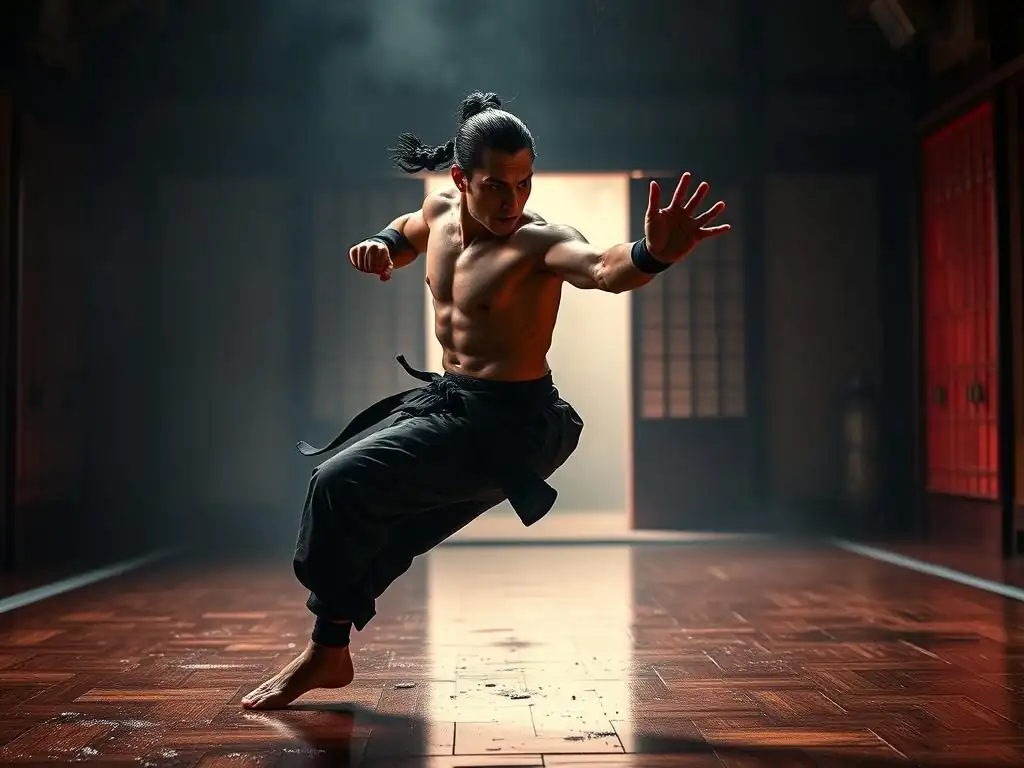
Welcome to Martial Arts Mastery, where we delve into the depths of combat arts. Are you ready to unlock a new level of agility and power? This article explores the crucial link between respiration and movement, focusing on the often-overlooked art of breathing footwork martial arts training. Discover how mastering this essential element can revolutionize your technique and elevate your martial arts journey. But how exactly does breath control amplify your footwork's effectiveness? Read on and prepare to transform your training.
- Introduction: The Unsung Synergy of Breathing and Footwork in Martial Arts Training
-
Frequently Asked Questions
- How does proper breathing enhance footwork in martial arts?
- What are some specific breathing techniques that complement footwork drills?
- Why is footwork considered so important in martial arts training?
- How does the history of martial arts influence current breathing and footwork practices?
- What self-defense benefits arise from mastering breathing-coordinated footwork?
- Final Reflection: The Rhythmic Dance of Breath and Movement
- Unlock Your Inner Rhythm: Breathe, Move, Conquer!
Introduction: The Unsung Synergy of Breathing and Footwork in Martial Arts Training

Why Breathing Footwork Martial Arts Training is Often Overlooked
In the demanding world of martial arts, practitioners typically dedicate significant time to mastering complex techniques, developing explosive power, and building physical endurance. The focus is often on visible skills – striking precision, grappling mechanics, or elaborate forms. Consequently, fundamental elements like breathing and footwork, while acknowledged as important, are frequently treated as separate, almost automatic functions rather than deeply integrated skills.
This disjointed approach means the critical synergy between how we breathe and how we move our feet is often underdeveloped, leading to subtle yet significant limitations in performance that might not be immediately apparent. The conscious practice of Breathing footwork martial arts training often takes a backseat to more glamorous or seemingly impactful aspects of training.
Instructors might cue students to "breathe" or "move your feet," but rarely is the intricate relationship between the two explored in depth during typical class time. Students might execute a drill with decent technique and speed but unknowingly compromise their balance or stamina due to poor respiratory patterns synchronized with their steps.
This oversight can stem from a lack of specific curriculum dedicated to this integration or simply the sheer volume of other techniques to cover. Without deliberate breathing footwork martial arts training, students miss out on a powerful tool that underpins efficiency, stability, and the ability to maintain peak performance throughout a strenuous exchange or match.
The Crucial Link Between Breath Control and Footwork Agility
The ability to control your breath directly influences your capacity for agile and efficient footwork in martial arts. Proper breath control, particularly diaphragmatic breathing, provides a stable core, which is the foundation for all movement. Think of the core as the central anchor point; if it's unstable due to shallow or erratic breathing, rapid or powerful leg movements become less grounded and more prone to telegraphing or imbalance.
A stable core allows for quicker transitions between stances, faster changes in direction, and more powerful generation from the lower body. This is a cornerstone of effective breathing footwork martial arts training.
Furthermore, conscious breath control helps regulate muscle tension. Holding your breath or breathing shallowly often leads to unnecessary tightness in the shoulders, neck, and even the legs. This tension inhibits fluid movement and agility, making quick evasions or explosive steps more difficult and energy-consuming.
By learning to breathe deeply and rhythmically in sync with movement, practitioners can maintain a state of relaxed readiness. This relaxation, counter-intuitively to some, is key to speed and agility, enabling the body to react instantly without fighting against its own rigidity. Mastering this link through dedicated breathing footwork martial arts training unlocks a higher level of dynamic capability.
Frequently Asked Questions
How does proper breathing enhance footwork in martial arts?
Proper breathing provides increased oxygen flow to muscles, improving endurance and agility. It also aids in maintaining balance and reducing tension, leading to more fluid and responsive footwork.
What are some specific breathing techniques that complement footwork drills?
Diaphragmatic breathing (belly breathing) promotes core stability and relaxed movement. Coordinated breathing with each step helps establish rhythm and timing. Exhalation on exertion enhances power and speed.
Why is footwork considered so important in martial arts training?
Effective footwork provides optimal positioning for both offense and defense. It allows for rapid evasion, creating openings for attacks and minimizing vulnerability. It is fundamental to controlling space and dictating the flow of combat.
How does the history of martial arts influence current breathing and footwork practices?
Many traditional styles, like Tai Chi and Aikido, emphasize mind-body connection. Historical practices often integrate breathing exercises (like pranayama) with specific footwork patterns to cultivate internal power and kinetic chain efficiency.
What self-defense benefits arise from mastering breathing-coordinated footwork?
Mastering these techniques allows for faster reaction times and improved evasive maneuvers. It also provides a calming effect under pressure, enabling clearer thinking and more effective self-defense strategies.
Final Reflection: The Rhythmic Dance of Breath and Movement
The exploration of integrating respiration with footwork dynamics in martial arts, as we've discussed, isn't merely a technical exercise; it's a profound journey into the symbiotic relationship between mind, body, and breath. It's a reminder that true power stems not just from physical prowess, but from the conscious cultivation of inner harmony, a principle that resonates far beyond the dojo and into the complexities of everyday life.
This mindful integration of breath and movement has a powerful and lasting influence on both physical and mental well-being. It teaches us to be present, to react with intention rather than impulse, and to find strength in stillness. The breath is the bridge which connects life to consciousness, which unites your body to your thoughts. Whenever your mind becomes scattered, use your breath as the means to take hold of your mind again.
- Thich Nhat Hanh. This quote perfectly encapsulates the essence of what we've explored, highlighting the breath as an anchor in the storm of life.
Now, I invite you to consider how you can incorporate this rhythmic dance of breath and movement into your own life. Whether you're a seasoned martial artist or simply seeking greater mindfulness, take a moment to breathe deeply, connect with your body, and discover the power that lies within the simple act of being present. Let the principles of breathing footwork not only enhance your martial arts training but also guide you towards a more balanced, centered, and resilient self.
Unlock Your Inner Rhythm: Breathe, Move, Conquer!
Thank you for diving into the art of breath and movement! We hope this exploration has unveiled new dimensions of your martial arts practice. Now, it's time to translate this knowledge into action.
Here's how you can deepen your understanding:
- Prioritize conscious breathing during your next training session. Dedicate 15 minutes to actively syncing your breath with each movement.
- Share this article with fellow martial artists and ignite a discussion on how they integrate respiration into their footwork.
- Experiment with different breathing patterns – explore paradoxical breathing to enhance core stability during dynamic movements.
How will you integrate breath and movement to elevate your martial arts mastery today?