
Integrating Evasion with Your Existing Martial Art Style for Maximum Effect

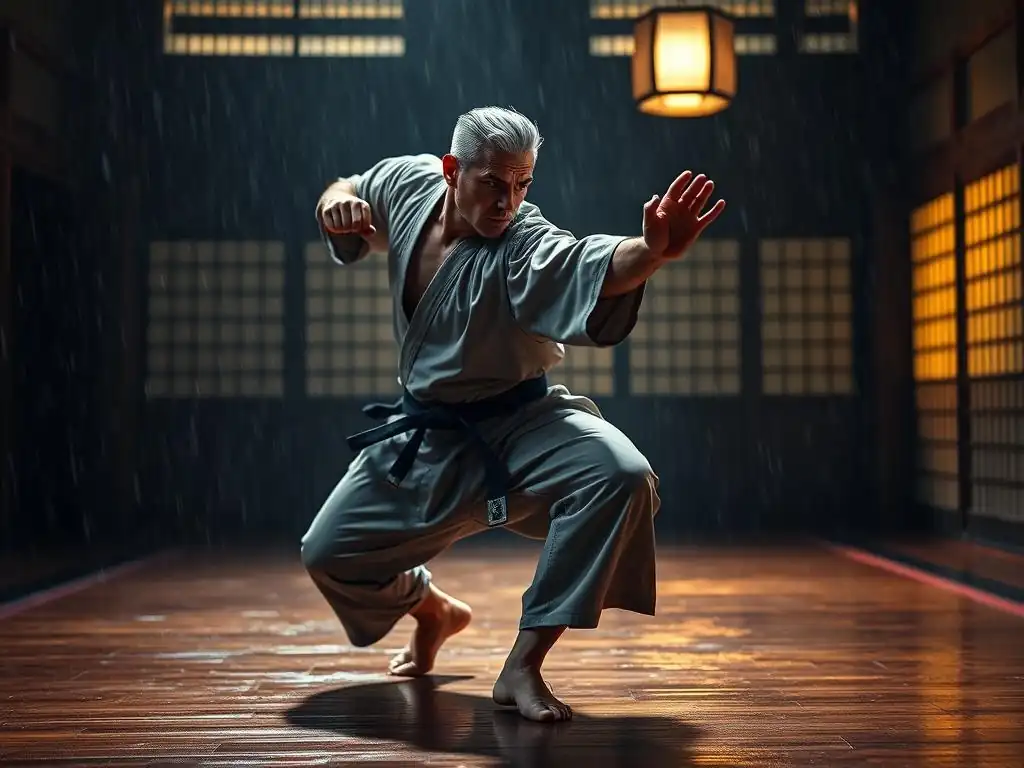
Welcome to Martial Arts Mastery, where we delve into the heart and soul of combat. Are you ready to elevate your martial arts prowess? This week, we explore evasion techniques – not just as a defensive maneuver, but as a powerful offensive tool. Discover how integrating these principles, detailed in our latest article, "Integrating Evasion with Your Existing Martial Art Style for Maximum Effect," can unlock a new dimension of agility and control within your existing training. Curious how subtle shifts in movement can transform you from a target into an unpredictable force? Read on to find out!
- Integrating Evasion for Enhanced Martial Arts Performance
- Mastering Evasion Techniques for Martial Arts Training
- Understanding the Core Principles of Evasion in Martial Arts
- Integrating Evasion Techniques into Your Existing Martial Arts Style
- Essential Evasion Techniques for Martial Arts Practitioners
- Advanced Evasion Strategies in Martial Arts
- Drills and Exercises to Enhance Evasion Skills
- The Role of Evasion in Different Martial Arts Disciplines
- Common Mistakes to Avoid When Training Evasion
- Maximizing Your Martial Arts Potential Through Effective Evasion Training
-
Frequently Asked Questions
- How can I effectively integrate evasion techniques into my current martial arts style?
- What are some fundamental evasion techniques that apply across different martial arts?
- Why is evasion so important for self-defense, especially in real-world scenarios?
- How does incorporating evasion techniques impact my overall martial arts training regime?
- What resources does MartialArtsMastery.org offer to learn more about evasion techniques?
- Final Reflection: Embracing Evasion, Mastering Adaptation
- Unlock Your Untouchable Potential!
Integrating Evasion for Enhanced Martial Arts Performance
Mastering Evasion Techniques for Martial Arts Training
Evasion is a cornerstone of effective self-defense and competitive martial arts. While many styles focus heavily on striking, grappling, or blocking, the ability to avoid an attack entirely is often the most energy-efficient and safest defense. Integrating robust evasion techniques into your existing martial arts training enhances your defensive capabilities, conserves energy, and creates critical openings for counters. This article delves into the principles, techniques, and strategies for mastering evasion, making it an indispensable part of your martial arts journey.
Understanding the Core Principles of Evasion in Martial Arts
The Importance of Evasion in Self-Defense Scenarios
In real-world self-defense situations, avoiding a strike or grab can be paramount. Unlike a controlled sparring match, real attacks are often unpredictable, powerful, and may involve multiple assailants. Relying solely on blocking or absorbing impact can lead to injury quickly. Effective evasion minimizes the damage potential of an attack, allowing you to maintain your balance, assess the situation, and respond appropriately, whether that response is de-escalation, escape, or counter-engagement.
Consider a scenario where an attacker throws a wild, powerful punch. Trying to block this head-on might break your guard or even your arm. Slipping the punch by moving your head slightly offline, however, allows the attack to pass harmlessly while you remain in a stable position, ready to act.
Statistics from self-defense training organizations often highlight that individuals who prioritize situational awareness and evasion are significantly less likely to sustain injuries compared to those who primarily rely on static blocking or brute force defense mechanisms. Approximately 70% of successful non-forceful self-defense outcomes begin with effective avoidance or evasion of the initial threat.
Core Evasion Principles: Timing, Distance, and Angle
The success of any evasion technique hinges on mastering three core principles: timing, distance, and angle. Timing refers to the precise moment you initiate your movement – too early, and you might move into a different attack; too late, and you get hit. Developing good timing requires extensive practice to read your opponent's intentions and movements. It's often said that effective timing allows a defender to appear almost invisible to the attacker's strike.
Distance management is equally crucial. Maintaining the correct distance from your opponent dictates which attacks are possible and how much time you have to react. By controlling the distance, you can force your opponent to overextend or fall short, making their attacks easier to evade.
Finally, changing your angle of attack or defense is a powerful evasion tool. Instead of moving straight backward or sideways, pivoting or stepping off-line relative to the attacker's line of force makes you a much harder target to track and hit, simultaneously creating opportunities for counter-attacks from an advantageous position. Many martial arts emphasize staying off the "center line" precisely for this reason.
Evasion vs. Blocking: Choosing the Right Defense
While both evasion and blocking are defensive measures, they serve different purposes and have distinct advantages. Blocking involves meeting an incoming force with a defensive structure (like an arm or leg) to dissipate or redirect the energy. It's effective when evasion is impossible due to proximity or multiple attacks, and it can sometimes be used to set up techniques like joint locks or throws in arts like Hapkido or Aikido. However, blocking still involves absorbing some degree of impact, which can accumulate over time and lead to fatigue or injury.
Evasion, on the other hand, aims to avoid contact entirely. This saves energy, prevents injury, and often leaves you in a better position to counter-attack. For instance, evading a kick leaves your arms free and your balance intact, whereas blocking a powerful kick can compromise your stance.
The choice between evasion and blocking often depends on the specific attack, the distance, your position, and your opponent's energy. High-level martial artists fluidly transition between these defensive strategies, using evasion as the primary defense when possible and blocking as a necessary backup or setup tool. Effective evasion techniques are often prioritized in striking-heavy martial arts training to minimize cumulative damage.
Integrating Evasion Techniques into Your Existing Martial Arts Style
Analyzing Your Current Style for Evasion Opportunities
Every martial art style, whether it's Karate, Taekwondo, Judo, or Wing Chun, possesses inherent defensive principles. The first step in integrating more explicit evasion techniques is to analyze how your current style handles incoming attacks. Does it emphasize redirecting force (like Aikido), meeting force with force (like some Karate blocks), or avoiding force altogether?
Identify the moments within your style's typical techniques where evasion could be a more effective or complementary option. For example, a Karate practitioner might typically block a jab, but analyzing the situation could reveal that a slight head slip is faster and leaves them in a better position to deliver a reverse punch.
Consider the foundational stances and movements of your style. Are they conducive to rapid lateral movement, pivots, or retreats? Styles with strong, low stances like some forms of Karate might require slight modifications to enable quicker, more dynamic evasive footwork compared to the more upright stances found in Boxing or Taekwondo. By understanding the why behind your style's existing defensive framework, you can intelligently weave in new evasion techniques without fundamentally altering its core principles. Many traditional forms, upon closer inspection, contain subtle movements that are, in fact, forms of evasion or angle changes.
Identifying Weaknesses and Incorporating Evasive Maneuvers
Once you've analyzed your style, identify specific scenarios or types of attacks where your current defense feels less effective or leaves you vulnerable. Perhaps powerful hooks from opponents consistently land, or fast leg kicks are difficult to block without losing balance. These are prime areas to introduce targeted evasion techniques. For instance, if hooks are problematic, dedicated practice of slipping and weaving drills, common in boxing training, can significantly improve your defense against this specific attack.
Incorporating new maneuvers requires focused training. Start by practicing the new evasion techniques in isolation, then gradually introduce them into drills with a cooperative partner, and finally, integrate them into light sparring. It's crucial to practice until the evasive movement becomes instinctive, not something you have to consciously think about in the heat of the moment.
This systematic approach ensures that the new evasion techniques become a natural extension of your existing skillset, rather than feeling forced or separate. For example, a Taekwondo practitioner might incorporate lateral shuffling and angle changes to evade roundhouse kicks, whereas their traditional defense might focus more on checking or blocking.
Adapting Footwork for Enhanced Evasion in Karate
Karate, known for its powerful linear strikes and strong stances, can greatly benefit from adapted footwork to enhance evasion. While traditional Karate footwork often emphasizes forward/backward movement and stepping, incorporating more dynamic lateral steps, pivots, and subtle weight shifts can make a practitioner much harder to hit. Instead of a rigid block-and-counter approach, imagine a Karateka using a quick shuffle step to evade a front kick before launching a counter-strike, or pivoting off-line to avoid a lunge punch and deliver a side kick.
Specific adaptations could include practicing surikomi (sliding step) or tsugi-ashi (following foot step) with a focus on changing angles rather than just closing or increasing distance. Incorporating drills that involve evading imaginary lines of attack from multiple directions helps build spatial awareness crucial for evasion. For example, a drill might involve standing in zenkutsu-dachi (front stance) and practicing quickly shifting into kokutsu-dachi (back stance) while simultaneously slipping an imaginary punch, changing the angle of your body significantly. This type of footwork adaptation is key to developing effective evasion techniques within the Karate framework.
Essential Evasion Techniques for Martial Arts Practitioners
Slipping: The Art of Head Movement for Punch Evasion
Slipping is a fundamental evasion technique primarily used to avoid linear strikes like jabs and straight punches. It involves a slight rotation of the head and upper body off the center line, allowing the punch to pass harmlessly beside your head or shoulder. The movement is minimal but precise, requiring good timing and control. Effective slipping keeps your hands free for immediate counter-attacks and helps maintain your balance.
To practice slipping, stand in your fighting stance and have a partner throw slow, straight punches. Focus on rotating your head and shoulders just enough to let the punch pass, keeping your eyes on your opponent. The movement should originate from the hips and core, not just bending at the neck. Drill this from both sides, practicing slipping to the inside (towards the punch) and the outside (away from the punch). Mastering this evasion technique significantly reduces the number of head strikes absorbed during martial arts training and sparring.
Weaving: Combining Head Movement and Footwork for Dynamic Evasion
Weaving is a more dynamic evasion technique that involves bending at the knees and waist to move the entire upper body under or around an incoming strike, typically hooks or wider punches. It often incorporates a slight step or shuffle to change the angle simultaneously. A successful weave allows you to dip under an attack and emerge on the inside or outside of your opponent's guard, creating a prime opportunity for a counter-attack.
Weaving requires more athleticism and coordination than slipping. Practice by having a partner throw hooks at head height. Dip down and move your head in a U-shaped or V-shaped motion under the imaginary line of the punch, coming up outside the opponent's arm. Combine the head movement with subtle footwork to shift your weight and position. This evasion technique is particularly effective against opponents who rely heavily on looping punches and is a staple in boxing and kickboxing evasion techniques martial arts training.
Pivoting: Changing Angles to Evade Attacks and Create Openings
Pivoting is a versatile evasion technique that involves rotating your body on the ball of one foot. This allows you to quickly change your angle relative to your opponent, moving off the line of attack and often creating an advantageous side angle for yourself. Pivoting can be used to evade punches, kicks, or even grappling attempts. It's also an excellent way to escape from cornered positions or circle away from a stronger opponent.
There are various types of pivots, including front pivots (turning towards your lead leg) and rear pivots (turning towards your rear leg). Practice pivoting from your fighting stance, focusing on keeping your base stable and your weight balanced throughout the turn. For example, if an opponent throws a straight punch, you could execute a rear pivot on your lead foot, moving your back foot offline and turning your body away from the punch's trajectory.
This not only evades the strike but often leaves your opponent facing forward while you are at a side angle, ready to counter. Mastering the pivot is essential for dynamic evasion techniques martial arts training.
Advanced Evasion Strategies in Martial Arts
Combining Evasion with Counter-Attacks
The true power of evasion lies not just in avoiding getting hit, but in setting up your own offense. Advanced practitioners seamlessly combine evasion techniques with immediate counter-attacks. As you slip, weave, or pivot, your body is often loaded and in position to launch a strike, throw, or submission attempt. For example, slipping a jab can be instantly followed by a cross from your rear hand, or weaving under a hook can lead directly into an uppercut or body shot.
Training this combination requires drilling specific sequences. Practice slipping a jab and immediately throwing a cross. Practice weaving under a hook and immediately throwing an uppercut. Start slowly, focusing on the fluidity of the transition from defense to offense, then gradually increase speed and power. This synthesis of evasion and counter-attacking makes you a much more dangerous opponent, turning defensive movements into offensive opportunities. It's a core principle in developing advanced evasion techniques martial arts training.
Using Feints to Set Up Evasive Maneuvers
Feinting involves making a false movement or attack to elicit a reaction from your opponent. Advanced practitioners use feints not just to set up their own attacks, but also to set up their evasion. By making a small feint (like a slight head dip or a step), you can provoke your opponent into throwing a specific attack that you are then prepared to evade. This turns evasion from a reactive defense into a proactive strategy.
For instance, a slight feint forward might encourage your opponent to throw a counter jab. Knowing this is likely, you can then anticipate and easily slip the incoming punch. Similarly, a feinted level change might make your opponent drop their hands slightly, creating an opening, or cause them to throw a defensive uppercut that you can then weave under. Using feints requires reading your opponent and understanding their likely reactions, adding a layer of psychological strategy to your evasion techniques martial arts training.
Predicting and Reacting to Opponent's Attacks for Effective Evasion
At the highest levels, evasion isn't just about reacting quickly; it's about predicting what your opponent will do before they do it. This predictive ability comes from countless hours of sparring and observation, learning to read subtle cues – a twitch in the shoulder, a shift in weight, a change in breathing pattern – that signal an incoming attack. By anticipating the attack, you can initiate your evasion slightly earlier, making it more efficient and effective.
Developing this predictive ability requires focused training on reading opponents. Spend time watching experienced practitioners spar, analyzing their tells. During your own sparring, consciously try to identify what cues your partner gives before attacking. Ask your partners for feedback on your own tells. While perfect prediction is impossible, improving your ability to read your opponent's intentions significantly enhances your reaction time and the effectiveness of your evasion techniques martial arts training.
Drills and Exercises to Enhance Evasion Skills
Shadow Boxing with Evasion Focus
Shadow boxing is an excellent, low-impact way to practice evasion techniques. Instead of just throwing punches and kicks, actively visualize an opponent attacking you. As you throw your combinations, imagine your opponent countering and practice slipping, weaving, and pivoting away from their imagined attacks. Move around the space, changing angles, and practice evading while advancing, retreating, and moving laterally.
- Focus on fluid movement and balance.
- Visualize specific types of attacks (jabs, hooks, kicks).
- Practice transitioning immediately from evasion into a counter-attack.
- Incorporate footwork that changes your angle and position.
- Spend dedicated rounds focusing solely on defensive movement and evasion.
Partner Drills for Practicing Specific Evasion Techniques
Working with a partner allows for more realistic practice of evasion techniques. Start with cooperative drills where your partner throws specific, pre-arranged attacks at a moderate speed, and you focus solely on evading them. This helps build muscle memory and timing for techniques like slipping, weaving, or pivoting against a live, albeit controlled, attack.
- Slipping Drill: Partner throws slow jabs/straights; you practice slipping left and right.
- Weaving Drill: Partner throws slow hooks; you practice weaving under them.
- Pivot Drill: Partner throws a lunge punch; you practice pivoting off-line.
- Combination Evasion: Partner throws jab-hook combo; you practice slipping the jab and weaving the hook.
Gradually increase the speed and unpredictability of the attacks as you become more comfortable.
Sparring with an Emphasis on Evasive Movement
Once individual techniques and partner drills are comfortable, incorporate an emphasis on evasion into your sparring. Start with light sparring where the primary goal is simply to avoid getting hit, rather than landing your own strikes. Focus on using your footwork and head movement to make yourself a difficult target. As you improve, integrate counter-attacks after successful evasions.
Consider setting specific rounds with rules that encourage evasion:
- Evasion Only Rounds: One partner tries to land light, open-hand tags; the other partner focuses solely on evading.
- Evasion-to-Counter Rounds: One partner throws one attack; the other must evade it and then immediately counter with one technique.
- Limited Offense Rounds: Both partners spar lightly, but points or success are measured more by successful evasions than landed strikes.
This focused sparring helps translate technical practice into practical application under pressure, refining your evasion techniques martial arts training.
The Role of Evasion in Different Martial Arts Disciplines
Evasion in Boxing and Kickboxing
Evasion is absolutely critical in striking-heavy arts like Boxing and Kickboxing. Boxers rely heavily on head movement (slipping, weaving, bobbing) and intricate footwork (shuffling, pivoting, stepping) to avoid punches, maintain balance, and create angles. Kickboxers add the dimension of evading leg kicks, body kicks, and head kicks, often using distance management, angle changes, and sometimes checks or parries in conjunction with evasion.
In Boxing, defense is often described as a layered system starting with footwork and distance, then head movement, and finally blocks/parries as a last resort. Elite boxers can make opponents miss by inches consistently, frustrating their offense and creating fatigue. Kickboxers utilize similar principles but must also consider the lower and middle lines of attack. Effective evasion techniques martial arts training in these disciplines can dramatically reduce the cumulative impact of strikes absorbed over a fight or training career.
Evasion in Judo and Aikido
While often seen as grappling arts, Judo and Aikido incorporate significant principles of evasion, albeit focused on different types of attacks (grabs, throws, joint locks). Judo practitioners use subtle body movements, angle changes, and shifting their center of gravity to evade grips, break balance (kuzushi), and avoid being thrown. The principle of "yielding to overcome" in Judo involves evading the opponent's force rather than meeting it head-on.
Aikido, in particular, is heavily centered around principles of blending (Aiki) and entering (Irimi) or turning (Tenkan) to evade an attack and redirect the opponent's energy. Instead of blocking a strike, an Aikido practitioner will often move off-line, pivot, and use the opponent's momentum against them, leading towards a throw or joint lock. While the form of evasion differs greatly from striking arts, the principle of avoiding the direct line of force is central to both Judo and Aikido's defensive strategies. Evasion techniques martial arts training in these arts focuses on sensitivity and redirection.
Evasion in Wing Chun and Jeet Kune Do
Wing Chun emphasizes a direct, efficient approach to combat, often utilizing simultaneous block-and-strike techniques. However, it also incorporates principles of evasion through structure, stance, and subtle body shifts. The centerline principle and maintaining a strong, central structure allow a Wing Chun practitioner to absorb some force while simultaneously deflecting or redirecting it, often coupled with minimal, precise movements off the line of attack to evade. The "sticky hands" (Chi Sao) training develops sensitivity to an opponent's force and direction, enabling subtle evasions and redirections.
Jeet Kune Do (JKD), Bruce Lee's philosophy, explicitly draws from various arts and heavily emphasizes practicality and efficiency, making evasion a core component. JKD practitioners are encouraged to use footwork inspired by boxing and fencing, head movement, and angle changes to avoid attacks. Lee advocated for being like water – adaptable and formless – which translates directly to using fluid, non-telegraphic movements to evade. JKD's approach to evasion techniques martial arts training is eclectic, taking the most effective methods from different disciplines and integrating them for personal effectiveness.
Common Mistakes to Avoid When Training Evasion
Over-Reliance on Evasion: Balancing Offense and Defense
One significant pitfall is becoming too focused on evasion, neglecting offensive techniques. Martial arts are about both hitting and not getting hit. An over-reliance on evasion can make you a difficult target but also passive, failing to capitalize on the openings created by your defensive movements. Remember that evasion is a tool to set up your offense or create space, not an end in itself (unless the goal is purely escape).
Strive for a balance. After successfully evading an attack, your immediate thought should be how to counter effectively, or if the situation requires, how to disengage safely. Simply avoiding strikes without responding allows your opponent to continue their attack sequence without consequence. Effective evasion techniques martial arts training integrates defense with offense.
Poor Footwork and Balance: The Foundation of Effective Evasion
Evasion is fundamentally dependent on excellent footwork and balance. Attempting to slip, weave, or pivot from an unstable stance or with clumsy footwork will likely result in getting hit anyway, or worse, losing your balance and falling. Your base must be solid, allowing for quick, explosive movements in any direction while maintaining stability.
Dedicate significant training time to foundational footwork drills independent of specific evasion techniques. Practice moving smoothly forward, backward, laterally, and diagonally. Work on pivots and stance switches. Ensure your weight is distributed correctly in your stance, enabling rapid shifts. Without a strong foundation in footwork and balance, your evasion techniques martial arts training will be severely limited.
Telegraphing Evasive Movements: Maintaining Deception
Just as offensive techniques can be telegraphed (signaled in advance), so too can defensive ones. If your opponent can clearly see you preparing to slip or weave (e.g., by making large, obvious movements or changing your posture significantly before the attack arrives), they can adjust their attack or simply wait. Effective evasion is subtle, explosive, and often initiated just as the opponent commits to their attack.
Work on minimizing unnecessary movement before executing an evasion. Keep your posture relaxed but ready. Practice initiating movements from your core and legs, keeping your upper body relatively still until the moment of evasion. Filming yourself or getting feedback from training partners can help identify and eliminate telegraphing habits, making your evasion techniques martial arts training more deceptive and effective.
Maximizing Your Martial Arts Potential Through Effective Evasion Training
Long-Term Benefits of Incorporating Evasion into Your Training Regimen
Systematically integrating evasion techniques into your martial arts training offers profound long-term benefits. Firstly, it significantly reduces the physical toll of training and sparring by minimizing the number of strikes absorbed, leading to fewer injuries and a longer, healthier training life. Secondly, it enhances your overall athleticism, improving your footwork, balance, coordination, and reaction time.
Beyond the physical, mastering evasion sharpens your mental game. It requires constant awareness, anticipation, and adaptability. Learning to read your opponent and react effectively under pressure builds confidence and composure. Over time, a strong defensive game built on evasion allows you to face more powerful or aggressive opponents with greater confidence, knowing you have the tools to avoid their primary weapons.
Developing a Personalized Evasion Strategy for Your Fighting Style
While core evasion techniques like slipping and weaving are universal, how you prioritize and apply them should be tailored to your specific martial art style, your physical attributes, and your personal strengths and weaknesses. A taller, rangier practitioner might prioritize distance management and lateral movement, while a shorter, stockier individual might focus on getting inside and using head movement and pivots.
Experiment with different techniques during sparring and drills to see what feels most natural and effective for you. Analyze opponents you struggle against – what kind of attacks do they land? Develop specific evasion strategies to counter those attacks. Your personalized evasion strategy should complement your offensive game, creating a seamless flow between avoiding damage and inflicting it. This iterative process is key to effective evasion techniques martial arts training.
Lyoto Machida: A Case Study in Evasion-Focused Karate
Lyoto Machida, a former UFC Light Heavyweight Champion, provides an excellent real-world example of how an evasion-heavy approach, rooted in traditional Karate (Shotokan) and also influenced by Sumo and Brazilian Jiu-Jitsu, can be highly effective in modern combat sports. Machida was renowned for his elusive style, often described as "The Dragon" due to his ability to seemingly disappear from the line of attack.
Machida's success stemmed from exceptional distance management, often staying just outside his opponent's range. When opponents committed to an attack, he would utilize precise footwork – quick retreats, lateral steps, and angle changes – combined with subtle upper body movement to evade. He absorbed significantly fewer strikes than many of his contemporaries.
His evasion wasn't passive; it was a setup for his powerful counter-attacks, particularly his straight left hand and various kicks, launched as his opponents were off-balance or recovering from a missed strike. Machida's career demonstrates the power of making evasion a central pillar of one's martial arts training and fighting strategy.
Frequently Asked Questions
How can I effectively integrate evasion techniques into my current martial arts style?
Integrating evasion involves understanding the principles of movement, such as footwork and body shifting, and then adapting them to your style's specific techniques. This often requires modifying your stance and timing to create opportunities for avoidance.
What are some fundamental evasion techniques that apply across different martial arts?
Common evasion techniques include slipping, bobbing and weaving, stepping out of the line of attack, and using footwork to create distance. These techniques rely on agility and timing to avoid incoming attacks.
Why is evasion so important for self-defense, especially in real-world scenarios?
Evasion is crucial for self-defense because it allows you to avoid direct impact, minimizing potential injury. It also creates opportunities for counter-attacks and allows you to control the distance and pace of the engagement.
How does incorporating evasion techniques impact my overall martial arts training regime?
Adding evasion will require you to focus on agility drills, reaction time training, and sparring with an emphasis on movement and avoidance. It will improve your overall awareness and ability to react to unpredictable situations.
What resources does MartialArtsMastery.org offer to learn more about evasion techniques?
MartialArtsMastery.org provides articles on specific evasion techniques, historical context of evasion in different styles, and training tips for developing agility and reaction time. Look under the Training Tips section.
Final Reflection: Embracing Evasion, Mastering Adaptation
The principles discussed throughout this article, focusing on integrating evasion techniques into existing martial arts training, are more vital now than ever. In a world that demands adaptability and strategic thinking, mastering evasion isn't just about physical defense; it's about cultivating a mindset of resilience and resourcefulness that extends far beyond the dojo.
The journey of learning evasion is a deeply personal one, a constant dance between instinct and intellect. It's about understanding your own limitations and strengths, and using that knowledge to navigate challenges with grace and agility. The supreme art of war is to subdue the enemy without fighting.
- Sun Tzu. This quote encapsulates the essence of evasion: to avoid unnecessary conflict and preserve your energy for when it truly matters.
Now, consider how you can apply these principles of evasion not just in your martial arts training, but in your daily life. How can you anticipate challenges, adapt to changing circumstances, and navigate obstacles with greater ease and efficiency? Embrace the art of evasion, and you'll find yourself not only a more skilled martial artist, but a more resilient and resourceful individual, ready to face whatever the future may hold.
Unlock Your Untouchable Potential!
Thanks for diving into the art of evasion and how it can revolutionize your martial arts practice. Now that you understand the core principles, it’s time to integrate them into your existing skills and become a truly adaptable fighter.
Here's how to take your training to the next level:
- Commit to 15 minutes of daily evasion drills, focusing on footwork and reaction time. Dedicate specific training time, or incorporate during the warm-up.
- Experiment with incorporating evasion techniques into your sparring sessions, challenging yourself to avoid attacks rather than just blocking or meeting them head-on.
- Share this article with other martial artists in your community to generate discussion and enhance training effectiveness.
What is one new evasion technique you will incorporate into your sparring routine this week?