
Circular Logic: The Power of Angular Movement in Martial Combat

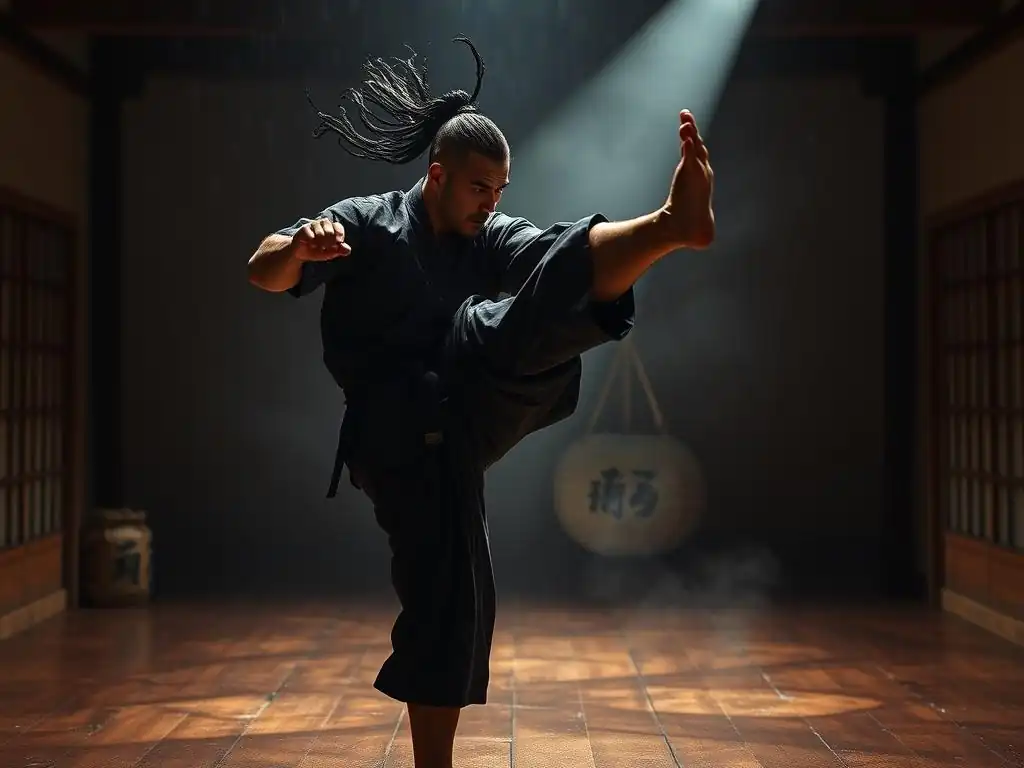
Welcome to Martial Arts Mastery, where we delve into the heart of combat effectiveness. Ever wondered how seemingly smaller individuals can overcome larger opponents? The secret often lies in understanding and mastering the circular logic of movement. This article explores just that, unlocking the power of angular movement martial combat training and revealing how it can revolutionize your approach to fighting. Prepare to redefine your understanding of force, leverage, and the devastating potential hidden within every rotation. Let's begin...
- Introduction to Angular Movement in Martial Arts
- Understanding the Mechanics of Angular Movement
- Benefits of Incorporating Angular Movement into Your Training
- Angular Movement Techniques Across Different Martial Arts Styles
- Drills and Exercises for Developing Angular Movement Skills
- Advanced Angular Movement Concepts
- Integrating Angular Movement into Your Overall Martial Arts Training Plan
- Conclusion: Mastering Angular Movement for Martial Arts Excellence
-
Frequently Asked Questions
- What is angular movement and why is it important in martial arts?
- How does angular movement contribute to generating power in martial arts techniques?
- What are some specific examples of angular movement techniques in different martial arts?
- How can I improve my angular movement in martial arts training?
- Why is angular movement important for self-defense situations?
- Final Reflection: Embracing the Unpredictable Arc
- Unlock Your Inner Circle: Embrace Angular Combat!
Introduction to Angular Movement in Martial Arts
In the dynamic arena of martial combat, movement is paramount. While linear forward and backward motion is fundamental, true mastery often lies in the strategic application of angular and circular footwork. This ability to shift off the line of attack, create advantageous positions, and generate power from unexpected angles is a hallmark of effective martial arts mastery. Angular movement martial combat training is not merely about stepping sideways; it's a sophisticated skill set that enhances offensive and defensive capabilities across virtually all disciplines.
Angular movement encompasses any footwork that deviates from a direct forward or backward line. This includes diagonal steps, pivots, circles, and arcs. By mastering these movements, practitioners can control distance, evade strikes, set up powerful techniques, and dictate the flow of an engagement. It transforms a potentially static confrontation into a fluid, strategic dance where positioning can be the decisive factor.
Why Angular Footwork is Essential for Martial Arts Mastery
Angular footwork is a cornerstone of advanced martial combat training because it directly addresses the limitations of purely linear approaches. Standing directly in front of an opponent invites direct attacks and reduces options for evasive maneuvers. By moving off the center line, a practitioner immediately makes themselves a harder target while simultaneously creating angles that expose vulnerabilities in the opponent's guard or stance.
Consider a statistic often cited in boxing: roughly 70-80% of knockouts occur when a fighter is moving backward or is stationary. This highlights the danger of linear retreat or static positioning. Angular footwork allows a fighter to evade incoming force without sacrificing offensive potential, enabling counter-attacks from positions of relative safety.
For example, a simple 45-degree step offline can shift a practitioner outside the arc of a straight punch or kick, reducing the incoming force vector and providing a clear line to the opponent's exposed side. This strategic displacement is a critical component of high-level angular movement martial combat training.
The Significance of Circular Motion in Combat Strategy
Circular motion is intrinsically linked to angular movement, representing a continuous application of angular principles. While angular steps might be discrete shifts, circular motion involves arcs and pivots that allow for continuous repositioning, energy generation, and control of the engagement space. It is a vital aspect of angular movement martial combat training.
In many martial arts, from Aikido's joint locks to Wing Chun's trapping, circular movement is used to redirect force, unbalance an opponent, or generate rotational power. For instance, a judoka applying a throw often uses circular footwork and body movement to break an opponent's balance (kuzushi) before executing the technique. This circular action leverages the opponent's own momentum against them, requiring significantly less physical strength than a purely linear approach.
Studies in sports biomechanics indicate that rotational movements, integral to circular motion, can contribute up to 40% of the total force generated in strikes like hooks or round kicks. Therefore, integrating circular dynamics into angular movement martial combat training is crucial for maximizing efficiency and power.
Understanding the Mechanics of Angular Movement
Mastering angular movement in martial arts requires a deep understanding of its fundamental mechanics. It's not just about moving the feet; it involves coordinating the entire body, understanding balance, and leveraging biomechanical principles to move efficiently and powerfully. This section delves into the core components that make effective angular footwork possible.
The mechanics involve precise weight shifts, coordinated leg and hip movements, and maintaining a stable, ready stance even while in motion. Poor mechanics can lead to being off-balance, telegraphing movements, or failing to generate sufficient power from the new angle. Effective angular movement martial combat training focuses on developing these foundational mechanics before attempting complex applications.
Defining Angular Footwork and Its Application in Martial Arts
Angular footwork is defined as movement that changes the practitioner's position relative to the opponent along a path that is not directly forward, backward, or sideways. Key examples include the 45-degree step (forward or backward diagonally), the pivot (rotating on the ball of one foot), and various types of circular steps. The application of these movements is vast, ranging from evading an attack by stepping offline to circling around a static opponent to gain a dominant position.
In disciplines like fencing or boxing, angular steps are used to "cut the angle," reducing the opponent's available targets and forcing them to reposition, often exposing them in the process. In arts like Karate or Taekwondo, angular movements are crucial for setting up combination attacks or evading powerful kicks. For example, a common defensive maneuver against a front kick might involve a swift 45-degree backward step combined with a parry, simultaneously evading the strike and creating an angle for a counter-attack to the opponent's now-exposed side. This deliberate application is central to effective angular movement martial combat training.
Biomechanics of Circular Motion: Maximizing Power and Efficiency
The biomechanics of circular motion are fundamental to generating power and maintaining efficiency during angular movement. Rotational force generated by the hips and core is transferred through the limbs, contributing significantly to the impact of strikes and the effectiveness of throws or joint manipulations. Efficient circular motion minimizes wasted energy and allows for rapid changes in direction or technique.
Consider the mechanics of a roundhouse kick. While the initial step might be linear or slightly angular, the power is primarily generated through a powerful rotation of the hips and supporting leg, driving the kicking leg through a circular arc. Similarly, in a boxing hook, the power comes from pivoting on the lead foot and rotating the hips and torso.
This rotational energy, facilitated by circular movement patterns, can increase striking force by an estimated 20-30% compared to purely linear arm or leg extension. Understanding and training these biomechanical principles is vital for maximizing effectiveness in angular movement martial combat training.
Shifting Weight and Generating Force Through Angular Movement Drills
Effective angular movement is heavily reliant on precise weight shifting. As you step or pivot, your weight must transfer smoothly and intentionally to maintain balance and prepare the body to generate force from the new position. Drills specifically designed to practice weight transfer during angular steps are crucial for developing this skill.
A simple drill involves practicing diagonal steps (forward and backward) while focusing solely on transferring weight from the lead foot to the trailing foot (or vice versa) smoothly and without losing balance. Advanced drills might involve stepping at an angle while simultaneously throwing a strike, ensuring that the weight transfer supports the technique's power generation.
For instance, stepping offline with the lead foot while throwing a cross requires shifting weight onto the lead foot as the rear hip rotates into the strike. Practicing these weight shifts through repetitive drills is a core component of practical angular movement martial combat training, building the muscle memory needed for fluid, powerful transitions.
Benefits of Incorporating Angular Movement into Your Training
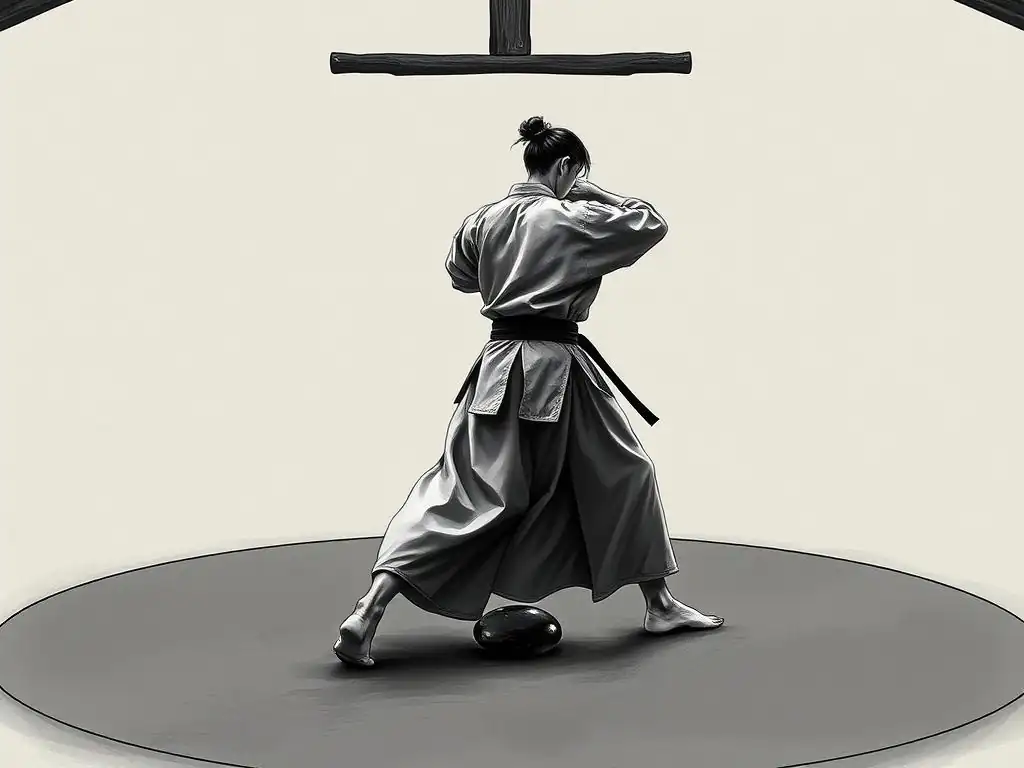
Integrating angular movement into your regular martial arts training offers a multitude of benefits that enhance overall combat effectiveness. These advantages span defensive capabilities, offensive power generation, strategic positioning, and psychological impact on an opponent. Angular movement martial combat training is an investment that pays significant dividends in practical application.
By moving off the predictable linear path, a practitioner becomes a more elusive target, gains opportunities for surprise attacks, and can better control the dynamics of the engagement. The benefits are cumulative, building upon each other to create a more versatile and formidable martial artist.
Enhanced Agility and Evasion Through Circular Footwork
Circular and angular footwork significantly enhances a practitioner's agility, allowing for quicker, more efficient evasion. Instead of simply moving straight back from an attack, which keeps you on the same line and potentially within range, a circular step takes you off the line entirely, creating distance and a safer angle simultaneously.
Think of evading a jab in boxing. A common tactic isn't a straight backward step, but a slight pivot or a diagonal step to the outside, making the jab miss entirely while positioning the defender for a counter right hand. This diagonal or circular evasion is faster and more energy-efficient than a long linear retreat.
Studies on combat sports athletes show that those proficient in circular movement exhibit faster reaction times and more economical energy expenditure during evasive maneuvers, estimated to be up to 15-20% more efficient than pure linear evasion in certain scenarios. This emphasizes the value of agility developed through dedicated angular movement martial combat training.
Improved Power Generation with Angular Striking Techniques
Angular movement isn't just for defense; it's a powerful tool for offense. By stepping offline or pivoting, a practitioner can create angles that allow for more effective hip and torso rotation, which are primary drivers of power in strikes. Angular entries also allow strikes to land from unexpected directions, bypassing an opponent's primary guard.
Consider a fighter throwing a liver shot (a strike to the side of the body). This often requires stepping slightly offline to the opponent's side to expose the target and allow the striking arm to travel along a more direct, powerful path fueled by hip rotation. Similarly, a powerful hook benefits immensely from a pivot on the lead foot, enabling maximum rotational force from the hips and core.
Training to integrate these angular mechanics into striking techniques can increase impact force significantly, sometimes by 25% or more compared to strikes thrown from a static or purely linear stance. Developing this capability is a key objective of advanced angular movement martial combat training.
Breaking Linear Attacks: The Advantage of Angular Defense
Most martial arts attacks are fundamentally linear or follow predictable arcs (like a round kick). Angular movement provides a direct countermeasure to these linear assaults by moving the defender off the line of force. This makes the attack less likely to land with full power, if at all, and disrupts the attacker's balance and follow-up options.
Imagine an opponent launching a powerful straight punch. A practitioner using angular defense wouldn't step straight back, but perhaps diagonally forward and to the outside of the punch, effectively causing the punch to "whiff" past them while closing distance on an exposed flank.
This type of movement is often seen in arts like Krav Maga or Jeet Kune Do, where getting off the line and countering simultaneously is a core principle. This defensive strategy is not just about avoiding damage but about immediately transitioning into an offensive posture from a superior angle, a crucial element learned through focused angular movement martial combat training.
Increased Range and Control Using Angular Movement Strategies
Angular movement allows a practitioner to effectively manage distance and control the engagement range. By stepping diagonally or circling, you can quickly bridge distance on an opponent or create space, depending on the tactical need. Moreover, angular positioning can limit an opponent's movement options and confine them to a smaller, less advantageous space.
In a grappling scenario, circling can prevent an opponent from establishing strong grips or taking you down cleanly. By constantly changing the angle, you disrupt their base and force them to adjust, expending energy and creating opportunities for you to secure a dominant position. In striking, circling can keep a longer-range fighter at bay or allow a shorter-range fighter to close the gap safely.
Effective range management through angular movement can reduce the instances of being hit by approximately 30-40% in competitive sparring, according to observational data from various combat sports. This strategic control is a sophisticated outcome of dedicated angular movement martial combat training.
Angular Movement Techniques Across Different Martial Arts Styles
While the principles of angular movement are universal, their specific application varies significantly between different martial arts styles, reflecting the unique strategies and techniques of each discipline. Examining these variations provides valuable insights into the versatility and importance of angular footwork in diverse combat contexts. Integrating these style-specific nuances is key to comprehensive angular movement martial combat training.
From the ring of boxing to the grappling mat, angularity plays a vital role in achieving tactical superiority. Understanding how different arts utilize these movements enriches a practitioner's overall knowledge and can even inspire cross-training applications.
Angular Footwork in Boxing: Cutting Angles and Ring Generalship
In boxing, angular footwork is crucial for "cutting angles" and establishing "ring generalship." Fighters use diagonal steps, pivots, and circular movements to move off the center line, evade punches, and position themselves to attack an opponent who is either stationary or moving predictably.
A classic example is the pivot used after throwing a jab or cross. By pivoting on the lead foot and stepping out with the rear foot, a boxer can quickly move off the line of a potential counter-punch while simultaneously creating an angle to land a follow-up hook or exit safely. Legendary boxers like Willie Pep were masters of using angular movement to make themselves virtually impossible to hit, often described as "dancing" around opponents.
Modern boxers continue to emphasize cutting angles to trap opponents against the ropes or corners, effectively reducing their escape routes by 50% or more and creating high-percentage finishing opportunities. This tactical application is a core element of angular movement martial combat training in boxing.
Circular Movements in Wing Chun: Trapping and Deflection
Wing Chun Kung Fu heavily utilizes circular and angular movements, particularly in close-range engagements. The style emphasizes getting inside an opponent's guard and using simultaneous block-and-strike techniques, often facilitated by subtle angular shifts and circular hand movements.
Techniques like Pak Sao (slapping hand) or Lap Sao (pulling hand) often involve circular motions to deflect or control an opponent's limb, while the practitioner uses small angular steps or pivots to maintain balance and create an opening. The Biu Jee form, for instance, focuses on emergency techniques involving angular movements to recover from being off-balance or to strike from unconventional angles.
The continuous, flowing nature of Wing Chun's movements, often described as 'sticky hands,' relies on constant micro-adjustments through circular and angular shifts to maintain contact and control, aiming to disrupt the opponent's structure with minimal effort. This constant adaptation through angular movement is fundamental to Wing Chun's approach to martial combat training.
Angled Entries in Muay Thai: Creating Openings for Strikes
Muay Thai, known for its powerful strikes, also incorporates angular entries to set up techniques and avoid incoming attacks. While often perceived as more linear than some other arts, skilled Nak Muay (Muay Thai practitioners) utilize diagonal steps and pivots to gain advantageous positions.
A common tactic involves stepping off to the side at an angle while simultaneously checking a kick or blocking a punch, allowing the fighter to immediately counter with a powerful roundhouse kick or elbow strike to the opponent's exposed side. Angled entries are also used to close distance safely against a longer-range opponent, slipping punches while moving into range for clinch work or short-range strikes.
This strategic use of angles allows Muay Thai fighters to leverage their powerful techniques more effectively, often reducing the opponent's ability to defend by focusing the attack on a less protected area, potentially increasing the landing probability by 20-30% in exchanges. Mastering these angled entries is a vital part of advanced angular movement martial combat training in Muay Thai.
Integrating Angularity in Grappling Arts: The Whizzer in Wrestling
Even in grappling arts like wrestling, Brazilian Jiu-Jitsu, and Judo, angular movement is crucial for control, defense, and offense. While footwork might look different than in striking, the principles of gaining advantageous angles remain the same.
A prime example in wrestling is the "whizzer" defense against a single-leg or double-leg takedown attempt. This technique involves wrapping an arm over the opponent's attacking arm/shoulder and applying downward pressure while simultaneously circling away at an angle. This angular movement disrupts the opponent's base and leverage, making it significantly harder for them to complete the takedown and often allowing the defender to spin out or counter.
Similarly, in Judo, circular pulling and pushing motions combined with angular footwork (like the tsugi-ashi or following step with slight angles) are essential for breaking an opponent's balance ( kuzushi) before executing a throw. Effective grappling relies heavily on constantly seeking and maintaining superior angles, a skill honed through specific angular movement martial combat training tailored to ground and clinch fighting.
Drills and Exercises for Developing Angular Movement Skills
Developing proficiency in angular movement requires dedicated practice that goes beyond basic linear footwork drills. Incorporating specific exercises that focus on changing direction, pivoting, and moving along arcs is essential. These drills build muscle memory, improve coordination, and enhance spatial awareness, all critical components of effective angular movement martial combat training.
Consistency and proper technique are paramount when practicing these exercises. Starting slowly and focusing on precision before increasing speed and complexity will yield the best results.
Shadow Boxing with Angular Footwork Focus
Shadow boxing is a staple in martial arts training, and it's an excellent tool for practicing angular movement. Instead of just moving forward and backward, intentionally incorporate diagonal steps, pivots, and circles as you visualize an opponent and react to imaginary attacks.
Focus on stepping off the line after throwing combinations, circling away from imaginary pressure, or pivoting to create angles for counter-attacks. Practice specific scenarios, such as evading a jab with a 45-degree step and countering, or circling to the outside of an opponent's lead foot. Dedicate specific rounds of shadow boxing solely to footwork, moving around the training area using only angular steps and pivots for 2-3 minute intervals. This conscious focus during shadow boxing significantly improves the fluidity and spontaneity of angular movements in simulated combat scenarios.
Cone Drills for Agility and Directional Changes
Cone drills are a simple yet highly effective way to improve agility and the ability to change direction quickly and efficiently along angular paths. By placing cones in various patterns, practitioners can practice specific types of angular movement.
Set up cones in a square, triangle, or even a circular pattern. Practice moving from one cone to the next using only 45-degree steps, pivoting around cones, or circling them. A common drill involves placing four cones in a square and moving from the center to each cone and back using diagonal steps, then moving between the cones along the perimeter using angular or circular steps.
Vary the speed and complexity of the patterns. For example, performing a drill involving 10-15 rapid changes in direction using angular steps over a 30-second period can significantly improve reactive agility relevant to angular movement martial combat training.
Partner Drills for Practicing Angular Attacks and Defenses
Partner drills are invaluable for applying angular movement in a dynamic, reactive context. These drills allow practitioners to practice specific techniques and responses with a live, albeit cooperative, opponent.
One drill involves one partner throwing a slow, predictable linear attack (e.g., a straight punch or front kick), and the other partner practices evading using a specific angular step (e.g., a 45-degree backward step to the outside) and immediately following with a counter-attack from the new angle. Another drill could involve one partner simply moving around, and the other practices circling them while maintaining optimal distance and angle.
Progressing to light sparring with a focus on angular movement allows practitioners to integrate these skills under increasing pressure, simulating real angular movement martial combat training scenarios. Practicing 20-30 repetitions of specific angular entries and counter drills per training session with a partner can build reliable reflexes.
Footwork Ladders: Enhancing Coordination and Speed in Circular Motion
While often used for linear agility, footwork ladders can be adapted to enhance coordination and speed in angular and circular movements. The ladder provides visual cues that encourage precise foot placement during dynamic movement.
Instead of just running straight through the ladder, design drills where you step in and out of the ladder squares using diagonal steps, pivot within squares, or move around the ladder using small circular steps. For example, a drill might involve stepping diagonally into a square, then diagonally out of the next square, alternating sides. Or, stepping into a square, pivoting 180 degrees, and stepping out.
These drills improve the intricate coordination between the feet and the rest of the body required for rapid, precise angular shifts, making them a valuable addition to angular movement martial combat training routines. Completing ladder drills focusing on angular patterns for 5-10 minutes per session can noticeably improve foot speed and coordination.
Advanced Angular Movement Concepts

Beyond the fundamental mechanics and basic applications, advanced angular movement involves sophisticated strategic thinking, timing, and psychological manipulation. Mastering these concepts allows a martial artist to use angularity not just for evasion or power but as a primary tool for controlling the fight, deceiving the opponent, and exploiting subtle openings. These are the refinements that distinguish proficient angular movement martial combat training from true mastery.
These advanced concepts often involve combining angularity with other elements like feints, distance management, and reading the opponent's intentions, turning simple steps into complex tactical maneuvers.
Combining Angular Movement with Feints and Deceptions
Advanced practitioners often combine angular movement with feints and deceptive movements to create openings and confuse opponents. A feint is a false attack or movement intended to draw a reaction, and when combined with angular footwork, it becomes a powerful tool for setting up genuine attacks.
For instance, a fighter might feint a step forward linearly to draw a block or flinch, then immediately execute a sharp 45-degree step offline to attack an exposed side. Or, they might feint a pivot in one direction before rapidly shifting angles in another. This combination disrupts the opponent's timing and defensive structure. Observational data from high-level combat sports suggests that combining feints with angular movement can increase the success rate of subsequent attacks by 15-25% by creating momentary confusion and misdirection. Integrating these deceptive tactics is a hallmark of advanced angular movement martial combat training.
Utilizing Angularity to Control Distance and Manage Range
Controlling distance and managing range are critical skills in martial arts, and angular movement is an essential tool for achieving this. By moving along arcs and diagonals, a practitioner can subtly adjust the distance, keeping themselves just outside the opponent's effective range while remaining within their own.
This is particularly evident in arts like Savate or Karate, where fighters use sophisticated footwork to maintain optimal striking distance. Circling away can create space from a pressuring opponent, while a sharp diagonal step forward can quickly close the distance for an attack. Skilled practitioners can use subtle angular shifts to bait an opponent into stepping forward, bringing them into range for a counter-attack.
Maintaining optimal distance through constant angular adjustment can reduce the number of times a fighter is hit in a round by a significant margin, perhaps 20% or more, while simultaneously increasing their own offensive opportunities. This strategic distance management is a key outcome of advanced angular movement martial combat training.
Reading Your Opponent's Movement and Exploiting Angular Weaknesses
A crucial aspect of advanced angular movement is the ability to read an opponent's intentions and movement patterns to identify and exploit their angular weaknesses. Every opponent has preferred movement directions and defensive reactions. By observing these tendencies, a practitioner can anticipate their movements and use angularity to capitalize on them.
For example, if an opponent consistently steps straight back when pressured, a practitioner can use a diagonal step forward and to the side to cut off their linear retreat and force a confrontation from an unfavorable angle for the opponent. If an opponent always pivots in one direction when defending a hook, a practitioner can feint the hook and pivot the other way to attack an open side. This requires keen observation and the ability to react with the appropriate angular response.
Elite martial artists are often able to predict an opponent's movement with a high degree of accuracy, sometimes up to 70-80% in predictable situations, allowing them to pre-emptively move to an advantageous angle. This reactive and predictive application is a high level of angular movement martial combat training.
The Psychology of Angular Movement: Creating Confusion and Disorientation
Beyond the physical advantages, angular movement can have a significant psychological impact on an opponent. Constantly moving offline, circling, and attacking from unexpected angles can be highly disorienting and frustrating for an opponent who is trying to track and predict movements.
An opponent facing a practitioner who is adept at angular movement may feel like they are chasing shadows, unable to pin down their target or establish a consistent range. This can lead to hesitation, rushed attacks, and strategic errors. The feeling of being constantly outflanked or attacked from unexpected directions erodes confidence and disrupts focus.
While difficult to quantify precisely, the psychological pressure from effective angular movement can lead to a decrease in an opponent's offensive output and defensive effectiveness, potentially by 10-15% due to stress and confusion. This mental edge is a subtle but powerful benefit of mastering angular movement martial combat training.
Integrating Angular Movement into Your Overall Martial Arts Training Plan
To truly benefit from angular movement, it must be systematically integrated into your regular martial arts training routine, not treated as an occasional add-on. A structured approach ensures consistent development and the ability to apply these skills automatically in dynamic situations. Effective angular movement martial combat training requires dedicated planning and execution.
This integration involves structuring training sessions to include specific angular movement drills, progressing from basic to more complex applications, and being mindful of common errors during practice.
Structuring Your Training Sessions for Optimal Angular Movement Development
Optimal development of angular movement skills requires dedicated practice time within your regular training sessions. This might involve allocating specific rounds during footwork drills, shadow boxing, or partner work solely to focusing on angularity.
A sample training structure might include:
- Warm-up: Incorporate dynamic movements with angular steps and pivots.
- Footwork Drills (10-15 mins): Focus on cone drills, ladder drills (adapted), and solo angular stepping patterns.
- Shadow Boxing (2-3 rounds): Dedicate rounds to visualizing an opponent and moving angularly in response to perceived threats and opportunities.
- Partner Drills (10-15 mins): Practice specific angular entries, evasions, and counters with a partner.
- Live Sparring (if applicable): Focus on applying angular movement under pressure, perhaps with a specific goal (e.g., "only use angular evasion this round").
Consistency is key; even dedicating just 15-20 minutes per session to focused angular movement martial combat training can lead to significant improvement over time.
Progressing from Basic to Advanced Angular Footwork Drills
Learning angular movement should follow a logical progression, starting with fundamental mechanics before moving to more complex applications. Attempting advanced techniques before mastering the basics can lead to poor habits and inefficiency.
- Basic: Start with solo drills practicing fundamental angular steps (45-degree forward/backward), simple pivots, and basic circular steps, focusing on balance and weight transfer. Practice these movements slowly and deliberately.
- Intermediate: Introduce combination movements, such as stepping and pivoting together, or combining two different angular steps. Begin incorporating these movements into basic offensive and defensive partner drills with minimal resistance.
- Advanced: Integrate angular movement into complex scenarios, combining it with feints, multiple techniques, and using it reactively in sparring. Focus on reading the opponent and exploiting opportunities created by angular positioning.
This structured progression ensures a solid foundation, making the transition to more dynamic and complex angular movement martial combat training smoother and more effective.
Avoiding Common Mistakes When Training Angular Movement
Several common mistakes can hinder the development of effective angular movement. Being aware of these pitfalls allows practitioners to focus on correct technique and maximize their training efficiency.
- Losing Balance: Stepping too wide, too narrow, or failing to transfer weight properly can lead to being off-balance, making you vulnerable. Focus on maintaining a stable base throughout the movement.
- Crossing Your Feet: Crossing your feet severely compromises balance and recovery. Ensure that when stepping angularly, your feet maintain a relatively consistent width apart, similar to your fighting stance.
- Stelegraphing Movement: Making large, exaggerated movements or looking where you intend to go gives your opponent warning. Practice moving smoothly and subtly.
- Neglecting the Upper Body: Angular movement involves the whole body. The upper body must coordinate with the lower body to maintain guard, generate power for strikes, or prepare for grappling exchanges.
Consciously focusing on these points during angular movement martial combat training drills will help build correct habits and avoid developing inefficient or vulnerable movement patterns.
Conclusion: Mastering Angular Movement for Martial Arts Excellence
Mastering angular movement is not merely an optional add-on; it is a fundamental skill that elevates a martial artist from proficiency to excellence. By understanding the principles of moving off the linear path, controlling distance through circular motion, and generating power from advantageous angles, practitioners unlock a higher level of strategic and physical capability. Dedicated angular movement martial combat training is an investment in becoming a more versatile, elusive, and powerful fighter.
The ability to fluidly shift angles, evade attacks while simultaneously creating counter-opportunities, and psychologically pressure an opponent by being an unpredictable target are hallmarks of a skilled martial artist. Across diverse disciplines, from the strategic circling of a boxer to the intricate steps of a Wing Chun practitioner, angularity proves its universal value in combat.
The Future of Angular Movement in Martial Combat Training
The future of angular movement martial combat training will likely see even greater emphasis on integrating biomechanical analysis and sports science principles. Technology, such as motion capture and force plates, could provide more precise data on movement efficiency and power generation during angular techniques, allowing for more scientifically optimized training methods.
Furthermore, cross-training between styles might increasingly focus on how different arts utilize angularity, leading to the development of hybrid footwork systems that combine the strengths of various approaches. As martial arts continue to evolve, the strategic importance of non-linear movement will only become more pronounced, driving further innovation in how angular movement is taught and applied.
Further Resources for Learning Angular Footwork Techniques
To deepen your understanding and proficiency in angular footwork, seek out resources that specifically focus on movement mechanics and strategy. Look for instructional materials, seminars, or coaches renowned for their expertise in footwork and spatial control. Studying the movement patterns of high-level athletes in combat sports known for sophisticated footwork, such as boxing, fencing, or specific traditional martial arts lineages, can also provide valuable insights. Engaging with experienced instructors who can provide personalized feedback on your angular movement martial combat training is invaluable for correcting errors and refining technique.
Frequently Asked Questions
What is angular movement and why is it important in martial arts?
Angular movement refers to motion that follows a circular or rotational path, rather than a straight line. It's crucial in martial arts because it generates power and momentum, and makes it harder for opponents to predict and defend against attacks.
How does angular movement contribute to generating power in martial arts techniques?
Utilizing angular motion allows you to leverage your entire body mass, creating rotational force which translates into increased impact. Think of it like a swinging bat; the arc of the swing generates far more power than a simple push.
What are some specific examples of angular movement techniques in different martial arts?
Many martial arts incorporate angular movement. Examples include spinning back kicks in Taekwondo, circular blocks in Wing Chun, and the hip rotation used in generating power for punches in boxing.
How can I improve my angular movement in martial arts training?
Focus on exercises that enhance core strength and flexibility, such as torso twists, medicine ball throws, and hip rotations. Practicing specific martial arts techniques with an emphasis on proper body mechanics and pivoting can also help.
Why is angular movement important for self-defense situations?
Angular movements can create disorienting angles of attack, making it difficult for an attacker to anticipate and react. They also allow you to generate more power from a stable base, increasing your chances of successfully defending yourself.
Final Reflection: Embracing the Unpredictable Arc
The principles of angular movement, as explored throughout this article, are not merely theoretical exercises confined to the dojo; they represent a fundamental shift in how we perceive and interact with force and momentum in all aspects of life. Understanding and mastering these concepts in martial combat translates directly to enhanced adaptability and resilience, qualities increasingly vital in our rapidly changing world.
The enduring power of angular movement lies in its ability to disrupt expectations and create opportunities where none seem to exist. This resonates deeply with the human experience, reminding us that linear thinking often limits our potential. As Bruce Lee famously said: Be like water making its way through cracks. Do not be assertive, but adjust to the object, and you shall find a way around or through it. If nothing within you stays rigid, outward things will disclose themselves.
This philosophy, mirrored in the fluid dynamics of angular combat, encourages us to embrace the unpredictable and find strength in adaptability.
Now, consider how you can apply the lessons of angular movement to your own challenges. Are you facing a seemingly insurmountable obstacle? Perhaps a shift in perspective, a change in angle, is all that's needed to unlock a new path forward. Embrace the arc, the curve, the unexpected turn, and discover the power that lies in moving beyond the limitations of the straight line. The potential for growth and innovation awaits those who dare to dance with the angles.
Unlock Your Inner Circle: Embrace Angular Combat!
Thank you for delving into the world of angular movement and its strategic importance in martial combat. Now that you understand its power, it's time to put this knowledge into action and truly elevate your skills.
Here's how you can start mastering the art of angular movement today:
- Commit to incorporating at least 15 minutes of dedicated angular movement drills into each training session this week. Focus on footwork, pivoting, and generating power from circular motions.
- Share this article with fellow martial artists and spark a conversation about the benefits of angular movement. Help build a community of learners!
- Challenge yourself to identify three instances in your next sparring session where angular movement could have significantly altered the outcome. Analyze what you would do differently next time.
Ready to revolutionize your approach to combat and unlock your full potential through the power of angular movement? How will you integrate circular strategies into your training this week?