
The Energetic Cost of Evasion: Moving Smart, Not Just Fast


Welcome to Martial Arts Mastery, where we delve into the depth and breadth of combat disciplines! Are you ready to elevate your skills beyond mere speed and agility? This article, "The Energetic Cost of Evasion: Moving Smart, Not Just Fast," explores the crucial concept of smart evasion martial arts. Discover how efficient movement and strategic positioning can conserve energy while maximizing defensive effectiveness. Curious to learn how to outmaneuver your opponent with intelligence rather than just brute force? Dive in and unlock the secrets!
- Introduction: The Importance of Efficient Evasion in Combat
- Understanding the Energy Demands of Evasive Maneuvers
- Smart Evasion: Principles and Techniques
- Footwork Fundamentals for Energy-Efficient Evasion
- Tactical Evasion: Using the Environment to Your Advantage
- Conditioning for Evasive Agility and Stamina
- Comparing Evasion Strategies Across Combat Disciplines
- Common Mistakes in Evasion and How to Correct Them
- Developing a Personalized Smart Evasion Strategy
- Conclusion: Embrace Smart Evasion for Long-Term Combat Success
-
Frequently Asked Questions
- How does "Smart Evasion Martial Arts" differ from simply being fast?
- What martial arts disciplines emphasize "Smart Evasion Martial Arts" techniques?
- What are the key benefits of prioritizing "Smart Evasion Martial Arts" in self-defense?
- How can I begin to incorporate "Smart Evasion Martial Arts" into my existing training?
- What role does understanding the philosophical underpinnings of martial arts play in mastering "Smart Evasion Martial Arts"?
- Final Reflection: The Enduring Wisdom of Smart Evasion
- Unleash Your Inner Agility Now!
Introduction: The Importance of Efficient Evasion in Combat
Why Smart Evasion is Crucial for Combat Effectiveness
In the dynamic world of martial arts, evasion is more than just avoiding a strike or a grapple; it's about survival and creating opportunities. While speed and reflexes are vital, relying solely on brute speed for evasion can quickly deplete an athlete's energy reserves. A smart evasion martial arts approach emphasizes efficiency, allowing practitioners to sustain defensive capabilities throughout a prolonged engagement. This strategic movement minimizes unnecessary effort, conserving stamina for offensive actions or critical defensive maneuvers later in the fight.
Efficient evasion is particularly crucial in competitive scenarios or prolonged self-defense situations. Consider a boxing match: a fighter who constantly leaps out of range expends far more energy than one who uses subtle head movement and precise footwork shifts. This energy difference can be the deciding factor in later rounds when fatigue sets in. By prioritizing intelligent movement and energy conservation, practitioners enhance their overall combat effectiveness and longevity in any physical confrontation.
Beyond Speed: Understanding Energy Expenditure in Evasion
Energy expenditure during evasion is not uniform; it varies significantly based on the technique employed. Large, explosive movements like jumping or sprinting away demand considerable anaerobic power, leading to rapid fatigue and lactic acid buildup. In contrast, smaller, controlled movements such as pivots, slips, or subtle weight shifts require less energy, relying more on muscular endurance and balance. Understanding this distinction is fundamental to developing a smart evasion martial arts strategy.
Analyzing the energy cost helps martial artists optimize their training and in-fight decisions. For instance, a study on combat sports athletes might show that a full sprint across the ring consumes roughly three to five times the energy per second compared to maintaining a stable stance with minor adjustments. By consciously choosing lower-energy evasive actions when possible, practitioners can preserve their high-energy bursts for decisive moments, ensuring they have the necessary power and stamina when it truly counts.
Understanding the Energy Demands of Evasive Maneuvers
High-Energy vs. Low-Energy Evasion Techniques
Evasive maneuvers can be broadly categorized by their energy demands. High-energy techniques often involve significant changes in location or posture, requiring explosive muscular contractions. Examples include leaping backward or sideways to create distance, sprinting away from an attacker, or executing complex aerial evasions seen in some forms. While these can be effective for avoiding immediate danger, their repeated use is unsustainable over time, quickly leading to exhaustion. Think of the difference between a quick sidestep and a full-blown scramble away – the latter burns far more fuel.
Conversely, low-energy evasion techniques prioritize minimal movement and maximal effect, embodying the principle of smart evasion martial arts. These include subtle head movements (slips, rolls), small footwork adjustments (shuffles, pivots), blocking or parrying with minimal limb extension, and utilizing balance shifts to absorb or redirect force. These techniques rely on precision, timing, and understanding of angles rather than raw power. A skilled practitioner can evade numerous attacks using low-energy methods, preserving their explosive power for offensive counters or critical high-energy evasions when absolutely necessary.
The Impact of Footwork on Evasion Efficiency
Footwork is arguably the single most critical element influencing evasion efficiency. Poor footwork leads to wasted movement, instability, and increased energy expenditure. For example, taking large, lumbering steps instead of small, controlled adjustments forces the body to constantly re-establish balance, engaging stabilizing muscles unnecessarily and burning excess calories. In contrast, precise, economical footwork allows a practitioner to maintain a stable base while making the smallest possible movements required to evade, embodying efficient smart evasion martial arts.
Effective footwork ensures that weight is distributed optimally, allowing for quick changes in direction or posture with minimal effort. Techniques like shuffling, stepping, and pivoting, when executed correctly, allow for rapid repositioning without losing balance or committing too much weight in one direction. A practitioner with excellent footwork can cover ground or change angles efficiently, using perhaps 20-30% less energy than someone with clumsy or exaggerated movements when performing similar evasive actions over time. Drills focusing on balance, agility, and precise stepping are foundational to developing energy-efficient evasion skills.
Smart Evasion: Principles and Techniques
Minimizing Movement, Maximizing Effect
The core principle of smart evasion martial arts is achieving the desired outcome (avoiding damage) with the least amount of physical effort. This means favoring subtle, precise movements over large, dynamic ones whenever possible. Instead of jumping back several feet to evade a jab, a smart practitioner might use a small slip of the head combined with a slight angle change in their stance. This minimal movement achieves the same defensive goal while expending significantly less energy.
This principle extends to managing distance and position. Rather than constantly moving to create distance, a smart approach might involve using small adjustments to stay just outside the opponent's effective range or manipulating angles to force them into disadvantageous positions. This requires sharp awareness and timing, allowing the practitioner to react with the smallest necessary movement rather than anticipating wildly or overreacting. The goal is surgical precision in movement, cutting away only what is necessary to evade the threat effectively.
Reading Your Opponent: Anticipation and Preemptive Evasion
True smart evasion martial arts goes beyond reactive movement; it involves proactive evasion based on reading the opponent's intentions. By observing subtle tells – shifts in weight, muscle tension, eye direction, or characteristic pre-attack movements – a skilled practitioner can anticipate an incoming attack fractions of a second before it fully develops. This allows for preemptive evasion, initiating the defensive movement slightly before the attack reaches its peak velocity or commitment.
Preemptive evasion is significantly more energy-efficient than reactive evasion. Reacting to an attack already in motion requires rapid, often explosive, movements to catch up to the threat. Anticipating, however, allows for smoother, smaller adjustments. For example, recognizing the subtle shoulder twitch before a hook allows a fighter to initiate a roll or slip as the punch begins, rather than having to violently duck after it's fully launched. This foresight reduces the necessary speed and magnitude of the evasive action, conserving precious energy throughout the engagement.
Footwork Fundamentals for Energy-Efficient Evasion
Stance and Balance: The Foundation of Efficient Movement
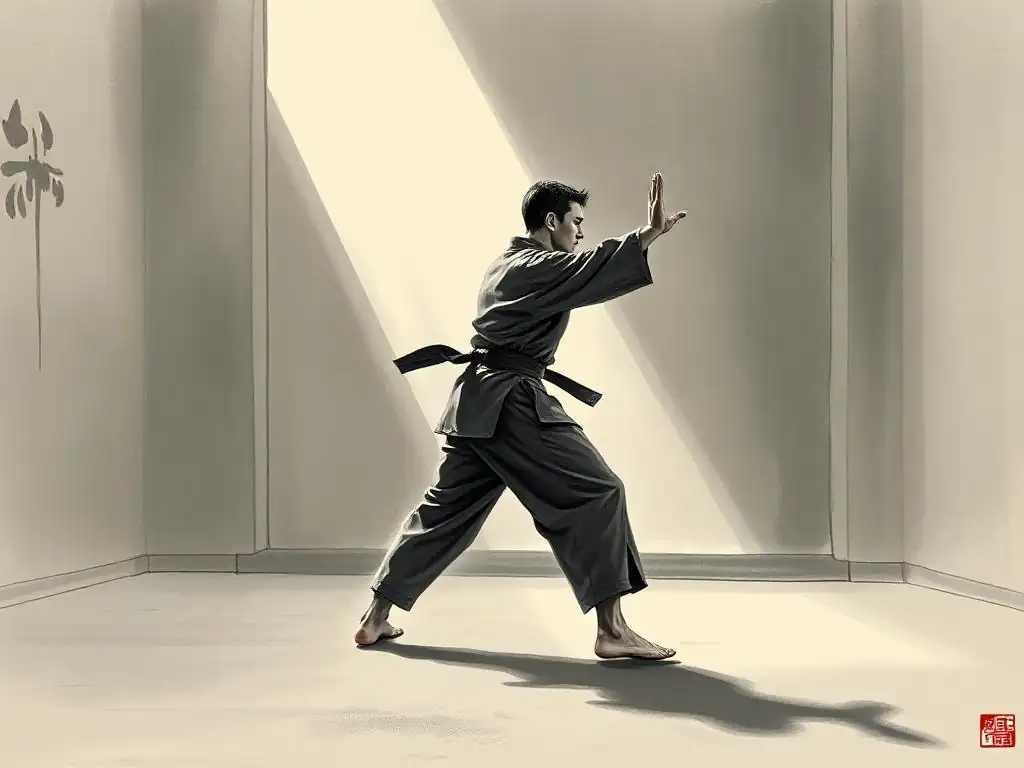
A solid, balanced stance is the absolute bedrock upon which energy-efficient evasion is built. Without proper balance, any movement, including evasion, becomes inherently inefficient. A practitioner who is off-balance must expend extra energy simply to maintain equilibrium while attempting to move defensively. This constant struggle for balance adds significant, unnecessary fatigue over the course of a round or encounter. A stable stance allows for quick shifts in weight and direction without teetering or requiring large recovery steps.
The ideal stance is one that allows for mobility in any direction while maintaining a ready posture. It should be neither too wide (limiting lateral movement) nor too narrow (compromising stability). Weight distribution is key; being too far forward or backward hinders rapid movement in the opposite direction. By cultivating a balanced, versatile stance through consistent practice, martial artists create a foundation where minimal muscular effort is required to initiate and control evasive footwork, embodying the principles of smart evasion martial arts.
Shifting and Pivoting: Mastering Controlled Movement
Shifting and pivoting are fundamental footwork techniques for smart evasion martial arts, offering efficient ways to change position and angle. Shifting involves moving the body laterally or forward/backward by sliding the feet while maintaining relative distance between them, often without lifting them completely off the ground. This allows for quick, small adjustments to distance or angle with minimal energy expenditure compared to stepping.
Pivoting involves rotating the body around one foot, allowing for rapid changes in facing direction or creating angles. A well-executed pivot can quickly take a practitioner off the line of attack, turning a frontal assault into a side-on or even rear advantage, while using significantly less energy than a full step or leap. Mastering these controlled movements enables practitioners to make subtle yet effective evasions, preserving stamina and positioning themselves advantageously without telegraphing large, energy-draining movements.
Footwork Drills for Developing Agile Evasion Skills
Developing agile and energy-efficient footwork requires dedicated practice. Drills that focus on speed, precision, and control are essential. Ladder drills, for instance, improve foot speed and coordination, teaching practitioners to place their feet quickly and accurately. Cone drills focusing on changing direction rapidly help develop the ability to shift weight and pivot efficiently.
Specific martial arts drills often simulate evasive scenarios. For example, partner drills where one person throws slow, telegraphed attacks while the other practices minimal head movement and small footwork adjustments (slips, pivots, shuffles) are invaluable. Shadowboxing, focusing explicitly on executing evasive movements with economy of motion, also helps build muscle memory for smart evasion martial arts. Consistent practice of these drills, perhaps dedicating 15-20 minutes per training session, significantly enhances a practitioner's ability to evade effectively and efficiently under pressure.
Tactical Evasion: Using the Environment to Your Advantage
Cornering and Ringcraft: Smart Evasion in Confined Spaces
In combat sports or self-defense scenarios, the environment is a crucial factor in smart evasion martial arts. In confined spaces like a boxing ring or a small room, cornering becomes a significant threat. Efficient evasion here isn't just about moving away; it's about using the boundaries strategically. Skilled practitioners employ "ringcraft" to avoid being trapped, using small lateral movements, pivots, and angles to stay off the ropes or walls.
Instead of trying to sprint out of a corner, which is often impossible and energy-intensive, a smart evasive strategy involves using footwork to circle out, tie up the opponent, or even use the boundary to their advantage by forcing the opponent into a predictable line of attack. This requires awareness of one's position relative to the environment and using minimal energy movements like shuffling along the ropes or pivoting off a corner post, rather than attempting large, desperate leaps to escape.
Utilizing Distance and Angles for Evasion
Distance and angles are fundamental tools for smart evasion martial arts. Maintaining the optimal distance prevents many attacks from even reaching their target, thus negating the need for physical evasion altogether. This involves constantly adjusting one's position relative to the opponent, using small steps or shifts to stay just outside their effective range for different types of attacks (e.g., hand strikes, kicks, grappling entries).
Manipulating angles is another energy-efficient evasive tactic. Instead of moving directly backward to evade a strike, a practitioner might step off to the side and slightly forward, creating an angle that takes them off the line of attack while simultaneously positioning them for a counter. This requires less energy than covering a large linear distance. By mastering distance management and angle creation, practitioners can evade threats proactively and efficiently, often disrupting the opponent's balance and flow in the process.
Conditioning for Evasive Agility and Stamina
Exercises to Improve Footwork Speed and Endurance
Developing the physical attributes necessary for effective and sustainable evasion requires targeted conditioning. Footwork speed and endurance are paramount. Exercises like jump rope are excellent for improving calf endurance, coordination, and the ability to stay light on the feet, crucial for quick evasive steps. Sprint intervals and shuttle runs enhance anaerobic capacity and explosiveness needed for rapid directional changes.
Beyond speed, endurance is vital for maintaining evasive capabilities throughout a prolonged encounter. Long-duration cardio, such as running or cycling, builds aerobic base endurance. Combining this with high-intensity interval training (HIIT) that mimics the stop-and-go nature of combat helps improve the body's ability to recover quickly between bursts of activity, allowing for sustained smart evasion martial arts throughout multiple rounds or extended periods of conflict.
The Role of Core Strength in Evasion Efficiency
Core strength is a often-underestimated component of efficient evasion. A strong core (abdominal, lower back, and hip muscles) provides stability and allows for efficient transfer of power throughout the body. During evasive movements like slipping, rolling, or pivoting, a strong core helps maintain balance and control, preventing wasted energy from wobbling or overcorrecting.
Exercises like planks, Russian twists, and medicine ball throws specifically target core muscles. Improving core strength enhances body control during dynamic movements, reducing the need for larger, less efficient muscular actions to maintain stability. For example, a strong core allows a practitioner to execute a tight, energy-efficient slip under a punch using minimal head and torso movement, whereas a weak core might require larger, more energy-intensive bending or leaning movements. This directly contributes to the efficiency of smart evasion martial arts.
Comparing Evasion Strategies Across Combat Disciplines
Evasion in Boxing: Footwork and Head Movement
Boxing is a prime example of smart evasion martial arts relying heavily on footwork and head movement. Boxers primarily evade punches through subtle head slips, rolls, and bobs, combined with precise footwork like shuffling, pivoting, and stepping. The goal is to make the opponent miss while staying within range to counter, demanding high energy efficiency.
Boxers train extensively on defensive drills focusing on minimal movement. A skilled boxer can evade a flurry of punches using only inches of movement, demonstrating exceptional energy conservation. The ability to slip punches by just an inch or pivot slightly to take the sting off a hook saves immense energy compared to constantly leaping out of range, which is generally frowned upon in boxing due to the energy cost and the loss of counter-attacking position.
Evasion in Muay Thai: Utilizing Distance and Angles
Muay Thai evasion incorporates footwork, but also heavily utilizes distance and angle management, particularly against kicks. While head movement is used against punches, evading powerful leg and body kicks often involves checking (blocking with the shin) or stepping just out of range or off to an angle. This requires precise timing and understanding of the opponent's kicking range.
Stepping off at an angle to avoid a roundhouse kick, for example, requires less energy than absorbing the impact or trying to sprint away. Muay Thai fighters also use push kicks (teep) to create distance and disrupt the opponent's rhythm, acting as a preemptive form of evasion. The strategic use of distance and angles is a cornerstone of energy-efficient evasion in Muay Thai, enabling fighters to conserve energy against powerful, committed attacks.
Evasion in Judo/Aikido: Redirecting Force, Avoiding Direct Impact
In grappling arts like Judo and Aikido, evasion often takes the form of yielding and redirecting force rather than purely physical avoidance of a strike. When an opponent attempts a throw or takedown, smart evasion martial arts involves blending with their movement, shifting balance, and using kuzushi (breaking balance) to negate their power and create an opening.
Instead of resisting force directly, which is energy-intensive, practitioners use their opponent's momentum against them. For example, when an opponent pulls for a throw, a Judo player might step in the direction of the pull, using a pivot to turn the opponent's force into a throw attempt for themselves. This redirection requires precise timing and body mechanics but is significantly more energy-efficient than trying to muscle out of a committed grip or throw attempt.
Evasion in Wrestling: Maintaining Position and Angle Control
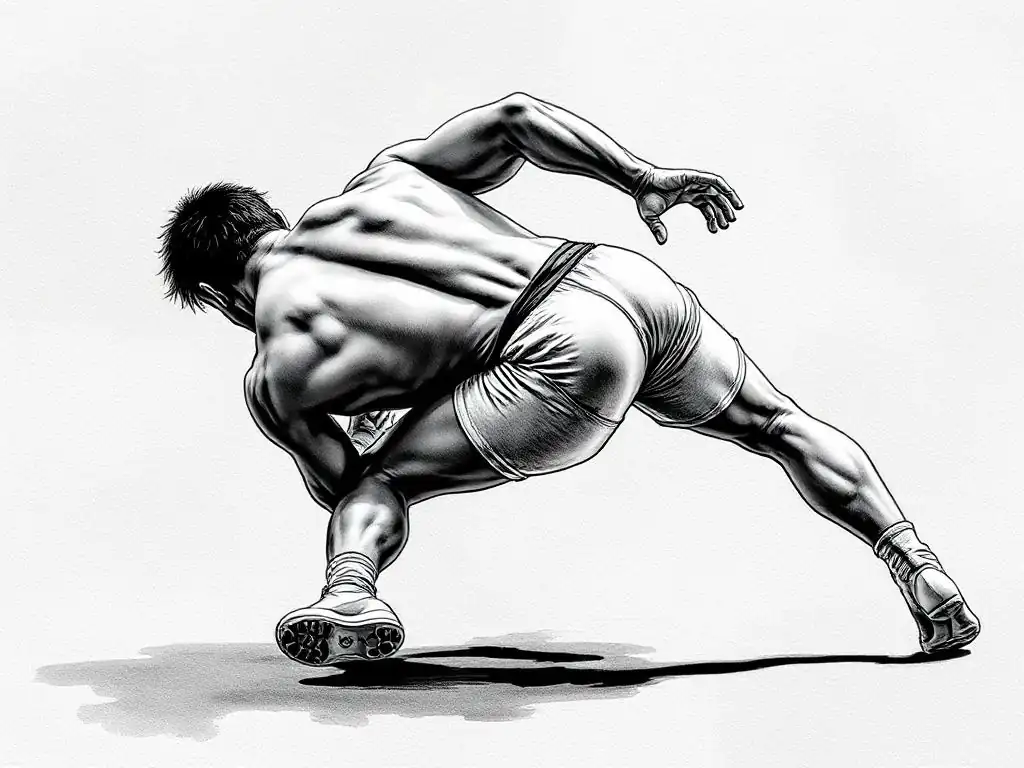
Wrestling evasion focuses on maintaining position, preventing takedowns, and escaping holds, often through subtle movements and angle changes rather than creating large distances. Defending a shot involves sprawling, down blocking, and circling to change the angle, preventing the opponent from getting to the legs or achieving a dominant position.
Escaping a hold or pin involves bridging, shrimping (hip escape), and creating frames, using body mechanics to create space and improve position. These techniques rely on core strength, body awareness, and efficient movement patterns developed through rigorous drilling. A skilled wrestler can evade takedown attempts and escape pins using minimal, precise movements that conserve energy compared to brute-force resistance.
Evasion in Fencing: Distance Management and Precise Footwork
Fencing is an excellent illustration of smart evasion martial arts focused on distance and precise footwork. The primary means of evasion is maintaining and manipulating the distance (measure) between fencers. Attacks are evaded by retreating (back steps), parrying (deflecting the blade), or using evasive body movements (ducks, lunges to the side), all executed with high speed and precision.
Fencers spend countless hours practicing footwork drills to move rapidly and efficiently forward, backward, and laterally. The ability to make small, rapid adjustments to stay just outside the opponent's reach, or to quickly close distance for an attack, is crucial. Energy efficiency comes from making the smallest possible movement required to evade the opponent's blade, relying on timing and precision rather than brute speed over long distances.
Common Mistakes in Evasion and How to Correct Them
Over-reliance on Speed and Reflexes
A frequent mistake in evasion is believing that speed and reflexes alone are sufficient. While important, solely relying on rapid reactions leads to inefficient, energy-draining movements. Constantly trying to outrun or out-react every attack results in wasted energy and fatigue. This approach often manifests as large, exaggerated movements that expose vulnerabilities and burn through stamina rapidly.
Correction involves shifting focus from pure speed to timing, precision, and anticipation. Training should emphasize reading the opponent, understanding angles, and practicing smaller, more controlled evasive movements. Incorporating drills that slow down the action initially, allowing practitioners to focus on technique and efficiency rather than just speed, helps retrain the reactive instinct towards smart evasion martial arts.
Poor Stance and Balance Leading to Wasted Energy
As mentioned earlier, poor stance and balance are significant drains on energy during evasion. A wobbly or unstable base forces the body to constantly engage stabilizing muscles, adding unnecessary fatigue. Attempting to evade from an unbalanced position often results in larger, compensatory movements that are both inefficient and slow.
Correcting this requires a return to fundamentals. Dedicate significant training time to developing a strong, balanced stance suitable for your discipline. Practice drills that challenge balance, such as standing on one leg, performing movements on unstable surfaces, or shadowboxing while focusing solely on maintaining perfect balance through every step and weight shift. Consistent attention to stance and balance is foundational for smart evasion martial arts.
Telegraphing Evasive Movements
Telegraphing occurs when a practitioner gives off subtle cues that signal their intended movement before it happens. This allows the opponent to anticipate and adjust their attack, forcing the defender into larger, more desperate, and energy-intensive evasions. Common examples include dipping the shoulder before slipping, looking down before ducking, or taking a deep breath before a big step back.
Eliminating telegraphing requires self-awareness and practice. Video recording training sessions can help identify subtle tells. Partner drills where the focus is on attacking only when the defender telegraphs can help raise awareness. Training should emphasize relaxed movement and initiating evasive actions from a neutral, balanced posture, making it harder for the opponent to predict the direction and timing of your smart evasion martial arts.
Developing a Personalized Smart Evasion Strategy
Assessing Your Strengths and Weaknesses
Developing an effective, energy-efficient evasion strategy begins with a realistic assessment of one's own physical attributes, skill set, and fighting style. Are you naturally fast but lack endurance? Do you have strong legs for powerful pushes but struggle with quick lateral shifts? Understanding these individual characteristics helps tailor which evasive techniques will be most efficient for you.
For example, a practitioner with excellent core strength and balance might excel at using subtle slips and pivots for evasion, while someone with naturally fast foot speed might rely slightly more on quick shuffles and angle changes. Identifying weaknesses, such as poor balance or limited hip mobility, allows for targeted training to improve the foundation of their smart evasion martial arts strategy.
Tailoring Evasion Techniques to Your Body Type and Fighting Style
Not all evasive techniques are equally suited to every body type or fighting style. A tall, lanky fighter might find it more energy-efficient to use distance management and long-range footwork to evade, while a shorter, stockier fighter might favor tighter slips, rolls, and angle changes in close quarters. Your primary martial arts discipline also dictates the most relevant evasive tactics – judoka evade throws differently than boxers evade punches.
The goal is to integrate the principles of smart evasion martial arts into your existing game. Experiment with different techniques during training and sparring to see which ones feel most natural and require the least amount of wasted energy for your body and style. Continuously refine your approach based on experience, focusing on the evasive methods that are most effective and sustainable for you as an individual martial artist.
Conclusion: Embrace Smart Evasion for Long-Term Combat Success
Mastering the Art of Energy Conservation in Combat
Mastering the art of energy conservation through smart evasion martial arts is not merely a defensive skill; it is a strategic imperative for long-term success in any combat discipline. By prioritizing efficiency over brute force, practitioners can sustain their performance, maintain mental clarity, and retain explosive power for crucial moments. This approach transforms evasion from a reactive scramble into a proactive, calculated element of your overall strategy.
Embracing smart evasion means constantly seeking the most economical way to avoid damage, whether through subtle footwork, precise head movement, strategic distance management, or utilizing the environment. It requires discipline to avoid the temptation of relying solely on speed and the commitment to refining fundamental skills like stance, balance, and controlled movement.
The Path to Sustainable Evasion Skills
The path to developing sustainable, energy-efficient evasion skills is one of continuous learning and refinement. It involves dedicated practice of fundamental footwork, targeted conditioning, and a deep understanding of timing, distance, and opponent tells. Integrating the principles of smart evasion martial arts into every training session builds the muscle memory and tactical awareness necessary to apply these skills under pressure.
Ultimately, the ability to move smart, not just fast, allows martial artists to fight longer, think clearer, and execute their techniques more effectively. It is a cornerstone of longevity and success in the demanding world of martial arts, ensuring that when the critical moment arrives, you have the energy and positioning necessary to prevail.
Frequently Asked Questions
How does "Smart Evasion Martial Arts" differ from simply being fast?
Smart evasion focuses on efficient movement and energy conservation, utilizing techniques like redirecting force and anticipating attacks. It's about strategic positioning rather than pure speed.
What martial arts disciplines emphasize "Smart Evasion Martial Arts" techniques?
Many disciplines, including Aikido and Wing Chun, heavily incorporate principles of redirection and efficient movement. Jeet Kune Do also emphasizes adapting to the opponent's energy.
What are the key benefits of prioritizing "Smart Evasion Martial Arts" in self-defense?
Primarily, it reduces energy expenditure during a confrontation. This allows for sustained defense and the ability to counter-attack effectively, even against a stronger opponent.
How can I begin to incorporate "Smart Evasion Martial Arts" into my existing training?
Focus on understanding angles and body mechanics, practicing techniques that redirect force rather than meeting it head-on. Seek out training that emphasizes sensitivity drills and partner work.
What role does understanding the philosophical underpinnings of martial arts play in mastering "Smart Evasion Martial Arts"?
The philosophical aspects often highlight the importance of yielding and non-resistance, which are crucial for effective evasion. Understanding these principles fosters a mindset of adaptability and strategic thinking.
Okay, here's a final reflection crafted for your article "The Energetic Cost of Evasion: Moving Smart, Not Just Fast," optimized for the keyword "Smart evasion martial arts" and following the structure you provided:
Final Reflection: The Enduring Wisdom of Smart Evasion
The principles of smart evasion martial arts are not merely historical techniques confined to dojos and training mats; they are profoundly relevant in today's fast-paced and often unpredictable world. Understanding the energetic cost of movement, and prioritizing efficiency over brute force, is a lesson applicable far beyond physical combat, influencing how we navigate challenges in our personal and professional lives.
This exploration of smart evasion has underscored the importance of mindful movement and strategic thinking, a philosophy that continues to resonate deeply within the martial arts community and beyond. The ability to conserve energy and anticipate an opponent's actions is a skill that transcends physical prowess, fostering resilience and adaptability in all aspects of life. The supreme art of war is to subdue the enemy without fighting.
- Sun Tzu. This quote perfectly encapsulates the essence of smart evasion, emphasizing the power of strategy and foresight over sheer physical confrontation.
As you reflect on the principles outlined in this article, consider how you can apply the wisdom of smart evasion to your own life. Embrace the power of mindful movement, prioritize efficiency over brute force, and cultivate the ability to anticipate and adapt to the challenges that lie ahead. By moving smart, not just fast, you can unlock your full potential and navigate life's complexities with grace, resilience, and enduring strength.
Unleash Your Inner Agility Now!
Thanks for exploring the art of efficient movement with us! We hope this article has illuminated the crucial link between energy conservation and effective evasion. Now, it's time to put that knowledge into action and refine your skills.
- Immediately incorporate at least 15 minutes of focused footwork drills into your next training session, emphasizing smooth transitions and minimizing wasted movement.
- Share this article with a fellow martial artist who could benefit from understanding the energy cost of evasion.
- Experiment with different movement patterns in a low-stakes setting and record your heart rate after each one to gauge efficiency.
What specific evasion technique will you prioritize refining this week to move smarter, not just faster?