
Taolu's Hidden Arsenal: Understanding the Practical Applications of Kung Fu Forms

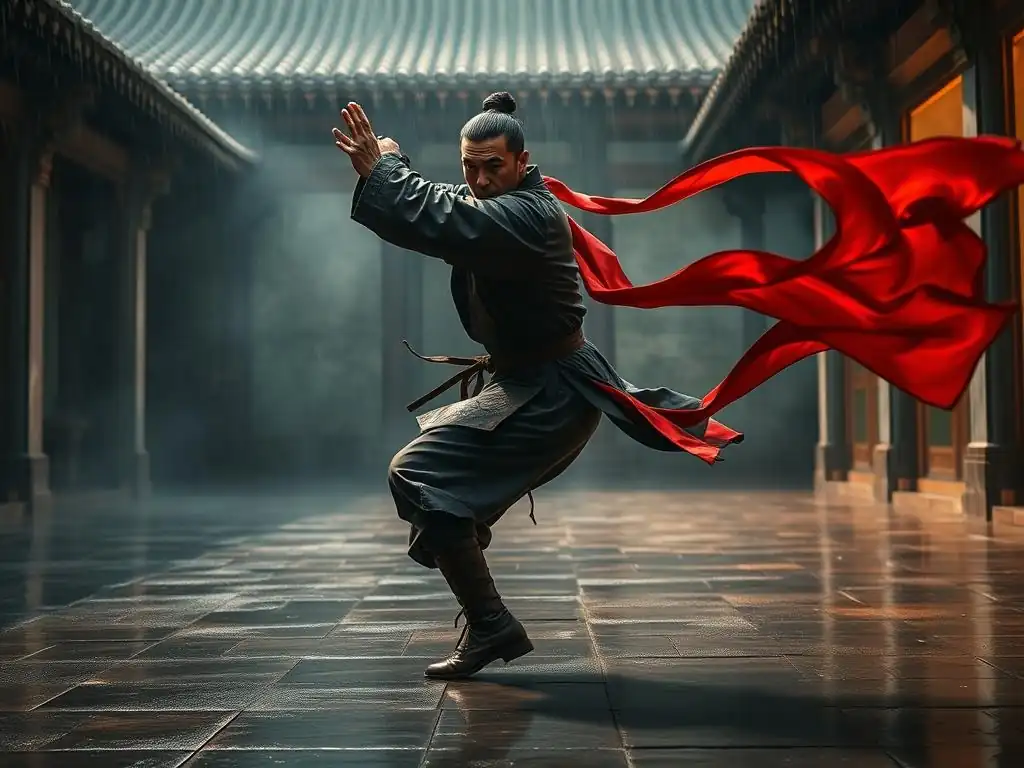
Welcome to Martial Arts Mastery, your ultimate resource for exploring the profound depths of martial arts! Ever wondered if those graceful movements in Kung Fu forms are more than just aesthetic displays? Dive into " Taolu's Hidden Arsenal: Understanding the Practical Applications of Kung Fu Forms" and unlock the secrets embedded within these ancient routines. Prepare to be amazed as we dissect the combat applications hidden within the seemingly intricate patterns, revealing practical self-defense techniques and a deeper understanding of this captivating art.
- Common Kung Fu Form Applications and Their Real-World Relevance
-
Frequently Asked Questions
- What are Kung Fu taolu (forms), and what's their primary purpose?
- How do Kung Fu forms relate to practical self-defense?
- What are some common misconceptions about Kung Fu form applications?
- How does one effectively learn the practical applications of Kung Fu forms?
- Besides self-defense, what other benefits can one gain from practicing Kung Fu forms?
- Final Reflection: Unveiling the Power Within
- Unleash Your Inner Warrior: Transform Theory into Action!
Common Kung Fu Form Applications and Their Real-World Relevance
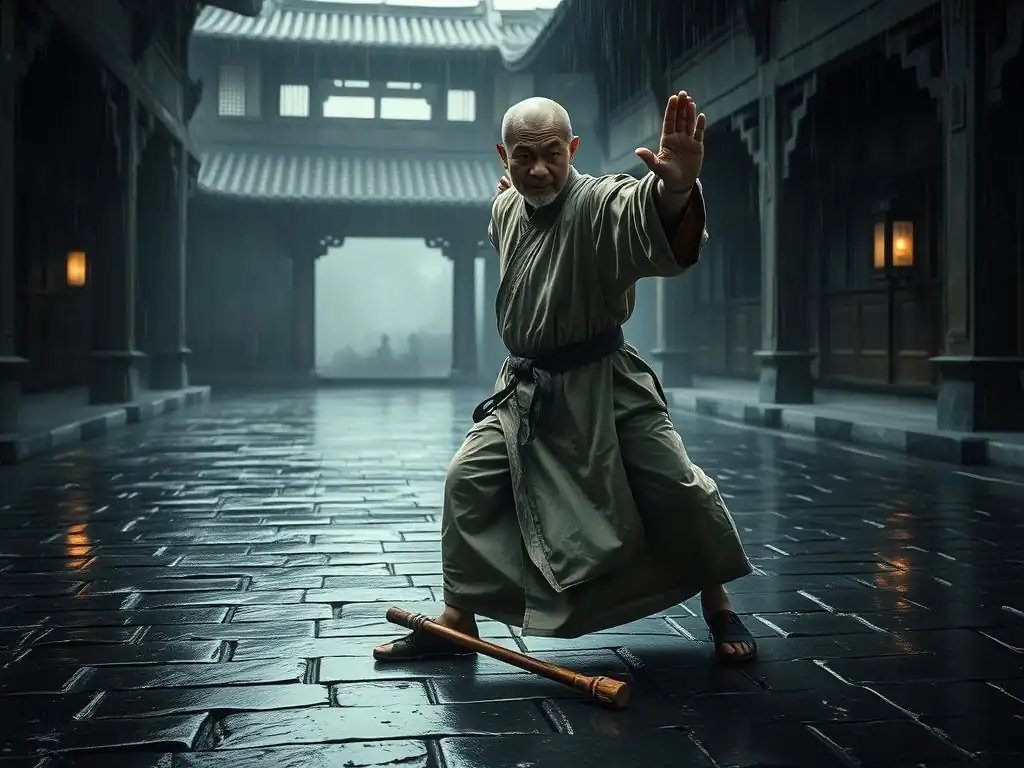
Stances: Building a Solid Foundation for Power and Stability
Stances are not merely static poses held within a Kung Fu form; they are dynamic structures designed to provide stability, generate power, and facilitate movement. A solid stance allows a practitioner to absorb incoming force, maintain balance during complex techniques, and launch powerful attacks.
Consider the ubiquitous Horse Stance (Ma Bu): while held statically in a form, its practical application lies in developing leg strength and a low center of gravity, essential for anchoring oneself against pushes or delivering low-line strikes. Similarly, the Bow Stance (Gong Bu) teaches forward weight distribution for powerful frontal attacks and forward momentum, a critical element in many Kung Fu form applications.
Beyond generating and absorbing force, stances dictate the potential range of motion and defensive capabilities. A well-executed Cat Stance (Xie Bu or Xu Bu), for instance, appears balanced and ready in a form, but its practical purpose is rapid transitioning, allowing for quick changes in direction or immediate launches into kicks or strikes while keeping weight off the front leg, making it less vulnerable.
The depth and width of a stance in training directly correlate to the stability and power available when applying techniques in a dynamic situation. Mastering the transitions between stances within a form is just as crucial as holding the stance itself, teaching the practitioner how to shift weight efficiently and maintain balance under pressure, a fundamental aspect of practical Kung Fu form applications.
Hand Techniques: Striking, Blocking, and Grappling Applications
Kung Fu forms are a repository of hand techniques, encompassing a vast array of strikes, blocks, parries, and control methods. What might look like a simple outward block (Wai Lan Shou) in a form is a practical defense against a frontal attack, designed to deflect force and create an opening. Similarly, a straight punch (Chuan Quan) performed in a form is the foundational close-range offensive tool, emphasizing directness and power generated from the core and ground. These basic techniques, repeated countless times within various Kung Fu form applications, build muscle memory for speed and precision.
More complex hand movements within forms often combine offensive and defensive actions or subtly include grappling elements. A sweeping hand motion might simultaneously parry a strike and set up a palm strike or a joint lock.
Techniques like the "Phoenix Eye Fist" (Feng Yan Quan) or various palm strikes (Zhang Fa) seen in forms have specific anatomical targets and power generation methods that are drilled through repetition in the form. While the form might show a stylized movement, the practical application focuses on the vector of force, the point of impact, and the follow-through required for effectiveness in real combat scenarios, demonstrating the depth of practical Kung Fu form applications embedded within the choreography.
Footwork: Evasion, Positioning, and Closing the Distance
Effective footwork is the unsung hero of practical martial arts, and Kung Fu forms extensively train it. Footwork patterns dictate how a practitioner moves in relation to an opponent, enabling evasion, creating advantageous angles for attack, and controlling distance. Steps like the simple forward step (Jin Bu) or backward step (Dao Bu) taught in forms are the basis for closing or increasing distance safely. More intricate footwork, such as circular steps (Yuan Zhuan Bu) or side steps (Ce Bu), allows for flanking maneuvers or evading frontal assaults, principles vital for survival in a confrontation.
The transitions between stances, heavily reliant on precise footwork, are where much of the practical application lies. The ability to quickly shift from a stable Bow Stance to a mobile Cat Stance, or to pivot rapidly using steps like the "Cross Step" (Jiao Cha Bu), is trained implicitly within the flow of a form. This develops the agility and balance needed to react instantaneously to an opponent's movements.
Understanding why a form dictates a specific step pattern – perhaps to avoid a common attack trajectory or to set up a particular subsequent technique – unlocks the practical Kung Fu form applications hidden within the seemingly choreographed dance. Training these sequences builds the intuitive movement necessary for dynamic self-defense situations.
Frequently Asked Questions
What are Kung Fu taolu (forms), and what's their primary purpose?
Taolu are prearranged sequences of movements that serve as a training method for Kung Fu. While they look beautiful, their primary purpose extends beyond aesthetics, laying the foundation for combat skills.
How do Kung Fu forms relate to practical self-defense?
Each movement within a Kung Fu form represents a potential self-defense application, such as a block, strike, or joint lock. Understanding these applications allows practitioners to translate the form into real-world combat scenarios.
What are some common misconceptions about Kung Fu form applications?
A common misconception is that forms are purely for performance or that the movements are too stylized for practical use. The truth is, they require dedicated analysis and training to unlock their combative potential.
How does one effectively learn the practical applications of Kung Fu forms?
Learning involves breaking down each movement, understanding its biomechanics, and practicing its application with a partner. It requires guidance from an experienced instructor who can demonstrate and explain the techniques.
Besides self-defense, what other benefits can one gain from practicing Kung Fu forms?
Beyond self-defense, practicing Kung Fu forms improves coordination, balance, and focus. It also cultivates discipline and mental fortitude, contributing to overall physical and mental well-being.
Final Reflection: Unveiling the Power Within
The journey through Taolu's Hidden Arsenal reveals that Kung Fu forms are far more than just aesthetic displays; they are living blueprints of combat strategy and physical conditioning. In a world often captivated by the flashy and immediate, it's crucial to remember the depth and practicality embedded within these ancient practices, ensuring their continued relevance in both martial arts and personal development.
The enduring influence of Kung Fu forms extends beyond the dojo, shaping our understanding of movement, discipline, and the interconnectedness of mind and body. My own exploration of these forms has instilled a profound respect for the dedication and ingenuity of past masters, and a deeper appreciation for the potential within each of us to unlock our own hidden arsenal. The best fighter is never angry.
This ancient wisdom, reflected in the controlled movements and focused intent of Kung Fu forms, reminds us that true strength lies not in aggression, but in mindful awareness and strategic application.
Now, as you step away from this exploration of Kung Fu form applications, consider how the principles of discipline, mindful movement, and strategic thinking can be applied to your own life. Embrace the challenge of uncovering the hidden potential within yourself, and let the spirit of Taolu guide you towards a path of strength, balance, and unwavering focus.
Unleash Your Inner Warrior: Transform Theory into Action!
Thanks for diving deep into the world of Taolu and its practical applications. We hope this exploration has illuminated the power and depth hidden within these Kung Fu forms. Now, it's time to translate that knowledge into tangible action.
Here's how you can continue your journey:
- Master one movement: Dedicate this week to perfecting a single technique from your favorite Taolu form and actively incorporate it into your sparring or self-defense practice.
- Explore the forms of a related style. The styles of Kung Fu are deep and varied, the deeper your understanding, the easier it will be to adapt to various self-defense scenarios.
- Share your progress! Record yourself practicing and post it on social media with #MartialArtsMastery, inspiring others to unlock the secrets of Taolu.
Which Taolu form will you focus on mastering this week, and how will you integrate its techniques into your daily training?