
Bunkai Defense Against Strikes: Applying Kata Movements to Neutralize Punches & Kicks

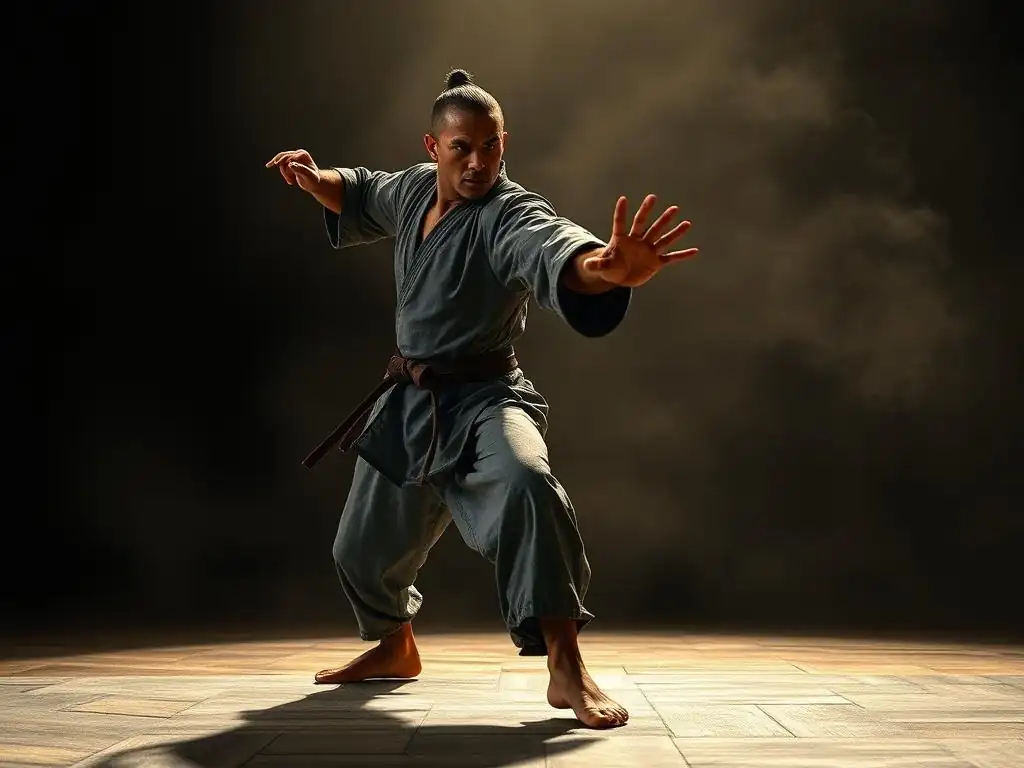
Welcome to Martial Arts Mastery! Delve into the fascinating world where ancient forms meet modern application. Ever wondered how the seemingly stylized movements of kata translate into real-world self-defense? This article unravels the secrets of Bunkai punch kick defense, demonstrating how to apply these time-tested techniques to effectively neutralize strikes. Prepare to unlock a deeper understanding of your art and discover the practical power hidden within its traditional forms. Intrigued? Keep reading to transform your kata into a powerful defensive tool!
- Introduction to Bunkai for Punch and Kick Defense
- Analyzing Common Strikes: Punches and Kicks in Self-Defense Scenarios
- Bunkai Techniques for Punch Defense: Turning Kata into Practical Application
- Bunkai Techniques for Kick Defense: Adapting Kata for Leg Attacks
- Integrating Footwork and Body Movement for Effective Strike Defense
- Training Drills for Bunkai Punch Kick Defense
- Common Mistakes in Bunkai and How to Avoid Them
- Conclusion: Mastering Bunkai for Practical Self-Defense
-
Frequently Asked Questions
- What is Bunkai and how does it relate to punch and kick defense?
- How does Bunkai training differ from regular sparring or kumite?
- Why is understanding the history and philosophical underpinnings of Bunkai important?
- Can Bunkai defense be used effectively against multiple attackers or weapons?
- What are some common mistakes people make when learning Bunkai for punch and kick defense?
- Final Reflection: Unlocking the Defensive Potential Within
- Unleash Your Inner Defender: Master the Art of Bunkai!
Introduction to Bunkai for Punch and Kick Defense
Understanding how to defend against common strikes is a fundamental aspect of practical self-defense. While many martial arts systems teach defensive techniques, karate kata contains a wealth of knowledge specifically tailored to neutralizing incoming attacks. Bunkai, the application of kata movements, provides the key to unlocking these defensive strategies, particularly for dealing with punches and kicks, which are the most frequent attacks encountered in real-world confrontations. Mastering Bunkai punch kick defense is essential for transitioning from performing forms to effectively protecting oneself.
This article delves into the practical application of kata movements for Bunkai punch kick defense. We will explore how traditional forms encode sophisticated defensive principles and techniques designed to evade, block, deflect, and counter common strikes. By analyzing specific kata sequences and breaking down their intended applications against punches and kicks, practitioners can gain a deeper understanding of their kata and develop practical self-defense skills rooted in centuries of martial tradition.
Understanding the Essence of Bunkai in Karate Kata
Bunkai, literally meaning "analysis" or "disassembly," is the practice of interpreting the techniques and principles hidden within the choreographed movements of karate kata. It is the bridge connecting the solo performance of a kata to its practical application in combat. The essence of Bunkai lies in understanding that kata is not merely a dance or a physical exercise, but a codified library of defensive and offensive strategies, including sophisticated methods for Bunkai punch kick defense.
Kata movements, often abstract in their solo execution, represent responses to specific types of attacks, body mechanics, and angles. For instance, a seemingly simple block in kata might represent a deflection, a joint lock, or even a throw setup depending on the context and the attacker's action. Effective Bunkai requires careful study, often with a partner, to recreate potential attack scenarios and test how the kata movements function as practical defenses, revealing the underlying principles of leverage, timing, and distance management crucial for effective Bunkai punch kick defense.
The Importance of Practical Application: Moving Beyond Form
While mastering the precise movements and flow of kata is vital for developing proper body mechanics, balance, and coordination, the true value of kata is realized through its practical application. Without Bunkai, kata remains an empty shell, a series of aesthetically pleasing movements devoid of their original combative purpose. Focusing solely on form without understanding application is akin to learning the alphabet without ever learning to read or write; the fundamental building blocks are present, but their practical utility is missed.
The importance of practical application, especially for Bunkai punch kick defense, cannot be overstated. Real-world self-defense scenarios are dynamic and unpredictable, requiring instinctive, effective responses. Training Bunkai punch kick defense through partner drills and scenario analysis helps practitioners internalize the principles embedded in kata, enabling them to react appropriately under pressure. This practical understanding transforms kata from a solo exercise into a living, breathing system of self-protection.
Decoding Kata: Identifying Strike Defenses Within Traditional Forms
Decoding kata to identify strike defenses requires a systematic approach and a deep understanding of martial principles. Traditional kata were designed to be compact and efficient repositories of knowledge, often using single movements to represent multiple potential applications depending on the context of the attack. Recognizing these applications, particularly those related to Bunkai punch kick defense, involves analyzing the direction, height, shape, and power generation of each movement in relation to common attack vectors.
For example, a rising block ( age-uke) is often interpreted as a defense against a straight punch or a high strike, but its application can vary based on subtle shifts in angle or timing – it could be a hard block, a deflection, or even a control technique. Similarly, a sweeping block ( gedan-barai) is a primary defense against low strikes like front kicks or low punches, but its power and trajectory also lend it to applications as a counter-strike or a balance disruption.
Effective decoding involves exploring these possibilities, often through guided instruction and partner practice, to uncover the rich tapestry of Bunkai punch kick defense techniques encoded within the kata.
Analyzing Common Strikes: Punches and Kicks in Self-Defense Scenarios
In most self-defense situations, the primary threats are punches and kicks. Understanding the mechanics, trajectories, and common targets of these strikes is crucial for developing effective defenses. While countless variations exist, focusing on fundamental strikes like the straight punch, hook punch, front kick, and roundhouse kick provides a solid foundation for Bunkai punch kick defense. Analyzing these attacks allows practitioners to better interpret how kata movements are designed to neutralize them.
Self-defense scenarios often occur at close to medium range, making strikes the most immediate danger. An attacker is likely to use the most direct and powerful methods available, which frequently involve basic punches aimed at the head or body and kicks targeting the lower or middle sections of the body. Preparing specifically for these common attacks through targeted Bunkai punch kick defense training significantly increases the likelihood of a successful defense.
Understanding Punching Mechanics for Effective Bunkai Defense
Effective Bunkai punch kick defense against punches begins with understanding how punches generate power and travel. A typical straight punch ( oi-zuki or gyaku-zuki) gains power from body rotation, hip drive, and forward momentum, traveling in a linear path towards the target. A hook punch ( kagi-zuki) uses centrifugal force from torso rotation, arcing towards the side of the head or body. An uppercut ( age-zuki) travels upwards, often generated from a lower stance and targeting the chin or solar plexus.
Recognizing the preparation and trajectory of a punch allows a defender to anticipate the attack and apply the appropriate Bunkai technique. For example, the forward lunge and hip rotation preceding a strong straight punch are clear indicators. Defenses often involve intercepting the punch early in its trajectory, redirecting its force, or evading the line of attack. Understanding that a punch's power is greatest at full extension helps inform strategies like jamming the attack at close range or deflecting it before it reaches its peak force, principles often found within Bunkai punch kick defense applications.
Recognizing Kick Variations and Their Vulnerabilities
Kicks utilize the powerful leg muscles and often target different ranges than punches. Common kicks like the front kick ( mae-geri) are linear, aiming for the stomach, groin, or knee, and can be delivered quickly from a fighting stance. The roundhouse kick ( mawashi-geri) generates significant power through hip rotation and swinging the leg in an arc, typically targeting the ribs, head, or thigh. Side kicks ( yoko-geri) use hip extension and thrust, often targeting the side of the body or knee.
Each kick variation has specific vulnerabilities that Bunkai techniques exploit for Bunkai punch kick defense. For instance, a front kick leaves the attacker momentarily balanced on one leg, making them susceptible to sweeps or balance disruption. A roundhouse kick involves winding up the hip, which can be a telegraph, and the supporting leg is vulnerable to low attacks or sweeps. Bunkai punch kick defense applications often involve intercepting the kick before it reaches full power, controlling the attacking leg, or attacking the supporting leg to compromise the attacker's balance and power generation.
Analyzing the Straight Punch (Oi-zuki)
The straight punch, particularly the oi-zuki (lunge punch), is a fundamental and powerful attack in many martial arts. It relies on driving the body weight forward in conjunction with extending the arm, creating a linear, penetrating force. This attack is often aimed at the head or upper chest and is relatively fast and direct. Analyzing the oi-zuki reveals key moments for defense: the initial forward movement, the moment of extension, and the retraction.
Effective Bunkai punch kick defense against oi-zuki frequently involves meeting the force with a strong block or deflection at an angle to redirect its energy. Techniques like age-uke (rising block) or soto-uke (outside block) are commonly interpreted as defenses against this strike.
The timing is critical; intercepting the punch just as it begins its forward thrust or at the point of impact allows the defender to use the attacker's momentum against them or minimize the force received. Many kata sequences demonstrate principles of stepping offline while blocking to simultaneously evade and set up a counter, a core element of Bunkai punch kick defense.
Analyzing the Front Kick (Mae-geri)
The front kick ( mae-geri) is another common and versatile attack, delivered by driving the knee upwards and extending the foot forward. It can be used as a quick jabbing attack to maintain distance, a powerful thrust to the body, or a disruptive strike to the knee. Analyzing the mae-geri shows that its power comes from hip flexion and extension, and the attacker is momentarily balanced on one leg, making them less stable.
Bunkai punch kick defense against mae-geri often involves techniques that either block/deflect the kick or target the supporting leg. Gedan-barai (downward sweep block) is a classic defense, aiming to knock the leg down or aside. Stepping off the line of attack while simultaneously blocking is also common, allowing the defender to evade the force while gaining an advantageous angle. Techniques that trap or control the extended leg, or disrupt the attacker's balance by attacking the supporting leg or pushing the torso, are also crucial components of Bunkai punch kick defense against this kick.
Bunkai Techniques for Punch Defense: Turning Kata into Practical Application
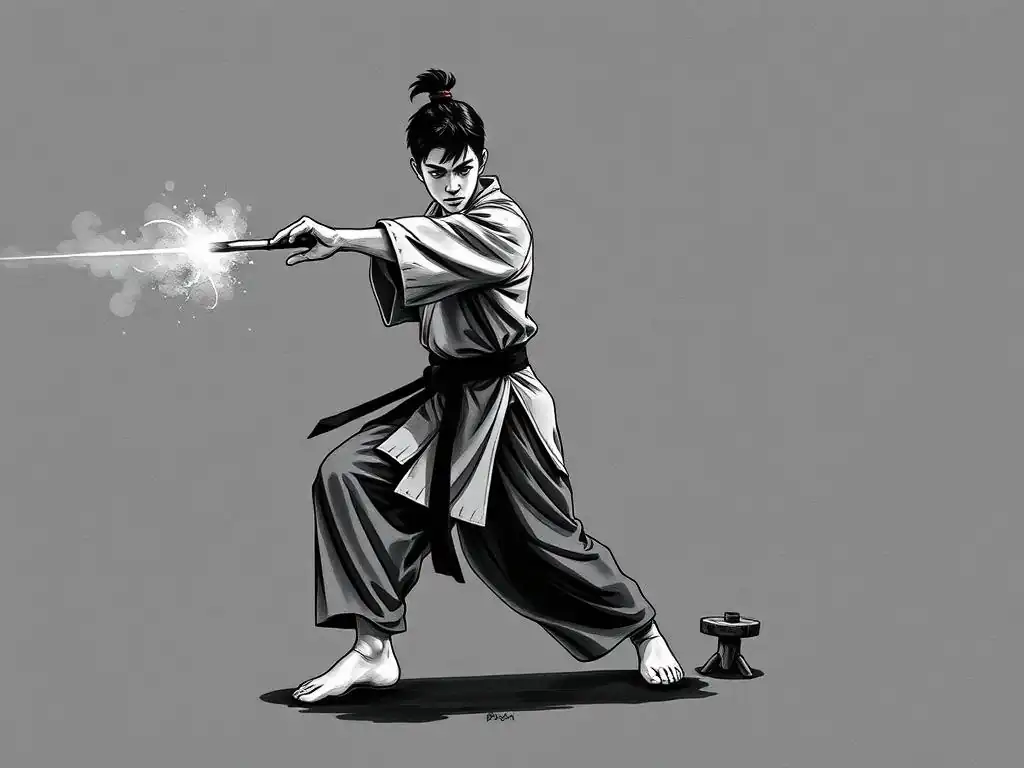
Translating kata movements into practical punch defenses requires understanding the context and potential applications of each technique. Many kata contain sequences specifically designed to address common punching attacks. By practicing Bunkai punch kick defense drills, practitioners can learn how to apply these techniques effectively against realistic attacks, moving beyond the solo performance of the form.
This section explores specific examples from traditional kata, demonstrating how their movements can be interpreted and applied for Bunkai punch kick defense against punches. We will break down key sequences and discuss the principles behind their effectiveness, providing a roadmap for practitioners to explore their own kata with a focus on practical application.
Using Heian Shodan to Defend Against Punches: Step-by-Step Breakdown
Heian Shodan, often the first kata taught, is rich in fundamental defensive movements directly applicable to Bunkai punch kick defense. Despite its simplicity, it contains core principles of blocking, stepping, and countering. Analyzing its sequences reveals effective strategies against common straight punches.
Let's examine two key applications from Heian Shodan for defending against punches:
Age-uke as a Block Against Oi-zuki
The age-uke (rising block) is a prominent movement in Heian Shodan, performed repeatedly. When interpreting age-uke as Bunkai punch kick defense against an oi-zuki (straight punch to the head), the application involves raising the forearm upwards and outwards to meet the incoming punch. The forearm is angled slightly to deflect the punch upwards and away from the head, rather than simply stopping it head-on.
Training this Bunkai punch kick defense involves a partner throwing a controlled oi-zuki. The defender practices stepping back or slightly offline while executing the age-uke, focusing on timing the block to intercept the punch before it reaches full extension. The principle is to use the structure of the forearm and body to redirect the force, minimizing impact. A common drill involves starting from fighting distance, with the attacker stepping in with the punch and the defender reacting with the block and simultaneous evasive step.
Gedan-barai as a Counter-Strike Opportunity
While gedan-barai (downward sweep block) is primarily known as a low block, its application in Bunkai punch kick defense against a high punch can be interpreted as setting up a counter-strike. In sequences where gedan-barai is followed immediately by a punch (like in Heian Shodan), it can represent parrying or deflecting a punch (perhaps a hook or a high jab aimed at the body) downwards while simultaneously launching a counter-attack with the other hand.
Consider a scenario where an attacker throws a high punch or a hook. The defender executes a gedan-barai with one arm, not necessarily sweeping low, but using the forearm to deflect the incoming punch downwards or outwards. As the attacker's upper body is momentarily disrupted or committed to the punch, the defender immediately follows with the punch from the other hand. This application highlights the principle of simultaneous block-and-counter found in many kata, a key element of practical Bunkai punch kick defense.
Using Bassai-Dai to Defend Against Punches: Detailed Bunkai
Bassai-Dai is a more advanced kata known for its strong, dynamic movements and emphasis on overcoming adversity. Its techniques offer more complex interpretations for Bunkai punch kick defense, including applications against different types of punches and methods for controlling an attacker.
Two examples from Bassai-Dai demonstrate its utility in punch defense:
Gedan-barai for Deflecting a Hook Punch (Kagi-zuki)
In Bassai-Dai, the gedan-barai appears in various contexts, often executed with significant power and body rotation. Against a hook punch ( kagi-zuki), a gedan-barai can be interpreted not as a low block, but as a powerful outward deflection using the forearm. The circular trajectory of the gedan-barai movement aligns well with intercepting the arcing path of a hook punch, particularly one aimed at the ribs or side of the head.
To apply this in Bunkai punch kick defense, as the attacker throws a hook punch, the defender steps slightly towards the attacker or offline and uses the gedan-barai motion to powerfully sweep the attacker's arm outwards. The key is to use the rotation of the hips and torso to generate force, effectively disrupting the punch's trajectory and potentially spinning the attacker off balance. This deflection creates an opening for a counter-attack with the other hand or a follow-up technique.
Shuto-uke for Controlling the Attacker's Center
Bassai-Dai features prominent shuto-uke (knife-hand block) movements, often performed with a strong stance and body shift. While commonly interpreted as defenses against strikes, they also lend themselves to applications involving control and manipulation, crucial aspects of effective Bunkai punch kick defense when an attack is not fully evaded or blocked.
Against a straight punch or even a grab attempt following a failed punch, a shuto-uke can be used not just to block, but to capture or control the attacker's arm. By bringing the hand down and across, the defender can trap the attacker's wrist or forearm against their own body or use the other hand to secure the control.
This technique allows the defender to neutralize the punching arm, limit the attacker's mobility, and set up a variety of follow-up techniques such as joint locks, throws, or strikes to vulnerable points. This demonstrates how Bunkai punch kick defense extends beyond simple blocking to include control and transition.
Bunkai Techniques for Kick Defense: Adapting Kata for Leg Attacks
Defending against kicks presents unique challenges compared to punches, primarily due to the power and range involved. However, kata also contain numerous movements and principles that are highly effective for Bunkai punch kick defense against leg attacks. These techniques often involve disrupting balance, controlling the kicking leg, or attacking the supporting leg.
This section explores how movements from kata like Tekki Shodan and Empi can be adapted and applied for practical Bunkai punch kick defense against common kicks, providing specific examples and potential applications.
Applying Tekki Shodan to Defend Against Kicks: Practical Bunkai Drills
Tekki Shodan, a kata performed entirely in kiba-dachi (horse riding stance), is renowned for its emphasis on strong lateral movement and close-range techniques. Its movements are highly applicable for Bunkai punch kick defense against kicks, especially those aimed at the lower body or techniques that involve disrupting balance.
Two key applications from Tekki Shodan for defending against kicks include:
Kosa-dachi as a Sweep Against Mae-geri
The rapid cross-step into kosa-dachi (crossing stance) followed by a low block or sweep is a characteristic sequence in Tekki Shodan. This movement is highly effective as Bunkai punch kick defense against a front kick ( mae-geri) aimed at the groin, knee, or stomach. As the attacker launches the mae-geri, the defender steps rapidly offline with the front leg crossing behind the back leg (or vice versa), simultaneously executing a low sweeping motion with the arm.
The sweep motion targets the attacker's supporting leg at the ankle or calf level. The principle here is to disrupt the attacker's balance while they are momentarily unstable on one leg. The swift cross-step takes the defender off the line of attack of the kick itself, adding an element of evasion. This combination of evasion and balance disruption is a powerful Bunkai punch kick defense strategy embedded within the kata's lateral movements. Partner drills for this involve the attacker throwing a light mae-geri while the defender practices the timing and coordination of the cross-step and sweep.
Tetsui-uchi to Disrupt the Kicker's Balance
Tekki Shodan features downward hammer-fist strikes ( tetsui-uchi) performed with significant body weight transfer. While these can be interpreted as strikes to a downed opponent, in the context of Bunkai punch kick defense against a kick, a downward tetsui-uchi can be powerfully applied to the thigh or knee of the attacker's supporting leg.
As the attacker commits to a kick, especially a roundhouse or side kick which involves significant weight on the supporting leg, the defender uses a quick step or body shift to get within range of the supporting leg. A sharp, downward hammer-fist strike is then delivered to the attacker's knee joint or the large muscle of the thigh. This strike aims to cause pain, disrupt balance, or even injure the leg, immediately neutralizing the kick and incapacitating the attacker's primary weapon. This aggressive form of Bunkai punch kick defense highlights the kata's focus on close-range, decisive action.
Utilizing Empi to Defend Against Kicks: Bunkai Principles
Empi, known for its dynamic level changes and emphasis on upward and downward movements, also contains principles applicable to Bunkai punch kick defense, particularly against kicks that travel in arcs or involve significant height.
Two key principles from Empi applicable to kick defense are:
Age-uke for Intercepting a Roundhouse Kick (Mawashi-geri)
While age-uke is commonly seen as a high block, its application in Empi often involves rising movements and powerful body shifts. Against a roundhouse kick ( mawashi-geri) aimed at the head or upper body, a strong age-uke can be adapted as an intercepting block. Rather than blocking straight up, the movement is directed outwards and slightly upwards, using the forearm's structure to meet the incoming shin or instep at an angle, deflecting its trajectory.
The principle here, central to Bunkai punch kick defense, is using a rising structure to meet a horizontal or arcing force. The power generated by the upward movement in Empi can be used to create a solid point of impact that disrupts the kick's momentum. Timing is crucial – the block must intercept the kick before it reaches its peak power. This demonstrates how a technique traditionally used for high strikes can be adapted with slight modification for Bunkai punch kick defense against arcing leg attacks.
Manji-uke for Evading and Countering
The unique manji-uke (swastika block) in Empi, involving simultaneous uchi-uke (inside block) and gedan-barai, is a complex double technique. When interpreted for Bunkai punch kick defense, it often represents a combination of evasion and defense or control against multiple attacks or a complex single attack like a deceptive kick.
Against a roundhouse kick combined with a potential follow-up punch, manji-uke can be applied by stepping offline (evading the kick with one part of the body) while simultaneously using the gedan-barai motion to potentially deflect the kick or control the leg, and the uchi-uke motion to guard against or block an incoming punch or upper body attack. This complex Bunkai punch kick defense application emphasizes simultaneous action and defense against multiple threats or threat vectors, showcasing Empi's dynamic and multi-layered approach to combat scenarios.
Integrating Footwork and Body Movement for Effective Strike Defense
Effective Bunkai punch kick defense is not solely about hand or arm techniques; it relies heavily on skilled footwork and body movement ( tai sabaki). Proper positioning, balance, and the ability to move efficiently are fundamental to either evading an attack, maximizing the power of a block, or creating opportunities for counter-attack. Kata implicitly teaches these principles through its stances, steps, and body shifts.
Integrating dynamic footwork and body movement transforms static blocks into active defenses. Simply standing and blocking a powerful strike is often ineffective; absorbing the full force can lead to injury. Instead, moving the body offline, shifting weight, or creating distance while executing a Bunkai technique multiplies its effectiveness and is a cornerstone of practical Bunkai punch kick defense.
The Role of Evasion (Tai Sabaki) in Bunkai for Punches and Kicks
Evasion, or tai sabaki (body management), is a critical component of Bunkai punch kick defense. It involves moving the body out of the line of attack, reducing the target area, or changing the distance to neutralize an incoming strike. Kata movements frequently incorporate subtle or overt shifts, steps, and pivots that are direct applications of tai sabaki.
For example, stepping offline at a 45-degree angle while blocking a straight punch significantly reduces the force that needs to be absorbed by taking the body partly or wholly out of the punch's direct path. Similarly, a quick pivot or side step can cause a roundhouse kick to miss entirely or land with significantly reduced power. Training Bunkai punch kick defense must include dedicated practice of tai sabaki, focusing on reacting to an attack by moving the body first, then applying the defensive technique. This principle of "move and block simultaneously" is inherent in many kata sequences.
Maintaining Balance and Stability During Defensive Maneuvers
Maintaining balance and stability is paramount during Bunkai punch kick defense. A loss of balance compromises the defender's ability to generate power for blocks or counters and leaves them vulnerable to follow-up attacks. Kata stances ( dachi) are designed to provide a stable base, but dynamic Bunkai punch kick defense requires the ability to maintain equilibrium while moving, blocking, and potentially absorbing some force.
Techniques in kata emphasize rooting the feet, engaging the core muscles, and aligning the body structure to withstand impact. When applying Bunkai punch kick defense, the defender must ensure their stance is solid, their weight is distributed appropriately, and their body is aligned to channel or redirect force effectively. Drills should focus on executing defensive movements under pressure, maintaining balance even when challenged or forced to move quickly, reinforcing the structural integrity taught by kata stances.
Creating Distance and Angles for Counter-Attacks
Effective Bunkai punch kick defense doesn't just stop an attack; it creates an opportunity for a counter-attack. Footwork and body movement are key to achieving this by creating advantageous distance and angles. Evading a strike or deflecting it can leave the attacker momentarily off-balance, exposed, or committed to their technique, providing a window for a swift and decisive response.
By stepping offline during a block, the defender not only avoids the strike but also gains an angle on the attacker, potentially exposing their side or back. Creating distance after a block can prevent follow-up attacks and allow the defender to reset or choose their next move. Conversely, closing distance after a deflection can jam the attacker's limbs and set up close-range techniques like knee strikes, elbow strikes, or throws, all of which can be found as interpretations within Bunkai. Training Bunkai punch kick defense involves recognizing these opportunities created by defensive movements and transitioning smoothly into effective counter-offense.
Training Drills for Bunkai Punch Kick Defense
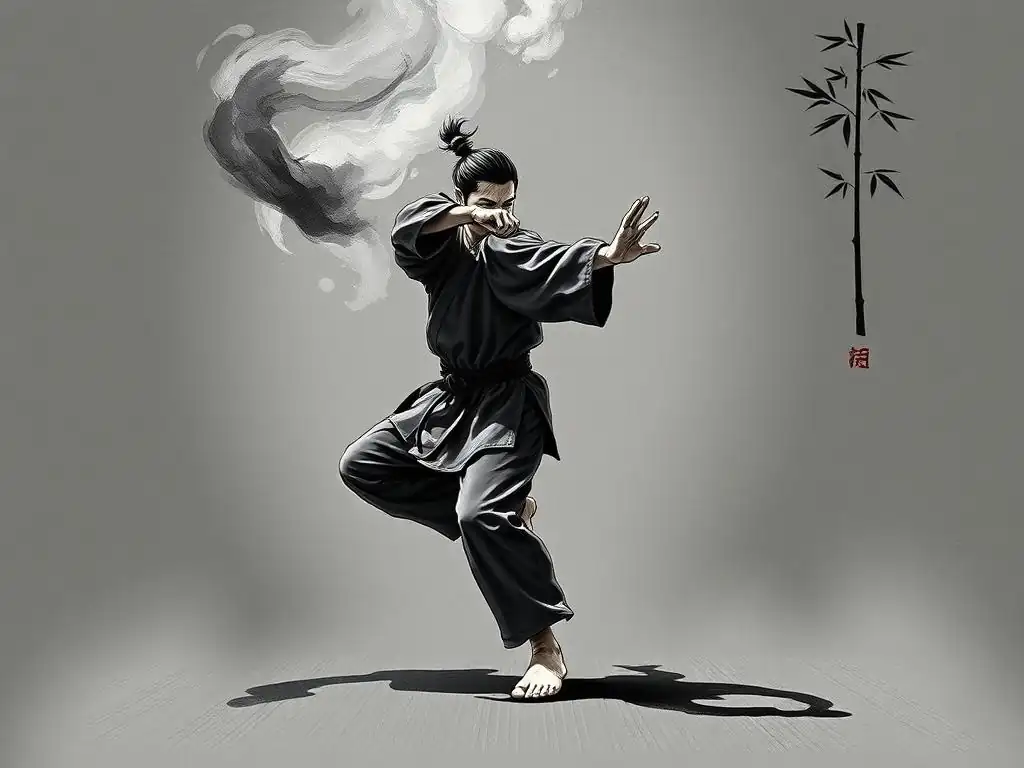
Translating theoretical Bunkai knowledge into practical skill requires dedicated training. Drills are essential for developing the timing, coordination, and reflexive response needed for effective Bunkai punch kick defense. These drills should progress from controlled, slow-motion practice to more dynamic and realistic scenarios.
Training Bunkai punch kick defense involves isolating specific techniques, practicing them against relevant attacks, and then integrating them into more complex scenarios. Partner work is invaluable, providing realistic feedback and the opportunity to practice against live, albeit controlled, attacks.
Partner Drills: Practicing Bunkai Applications with a Training Partner
Partner drills are the cornerstone of practical Bunkai punch kick defense training. They allow practitioners to experience the force, timing, and angles of real strikes in a safe environment. Drills can start slow, with the attacker delivering a single, pre-announced strike, and the defender practicing the specific Bunkai response.
For example, a basic drill for Bunkai punch kick defense against an oi-zuki might involve partner A stepping in with a slow straight punch while partner B practices the age-uke with an evasive step. As proficiency increases, the speed and power can be gradually increased (while maintaining control), and the defender can add a predetermined counter-attack. More advanced drills involve the attacker throwing variations of strikes, requiring the defender to identify the attack and choose the appropriate Bunkai response from their repertoire. This iterative process is crucial for building reflexive Bunkai punch kick defense skills.
Shadow Bunkai: Refining Technique and Visualization
Shadow Bunkai involves practicing the kata movements with the specific application in mind, visualizing an imaginary attacker and their strikes. While lacking a partner, it is invaluable for refining technique, improving body mechanics, and enhancing visualization skills for Bunkai punch kick defense.
During Shadow Bunkai, the practitioner performs the kata or specific sequences, but instead of just executing the form, they vividly imagine the incoming punch or kick they are defending against. They visualize the angle of the attack, the timing of their block or evasion, and the subsequent counter. This mental rehearsal helps to internalize the Bunkai punch kick defense applications, improving timing and coordination even without a physical partner. It allows for focused repetition on specific aspects, such as the angle of a deflection or the timing of a step relative to the imaginary strike.
Integrating Bunkai into Sparring: Applying Kata Principles in Live Combat
Integrating Bunkai punch kick defense into sparring is the ultimate test of practical application. While sparring is often free-form, focusing on applying principles and specific techniques derived from kata within a live context is crucial for bridging the gap between kata, Bunkai drills, and self-defense.
This integration doesn't necessarily mean performing entire kata sequences during sparring, but rather allowing the principles and reactions trained through Bunkai drills to emerge naturally. For instance, reacting to a straight punch with an evasive step and a deflection learned from Heian Shodan Bunkai, or using a cross-step and sweep motion from Tekki Shodan Bunkai punch kick defense against a low kick. Sparring provides the dynamic, unpredictable environment needed to test the timing, adaptability, and effectiveness of learned Bunkai punch kick defense techniques under pressure. It requires careful control and appropriate safety gear to prevent injury.
Common Mistakes in Bunkai and How to Avoid Them
While practicing Bunkai is vital for practical application, several common mistakes can hinder progress and lead to ineffective techniques. Recognizing and addressing these pitfalls is crucial for developing truly functional Bunkai punch kick defense. Avoiding these errors ensures that the time spent on Bunkai training translates into real self-defense capability.
Understanding these common issues allows practitioners to refine their approach to Bunkai study and training, ensuring they are developing effective, reliable Bunkai punch kick defense skills rather than practicing ineffective interpretations or habits.
Misinterpreting Kata Movements: The Importance of Context
One of the most common mistakes in Bunkai is misinterpreting the intended application of kata movements due to a lack of understanding of context. Kata movements are often abstract and can have multiple potential meanings depending on the angle of attack, the distance, and the attacker's reaction. A rigid, one-dimensional interpretation limits the practical utility of the kata.
Avoiding this requires studying Bunkai under experienced instructors who have researched and tested various applications, including historical contexts where possible. It also involves actively exploring different possibilities during partner practice. For example, recognizing that a "block" might also be a parry, a joint lock, a throw entry, or a strike is key to unlocking the full potential of Bunkai punch kick defense embedded in the forms. Asking "what if the attack came from a different angle?" or "what if the attacker reacted this way?" helps to broaden the understanding.
Over-Reliance on Brute Force: Emphasizing Technique and Timing
Another significant error in Bunkai punch kick defense is over-reliance on brute force rather than technique and timing. Simply trying to block a powerful punch or kick with sheer strength is often ineffective and can lead to injury. The genius of Bunkai lies in using leverage, timing, body mechanics, and redirection to neutralize force efficiently.
Effective Bunkai punch kick defense emphasizes meeting the force at the right moment, at the correct angle, and with proper body structure to deflect or absorb it with minimal effort. For instance, deflecting a punch slightly offline requires far less force than stopping it head-on. Training should focus on precision, timing the movement with the attack, and using hip and core rotation to generate power for blocks or counters, rather than just arm strength. This technical focus is what makes Bunkai punch kick defense practical for individuals of varying physical strengths.
Neglecting Footwork and Body Mechanics: Creating a Solid Foundation
Neglecting footwork and overall body mechanics is a critical mistake that undermines the effectiveness of Bunkai punch kick defense. As discussed earlier, footwork and body movement are inseparable from the hand techniques in effective defense. Performing a block or counter from a static, unbalanced, or improperly aligned stance significantly reduces its power and defensive capability.
To avoid this, practitioners must pay as much attention to their stances, steps, and body shifts during Bunkai practice as they do to the hand movements. Drills should emphasize moving the entire body in coordination with the block or counter. Understanding how weight transfer and hip rotation contribute to both defensive power (e.g., a strong deflection) and offensive power (e.g., a counter-punch) is fundamental. A solid foundation in body mechanics, honed through diligent kata practice, is indispensable for effective Bunkai punch kick defense.
Conclusion: Mastering Bunkai for Practical Self-Defense
Mastering Bunkai transforms the solo practice of karate kata into a dynamic and practical system of self-defense. By analyzing the movements within forms, practitioners can uncover sophisticated techniques for neutralizing common strikes like punches and kicks. Bunkai punch kick defense is not just an academic exercise; it is the key to unlocking the combative heart of karate.
The journey of mastering Bunkai punch kick defense is continuous, requiring ongoing study, dedicated partner practice, and critical analysis of kata movements. It involves understanding the principles of leverage, timing, distance, and body mechanics that underpin effective self-protection strategies encoded within the forms.
The Ongoing Journey of Learning and Refining Bunkai
Learning Bunkai is an ongoing process that deepens with experience and understanding. As practitioners advance, they discover more subtle and complex applications within the kata. The initial interpretations of Bunkai punch kick defense against basic strikes evolve into understanding multi-layered responses, combinations, and adaptations for different scenarios and attacker types.
Refining Bunkai punch kick defense involves constant testing and adaptation. What works in a controlled drill might need modification in a more dynamic situation. Seeking guidance from experienced instructors, studying historical texts (where available), and training with a variety of partners helps to broaden perspectives and refine techniques. The journey is one of continuous discovery, revealing the depth and richness of kata as a repository of martial knowledge.
The Power of Kata: Preserving Tradition While Embracing Practicality
Kata serves as a powerful link to martial traditions, preserving techniques and principles developed over centuries. However, its true power is unleashed when its movements are understood and applied practically. Embracing the practical side of kata through Bunkai punch kick defense honors its original purpose as a method of combat training.
By diligently studying and practicing Bunkai, practitioners ensure that the knowledge contained within kata remains living and relevant. They move beyond simply performing the steps to understanding the "why" and "how" behind each movement, making their training more meaningful and their skills more functional for Bunkai punch kick defense in the real world.
Applying Bunkai Principles for Real-World Strike Defense.
Ultimately, the goal of Bunkai punch kick defense training is to develop the ability to effectively defend against punches and kicks in real-world situations. This requires not just knowing the techniques, but being able to apply them instinctively under pressure. The principles learned through Bunkai – evasion, redirection, balance disruption, timing, and effective counter-attacking – are universal to effective self-defense.
By training Bunkai punch kick defense diligently, practitioners develop reflexive responses rooted in sound martial principles. They learn to see incoming strikes not as overwhelming threats, but as opportunities to apply the defenses and counters embedded within their kata. This practical application of Bunkai empowers individuals with the confidence and capability to protect themselves against the most common forms of physical assault.
Frequently Asked Questions
What is Bunkai and how does it relate to punch and kick defense?
Bunkai refers to the application or interpretation of kata movements. In the context of punch and kick defense, it involves understanding how seemingly abstract kata sequences can be used for practical self-defense against strikes.
How does Bunkai training differ from regular sparring or kumite?
While sparring focuses on free-flowing combat, Bunkai training emphasizes the precise execution of kata-derived techniques against specific attacks. It breaks down movements for deeper understanding.
Why is understanding the history and philosophical underpinnings of Bunkai important?
Knowing the history and philosophy provides context and intent behind kata movements. This understanding helps practitioners adapt and apply Bunkai principles effectively in real-world self-defense scenarios, versus just rote memorization.
Can Bunkai defense be used effectively against multiple attackers or weapons?
While primarily designed for one-on-one combat, the principles of Bunkai, such as redirecting force and controlling distance, can be adapted to handle multiple attackers or weapon threats with modifications and advanced training. Situational awareness is key.
What are some common mistakes people make when learning Bunkai for punch and kick defense?
Common mistakes include over-complicating techniques, failing to apply proper distancing and timing, and neglecting the underlying principles of body mechanics and energy flow derived from the kata.
Final Reflection: Unlocking the Defensive Potential Within
The exploration of Bunkai, specifically its application to punch and kick defense, reveals a profound truth: traditional martial arts forms are not merely aesthetic sequences, but rather repositories of practical self-defense techniques. The ability to decipher and apply these hidden applications transforms Kata from a static performance into a dynamic and adaptable defensive strategy, proving its enduring relevance in a world where self-preservation remains paramount.
This journey into Bunkai has deeply influenced my understanding of martial arts, revealing the critical importance of bridging the gap between form and function. It underscores the necessity of moving beyond rote memorization and embracing a deeper, more analytical approach to training. As Bruce Lee famously stated, Absorb what is useful, discard what is not, add what is uniquely your own.
This sentiment perfectly encapsulates the essence of Bunkai – a process of extracting, adapting, and personalizing defensive techniques to suit individual needs and circumstances.
Now, I invite you to reflect on the potential within your own practice. Consider how you can unlock the defensive secrets hidden within your Kata, transforming them from mere movements into powerful tools for self-protection. Embrace the challenge of Bunkai, and discover the profound defensive capabilities that lie dormant within you, ready to be awakened.
Unleash Your Inner Defender: Master the Art of Bunkai!
Thanks for diving into the world of Bunkai defense! Now that you've explored how to apply kata movements to neutralize punches and kicks, it's time to put that knowledge into action and truly embody the art of self-defense.
Here's how you can continue your journey:
- Practice the primary kata from the article with a partner, focusing specifically on the bunkai techniques discussed. Start slow and gradually increase the speed and power as you become more comfortable.
- Explore variations of the bunkai techniques by adapting them to different attacks and scenarios. Challenge yourself to think creatively and apply the principles in novel ways.
- Share your experiences and insights with fellow martial artists on the Martial Arts Mastery forum.
What new insights did you uncover when applying these bunkai principles in your own practice sessions?