
The Philosophy of Power: Understanding Mas Oyama's Kyokushin

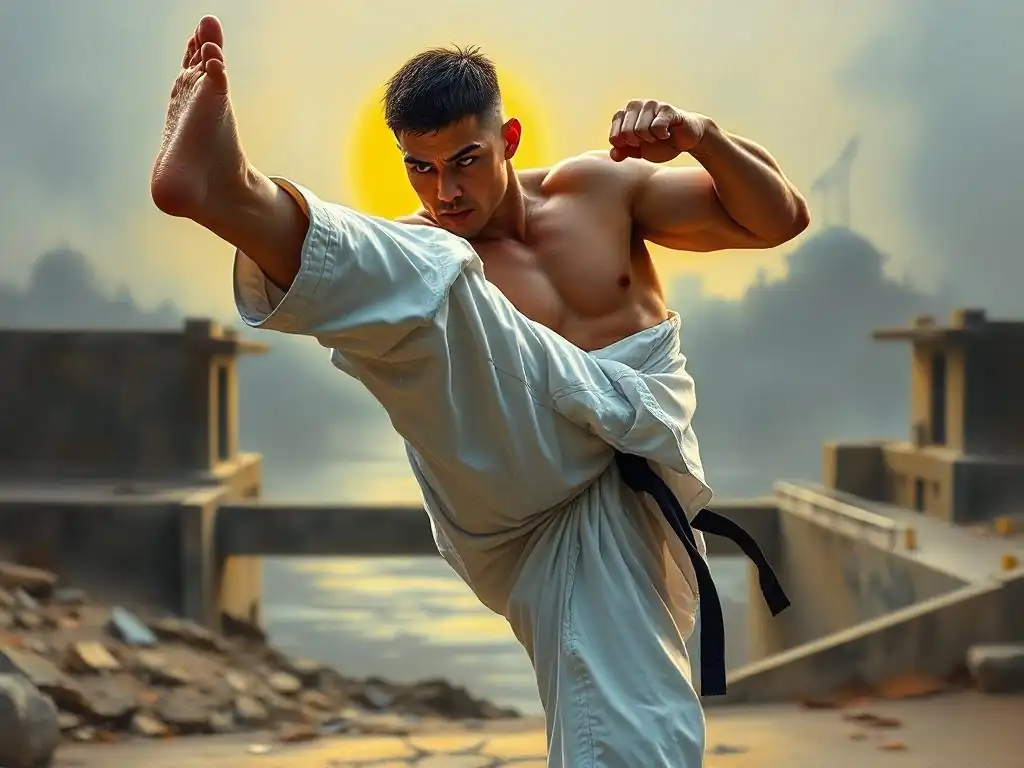
Welcome to Martial Arts Mastery, your definitive source for exploring the rich tapestry of martial arts traditions! Ever wondered how a philosophy could shape bone-crushing power? In this article, we delve into the Kyokushin power philosophy techniques pioneered by the legendary Mas Oyama, uncovering the secrets behind his unwavering strength and the principles that made him a true martial arts icon. Discover how this unique blend of discipline and spirit transcends mere physical prowess – and perhaps even unlock a new dimension in your own training. Intrigued? Keep reading to learn more!
- Introduction to Mas Oyama and the Essence of Kyokushin Karate
- The Philosophical Underpinnings of Kyokushin Karate
- Kyokushin Power Philosophy: Key Concepts and Ideals
- Kyokushin Power Techniques: A Deep Dive into the Fighting Style
- Training Methodology in Kyokushin: Cultivating Power and Resilience
- Kyokushin and Self-Defense: Practical Applications of Power Philosophy
- The Enduring Impact of Kyokushin: A Global Martial Arts Phenomenon
-
Frequently Asked Questions
- What are the core philosophical tenets of Kyokushin Karate as taught by Mas Oyama?
- How does Kyokushin's power philosophy differ from other martial arts?
- What are some key training techniques used to develop power in Kyokushin?
- How does the historical context of post-war Japan influence Kyokushin's philosophy?
- How can Kyokushin's philosophy be applied outside of the dojo, in everyday life?
- Final Reflection: The Enduring Legacy of Kyokushin Power
- Unleash Your Inner Strength: Begin Your Kyokushin Journey!
Introduction to Mas Oyama and the Essence of Kyokushin Karate
The Legacy of Sosai Mas Oyama: A Pioneer of Full-Contact Karate
Sosai Masutatsu Oyama, born Choi Yeong-eui in Korea in 1923, was a visionary martial artist whose pursuit of practical strength and realism led to the creation of Kyokushin Karate. Dissatisfied with the limitations of non-contact sparring in traditional styles, Oyama sought a method that would truly test the limits of human capability, both physically and mentally.
His rigorous training, including solitary mountain retreats and legendary feats like fighting bulls (reportedly over 50, with several killed instantly), cemented his reputation and demonstrated a level of power and courage previously unseen. His unique journey, from training in various forms of karate under masters like Gichin Funakoshi and So Nei Chu, culminated in his own powerful synthesis.
Oyama's goal was not just to create a fighting style, but a way of life centered on overcoming challenges and cultivating an indomitable spirit. He believed that true strength, the kind embodied in the Kyokushin power philosophy techniques, came from pushing past perceived limitations. His legacy is not only in the millions of practitioners worldwide but in the fundamental shift he brought to karate, emphasizing conditioning, realism, and the intense physical and mental crucible required to forge genuine power. The dojo became a place for forging character through hardship, a core tenet of his approach.
Defining Kyokushin: More Than Just a Martial Art
Kyokushin, meaning "the ultimate truth," is a full-contact style of karate founded by Mas Oyama in 1964. Unlike many traditional styles that emphasize kata or point sparring, Kyokushin is renowned for its demanding physical training, body conditioning, and full-contact kumite (sparring) without protective gear for the body (though rules often limit strikes to the head with bare knuckles). This emphasis on realistic combat application is central to its identity and the development of its distinct Kyokushin power philosophy techniques.
Beyond the physical aspects, Kyokushin is deeply rooted in a rich philosophical framework. It stresses self-improvement, discipline, perseverance, and respect. The training is designed to build not just a strong body, but a strong character and spirit. Practitioners learn to face pain, fear, and exhaustion, developing mental fortitude and resilience. This holistic approach means that understanding Kyokushin power is as much about internal strength and ethical conduct as it is about delivering a devastating blow.
The Core Principles of Kyokushin Power: A Holistic Approach
The Kyokushin power philosophy views power not merely as physical force, but as a combination of physical strength, mental resilience, and spiritual discipline. This holistic perspective is foundational to the training methodology. Developing powerful techniques requires a body capable of generating force, a mind focused enough to apply it effectively, and a spirit resolute enough to persevere through adversity.
Key principles underpinning this power include the concept of Osu (perseverance, respect, pushing limits), the influence of Bushido (the samurai code), and elements of Zen Buddhism (mindfulness, focus, detachment). These philosophical pillars are integrated into every aspect of training, from basic stances and techniques ( Kihon) to sparring ( Kumite) and forms ( Kata). It is this fusion of rigorous physical conditioning with deep philosophical roots that defines the unique nature of Kyokushin power philosophy techniques.
The Philosophical Underpinnings of Kyokushin Karate
Bushido and Kyokushin: Influences and Parallels
The ancient code of the samurai, Bushido, profoundly influenced Mas Oyama and the development of Kyokushin. Oyama admired the samurai's discipline, loyalty, courage, and unwavering spirit. These virtues are actively cultivated in the Kyokushin dojo. Trainees are expected to demonstrate respect for their instructors and seniors, show courage in the face of demanding training and sparring, and maintain strict self-discipline in their practice and daily lives.
The emphasis on loyalty within the dojo structure, the pursuit of technical mastery (akin to the samurai's dedication to their craft), and the readiness to face challenges head-on are direct parallels to Bushido. The rigorous training is seen as a path to forge a warrior spirit, not for aggression, but for developing inner strength and the ability to overcome obstacles. This connection to historical warrior ethics provides a deep cultural and philosophical context for the development of Kyokushin power philosophy techniques.
The Spirit of Osu: Perseverance, Respect, and Self-Discipline
The term "Osu!" is ubiquitous in Kyokushin and encapsulates much of its core philosophy. It is used as a greeting, a sign of understanding, an acknowledgment, and an expression of determination. More than just a word, it represents the spirit of pushing oneself to the absolute limit, persevering through pain and difficulty, and maintaining unwavering respect for one's instructors, training partners, and the art itself.
Saying "Osu!" during a grueling training session signifies the practitioner's commitment to endure and overcome. It embodies the self-discipline required to continue when the body screams to stop and the respect shown by acknowledging the challenge and the guidance provided. This spirit is fundamental to developing Kyokushin power, as it is through constant pushing of boundaries, both physical and mental, that true strength is attained. It is the relentless pursuit of improvement despite hardship that defines the Osu mindset.
Zen Buddhism and Kyokushin: Achieving Mental Fortitude
Mas Oyama incorporated elements of Zen Buddhism into Kyokushin training, particularly emphasizing meditation and the cultivation of a focused, tranquil mind. Zen principles, such as mindfulness, detachment from ego, and the importance of the present moment, are seen as vital for developing the mental fortitude required in full-contact karate. Meditation is often practiced before or after training sessions to calm the mind and improve focus.
The intense physical demands of Kyokushin training itself can be a form of moving meditation, requiring practitioners to focus entirely on the task at hand, pushing past distractions and discomfort. This process helps develop the ability to remain calm and focused under pressure, a critical skill for applying Kyokushin power techniques effectively in sparring or self-defense. By training the mind to be clear and resilient, practitioners enhance their physical capabilities and embody the deeper aspects of the Kyokushin power philosophy.
Kyokushin Power Philosophy: Key Concepts and Ideals
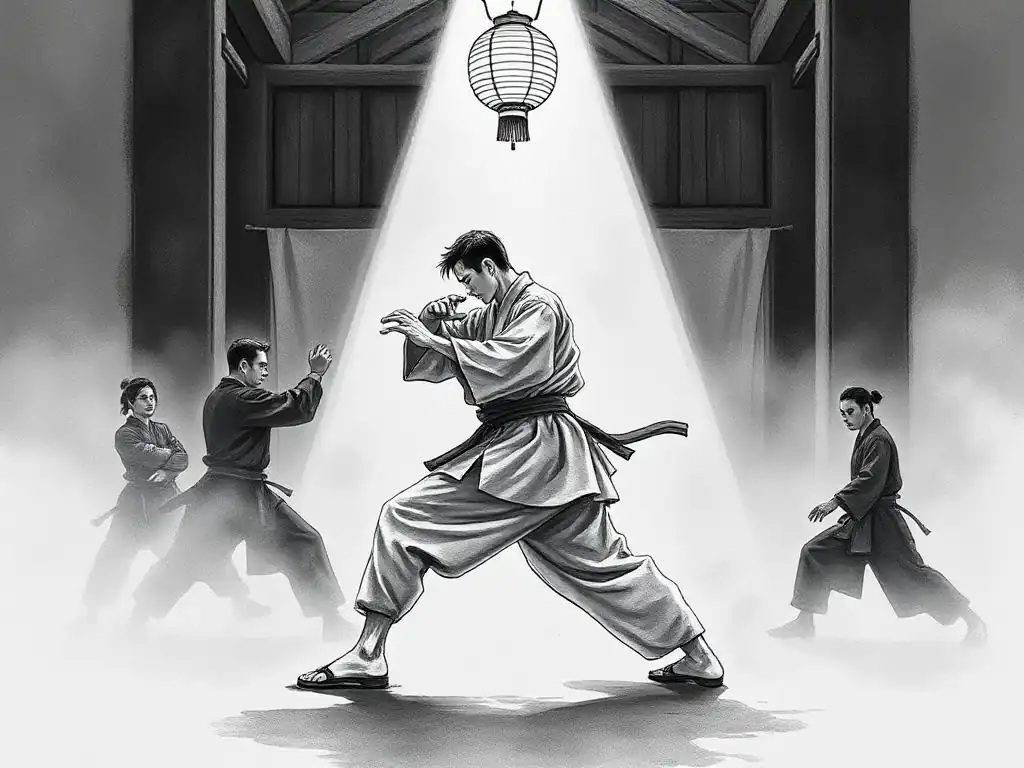
Absolute Strength: The Pursuit of Physical and Mental Dominance
In the context of Kyokushin, "absolute strength" (Kyokushin) refers to a state of being where one has achieved dominance over oneself – overcoming fear, doubt, and physical limitations – and possesses the capability to overcome external challenges. It is not merely about who can punch the hardest, but about the total integration of mind, body, and spirit. This pursuit is lifelong and central to the Kyokushin power philosophy.
Achieving absolute strength involves relentless physical conditioning to build power and endurance, coupled with equally intense mental training to develop focus, resilience, and an indomitable will. The ideal of Ichigeki Hissatsu (one strike, certain death), while perhaps hyperbole in modern context, reflects the pursuit of delivering maximum power with absolute precision and focus, requiring perfect synchronization of physical technique and mental intent. This ideal drives the demanding training regimen designed to cultivate Kyokushin power techniques.
The Importance of Self-Improvement: Beyond Physical Prowess
The Kyokushin power philosophy places immense value on continuous self-improvement, known as Kaizen. This journey extends far beyond developing physical fighting skills. While technical proficiency is essential, the true measure of progress in Kyokushin is the development of character, discipline, humility, and perseverance. The belt ranking system (kyu and dan grades) signifies not just technical knowledge but also the practitioner's commitment, maturity, and spirit.
Every training session is viewed as an opportunity to learn, grow, and overcome personal limitations. Facing challenging sparring partners, enduring difficult conditioning drills, and striving for perfection in basic techniques all contribute to this process of self-refinement. The emphasis is on becoming a better version of oneself through the discipline of Kyokushin, understanding that true power comes from internal growth as much as external capability.
Confronting Fear: Developing Courage and Indomitable Spirit
Kyokushin's full-contact nature directly confronts one of the most fundamental human emotions: fear. The prospect of receiving powerful strikes and the reality of pain are integral parts of the training. By repeatedly facing these situations in a controlled environment, practitioners learn to manage fear, develop courage, and build an indomitable spirit ( Seishin). This mental toughness is a hallmark of Kyokushin and a crucial component of its power philosophy.
Overcoming the fear of being hit allows practitioners to move more freely, apply techniques with greater conviction, and persevere when exhausted or hurt. This courage translates beyond the dojo, fostering confidence and resilience in facing challenges in daily life. The ability to stand firm and continue fighting, even when physically drained, is a direct result of cultivating this indomitable spirit through the demanding practice of Kyokushin power techniques.
The Kyokushin Fighting Stance: The Low Zenkutsu-Dachi and its Grounding Significance
A characteristic visual element of Kyokushin is the deep, low front stance, often referred to simply as Zenkutsu-Dachi. While other stances are used, this powerful, grounded posture is fundamental. Functionally, it provides an extremely stable base from which to launch powerful strikes, particularly punches and front kicks, and to absorb incoming attacks without being easily displaced. The low center of gravity increases stability and power generation from the hips.
Philosophically and symbolically, the low stance represents being firmly rooted, grounded, and ready to face confrontation. It signifies stability, strength, and readiness. Maintaining such a physically demanding stance for extended periods also builds leg strength and mental endurance, embodying the physical commitment required by the Kyokushin power philosophy. It's a posture that physically manifests the readiness and resilience cultivated through training.
Kyokushin Power Techniques: A Deep Dive into the Fighting Style
Foundational Techniques: Building a Solid Base for Power
The effectiveness of Kyokushin power techniques is built upon a mastery of fundamental movements, known as Kihon. This includes stances, blocks, punches, and kicks, practiced thousands of times in repetition. The focus is on perfect form, proper body mechanics, and generating power from the core and hips. Without a solid foundation in Kihon, more advanced techniques lack true power and efficiency.
Training begins with basic movements performed slowly to ensure correctness, gradually increasing speed and intensity. Emphasis is placed on aspects like hip rotation ( Koshi Kaiten) for generating rotational power in punches and kicks, and sinking the weight to create stability and driving force. This meticulous attention to basics ensures that when techniques are applied in sparring or self-defense, they carry maximum impact and embody the practical application of the Kyokushin power philosophy techniques.
The Emphasis on Full-Contact: Realism and Practical Application
The most distinctive aspect of Kyokushin is its commitment to full-contact sparring ( Kumite). This approach is rooted in the belief that true fighting skill and spirit can only be developed by testing techniques under realistic pressure against a resisting opponent. While rules vary, traditional Kyokushin kumite involves powerful body strikes with bare knuckles and kicks to the legs, body, and head (often with protection like shinpads for beginners and limited head contact in some rulesets).
This emphasis on full-contact forces practitioners to develop resilience, learn to absorb impact, judge distance and timing accurately, and apply Kyokushin power techniques effectively in dynamic situations. It eliminates the artificiality of point sparring and cultivates the courage and determination needed to face actual physical confrontation. This realism is crucial for developing the practical side of the Kyokushin power philosophy.
Conditioning for Power: Strengthening the Body and Mind
Developing the ability to deliver and withstand powerful strikes requires intense physical conditioning. Kyokushin training includes rigorous exercises designed to build strength, endurance, and body resilience. This involves calisthenics, running, weight training (often using bodyweight), and specific body conditioning drills like hitting the makiwara (striking post) to toughen knuckles and shins, and performing abdominal exercises to absorb body shots.
This physical conditioning is not just about building muscle; it's about preparing the body to endure the demands of full-contact sparring and demonstrating Kyokushin power techniques. Furthermore, pushing through the discomfort of intense conditioning builds mental toughness and discipline, reinforcing the mind-body connection central to the Kyokushin power philosophy. The ability to perform under physical duress is a direct result of this comprehensive approach to conditioning.
Key Strikes and Kicks in Kyokushin: Seiken Tsuki, Mae Geri, Mawashi Geri, and Their Applications
Kyokushin emphasizes powerful, direct techniques. Key strikes include Seiken Tsuki (forefist straight punch), often aimed at the body, delivered with driving force from the hips and a strong follow-through. Important kicks include Mae Geri (front snap kick or front push kick), used to maintain distance, attack the body, or disrupt an opponent's balance, and Mawashi Geri (roundhouse kick), a signature Kyokushin technique often delivered with immense power to the legs (low mawashi) or body (mid-section).
These techniques are chosen for their efficiency, power generation potential, and practical application in full-contact scenarios. Training focuses on delivering these strikes with maximum Kime (focus and power at the point of impact). The heavy emphasis on leg conditioning allows practitioners to repeatedly absorb and deliver powerful low kicks, a tactic that can significantly diminish an opponent's mobility and is a key component of Kyokushin power techniques in sparring.
Training Methodology in Kyokushin: Cultivating Power and Resilience
Kihon: Mastering the Fundamentals
Kihon training is the bedrock of Kyokushin. It involves practicing basic techniques – stances, blocks, punches, and kicks – individually and in combination, often in lines or moving forward and backward. The emphasis is on precision, power generation through correct body mechanics, and developing muscle memory. A typical Kyokushin class dedicates significant time to rigorous Kihon practice.
This repetitive drilling ensures that fundamental movements become automatic and powerful. It builds the physical structure and coordination necessary for all other aspects of training. Mastering Kihon is seen as essential for unlocking the potential for true Kyokushin power, as complex techniques rely on perfect execution of these basic building blocks. It is through this disciplined repetition that the body is sculpted into an instrument capable of generating force.
Kata: Developing Form and Flow
While Kyokushin is known for its emphasis on sparring, Kata, or pre-arranged forms, remains an important part of the training methodology. Kata sequences contain a variety of offensive and defensive movements, performed against imaginary opponents. Practicing Kata helps develop balance, coordination, timing, breathing control, and focus ( Kime).
Kata also serves as a living library of techniques and principles, preserving movements that might not be frequently used in modern kumite but are valuable for understanding the art's depth. Performing Kata with power and concentration is a form of moving meditation, integrating physical movement with mental focus and embodying the flow and potential power contained within the Kyokushin power philosophy techniques. It connects the practitioner to the history and tradition of the art.
Kumite: Applying Techniques in Sparring
Kumite is the application phase of Kyokushin training, where techniques learned in Kihon and Kata are tested against a live, resisting opponent. Starting with basic partner drills, Kumite progresses to full-contact sparring. This is where the practitioner develops timing, distance, strategy, and the ability to perform under pressure. Facing the reality of receiving strikes is crucial for building resilience and courage.
Kyokushin Kumite, particularly competitive sparring, is known for its intensity and focus on body conditioning and powerful strikes. While head punches with bare knuckles are typically prohibited in competition, kicks and punches to the body are delivered with full force. This forces practitioners to develop robust defense, strong body conditioning, and the ability to deliver impactful Kyokushin power techniques while absorbing significant impact themselves.
Tameshiwari (Board Breaking): Demonstrating Power and Focus
Tameshiwari, the practice of breaking boards, tiles, or other materials, is a traditional demonstration of power, technique, and focus in Kyokushin. While not a fighting technique itself, it requires precise application of force generated through proper body mechanics, speed, and mental concentration. It is a test of the practitioner's ability to channel their energy and intent into a single, powerful strike.
Successfully breaking demonstrates not just physical strength but also the mental fortitude and technical proficiency developed through rigorous training. It requires overcoming psychological barriers and executing the technique with perfect Kime. Tameshiwari provides a tangible measure of the physical manifestation of Kyokushin power and the practitioner's ability to focus their energy effectively.
Kyokushin and Self-Defense: Practical Applications of Power Philosophy
Using Kyokushin in Real-World Scenarios
The rigorous, full-contact nature of Kyokushin training provides practical skills applicable in real-world self-defense situations. The emphasis on powerful body strikes, leg kicks, and conditioning means practitioners are trained to deliver impactful blows capable of incapacitating an attacker. The ability to absorb impact also provides a degree of resilience if a physical confrontation is unavoidable.
Techniques like the low mawashi geri can quickly disable an aggressor's mobility. Direct body punches can disrupt their breathing and stability. The conditioning developed through training means practitioners are physically prepared to handle the stress and demands of a physical altercation. The Kyokushin power techniques are designed for effectiveness, making them directly relevant for self-protection.
Mental Preparation for Self-Defense Situations
Perhaps even more valuable than the physical techniques is the mental preparation instilled by the Kyokushin power philosophy. Training under pressure and facing discomfort builds resilience, courage, and the ability to remain calm in stressful situations. In a self-defense scenario, maintaining composure is critical for assessing the threat, making quick decisions, and acting effectively.
The indomitable spirit cultivated in the dojo translates into a refusal to be easily intimidated. The discipline learned helps in controlling the fight-or-flight response. Kyokushin practitioners are trained to push past fear and act decisively, drawing upon their physical capabilities and mental fortitude honed through challenging training, embodying the preparedness central to the Kyokushin power philosophy techniques.
The Importance of Awareness and Prevention
While Kyokushin provides the physical and mental tools for self-defense, the philosophy also stresses the importance of awareness and prevention. True mastery lies not just in fighting ability but in avoiding conflict altogether. Practitioners are encouraged to be aware of their surroundings, identify potential threats, and take steps to de-escalate or avoid dangerous situations.
The discipline and control developed through training reinforce the principle of using force only as a last resort. The goal is self-protection, not aggression. Therefore, awareness, avoidance, and de-escalation are considered the first and most important lines of defense, complementing the physical capabilities provided by mastering Kyokushin power techniques.
The Enduring Impact of Kyokushin: A Global Martial Arts Phenomenon
Kyokushin's Influence on Other Martial Arts Styles
Kyokushin's pioneering full-contact approach had a significant impact on the martial arts world. It inspired the creation of numerous other full-contact karate styles, such as Ashihara Karate and Enshin Karate, which built upon or adapted Kyokushin's methods. Its emphasis on rigorous conditioning and realistic sparring also influenced other combat sports.
Many fighters who transitioned into mixed martial arts (MMA) had backgrounds in Kyokushin, bringing its powerful striking and conditioning methods into the nascent sport. The focus on delivering powerful, fight-ending blows and the development of incredible physical toughness became hallmarks that resonated across different disciplines. The legacy of Kyokushin power philosophy techniques can be seen in the evolution of modern combat sports.
The Global Community of Kyokushin Practitioners
From its founding in Japan, Kyokushin has spread rapidly around the world. Today, it boasts dojos and practitioners in well over 100 countries across every continent. This global network shares a common training methodology, philosophy, and spirit, creating a strong international community bound by the principles of Kyokushin.
Major events like the World Open Tournament, held every four years in Tokyo, Japan, bring together elite competitors from around the globe to test their skills and spirit. These tournaments showcase the highest level of Kyokushin power techniques and serve as a powerful symbol of the art's global reach and unity, fostering camaraderie and friendly competition among practitioners worldwide.
The Future of Kyokushin: Continuing the Legacy of Power and Discipline
The future of Kyokushin lies in the hands of its dedicated instructors (Shihan and Sensei) and practitioners who continue to uphold Sosai Oyama's vision. While the organization faced divisions after Oyama's passing, the core philosophy and demanding training methods endure across various Kyokushin groups. The commitment to developing strong individuals, both physically and mentally, remains the driving force.
New generations of practitioners continue to train with intensity, preserving the traditional Kyokushin power philosophy techniques while adapting to the modern world. The focus remains on continuous self-improvement, facing challenges head-on, and embodying the spirit of Osu. As long as these principles are upheld, the legacy of Mas Oyama and the unique power philosophy of Kyokushin will continue to inspire and transform lives globally.
Frequently Asked Questions
What are the core philosophical tenets of Kyokushin Karate as taught by Mas Oyama?
Kyokushin's philosophy emphasizes extreme physical and mental discipline, self-improvement through hardship, and real-world combat effectiveness. It focuses on pushing one's limits and developing unwavering spirit.
How does Kyokushin's power philosophy differ from other martial arts?
Unlike some arts that prioritize forms or point sparring, Kyokushin stresses full-contact fighting and demonstrating power. This philosophy aims to build resilience and practical fighting skills through rigorous training.
What are some key training techniques used to develop power in Kyokushin?
Kyokushin utilizes techniques like makiwara training, conditioning exercises, and kumite (sparring) to cultivate physical strength and impact power. These methods are designed to toughen the body and increase striking force.
How does the historical context of post-war Japan influence Kyokushin's philosophy?
Mas Oyama founded Kyokushin in post-war Japan, a time of rebuilding and seeking strength. This environment influenced the art's focus on discipline, self-reliance, and a never-give-up attitude in the face of adversity.
How can Kyokushin's philosophy be applied outside of the dojo, in everyday life?
Kyokushin's principles of perseverance, respect, and self-control can be applied to various aspects of life. These qualities foster discipline and resilience in personal and professional endeavors.
Okay, here's a final reflection designed to close your article "The Philosophy of Power: Understanding Mas Oyama's Kyokushin," optimized for the keyword "Kyokushin power philosophy techniques," and following your specified structure:
Final Reflection: The Enduring Legacy of Kyokushin Power
The exploration of Mas Oyama's Kyokushin, its power philosophy, and the techniques it embodies reveals more than just a martial art; it unveils a profound system for self-cultivation and the pursuit of unwavering strength. The principles of Kyokushin, emphasizing discipline, perseverance, and unwavering spirit, remain profoundly relevant in today's world, offering a powerful antidote to the distractions and superficiality that often dominate modern life. These are not merely fighting techniques, but tools for building character and navigating the challenges of existence with courage and integrity.
The impact of Kyokushin extends far beyond the dojo, shaping individuals who embody resilience and unwavering commitment. The emphasis on pushing beyond perceived limits, both physically and mentally, has personally inspired countless individuals to overcome obstacles and achieve seemingly impossible goals. This philosophy resonates deeply because it speaks to the inherent human desire for self-improvement and the pursuit of excellence. The heart of our karate is real fighting. There can be no proof without real fighting. Without proof there is no trust. Without trust there is no respect.
- Mas Oyama. This quote encapsulates the core of Kyokushin: a relentless pursuit of truth and strength through unwavering dedication.
As we conclude this exploration of Kyokushin's power philosophy and techniques, I invite you to reflect on the lessons learned. Consider how the principles of discipline, perseverance, and unwavering spirit can be applied to your own life. Embrace the challenge to push beyond your perceived limitations, cultivate inner strength, and strive for excellence in all that you do. Let the spirit of Kyokushin empower you to face the world with courage, integrity, and an unyielding determination to achieve your full potential.
Unleash Your Inner Strength: Begin Your Kyokushin Journey!
Thank you for delving into the powerful philosophy of Mas Oyama's Kyokushin. We hope this article has ignited a spark within you to explore the path of true strength and self-discovery. Now, take the next step towards embodying the spirit of Kyokushin:
- Find a local Kyokushin dojo and attend an introductory class. Experience the intensity and discipline firsthand!
- Explore resources like Mas Oyama's books or documentaries to deepen your understanding of his philosophy and training methods.
- Share this article with friends or training partners who might also benefit from learning about the Kyokushin way.
What aspect of Mas Oyama's philosophy resonates most with you, and how will you apply it to your training or daily life?