
Katame no Kata: Judo's Foundational Blueprint for Groundwork Dominance

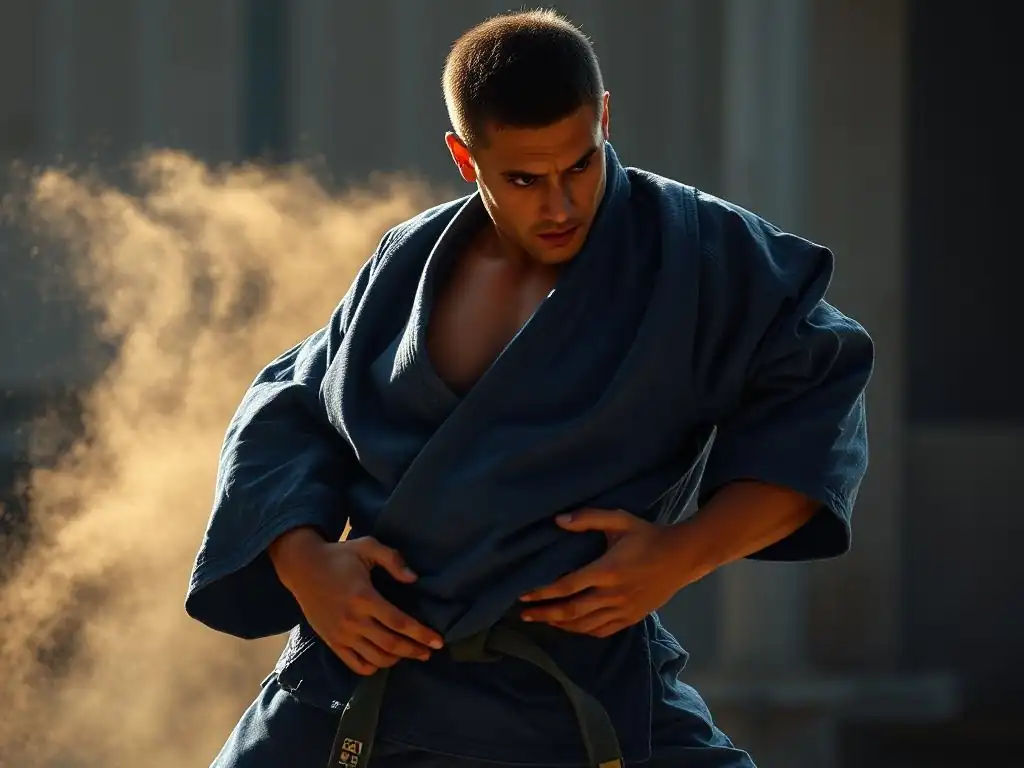
Welcome to Martial Arts Mastery, your ultimate guide to the world's fighting traditions! Ever wondered how Judo masters achieve such effortless control on the ground? Dive into our comprehensive Judo groundwork techniques tutorial and unlock the secrets of Katame no Kata, Judo's foundational blueprint for grappling dominance. Discover the intricate details of this essential form and begin your journey towards unparalleled mat mastery. What hidden techniques will you uncover?
- Introduction to Katame no Kata: Mastering Judo Grappling
- Understanding the Five Groups of Katame no Kata
- Performing Katame no Kata: A Step-by-Step Judo Groundwork Techniques Tutorial
- Drills and Exercises to Improve Your Katame no Kata
- The Significance of Katame no Kata in Modern Judo
- Advanced Strategies and Concepts in Judo Ground Fighting from Katame no Kata
- Conclusion: Embracing Katame no Kata for Judo Ground Fighting Mastery
-
Frequently Asked Questions
- What is Katame no Kata and what is its significance in Judo?
- Where does Katame no Kata fit within the broader scope of Judo training?
- What are the main categories of techniques covered in Katame no Kata?
- How can a "Judo groundwork techniques tutorial" based on Katame no Kata benefit beginners?
- Does Katame no Kata have relevance beyond the Judo dojo, such as in self-defense scenarios?
- Final Reflection: Embracing the Ground Game Legacy
- Unleash Your Inner Grappling Genius!
Introduction to Katame no Kata: Mastering Judo Grappling
Unveiling the Secrets of Judo Groundwork Techniques
Judo, renowned globally for its dynamic throwing techniques (Nage-waza), possesses an equally crucial and intricate component: groundwork, known as Ne-waza. While throws often capture immediate attention, proficiency in controlling and submitting an opponent on the ground is vital for complete mastery of the art. Katame no Kata, the "Forms of Grappling," serves as the classical, codified system for learning these essential Judo groundwork techniques tutorial principles. It meticulously details the fundamental holds (Osækomi-waza), chokes (Shime-waza), and joint locks (Kansetsu-waza), providing a structured pathway to understanding the underlying mechanics and strategic applications of ground fighting in Judo.
This kata, developed under the guidance of Judo's founder, Kano Jigoro, alongside Nage no Kata (Forms of Throwing), represents a core pillar of the Kodokan Judo curriculum. It is not merely a collection of isolated techniques but a study in transitions, control, pressure, and timing.
By practicing Katame no Kata, students learn the proper body mechanics for applying techniques effectively and safely, understanding how to maintain dominant positions and exploit opportunities for submission. This systematic approach ensures that practitioners build a solid foundation in Judo grappling techniques before engaging in the more fluid and unpredictable environment of free practice (randori) or competition.
The Importance of Katame no Kata in Judo Training
Katame no Kata is indispensable for developing a deep understanding of Judo groundwork, offering benefits far beyond simple technique memorization. It instills critical principles like kuzushi (breaking balance) applied on the ground, control of an opponent's limbs and posture, and the efficient use of leverage.
For example, understanding how to use body weight and hip positioning in Hon-gesa-gatame (scarf hold) as taught in the kata directly translates to more effective pinning in randori, where maintaining control under resistance is paramount. Studies and observations in competitive Judo consistently show that athletes with a strong foundation in classical Ne-waza forms, even if they employ modern variations, demonstrate superior positional control and finishing ability.
Furthermore, the kata emphasizes the precise point of application for joint locks and chokes, crucial for executing submissions safely and effectively. It teaches practitioners the specific angles and pressure points required to elicit a tap-out without causing unnecessary injury, a core principle of Judo.
Learning techniques like Ude-hishigi-juji-gatame (cross armlock) or Hadaka-jime (naked choke) through the kata's structured format ensures that students understand the entry, application, and control phases correctly. This disciplined practice is foundational for developing the tactile sensitivity and strategic awareness needed to excel in Judo ground fighting, making Katame no Kata a cornerstone of comprehensive Judo education.
Understanding the Five Groups of Katame no Kata
Katame no Kata is logically divided into five distinct groups, each focusing on a specific type of Judo groundwork technique. This organization provides a clear progression for learning, starting with control, moving to submissions via chokes, and finally exploring submissions through joint locks. The five groups are: Osækomi-waza (Holding Techniques), Shime-waza (Choking Techniques), and Kansetsu-waza (Joint Locking Techniques). Each group contains five fundamental techniques, totaling 15 core movements that form the syllabus of this essential kata.
The structure of the kata involves a specific sequence within each group, designed to showcase variations and transitions. For instance, within the holds group, techniques like Hon-gesa-gatame and Kuzure-gesa-gatame are presented sequentially, illustrating a basic hold and its common variation. This methodical presentation helps practitioners understand the relationships between techniques and how they can be adapted or transitioned from one to another during dynamic ground exchanges. Mastering these foundational techniques through the kata is the first step in building a comprehensive repertoire of Judo grappling techniques for both sport and self-defense.
Osækomi-waza: The Holding Techniques of Katame no Kata
Osækomi-waza are the pinning or holding techniques, designed to control an opponent on their back for a sustained period, typically 20 seconds in competitive Judo to score Ippon (a full point). These techniques are fundamental to Judo groundwork, as achieving a dominant hold is often the prerequisite for attempting submissions or simply winning by pinfall. Katame no Kata presents five core Osækomi-waza, emphasizing principles of weight distribution, base, and control of the opponent's hips and upper body.
The five holds included in the kata—Hon-gesa-gatame, Kuzure-gesa-gatame, Kata-gatame, Kami-shiho-gatame, and Yoko-shiho-gatame—represent the most common and effective pinning positions in Judo. Practicing these forms teaches the practitioner (Tori) how to maintain a stable position against the opponent's (Uke's) attempts to escape, using their body weight and limb entanglement strategically. For example, the kata teaches precise hand grips and leg positioning in Yoko-shiho-gatame (side four-corner hold) to prevent Uke from bridging or turning effectively, illustrating the critical details needed for successful execution of these Judo groundwork techniques tutorial components.
Hon-gesa-gatame: Mastering the Scarf Hold in Judo Ground Fighting
Hon-gesa-gatame, or the scarf hold, is perhaps one of the most widely recognized and fundamental holding techniques in Judo and other grappling arts. It involves Tori sitting beside Uke's head, controlling their arm and wrapping an arm around their head or neck, using their body weight draped across Uke's chest and abdomen. The kata emphasizes maintaining a low center of gravity, controlling Uke's far arm to prevent framing or escape, and using leg positioning to prevent bridging.
Mastery of Hon-gesa-gatame provides a strong base for ground control. In competitive Judo, successfully holding an opponent in this position for 20 seconds results in an Ippon, immediately winning the match. Even short durations yield points (Waza-ari for 10 seconds). The kata teaches the specific posture and pressure points required to make this hold secure, such as keeping Uke's head pinned low and using Tori's chest pressure. It is a versatile hold, allowing for transitions to other techniques or providing a stable platform from which to initiate submissions, making it a cornerstone of any Judo groundwork techniques tutorial.
Kuzure-gesa-gatame: Variation and Application of the Broken Scarf Hold
Kuzure-gesa-gatame, the broken scarf hold, is a variation of Hon-gesa-gatame, often adapted when Uke manages to gain some defensive posture or when Tori seeks a slightly different weight distribution. In this variation, Tori typically controls Uke's arm near the elbow with their far arm (instead of the arm around the head), while maintaining pressure across Uke's body. The leg positioning might also differ slightly to adapt to Uke's movements.
The kata includes Kuzure-gesa-gatame to illustrate the concept of adapting a fundamental technique to a changing situation, a crucial aspect of dynamic Judo ground fighting. It teaches how small adjustments in grip and posture can maintain control even when the ideal position is compromised. This variation is frequently encountered in randori and competition; according to competitive data analysis, variations of Gesa-gatame positions account for a significant percentage of successful pins, highlighting the practical relevance of learning both the standard and broken forms as part of a comprehensive Judo groundwork techniques tutorial.
Kata-gatame: Shoulder Hold Control and Submission in Judo
Kata-gatame, the shoulder hold, is a powerful pinning technique that also has the potential to become a submission. It involves Tori trapping Uke's arm and head with their arm and body, creating a very tight, constricting hold. Tori's arm goes under Uke's neck and grips their own arm (or the gi), while simultaneously controlling Uke's trapped arm against their head or shoulder. The pressure applied can make it difficult for Uke to breathe or move their head, contributing to its effectiveness as a pin.
In the context of the kata, Kata-gatame is demonstrated as a secure hold, emphasizing the tight control over Uke's upper body. Beyond its pinning utility, the kata subtly introduces the potential for this technique to transition into a choke or apply pressure that forces a tap, depending on the exact alignment and pressure. This dual nature makes Kata-gatame a highly valuable technique in Judo ground fighting, frequently seen in competition where it can lead to a pin or set up further attacks. Its inclusion in the kata highlights its importance as a fundamental Judo groundwork technique tutorial element.
Kami-shiho-gatame: Upper Four-Corner Hold for Dominance
Kami-shiho-gatame, the upper four-corner hold, is a powerful pinning technique where Tori kneels or sits astride Uke's torso, facing their head. Tori controls Uke's arms, pinning them to the ground near their head, while using their body weight to exert pressure downwards. This position offers excellent control over Uke's upper body and prevents them from bridging or turning effectively.
The kata demonstrates Kami-shiho-gatame emphasizing a low, heavy posture and secure grips on Uke's arms or gi near the shoulders. This hold is particularly effective against opponents attempting to escape by bridging or using their legs. In competitive Judo, Kami-shiho-gatame is a reliable pin, especially when executed with sufficient pressure and control, making it difficult for Uke to escape within the required time. Learning the precise body mechanics and control points from the kata is essential for applying this fundamental Judo groundwork technique tutorial element successfully in live situations.
Yoko-shiho-gatame: Side Four-Corner Hold for Effective Control
Yoko-shiho-gatame, the side four-corner hold, is another fundamental pinning technique performed from the side of Uke's body. Tori lies perpendicular to Uke, controlling Uke's head with one arm and their leg with the other, while using their body weight to pin Uke's torso. This position allows Tori to distribute their weight across Uke's body and control their movement effectively.
The kata focuses on the proper alignment and weight distribution required for a secure Yoko-shiho-gatame. Key details include keeping hips low, maintaining control of Uke's head and leg, and preventing space for Uke to insert a hook or turn. This hold is extremely common in Judo randori and competition due to its versatility and relative ease of entry from various positions. According to competitive statistics, Yoko-shiho-gatame and its variations are among the most frequently scored pins, underscoring the practical value of mastering this technique as taught in the Katame no Kata Judo groundwork techniques tutorial.
Shime-waza: Choking Techniques for Submission in Judo
Shime-waza, or choking techniques, are submission holds that constrict blood flow to the brain (blood chokes) or airflow to the lungs (air chokes), compelling the opponent to submit. Judo's Shime-waza primarily targets blood chokes, which are highly effective and generally safer when applied correctly than air chokes. Katame no Kata includes five fundamental choking techniques, demonstrating applications from various positions, primarily focusing on using the gi (judo uniform) for leverage and control.
The five chokes in the kata—Gyaku-juji-jime, Kata-juji-jime, Hadaka-jime, Okuri-eri-jime, and Kataha-jime—teach the core principles of applying pressure to the carotid arteries using hands, forearms, or the gi. The kata emphasizes the importance of control before applying the choke, securing the position, and creating tension slowly and deliberately to allow the opponent time to tap. Mastering these techniques through the kata provides the necessary understanding of mechanics and safety for applying Shime-waza effectively in Judo groundwork techniques tutorial practice and competition.
Gyaku-juji-jime: Reverse Cross Choke for Submission
Gyaku-juji-jime, the reverse cross choke, is a fundamental gi choke where Tori uses both hands to grip Uke's gi lapels, but with the hands crossed in a 'reverse' manner compared to the standard cross choke. One hand grips high on the opposite lapel, and the other grips low on the near lapel. Tori then applies pressure by pushing their hands together and often pulling Uke's head forward.
The kata demonstrates Gyaku-juji-jime from a seated position over Uke's chest, emphasizing the specific hand placement and the direction of force required to constrict blood flow effectively. This choke is powerful because it utilizes the strong structure of the gi and allows Tori to use chest pressure in addition to arm tension. It is a common and effective submission in Judo, frequently seen in ground fighting exchanges, highlighting its importance in any comprehensive Judo groundwork techniques tutorial.
Kata-juji-jime: Single-Sided Cross Choke
Kata-juji-jime, the single-sided cross choke (often translated as 'half' or 'partial' cross choke), is another gi choke from the cross-choke family. In this technique, one hand grips the near lapel high up, and the other hand grips the far lapel in a standard cross grip. This creates an asymmetrical application of pressure, often effective when the opponent is defending the standard cross choke.
The kata presentation of Kata-juji-jime illustrates how to apply this choke from a position where full bilateral control might not be possible, such as when transitioning or reacting to Uke's defense. It emphasizes using the forearm bone against the side of the neck for maximum pressure while securing the grip. This choke is versatile and can be applied from various top positions, making it a valuable addition to a Judo practitioner's arsenal of Judo grappling techniques.
Hadaka-jime: The Naked Choke - A Fundamental Judo Technique
Hadaka-jime, the naked choke, is unique among the kata's Shime-waza as it is applied without the use of the gi. It is a blood choke applied directly to Uke's neck using Tori's arms. Typically performed from behind Uke, Tori wraps one arm around Uke's neck, placing the forearm across the carotid artery, and then uses the other hand to support the choking arm, often by gripping their own bicep or shoulder.
The kata demonstrates Hadaka-jime from a scenario where Uke is on their knees or attempting to escape, highlighting its application when gi grips are unavailable or less effective. This technique requires precise placement of the forearm and strong chest-to-back pressure to be effective. It is a universal choking technique found in many martial arts and combat sports, and its inclusion in the Judo kata underscores its fundamental importance as a self-defense technique and a powerful submission in Judo ground fighting.
Okuri-eri-jime: Sliding Collar Choke for Ground Fighting
Okuri-eri-jime, the sliding collar choke, is a highly effective gi choke that utilizes both of Uke's gi lapels from behind their head. Tori reaches over Uke's shoulders, grips both lapels (often with one hand feeding the lapel deeper to the other), and then slides their hands down while pulling the lapels tight against Uke's neck.
The kata teaches Okuri-eri-jime from a position where Tori is behind Uke, emphasizing the coordination between the hands to slide the gi material and apply pressure. This choke is particularly potent because it uses the strong fabric of the gi and can be applied from various back control positions. It is a favorite technique among competitive Judoka due to its high finishing rate, making it a key component of any advanced Judo groundwork techniques tutorial.
Kataha-jime: Single Wing Choke Application
Kataha-jime, the single wing choke, is a gi choke related to Okuri-eri-jime but also incorporates control of one of Uke's arms. Tori typically grips one lapel from behind, slides it deep, and then uses their other arm to trap Uke's arm across their body while applying the choking pressure with the gi. This technique combines the choke with upper body control, making escape difficult.
The kata demonstrates Kataha-jime showcasing how to integrate limb control with choking pressure. By pinning one of Uke's arms, Tori significantly limits Uke's ability to defend the choke or posture up for escape. This technique is effective in pinning Uke face down or sideways while applying the submission. Its inclusion in the kata illustrates the principle of combining different elements (control and submission) for greater effectiveness in Judo ground fighting.
Kansetsu-waza: Joint Locking Techniques in Judo's Katame no Kata
Kansetsu-waza, or joint locking techniques, are submission holds that hyperextend or twist a joint beyond its normal range of motion, causing pain and forcing the opponent to submit. Judo, as practiced in most dojos and competitions today, primarily focuses on elbow locks, reflecting a safety-conscious evolution of the art. Katame no Kata includes five fundamental elbow locking techniques, demonstrating applications from various positions and illustrating the principles of leverage and directional force.
The five joint locks in the kata—Ude-garami, Ude-hishigi-juji-gatame, Ude-hishigi-hiza-gatame, Ude-hishigi-waki-gatame, and Ude-hishigi-hara-gatame—represent the core methods of attacking the elbow joint. The kata emphasizes securing control of the opponent's arm, isolating the elbow joint, and applying gradual pressure to elicit a tap-out safely. Mastering these techniques through the kata provides practitioners with a solid foundation in the mechanics and application of armlocks, essential for developing effective Judo grappling techniques.
Ude-garami: Arm Entanglement Technique in Judo Groundwork
Ude-garami, often translated as arm entanglement or figure-four armlock, is a submission technique targeting the shoulder and elbow joint. It involves Tori controlling Uke's arm and bending it at a 90-degree angle at the elbow, then using their other arm to create a figure-four grip around Uke's wrist and their own arm or gi. Pressure is applied by rotating Uke's shoulder and hyperextending the elbow.
The kata demonstrates Ude-garami from a position where Tori is often beside or slightly above Uke, highlighting the importance of controlling Uke's wrist and elbow to isolate the joint. This technique is versatile and can be applied from various positions, including side control or from within Uke's guard. It is a common submission in Judo ground fighting, particularly effective when transitioning from a control position, making it a vital part of any Judo groundwork techniques tutorial.
Ude-hishigi-juji-gatame: Cross Armlock - A Classic Judo Submission
Ude-hishigi-juji-gatame, widely known as the cross armlock or "Juji-gatame," is arguably the most iconic armlock in Judo. It is applied by controlling the opponent's arm and extending it across Tori's body, perpendicular to Tori's hips, while securing Uke's wrist with both hands and applying pressure by bridging the hips upwards. Tori is typically lying on their back, with Uke's arm trapped between their legs.
The kata demonstrates Juji-gatame from a classical entry, often following a transition from a failed throw or a scramble on the ground. It emphasizes securing Uke's arm at the elbow, controlling the wrist, and using hip thrust for leverage. Juji-gatame is a high-percentage submission in competitive Judo, accounting for a significant portion of match-ending submissions. Its classical presentation in the kata provides the fundamental mechanics for this powerful Judo grappling technique.
Ude-hishigi-hiza-gatame: Knee Armlock Variation
Ude-hishigi-hiza-gatame, the knee armlock, is a variation of the armlock where the knee is used as a fulcrum to apply pressure to the elbow joint. Tori typically controls Uke's arm and places their knee against the elbow joint, then extends Uke's arm while stabilizing it with their hands or body.
The kata demonstrates Hiza-gatame showcasing an alternative method of applying pressure to the elbow, particularly useful in situations where traditional Juji-gatame setup is difficult. It might be applied from a side control or top position, using the knee nearest Uke's elbow as the pivot point. While perhaps less common in competition than Juji-gatame, understanding Hiza-gatame from the kata provides a broader perspective on applying leverage in Judo ground fighting techniques tutorial scenarios.
Ude-hishigi-waki-gatame: Armpit Armlock Application
Ude-hishigi-waki-gatame, the armpit armlock, is a technique where Tori secures Uke's arm and traps it tightly under their armpit (waki). Tori then uses their body to extend Uke's arm, with the pressure point being Tori's armpit acting as a fulcrum against Uke's elbow.
The kata shows Waki-gatame often applied from a standing position transitioning to the ground, or from a top control position. It emphasizes the tight grip under the armpit and using body weight to generate leverage. This armlock can be very powerful due to the strong leverage provided by the body. It is a technique that requires precise control to apply safely and effectively, reinforcing the importance of structured learning via the Katame no Kata Judo groundwork techniques tutorial.
Ude-hishigi-hara-gatame: Stomach Armlock Technique
Ude-hishigi-hara-gatame, the stomach armlock, involves Tori using their stomach or hip area as a fulcrum to apply pressure to Uke's elbow joint. Tori controls Uke's arm and extends it across their own abdomen or hip, then applies pressure by bridging or shifting weight.
The kata demonstrates Hara-gatame from a position where Tori might be over Uke or transitioning. It highlights using the core body mass for leverage against Uke's extended arm. This technique can be applied from various scenarios on the ground, often when Uke attempts to push or frame with their arm. Learning Hara-gatame through the kata provides insight into utilizing different parts of the body for leverage in Judo grappling techniques.
Performing Katame no Kata: A Step-by-Step Judo Groundwork Techniques Tutorial
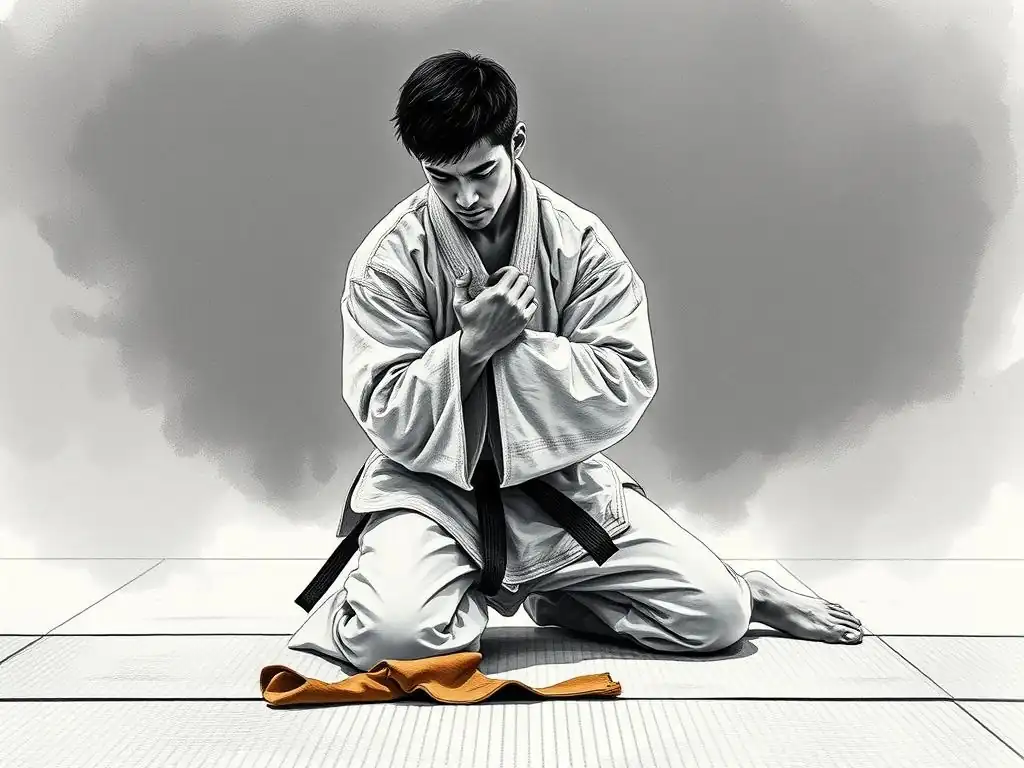
Performing Katame no Kata is a deliberate process, requiring two partners: Tori (the person performing the techniques) and Uke (the receiver). The kata follows a specific sequence and set of movements designed to teach both the application and the reception of the techniques safely and effectively. Unlike randori, the movements in kata are stylized and cooperative, allowing for focus on precision, balance, and the underlying principles of each technique. It serves as a structured Judo groundwork techniques tutorial, breaking down complex movements into manageable steps.
The performance begins with formal bowing and positioning, setting a respectful and focused tone. Tori and Uke take turns demonstrating the techniques, with Uke reacting in a prescribed manner to facilitate the execution and learn how to receive the techniques safely, including knowing when and how to tap. The emphasis is on correct form, understanding the direction of force, and maintaining control throughout the technique. Practice of the kata is essential for grading in Judo, demonstrating a fundamental understanding of the art's principles.
Preparation and Stance for Katame no Kata
Before beginning the execution of the techniques within Katame no Kata, Tori and Uke must prepare correctly. This involves ensuring the training area is clear and safe, and both practitioners are properly warmed up. The formal start involves standing approximately six meters apart, facing each other.
From this distance, both Tori and Uke perform a standing bow (Ritsu-rei). Following the standing bow, they walk towards each other and kneel down (Za-rei) approximately one meter apart, performing a kneeling bow. This sequence of bows is a traditional sign of respect in Judo. After the kneeling bow, they move into the starting positions for the first group of techniques, Osækomi-waza, which typically begins with Uke lying on their back and Tori kneeling beside them, ready to execute the first technique. This ritualistic beginning sets the mental stage for focused practice of the Judo groundwork techniques tutorial.
Detailed Breakdown of Each Technique in Katame no Kata
This section provides a detailed overview of the execution steps for each of the 15 techniques within Katame no Kata. While the kata involves specific entries and transitions between techniques, the core application of each hold, choke, or lock follows a defined sequence of actions. The purpose here is to outline the key steps Tori takes to apply each technique effectively and safely, serving as a step-by-step guide within this Judo groundwork techniques tutorial.
Each technique, whether a hold, choke, or joint lock, requires Tori to establish control, secure the necessary grips or positioning, and then apply the technique with appropriate pressure or weight distribution. Uke's role is to react in a prescribed manner, allowing Tori to execute the technique while being prepared to tap out if necessary. The detailed steps highlight the critical points of application, leverage, and control for each of these fundamental Judo grappling techniques.
Hon-gesa-gatame: Execution Steps
- Tori kneels beside Uke's head, who is lying on their back.
- Tori wraps their arm closest to Uke's head under Uke's neck and grips Uke's far lapel or shoulder area.
- Tori's other arm controls Uke's far arm, often by gripping the wrist or gi sleeve to pin it to the mat.
- Tori lowers their chest and body weight onto Uke, specifically across Uke's chest and abdomen.
- Tori extends their leg furthest from Uke's head for base and stability, keeping the knee bent or extended depending on preference, while the leg nearest Uke's head is tucked in close to Uke's side.
- Tori maintains pressure, keeping Uke's head low and preventing escape by controlling Uke's hips and upper body with their weight and grips.
Kuzure-gesa-gatame: Execution Steps
- Similar starting position to Hon-gesa-gatame, with Uke on their back and Tori beside their head.
- Tori wraps the arm closest to Uke's head under Uke's neck, but grips high on Uke's near gi lapel or shoulder.
- Tori's other arm controls Uke's far arm, gripping the gi sleeve near the elbow or wrist.
- Tori lowers their weight onto Uke, similar to Hon-gesa-gatame, but the grip variation changes the angle slightly.
- Leg positioning is similar to Hon-gesa-gatame, focusing on base and preventing Uke's movement.
- Tori maintains pressure, using the grip on the near lapel and control of the far arm to keep Uke pinned.
Kata-gatame: Execution Steps
- Tori is positioned beside Uke's head, with Uke on their back. Uke's near arm is extended towards Uke's head.
- Tori wraps the arm closest to Uke's head under Uke's neck and grips their own biceps or gi shoulder.
- Simultaneously, Tori uses their other arm to secure Uke's extended arm against Uke's head and neck.
- Tori brings their head close to Uke's head, trapping Uke's head and arm between Tori's arm and body.
- Tori lowers their body weight, applying pressure across Uke's upper chest and shoulder area.
- Tori maintains a tight, constricting hold, using their chest and arm pressure to secure the pin.
Kami-shiho-gatame: Execution Steps
- Tori kneels astride Uke's torso, facing Uke's head, with Uke on their back.
- Tori reaches under Uke's arms and grips Uke's belt or trousers near the hips, or grips the edges of Uke's gi skirt.
- Tori pulls Uke's arms upwards towards Uke's head, pinning them to the mat.
- Tori lowers their chest and hips onto Uke's torso, distributing their weight downwards.
- Tori keeps their knees wide for a stable base, preventing Uke from bridging or turning.
- Tori maintains heavy pressure downwards, securing the pin by controlling Uke's upper body and arms.
Yoko-shiho-gatame: Execution Steps
- Tori lies perpendicular to Uke, who is on their back. Tori's head is near Uke's hip, and Tori's legs extend towards Uke's head.
- Tori wraps the arm nearest Uke's head around Uke's neck and grips Uke's far gi collar or shoulder.
- Tori wraps the arm nearest Uke's legs around Uke's leg (often between the legs) and grips Uke's gi trousers or belt.
- Tori lowers their hips and chest, distributing weight across Uke's torso.
- Tori keeps their legs extended or slightly bent for base, preventing Uke from turning into them.
- Tori maintains pressure, controlling Uke's head and hips to secure the pin.
Gyaku-juji-jime: Execution Steps
- Tori is in a dominant position over Uke's chest (e.g., seated mount or side control transition). Uke is on their back.
- Tori grips Uke's far lapel with their near hand, inserting fingers deep inside the gi.
- Tori grips Uke's near lapel with their far hand, crossing over their first arm, inserting fingers deep.
- Tori adjusts grips to be high on Uke's neck area.
- Tori applies pressure by pushing their hands together and pulling Uke's head forward slightly, constricting the carotid arteries.
- Tori maintains control of Uke's body while applying pressure until Uke taps.
Kata-juji-jime: Execution Steps
- Tori is in a dominant position over Uke's chest. Uke is on their back.
- Tori grips Uke's near lapel with their near hand, fingers inside, gripping high near the neck.
- Tori grips Uke's far lapel with their far hand, crossing over the near arm, fingers inside, gripping high near the neck.
- Tori adjusts grips so one hand is high on the near side, the other high on the far side, creating an asymmetrical cross.
- Tori applies pressure by squeezing their forearms together against Uke's neck and potentially using chest pressure.
- Tori maintains control and pressure until Uke taps.
Hadaka-jime: Execution Steps
- Tori secures a position behind Uke (e.g., Uke on hands and knees, or Tori on Uke's back).
- Tori wraps one arm around Uke's neck, positioning the forearm across Uke's trachea or carotid artery area (classical Judo focuses on blood choke).
- Tori secures the choking arm by gripping their own biceps with the other hand, or by placing the second hand behind Uke's head/shoulder to push Uke's head into the choking arm.
- Tori closes the gap by bringing their chest close to Uke's back.
- Tori applies pressure by squeezing the arms and potentially leaning back slightly, constricting blood flow.
- Tori maintains pressure until Uke taps. Note: In kata, pressure is gentle and Uke taps quickly.
Okuri-eri-jime: Sliding Collar Choke for Ground Fighting
- Tori is positioned behind Uke, often with Uke on hands and knees or flattened out.
- Tori reaches over Uke's near shoulder and grips Uke's far lapel, feeding it across Uke's neck.
- Tori reaches over Uke's far shoulder with the other hand and grips the lapel fed by the first hand, or grips the opposite lapel.
- Tori pulls both lapels tight against Uke's neck, sliding the material.
- Tori applies pressure by pulling the hands apart or towards themselves, constricting blood flow.
- Tori maintains control of Uke's body while applying pressure until Uke taps.
Kataha-jime: Single Wing Choke Application
- Tori is positioned behind Uke, similar to Okuri-eri-jime setup.
- Tori secures a deep grip on one of Uke's lapels (e.g., reaching over the near shoulder to the far lapel).
- Tori uses their other arm to trap Uke's arm on the side where Tori has the deep lapel grip, pinning it across Uke's body.
- Tori applies choking pressure with the gi lapel while simultaneously controlling Uke's trapped arm, often by using their chest or shoulder to pin it.
- Pressure is applied by pulling the lapel tight and squeezing.
- Tori maintains control and pressure until Uke taps.
Ude-garami: Execution Steps
- Tori is in a position controlling Uke's arm (e.g., side control, or from a scramble). Uke's arm is bent at the elbow, approximately 90 degrees.
- Tori controls Uke's wrist with one hand.
- Tori wraps their other arm around Uke's trapped arm and grips their own wrist or gi, creating a figure-four grip.
- Tori ensures Uke's elbow is supported and isolated.
- Tori applies pressure by rotating Uke's shoulder joint or slightly extending the elbow, using the figure-four grip for leverage.
- Tori maintains control and applies pressure until Uke taps.
Ude-hishigi-juji-gatame: Execution Steps
- Tori transitions to a position perpendicular to Uke, often by swinging a leg over Uke's head. Uke is on their back.
- Tori secures Uke's arm, extending it across Tori's body.
- Tori grips Uke's wrist with both hands (or one hand gripping the wrist, the other gripping the gi sleeve).
- Tori brings their knees together to trap Uke's shoulder, preventing Uke from pulling their arm out.
- Tori leans back, keeping Uke's arm straight, with Uke's elbow resting on Tori's abdomen or hip.
- Tori applies pressure by bridging their hips upwards, hyperextending Uke's elbow joint until Uke taps.
Ude-hishigi-hiza-gatame: Execution Steps
- Tori controls Uke's arm while in a top position (e.g., side control or mount). Uke is on their back.
- Tori secures Uke's arm and positions one of their knees against Uke's elbow joint, acting as a fulcrum.
- Tori extends Uke's arm, using their hands or body to stabilize it.
- Tori applies pressure by pushing Uke's arm downwards or back, using the knee as the pivot point to hyperextend the elbow.
- Tori maintains control of Uke's body and arm while applying pressure until Uke taps.
Ude-hishigi-waki-gatame: Execution Steps
- Tori secures Uke's arm and isolates the elbow joint. This can occur during a scramble or from a top position.
- Tori traps Uke's arm tightly under their armpit (waki).
- Tori controls Uke's wrist with their hand, preventing Uke from bending the arm.
- Tori applies pressure by straightening their body and driving their armpit downwards or backwards, using the armpit as the fulcrum against Uke's elbow.
- Tori maintains control and applies pressure until Uke taps.
Ude-hishigi-hara-gatame: Execution Steps
- Tori controls Uke's arm and positions it across Tori's abdomen or hip area. This often occurs when Tori is on top of Uke.
- Tori secures Uke's wrist with their hands or body.
- Tori ensures Uke's elbow joint is positioned over Tori's abdomen or hip, which acts as the fulcrum.
- Tori applies pressure by extending Uke's arm and bridging their hips or shifting their weight downwards onto Uke's elbow.
- Tori maintains control of Uke's arm and body while applying pressure until Uke taps.
Drills and Exercises to Improve Your Katame no Kata
Practicing Katame no Kata techniques in isolation is crucial for understanding the mechanics, but integrating them into dynamic drills enhances their practical application in Judo ground fighting. Drills help build muscle memory, improve transitions, and increase speed and efficiency. These exercises can be performed solo to refine movement patterns or with a partner to simulate resistance and explore entries and escapes. Consistent drilling complements kata study, bridging the gap between formal practice and the unpredictability of randori.
Effective drills focus on specific aspects, such as maintaining base under pressure, transitioning between holds, or chaining submission attempts. For example, practicing transitioning between Hon-gesa-gatame, Kuzure-gesa-gatame, and Yoko-shiho-gatame helps develop fluidity in pinning. Similarly, drilling entries into Juji-gatame from various positions, like guard or side control, makes the technique more accessible in live situations. Incorporating these drills into training is vital for anyone serious about mastering Judo groundwork techniques tutorial principles learned from the kata.
Solo Drills for Refining Judo Groundwork Technique
Solo drills allow practitioners to focus on their own body mechanics, movement patterns, and the physical conditioning required for effective groundwork. These drills can be performed without a partner and are excellent for refining posture, balance, and the specific motions involved in applying techniques. While a partner is necessary for the full kata experience, solo work builds the foundational physical literacy.
Examples of solo drills include practicing bridging and shrimping movements, which are essential for creating space and escaping pins. Another valuable solo drill is practicing the specific hip movements and leg placements for entering and maintaining different holding positions like Kami-shiho-gatame or Yoko-shiho-gatame, simulating the posture without an opponent. Practicing the arm movements and body alignment for submissions like Ude-garami or Juji-gatame, perhaps using a resistance band or a training dummy, helps solidify the motor patterns, making these Judo groundwork techniques tutorial elements more instinctive.
Partner Drills for Practical Application of Katame no Kata
Partner drills are indispensable for translating the static forms of kata into dynamic, applicable skills. These drills involve a partner providing light resistance or simulating specific reactions, allowing Tori to practice technique execution under more realistic conditions. Partner drills help improve timing, control, and the ability to adapt techniques based on the opponent's movements.
Examples include positional drilling, where one partner attempts to maintain a specific hold (e.g., Hon-gesa-gatame) while the other attempts a prescribed escape, focusing on Tori's ability to counter the escape and maintain control. Another effective drill is transition practice, where partners flow between different holds (e.g., Kami-shiho-gatame to Yoko-shiho-gatame) based on designated cues. Submission entry drills, where Uke presents a specific opening (e.g., extends an arm), and Tori practices entering a joint lock like Juji-gatame or a choke like Okuri-eri-jime, are also crucial for developing practical Judo grappling techniques.
Integrating Katame no Kata into Randori (Free Practice)
The ultimate goal of studying Katame no Kata and performing drills is to apply the learned principles and techniques effectively in randori, Judo's free sparring. Randori is dynamic and unpredictable, requiring practitioners to recognize opportunities and apply techniques under resistance. Integrating kata principles into randori means actively looking for the setups and openings practiced in the structured environment.
During Ne-waza randori, practitioners can focus on specific areas covered in the kata, such as establishing and maintaining dominant holding positions for 20 seconds, recognizing opportunities to apply chokes when the opponent's gi becomes accessible, or identifying extended limbs for joint locks. Consciously attempting to apply techniques like Kata-gatame for a pin or transitioning into a Juji-gatame when the opponent defends a sweep are direct applications of kata study. Regularly reflecting on randori performance and identifying which kata techniques could have been applied or improved upon is key to continuous development in Judo ground fighting.
The Significance of Katame no Kata in Modern Judo
While competitive Judo rules and training methodologies have evolved significantly since Kano Jigoro's era, Katame no Kata remains profoundly relevant. Its structured approach to teaching fundamental holds, chokes, and joint locks provides a deep understanding of the mechanics and principles that underpin all effective ground fighting. Modern Judo techniques, even the highly dynamic ones seen in international competition, are often variations or combinations of the core actions codified in this kata.
Mastery of Katame no Kata ensures that Judoka possess a strong technical base, allowing them to adapt to different opponents and situations on the ground. It teaches the importance of positional control before submission, the safe application of joint locks and chokes, and the efficient use of leverage and body weight. For instance, the principles of maintaining a tight base in Kami-shiho-gatame are directly applicable to maintaining control in modern pin variations. Thus, Katame no Kata is not a historical relic but a living foundation for contemporary Judo groundwork techniques tutorial and practice.
Applying Katame no Kata Principles in Judo Competition
Competitive Judo ground fighting is fast-paced and strategic, but the success of elite athletes often hinges on their mastery of fundamental principles taught in Katame no Kata. Techniques like Yoko-shiho-gatame and Hon-gesa-gatame remain high-percentage pins at all levels of competition, including the Olympics and World Championships, demonstrating the enduring effectiveness of these core holds. For example, a 2018 analysis of IJF Grand Slam events showed that Osækomi-waza accounted for a significant percentage of scoring actions on the ground, with variations of the kata holds being predominant.
Furthermore, submissions like Juji-gatame and Okuri-eri-jime are frequently used to end matches at the highest levels. The ability to transition smoothly from a hold to a submission, or to apply a choke when the opponent is defending a pin, is a direct result of understanding the connections and transitions demonstrated in the kata and refined through drilling. Competitive Judoka who excel in Ne-waza demonstrate a deep understanding of pressure, control, and timing—principles meticulously laid out in Katame no Kata. Mastering this Judo groundwork techniques tutorial is a clear pathway to competitive success.
The Role of Katame no Kata in Self-Defense
Judo's self-defense applications extend beyond throwing techniques to include practical groundwork skills for controlling a situation when it goes to the ground. Katame no Kata provides a syllabus of techniques directly applicable to self-defense scenarios, focusing on control, incapacitation, and submission without requiring strikes. Techniques like the fundamental holding positions (Osækomi-waza) are crucial for controlling an assailant on the ground, preventing them from striking or escaping.
Basic chokes like Hadaka-jime (naked choke) are effective for quickly incapacitating a threat when applied correctly, particularly useful in situations where gi grips are not available. While joint locks require more precision and cooperation (as seen in the kata), the principle of controlling an opponent's limbs and using leverage to create pain compliance can be adapted for self-defense, although caution is always advised. Katame no Kata, therefore, serves as a vital Judo groundwork techniques tutorial for self-defense, equipping practitioners with the means to manage and neutralize a threat on the ground using control and submission.
Advanced Strategies and Concepts in Judo Ground Fighting from Katame no Kata
While Katame no Kata presents techniques in a relatively static, formal manner, its principles form the basis for advanced ground fighting strategies. Beyond simply executing individual techniques, mastery involves understanding how to combine them, transition between positions, and adapt to a resisting opponent. The kata provides the fundamental building blocks; advanced practice focuses on linking these blocks together seamlessly and strategically.
Developing advanced Judo groundwork techniques tutorial skills involves exploring variations not explicitly shown in the kata but derived from its principles, such as applying submissions from less dominant positions or using specific grips to set up multiple attacks. It also involves a deeper understanding of timing and anticipation—recognizing Uke's defensive reactions and immediately transitioning to the next appropriate technique from the kata's repertoire. This layered understanding transforms the kata from a list of techniques into a dynamic framework for strategic ground fighting.
Transitioning Between Ground Positions: A Key to Judo Groundwork Success
Katame no Kata implicitly teaches transitions by presenting techniques in groups and sequence, but advanced practice explicitly focuses on the fluid movement between positions. The ability to smoothly transition from a pin attempt to a submission, or from one side control variation to another, is critical for maintaining dominance and finishing techniques against a skilled opponent.
Drilling transitions, such as moving from Yoko-shiho-gatame to Kami-shiho-gatame or from side control to mount before attempting a choke or armlock, is a core component of advanced Judo ground fighting. Effective transitions rely on maintaining control throughout the movement, preventing the opponent from escaping or countering. The kata provides the destinations (the finished techniques); advanced training focuses on the journeys between them, highlighting how mastering the fundamental positions from the Judo groundwork techniques tutorial in the kata enables effective movement in dynamic situations.
Using Leg Entanglements to Enhance Ground Control
While Katame no Kata primarily focuses on upper body control for pins and arm control for joint locks, modern Judo groundwork incorporates significant use of the legs for control and submission setups. Techniques like Okuri-eri-jime and Juji-gatame often benefit from leg positioning to prevent the opponent from escaping or gaining posture.
Advanced application builds upon the kata's principles by integrating leg entanglements, such as using legs to control the opponent's hips or establish guard positions that facilitate entries into kata techniques. For instance, controlling an opponent within a closed or open guard allows for setups into armlocks like Juji-gatame or chokes like Gyaku-juji-jime. Understanding how to use the legs effectively for control and leverage, in conjunction with the upper body techniques from the kata, significantly enhances a practitioner's overall Judo ground fighting ability, expanding upon the core Judo groundwork techniques tutorial.
Combining Holding, Choking, and Joint Locking Techniques
True mastery of Judo groundwork lies in the ability to combine Osækomi-waza, Shime-waza, and Kansetsu-waza into seamless attacks. An opponent defending against a pin often creates openings for a choke or joint lock, and defending against a submission attempt might expose them to being pinned. The techniques in Katame no Kata are not isolated; they are interconnected tools in a grappler's toolbox.
Advanced strategy involves setting up one type of attack to facilitate another. For example, applying pressure with a strong Kata-gatame pin might force the opponent to expose their neck for a choke like Kata-juji-jime, or reaching for an escape might lead to an arm entanglement like Ude-garami. Practicing sequences that chain techniques from different groups, such as attempting to transition from Kami-shiho-gatame to Okuri-eri-jime if the opponent turns, or from Yoko-shiho-gatame to Juji-gatame if they push with an arm, is crucial for developing a sophisticated ground game based on the foundational Judo groundwork techniques tutorial provided by the kata.
Conclusion: Embracing Katame no Kata for Judo Ground Fighting Mastery
Katame no Kata stands as a timeless and essential pillar of Judo training, offering a structured and comprehensive approach to mastering groundwork. It provides the foundational blueprint for understanding and executing the core holding, choking, and joint locking techniques that define Ne-waza. While the kata's formal execution might seem distant from the dynamic nature of randori and competition, the principles of balance, leverage, control, and safe application it instills are directly transferable and crucial for success in any Judo ground fighting scenario.
By diligently practicing Katame no Kata, Judoka develop not just physical technique but also a deeper conceptual understanding of ground fighting. This understanding is vital for both competitive performance, where effective pins and submissions are key scoring elements, and for self-defense, where control and neutralization are paramount. Embracing the study of this kata is an investment in a lifelong journey of learning and refinement in the art of Judo, ensuring a strong foundation in its intricate and effective groundwork techniques tutorial.
Katame no Kata: A Foundation for Lifelong Judo Learning
Katame no Kata is far more than a set of techniques to be memorized for grading. It represents a distillation of fundamental Judo principles applied to the ground. The iterative process of practicing the kata – focusing on posture, pressure, timing, and connection with Uke – fosters continuous improvement. Even experienced Judoka return to the kata to refine their basics, recognizing that small improvements in fundamental movements can lead to significant gains in effectiveness during dynamic application.
The principles learned, such as how to use body weight for pressure in holds like Kami-shiho-gatame or the precise angle needed for a choke like Hadaka-jime, are universally applicable. As practitioners advance, they find that the kata provides a reference point for understanding more complex techniques and variations encountered in modern Judo or other grappling arts. Thus, Katame no Kata serves as a lifelong Judo groundwork techniques tutorial, providing a robust foundation upon which all further ground skills are built and refined.
Further Resources for Enhancing Your Judo Groundwork Skills.
To deepen your understanding and proficiency in Judo groundwork techniques tutorial principles derived from Katame no Kata, several avenues are available. Consistent practice of the kata itself under the guidance of experienced instructors is paramount. High-quality instruction ensures correct form and a proper understanding of the kata's underlying intent.
Supplementing kata practice with focused drills (solo and partner) targeting specific techniques or transitions from the kata is highly recommended. Observing competitive Judo matches, particularly focusing on Ne-waza exchanges, can provide insight into how kata techniques are applied and adapted in real-time scenarios. Studying classical Judo texts and instructional materials on Katame no Kata can offer further historical and technical details. Engaging in randori while consciously attempting to apply techniques and principles learned from the kata provides the necessary practical experience to truly internalize these fundamental Judo groundwork techniques.
Frequently Asked Questions
What is Katame no Kata and what is its significance in Judo?
Katame no Kata is a Judo form that serves as a foundational blueprint for Judo groundwork techniques. It teaches the principles of control, submission, and escape essential for ne-waza (ground fighting).
Where does Katame no Kata fit within the broader scope of Judo training?
Katame no Kata complements nage-waza (throwing techniques), creating a well-rounded Judo practitioner. It provides a structured approach to learning and mastering grappling skills, which are crucial for self-defense and competition.
What are the main categories of techniques covered in Katame no Kata?
The Kata focuses on three core groups of techniques: osaekomi-waza (holding techniques), shime-waza (strangling techniques), and kansetsu-waza (joint locking techniques), providing a comprehensive overview of Judo's groundwork arsenal.
How can a "Judo groundwork techniques tutorial" based on Katame no Kata benefit beginners?
A tutorial based on Katame no Kata offers beginners a systematic and safe way to learn the fundamentals of Judo groundwork. It provides a strong foundation upon which to build more advanced skills and techniques.
Does Katame no Kata have relevance beyond the Judo dojo, such as in self-defense scenarios?
Yes, the principles and techniques taught in Katame no Kata, particularly those related to control and submission, can be adapted for practical self-defense. Understanding leverage and body mechanics is applicable in various situations.
Okay, here's a final reflection designed to close your article "Katame no Kata: Judo's Foundational Blueprint for Groundwork Dominance," optimized for the keyword "Judo groundwork techniques tutorial," and following the structure you outlined:
Final Reflection: Embracing the Ground Game Legacy
The journey through Katame no Kata reveals more than just a set of Judo groundwork techniques; it unveils a foundational blueprint for grappling excellence that remains profoundly relevant today. In a world where ground fighting is increasingly emphasized across various martial arts disciplines, understanding the principles embedded within Katame no Kata provides a crucial edge, offering a depth of understanding that transcends mere memorization of techniques.
The enduring influence of Katame no Kata is undeniable, shaping not only Judo's groundwork but also informing grappling strategies across various combat sports. My own exploration of these techniques has deepened my appreciation for the subtle nuances of control and leverage, highlighting the importance of understanding the "why" behind each movement. > As Jigoro Kano himself stated, "Judo is the way to the most effective use of both physical and spiritual strength.
By training in attacks and defenses one refines the body and spirit and makes constant progress." This kata embodies that progress, demanding both physical mastery and mental acuity.
Now, I invite you to reflect on your own grappling journey. How can you integrate the principles of Katame no Kata into your training? Consider the underlying concepts of kuzushi (breaking balance), tsukuri (fitting), and kake (execution). By embracing these foundational elements, you can unlock a deeper understanding of Judo groundwork, elevate your skills, and truly embody the spirit of this ancient art. Let Katame no Kata be your guide, not just to mastering techniques, but to mastering yourself.
Unleash Your Inner Grappling Genius!
Thank you for diving deep into the world of Katame no Kata! We hope this exploration has illuminated the profound strategic depth this foundational form offers. Now, it's time to translate knowledge into action and elevate your groundwork game.
Here's how you can start:
- Commit to Memory: Dedicate time each week to practice the precise movements and techniques of one or two Katame no Kata techniques. Focus on form over speed initially, building a strong foundation.
- Join our Martial Arts Mastery community forum to discuss your Katame no Kata journey with fellow enthusiasts. Share insights, ask questions, and learn from others!
- Challenge yourself! Can you identify applications of Katame no Kata principles in other grappling arts or self-defense scenarios?
Ready to unlock the secrets of Judo's groundwork mastery?