
Sekhmet: The Lioness Goddess and Her Ferocious Appetite for Battle

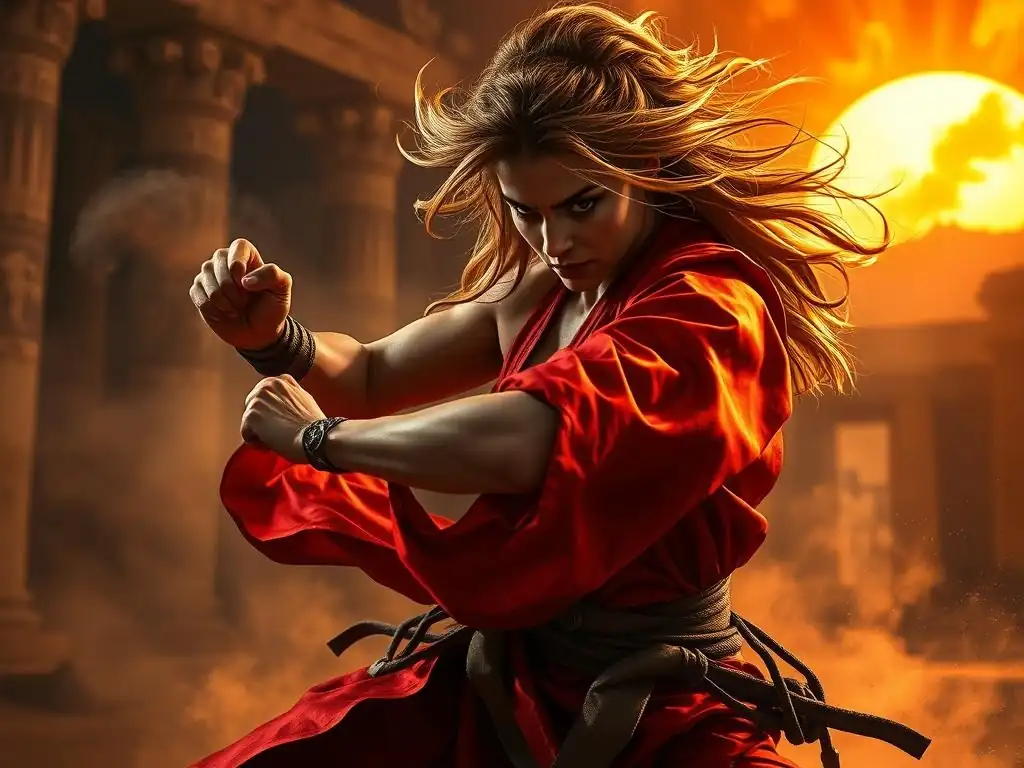
Welcome to Martial Arts Mastery, where history and technique collide! Ever wondered if the spirit of a warrior goddess could inspire a martial art? Dive into the fascinating world of Sekhmet martial arts history and uncover the surprising links between ancient Egyptian mythology and the brutal realities of combat. Prepare to be captivated as we explore the legacy of this lioness goddess and her enduring impact on the warrior ethos. What secrets will you uncover?
- Introduction: Sekhmet in Egyptian Mythology and Martial Prowess
- Sekhmet's Ferocious Nature: A Goddess of Destruction and Protection
- Sekhmet and the Concept of Controlled Aggression in Combat Disciplines
- Sekhmet's Depiction in Art and Hieroglyphs: Insights into Ancient Warfare
- Sekhmet and the Pharaohs: Divine Patronage and Military Power
- Sekhmet in Martial Arts Mythology and Folklore: A Comparative Analysis
- Sekhmet's Legacy: Lessons in Discipline, Control, and the Balance of Power
- Conclusion: Sekhmet, An Eternal Symbol of Martial Arts Power and Spirituality
-
Frequently Asked Questions
- What is Sekhmet's connection to martial arts history?
- How does Sekhmet's mythology influence the philosophy of certain martial arts?
- Are there any specific martial arts that directly claim lineage or inspiration from Sekhmet?
- What aspects of Sekhmet's character resonate with modern self-defense strategies?
- Where can I find more information about the historical context of Sekhmet and ancient Egyptian warfare?
- Final Reflection: Embracing the Lioness Within
- Unleash Your Inner Warrior: Channel Sekhmet's Strength!
Introduction: Sekhmet in Egyptian Mythology and Martial Prowess
Exploring the Origins of Sekhmet: Lioness Deity of War and Healing
Sekhmet, whose name translates to "She Who Is Powerful," emerges from the heart of ancient Egyptian mythology as a formidable deity, often depicted with the head of a lioness and the body of a woman. Her origins are deeply intertwined with the solar deity Ra, often described as his daughter or the Eye of Ra, sent forth to punish humanity for its transgressions. This divine lineage immediately establishes her immense power and her primary role as an agent of divine retribution and destruction.
Yet, the origins of Sekhmet also reveal a profound duality. While born from the sun's fiery wrath and associated with plagues and destruction, she is also revered as a goddess of healing. This seemingly contradictory nature is central to understanding Sekhmet's complex character and her potential symbolic resonance with martial arts principles. She embodies both the capacity for overwhelming force and the knowledge required to restore balance and health, a dynamic often mirrored in combat disciplines where the ability to inflict harm is balanced by the knowledge of anatomy, healing, and the pursuit of overall well-being.
Sekhmet's Significance in Ancient Egyptian Culture and Martial Traditions
Sekhmet held a position of paramount importance in ancient Egyptian society, particularly during the New Kingdom period (c. 1550–1070 BCE). Her cult centers, notably at Memphis and later at Karnak, were sites of significant religious activity, where priests and pharaohs sought to appease her wrath and harness her protective power. Her dual nature made her indispensable: feared for her destructive potential during times of plague or war, and revered for her ability to avert catastrophe and heal the sick.
In the context of ancient Egyptian martial traditions and Sekhmet martial arts history, her significance is largely symbolic. While specific manuals akin to modern martial arts texts are scarce from this period, Egyptian reliefs and texts depict various forms of combat, wrestling, and military training.
Sekhmet, as the primary goddess of war and patron of physicians, would have been a central figure for both warriors and healers. Her association with the pharaoh's military campaigns underscored her role as a divine force invoked for victory, representing the raw power and aggressive spirit needed in battle, yet also the strategic control and restorative power required for a functioning army and society.
Sekhmet's Ferocious Nature: A Goddess of Destruction and Protection
The Wrath of Sekhmet: Understanding Her Role as a Punisher
Sekhmet's most famous mythological narrative vividly illustrates her terrifying wrath. According to the myth of the destruction of mankind, Ra, angered by humanity's disrespect, dispatched his Eye, which transformed into Sekhmet, to punish them. She carried out this task with such zealous ferocity, slaughtering humans across the land, that Ra himself became concerned that she would annihilate the entire race.
This episode underscores Sekhmet's role as an unstoppable force of nature, embodying uncontrolled power and the potential for complete devastation. Her rage was not easily sated, requiring divine intervention – the flooding of the land with beer dyed red to resemble blood – to trick her into drinking and becoming intoxicated, thus halting her slaughter. This myth serves as a powerful allegory for the destructive potential inherent in unchecked aggression, a concept relevant to understanding the dangers of uncontrolled power in any form of combat or conflict.
Sekhmet as a Protector: Warding off Enemies and Disease
Despite her terrifying capacity for destruction, Sekhmet was equally revered as a powerful protector. Egyptians believed she could ward off evil, curses, and, significantly, disease. During times of plague, her priests were particularly active, offering prayers and sacrifices to appease her and implore her healing aspect to intervene. This protective role extended to the pharaoh and the state, where she was invoked to defend against foreign invaders and internal threats.
This protective facet of Sekhmet resonates with defensive principles in martial arts. Just as a martial artist learns to defend themselves and potentially others, Sekhmet was seen as a divine guardian capable of repelling negative forces. Her dual nature highlights that the power capable of causing harm is also the power capable of providing ultimate protection, a balance often sought in martial arts philosophy – the ability to use force only when necessary for defense, embodying a fierce readiness to protect what is vital.
Sekhmet and the Concept of Controlled Aggression in Combat Disciplines
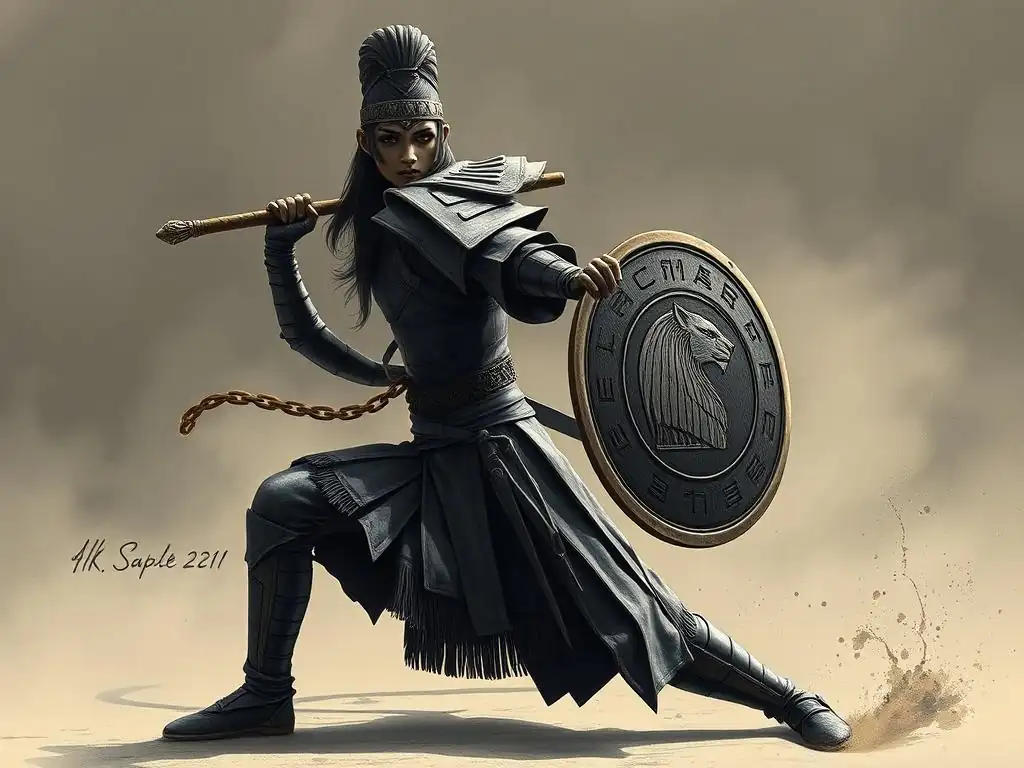
Parallels between Sekhmet's Rage and Controlled Aggression in Martial Arts
Sekhmet's mythological representation of immense, potentially overwhelming power offers a compelling parallel to the concept of controlled aggression in martial arts. Martial arts training often involves cultivating the ability to generate significant force and intensity – a metaphorical "rage" or power – but strictly within the bounds of discipline and control. A powerful strike, a decisive block, or a swift takedown all require channeling energy and intent effectively, much like directing a potent force.
Without control, this power is chaotic and dangerous, potentially harming the practitioner or others indiscriminately, mirroring Sekhmet's initial rampage. Martial artists spend years honing techniques to ensure that their power is precise, directed, and applied only when and where intended. This transformation of raw potential into disciplined execution reflects the necessity of managing inherent power, drawing a symbolic link to the appeasement and redirection of Sekhmet's destructive energy into more constructive or protective forms.
Channeling Sekhmet's Spirit: Focusing Intent and Maintaining Composure Under Pressure
Metaphorically channeling Sekhmet's spirit in martial arts can be understood as embodying her fierce focus and formidable presence while maintaining disciplined composure. In the heat of combat or a high-pressure situation, a martial artist must access a state of intense focus and readiness, akin to the lioness's predatory concentration. This requires suppressing fear and hesitation, tapping into a reservoir of inner strength and aggressive intent.
However, unlike Sekhmet's initial uncontrolled fury, the martial artist must simultaneously maintain mental clarity and emotional equilibrium. This composure under pressure allows for strategic thinking, adaptability, and the precise application of technique. It is the ability to access immense power (Sekhmet's force) without being consumed by it (her uncontrolled rage), using focused intent to direct energy effectively while remaining centered and in command of one's actions. This balance is a cornerstone of advanced martial arts practice, reflecting the nuanced power symbolized by the great lioness goddess.
Sekhmet's Depiction in Art and Hieroglyphs: Insights into Ancient Warfare
Analyzing Sekhmet's Imagery: Weapons, Armor, and Symbolic Representations
Sekhmet's depictions in ancient Egyptian art provide valuable, albeit symbolic, insights into concepts of power and potentially ancient warfare. She is almost invariably shown with the head of a lioness, often wearing the solar disk atop her head, emphasizing her connection to Ra and divine authority. She frequently holds a scepter, symbolizing power and dominion, and sometimes carries an Ankh, the symbol of life, reinforcing her duality.
Crucially, Sekhmet is sometimes depicted holding or associated with weapons. While not always explicitly armed in every image, reliefs show her alongside pharaohs in battle scenes, symbolizing divine support for military action. Occasionally, she is shown holding a knife or a short sword, typical weapons of the era. These visual cues, combined with her association with the Eye of Ra and the destructive power of the sun's rays (sometimes depicted as arrows or fiery breath), paint a picture of a deity embodying swift, decisive, and overwhelming force, reflecting the ideals sought in ancient Egyptian military might.
Hieroglyphic References to Sekhmet's Martial Abilities: The Destruction of Apep and Divine Retribution
Hieroglyphic texts and religious writings frequently reference Sekhmet's formidable abilities, particularly her role in combating chaos and enacting divine retribution. Beyond the famous myth of mankind's destruction, Sekhmet is associated with defending the cosmic order. While the serpent Apep is primarily battled by Ra and other deities, Sekhmet's fierce nature and association with the sun's protective power align her with the forces that repelled such chaotic entities.
Texts describe her "slaughtering the enemies of Ra" or "burning up the wicked," using vivid language that evokes martial prowess. In temple inscriptions, pharaohs are depicted receiving power from deities like Sekhmet before battle, or Sekhmet is shown trampling Egypt's enemies. These hieroglyphic narratives solidify her image as a divine warrior whose power was essential for maintaining cosmic and earthly order, providing a mythological framework for understanding the ancient Egyptian perspective on divine involvement in conflict and the importance of overwhelming force against adversaries.
Sekhmet and the Pharaohs: Divine Patronage and Military Power
Sekhmet was deeply intertwined with the concept of pharaonic authority and military power. Pharaohs saw themselves as earthly representatives of the gods, and associating with powerful deities like Sekhmet legitimized their rule and command over the military. The pharaoh was often depicted in reliefs standing alongside Sekhmet, receiving her blessings or jointly smiting enemies, visually reinforcing the idea that the king's power was divinely sanctioned and as formidable as the goddess herself.
Temples dedicated to Sekhmet, particularly in royal cities, received substantial patronage. The sheer number of Sekhmet statues found in places like the Temple of Mut at Karnak (estimates range into the hundreds) speaks to the significant efforts made by pharaohs, notably Amenhotep III, to appease her and align themselves with her power. This extensive patronage underscores her vital role not just as a religious figure, but as a cornerstone of the ideological foundation for royal military authority and the projection of strength both domestically and internationally.
Pharaohs invoking Sekhmet's Power in Warfare: Thutmose III and the Battle of Megiddo
Throughout Egyptian history, pharaohs explicitly invoked divine aid before embarking on military campaigns. As the goddess of war, Sekhmet was a prime deity called upon for victory. While direct textual accounts of a pharaoh specifically praying only to Sekhmet before a battle like Megiddo (c. 1457 BCE) are rare – pharaohs typically invoked multiple deities – Sekhmet's presence in battle reliefs and her title as "Mistress of Dread" confirm her invoked role in military endeavors.
Pharaohs like Thutmose III, known as the "Napoleon of Egypt" for his extensive conquests, would have certainly sought the favor of all major state deities, including Sekhmet, before crucial engagements such as the Battle of Megiddo. The Pylons of the Karnak Temple, for instance, depict pharaohs smiting enemies in the presence of various gods, including Sekhmet, symbolizing divine approval and assistance.
The Great Hymn to Amun, often associated with royal power and victory, mentions the pharaoh's strength being like various deities; within this context, Sekhmet's power would represent the fierce, destructive force unleashed upon enemies, a necessary component of achieving military success and expanding the empire.
Sekhmet in Martial Arts Mythology and Folklore: A Comparative Analysis
Comparing Sekhmet to Other Warrior Goddesses: Durga, Athena, and Their Combat Roles
Sekhmet's archetype as a fierce, protective warrior goddess finds echoes in other mythologies around the world, offering interesting points of comparison relevant to Sekhmet martial arts history in a broader, cross-cultural sense. In Hinduism, the goddess Durga is a prime example, often depicted with multiple arms wielding various weapons, created to defeat powerful demons that male gods could not vanquish. Like Sekhmet, Durga embodies divine wrath channeled for the protection of cosmic order and the innocent, representing unstoppable power against evil.
Conversely, the Greek goddess Athena presents a different facet of the warrior archetype. While also a goddess of war, Athena is more closely associated with strategic warfare, wisdom, and defensive combat rather than pure, destructive rage. She is the patron of heroes and cities, skilled in crafts and counsel as well as battle. Comparing Sekhmet's fiery, lioness-like ferocity with Athena's strategic, owl-like wisdom highlights different philosophical approaches to combat – one emphasizing overwhelming power and divine terror, the other focusing on intelligence, tactics, and defensive skill, showcasing the varied ways martial concepts are embodied in mythology.
The Enduring Influence of Sekhmet on Martial Arts Narratives: Adaptations in Modern Fantasy and Literature
While not as widely recognized globally as Athena or Durga, the archetype embodied by Sekhmet – the terrifyingly powerful female force of nature, capable of both destruction and healing – continues to resonate and influence narratives, sometimes indirectly, in modern fantasy, literature, and even popular culture that touch upon martial or combat themes. The idea of a powerful, ancient deity linked to primal force and protection finds its way into character designs and plotlines.
In works exploring ancient Egypt or drawing from its mythology, Sekhmet herself may appear, often highlighting her duality of fierce combatant and potential healer. More broadly, the trope of a character who must control immense, potentially destructive power, often with a wild or animalistic aspect, mirrors Sekhmet's story. This enduring archetype reflects a universal fascination with the balance between raw power and disciplined control, a central philosophical tenet that underpins martial arts training and history, keeping the spirit of figures like Sekhmet relevant in contemporary explorations of combat and power.
Sekhmet's Legacy: Lessons in Discipline, Control, and the Balance of Power
Understanding the Dual Nature of Sekhmet: Destruction and Healing in Martial Arts Philosophy
Sekhmet's most enduring legacy, particularly relevant to martial arts philosophy, lies in her profound dual nature: the capacity for both devastating destruction and vital healing. This duality mirrors the inherent paradox within martial arts – the training to inflict harm is inextricably linked with the responsibility to prevent it and, in some traditions, knowledge of how to heal injuries. A skilled martial artist possesses the power to cause significant damage but operates under strict ethical codes regarding when and how that power is used.
This balance reflects Sekhmet's roles. Her destructive aspect is the potential energy, the learned techniques for striking or grappling with force. Her healing aspect is the control, the discipline, the understanding of consequences, and the knowledge of anatomy that prevents unnecessary harm or even aids recovery. Embracing this duality means understanding that true mastery involves not just the ability to overpower, but the wisdom to show restraint, to heal, and to use force only as a last resort for protection, embodying the complete spectrum of power and responsibility.
Applying Sekhmet's Principles: Cultivating Focus, Discipline, and Respect in Training and Combat
Applying Sekhmet's principles in martial arts training involves cultivating several key attributes. Firstly, focus: like the predatory concentration of the lioness, intense focus is required to master techniques and react effectively under pressure. This mental discipline is crucial for harnessing physical power. Secondly, discipline: Sekhmet's power needed to be managed; similarly, martial artists must adhere to rigorous training regimens and ethical guidelines, controlling their power and aggression rather than being controlled by it.
Finally, respect: respect for the power being cultivated, respect for training partners and opponents, and respect for the potential consequences of one's actions. Sekhmet, when appeased, was a protector. This translates to using one's martial skill for defense and the protection of others, rather than reckless aggression. By internalizing Sekhmet's symbolic lessons of focused power, disciplined control, and the balance between destructive potential and protective application, martial artists can deepen their understanding of their art beyond mere physical technique, connecting with ancient principles of strength, responsibility, and balance inherent in Sekhmet martial arts history and philosophy.
Conclusion: Sekhmet, An Eternal Symbol of Martial Arts Power and Spirituality
Frequently Asked Questions
What is Sekhmet's connection to martial arts history?
Sekhmet, the Egyptian lioness goddess of war and healing, is often associated with the ferocious and disciplined nature that some martial arts embody. While not a direct martial art, her symbolism and stories provide a historical and mythological context for understanding the warrior spirit.
How does Sekhmet's mythology influence the philosophy of certain martial arts?
Sekhmet's attributes, such as strength, focus, and controlled aggression, can inspire martial artists to cultivate these qualities. Her dual nature as both destroyer and healer highlights the importance of balance and responsibility in wielding martial skills.
Are there any specific martial arts that directly claim lineage or inspiration from Sekhmet?
No, there are no documented martial arts that directly trace their origins to Sekhmet. However, her image and symbolism may be incorporated into training or philosophy within certain schools that emphasize ferocity and power.
What aspects of Sekhmet's character resonate with modern self-defense strategies?
Sekhmet's fearless nature and protective instincts mirror the mindset needed for effective self-defense. Her association with healing also underscores the importance of avoiding conflict and prioritizing safety.
Where can I find more information about the historical context of Sekhmet and ancient Egyptian warfare?
Websites dedicated to ancient Egyptian history and mythology are excellent resources. Academic papers and museum exhibits often provide detailed information about warfare practices and religious beliefs of the time.
Final Reflection: Embracing the Lioness Within
The exploration of Sekhmet, the lioness goddess, and her connection to martial prowess might seem like a historical curiosity, but it resonates powerfully today. Her fierce spirit, her unwavering dedication to justice, and her mastery of battle are qualities we can all aspire to embody in our own lives, regardless of our chosen path. Sekhmet's story reminds us that strength is not merely physical; it is a potent blend of courage, discipline, and a deep commitment to one's values.
The enduring fascination with Sekhmet speaks to a primal human need to connect with powerful archetypes. Her image, both terrifying and awe-inspiring, continues to inspire artists, writers, and those seeking inner strength. The concept of channeling inner rage and transforming it into focused action, as Sekhmet embodies, holds profound relevance in a world often characterized by chaos and injustice. To invoke Sekhmet is to awaken the power within, to embrace the transformative potential of destruction and creation, and to stand fiercely in defense of what is right.
Now, consider the lessons of Sekhmet. How can you channel your own inner lioness? How can you harness your passions and your frustrations to create positive change in your life and in the world around you? Embrace the discipline, the courage, and the unwavering spirit of Sekhmet, and discover the warrior within. Let her story be a reminder that even in the face of overwhelming odds, you possess the strength to fight for what you believe in.
Unleash Your Inner Warrior: Channel Sekhmet's Strength!
Thank you for exploring the formidable power of Sekhmet with us. Now that you've discovered her story and the depths of her fiery spirit, it's time to embody some of that strength in your own life.
- Commit to one extra intense training session this week, visualizing Sekhmet's unwavering focus as you push through your limits.
- Share this article with a fellow martial artist who needs a dose of fierce inspiration and ancient wisdom.
- Research how other ancient cultures viewed female warriors and compare them to Sekhmet's role in Egyptian mythology.
What small, powerful act will you take today to honor the warrior spirit within you?