
The Philosophical Journey Within Kanku Dai: Symbolism and Spirit

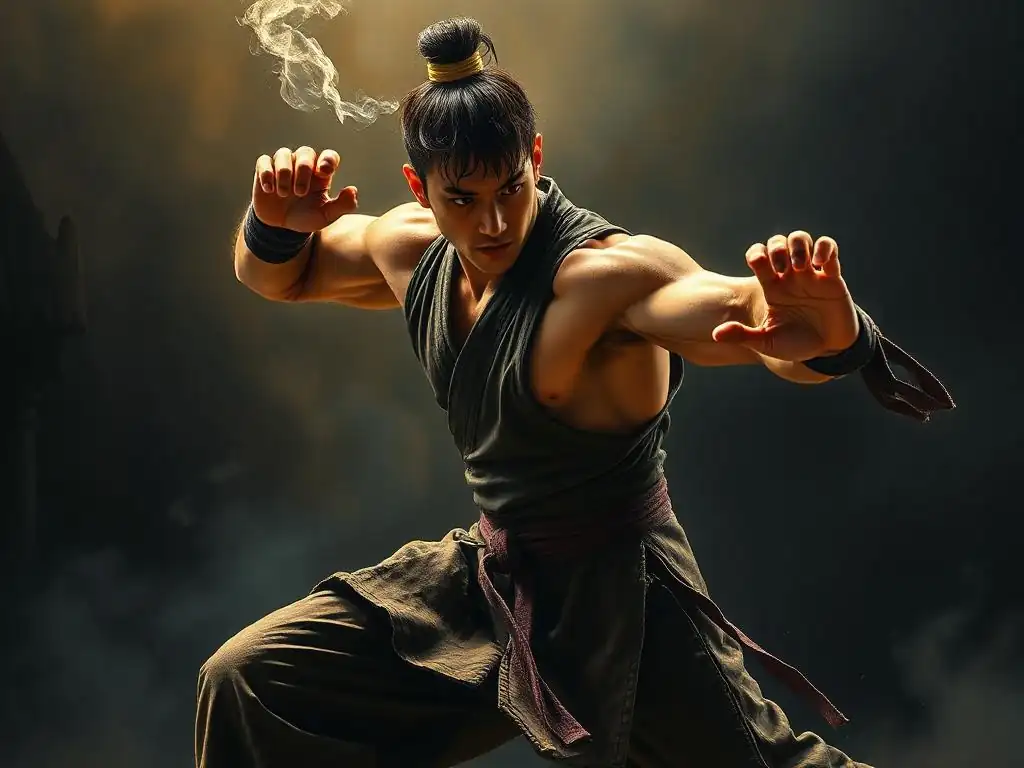
Welcome to Martial Arts Mastery, your gateway to unlocking the secrets of combat traditions worldwide!
Delve into the rich tapestry of martial arts, from ancient philosophies to modern techniques. Are you ready to explore the profound depths hidden within seemingly simple movements? Join us as we embark on a fascinating journey, starting with a detailed exploration of Kanku Dai's philosophical meaning – a kata that’s much more than just a sequence of techniques. Uncover the symbolism and spirit embedded within this iconic form, and discover how it can transform your understanding of martial arts. What will you learn? Let's begin!
- Kanku Dai: An Introduction to its Profound Meaning
- The Symbolism Embedded in Kanku Dai's Movements
- Kanku Dai Philosophical Meaning: A Deeper Dive
- Kanku Dai and the Pursuit of Self-Mastery
- Exploring the Spirit of Kanku Dai
- Kanku Dai's Legacy: Its Enduring Relevance in Modern Karate
-
Frequently Asked Questions
- What is the Kanku Dai form in martial arts?
- What does "Kanku Dai" literally translate to?
- What is the philosophical meaning associated with Kanku Dai?
- How does the performance of Kanku Dai connect to its philosophical underpinnings?
- How can understanding the philosophy of Kanku Dai improve a martial artist's practice?
- Final Reflection: Unveiling the Spirit Within
- Unleash Your Inner Warrior: Embark on the Kanku Dai Journey!
Kanku Dai: An Introduction to its Profound Meaning
Unveiling the Depths of Kanku Dai Kata
Kanku Dai, often translated as "Viewing the Sky," is one of the longest and most complex kata in the Shotokan karate repertoire. Its origins are deeply rooted in the history of Okinawan martial arts, believed to have been adapted from the Kusanku kata, named after a Chinese emissary who visited Okinawa in the 18th century.
This kata is not merely a sequence of physical techniques; it is a moving meditation, a repository of strategic principles, and a journey into the Kanku Dai philosophical meaning. Mastery of Kanku Dai requires not just physical prowess but also a profound understanding of its underlying concepts and symbolism, making it a cornerstone for advanced practitioners seeking a deeper connection to the art.
The kata begins with a distinctive opening movement, raising the hands to frame the sky, which gives the kata its name. This symbolic gesture sets the stage for the entire form, suggesting a connection to the vastness of the universe and the practitioner's place within it. Beyond this initial movement, Kanku Dai encompasses a wide array of techniques, including intricate hand movements, dynamic stances, and powerful kicks.
The complexity demands precision, balance, and coordination, pushing the practitioner to their physical and mental limits. Exploring the Kanku Dai philosophical meaning reveals layers of depth, from resilience and adaptability to the pursuit of harmony with one's environment.
Kanku Dai in the Landscape of Karate Kata
Within the Shotokan curriculum, Kanku Dai holds a prominent position, typically introduced at higher kyu grades and essential for shodan (first-degree black belt) examination. It is considered a Shitei Kata, or designated kata, highlighting its fundamental importance. Its length, approximately 65 movements taking around 90 seconds to perform, makes it a significant test of endurance, focus, and technical execution. Compared to foundational kata like Heian series or even intermediate ones like Bassai Dai, Kanku Dai demands a more sophisticated understanding of timing, power generation, and the seamless transition between techniques.
Furthermore, Kanku Dai is often seen as a 'parent' kata, influencing other forms. For instance, the kata Kanku Sho is a shorter, more condensed version derived from Kanku Dai, focusing on specific principles and sequences. Studying Kanku Dai provides a foundational insight into these derived forms.
The philosophical meaning of Kanku Dai permeates its structure, teaching valuable lessons about facing diverse challenges, maintaining composure under pressure, and the importance of observing one's surroundings before acting. Its inclusion in the core curriculum underscores its role not just as a physical exercise but as a vital component in developing a well-rounded martial artist.
The Symbolism Embedded in Kanku Dai's Movements
Decoding the Hand Techniques: Shuto Uke (Knife-Hand Block)
Kanku Dai extensively utilizes the Shuto Uke, or knife-hand block, often performed in conjunction with a forward stance ( Zenkutsu Dachi). This technique is more than just a defensive movement; it carries significant symbolic weight. The open hand, with fingers held together and thumb tucked, represents readiness and the potential for both blocking and striking.
Unlike the closed fist of a Seiken (forefist), the open hand suggests a more adaptable and fluid response, capable of deflecting, striking, or even seizing. In the context of Kanku Dai's philosophical meaning, the frequent use of Shuto Uke can be interpreted as the ability to meet challenges with a flexible yet strong defense, capable of adapting to incoming force rather than rigidly opposing it.
Consider the opening sequence where Shuto Uke is performed after the initial 'viewing the sky' movement. This placement suggests that after gaining perspective (viewing the sky), one prepares to face potential challenges (Shuto Uke). The technique is executed with controlled power, emphasizing stability and rootedness while maintaining readiness. The repeated application of Shuto Uke throughout the kata reinforces the principle of constant vigilance and the necessity of a versatile defense mechanism, highlighting the philosophical meaning of Kanku Dai as a guide to navigating conflict with wisdom and adaptability.
Interpreting the Stances: Zenkutsu Dachi (Forward Stance) in Kanku Dai
Zenkutsu Dachi, the forward stance, is a fundamental posture in karate and is frequently employed throughout Kanku Dai. This stance is characterized by a strong, rooted base with the majority of weight on the front leg (approximately 60-70%) and the rear leg straight, heel down. Symbolically, Zenkutsu Dachi represents stability, forward momentum, and readiness to advance or absorb an impact.
Its deep, grounded nature signifies a firm foundation, both physically and metaphorically. In Kanku Dai, the transition into and out of Zenkutsu Dachi is as important as the stance itself, emphasizing smooth yet powerful movement and the ability to quickly shift weight and direction.
The consistent use of Zenkutsu Dachi within Kanku Dai underscores the theme of unwavering determination and the capacity to stand firm against adversity. When combined with powerful techniques like straight punches ( Oi Tsuki or Gyaku Tsuki) or blocks, the stance provides the necessary stability for generating force and maintaining balance.
The philosophical meaning of Kanku Dai is partly conveyed through these stances, illustrating the importance of having a strong base in life, being rooted in one's principles, and being prepared to move forward decisively when necessary. The ability to maintain a solid Zenkutsu Dachi throughout the kata, despite fatigue, reflects the development of physical and mental fortitude.
The Significance of Direction Changes in Kanku Dai
Kanku Dai is renowned for its numerous and often rapid changes in direction. The kata moves along multiple axes, turning 90, 180, and even 270 degrees. These dynamic shifts are not random; they are integral to the kata's strategic and philosophical meaning. Each change in direction often follows a block or a combination, simulating the need to respond to threats potentially coming from multiple opponents or unexpected angles. The ability to seamlessly transition from facing one direction to another while maintaining balance, power, and focus is a key challenge of Kanku Dai.
Symbolically, the frequent direction changes represent adaptability, awareness of one's surroundings, and the readiness to face challenges from any quarter. Life, much like a complex kata, rarely presents obstacles in a predictable straight line.
The turns in Kanku Dai train the practitioner to remain vigilant, to pivot quickly when circumstances change, and to never become fixated on a single point of conflict. This aspect directly contributes to the Kanku Dai philosophical meaning by teaching the practitioner to be fluid and responsive, emphasizing that true mastery involves not just executing techniques but also possessing the strategic insight to apply them effectively in a dynamic environment.
Kanku Dai Philosophical Meaning: A Deeper Dive
The Core Principles Reflected in Kanku Dai: Indomitable Spirit
One of the most profound aspects of the Kanku Dai philosophical meaning is the cultivation of an indomitable spirit, often referred to as Fudo Shin (immovable mind). The sheer length and technical demand of Kanku Dai push practitioners to their physical and mental limits. Executing the kata with the required intensity, precision, and focus from start to finish requires significant willpower and resilience. The moments of demanding balance, powerful sequences, and rapid transitions test one's ability to persevere when tired or challenged.
The kata includes movements that require explosive power followed by moments of calm control, mirroring the ebb and flow of facing challenges. Overcoming the physical fatigue and maintaining sharp Kime (focus of power and intent) throughout the entire form builds mental toughness. This relentless pursuit of perfection through enduring difficulty embodies the principle of an indomitable spirit, teaching that true strength comes from within and is forged through persistent effort. This aspect of the Kanku Dai philosophical meaning is perhaps its most important lesson for character development.
The Core Principles Reflected in Kanku Dai: Adaptability
Adaptability is another cornerstone of the Kanku Dai philosophical meaning. As discussed earlier, the kata's numerous direction changes and varied techniques simulate a dynamic combat scenario where threats are unpredictable. The rapid shifts from defensive blocks to offensive strikes, from high stances to low stances, and from linear movements to circular ones, all require the practitioner to be highly adaptable. The ability to transition smoothly and effectively between these different modes of action is crucial for successful execution.
Beyond the physical techniques, this adaptability translates into a broader life lesson. The philosophy of Kanku Dai suggests that one must be prepared for unexpected changes and be able to adjust one's strategy accordingly. It teaches the importance of not being rigid in one's approach but rather fluid and responsive to the circumstances. This principle of adaptability, woven into the very fabric of Kanku Dai's structure, is a key component of its philosophical meaning, emphasizing the importance of flexibility in both physical engagement and personal growth.
The Sun Symbolism and its Representation in Kanku Dai
The opening movement of Kanku Dai, where the hands are raised to form a triangle or frame, is widely interpreted as symbolizing the viewing of the sky or the sun. This act is deeply significant within the Kanku Dai philosophical meaning. The sun is a universal symbol of light, energy, life, and enlightenment. Viewing the sun can represent gaining perspective, seeking illumination, or connecting with a higher power or universal energy.
This initial gesture sets the tone for the entire kata, suggesting that the subsequent journey is one undertaken with awareness, purpose, and a connection to something greater than oneself. The sun's constant energy and presence can also be linked to the idea of enduring spirit and continuous self-improvement. By starting with this symbolic act, Kanku Dai encourages practitioners to approach their training and their lives with clarity, energy, and a perspective that transcends immediate challenges, highlighting the profound Kanku Dai philosophical meaning embedded from its very first movement.
Kanku Dai and the Pursuit of Self-Mastery
Connecting the Kata to Personal Growth
The practice of Kanku Dai offers a powerful pathway to personal growth. The demands of the kata – precision, power, balance, timing, and mental focus – require the practitioner to confront their physical limitations and mental distractions. Each repetition, each attempt to perfect a difficult transition or technique, is an opportunity for self-improvement. Errors are not just technical flaws but indicators of areas needing attention, fostering patience and perseverance. The journey through Kanku Dai is reflective of life's challenges, requiring dedication, resilience, and the willingness to learn from mistakes.
Furthermore, the process of understanding the Kanku Dai philosophical meaning encourages introspection. As practitioners delve into the symbolism of the movements and the underlying principles, they are prompted to consider how these lessons apply to their own lives outside the dojo. The discipline required to master Kanku Dai translates into greater self-control and determination in other areas. This direct link between the physical practice of the kata and the development of character is a core aspect of martial arts training and central to the pursuit of self-mastery through Kanku Dai.
Kanku Dai as a Tool for Mental Discipline
Executing Kanku Dai effectively demands intense mental discipline. With 65 movements and numerous complex sequences, maintaining focus for the entire duration is a significant challenge. Distractions, fatigue, and self-doubt can easily derail a performance. Therefore, practicing Kanku Dai rigorously trains the mind to stay present, focused, and committed to the task at hand. The requirement for sharp Kime (focus of intent) in techniques further reinforces this mental discipline, demanding that the practitioner channel all their energy and focus into single, decisive moments.
The kata also teaches the importance of Zanshin (remaining mind/awareness), the state of relaxed alertness that is maintained throughout the performance and even after the final movement. This continuous state of awareness, both internally (monitoring one's own body and mind) and externally (simulating awareness of a hypothetical opponent), hones mental acuity. The mental discipline cultivated through the demanding practice of Kanku Dai is invaluable, extending beyond the dojo to improve concentration, perseverance, and mental resilience in all aspects of life, deeply embedding its philosophical meaning in the practitioner's mindset.
Cultivating Inner Strength Through Kanku Dai Practice
The physical and mental demands of Kanku Dai directly contribute to the cultivation of inner strength. Successfully performing the kata, especially under pressure (e.g., during grading or competition), requires overcoming fatigue, nervousness, and self-doubt. Each time a difficult section is executed correctly or a moment of weakness is pushed through, the practitioner's inner strength is reinforced. The feeling of accomplishment after a strong performance of Kanku Dai is a tangible demonstration of one's growing capabilities and resilience.
The philosophical meaning of Kanku Dai emphasizes not just physical power but the power derived from a strong will and unwavering spirit. By repeatedly facing and overcoming the challenges presented by the kata, practitioners build a deep reservoir of inner strength that they can draw upon in any difficult situation. This inner strength is the foundation of true confidence, enabling individuals to face adversity with courage and determination, embodying the spirit of Kanku Dai in their daily lives.
Exploring the Spirit of Kanku Dai
Understanding the Budo Spirit Within the Kata
Kanku Dai is steeped in Budo spirit, the martial way philosophy that transcends mere fighting techniques. Budo emphasizes character development, discipline, respect, and the pursuit of self-perfection. Performing Kanku Dai with the correct spirit means approaching the kata not just as a physical routine but as a serious discipline with profound ethical and moral dimensions. It involves demonstrating respect for the kata's history, its movements, and the principles it embodies.
The Budo spirit in Kanku Dai is evident in the practitioner's attitude: their seriousness, focus, and commitment to performing each technique with intent and purpose. It is seen in the sharp kiai (spirit shout) that punctuates certain movements, expressing energy, determination, and the release of spirit. Embracing the Budo spirit while practicing Kanku Dai transforms the physical exercise into a holistic training of mind, body, and spirit, connecting the practitioner to the rich legacy and philosophical meaning of karate as a path to self-improvement.
The Importance of Intent (Kime) in Kanku Dai Execution
Kime is a critical element in the execution of any karate technique, and its importance is particularly highlighted in a complex kata like Kanku Dai. Kime refers to the focused power and intent applied at the culmination of a technique. It is not just physical muscle contraction but a state of complete mental and physical integration, where all energy is channeled into a single point at the precise moment of impact or completion of a block. Without Kime, techniques are weak and ineffective, lacking the vital spark of martial effectiveness.
In Kanku Dai, maintaining sharp Kime throughout the numerous and varied techniques is a significant challenge. It requires continuous mental engagement and the ability to generate and focus energy repeatedly. The philosophical meaning of Kanku Dai is profoundly linked to Kime; it represents the concentration of one's will and power towards a specific goal. Cultivating strong Kime through Kanku Dai practice teaches the practitioner the importance of focused intention and decisive action, lessons applicable far beyond the physical techniques themselves.
Transcending the Physical: The Spiritual Dimension of Kanku Dai
While Kanku Dai is a physically demanding kata, its true depth lies in its spiritual dimension. The opening movement, viewing the sky, is a powerful symbol of seeking a connection to something larger than oneself. The journey through the kata, with its challenges and demands for perseverance, can be seen as a metaphor for the spiritual path. It requires discipline, humility, and a continuous effort to refine oneself. The focus and presence required during the kata can become a form of moving meditation, calming the mind and enhancing self-awareness.
The philosophical meaning of Kanku Dai encourages practitioners to look beyond the mere mechanics of punches and blocks and to connect with the deeper principles of harmony, adaptability, and indomitable spirit. Achieving a state of flow during the kata, where mind and body are seamlessly integrated, can be a deeply spiritual experience. Kanku Dai, when practiced with this understanding, becomes a vehicle for spiritual growth, helping the practitioner to cultivate inner peace, resilience, and a profound connection to the essence of martial arts.
Kanku Dai's Legacy: Its Enduring Relevance in Modern Karate
Kanku Dai and its Influence on Other Kata
Kanku Dai's significance in the karate syllabus extends beyond its own performance; it has directly influenced the creation and structure of other kata. Most notably, Kanku Sho ("Viewing the Smaller Sky") is a direct descendant, incorporating many of the same principles and movements but in a condensed form. Studying Kanku Dai provides essential context and understanding for Kanku Sho, revealing the deeper meaning behind its techniques and sequences. The shared elements highlight core principles that the founder, Gichin Funakoshi, deemed crucial for advanced practitioners.
Furthermore, the strategic principles embodied in Kanku Dai, such as dynamic adaptability, multi-directional response, and the integration of hard and soft techniques, can be observed influencing sections of other advanced kata. For example, the sophisticated footwork and body mechanics required in Kanku Dai contribute to the practitioner's ability to master complex transitions found in kata like Gojushiho Dai or Enpi. Understanding the Kanku Dai philosophical meaning provides a lens through which to appreciate the interconnectedness and progressive nature of the entire kata system.
Preserving the Traditional Wisdom of Kanku Dai
In the modern era, where the focus in karate can sometimes shift towards sport competition, preserving the traditional wisdom and philosophical meaning of kata like Kanku Dai is crucial. Traditional practice emphasizes not just physical performance but the cultivation of character, spirit, and a deep understanding of the 'why' behind the movements. Kanku Dai, with its rich symbolism and demands for mental fortitude, serves as a vital link to the historical and philosophical roots of karate.
Instructors play a key role in passing down this traditional wisdom, explaining the philosophical meaning of Kanku Dai alongside the technical instruction. They guide students to understand the historical context, the symbolism of movements like viewing the sky or the use of Shuto Uke, and how the kata's challenges build inner strength and adaptability. By preserving this holistic approach, the practice of Kanku Dai remains a powerful tool for personal development, ensuring that its enduring lessons continue to benefit future generations of martial artists.
Kanku Dai: A Continuing Journey of Self-Discovery
Ultimately, the practice of Kanku Dai is a continuing journey of self-discovery. Each time the kata is performed, whether in the quiet solitude of a dojo or under the watchful eyes of examiners, it offers new insights. As practitioners mature, physically and mentally, their understanding and execution of Kanku Dai deepen. Techniques become more refined, the connection between movements more fluid, and the philosophical meaning of Kanku Dai becomes more personal and profound.
The challenges presented by Kanku Dai evolve with the practitioner. What was once a struggle with physical coordination becomes a quest for perfect timing and power generation, and later, a meditation on presence and spirit. The kata serves as a constant mirror, reflecting one's strengths and weaknesses, encouraging continuous self-assessment and improvement. This lifelong engagement with Kanku Dai embodies the spirit of martial arts as a path of continuous learning and self-refinement, making it an inexhaustible source of growth and a testament to the enduring power of its philosophical meaning.
Frequently Asked Questions
What is the Kanku Dai form in martial arts?
Kanku Dai is a long Kata or form in many martial arts styles, particularly Karate. It's renowned for its complexity and demanding nature, requiring a high level of skill and understanding.
What does "Kanku Dai" literally translate to?
The most common translation is "Looking at the Sky, or viewing the sky from a high vantage point". This reflects the expansive and encompassing nature of the form.
What is the philosophical meaning associated with Kanku Dai?
Philosophically, Kanku Dai represents observing the world with clarity and a broader perspective, seeking understanding beyond the immediate and superficial. It emphasizes inner strength and resilience.
How does the performance of Kanku Dai connect to its philosophical underpinnings?
The kata's movements, like the opening enbusen (performance line), symbolize inner focus and mental fortitude. The powerful techniques and stances represent overcoming obstacles with confidence and unwavering spirit.
How can understanding the philosophy of Kanku Dai improve a martial artist's practice?
By grasping the underlying philosophical principles, a practitioner can enhance their mental discipline, increase their awareness, and develop a deeper appreciation for the art. This leads to more meaningful and effective training.
Final Reflection: Unveiling the Spirit Within
The exploration of Kanku Dai's philosophical meaning, as we've seen, isn't just an academic exercise; it's a journey into the heart of self-discovery. The enduring relevance of this kata lies in its ability to provide a framework for navigating the complexities of life through discipline, focus, and self-awareness. Its principles, rooted in ancient wisdom, offer a potent antidote to the distractions and anxieties of the modern world.
This kata, and the philosophy it embodies, has profoundly shaped the martial arts landscape and continues to resonate with practitioners seeking more than just physical prowess. The dedication required to master Kanku Dai mirrors the dedication needed to cultivate inner peace and resilience. The ultimate aim of Karate lies not in victory nor defeat, but in the perfection of the character of its participants.
- Gichin Funakoshi. This quote encapsulates the essence of Kanku Dai's philosophical depth, reminding us that the true reward lies in the transformative journey itself.
Now, consider how the principles of Kanku Dai – the unwavering focus, the balanced strength, the harmonious movement – can be applied to your own life. Embrace the challenge of self-improvement, cultivate inner strength, and strive for balance in all that you do. Let the spirit of Kanku Dai guide you on your own philosophical journey within, leading you to a deeper understanding of yourself and the world around you.
Unleash Your Inner Warrior: Embark on the Kanku Dai Journey!
Thank you for exploring the profound symbolism and spirit within Kanku Dai. We hope this journey into its philosophical depths has enriched your understanding and ignited your passion. Now, take the next step to truly embody its essence.
- Reflect on one specific movement from Kanku Dai and journal about how its symbolism resonates with your personal challenges or goals.
- Share this article with a fellow martial artist and discuss your interpretations of Kanku Dai's principles.
- Dare to adapt a small aspect of Kanku Dai into your daily life, using its spirit to cultivate focus and resilience in unexpected moments.
What hidden strength within yourself will you now cultivate, inspired by the wisdom of Kanku Dai?