
The Hirate (Open Hand) Techniques of UechiRyu: An Essential Overview

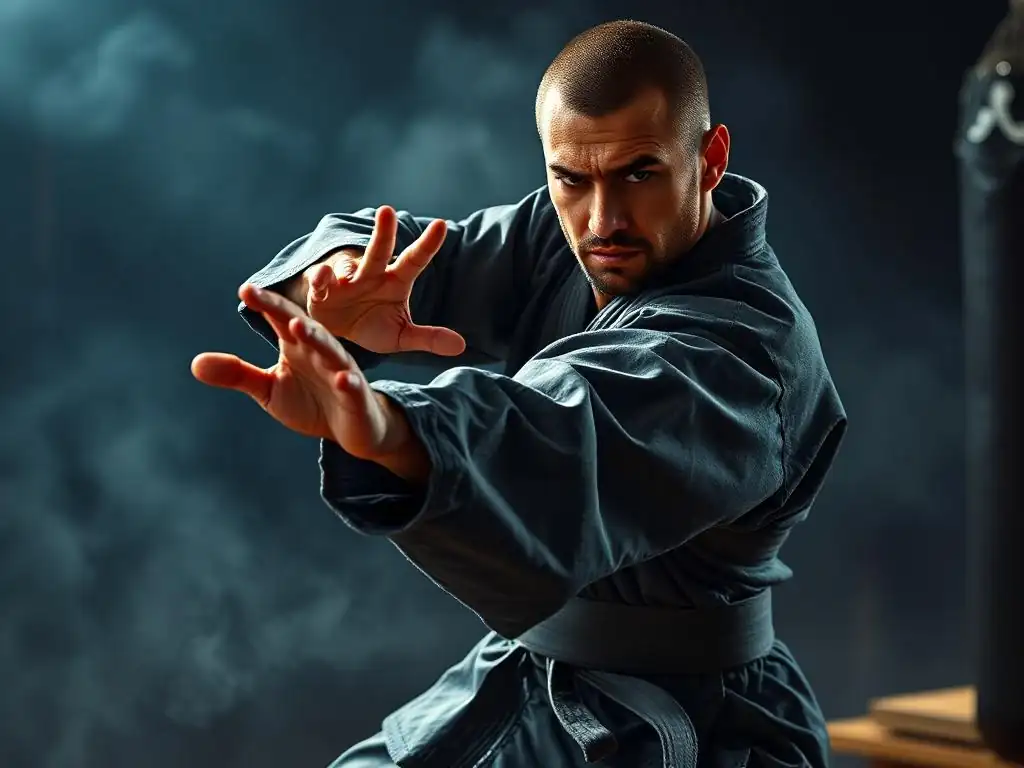
Welcome to Martial Arts Mastery, where we delve into the rich tapestry of fighting arts worldwide. Are you ready to unlock the secrets behind devastatingly effective open-hand combat? In this article, we'll explore the crucial role of Uechi Ryu Hirate techniques, revealing how these often-overlooked elements form the bedrock of this powerful Okinawan style. Discover the precise movements and strategic applications that make Hirate an essential component of Uechi Ryu mastery. Intrigued? Keep reading to unravel the power held within the open hand!
- Introduction to Uechi-Ryu Karate and its Hirate Emphasis
- Exploring the Key Hirate Techniques in Uechi-Ryu
- The Biomechanics and Power Generation of Uechi-Ryu Hirate
- Hirate Techniques in Uechi-Ryu Kata (Forms)
- Integrating Hirate into Uechi-Ryu Kumite (Sparring)
- The Advantages of Uechi-Ryu Open Hand Techniques
- Conclusion: Mastering Uechi-Ryu Hirate for Enhanced Martial Arts Prowess
-
Frequently Asked Questions
- What are Hirate techniques in Uechi-Ryu?
- How do Hirate techniques differ from traditional fist strikes in Uechi-Ryu?
- Why are Hirate techniques considered essential in Uechi-Ryu?
- What are some examples of common Hirate techniques practiced in Uechi-Ryu?
- How does one effectively train in Uechi-Ryu Hirate techniques?
- Final Reflection: The Enduring Power of Open Hands
- Master UechiRyu: Embrace the Power Within!
Introduction to Uechi-Ryu Karate and its Hirate Emphasis
Understanding the Core Principles of Uechi-Ryu
Uechi-Ryu Karate is a traditional Okinawan martial art with deep roots in Southern Chinese Kung Fu, particularly the Pangainoon (Half Hard, Half Soft) system. Founded by Kanbun Uechi, this style distinguishes itself through its emphasis on body conditioning, close-range combat, and a unique blend of hard and soft techniques. A fundamental principle is the integration of defense and offense; often, a block and a strike occur simultaneously or in rapid succession. The training rigorously develops the practitioner's body into a formidable weapon and shield, focusing on structural integrity, rooted stances, and the ability to absorb and deliver powerful impacts.
This hard conditioning, prominently featured in the foundational Sanchin kata, builds resilience in the limbs and torso, preparing the body for the demands of close-quarters engagement. Unlike many other karate styles that primarily rely on closed-fist striking, Uechi-Ryu places significant importance on open hand techniques.
This reliance on hirate (open hand) methods is a direct lineage from its Chinese origins and reflects a tactical preference for targeting vital points and utilizing different surfaces of the hand for striking, blocking, and seizing. The core principles guide practitioners to develop a body that is both impervious and capable of delivering devastating force through precise, focused application, often leveraging the unique Uechi Ryu Hirate techniques.
The Significance of Open Hand (Hirate) Techniques in Uechi-Ryu Training
The prevalence of open hand (hirate) techniques is arguably one of the most defining characteristics of Uechi-Ryu Karate. While closed-fist punches exist, the training places considerable emphasis on developing the fingers, palms, and knife-edge of the hand into primary striking tools.
This emphasis stems from the practical applications favored by the style's founders, focusing on effective techniques for self-defense in close proximity. Open hand strikes allow for versatile attacks to a wider range of targets, including soft tissues, vital points, and joints, which can be more vulnerable to focused pressure or tearing actions than blunt force trauma from a fist.
Training in Uechi Ryu Hirate techniques involves extensive conditioning, such as striking makiwara (padded boards) with the palm, fingertips, and knife hand, as well as partner conditioning drills where practitioners condition their forearms and shins. This rigorous preparation hardens the striking surfaces and develops the necessary structural support within the hand and wrist to deliver powerful blows without injury.
Furthermore, open hand techniques facilitate transitions into trapping, seizing, and controlling an opponent, reflecting the integrated nature of Uechi-Ryu's defensive and offensive strategies. The mastery of Uechi Ryu Hirate techniques is considered essential for unlocking the full potential of the style.
Exploring the Key Hirate Techniques in Uechi-Ryu
Shoken Zuki (Palm Heel Strike): A Fundamental Uechi-Ryu Technique
Shoken Zuki, the palm heel strike, is a foundational Uechi-Ryu technique delivered using the hard, fleshy base of the palm near the wrist. This strike is characterized by its ability to generate significant force while minimizing the risk of injury to the hand compared to a closed-fist punch, especially when striking hard surfaces like the skull or jawbone.
The technique typically involves driving the body weight forward, often with a rooting action through the lead foot and a powerful hip rotation, transferring energy directly through the grounded structure of the palm. The wrist is kept rigid, ensuring the force is transmitted effectively upon impact.
Unlike a punch, the Shoken Zuki offers a broader, flatter striking surface, making it less prone to glancing blows and providing a stable platform for delivering force. It is a primary striking technique in many Uechi-Ryu kata, particularly Sanchin and Seisan, where its proper execution is drilled repeatedly to build power and structural integrity.
The development of a strong, stable wrist and palm for Shoken Zuki is a direct result of the style's body conditioning methods, allowing practitioners to deliver concussive force to targets like the chin, nose, temple, or even the chest and abdomen, making it a versatile component of Uechi Ryu Hirate techniques.
Shoken Zuki Applications in Self-Defense
The Shoken Zuki is highly effective in self-defense scenarios, particularly at close range. Targeting the chin or jaw can cause whiplash and potential knockout. A strike to the nose can be debilitating due to pain and disorientation.
- Targeting the Head: Effective against the chin, jaw, nose, or temple. The broad surface reduces the chance of missing vital areas under stress.
- Targeting the Body: Can be used against the sternum or solar plexus to disrupt breathing and structure.
- Breaking Structure: Can be used to push or drive through an opponent's guard or balance.
Training Drills for Mastering Shoken Zuki
Mastering Shoken Zuki involves developing power, accuracy, and body mechanics.
- Makiwara Training: Repeatedly striking the makiwara with the palm heel to condition the hand and perfect the body connection. Start lightly and gradually increase force.
- Partner Drills: Practice striking padded targets held by a partner, focusing on hip rotation and forward drive.
- Heavy Bag Work: Utilize a heavy bag to practice full-power strikes, ensuring proper alignment and follow-through. Focus on driving through the target.
Nukite (Spear Hand): Precision and Power in Uechi-Ryu
Nukite, or spear hand, is another signature Uechi-Ryu Hirate technique that leverages the hardened fingertips as a piercing weapon. This technique requires significant conditioning of the fingers, typically achieved through various exercises including striking sandbags, buckets of sand or gravel, and makiwara. The goal is to strengthen the tendons and bones in the fingers and wrist, allowing them to withstand the impact of striking firm targets without breaking. The power of Nukite comes not just from the arm, but from the entire body's force channeled into the small surface area of the fingertips.
The effectiveness of Nukite lies in its ability to target small, vulnerable areas with focused force. While seemingly fragile, well-conditioned fingertips can deliver surprising penetration and concussive power to soft tissue and vital points. This technique demands precision and control, as misplaced force could result in serious self-injury. Uechi-Ryu training emphasizes developing the necessary strength and accuracy to utilize Nukite safely and effectively, making it a potent, albeit higher-risk, option within the arsenal of Uechi Ryu Hirate techniques.
Types of Nukite: Ippon Nukite, Nihon Nukite, and Yonhon Nukite
Nukite techniques vary depending on the number of fingers used for the strike.
- Ippon Nukite (One-Finger Spear Hand): Uses a single, extended index finger, often reinforced by the thumb. Primarily targets extremely small, vital points like the eyes or specific nerve points. Requires exceptional conditioning and precision.
- Nihon Nukite (Two-Finger Spear Hand): Uses the extended index and middle fingers. Provides a slightly larger striking surface than Ippon Nukite, targeting areas like the eyes, throat, or specific points on the body.
- Yonhon Nukite (Four-Finger Spear Hand): Uses all four fingers extended. The most common form of Nukite, targeting softer areas like the solar plexus, abdomen, throat, or even the bicep to cause temporary paralysis. Requires significant finger strength to prevent buckling on impact.
Targeting Vital Points with Nukite Techniques
Nukite is specifically designed for targeting vital points, maximizing effect with minimal force when applied correctly.
- Eyes: Highly vulnerable to Ippon or Nihon Nukite, causing immediate pain, disorientation, and temporary or permanent vision loss.
- Throat: The trachea is a prime target for Yonhon or Nihon Nukite, potentially causing respiratory distress or collapse.
- Solar Plexus: A strike here with Yonhon Nukite can disrupt breathing and cause intense pain.
- Temple/Fontanel: While requiring extreme precision and conditioning (often Ippon or Nihon Nukite), a strike to these areas can be devastating.
- Nerve Points: Specific nerve clusters on the body can be targeted with Ippon or Nihon Nukite to cause localized pain or temporary paralysis.
Haito Uchi (Ridge Hand Strike): Versatile Uechi-Ryu Striking
Haito Uchi, the ridge hand strike, utilizes the inner edge of the hand, from the base of the index finger down to the wrist, as the striking surface. This technique is versatile, capable of being delivered with significant power from various angles and trajectories, including horizontal, vertical, and diagonal movements.
The power is generated through body rotation and snap, similar to other strikes, but the unique angle of the hand allows it to wrap slightly around targets or strike with a cutting motion. Haito Uchi is often seen in Uechi-Ryu kata like Seisan, demonstrating its application in more dynamic sequences.
The ridge hand offers a balance between the broadness of the palm heel and the sharpness of the knife hand or fingertips. It is less prone to injury than Nukite when striking harder surfaces but can still deliver focused force. Conditioning for Haito Uchi involves striking makiwara or sandbags with this specific edge of the hand. Its versatility makes it applicable for striking the head, neck, collarbone, or even the ribs, providing another valuable option within the comprehensive system of Uechi Ryu Hirate techniques.
Haito Uchi Variations and Applications
Haito Uchi can be delivered in numerous ways depending on the target and situation.
- Horizontal Haito: Delivered across the body, often targeting the side of the head or neck.
- Vertical Haito: Delivered downwards or upwards, targeting the collarbone, temple, or groin.
- Diagonal Haito: Combines horizontal and vertical movements, useful for striking targets at various angles.
- Applications: Can be used as a primary strike, a follow-up technique, or even in combination with blocks. Effective against the temple, jaw, neck (carotid artery area), collarbone, or floating ribs.
Developing Effective Haito Uchi Technique
Training for Haito Uchi focuses on power generation and accurate targeting.
- Makiwara Practice: Striking the makiwara with the ridge hand from different angles to build conditioning and power.
- Focus Mitts/Pads: Practicing with a partner holding pads to refine accuracy and speed, focusing on driving the strike through the target.
- Shadow Boxing: Incorporating Haito Uchi into movement patterns to understand its application in dynamic scenarios.
- Body Mechanics: Emphasizing hip rotation and proper body alignment to maximize force transfer into the strike.
Shuto Uchi (Knife Hand Strike): A Defensive and Offensive Tool
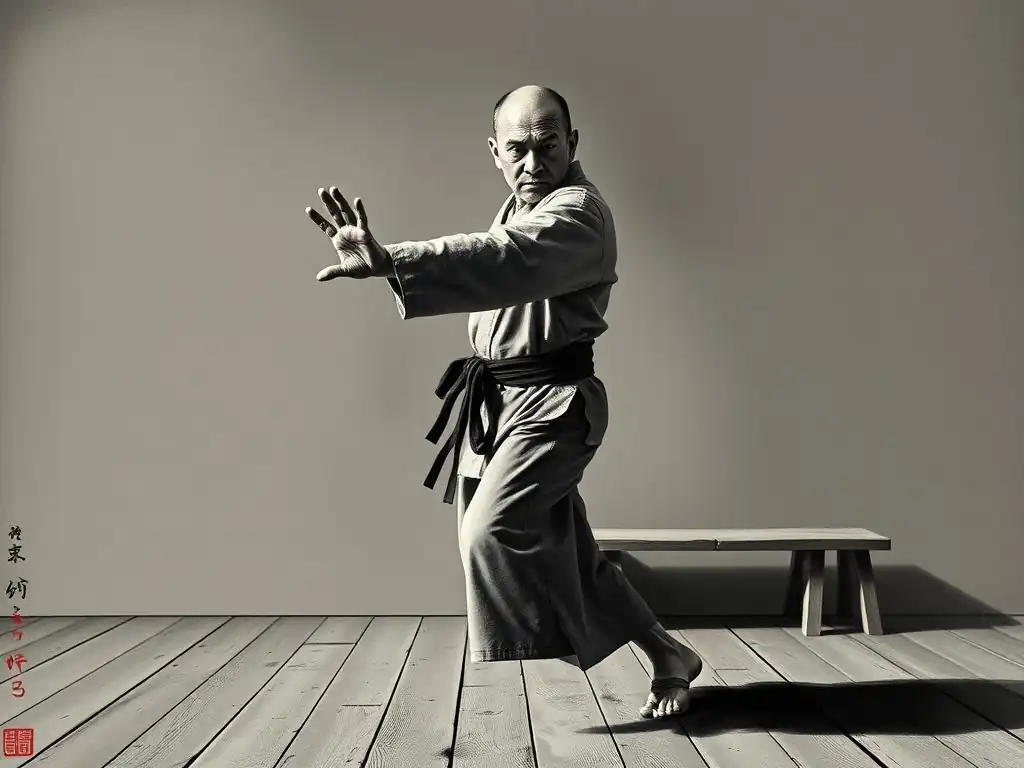
Shuto Uchi, the knife hand strike, uses the outer edge of the hand, from the base of the pinky finger down to the wrist, as the primary striking surface. This is a widely recognized open hand technique across many karate styles, but in Uechi-Ryu, its application is deeply integrated with the style's close-range philosophy and body conditioning. The hand is held firm, with fingers together and the thumb tucked slightly to protect it. The conditioning involves striking makiwara or other hard surfaces with this edge, developing resilience and the ability to deliver sharp, impactful blows.
Shuto Uchi serves a dual purpose: it is a powerful offensive strike and a versatile defensive block. Its shape allows it to deflect incoming attacks with a cutting motion while simultaneously positioning the hand for a follow-up strike or grab. The power for Shuto Uchi is generated through a snapping motion of the wrist and arm, combined with hip rotation and body weight. This technique is prominent in many Uechi-Ryu kata, showcasing its importance in both defensive sequences and offensive combinations, solidifying its place among essential Uechi Ryu Hirate techniques.
Shuto Uchi for Blocking and Striking
Shuto Uchi is one of the most versatile techniques in Uechi-Ryu, used effectively for both defense and offense.
- Blocking: The firm edge of the hand can be used to block punches, kicks, or even weapon attacks (with proper conditioning and timing). Blocks can be outward (Soto Shuto Uke), inward (Uchi Shuto Uke), or downward (Gedan Shuto Uke). The "cutting" nature of the block can disrupt the opponent's technique.
- Striking: As a strike, Shuto Uchi is effective against the neck (carotid artery/trachea), collarbone, temple, jaw, or even across the limbs to cause pain or temporary paralysis. It can be delivered horizontally, vertically, or diagonally.
Utilizing Shuto Uchi in Close-Quarters Combat
In Uechi-Ryu's preferred close-range environment, Shuto Uchi is highly practical.
- Simultaneous Block and Strike: A common application involves using Shuto Uchi to block an incoming attack while simultaneously striking a nearby target on the opponent. For example, blocking a punch with one Shuto Uke while the other hand delivers a Shuto Uchi to the neck or head.
- Follow-up Technique: After a block or initial strike, Shuto Uchi can be used as a rapid follow-up, often delivered with a snapping motion to the side of the neck or head.
- Controlling Distance: Can be used defensively to push an opponent away or offensively to break their guard and create an opening.
Other Important Hirate Techniques in Uechi-Ryu Karate
While Shoken Zuki, Nukite, Haito Uchi, and Shuto Uchi are the most prominent Uechi Ryu Hirate techniques, several other open hand methods contribute to the style's unique character and effectiveness. These techniques, often seen in kata and partner drills, further emphasize the versatility of the hand as a weapon and defensive tool in close-quarters combat. Mastering this full range of hirate methods provides a comprehensive understanding of Uechi-Ryu's strategic depth.
These additional techniques often involve less common uses of the hand's surfaces or specific hand formations designed for particular targets or applications. They reflect the sophisticated approach to anatomy and biomechanics inherited from the style's Chinese roots. Training in these less common, but equally important, Uechi Ryu Hirate techniques ensures a well-rounded practitioner capable of responding effectively to a wider variety of self-defense situations.
Kakuto Uchi (Bent Wrist Strike)
Kakuto Uchi utilizes the bent wrist, specifically the outer edge of the wrist bone, as a striking surface. This technique is often delivered with a whipping motion, targeting areas like the temple, jaw, or mastoid process behind the ear.
- Requires significant wrist conditioning to prevent injury.
- Can be delivered from very close range or in confined spaces where a full arm extension is not possible.
- Appears in some Uechi-Ryu kata, demonstrating its integration into dynamic sequences.
Hirabasami (Pincer Hand)
Hirabasami is a unique Uechi-Ryu technique that involves using the thumb and fingers like a pincer or claw to grab and tear soft tissue, such as the throat, groin, or biceps.
- Not a percussive strike, but a seizing and tearing action.
- Requires strong grip strength and finger conditioning.
- Highly effective against vital points or for disrupting an opponent's structure or limb control.
The Biomechanics and Power Generation of Uechi-Ryu Hirate
Understanding the Body Mechanics Behind Effective Hirate Strikes
Effective Uechi Ryu Hirate techniques, like any powerful strike in martial arts, rely heavily on coordinated body mechanics rather than just arm strength. The power originates from the ground up, utilizing the large muscle groups of the legs and hips. A stable, rooted stance is crucial, providing a solid base from which to launch strikes. As the strike is initiated, weight transfer occurs, typically shifting forward into the strike while maintaining balance. Hip rotation is paramount, acting as a powerful engine that whips the torso and arm into motion, adding significant momentum and force to the technique.
Simultaneously, the core muscles are engaged to stabilize the body and transfer energy efficiently from the lower body through the torso and into the striking limb. The arm and hand act as the delivery mechanism, but the force is generated by the entire body working in unison.
For techniques like Shoken Zuki or Shuto Uchi, the kinetic chain involves grounding through the feet, driving the hips, rotating the torso, and extending the arm with a locked wrist and proper hand formation at impact. This integrated movement ensures that the full power of the body is channeled precisely through the specific striking surface of the hand, making Uechi Ryu Hirate techniques devastatingly effective.
Generating Power Through Body Alignment and Hip Rotation
Power generation in Uechi-Ryu Hirate techniques is intrinsically linked to proper body alignment and dynamic hip rotation. Maintaining a straight line from the point of impact through the striking limb, shoulder, and down into the supporting leg ensures that the force is not dissipated but directed entirely into the target. Misalignment, such as a bent wrist during a Shoken Zuki or a sagging posture, can significantly reduce the power and potentially cause injury. The 'stacking' of joints and bones creates a strong structure capable of withstanding the recoil and transferring maximum energy forward.
Hip rotation acts as the primary driver of power, especially in techniques delivered from the side or with a stepping motion. As the hips snap or rotate, they generate torque that is transferred up the spine and out through the shoulders and arms. This whip-like action accelerates the striking limb, adding velocity and mass to the strike. The timing of the hip rotation relative to the arm extension is critical; they must work together harmoniously to achieve peak power at the moment of impact. Mastery of this coordinated movement is a key aspect of advanced Uechi Ryu Hirate techniques.
The Role of Breath Control (Ibuki) in Enhancing Hirate Power
Breath control, known as Ibuki in Uechi-Ryu, plays a vital role not only in conditioning and focus but also in enhancing the power of Hirate techniques. Ibuki involves a specific method of deep, controlled inhalation followed by a strong, often audible, exhalation that coincides with the execution of a technique, especially at the point of impact. This forceful exhalation helps to tense the abdominal muscles and the entire body, creating a solid, stable structure that maximizes the transfer of power from the core through the striking limb.
Beyond creating structural rigidity, Ibuki also focuses the practitioner's energy and intent onto the technique. The sharp, focused exhalation helps to concentrate physical and mental energy precisely at the moment the Hirate technique connects with the target. This synchronization of breath, body tension, and physical movement ensures that the maximum possible force is delivered. Training Ibuki diligently alongside physical techniques is therefore essential for developing truly powerful and effective Uechi Ryu Hirate techniques, embodying the style's principle of unifying mind, body, and spirit.
Hirate Techniques in Uechi-Ryu Kata (Forms)
Identifying and Analyzing Hirate Techniques within Uechi-Ryu Kata
Uechi-Ryu kata are not merely choreographed movements but practical manuals containing the style's techniques and principles. Hirate techniques feature prominently throughout the kata system, from the foundational Sanchin to the more advanced forms. Analyzing kata movements reveals the intended applications, angles, and transitions involving open hand strikes and blocks. Practitioners learn the proper form, power generation, and flow of Uechi Ryu Hirate techniques by diligently practicing these prescribed sequences, understanding where and how these techniques are meant to be applied in combat.
Each kata introduces Uechi Ryu Hirate techniques within specific contexts, emphasizing different aspects of their application. Sanchin focuses on developing the basic structure and internal power for techniques like Shoken Zuki and Shuto Uke/Uchi. Seisan introduces more dynamic movements and combinations involving Haito Uchi and variations of Shuto. Sanseiryu integrates complex footwork and transitions with a wider array of Hirate techniques, including some of the less common ones like Hirabasami. Through repeated kata practice, the practitioner internalizes the mechanics and potential applications of these open hand methods.
Sanchin Kata: Foundation of Uechi-Ryu and Hirate Development
Sanchin (Three Battles) is the cornerstone of Uechi-Ryu training and is performed slowly with intense muscular tension and Ibuki breathing. It is crucial for developing a rooted stance, structural integrity, and internal energy.
- Features prominent use of Shoken Zuki (Palm Heel Strike) and Shuto Uke/Uchi (Knife Hand Block/Strike).
- Focuses on developing the ability to generate power from a stable, grounded position.
- Builds resilience in the hands and arms through tension and impact (implied conditioning within the form).
Seisan Kata: Advanced Hirate Applications
Seisan (Thirteen) is typically the second kata learned and introduces more dynamic movements, evasions, and combinations.
- Incorporates Haito Uchi (Ridge Hand Strike) and more varied applications of Shuto Uchi.
- Features simultaneous blocking and striking movements utilizing Uechi Ryu Hirate techniques.
- Develops timing, coordination, and the ability to apply open hand techniques while moving.
Sanseiryu Kata: Integrating Hirate with Complex Movements
Sanseiryu (Thirty-Six) is a more advanced kata that includes complex footwork, throws, and a wider range of techniques.
- Demonstrates the integration of various Hirate techniques, including less common ones like Hirabasami.
- Shows how open hand techniques are used in conjunction with close-range grappling and control.
- Requires a high level of coordination, balance, and understanding of Uechi-Ryu's full technical repertoire.
How Kata Training Improves Hirate Technique and Application
Consistent and dedicated kata training is fundamental to mastering Uechi Ryu Hirate techniques. The repetitive nature of practicing forms allows practitioners to refine their body mechanics, ensuring proper alignment, hip rotation, and weight transfer for each strike. It builds muscle memory, making the execution of complex open hand techniques instinctive under pressure. Furthermore, kata practice, particularly Sanchin, develops the physical conditioning necessary to deliver powerful strikes without self-injury, hardening the striking surfaces and strengthening the supporting structures of the hand and wrist.
Beyond the physical mechanics, kata training also deepens the practitioner's understanding of the application of Hirate techniques. Each movement within a kata represents a potential self-defense scenario, often involving a block followed by a strike, or a combination of strikes. By studying and practicing the kata, students learn the intended targets, angles of attack, and strategic timing for their open hand techniques. This holistic approach, combining physical conditioning, technical refinement, and applied understanding, is what makes kata training indispensable for developing proficient Uechi Ryu Hirate techniques.
Integrating Hirate into Uechi-Ryu Kumite (Sparring)
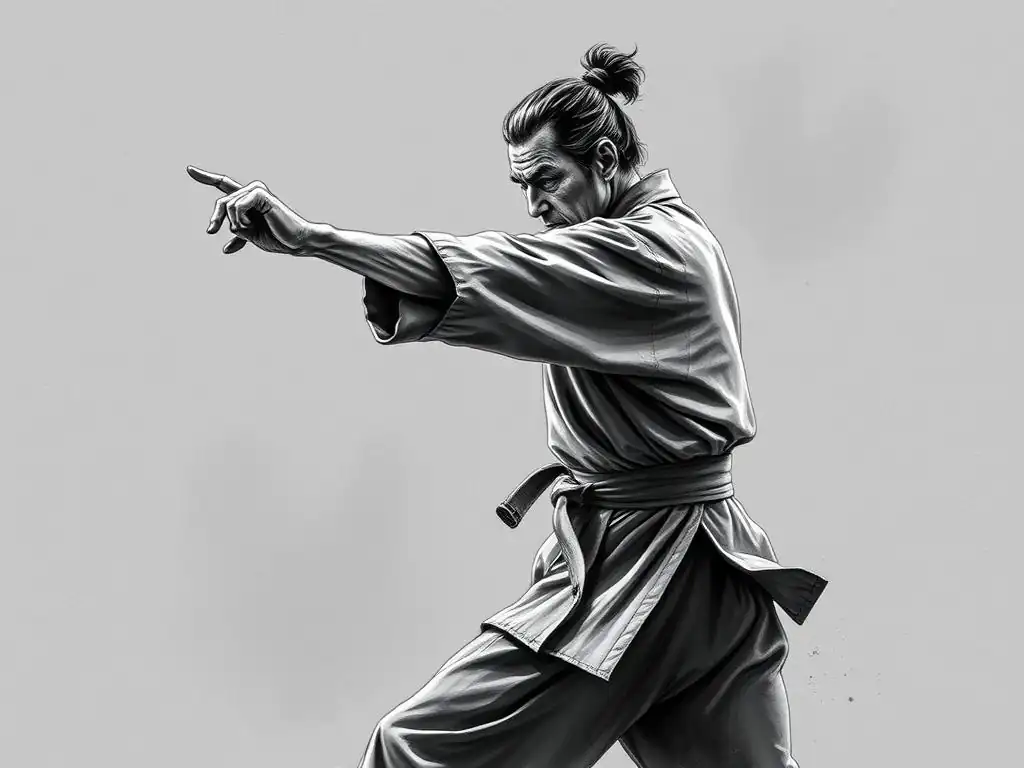
Adapting Hirate Techniques for Sparring Scenarios
Integrating Uechi Ryu Hirate techniques into kumite (sparring) requires careful adaptation, especially in environments focused on safety and control. Techniques like Nukite or Hirabasami, designed for vital points or tearing soft tissue, are typically modified or simulated rather than applied with full force to avoid serious injury. Instead, practitioners might focus on the mechanics and targeting principles, stopping just short of contact or using padded gloves that allow for open-hand strikes like Shoken Zuki or Shuto Uchi.
Sparring provides a crucial opportunity to test the timing, distance, and effectiveness of modified Hirate techniques against a resisting opponent. Practitioners learn to identify openings for palm heel strikes to the head or body, practice using Shuto as a simultaneous block and counter, and develop the sensitivity needed for close-range engagements where open hand techniques excel. The focus shifts from delivering fight-stopping force (which is the goal in self-defense) to developing tactical understanding, speed, accuracy, and the ability to apply the principles of Uechi Ryu Hirate techniques in a dynamic, unpredictable setting.
Drills for Improving Hirate Speed and Accuracy in Kumite
Developing speed and accuracy for Uechi Ryu Hirate techniques in kumite involves targeted drills that simulate sparring conditions.
- Target Sparring: Using focus mitts or body pads worn by a partner, practice delivering specific Hirate techniques (Shoken Zuki, Shuto Uchi, Haito Uchi) to designated targets while moving and reacting.
- Flow Drills: Practice pre-arranged sequences involving blocks and counters using Hirate techniques, gradually increasing speed and adding variations.
- Reaction Drills: Partner throws random attacks, and the practitioner reacts with appropriate Hirate blocks and counter-strikes, focusing on speed and correct technique selection.
- Light Contact Sparring: Engage in very light contact sparring, focusing on placement and timing of Hirate strikes (like Shoken Zuki to the chest or shoulder) rather than power, to develop distance management and control.
Strategic Considerations for Using Hirate in Uechi-Ryu Sparring
Strategic application of Uechi Ryu Hirate techniques in sparring involves understanding their strengths and limitations in a controlled environment.
- Close Range Engagement: Hirate techniques are most effective at close range. Strategies often involve closing the distance safely to utilize palm heel strikes, knife hands, or ridge hands.
- Targeting: Focus on available targets that are safe to strike in sparring (e.g., chest, shoulders, sides of the head with control/pads) while mentally noting the intended vital points for real self-defense.
- Combinations: Integrate Hirate techniques with other strikes (e.g., a Shuto block followed by a Shoken Zuki) or movements (e.g., using a Haito Uchi while sidestepping).
- Sensitivity and Control: Sparring develops the sensitivity needed to feel an opponent's movement and the control required to execute techniques precisely without causing undue harm, even when practicing potentially dangerous Uechi Ryu Hirate techniques.
The Advantages of Uechi-Ryu Open Hand Techniques
Increased Versatility and Adaptability in Combat
The emphasis on open hand (Hirate) techniques provides Uechi-Ryu practitioners with significant versatility and adaptability in combat situations, particularly at close quarters. Unlike a closed fist, which is primarily a blunt striking tool, the various surfaces of the hand – the palm heel, fingers, ridge hand, and knife hand – can be used for striking, poking, tearing, seizing, trapping, and blocking. This allows a Uechi-Ryu practitioner to transition seamlessly between different actions using the same limb, adapting to the dynamic nature of a confrontation.
For example, a Shuto Uchi can be used to block an incoming punch, immediately followed by using the same hand's Haito Uchi to strike the opponent's neck, or transitioning into a grab with the fingers (Hirabasami). This multi-functional capability of the hand means that a single movement or position can serve multiple purposes, making the Uechi Ryu Hirate techniques highly efficient and less predictable than techniques relying solely on closed-fist strikes. This adaptability is a major strength in the unpredictable environment of self-defense.
Focus on Close-Range Effectiveness
Uechi-Ryu is renowned for its emphasis on close-range combat, and its Hirate techniques are perfectly suited for this distance. Techniques like Shoken Zuki, Nukite, and Kakuto Uchi are designed to be delivered effectively when grappling range or clinching distance is reached. At these distances, generating power with traditional punches can be difficult due to lack of space for full extension or body rotation. However, Uechi Ryu Hirate techniques, utilizing focused points or surfaces and often driven by subtle body mechanics and rooting, remain highly potent.
Within this close range, the ability to target vital points with precision using Nukite or to deliver concussive force with a close-quarters Shoken Zuki or Haito Uchi becomes critical. The hands are also readily available for trapping an opponent's limbs, seizing vulnerable areas, or transitioning into throws or joint locks, all of which integrate naturally with the open hand strikes. This specialized focus makes Uechi-Ryu practitioners particularly formidable when an opponent attempts to close the distance, leveraging their mastery of Uechi Ryu Hirate techniques.
Developing Sensitivity and Control
Training extensively in Uechi Ryu Hirate techniques also fosters a high degree of sensitivity and control in the hands. Because open hand techniques involve using specific surfaces and often targeting precise areas, practitioners develop a finer sense of touch and proprioception in their hands and fingers. This sensitivity is crucial in close-range engagements for feeling an opponent's movements, identifying openings, and executing techniques with precision. Techniques like Nukite, in particular, demand exceptional control to apply force accurately to a small target without causing self-injury or over-penetration in training.
Furthermore, the conditioning process itself, involving striking various surfaces, builds a tactile awareness and resilience in the hands. This heightened sensitivity translates into improved trapping ability, more effective joint manipulation (should the situation escalate or transition), and better overall control of one's own body and interaction with an opponent. The development of this refined sensitivity alongside raw power is a unique benefit of dedicating significant training time to Uechi Ryu Hirate techniques.
Conclusion: Mastering Uechi-Ryu Hirate for Enhanced Martial Arts Prowess
The Importance of Dedicated Training and Practice
Mastering the Uechi Ryu Hirate techniques is not a swift process; it demands dedicated and consistent training. The conditioning required to safely and effectively deliver strikes with the palm heel, fingertips, ridge hand, and knife hand takes years of diligent practice, including extensive makiwara work and partner conditioning drills. Without this foundational physical development, the risk of injury outweighs the potential effectiveness of these techniques. Beyond conditioning, the refinement of body mechanics, timing, accuracy, and the integration of Ibuki breathing requires countless repetitions of basic techniques, kata, and focused kumite drills.
The complexity and versatility of Uechi Ryu Hirate techniques mean that practitioners must delve deeply into the nuances of each method, understanding not just the physical movement but also the strategic context and potential applications. This level of mastery is only achievable through consistent effort, guided instruction, and a commitment to the rigorous training methodology of Uechi-Ryu. It is through this dedication that the practitioner truly transforms their hands into the versatile, powerful weapons characteristic of the style's open hand emphasis.
Continuing the Legacy of Uechi-Ryu Hirate Techniques
The Uechi Ryu Hirate techniques represent a tangible link to the style's historical roots in Southern Chinese martial arts and the practical self-defense needs that shaped its development. By dedicating themselves to the study and practice of these open hand methods, modern practitioners are not only enhancing their own martial arts capabilities but also actively participating in the continuation of a rich and unique legacy. Preserving the integrity and understanding of these techniques ensures that the distinctive character and practical effectiveness of Uechi-Ryu are passed on to future generations.
As Uechi-Ryu continues to evolve and spread globally, maintaining a strong emphasis on the foundational Hirate training is crucial. It is these techniques that largely define the style and differentiate it from others. Through teaching, demonstrating, and embodying the principles behind Uechi Ryu Hirate techniques, practitioners contribute to keeping this vital aspect of the art alive, ensuring that its lessons in resilience, precision, and versatile close-range combat remain accessible and relevant in the contemporary martial arts landscape.
Frequently Asked Questions
What are Hirate techniques in Uechi-Ryu?
Hirate, meaning open hand, refers to a specific set of striking and blocking techniques in Uechi-Ryu karate that utilize the palm, fingers, and wrist instead of a closed fist. These are crucial for close-quarters combat and grappling.
How do Hirate techniques differ from traditional fist strikes in Uechi-Ryu?
While Uechi-Ryu incorporates both fist and open-hand techniques, Hirate emphasizes sensitivity and precision, allowing for grappling, pressure point manipulation, and deflections which are harder to achieve with a fist.
Why are Hirate techniques considered essential in Uechi-Ryu?
Hirate techniques provide versatility in combat, allowing practitioners to adapt to various situations. They are particularly effective for controlling an opponent’s limbs and disrupting their balance.
What are some examples of common Hirate techniques practiced in Uechi-Ryu?
Examples include the Nukite (spear hand), Shuto (knife hand), and various palm strikes. These techniques are used for striking vital points and deflecting attacks.
How does one effectively train in Uechi-Ryu Hirate techniques?
Effective training involves repeated practice of Kata, partner drills focusing on sensitivity and accuracy, and understanding the anatomical targets. Proper instruction from a qualified instructor is essential for mastering these techniques.
Final Reflection: The Enduring Power of Open Hands
The exploration of Uechi Ryu Hirate techniques reveals more than just a martial art; it unveils a philosophy of adaptable strength and mindful engagement, principles profoundly relevant in our ever-changing world. In a society often driven by force and direct confrontation, the Hirate's emphasis on sensitivity, deflection, and strategic application of force offers a powerful alternative, a reminder that true strength lies not just in power, but in control and understanding.
The subtle yet potent nature of these open-hand techniques has deeply influenced my understanding of martial arts and beyond. It's a constant reminder that true mastery lies in the details, in the ability to adapt and respond with precision and grace. The ultimate aim of martial arts is not to win battles, but to avoid battles altogether.
This quote encapsulates the spirit of Uechi Ryu and its Hirate techniques, highlighting the importance of prevention and harmonious resolution over brute force.
Now, I invite you to consider how the principles of Uechi Ryu's Hirate techniques – adaptability, sensitivity, and strategic application – can be applied in your own life. How can you approach challenges with a more open hand, seeking understanding and balance rather than direct confrontation? Embrace the power of subtle strength, and discover the profound impact it can have on your journey.
Master UechiRyu: Embrace the Power Within!
Thank you for exploring the world of UechiRyu and its unique open-hand techniques! We hope this overview has inspired you to delve deeper into this fascinating martial art. Now, it's time to take the next step.
Here's how you can continue your journey:
- Commit to mastering a single Hirate technique this week. Practice its form, understand its application, and feel its power.
- Explore related styles. Research GojuRyu and explore the common connection.
- Share this article with fellow martial arts enthusiasts to spark discussion and build our community!
Which Hirate technique will you focus on first, and how will you integrate it into your training?