
The Silent Language: What Your Movement Says About Your Martial Skill

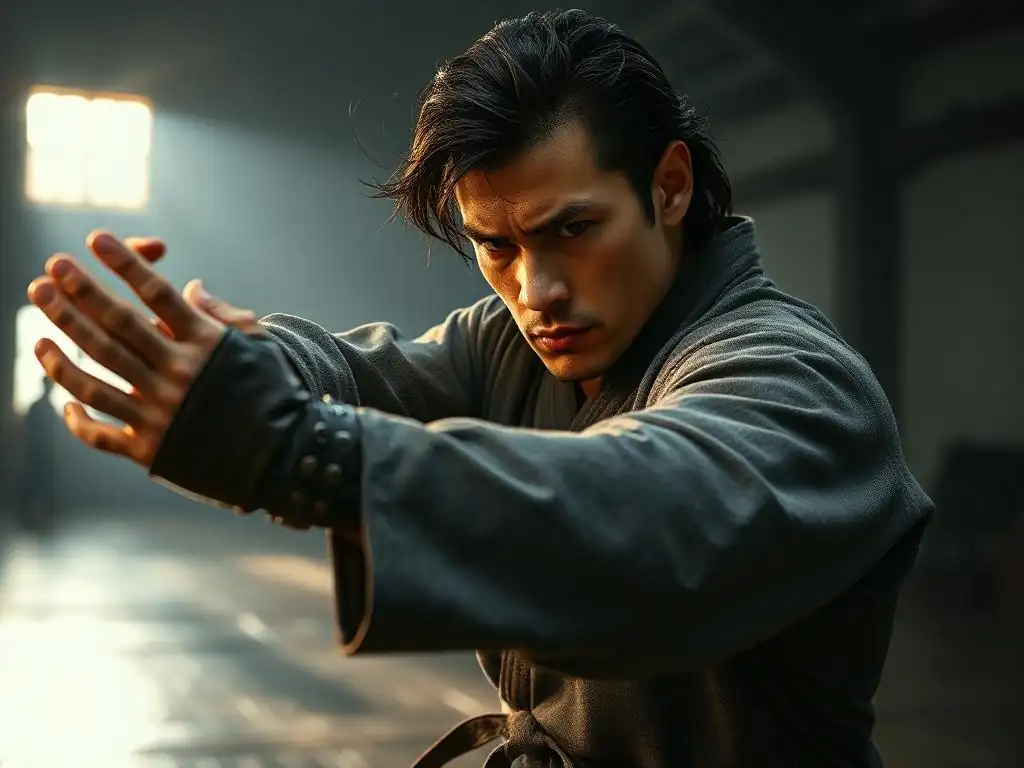
Welcome to Martial Arts Mastery, where we delve deep into the world of combat and self-discovery. Ever wondered what your stance, your gait, your very presence reveals to a trained eye? This week, we unlock the secrets of body language as a martial arts skill. Prepare to decode the silent signals that separate the novice from the master, and discover how to harness your own non-verbal communication to gain a crucial advantage. Intrigued? Let's begin...
- Reading the Body: Nonverbal Communication in Martial Arts
- Introduction: The Unspoken Dialogue in Combat
- Foundation: Stance and Posture as Indicators
- Movement Analysis: Footwork, Shifting, and Telegraphing
- Eye Contact and Focus: The Window to Intent
- Micro-expressions and Intuition: Detecting Subtle Signals
- Deception and Misdirection: The Art of the Feint
- Cultural Nuances in Martial Arts Communication
- Training for Nonverbal Proficiency: Drills and Exercises
- Conclusion: Nonverbal Communication as a Key to Martial Arts Excellence
-
Frequently Asked Questions
- How does body language relate to martial arts skill?
- What are some key elements of body language that indicate a martial artist's skill level?
- Can I improve my martial arts skills by improving my body language?
- How can I learn to read my opponent's body language effectively?
- Are there specific martial arts that emphasize the importance of body language more than others?
- Final Reflection: Embracing the Eloquence of Movement
- Ignite Your Inner Warrior: Refine Your Movement Today!
Reading the Body: Nonverbal Communication in Martial Arts
Introduction: The Unspoken Dialogue in Combat
Why Nonverbal Cues are Critical in Martial Arts
In the dynamic world of combat sports and self-defense, victory often hinges on reading the opponent as much as executing techniques. While verbal commands are absent, the body itself speaks volumes. Understanding and interpreting nonverbal cues is not merely an advantage; it is a fundamental skill that can mean the difference between anticipating an attack and being caught off guard.
This silent dialogue encompasses everything from subtle shifts in weight to the tension in a muscle, providing a wealth of information about an opponent's intentions, physical state, and level of body language martial arts skill. Ignoring this aspect of combat is akin to fighting blindfolded, missing the crucial signals that predict movement and reveal vulnerabilities.
Beyond predicting immediate actions, nonverbal communication in martial arts also reveals deeper truths about a practitioner's training and mindset. A fighter's posture, the way they breathe, or the subtle tremor in their hands can betray nervousness, exhaustion, or even overconfidence. Conversely, a confident, controlled presence projected through deliberate body language can intimidate an opponent and disrupt their focus. Mastery of this nonverbal layer enhances defensive capabilities by allowing earlier recognition of threats and improves offensive timing by identifying openings created by an opponent's tells. Developing this sensitivity is a core component of advanced body language martial arts skill training.
The Silent Language of a Skilled Martial Artist
A truly skilled martial artist communicates proficiency not just through powerful strikes or intricate grappling but through their very presence. Their movements are efficient, devoid of wasted energy or unnecessary tension. Their stance is rooted yet fluid, ready to transition instantly between offense and defense. This economy of motion and confident bearing are hallmarks of deep training and understanding. Observing such a practitioner, one can often discern their style, discipline, and years of dedication before they even throw a single technique, purely through their nonverbal expression.
This silent language extends to reactions under pressure. While an inexperienced individual might exhibit jerky movements, widened eyes, or excessive breathing when stressed, a seasoned martial artist often maintains a calm, controlled demeanor. Their body language reflects composure, even in intense situations, demonstrating a higher level of mental and physical conditioning. They have trained their bodies to respond instinctively and efficiently, minimizing tells and projecting an aura of control that is a direct manifestation of advanced body language martial arts skill.
Foundation: Stance and Posture as Indicators
Analyzing Stance: Stability, Readiness, and Intent
A martial artist's stance is far more than just a way to stand; it is the bedrock of their structure, balance, and readiness. Analyzing an opponent's stance provides crucial insights into their immediate capabilities and potential actions. A wide, low stance often indicates a focus on stability, power generation for low attacks, or readiness for grappling, common in styles like wrestling or certain Karate forms.
Conversely, a narrower, more upright stance might suggest a preference for mobility, quick footwork, and upper-body techniques, seen in boxing or Tae Kwon Do. Even subtle variations, like the angle of the feet or the distribution of weight, can signal an imminent shift, a planned attack, or a defensive posture.
For instance, slightly more weight on the lead leg might telegraph an incoming jab or forward movement, while weight shifted back could indicate preparation for a defensive retreat or a powerful rear-leg kick. Mastering the interpretation of these subtle signals is key to developing effective body language martial arts skill.
The tension and alignment within a stance also reveal much. A fighter holding excessive tension in their shoulders or arms might be telegraphing a forceful strike, sacrificing speed for power. Conversely, a relaxed yet alert stance, with joints slightly bent and weight evenly distributed or subtly shifting, indicates readiness for dynamic movement.
Observing the spine's alignment and the position of the head can also reveal vulnerability or defensive positioning. A fighter with a forward-leaning head might be exposed to uppercuts, while someone with a rigid, straight back might lack flexibility for evasive maneuvers. Recognizing these structural indicators allows a practitioner to anticipate an opponent's strengths, weaknesses, and immediate intentions, refining their own body language martial arts skill in response.
Projecting Confidence: Posture's Role in Psychological Warfare
Posture plays a significant role in the psychological dimension of martial arts. Standing tall with squared shoulders and a steady gaze projects confidence and readiness, potentially intimidating an opponent or at least preventing them from sensing weakness. This strong, assertive posture can influence the opponent's perception, making them more hesitant or cautious.
Consider the difference between an individual who is slumped, looking at the ground, and one who stands erect, making eye contact. The latter instantly communicates a level of self-assurance and preparedness that the former lacks, regardless of actual skill level. This projection is a deliberate use of body language martial arts skill for psychological advantage.
Conversely, a slumped posture, averted gaze, or fidgeting can betray nervousness, fatigue, or lack of commitment. Opponents are often quick to pick up on these signs of weakness, which can invite more aggressive attacks.
Even slight adjustments in posture, such as puffing out the chest or slightly lowering the chin, can be conscious or subconscious attempts to project dominance or protect vulnerable areas. Training to maintain a strong, controlled posture even when fatigued or under pressure is vital not just for physical stability but for maintaining psychological resilience and effectively utilizing body language martial arts skill in competition or self-defense.
Common Postural Errors and Their Tactical Implications
Several common postural errors can severely compromise a martial artist's effectiveness and serve as glaring tells to a skilled opponent. One frequent error is leaning too far forward or backward from the waist, which breaks the body's vertical alignment and compromises balance, making the practitioner vulnerable to pushes, pulls, or sweeps. For example, a boxer leaning in excessively might be easily countered with an uppercut or a side-step and hook.
Another common mistake is holding the hands too low or too wide, leaving the head and body exposed; this posture immediately signals openings that an opponent can exploit. These errors are not just technical flaws but are direct indicators of poor body language martial arts skill.
Excessive tension is another critical postural error. Tensed muscles are slower and fatigue faster, and they often telegraph intentions. A fighter with locked knees or shoulders held high is less agile and more predictable. For instance, visibly tensing the shoulders just before throwing a punch gives the opponent a fraction of a second warning to block or evade. Furthermore, poor posture can lead to inefficient movement patterns, requiring more energy for basic actions and reducing stamina. Identifying and correcting these postural flaws is essential for improving both physical performance and the subtle communication of body language martial arts skill.
Movement Analysis: Footwork, Shifting, and Telegraphing
Interpreting Footwork: Agility, Evasion, and Attack Patterns
Footwork is the foundation of movement in most martial arts, dictating distance, angle, and the ability to generate power or evade. The patterns and quality of a practitioner's footwork offer deep insights into their style, intentions, and level of body language martial arts skill. Quick, light steps with frequent small adjustments might indicate a fighter who relies on speed, evasion, and counter-attacks, common in styles like fencing or some forms of Karate.
Heavy, deliberate steps or rooted stances suggest a focus on generating power for strikes or maintaining ground for grappling, seen in disciplines like Sumo or certain traditional Kung Fu systems. Observing how an opponent moves their feet – whether they shuffle, slide, step, or pivot – provides a clear picture of their mobility and preferred fighting range.
Beyond general style, footwork patterns can specifically telegraph immediate actions. A sudden, deep step forward with the lead leg often signals an impending attack, such as a punch or a charge. A quick step back or to the side indicates an attempt to evade or create distance.
Even subtle shifts in weight distribution, observed through the feet, can betray intent; a slight lift of the heel on the back foot might precede a powerful push-off for a forward movement or kick. Recognizing these granular details in an opponent's footwork allows a practitioner to anticipate their movements and react proactively, demonstrating a high level of body language martial arts skill in reading the opponent's lower body.
Weight Distribution: Communicating Balance and Power
The distribution of weight within a stance and during movement is a critical, often subconscious, form of nonverbal communication. It directly relates to a practitioner's balance, stability, and readiness to generate power or change direction. A fighter with their weight predominantly on their back foot might be preparing for a strong defensive posture or a powerful rear-leg technique.
Conversely, weight forward often indicates readiness to advance, attack with the lead side, or initiate a takedown. Observing how an opponent shifts their weight provides clues about their center of gravity and potential vulnerabilities. For example, someone who consistently overcommits their weight to one side becomes vulnerable to attacks on their opposite flank or off-balancing techniques.
Skilled practitioners maintain dynamic balance, constantly adjusting their weight distribution subtly to remain stable while poised for action. Their weight shifts are often minimal and efficient, providing little in the way of obvious tells. In contrast, beginners or less experienced fighters might exhibit exaggerated weight shifts, clearly loading up before an attack or visibly losing balance during movement. Learning to read these weight distribution patterns is a key aspect of developing advanced body language martial arts skill, allowing for more accurate predictions of an opponent's next move and better timing for counter-attacks or defensive maneuvers.
Identifying "Tells": Unintentional Signals of Attack or Defense
"Tells" are unintentional nonverbal signals that betray a fighter's intentions before they execute a technique. These can be subtle and varied, ranging from a twitch of a muscle to a specific breathing pattern or a change in gaze. A common tell in striking arts is "loading up" – slightly winding up a punch or kick, often involving a small backward movement or tensing of specific muscles, before launching the technique.
For instance, a boxer might slightly drop their shoulder before throwing a hook, or a Karateka might visibly tense their hip before a roundhouse kick. These minute preparatory movements provide a critical window for the opponent to react.
In grappling, tells might involve subtle changes in grip tension, body alignment shifts, or even breathing patterns before attempting a throw or submission. For example, a judoka might instinctively tense their core and shift their weight slightly before attempting an Ogoshi (major hip throw). Identifying these tells requires acute observation and experience. Skilled fighters work diligently to minimize their own tells through rigorous training, aiming for smooth, efficient movements that offer no advance warning. Recognizing an opponent's tells while eliminating one's own is a sophisticated application of body language martial arts skill in combat.
Eye Contact and Focus: The Window to Intent
Eye Contact: Assertiveness, Intimidation, and Target Acquisition
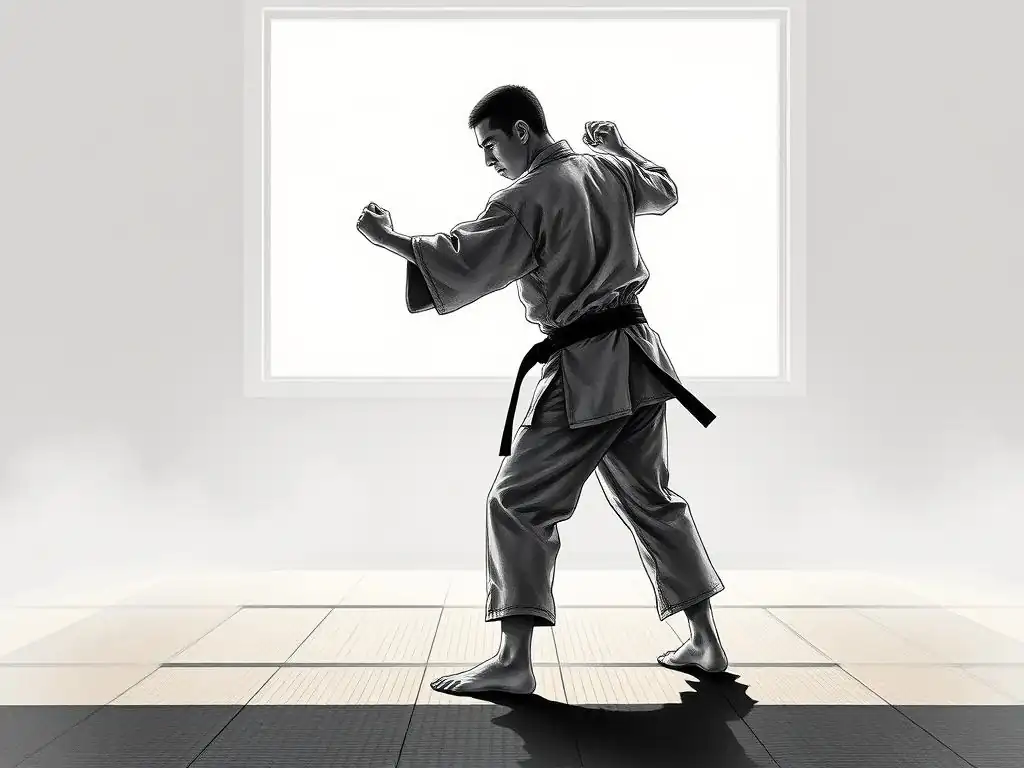
In the confrontation inherent in martial arts, eye contact is a powerful tool. Direct, steady eye contact can project confidence, assertiveness, and readiness, potentially intimidating an opponent or at least preventing them from sensing fear. In some traditional contexts, maintaining eye contact is a sign of respect and unwavering focus. However, in combat, prolonged, unbroken eye contact can also be a trap, drawing the opponent's gaze and potentially distracting them from observing the rest of the body. It can also reveal too much about one's own emotional state.
Beyond psychological projection, the eyes play a crucial role in target acquisition. While not necessarily staring directly at the intended target (which can be a tell), a fighter's gaze direction often aligns with where they are focusing their attention or where they plan to attack. A quick glance down might precede a leg kick or a takedown attempt. A focus on the upper body might signal incoming hand techniques. Learning to observe an opponent's eyes without being fixated on them is a nuanced skill, part of the broader practice of reading body language martial arts skill.
Reading Gaze Direction: Anticipating Movements and Strategies
While direct eye contact is significant, reading the direction of an opponent's gaze is often more tactically revealing. Experienced fighters rarely stare fixedly at one point; instead, their gaze scans, gathering information about distance, balance, and potential openings. However, even in this scanning, subtle shifts can betray intent. A fighter whose eyes repeatedly dart to the opponent's legs might be planning low attacks or evaluating opportunities for a sweep or takedown. Eyes focused on the opponent's hands might indicate anticipation of punches or attempts to control grips.
Furthermore, a fighter's gaze can reveal their overall strategy. Someone who keeps their eyes fixed on the opponent's chest or head might be focused on maintaining central control or setting up head attacks. Conversely, a wider, less focused gaze might indicate an attempt to take in the whole picture, anticipating broader movements or multiple threats. Learning to interpret these subtle shifts in gaze direction, often combined with other nonverbal cues like footwork or hand position, significantly enhances the ability to anticipate an opponent's actions, refining one's body language martial arts skill in prediction.
Maintaining Composure: The Focused Gaze Under Pressure
Maintaining a focused, controlled gaze is a hallmark of composure under pressure in martial arts. While an inexperienced individual might exhibit darting eyes, blinking excessively, or averting their gaze when stressed or overwhelmed, a seasoned practitioner often maintains a steady, alert focus. This doesn't mean a rigid stare, but rather a relaxed yet attentive gaze that takes in necessary information without betraying anxiety or panic. This controlled gaze reflects a calm mind and the ability to process information effectively even in chaotic situations.
Training to maintain this focused gaze involves developing mental discipline and the ability to filter distractions. It's about seeing without reacting emotionally to everything observed. This composure, reflected in the eyes, is a vital part of projecting strength and control, preventing the opponent from sensing vulnerability. The ability to maintain a clear, focused gaze while simultaneously processing subtle nonverbal cues from the opponent is a high-level application of body language martial arts skill.
Micro-expressions and Intuition: Detecting Subtle Signals
Recognizing Fleeting Emotions: Fear, Anger, and Deception
Micro-expressions are fleeting facial expressions that occur involuntarily, often lasting only a fraction of a second (typically 1/25 to 1/5 of a second). They reveal genuine underlying emotions that a person might be trying to conceal, such as fear, anger, surprise, disgust, sadness, or happiness. In the high-stakes environment of combat, recognizing these rapid emotional leaks can provide critical information.
A flash of fear might indicate an opponent is overwhelmed or uncertain about their next move. A flicker of anger could precede an aggressive, potentially reckless attack. Detecting deception, though harder, might involve recognizing a mismatch between a feigned expression and a micro-expression.
While explicitly training to spot micro-expressions is complex and often relies on specialized programs, martial artists can develop a heightened general sensitivity to subtle facial cues through extensive sparring and observation. This isn't about clinical diagnosis but about developing an intuitive sense for when an opponent's outward demeanor doesn't quite match their internal state. This ability to pick up on subtle emotional shifts, even below conscious awareness, is a sophisticated component of reading body language martial arts skill.
The Role of Instinct: Subconscious Processing of Nonverbal Data
Much of the reading of body language in martial arts happens not through conscious, analytical thought in the moment, but through instinct and subconscious processing. Years of training and sparring build a vast database of nonverbal cues and associated outcomes. When a familiar pattern of movement, posture, or gaze appears, the brain quickly matches it to past experiences and triggers an appropriate response, often before the conscious mind fully registers the individual cues. This is often referred to as "feeling" the opponent or having "good instincts."
For example, a fighter might instinctively block a punch they didn't consciously see coming, simply because their opponent's preceding body language (weight shift, shoulder tension) triggered a pre-programmed defensive reaction. This subconscious processing allows for incredibly fast reaction times, essential in dynamic combat. Developing this level of instinct requires countless hours of practice, embedding the recognition of nonverbal patterns deep within the nervous system. This intuitive grasp of body language martial arts skill is arguably the highest level of nonverbal mastery.
Training Methods for Heightening Nonverbal Awareness
Training to heighten nonverbal awareness involves more than just physical drills; it requires dedicated observational practice. One effective method is focused sparring or drilling with the specific goal of only observing the opponent's body language. Instead of reacting immediately, the practitioner attempts to predict the opponent's technique based purely on their nonverbal cues before they execute it. This slows down the process initially but builds the analytical skill.
Another method involves reviewing footage of sparring sessions or matches, analyzing the body language of both participants frame by frame to identify tells, reactions, and patterns. Coaches can provide feedback, pointing out cues that were missed. Partner drills focusing on specific nonverbal exchanges, such as reading weight shifts during grappling setups or anticipating strikes based on subtle upper body movements, are also invaluable. These deliberate practices, combined with extensive real-time sparring, gradually build the practitioner's ability to consciously and subconsciously read body language martial arts skill in action.
Deception and Misdirection: The Art of the Feint
Using Body Language to Create Vulnerabilities
Just as body language can reveal intent, it can also be deliberately used to deceive and create vulnerabilities in an opponent's defense. This is the art of the feint. By using body language to suggest one action while planning another, a martial artist can manipulate the opponent's reactions, forcing them to open up defenses or commit to a false prediction. For example, a fighter might feint a jab with a slight forward lean and hand movement, causing the opponent to raise their guard, thereby opening their body for a low kick or a takedown attempt.
The effectiveness of using body language for deception lies in making the feint look as real as possible without fully committing to the technique. This requires subtle control over weight distribution, muscle tension, and gaze. A poorly executed feint looks unnatural and is easily ignored. A masterful feint, however, perfectly mimics the initial stages of a genuine attack, triggering an instinctive defensive reaction from the opponent. This deliberate manipulation of an opponent's interpretation of body language martial arts skill is a key offensive strategy.
Mastering Feints: Disrupting Opponent's Perception
Mastering feints is about disrupting the opponent's ability to accurately read your body language. It involves creating ambiguity and forcing them to guess your true intentions. A fighter who employs varied and convincing feints keeps their opponent constantly off-balance, hesitant to commit to their own attacks for fear of falling into a trap. This psychological pressure is a direct result of undermining the opponent's confidence in their ability to read your body language martial arts skill.
Effective feints can target different aspects of the opponent's reaction. A feint towards the head might draw their hands up, leaving the body open. A feint towards the legs might cause them to shift weight defensively, making them momentarily rooted and vulnerable to upper-body attacks. The key is to make the feint just convincing enough to elicit the desired reaction without expending too much energy or putting oneself in a compromised position. Developing a repertoire of realistic feints is crucial for offensive strategy.
Feinting Techniques: Punches, Kicks, and Grappling Setups
Feinting techniques are applicable across all ranges and disciplines within martial arts. In striking, common feints include:
- Punch Feints: A quick, partial movement of the hand or shoulder mimicking the start of a punch, designed to draw a block or reaction.
- Kick Feints: Lifting the leg slightly or shifting weight as if to kick, aiming to make the opponent defend low or break their posture.
- Head Movement Feints: Bobbing or weaving slightly to suggest movement in one direction, baiting the opponent into following, then moving the opposite way.
In grappling, feints are used to set up throws, takedowns, or submissions:
- Takedown Feints: Dropping levels or changing stance as if attempting a shoot or sweep, causing the opponent to defend their legs and potentially opening their upper body or grips.
- Throw Feints: Initiating a grip break or a slight pull/push to suggest a throw in one direction, aiming to make the opponent resist, then executing the throw in the opposite direction.
- Submission Feints: Applying light pressure on a joint or choke point to elicit a defensive reaction that opens up a different submission opportunity.
Mastering these diverse feinting techniques requires precise control over one's own body language martial arts skill, making the deceptive movements look genuine and purposeful.
Cultural Nuances in Martial Arts Communication
Regional Styles: Variations in Stance, Movement, and Etiquette
Body language in martial arts is not universal; it is deeply influenced by the cultural and regional origins of the style. Different traditions have developed distinct forms of nonverbal communication embedded in their techniques, stances, and even pre-combat rituals. For example, the low, rooted stances and powerful, linear movements of Okinawan Karate communicate stability and direct force, reflecting its self-defense origins. The fluid, circular movements and relaxed postures of Tai Chi Chuan reflect its philosophical underpinnings of harmony and energy flow.
Even within similar fighting ranges, regional styles can vary significantly. Muay Thai fighters often exhibit a distinct upright posture and specific hand positions (like the Wai Kru pre-fight ritual), while Western boxers have a more forward-leaning stance and different defensive hand positions. Understanding these regional variations in body language martial arts skill is crucial when encountering practitioners from different backgrounds; what might be a tell in one style could be standard posture in another.
Respect and Protocol: Nonverbal Signals of Deference and Challenge
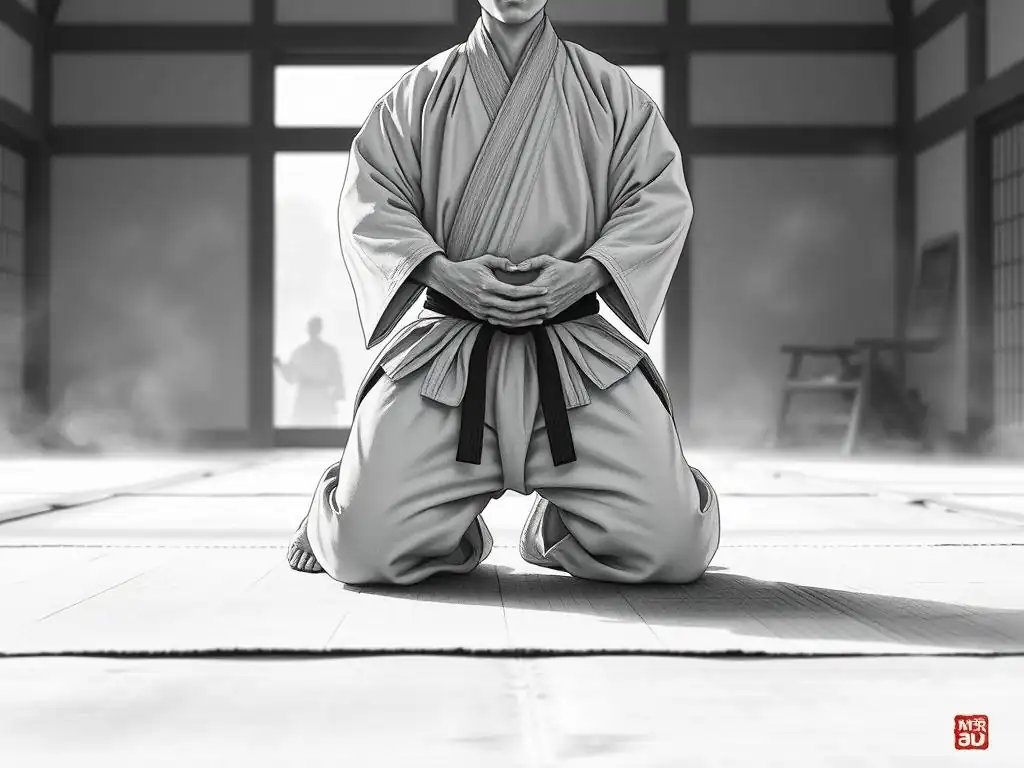
Beyond combat techniques, nonverbal communication plays a significant role in the etiquette and protocol of many martial arts dojos and traditions. Bowing, for instance, is a near-universal sign of respect, but the depth, duration, and specific hand/foot placement during the bow can vary significantly between Japanese, Korean, Chinese, and other martial arts cultures. These nonverbal acts of deference are not just formalities; they communicate humility, discipline, and acknowledgment of the teacher and lineage.
Conversely, certain nonverbal cues can signal challenge or readiness for confrontation within a specific cultural context. In some systems, a specific stance adopted before a match, a certain way of tying a belt, or even the intensity of eye contact can carry symbolic weight, communicating readiness to engage. Navigating these cultural nuances requires sensitivity and awareness, as misunderstanding nonverbal protocol can lead to unintended disrespect or misinterpretation, impacting the social dynamics of training and competition, and is a less discussed aspect of body language martial arts skill.
Adapting Communication: Cross-Cultural Martial Arts Interaction
In today's global martial arts landscape, practitioners frequently interact with individuals from diverse stylistic and cultural backgrounds. This necessitates an ability to adapt one's understanding and use of nonverbal communication. What is considered a confident stance in one culture might appear overly aggressive or disrespectful in another. A gesture of readiness in one style might be misinterpreted as a tell in a different context.
Effective cross-cultural martial arts interaction requires an open mind and a willingness to learn the nonverbal language of different traditions. This involves observing and understanding the typical body language associated with specific styles, recognizing their common stances, movement patterns, and behavioral norms. By developing this cross-cultural literacy in body language martial arts skill, practitioners can improve communication, reduce misunderstandings, and foster more productive exchanges, whether in training, competition, or collaborative events.
Training for Nonverbal Proficiency: Drills and Exercises
Training to project a strong, confident presence through body language is an active process. It starts with mastering one's own physical structure: maintaining good posture, balancing weight effectively, and moving with intention rather than hesitation. Drills can include simply standing in a proper stance for extended periods, focusing on relaxation without collapsing structure. Mirror work can help practitioners see how they appear to an opponent and identify areas of tension or weakness in their posture.
Partner exercises can also be designed to focus on presence. For example, two partners might stand facing each other, slowly approaching while trying to project confidence and read the other's response, without any physical contact. Feedback from instructors or training partners is crucial for identifying how one's current body language martial arts skill is being perceived. Role-playing scenarios, such as simulating a challenge or a defensive encounter, can help practitioners practice maintaining composure and projecting authority under simulated pressure.
Refining Movement Efficiency: Eliminating Unnecessary Tells
Eliminating unnecessary tells requires meticulous self-observation and refinement of movement. Video analysis is an invaluable tool here. Practitioners can record themselves performing techniques and sparring, then review the footage to identify any preparatory movements, facial expressions, or weight shifts that telegraph their intentions. An instructor's experienced eye can also spot tells that the practitioner is unaware of.
Drills can be tailored to specific tells. If a fighter drops their hand before punching, drills can focus on punching directly from the guard position. If they tense their shoulders before a kick, exercises can emphasize relaxation and fluid hip movement. Shadowboxing with conscious attention to eliminating tells, focusing on smooth transitions and minimal wasted motion, is also highly effective. The goal is to make movements efficient and deceptive, improving one's inherent body language martial arts skill by removing unintended signals.
Drills for Enhancing Stance, Footwork, Gaze, and Micro-expression Recognition
Specific drills can target the various components of nonverbal communication.
- Stance & Posture Drills: Holding various stances with proper alignment for time, practicing transitions between stances smoothly while maintaining balance, and performing techniques from different stances to feel how posture impacts power and stability.
- Footwork Drills: Practicing footwork patterns while observing a partner, trying to predict their next step based on their foot placement and weight shifts. Blindfolded partner drills (with safety precautions) can force reliance on feeling weight shifts through light contact.
- Gaze Drills: Sparring or drilling with the specific instruction to focus only on the opponent's eyes (or chest, or feet) to understand how gaze direction correlates with action. Practicing maintaining a relaxed, wide gaze while scanning for information.
- Micro-expression/Subtle Cue Drills: While direct micro-expression training is specialized, general sensitivity can be improved. Partner drills focusing on observing subtle changes in breathing, muscle tension in the face or neck, or hand clenching under light stress can help. Discussions after sparring about perceived emotional states and correlating them with actions can also be beneficial.
These focused drills, integrated into a regular training regimen, systematically build proficiency in both sending and receiving body language martial arts skill.
Conclusion: Nonverbal Communication as a Key to Martial Arts Excellence
Continuous Refinement: The Ongoing Study of Body Language
Mastering nonverbal communication in martial arts is not a destination but a continuous journey of refinement. The subtle language of the body is incredibly complex and varies from individual to individual. As practitioners evolve, so too does their body language, and the tells they might have exhibited early on may disappear, replaced by new, less obvious ones. Therefore, the study and interpretation of body language martial arts skill must be ongoing.
This continuous refinement involves consistent self-observation, seeking feedback from experienced partners and instructors, and diligently studying opponents. Watching high-level martial artists compete, analyzing their movements and reactions, provides valuable insights. The goal is to deepen both the conscious understanding of nonverbal principles and the subconscious, intuitive ability to read and respond to them in real-time combat.
Integrating Nonverbal Skills: Enhancing Martial Arts Prowess
Ultimately, nonverbal communication skills are not separate from physical technique; they are deeply integrated. A powerful strike is more effective when preceded by deceptive body language. Evasion is faster and more efficient when anticipating an attack based on subtle tells. Grappling entries are more successful when reading an opponent's balance and tension.
By consciously developing the ability to read and manipulate body language martial arts skill, practitioners unlock a higher level of combat intelligence. They move beyond simply executing techniques to engaging in a sophisticated physical and psychological dialogue with their opponent. This enhanced awareness and control of the silent language significantly elevates overall martial arts prowess, making the practitioner more effective, adaptable, and insightful in any confrontational situation.
Frequently Asked Questions
How does body language relate to martial arts skill?
Body language is crucial in martial arts as it reveals your intentions, weaknesses, and confidence to opponents. Skilled martial artists can read and manipulate body language to gain an advantage. It's a silent conversation happening before and during any physical engagement.
What are some key elements of body language that indicate a martial artist's skill level?
A skilled martial artist often displays relaxed posture, focused gaze, and precise movements. Conversely, hesitation, tension, and erratic movements can reveal a lack of training or confidence. Look for efficiency and control.
Can I improve my martial arts skills by improving my body language?
Yes! Being aware of your own body language and practicing confident and deliberate movements can significantly enhance your skills. Improved body language can intimidate opponents, mask your intentions, and project competence.
How can I learn to read my opponent's body language effectively?
Practice observing and analyzing the subtle cues in your opponent's posture, facial expressions, and movements during sparring and drills. Study common tells and learn to anticipate their actions based on their body language.
Are there specific martial arts that emphasize the importance of body language more than others?
While all martial arts benefit from body language awareness, styles like Aikido and Tai Chi often place a greater emphasis on reading and utilizing an opponent's body language to redirect their energy and control their movements. Mindful movement is key.
Final Reflection: Embracing the Eloquence of Movement
The exploration of body language in martial arts, as we've seen, transcends mere physical prowess; it's a silent dialogue that speaks volumes about skill, intent, and mastery. In a world increasingly reliant on digital communication, understanding the nuances of non-verbal cues becomes even more crucial, not just in the dojo, but in every facet of our lives. The ability to interpret and control our own body language, as well as that of others, offers a profound advantage, fostering deeper connections and sharper awareness.
This journey into the silent language of movement has profoundly impacted my understanding of martial arts and human interaction. It's a constant reminder that true skill lies not just in the execution of techniques, but in the subtle communication that precedes and accompanies them. Movement never lies,
Martha Graham famously said. This holds especially true in martial arts, where every gesture, every stance, reveals the depth of one's training and understanding. The ongoing influence of this silent language shapes not only how we perceive martial artists but also how we navigate the complexities of human relationships.
Now, consider the power you hold to refine your own silent language. Reflect on the movements you make, the messages you send, and the impressions you leave. Embrace the challenge of becoming more conscious of your body language, both in and out of the martial arts context. By doing so, you unlock a deeper understanding of yourself and others, paving the way for greater skill, connection, and ultimately, a more meaningful existence.
Ignite Your Inner Warrior: Refine Your Movement Today!
Thank you for diving deep into the world of movement and its connection to martial arts mastery. Now that you understand the silent language of your body, it's time to translate that knowledge into action and elevate your skills.
Here's how you can continue your journey:
- Film yourself practicing your kata or sparring. Analyze your movements for telegraphing, tension, and wasted energy. Identify one key area for improvement and focus on correcting it in your next training session. This is the most critical step to applying what you've learned.
- Explore different movement styles outside of your primary martial art – perhaps dance, yoga, or even capoeira. Observe how other disciplines utilize body language and control, and consider how these concepts can be integrated into your own training.
- Share this article with fellow martial artists and start a discussion on the importance of mindful movement in your training. Let's build a community of practitioners dedicated to refining their body language!
What subtle movement patterns are you most eager to improve in your own martial arts practice this week?