Tang Soo Do: History and Core Techniques – A Journey Through a Timeless Martial Art
Tang Soo Do is a striking-based martial art that blends the fluid grace of Korean tradition with the disciplined power of Northern and Southern Chinese martial arts, as well as the practical footwork of Japanese karate. At MartialArtsMastery.org, we delve deep into this art’s rich lineage—from its emergence in the mid-20th century to its modern global practice—while breaking down its essential techniques, forms (hyung), and training philosophy. Whether you are a novice exploring styles or a seasoned practitioner seeking historical context, this subcategory offers a thorough and actionable overview. Expect clear explanations of stance mechanics, hand and foot strikes, and the moral code that defines Tang Soo Do, all optimized for both learning and search visibility.
🥋 The Origins and Founding Masters of Tang Soo Do
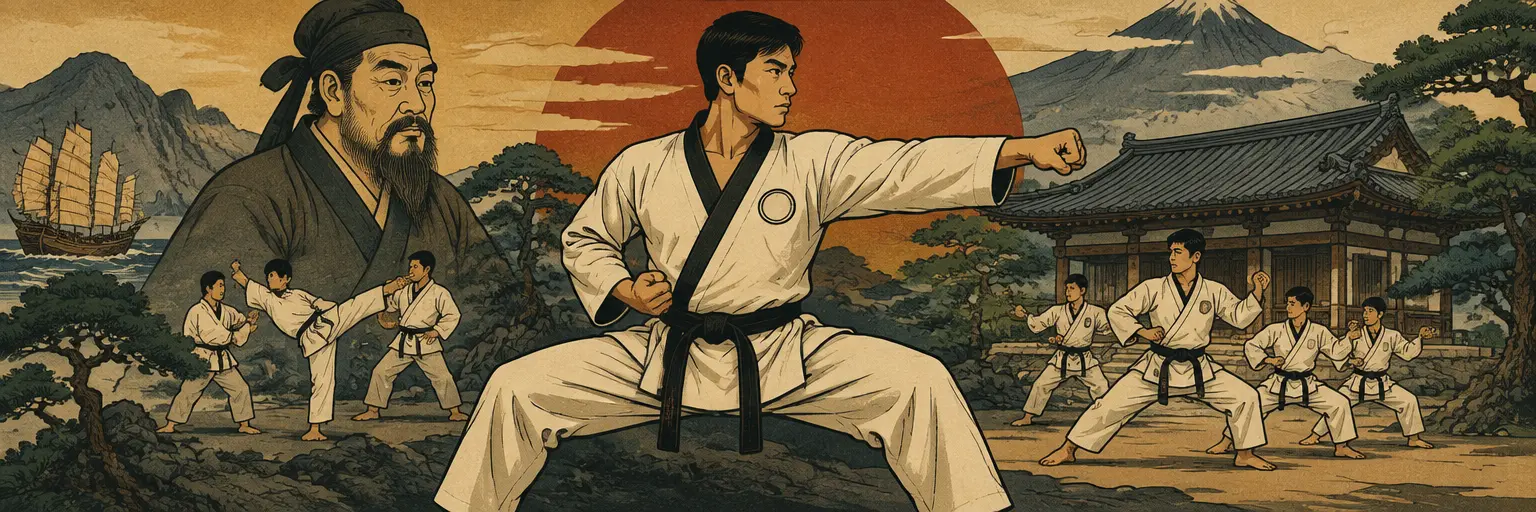
Tang Soo Do’s history is a tapestry of cultural exchange and personal dedication. Founded by Grandmaster Hwang Kee in 1945, the art arose during Korea’s post-occupation era, synthesizing the ancient Korean martial tradition of Soo Bahk Do with the circular, flowing movements of Chinese martial arts and the linear, powerful techniques of Shotokan karate. This subcategory explores how Kee’s early life, study of the *Muye Dobo Tongji* (a Korean military manual), and exposure to Okinawan karate shaped a system that emphasizes both physical effectiveness and inner character development. We also cover the split in the 1960s that gave rise to Taekwondo, clarifying why Tang Soo Do remains a distinct, traditional art with its own identity.
Readers will gain insight into the martial, political, and personal motivations behind Tang Soo Do’s creation, as well as its spread to the United States via pioneers like Jae Chul Shin. Expect biographical snapshots, timelines of key events, and a clear explanation of how the art’s name—meaning “Way of the Tang (Chinese) Hand”—reflects its philosophical roots. This historical foundation is essential for anyone looking to understand modern martial arts’ evolution or who wishes to appreciate the deep respect for legacy that underpins every hyung and kick in Tang Soo Do.
🦶 Essential Stances and Footwork: The Foundation of Power
Mastering Tang Soo Do begins with its stance system, which dictates balance, speed, and striking efficiency. In this section, we break down the core stances—such as the front stance (choon bi sohgi), back stance (hoo gool sohgi), and horse stance (kee ma sohgi)—explaining their biomechanical advantages and common alignment errors. You’ll learn how the hip rotation (called “hip twist” or *don* in Korean) generates explosive force in kicks and strikes, and why the low, wide stances of Tang Soo Do are designed for both rooted stability and rapid directional changes. We provide weight distribution percentages, foot angles, and breathing tips for each posture.
Footwork is not just static positioning but dynamic movement. We cover stepping patterns like the front shuffle, crossover step, and turning kick’s pivot motion, along with drills to improve agility and reaction time. Emphasis is placed on the “twist and turn” principle, where the back heel lifts and the hips snap forward, transferring kinetic energy from the ground through the body. Whether you are correcting a beginner’s flat-footed stance or refining a black belt’s pivot, this content provides actionable cues. Expect diagrams, common mistake lists, and conditioning routines to build the leg strength and flexibility that stances demand.
👊 Core Hand Strikes and Defensive Blocks
Tang Soo Do’s upper-body techniques are a mix of linear punches and circular, open-hand blocks that reflect the art’s hybrid heritage. This section details the straight punch (jirugi), reverse punch (bandae jirugi), and knife-hand strike (sonkal), explaining how to align the knuckles, wrist, and shoulder for maximum impact without injury. We also explore less common but vital techniques like the ridge hand and spear hand, offering target areas and realistic usage scenarios. Defensive methods include low, middle, and high blocks—such as the outer forearm block and palm heel block—with tips on maintaining a relaxed guard between movements.
Beyond mechanics, we cover the strategic application of hand techniques: when to use a hard block versus an evasive side-step, how to counter after a successful deflection, and the role of *besting* (a form of close-range trapping) that sets Tang Soo Do apart from more linear karate styles. Each technique is accompanied by partner drills, shadowboxing routines, and focus mitt workouts to build speed and accuracy. Advanced practitioners will appreciate the inclusion of classic hyungs like *Pyung Ahn* forms, which continually reinforce these hand skills in a flowing sequence that mimics self-defense situations.
🦵 Kicking Techniques: Speed, Height, and Precision
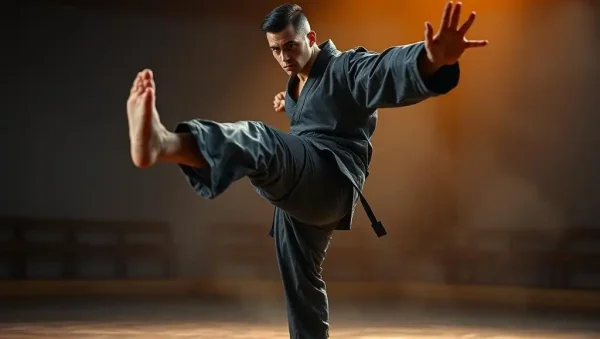
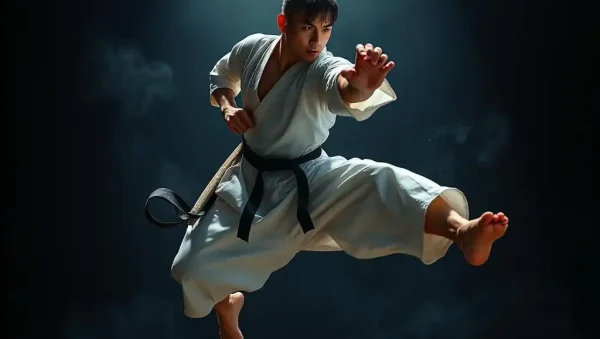
Kicks are the signature of Tang Soo Do, ranging from low, devastating leg kicks to high, knife-shin axe kicks. This subcategory provides a progressive breakdown of the essential kicking arsenal: the front kick (ap chagi), roundhouse kick (dollyo chagi), side kick (yop chagi), and back kick (twit chagi). For each, we detail chambering mechanics, hip follow-through, and retraction speed, ensuring that technique is not sacrificed for flash. We also introduce advanced kicks like the crescent kick and spinning hook kick, explaining how to build the necessary flexibility and spatial awareness through stretch sequences and mirror drills.
Practicality is key—this is not just for sport but for effective self-defense. You’ll learn how to target vulnerable areas (knee, groin, ribs) while maintaining balance on one leg, and how to use kicks as both long-range strikes and reactive counters. The section includes warm-up routines, flexibility ladders (e.g., progressive side-to-butterfly stretches), and partner hold drills to refine distance control. We also address common pitfalls like hyperextension or telegraphing, with mental cues to think of the leg as a whip, not a baseball bat. By the end, you’ll have a structured pathway to elevate your kicking from basic to competition-ready.
🧘 The Hyung and Philosophy: Forms, Meditation, and the Five Codes
The physical techniques of Tang Soo Do are inseparable from its mental and ethical training, embodied in the hyung (forms) and the *Sah Jun* (Five Codes of Conduct). Here, we explore the purpose of forms—not as choreography, but as a living encyclopedia of self-defense techniques hidden within sequential patterns. We outline the progression from the beginner’s *Kichon* forms through the *Pyung Ahn* series to the advanced *Bassai* and *Chil Sung* forms, explaining what each teaches: coordination, rhythm, and situational awareness. For each hyung, we highlight the metaphorical “bunkai” (application), giving examples of how a block can become a joint lock or a stance change mimics an evasion.
Philosophically, Tang Soo Do aims to develop a “vacant mind” (*Kong Shin*)—a state of calm alertness. This section provides guided meditation exercises, breathing techniques, and the meaning behind the Five Codes: loyalty to one’s country, obedient behavior toward parents, fidelity to one’s spouse, cooperation with brothers and sisters, and respect for elders. We discuss how these principles translate into dojang etiquette, leadership, and daily life, making Tang Soo Do a holistic practice beyond fighting. For those curious about moral education in martial arts, this content offers clear, actionable ways to integrate the Five Codes into training and personal conduct.
Frequently Asked Questions
What is the difference between Tang Soo Do and Taekwondo?
Tang Soo Do is an older, more traditional art founded by Hwang Kee in 1945, emphasizing circular hand techniques, deep stances, and a strong focus on forms (hyung). Taekwondo, which split off in the 1950s, is more sport-oriented, with faster, higher kicks and a competitive point-sparring focus. Tang Soo Do retains a greater emphasis on self-defense applications and classical block-strike countering.
How long does it take to earn a black belt in Tang Soo Do?
For a dedicated student training 2-3 times per week, it typically takes 3 to 4 years to reach first-degree black belt (Cho Dan). This timeline depends on retention of forms, technique precision, physical conditioning, and demonstrating the Five Codes in behavior. Testing often occurs every 3-6 months, with specific curriculum requirements for each belt rank.
Is Tang Soo Do effective for real-life self-defense?
Yes, Tang Soo Do is effective because it teaches practical strikes to vulnerable areas, proper distance management, and defensive blocks that can counter common street attacks. However, like any martial art, effectiveness depends on realistic training pressure—sparring with contact, scenario drills, and continuous practice. The muscle memory from hyung and partner work helps you react calmly under stress.
Do I need to be very flexible to practice Tang Soo Do?
No, flexibility improves progressively. Beginners start with basic front and side kicks at a comfortable height, gradually stretching over weeks and months. Dynamic stretching before class and static stretching after are built into training routines. Even older or less flexible students can excel in stances, hand techniques, and self-defense applications without ever achieving a full split.
What should I look for when choosing a Tang Soo Do school?
Look for a certified instructor (e.g., through the World Moo Duk Kwan or traditional organizations) who emphasizes both technique and character. Observe a class to see if safety, respect, and clear instruction are prioritized. Ask about testing fees, sparring safety gear, and whether the school focuses on traditional forms or modern sport. Ensure the environment fosters growth without harassment or ego.