The Silent Language of Ukemi: Communicating with Your Partner
🥋 Master the silent dialogue of martial arts. Learn the essential Ukemi falling technique basics to build trust and communicate seamlessly with…
Read article
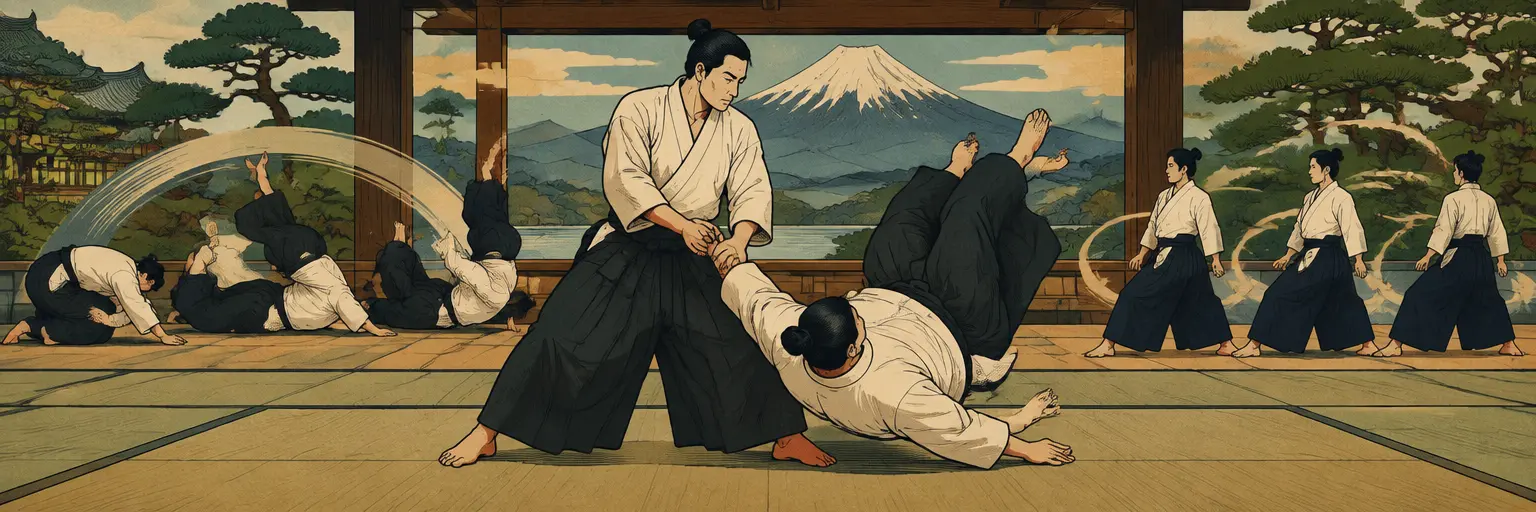
Aikido is far more than a martial art—it’s a dynamic study of balance, flow, and redirection, and mastering its fundamental techniques is your first step toward true proficiency. This guide focuses on the twin pillars of ukemi (safe, graceful falling and rolling) and tai sabaki (whole-body movement and footwork), the essential building blocks that unlock every throw, pin, and evasion in the art. By learning to move from your center, blend with an attacker’s energy, and absorb impact without injury, you’ll develop the agility, spatial awareness, and resilience that define advanced practice. Perfect for beginners and a valuable refresher for seasoned students, these core drills improve coordination, reaction time, and mental calm under pressure. Whether you train for self-defense, fitness, or personal growth, understanding ukemi and tai sabaki is the key to practicing safely and moving with effortless, powerful precision. Start here and transform stiff resistance into fluid harmony—because in Aikido, how you move matters as much as where you end up.
🥋 Master the silent dialogue of martial arts. Learn the essential Ukemi falling technique basics to build trust and communicate seamlessly with…
Read article
🌟 Unlock the secrets of "Tai Sabaki in Action: Analyzing Movement in Aikido Masters." Explore advanced Aikido movement analysis techniques and discover…
Read article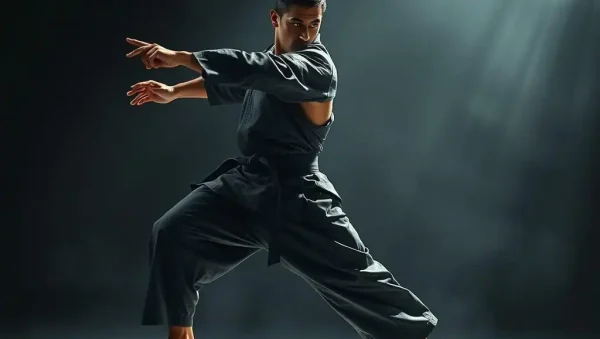
😊 Mastering Tai Sabaki Hara Balance is essential for effective movement and stability in martial arts. This core principle enhances your ability…
Read article
🌟 Discover how Ukemi falling resilience training enhances mental strength and confidence, transforming your martial arts practice. Embrace the art of falling…
Read article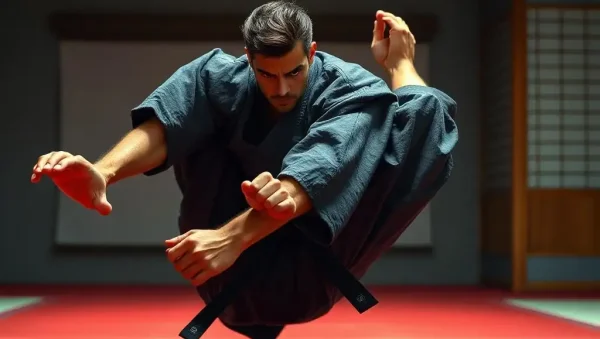
🥋 Master the art of falling with Aikido ukemi drills safety. Enhance your flow, prevent injuries, and unlock true martial arts mastery…
Read article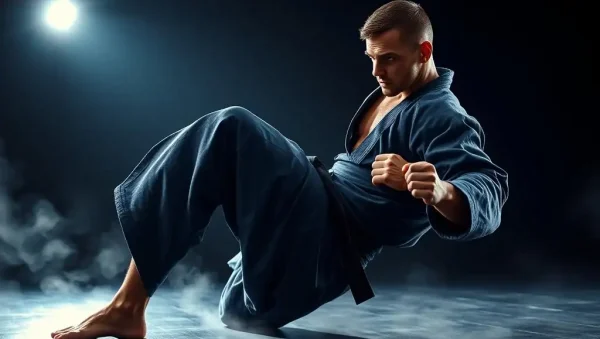
🤝 Discover how mastering Aikido ukemi transition techniques enables practitioners to seamlessly flow between offensive and defensive moves, enhancing effectiveness and fluidity…
Read article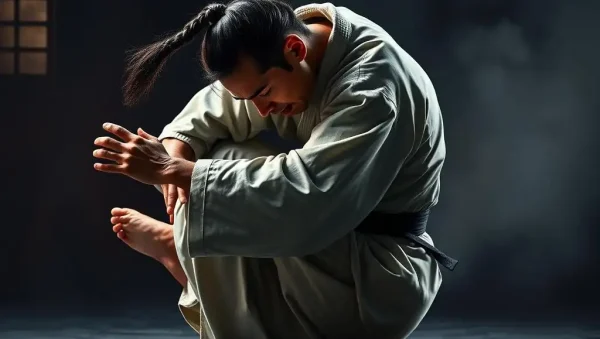
🌀 Unlock the secrets of Aikido tai sabaki and master the elusive dead angle. Explore this crucial concept on MartialArtsMastery.org, your comprehensive…
Read articleWelcome to the core of Aikido practice! This subcategory focuses exclusively on the two indispensable pillars that every beginner and advanced practitioner must refine: Ukemi (the art of safe falling and rolling) and Tai Sabaki (body movement and positioning). These fundamental techniques are not just physical exercises; they are the grammar of Aikido's language, enabling fluid responses to attacks and ensuring safety during dynamic training. Explore our guides to build a rock-solid base that accelerates every other aspect of your martial arts journey.
Ukemi—literally meaning "receiving" —is often misunderstood as mere tumbling. In reality, it is a sophisticated set of movements that protect your body when thrown, promoting resilience and spatial awareness. This section breaks down the four primary types of ukemi: forward rolls (zenpo kaiten), backward rolls (koho kaiten), side falls (yoko ukemi), and high falls (ushiro ukemi). Expect step-by-step breakdowns that emphasize chin protection, hand placement, and energy redirection.
Our tutorials focus on progressive learning: starting from seated positions, moving to standing still, and finally integrating into partner throws. You will learn the critical difference between collapsing and actively rolling, which not only prevents injuries but also enhances your psychological comfort in chaotic situations. Mastery of ukemi transforms you from a passive victim into an adaptive martial artist, capable of maintaining awareness and countering even after being launched off-balance. We also cover common errors, such as slapping the mat incorrectly, which can cause wrist strain.
Tai Sabaki refers to the pivoting, stepping, and twisting of the torso that allows you to move off the line of attack while maintaining visual contact with your opponent. This body movement is the engine of all Aikido techniques—without it, joint locks and throws lose their efficacy. This section details four core movements: Irimi (entering), Tenkan (turning), Ude-furi (arm swinging), and O-kuzushi (body weight shifting for balance disruption).
Expect practical breakdowns of footwork patterns, weight distribution, and the all-important "triangular" stance that provides stability yet allows fluid motion. We explain how maintaining a relaxed upper body while moving your center low and forward creates powerful leverage. You will also discover how Tai Sabaki is the precursor to Kuzushi (balance breaking), enabling you to unbalance an attacker with minimal physical effort. Our drills include mirror-practice, solo locomotion patterns, and paired sensitivity exercises to develop an instinctual feel for distance and timing.
The true test of fundamentals occurs when you blend ukemi and Tai Sabaki in dynamic partner exercises. This section provides structured sequences that combine your rolling skills with body repositioning during throws and pins. You will learn how to execute a technique as nage (thrower) while simultaneously preparing to receive a counter-throw through seamless ukemi. Expect detailed guidance on maintaining "soft eyes" and continuous breath, which prevent stiffness and allow rapid transitions.
We emphasize the relationship between attacker (uke) and defender (nage)—how both roles require equal proficiency in these fundamentals. For uke, proper ukemi keeps you safe; for nage, clean Tai Sabaki ensures efficient technique. Practice sets include entry-level combinations like kokyunage (breath throw) and ikkyo controls, where falling and pivoting are rhythmically linked. By internalizing these patterns, you'll build the reflexive motor memory needed for higher-level Aikido weapons training and empty-hand defense.
Not all quality practice requires a partner. This section offers a curated library of solo drills to sharpen your ukemi and Tai Sabaki at home or in the dojo without mats. For ukemi, we include progressive conditioning exercises such as shoulder flexibility stretches, wrist strengthening routines, and stationary roll progressions using cushions. For Tai Sabaki, we provide shadow-fighting movements that replicate turning angles and stepping patterns, complete with visual cues for foot orientation and hip direction.
These drills are designed to be time-efficient (15-20 minutes daily) and accessible for all fitness levels. Expect guidance on how to simulate an "opponent's" presence using visual markers (e.g., tape on floor) and hand positions. We also emphasize the importance of breath coordination—exhaling during rolls and inhaling during pivots—to enhance stability and energy flow. By committing to these solo practices, you accelerate muscle memory, reduce injury risk during class, and build the foundational stamina required for advanced Aikido techniques.
Aikido fundamentals are as much about mindset as they are about movement. This section addresses the psychological aspects of ukemi—such as overcoming the fear of falling—and Tai Sabaki—like maintaining calm awareness (zanshin) amidst motion. Expect practical breathing techniques, visualization exercises, and mindfulness cues to embed into practice. We explain why flinching or tensing up during falls causes the most injuries and how to train your nervous system to remain relaxed and redirected.
Injury prevention is our priority. You'll learn how to properly condition your wrists, knees, and neck to withstand repeated falls, along with warning signs of overtraining. We share pre-practice warm-up routines that specifically activate the core and shoulder girdle. By approaching fundamentals with this holistic lens, you not only progress faster but also sustain a long, enjoyable practice life. The insights here are valuable for both beginners and seasoned practitioners seeking to refine their proprioceptive awareness and calm under physical pressure.
Most students develop functional proficiency in basic rolls and pivots within 3–6 months of consistent practice (2–3 times weekly). However, continuous refinement is a lifelong journey. Focus on quality over speed—master the safest, most efficient form first, then increase speed and complexity gradually.
Yes, absolutely. Solo drills like forward rolls over a cushion, pivoting footwork exercises, and shadow techniques are highly effective. Use visual markers on the floor to simulate angles and practice breath coordination. A mirror or camera helps correct posture, but partner work remains vital for realistic timing.
The biggest error is slapping the mat with an extended arm, which can cause shoulder or elbow injury. Instead, aim to slap with a slightly bent arm, palm flat, making contact with the whole forearm simultaneously. Also, beginners often tuck the chin too late—always keep it tucked toward the chest throughout the roll.
Tai Sabaki allows you to avoid an attack without muscle strength, instantly repositioning you off the line of force. This creates the angle needed to apply joint locks or throws regardless of your size relative to the attacker. It trains your body to move naturally and fluidly, which is more reliable than relying on blocking or grabbing.
Yes, these skills transfer to other martial arts, improving your ability to fall safely in judo, BJJ, or even ice skating. Tai Sabaki enhances agility, coordination, and spatial intelligence, which benefit sports like tennis or dancing. Mentally, they cultivate calmness under stress and improve focused multitasking—valuable in daily life and professional environments.