Understanding Aikido’s Joint Locks and Controls (Irimi Nage, Kokyu Nage)
Within the vast world of individual martial arts styles, Aikido stands apart for its graceful, circular movements and emphasis on neutralizing aggression without causing lasting harm. This subcategory focuses on two of the most iconic techniques in the art: Irimi Nage (entering throw) and Kokyu Nage (breath throw), alongside the broader family of joint locks and controls. Unlike striking-based systems, Aikido leverages the attacker’s own momentum and structure against them, making these techniques highly effective for self-defense and tactical control. On this page, you’ll discover how to integrate these powerful tools into your practice, understand their historical context, and refine your biomechanics for real-world application.
🥋 The Core Mechanics of Irimi Nage (Entering Throw)
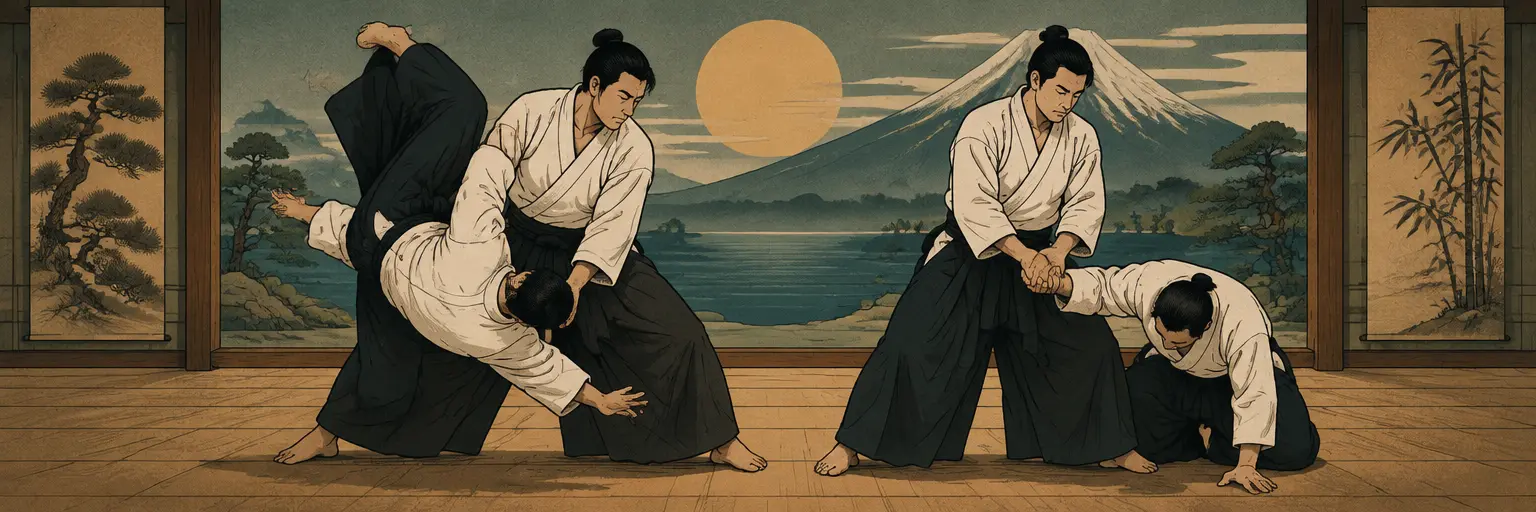
Irimi Nage, often translated as “entering throw,” is a cornerstone technique where the defender steps deeply into the attacker’s space, redirecting their forward energy into a sweeping arc. The movement begins with a precise footwork pattern known as *irimi* (entering), which allows you to blend with the attack rather than oppose it. Your leading hand controls the attacker’s head or collar, while your rear hand secures their arm, creating a rotational force that unbalances them. The key is to avoid pulling; instead, you move your entire body as a single unit, letting your hips generate the power.
Practicing Irimi Nage enhances your spatial awareness and timing, as the technique demands that you close distance instantly yet calmly. In partner drills, you’ll learn to flow from static grips into dynamic throws, focusing on maintaining connection through the attacker’s centerline. From a self-defense perspective, this throw is invaluable because it works against both front and rear attacks, and its circular nature allows you to control the outcome continuously. With consistent practice, you’ll internalize the principle of “winning by yielding,” turning an opponent’s aggression into an elegant, decisive conclusion.
🌬️ Mastering Kokyu Nage (Breath Throw) Through Body Alignment
Kokyu Nage, or “breath throw,” is deceptively simple yet profound, relying on the coordination of breath, movement, and intent. Unlike many throws that rely on brute strength, Kokyu Nage uses your entire body’s wave-like motion, initiated from the *hara* (lower abdomen), to lift and project the attacker. The technique often begins with a wrist grab or a strike, where you extend your arms in a spiral pattern, not pushing outward but expanding with a soft, continuous force. Your breath acts as the internal timer, ensuring that your exhalation synchronizes with the moment of extension, making the throw feel effortless to you and unstoppable to the receiver.
For martial artists transitioning from other styles, Kokyu Nage offers a fresh perspective on balance and leverage. You’ll explore multiple variations, including *omote* (front) and *ura* (rear) entries, each teaching you to read the attacker’s intent and adapt on the fly. The technique also profoundly improves your posture and breathing under pressure, which is crucial for any combat scenario. Beyond the physical throw, this practice cultivates *kuzushi* (balance breaking) at a subtle level, showing that true control stems from mental clarity and precise body mechanics rather than muscular tension. Expect to spend many sessions refining your *tanden* (center) connection to unlock the full potential of this elegant technique.
🔗 The Art of Joint Locks: Sankyo, Nikyo, and Gokyo
Joint locks in Aikido are not merely submission holds; they are dynamic control systems designed to immobilize an attacker while maintaining safe, ethical restraint. Techniques like Sankyo (third control) twist the wrist and forearm into a painful but non-damaging pronation lock, while Nikyo (second control) applies pressure to the wrist and elbow in a flexion arc that forces compliance. Gokyo (fifth control) is a more penetrating pin, often used when a weapon is involved, as it secures both the joint and the line of sight. Each lock is practiced with an emphasis on *aiki* (harmonious energy), where you redirect the attacker’s power into the joint at an unnatural angle.
Integrating joint locks into your martial arts repertoire requires a shift in mindset: you are no longer seeking to defeat an opponent but to neutralize a threat with minimum force. Through static and dynamic practice, you’ll learn to apply these locks from various grabs, strikes, and even while kneeling or seated, reflecting real-world unpredictability. The anatomical precision involved also deepens your understanding of human movement, making you a more efficient practitioner in all grappling contexts. Moreover, the ethical application of joint locks aligns with Aikido’s philosophy of non-violence, empowering you to resolve conflicts without escalation.
⚡ Integrating Irimi Nage and Kokyu Nage into a Flowing Self-Defense Strategy
While individual techniques are valuable, their true power emerges when combined into fluid sequences that mirror real attacks. In this section, you’ll learn how to chain Irimi Nage into a Sankyo pin, or transition from a Kokyu Nage entry into a Nikyo control, depending on the attacker’s body position and momentum. The emphasis is on *zanshin* (awareness), maintaining a focused state even after the throw, ready to respond to a second attacker or an escalation. You’ll also practice counters and escapes from failed attempts, ensuring that your defenses are resilient, not brittle.
Practical training scenarios simulate common street encounters, such as a one-handed collar grab, a haymaker punch, or a shove from behind. By internalizing the principles of *ma-ai* (distance) and *sen* (initiative), you’ll learn to intercept attacks at the right moment, using circular footwork to avoid standing in the line of power. These integrated drills also enhance your cardiovascular conditioning and reflexes, as the constant motion between throws and locks keeps your body engaged and adaptable. Ultimately, this holistic approach transforms isolated techniques into a cohesive self-defense system that feels both natural and effective under pressure.
🧘 Philosophical Underpinnings: The “Way” of Joint Locks and Throws
Aikido is more than a set of physical movements; it is a *budō* (martial path) that seeks to cultivate harmony in the practitioner. The joint locks and throws—especially Irimi Nage and Kokyu Nage—are expressions of *aiki*: blending with the opponent’s energy rather than opposing it. This philosophical dimension is woven into every practice, reminding you that true victory lies in resolution, not domination. By focusing on control rather than damage, you train your mind to remain calm and compassionate even in the chaos of conflict.
As you delve deeper, you’ll discover that the physical patterns mirror mental principles: entering (*irimi*) teaches you to face challenges head-on, while breath control (*kokyu*) cultivates patience and presence. The practice of joint locks reinforces humility, as you must constantly adapt to your partner’s body and feedback. This subcategory encourages you to reflect on how these techniques apply beyond the dojo—improving your ability to de-escalate arguments, make decisive choices, and maintain equilibrium in stressful situations. Through dedicated study, you’ll not only master joint locks and throws but also embody the “way” of Aikido in your daily life.
Frequently Asked Questions
What is the difference between Irimi Nage and Kokyu Nage?
Irimi Nage focuses on deep entering footwork to break the attacker’s posture, using a leading hand to control the head while the arm sweeps in an arc, resulting in a throw. Kokyu Nage emphasizes breath-synchronized expansion from the center, often using less linear movement and more spiral extension. While both redirect energy, Irimi Nage is more direct and structured, whereas Kokyu Nage is fluid and adaptive.
Are joint locks in Aikido effective for self-defense in real fights?
Yes, when practiced correctly with realistic pressure, Aikido joint locks can effectively control an attacker in real fights. Techniques like Sankyo and Gokyo allow you to neutralize a threat without permanent injury. However, they require substantial training to apply under adrenaline and against resisting opponents. Integrated with footwork and throws, they form a reliable self-defense system.
How long does it take to become proficient in Aikido joint locks?
Proficiency varies by individual, but most practitioners see noticeable improvement in joint lock application within 6-12 months of regular practice (2-3 times weekly). Mastery of dynamic throws like Irimi Nage and Kokyu Nage often takes several years, as they rely on subtle body mechanics and timing. Consistent practice with mindful feedback accelerates learning.
Can I practice these techniques without a partner?
You can practice solo by focusing on footwork patterns, body movement, and breathing drills for Irimi Nage and Kokyu Nage. For joint locks, you can use a heavy bag or resistance bands to simulate grip and control, but live partner practice is essential for refining pressure and timing. Solo work builds foundational strength but cannot replace partner interaction.
What is the best way to start learning Aikido joint locks?
Start with foundational techniques like Nikyo and Sankyo under a qualified instructor, focusing on slow, precise movements with a cooperative partner. Emphasize proper *kamae* (posture) and *kuzushi* (balance breaking) before adding speed. Complement your physical practice by studying the anatomical principles behind each lock to deepen your understanding.