Can You Learn Arnis/Eskrima Online? Pros & Cons for Stick Beginners
🥋 Curious about starting Arnis Eskrima online, beginners? Discover the advantages and challenges of learning this Filipino martial art virtually, and find…
Read article
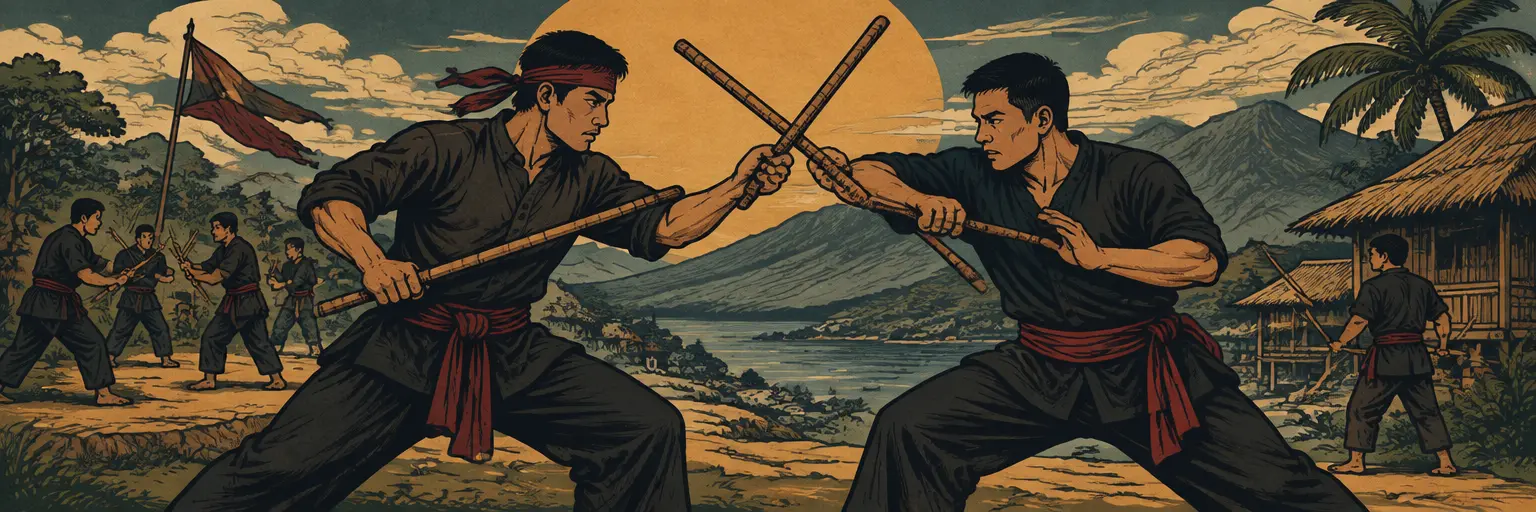
Discover the electrifying world of Arnis, Eskrima, and Kali—the Philippines’ legendary stick-fighting arts that blend lightning-fast strikes, fluid footwork, and razor-sharp precision. These interconnected systems are more than just weapon-based combat; they teach you to view any object as an extension of your body, sharpening reflexes and coordination that translate directly into empty-hand self-defense. Our Stick Fighting Fundamentals break down the core angles of attack, footwork patterns, and disarming drills that form the backbone of this dynamic art. Whether you’re a beginner seeking a new fitness challenge or a seasoned martial artist aiming to cross-train, you’ll learn the sinawali double-stick rhythms, twirling techniques, and the all-important “aliveness” training that builds real-world adaptability. Embrace the warrior’s mindset of the Filipino masters, where every strike is a lesson in timing and economy of motion. Dive in now to unlock the secrets of this battle-tested martial art—your journey to mastering the stick starts here! 🥢⚔️
🥋 Curious about starting Arnis Eskrima online, beginners? Discover the advantages and challenges of learning this Filipino martial art virtually, and find…
Read article
🥋 Eskrima training improves coordination skills, enhancing strength and agility through dynamic stick and weapon drills. This martial art develops not only…
Read article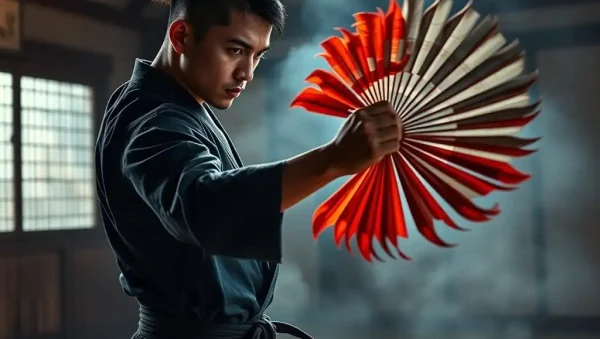
🔥 Discover the secrets behind the Eskrima Abaniko Fan Strike, a technique renowned for its deceptive speed and precise angles. Mastering this…
Read article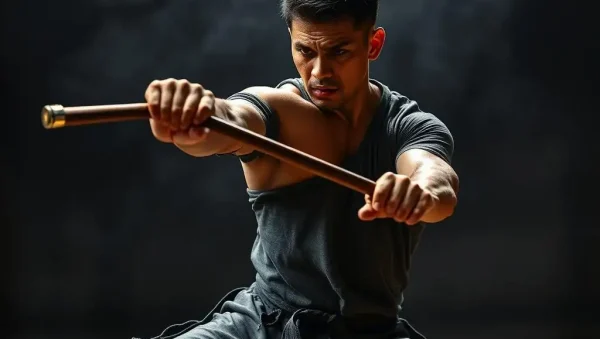
🥋 Discover how mastering Eskrima stick skills enhances empty hand combat, transforming weapon techniques into powerful self-defense methods. Eskrima stick empty hand…
Read article
⚔️ Explore the profound Arnis Eskrima philosophical mindset at MartialArtsMastery.org. Uncover the ancient wisdom and mental fortitude that forge true mastery in…
Read article
🥋 Discover essential Arnis stick fighting terms to kickstart your journey in Filipino martial arts. This guide introduces key terminology, enhancing understanding…
Read article
🔥 Discover the deadly art of Eskrima as we explore the crucial elements of movement, evasion, and timing that make this Filipino…
Read article
🌟 Unlock devastating counter-offense with "The Sumbrada Drill." Master intricate Eskrima stick counterforce techniques, transforming defensive blocks into offensive opportunities. Elevate your…
Read article
💪 Master the foundational Arnis roof block technique, your vital first line of defense. Learn how this essential Arnis roof block skill…
Read articleWelcome to the dynamic world of Arnis, Eskrima, and Kali—collectively known as Filipino Martial Arts (FMA). This subcategory focuses on the foundational skills of stick fighting, the core of these ancient yet highly practical systems. Whether you are a complete beginner or a seasoned martial artist seeking to expand your toolkit, understanding these fundamentals will unlock a comprehensive approach to weapon-based combat and empty-hand defense. Here, we break down the essential stances, striking patterns, footwork, and training methodologies that define this art, emphasizing its real-world applicability and deep cultural roots.
While names vary by region and instructor, Arnis, Eskrima, and Kali share a common technical DNA rooted in pre-colonial Filipino warfare. Arnis is the national martial art of the Philippines, often emphasizing sport and tournament play. Eskrima focuses more on practical combat efficiency, while Kali is frequently associated with the Visayan regions and includes a broader range of weaponry. Despite these nuances, all three prioritize the use of the rattan stick as an extension of the hand, teaching practitioners to flow seamlessly between weapon and empty-hand techniques. Understanding this unity helps you train without confusion, allowing you to appreciate the art’s adaptability across different schools and lineages.
For beginners, this subcategory clarifies that you are not learning a single "style" but rather a flexible framework. The fundamentals taught here—angles of attack, defensive blocks, and limb destruction—translate directly to knife, sword, or even improvised weapons. By mastering stick fighting basics, you gain a transferable skill set. Expect to explore the historical context but focus primarily on the biomechanics and tactical logic that make FMA so effective. This foundational knowledge ensures you can later specialize in any specific FMA branch with confidence and technical precision.
In Arnis/Eskrima/Kali, footwork is everything. The triangular footwork pattern is the signature movement, allowing practitioners to evade attacks while simultaneously positioning for counterstrikes. Stances, though often low and grounded in traditional practice, are not static; they are launching points for explosive movement. Your lead foot determines your range, and your rear foot provides power for rotation. Mastering these footwork fundamentals improves your balance and distance management, which are critical for avoiding a stick strike and closing the gap safely. Expect to drill shifting, stepping, and pivoting until they become second nature, as this mobility is your primary defense.
This subcategory breaks down the common stances—such as the ready stance, forward stance, and horse stance—and explains their tactical purposes. You will learn how to execute a quick forward step to land a strike, a backward shift to evade a thrust, and a side-step to flank your opponent. Training these movements on their own seems simple, but integrating them with stick strikes creates a formidable fighting rhythm. We emphasize that footwork is not just about moving; it’s about controlling the fight's tempo. Expect practical drills that you can practice at home, using cones or chalk marks to ingrain the triangular patterns into your muscle memory.
The core of all stick fighting in FMA is the set of 12 basic striking angles. These are not random swings; each angle represents a targeted line of attack designed to hit vital areas—from the temple and neck to the knees and wrists. Learning these angles provides a comprehensive offensive arsenal, as every strike can be delivered with overhead, forehand, backhand, or thrusting motion. Memorizing the 12 angles enables you to execute fluid combinations, making your attacks unpredictable and overwhelming. Expect to practice each angle repetitively, starting slowly with full range of motion before increasing speed and power.
In this subcategory, we illustrate each angle with clear descriptions and common application scenarios. For example, Angle #1 is a forehand strike to the left temple, while Angle #7 is a backhand strike to the right knee. You will also learn how to transition between angles seamlessly, such as flowing from a high strike to a low follow-up. The key is to understand that each angle can be performed while stepping forward, backward, or laterally. We also cover the proper grip—both the standard and reverse grip—and how to snap the wrist to generate whip-like speed. These fundamentals turn a simple stick into a devastating weapon when paired with disciplined practice.
Defense in Arnis/Eskrima/Kali is not about blocking force with force; it’s about redirection, timing, and immediate counterattacks. The basic blocks correspond to the 12 angles, meaning your stick meets your opponent’s strike at a complementary angle to deflect it safely. For example, Angle #1 is blocked with a rising forehand block, while Angle #3 (thrust to the stomach) is parried with a downward sweeping block. Learning these blocks teaches you to intercept attacks while keeping your hands in a position to strike back instantly. Expect to practice both static blocks and flowing deflections, where you redirect the incoming stick away from your body without stopping your own offensive momentum.
Beyond stick-on-stick defense, this subcategory introduces "defanging the snake"—a core FMA concept where you target the opponent’s weapon hand to disable their attack. Instead of merely blocking, you strike the hand with a quick, snappy motion. This turns defense into offense, a hallmark of Filipino martial arts. We also cover empty-hand defenses against stick attacks, using the same angular patterns to cave, parry, or trap the weapon arm. These fundamentals are invaluable for realistic self-defense, as they teach you to neutralize threats efficiently. Expect drills that pair you with a training partner to develop the speed and precision necessary for effective defense without flinching.
No martial art is complete without live application, and Arnis/Eskrima/Kali excels in structured drills that bridge fundamentals to combat. The most famous are "sinawali" (double-stick weaving) patterns, which develop hand-eye coordination, ambidexterity, and rhythmic flow. These drills are performed solo or with a partner, gradually increasing in speed. Additionally, "hubud" drills (trapping hands) teach tactile reflexes, allowing you to feel your opponent’s pressure and respond with counter-traps. These repetitive exercises build neural pathways that make defensive and offensive reactions instinctive, reducing conscious thought during a live encounter. Expect to spend considerable time on these drills, as they are the bridge between theory and practical skill.
Sparring, when introduced, is done with protective gear—helmet, gloves, and padded sticks—to ensure safety while preserving realism. This subcategory guides you through controlled sparring scenarios, starting with one-strike point exchanges and progressing to continuous free-flowing bouts. You will learn how to maintain proper distance, read your opponent’s intentions, and execute counters under pressure. While full-contact stick fighting can be intense, the fundamentals taught here ensure you prioritize control and sportsmanship. Expect to leave your ego at the door, as the goal is not to "win" but to refine your technique in a dynamic environment. These drills and sparring sessions are essential for developing the confidence and reflexes needed for real-world application.
No, absolutely not. Arnis/Eskrima/Kali is designed to be accessible to beginners. The fundamentals—footwork, angles, blocks—are taught from scratch, and the repetitive drills help build coordination over time. Even if you have no combat experience, you can progress steadily with regular practice and proper instruction, whether in-person or through online tutorials.
Beginners typically use a rattan stick, about 28 inches long and 1 inch in diameter. Rattan is lightweight, durable, and has a slight flex, making it safe for training. For home practice without a partner, you can use a wooden dowel or PVC pipe, but rattan is recommended for actual drills to mimic authentic weight and feel.
Yes, extremely effective. The movements, angles, and footwork in stick fighting translate directly to empty-hand self-defense. You learn to use your hands, forearms, and elbows as "sticks," and the trapping and grappling techniques complement your striking. The footwork also improves your ability to evade and create distance in any altercation.
You can memorize the 12 angles in a few days, but mastering them takes months. With consistent daily practice of 15-20 minutes, you’ll become comfortable within 4-6 weeks. However, true proficiency comes from drilling them in combinations and applying them in sparring, which typically takes a few months of regular training.
For safety during sparring, you need a fencing mask or padded helmet to protect your head and face, padded gloves to shield your hands and wrists, and forearm guards. A padded or rattan stick with appropriate weighting is essential. Additionally, wear a groin protector and a mouthguard for full protection.