Mastering Advanced Aikido Applications and Randori
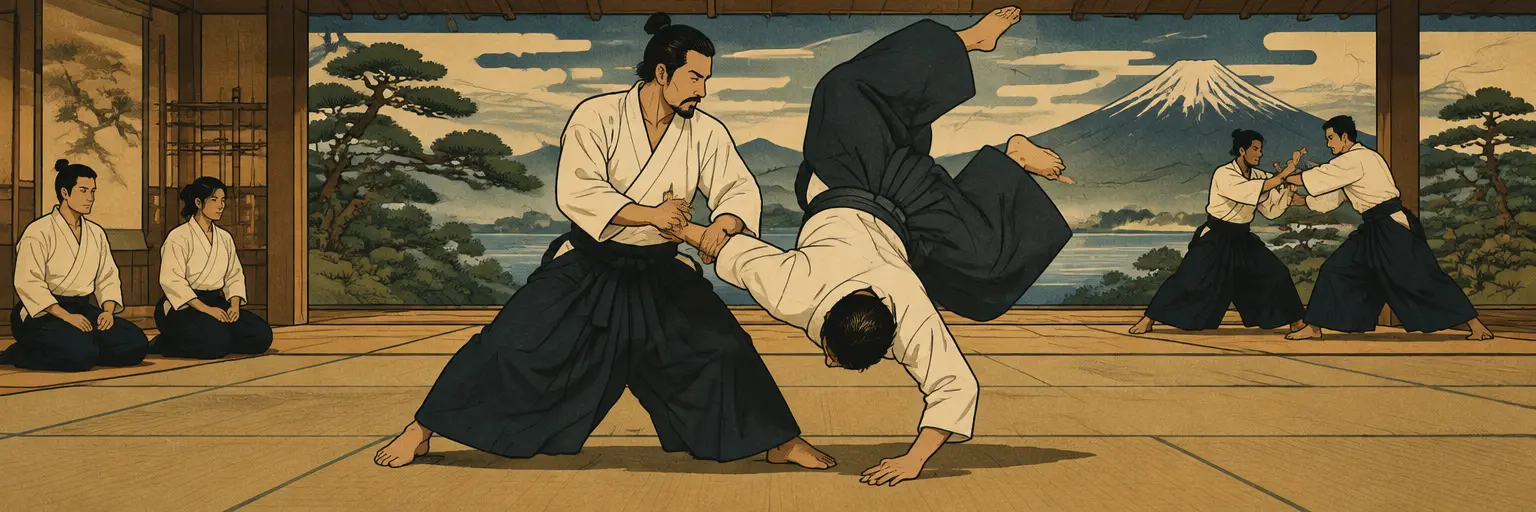
Welcome to the advanced realm of Aikido, where precise technique meets fluid adaptability. This subcategory on Martial Arts Mastery focuses on the strategic application of Aikido principles in dynamic, unpredictable scenarios, with a special emphasis on randori (multiple-attacker free practice). Here, we move beyond basic joint locks and throws to explore the subtle art of blending, timing, and spatial awareness that defines true mastery. Whether you are a seasoned practitioner or a curious enthusiast, this guide offers actionable insights into elevating your practice, improving your reaction speed, and understanding the deeper strategic layers of this modern Budo.
📜 The Strategic Depth of Advanced Waza 🥋
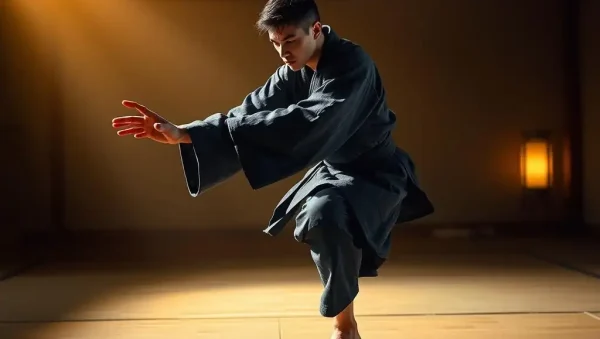
Advanced Aikido is not merely about executing more complex techniques; it is about understanding the why and when behind each movement. In this section, we deconstruct advanced waza (techniques) such as intricate kokyu-nage (breath throws) and nikyo applications against dynamic attacks. You will learn how to exploit an attacker's momentum and balance (kuzushi) with minimal effort, using circular motions and precise body positioning (hamni) to create decisive openings.
Expect to deepen your understanding of ma-ai (combat distance) and the importance of atemi (striking distractions) as facilitators, not primary weapons. This content focuses on refining your technical vocabulary so that your responses become instinctive and adaptive. By studying these applications, you will develop a more fluid and responsive style, ensuring that your Aikido is both effective in controlled practice and conceptually transferable to chaotic, real-world encounters.
⚔️ Randori: The Art of Multi-Attacker Flow 🤹
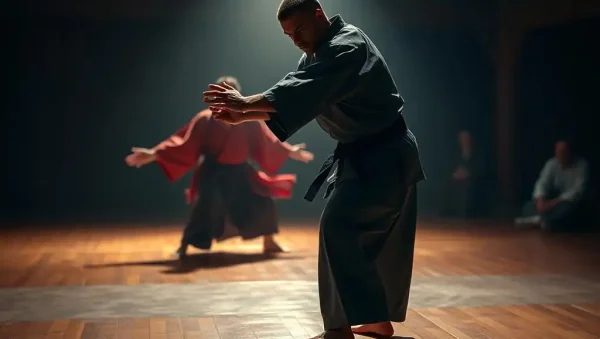
Randori, often called “free practice,” is the crucible of advanced Aikido. Unlike structured kata, randori requires you to continuously shift between attacks from multiple directions, blending with each new energy seamlessly. This H3 section breaks down the core principles for navigating chaos: maintaining a dynamic center, utilizing irimi (entering) over tenkan (turning) for control, and continuously moving to avoid being surrounded. You will learn how to read the ma-ai of multiple opponents simultaneously.
This section provides practical drills to build your zanshin (awareness) and reaction timing. We emphasize the importance of kaeshi-waza (reversals) and how to instantly transition between throws and pins as attackers close in. By internalizing these strategies, you will move with purpose and calm, transforming apparent pandemonium into a structured, flowing dialogue. This is where your technique becomes truly alive, proving that Aikido is both a physical art and a mental discipline of unshakable composure.
🧠 Tactical Response to Unpredictable Attacks 🌀
Advanced randori often involves unpredictable, non-standard attacks, such as grabs from behind, swinging punches, or combined strikes and holds. This section addresses these high-pressure scenarios, teaching you how to apply Aikido's core principles—blending, redirecting, and neutralizing—without relying on a fixed sequence. We explore the concept of henka-waza (changing techniques) to adapt mid-motion when an initial response is thwarted by an unexpected second attack.
You will learn to use your kamae (posture) and footwork to maintain safety and positional advantage, turning a disadvantageous position into a controlling one. The focus is on decisiveness and economy of movement, avoiding strength-based resistance in favor of anatomical leverage and timing. By practicing these tactical responses, you will cultivate the ability to remain calm and creative under duress, turning your knowledge into reflexive, practical self-defense that is both effective and aligned with Aikido's non-violent philosophy.
🔄 Integration of Weapons and Empty-Hand Flow 🗡️
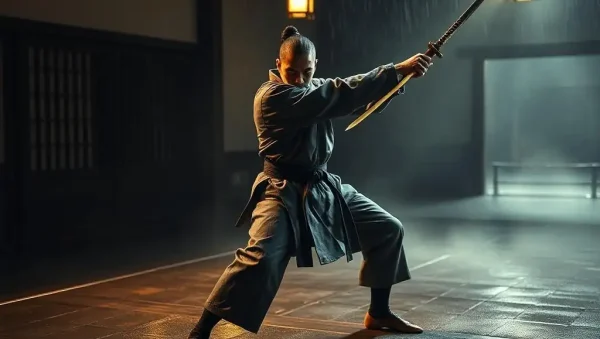
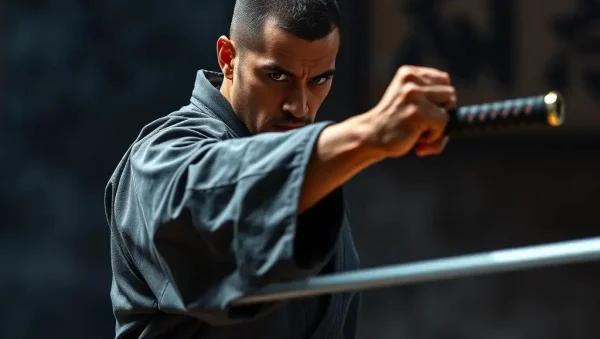
To truly master advanced applications, one must understand the intrinsic link between kenjutsu (swordwork) and jojutsu (staffwork) in Aikido. This section examines how suburi and paired weapons practice sharpen your ma-ai, timing, and sense of extension (ki-ken-tai). We highlight drills that transpose the same angles and cutting lines from the jo or bokken directly into your empty-hand techniques, reinforcing proper hip rotation and continuous, fluid movement during randori.
You will discover how weapons training improves your ability to manage distance against a knife or an over-committed lunge. This cross-training ensures that your Aikido is not just a series of arm grabs but a full-body, integrated system of movement. By internalizing the kamae and off-line footwork from weapons practice, you will enter randori with sharper reflexes and a deeper understanding of the underlying geometry of every technique, making your empty-hand defense more potent and dynamic.
🤝 Cultivating Mental Resilience & Zanshin 🧘
Advanced practice is as much about the mind as the body. This section focuses on developing zanshin—the continuous state of relaxed awareness and preparedness—that separates a technician from a true martial artist. We discuss strategies to maintain calm focus amid rapid attacks, using your breath and center (hara) to anchor your composure. You will learn to view randori not as a fight but as a cooperative and dynamic workout of perception and response.
Here, the emphasis is on mushin (“no-mind”), the state of flow where your techniques emerge without conscious calculation. We provide mental drills to enhance your peripheral vision and predictive intuition, allowing you to preempt an attack’s trajectory. By strengthening your mental resilience and focus, you will not only excel in randori but also translate this unwavering presence of mind into daily life. This is the supreme goal of Aikido: to forge an indomitable spirit through calm and compassionate action.
Frequently Asked Questions
What is the difference between randori and regular kata practice?
Kata is a pre-arranged, choreographed sequence of techniques with a fixed partner, focusing on form and precision. Randori is free-form practice with one or multiple attackers who strike or grab at will, requiring you to spontaneously blend and respond. While kata builds foundational muscle memory, randori develops adaptability, timing, and strategic decision-making, simulating the unpredictability of a real encounter without the full intention to harm.
How important is physical fitness for advanced Aikido and randori?
While Aikido emphasizes leverage and timing over brute strength, advanced randori requires a solid baseline of cardiovascular endurance, core stability, and lower-body strength. Maintaining low stances, continuous pivoting, and absorbing repetitive impacts is physically demanding. Regular aerobic and strength training, especially for legs and hips, will significantly improve your stamina and ability to practice longer and more effectively, allowing your techniques to remain sharp and controlled under fatigue.
Can advanced Aikido applications work against a larger, stronger attacker?
Yes, advanced Aikido is specifically designed to neutralize strength advantage by using the attacker’s momentum and body mechanics against them. Techniques in randori focus on off-balancing (kuzushi), redirecting force, and attacking anatomical weak points like joints and neck. By maintaining perfect ma-ai and blending fully, you can effectively control a larger opponent without matching their physical power, making it a highly practical system for self-defense.
How do I practice advanced techniques at home without a partner?
Home practice is excellent for refining your movement. You can practice solo suburi (sword/sword strokes) with a bokken or jo to improve your footwork and body dynamics. Additionally, shadow randori involves visualizing attackers and moving through sequences smoothly, focusing on flow and balance. Emotionally, you can use a heavy bag or resistance bands to mimic grips, but always prioritize correct posture, tenkan pivots, and breathing over speed or forceful repetition.
Is it necessary to learn weapons to improve empty-hand randori?
Weapons training is highly beneficial and often considered essential in aikido for advanced practitioners. Practicing with the bokken and jo teaches precise angles, distance control (ma-ai), and the importance of a strong center line. These principles translate directly to empty-hand techniques, improving your timing and extension. While not strictly mandatory, weapons practice accelerates your understanding of body mechanics and makes your empty-hand randori more grounded, fluid, and strategically sound.