Does NoGi Training Neglect Key BJJ Principles? A Critical Examination
🤔 Does NoGi training neglect key BJJ principles? This article critically examines whether the absence of gi-based techniques impacts foundational concepts, exploring…
Read article
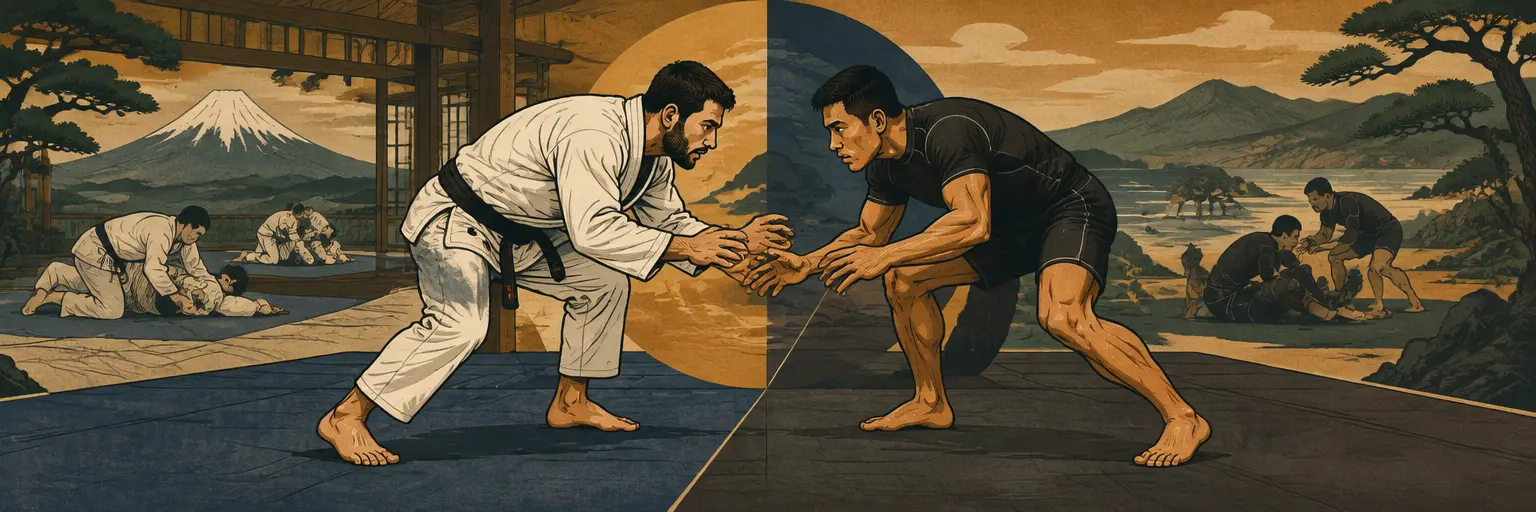
Brazilian Jiu-Jitsu offers two distinct yet equally profound training worlds: Gi and No-Gi. The Gi emphasizes grips, lapel controls, and friction-based submissions, honing patience and technical precision, while No-Gi prioritizes speed, athleticism, and slippery limb controls that translate directly to modern MMA and self-defense. Mastering both not only diversifies your attack arsenal but also sharpens your adaptability, reaction timing, and positional awareness. Whether you prefer the traditional chess-like battles of the kimono or the fast-paced scramble of rash guards, understanding the unique challenges and rewards of each style will accelerate your BJJ journey, prevent stagnation, and build a well-rounded grappling game. Dive into the nuanced techniques, guard passes, and submissions that define each format, and discover why integrating both is the ultimate key to total mat mastery 🔥🥋🤼♂️.
🤔 Does NoGi training neglect key BJJ principles? This article critically examines whether the absence of gi-based techniques impacts foundational concepts, exploring…
Read article
🥋 Discover the best BJJ gi for beginners with our comprehensive guide, exploring essential factors like weave quality, fit, and top brands.…
Read article
🥋 Explore the art of Gi-specific takedowns with our comprehensive Gi takedown techniques tutorial, emphasizing the effective use of the kimono to…
Read article
🤼♂️ Discover how martial arts gi weapon techniques transform the traditional kimono into a formidable tool for self-defense, showcasing innovative tactics that…
Read article
🥋 Discover the essential differences in BJJ guard passing gi noGi, exploring strategic variations that maximize effectiveness in both disciplines. MartialArtsMastery.org offers…
Read article
✨ Embrace the discipline of Gi training benefits mastery by slowing your pace. Discover how deliberate practice within traditional attire unlocks deeper…
Read article
🥋 Transitioning from Gi to NoGi requires mastery of JiuJitsu submission grappling techniques adapted for faster, more dynamic combat. Explore essential strategies…
Read articleBrazilian Jiu-Jitsu (BJJ) offers two distinct yet complementary training paths: the traditional Gi (kimono) and the modern No-Gi (rash guard and shorts). Both approaches develop grappling mastery but demand different grips, movements, and strategies. This subcategory breaks down the technical, tactical, and practical differences between Gi and No-Gi training, helping you decide which to prioritize or how to integrate both into your practice for maximum effectiveness.
In Gi training, the fabric becomes a primary weapon. You can grip collars, sleeves, and pant legs to slow down opponents, establish dominant positions, and execute complex chokes like the cross-collar or bow-and-arrow. This emphasis on gripping builds incredible hand and forearm strength, as well as patience, since position often evolves from systematic grip fighting. No-Gi, conversely, eliminates all fabric grips, forcing you to rely on body locking, underhooks, overhooks, and wrist control. The lack of handles accelerates the pace, rewarding fast transitions, explosive movements, and constant re-adjustment of your base.
Understanding these differences is crucial because your guard game, passing style, and submission arsenal will shift dramatically between the two. Gi players often use lapel guards and sleeve drags, while No-Gi athletes favor butterfly, X-guard, and leg entanglement variations. By studying both, you develop a comprehensive grappling vocabulary that translates effectively across any ruleset or self-defense scenario.
The submission landscape in No-Gi is heavily skewed toward chokes that use the forearms, biceps, and neck cranks—like the guillotine, darce, and anaconda—because there is no collar to grab. Joint locks, particularly on the legs (heel hooks, toe holds, knee bars), are also more prevalent and often permitted in No-Gi competition, especially under rules like ADCC or EBI. Gi submissions introduce a wide range of lapel chokes, collar drags, and fabric-based strangles that require precise hand positioning and patience. The friction of the Gi also enables you to trap a limb or head more easily, creating unexpected angles for armbars and triangles.
From a defensive perspective, escaping submissions differs too. The Gi provides extra friction to slow down escapes, but also gives the defender fabric to pull on for frames. In No-Gi, sweat and skin can make escapes slippery and rapid, demanding tighter body positioning and immediate reaction. Learning the mechanics of both submission families ensures you are never caught off guard and can attack with whatever tools are available to you.
Training in the Gi naturally slows the game down. Because grips act as brakes, you spend more time in static positions, methodically advancing your guard or pass. This slower pace is excellent for developing deep positional awareness and problem-solving under pressure. You learn to neutralize strength advantages with leverage, and you develop an almost chess-like approach to sequences. No-Gi rolling, however, is usually fast-paced and athletic. Fewer grips mean less friction, so scrambles, stand-ups, and dynamic guard pulls are common. This style improves your reaction time, cardiovascular conditioning, and ability to survive bad positions quickly.
Strategically, Gi players often stall to clear a lapel for a choke, while No-Gi players hunt for leg entanglements or front headlocks during transitions. The mental game also shifts: Gi demands patience and technical precision, whereas No-Gi rewards aggression and improvisation. By cross-training both, you build a versatile strategy that can slow down wrestlers in No-Gi or speed up your Gi game to outpace patient opponents.
Your gear directly influences your training experience. In the Gi, a properly fitted, high-quality kimono (typically 350-450 GSM) is essential for both comfort and durability. You will also need a belt that corresponds to your rank, plus optional accessories like knee pads and mouthguards. In No-Gi, a snug rash guard and board shorts or grappling tights are standard, but you must invest in good no-gi-specific grips—meaning your fingers are less likely to jam, but your toes and ankles are more exposed to friction burns. Finger taping is common in Gi training to prevent joint strain from relentless grip fighting.
Injury prevention also differs. The Gi can cause mat burn on your neck and fingers, while No-Gi increases risk for knee and ankle injuries during quick scrambles and leg locks. Always warm up your fingers, wrists, and hips, and tap early, especially when learning new leg attacks. Wearing the correct gear—plus maintaining proper hygiene—reduces skin infections and keeps you healthy for long-term progress in both styles.
Major BJJ competitions often separate Gi and No-Gi divisions. IBJJF rules permit a wide range of collar chokes and lapel play in the Gi, while No-Gi events like ADCC use submission-only or points systems that allow heel hooks. Knowing these rulesets helps you tailor your training for specific goals. For self-defense, the Gi has a clear advantage because it simulates street clothing—jackets, shirts, and hoodies provide real grips and friction. Training in the Gi teaches you to control an attacker who is wearing everyday clothes. However, No-Gi is equally vital for defending against wrestling and MMA-style attacks, where removing your shirt is common.
The best practitioners blend both. By drilling escapes and submissions in the Gi, you become more precise; by rolling No-Gi, you become sharper and more adaptive under slippery conditions. Whether aiming for competition medals or practical self-defense, a balanced program ensures you are never limited by the absence or presence of fabric.
Most schools recommend starting with the Gi because it teaches you fundamental control and mechanics at a slower pace, building a solid positional base. However, No-Gi is equally valuable for learning body movement and escapes. Ideally, beginners should train both from the start, as each reinforces the other and prevents one-dimensional skill development.
Absolutely. Cross-training in both styles accelerates overall grappling intelligence. You will develop stronger grips and control from the Gi, plus faster reactions and scrambles from No-Gi. Just ensure you alternate rest days and listen to your body, as both styles cause different types of muscular fatigue and joint stress.
No. The same belt system applies to both, and your rank stays consistent across Gi and No-Gi. Some academies award separate rankings for No-Gi only, but most unify them. Your instructor will promote you based on your overall grappling ability, which includes both styles.
No-Gi has a higher incidence of toe, ankle, and knee injuries due to the lack of fabric friction, allowing faster leg movements and heel hooks. The Gi poses more finger, hand, and neck skin burns, plus repetitive grip strain. Wearing proper gear and tapping early minimizes both risk profiles.
Gi training is often considered more practical for self-defense because it mimics gripping jackets and shirts, allowing you to control an attacker wearing normal clothes. However, No-Gi skills are essential for defending against slippery, sweaty, or shirtless attackers. A balanced training of both is the most effective self-defense approach.