Explore the Heart of Aikido: Its Core Principles and Philosophy
Welcome to our dedicated guide on Aikido: Core Principles and Philosophy, a cornerstone of Individual Martial Arts Styles at MartialArtsMastery.org. Unlike many combat systems that focus solely on striking or grappling, Aikido is a profound martial art rooted in harmony, non-resistance, and the redirection of energy. Here, we break down the philosophical foundation and technical principles that make Aikido a unique path for personal growth and practical self-defense. Expect to uncover how ki (internal energy), circular motion, and blending with an attacker's force transform conflict into resolution. Whether you’re a beginner or a seasoned practitioner, this deep dive will illuminate the spiritual and tactical essence of O-Sensei’s art, enhancing your broader understanding of martial arts history and training techniques.
🕊️ The Principle of Non-Resistance: Blending Over Blocking
The first cornerstone of Aikido philosophy is non-resistance—the idea that you never meet force with force. Instead of opposing an attack, the practitioner learns to blend with the opponent’s movement, stepping into their path and redirecting their momentum. This principle, drawn from aiki, emphasizes timing and spatial awareness over brute strength, making it effective for smaller defenders. On this page, expect detailed explanations of how omote (entering) and ura (turning) techniques embody this philosophy, alongside practical drills to cultivate a "soft" yet devastatingly effective response to punches and grabs.
For the martial artist, this section will also clarify why Aikido’s non-resistance differs from passive avoidance. It is an active, dynamic process that involves centripetal and centrifugal forces, pushing you to stay relaxed under pressure. Expect insights from legendary practitioners like Morihei Ueshiba, who viewed the battlefield as a mirror of the mind. By mastering this core principle, you’ll learn to resolve confrontations with minimal harm, aligning with the art’s ultimate goal of universal peace. This philosophy is not just theoretical—it underpins every ki-tsuki strike and kote-gaeshi wrist lock you will practice.
🌀 Circular Movement and the Redirection of Energy
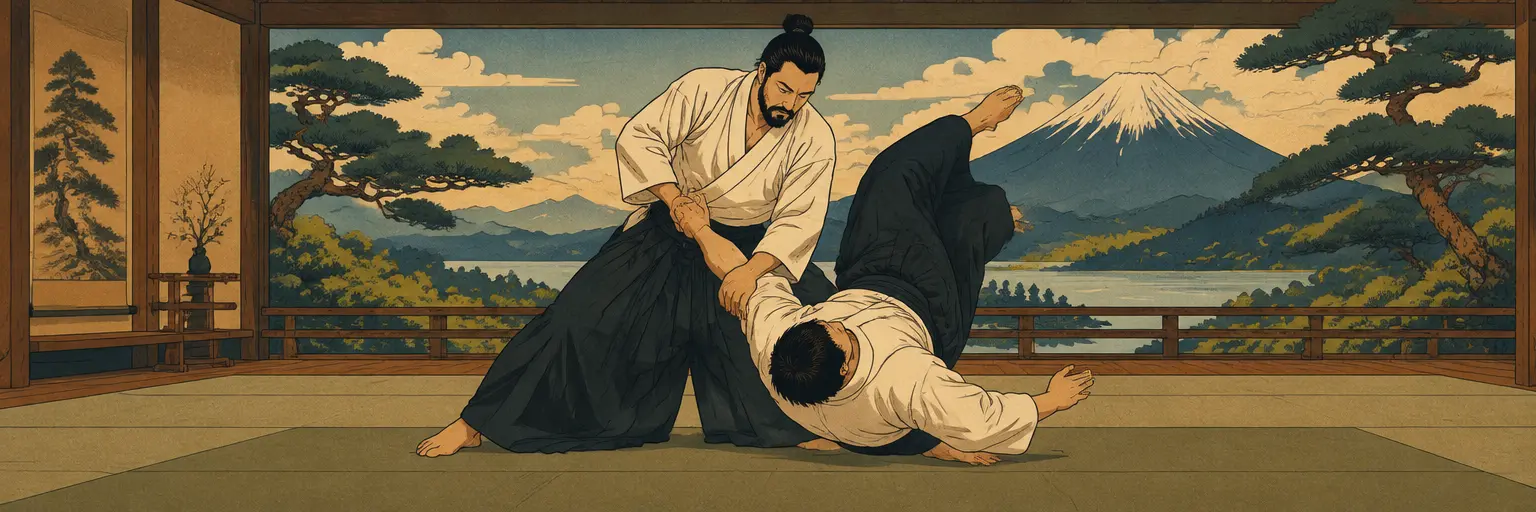
Aikido is often called the "art of the circle," because its techniques rely on circular footwork and spinning body motions to unbalance an opponent. Unlike linear martial arts like Karate, Aikido teaches you to pivot, turn, and spiral around the attack, converting linear aggression into a circular pathway. This section will break down the biomechanics behind irimi (entering) and tenkan (turning), showing how a simple wrist hold can become a powerful joint lock or throw. Expect step-by-step breakdowns of classic movements like shiho-nage (four-direction throw) and kaiten-nage (rotary throw), highlighting how the circle creates leverage.
Practically, this principle teaches you to use the opponent’s own momentum against them—a core self-defense strategy that requires no brute strength. Through the lens of martial arts science, you’ll understand why circular paths are more efficient for generating power and maintaining balance. The page will include visualizations of energy flow, connecting the philosophy of wa (harmony) to physical mechanics. By internalizing this principle, you’ll find that your training tips become more fluid, reducing fatigue while increasing effectiveness. This is where Aikido truly shines as a practical system for real-world scenarios, where attackers are often larger and unpredictable.
🧘 The Role of Ki and Breath Control in Practice
Central to Aikido’s philosophy is the concept of ki—often translated as life force or internal energy. Unlike physical force, ki is cultivated through breath control, posture, and mental focus. In this subsection, expect an in-depth exploration of how kokyu-ho (breath power) is trained, not as mystical magic, but as a measurable increase in stability and extension. You’ll learn exercises to develop ki-ken-tai-no-itchi (unity of spirit, sword, and body), which enhance your martial arts training by making your movements seem effortless yet unstoppable. We’ll demystify common misconceptions about ki, grounding it in practical body mechanics and relaxation techniques.
For the philosophy enthusiast, this part will link Aikido’s breathing principles to Zen Buddhism and Shinto traditions, revealing how O-Sensei integrated spiritual awakening into a combat art. Expect guided meditations and breathing exercises that you can incorporate into your daily routine, improving your overall wellbeing and stress management. On this page, you’ll find that the development of ki is not separate from technique—it is the invisible force that powers every lock and throw. By mastering breath control, you’ll learn to remain calm in chaotic situations, a skill that is both a philosophical ideal and a tactical advantage in self-defense.
⚔️ Conflict Resolution and the Path to Personal Mastery
Aikido’s ultimate principle is the resolution of conflict, not through defeat, but through mutual growth. This subsection will explore the ethical framework of the art, teaching you to view an attacker as a partner in a shared dynamic rather than an enemy. Expect discussions on the concept of masakatsu agatsu (true victory is self-victory), which emphasizes overcoming your own fear and ego. We’ll provide case studies of how Aikido’s principles apply to verbal disagreements and professional conflicts, making it a practical life skill beyond the dojo. This page will also profile historical figures who embodied these ideals, from Ueshiba to modern masters, showing how peace can be an active, powerful stance.
From a training perspective, this section will guide you on how to approach randori (multi-person sparring) with a philosophical mindset, turning chaos into ordered movement. You’ll learn that the martial arts psychology of Aikido is about staying present, not planning for a specific outcome. Expect practical advice on cultivating zentai (whole-body awareness) and satori (insight) during practice, which will enrich your historical overviews of other martial arts. Ultimately, this is the most transformative aspect of Aikido—it is a path of constant refinement where physical skill is inseparable from ethical action, confirming why this art remains a timeless discipline in the world of martial arts.
🛡️ Practical Self-Defense and Real-World Application of Principles
While philosophy is crucial, Aikido’s core principles are also highly practical for self-defense. This subsection will explain how non-resistance and circular movement translate into defending against grabs, strikes, and even armed attacks. Expect a breakdown of atemi-waza (distracting strikes) that create openings for throws or locks, and learn how to use kamae (stance) to protect vital areas. We’ll provide specific scenarios—such as a wrist grab, a front choke, or a wild punch—and show how each principle is applied step-by-step, emphasizing leverage and timing over strength. This is essential content for anyone seeking practical self-defense strategies without resorting to violence.
Furthermore, this page will discuss the limitations and advantages of Aikido in street situations, offering an honest assessment for the modern practitioner. You’ll learn about the importance of ma-ai (distance control) and zanshin (awareness) to avoid conflicts before they begin. Expect tips on how to incorporate Aikido’s principles into your daily routine, from sitting to walking, to build reflexive responses. By comparing Aikido to other martial arts styles, this section will show you why it remains a viable option for personal protection, especially when combined with other systems. Ultimately, you’ll gain a balanced view of how philosophy does not compromise effectiveness—it enhances it.
Frequently Asked Questions
What is the main philosophy behind Aikido?
The main philosophy is the reconciliation of conflict through non-resistance and harmony. It teaches practitioners to blend with an attacker’s force, redirecting it into circular movements that neutralize aggression without causing severe injury. This reflects the founder’s vision of using martial arts to promote peace and self-mastery, rather than dominance.
Do I need to be physically strong to practice Aikido?
No, Aikido is designed for individuals of all sizes and strengths. Its core principles rely on timing, leverage, and body mechanics, not muscular power. By using circular motion and blending with the opponent’s momentum, smaller practitioners can effectively control larger attackers. It is an excellent choice for older adults or those new to martial arts.
How does Aikido differ from other martial arts like Judo or Karate?
Unlike Karate’s linear strikes or Judo’s throws from a clinch, Aikido emphasizes continuous circular motion and redirection of energy. It uses joint locks, pins, and throws to neutralize threats, often without striking. Philosophically, it prioritizes peaceful resolution over winning, making it a unique blend of self-defense and spiritual development.
Can Aikido be used for real self-defense?
Yes, when trained realistically, Aikido can be effective in self-defense. It focuses on managing aggressive attacks, controlling distance, and using an assailant’s momentum against them. However, it requires dedicated practice to develop the timing and awareness needed. Many practitioners complement Aikido with striking arts to cover all self-defense aspects.
What does "ki" really mean in Aikido, and can I develop it?
"Ki" refers to internal energy or vital life force, developed through breath control, relaxation, and mental focus. It is seen as a cohesive extension of the body and mind. Through specific exercises like kokyu-ho, practitioners learn to generate power from the core, improving stability and the effectiveness of techniques. It is a skill.