The FigureEight Drill: A Universal Exercise for Staffs, Swords, and Chain Whips
✨ Master the Figure Eight Staff Drill, a versatile technique applicable to staffs, swords, and chain whips. Elevate your martial arts proficiency…
Read article
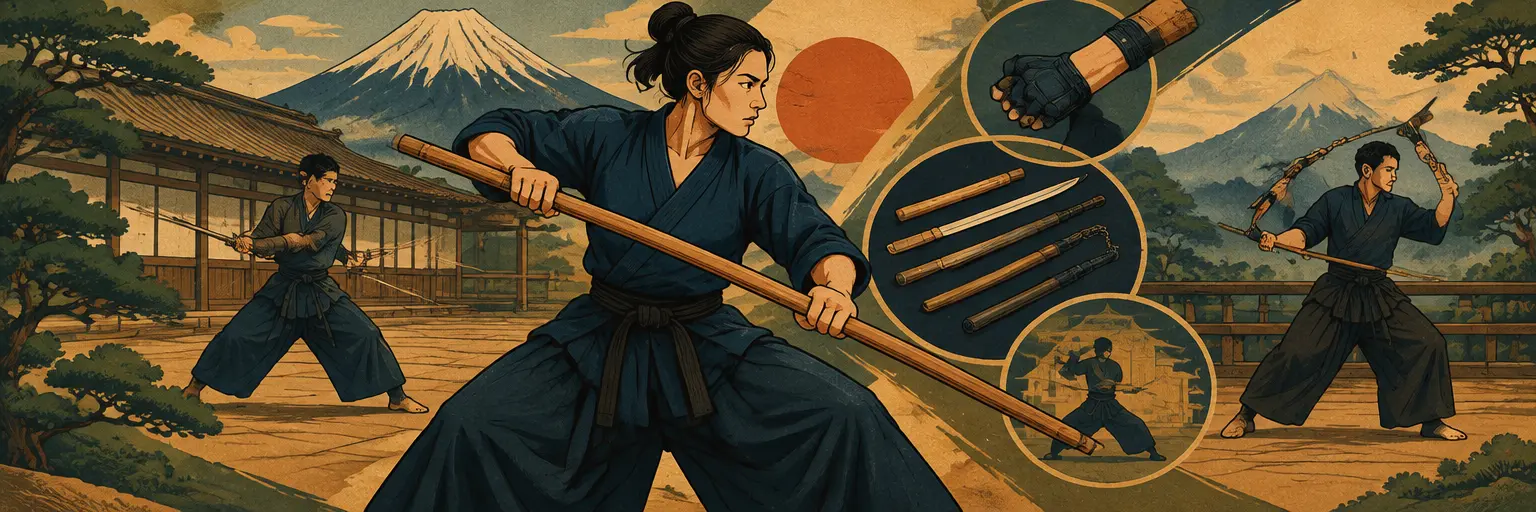
Unlock the full potential of your practice with training with martial arts weapons, where precision meets discipline in every swing, block, and thrust. From nunchaku and bo staff to katana and escrima sticks, this detailed study transforms weapon handling into a fluid extension of your body, boosting coordination, focus, and functional strength. Safety is paramount—learn essential protocols for protective gear, grip control, and spatial awareness to prevent injuries during partner drills and solo forms. Master structured drills that build muscle memory and reaction speed, then flow into traditional forms (kata) that preserve historical techniques and cultivate a meditative rhythm. Whether you’re a beginner seeking foundational stances or an advanced practitioner refining advanced combinations, these methods enhance your martial arts mastery by deepening your understanding of distance, timing, and energy transfer. Elevate your training with proven strategies that bridge ancient wisdom and modern athleticism, ensuring every session is both safe and powerfully effective. Dive into the art of weapon mastery and transform your discipline today.
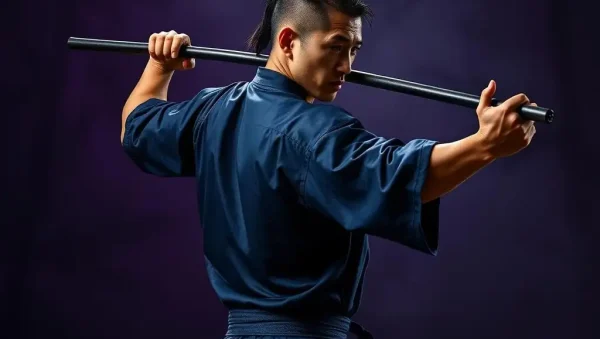
✨ Master the Figure Eight Staff Drill, a versatile technique applicable to staffs, swords, and chain whips. Elevate your martial arts proficiency…
Read article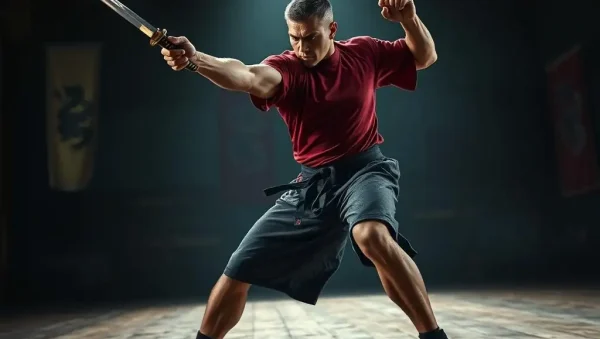
💥 Master your martial arts with essential weapon training warm up cool down routines. Prevent injuries and maximize performance, ensuring peak readiness…
Read article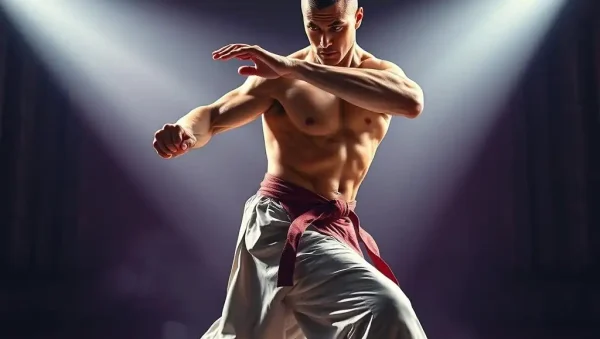
💥 Go beyond rote memorization. Discover the true purpose of every movement in your weapon forms, unlocking potent Bunkai weapon form applications…
Read article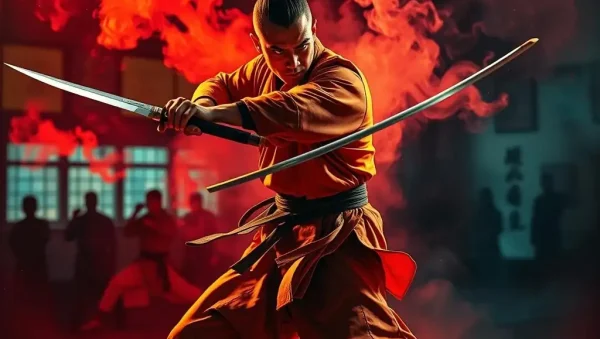
🛡️ Master weapon-based multidirectional martial arts with our comprehensive drills. Enhance your defense and attack strategies, covering historical techniques and practical application…
Read article
💪 Unlock peak performance with our expert guide to weapon kata memorization techniques. Master your movements and elevate your martial arts journey…
Read article
🏆 Unlock peak performance in martial arts by mastering "mental rehearsal for complex weapon forms." This article on MartialArtsMastery.org reveals how visualizing…
Read articleTraining with martial arts weapons is a profound journey that transforms a practitioner’s coordination, focus, and tactical understanding. Unlike empty-hand forms, weapon work demands precise timing, spatial awareness, and respect for the tool's lethal potential. This subcategory of Martial Arts Mastery dives deep into the safety protocols, structured drills, and traditional forms (kata) that build a safe and effective training environment. Whether you are drawn to the flowing staff, the swift sword, or the complex nunchaku, this guide will help you progress methodically while avoiding common pitfalls. Expect practical advice rooted in both historical tradition and modern coaching science, ensuring your weapon practice is as rewarding as it is safe.
Before any weapon touches your hands, safety must become second nature. This section covers spacing, protective gear, and weapon inspection, which are critical to preventing injury. You will learn how to establish a clear training zone, why wearing padded gloves and eye protection matters even during slow practice, and how to check for cracks or splinters in wooden weapons or loose fittings on metal ones. We emphasize the "dry run" method: visualizing the full motion without the weapon, then repeating it with a lightweight training version.
More importantly, we address the psychological aspect—cultivating a calm, present mindset that treats every session as a serious rehearsal. Understanding the danger zone (the arc of your strike and your partner's movement) helps you control your energy. By integrating these protocols into every warm-up, you build muscle memory for safety that carries over into high-intensity sparring or performance. This foundation is what separates disciplined practitioners from reckless hobbyists.
Drills are the bridge between holding a weapon and wielding it effectively. Here, we break down solo drills like the "figure-eight" for the staff or "strike-retract" sequences for the sword, focusing on grip transitions and body alignment. Next, we introduce partner drills with controlled contact—such as the "step-draw" exercise—where one partner attacks slowly while the other practices parries and counter-strikes. These partner drills teach distance management and reaction timing without the chaos of free sparring.
For intermediate and advanced students, we explore shadow-sparring and reaction drills using padded targets. A key drill is the "random attack" where a coach calls out a strike direction, forcing you to respond with the appropriate block. This builds decision-making speed. We also stress the importance of slow, deliberate repetition—going at 50% speed to perfect mechanics before adding power. Each drill is designed to be scalable, allowing you to increase intensity only when your form remains flawless. This systematic approach prevents bad habits and accelerates muscle memory.
Forms, or kata, are choreographed patterns that preserve a weapon’s techniques against imaginary opponents. This section dissects the structure and hidden applications of classic forms, such as the Bo kata "Sai-fa" or the Katana "Kata of the Rising Sun". You will learn to view each movement as a defensive response, not just a dance. For example, a wide circular cut might actually be a disarm against a spear thrust. We guide you through breaking down these sequences into beginner, intermediate, and advanced segments, so you can memorize and polish step-by-step.
Beyond memorization, we focus on rhythm, expression, and intent. A form should feel like a conversation with an invisible opponent—knowing when to tense and when to relax, when to breathe, and when to strike with explosive power. We also discuss the historical context: how forms evolved from battlefield necessity to codified practice. By understanding the "bunkai" (applications) within each stance and strike, your kata transforms from a hollow recitation into a dynamic combat tool. This deepens your appreciation and improves your practical fluency with the weapon.
Not all weapons suit every practitioner. This section helps you match your body type, personality, and training goals to the right tool. The bo staff is excellent for building grip strength and long-range control, while the sword demands precise edge alignment and wrist flexibility. For those seeking fast coordination, nunchaku offers rhythm and dexterity, but has a steeper learning curve. We compare the pros and cons of each—covering weight, length, and training material (wood vs. foam vs. aluminum).
We also highlight transitional training—how mastering one weapon enhances your empty-hand skills and vice versa. For example, staff work improves your jab distance, while sword work refines your forearm rotation for palm strikes. We advise beginners to start with a lighter, safer weapon like the foam staff to build confidence, then progress to heavier models. Ultimately, the right weapon is the one you’ll practice consistently. Our guidance ensures you make an informed choice that keeps your training engaging and injury-free.
Once your safety, drills, and forms are solid, you can move to controlled sparring with protective gear and padded weapons. This section covers legal and ethical boundaries of weapon sparring, including essential equipment (helmet, chest guard, and hand protection) and rule sets (points-based vs. continuous). We teach you how to combine your solo and partner drills into fluid exchanges, using feints, footwork, and angle changes to create openings. Expect to learn counter-attack sequences that exploit your opponent's overcommitment.
We also emphasize flow drills that blend four to six techniques into a seamless response, simulating real combat pressure. Beyond the mechanical, we discuss the mental game: maintaining calm under attack, reading intent from shoulders and hips, and building the courage to close distance. By integrating weapon work with sparring, you apply your forms in a dynamic, unpredictable setting—transforming choreography into instinct. This is where weapon mastery becomes martial—practical, decisive, and deeply connected to your body's natural responses.
No, but a basic grasp of footwork and body mechanics helps. Beginners should start with basic solo drills on a lightweight staff or foam sword, focusing on grip and stance. We recommend at least three months of empty-hand practice to build coordination, but it is not a strict prerequisite. Always seek a qualified instructor for live partner drills.
For safe sparring, you need a fencing mask or a padded helmet, chest protector, padded gloves, and a groin cup. Additional shin guards are advised for low strikes. Never use hardwood or metal weapons for free sparring—only foam, plastic, or padded models designed for contact. Check gear for damage before each session.
Consistency beats quantity. Practice your primary form at least three times per week for 15–20 minutes, focusing on slow, correct execution. Add two short daily sessions (5 minutes) for grip and wrist mobility drills. With this frequency, you’ll notice improved fluidity within four to six weeks.
Yes, indirectly. Weapon drills enhance your reaction speed, spatial awareness, and wrist/forearm strength, which translate to empty-hand defense. For example, a sword parry trains your forearm to block a knife strike, and staff work improves your ability to manage distance. However, always pair weapon practice with dedicated empty-hand self-defense training.
Start with a foam or soft-padded nunchaku and practice over a bed or mat to prevent floor damage. Learn basic figure-eights and strikes slowly, keeping your wrists loose. Avoid practicing in tight spaces and always check that the connecting cord is secure. Once you’ve mastered control at slow speed, you can upgrade to wooden ones for forms.