Selecting Your Ideal Spear: A Guide to Length, Weight, and Balance
🗡️ Master the art of the spear! This guide unlocks the secrets to selecting the perfect weapon, focusing on optimal spear length…
Read article
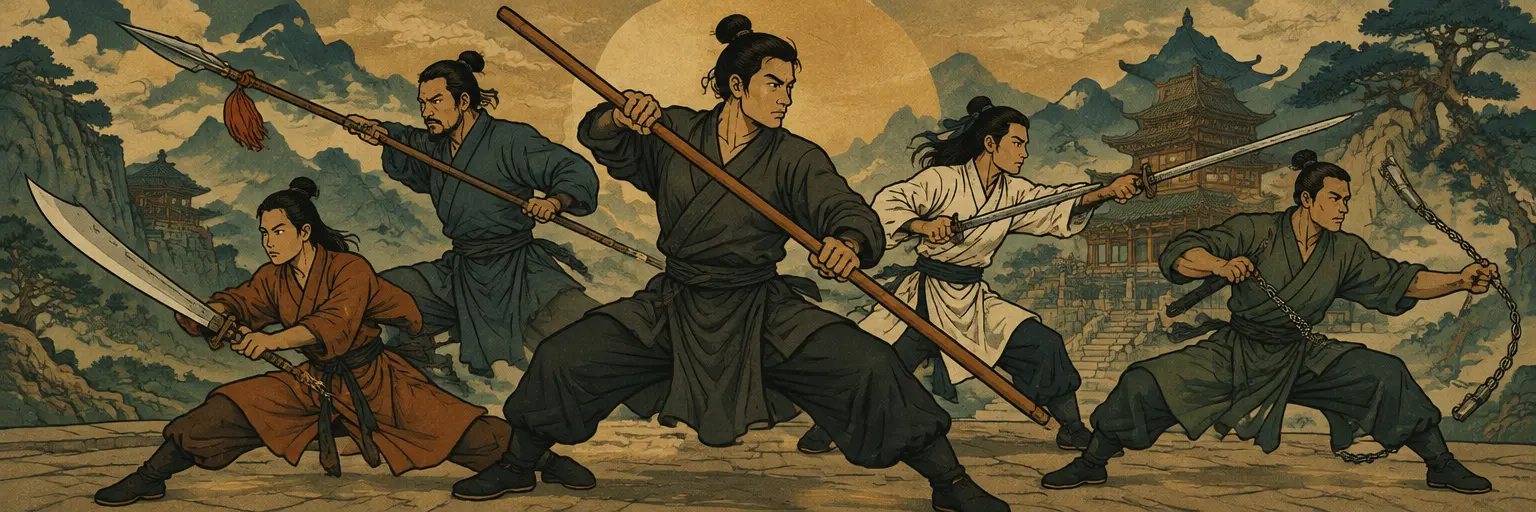
Discover the enduring legacy of Chinese weaponry—from the versatile staff and piercing spear to the powerful broadsword, the elegant straight sword, and the fluid, unpredictable chain whip. These iconic tools are more than combat instruments; they are extensions of martial philosophy, demanding precision, balance, and deep mental focus. Whether you’re a seasoned practitioner or a curious enthusiast, this detailed study unveils the historical roots, distinct techniques, and practical applications of each weapon, enriching your understanding of traditional kung fu and enhancing your training versatility. Dive into the art of moving with intent, mastering distance, and channeling energy through steel and wood—perfect for those seeking to deepen their martial arts knowledge or refine their self-defense repertoire. Unlock the secrets of these timeless classics and elevate your practice with insights that bridge ancient wisdom and modern application.
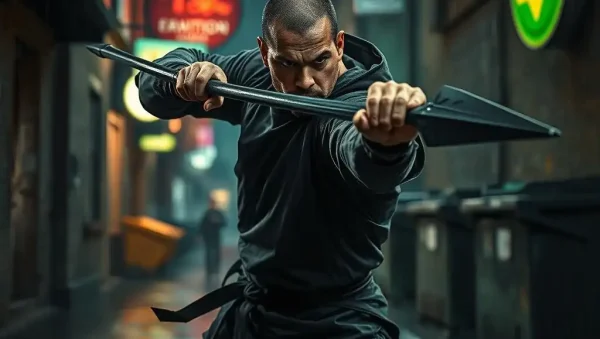
🗡️ Master the art of the spear! This guide unlocks the secrets to selecting the perfect weapon, focusing on optimal spear length…
Read article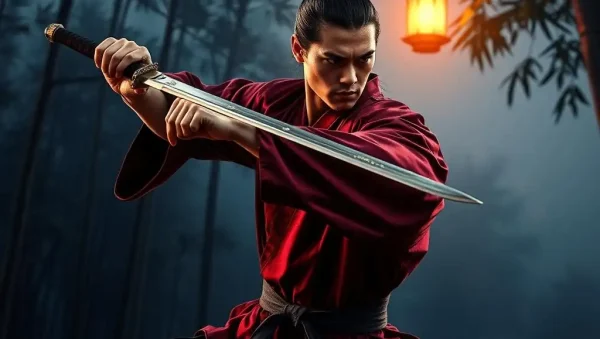
⚔️ Delve into the elegant Chinese Jian sword history, a symbol of noble lineage and martial prowess. Explore its evolution, craftsmanship, and…
Read article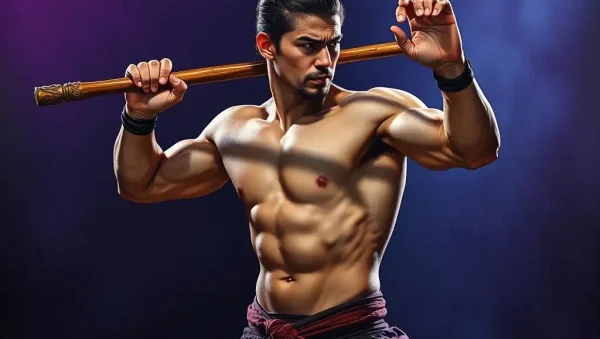
💪 Unlock devastating force and unwavering control with expert staff grip techniques. Master the art of wielding your weapon for ultimate power…
Read article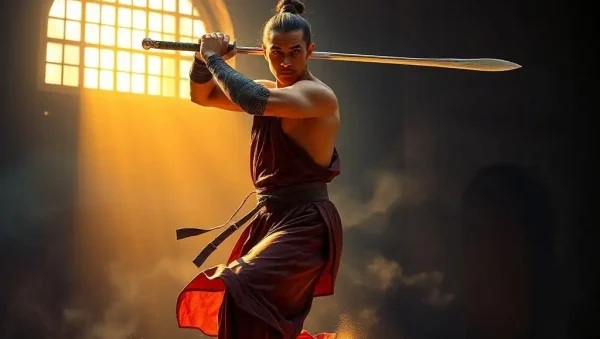
🥋 Master the diverse world of Chinese weaponry, from swift short blades to powerful long poles. Explore the nuances of each category…
Read article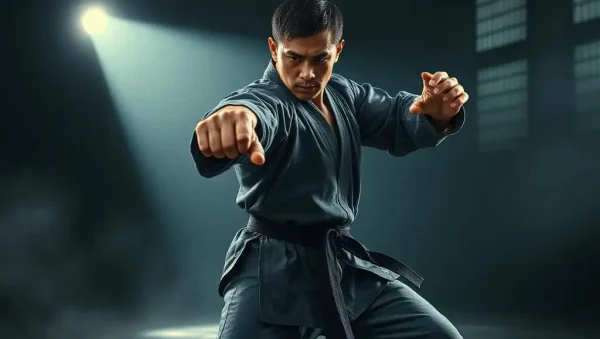
⚔️ Master the "Gun staff striking techniques" and forge your ultimate arsenal at MartialArtsMastery.org. Explore historical methods and practical applications to dominate…
Read article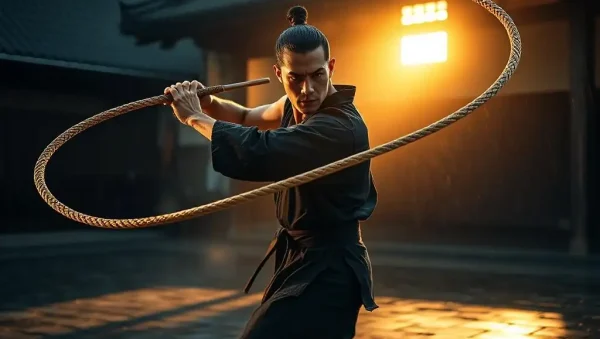
💥 Unlock peak performance in whip martial arts with specialized conditioning techniques. This article dives into optimizing speed, flexibility, and coordination to…
Read article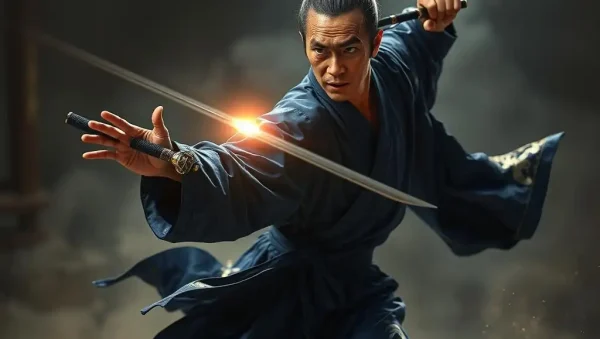
⚔️ Discover the often-overlooked power of the Dao arts scabbard strategy. Beyond mere protection, learn how this vital component enhances combat effectiveness…
Read articleWelcome to the focused study of five iconic Chinese weapons that have shaped martial arts history. This subcategory under "Martial Arts Weapons (Detailed Study)" explores the staff, spear, broadsword, straight sword, and chain whip — each with distinct techniques, cultural significance, and training methodologies. Whether you are a seasoned practitioner or a curious historian, this page delivers actionable insights into grip, footwork, stances, and combat applications, all drawn from classical Chinese martial traditions. Expect precision, context, and depth that go beyond surface-level descriptions.
The Chinese staff, or Gun, is often called the "grandfather of all weapons" due to its simplicity and effectiveness. In this section, you will learn about the staff’s length variations (shoulder to forehead height), fundamental strikes like the sweep, thrust, and block, and the importance of waist-driven rotation for generating explosive force. Traditional forms such as the Shaolin staff emphasize fluid transitions and circular motions that disarm opponents while maintaining constant pressure.
Beyond basic mechanics, the staff teaches distance management and timing—skills transferable to empty-hand fighting. You’ll discover drills like the "figure-eight" spin and the "three-point push" that build forearm endurance and coordination. Historical texts, including the 18 Arms of Wushu, list the staff as foundational before advancing to sharper weapons. Expect step-by-step breakdowns for solo practice, partner drills, and common errors to avoid, ensuring your form is both powerful and precise.
The spear, or Qiang, is celebrated as the "king of weapons" for its reach and piercing accuracy. This section details the spear’s anatomy—ash wood shaft, diamond-shaped steel head, and horsehair tassel that masks thrusts. Key techniques include the upward thrust, low stab, and circular parry, all executed with a relaxed grip and explosive hip snap. You’ll learn how to use the spear’s flexibility to absorb and redirect incoming force, making it ideal for both offense and defense.
Advanced training involves spear forms like the Pear Flower Spear or Six Harmony Spear, which integrate flowing footwork with rapid thrusting sequences. Mastering the spear enhances your leg coordination and spatial awareness, as the weapon’s length demands precise angle adjustments. Historical accounts from Ming dynasty generals emphasize the spear’s role in battlefield formations—our guide connects these ancient tactics to modern solo drills, so you can practice anywhere without a partner.
The broadsword, or Dao, is a single-edged curved blade known for its slashing power and relentless forward pressure. In this segment, you’ll explore the typical weight and balance of the Chinese cavalry saber, along with signature moves like the chop, hook, and backhand slash. What sets the Dao apart is its reliance on body momentum—every strike engages the whole torso, not just the arms. You’ll learn footwork patterns that maintain a continuous attack rhythm, often described as "wave-like" or "mountain-crushing."
Practical training includes cutting drills using wooden or padded replicas, progressing to sharp-edge safety protocols. The Dao’s short range offers excellent practice for close-quarter combat, teaching you to transition between high and low targets seamlessly. Historical forms like the Meihua Dao (Plum Blossom Broadsword) emphasize circular changes and rapid direction shifts, which build agility and cardiovascular endurance. Our breakdown includes visual cues for alignment, grip tension, and breathing rhythms to avoid common telegraphs that alert opponents.
The straight sword, or Jian, is the scholar’s weapon, prized for its precision, elegance, and two-edged versatility. This section focuses on the Jian’s lightweight design (typically 1-2 pounds) and techniques such as the thrust, draw-cut, and spiral deflection. Unlike the Dao’s brute force, the Jian emphasizes finger-tip control and subtle wrist rotations that change the blade’s angle mid-motion. You’ll practice "sword hand" formations—like the chicken beak or orchid finger—that direct energy flow and maintain balance.
Classical Taiji Jian and Wudang forms provide a meditative yet combat-ready framework. Expect detailed guidance on defensive circles, where the blade traces protective arcs around the body, and point control for targeting joints or pressure points. Because the Jian is double-edged, it demands heightened spatial awareness—our drills include mirror practice and slow-motion repetitions to develop proprioception. This weapon’s study deepens your understanding of intent and flow, making it a favorite for internal stylists seeking precision over power.
The chain whip, or Bian, is a flexible weapon comprising a steel rod, multiple segments, and a dart tip—demanding exceptional timing and body coordination. This section unpacks the whip’s mechanics, including the snap, wrap, and crack techniques that confuse and disarm opponents. Unlike rigid weapons, the Bian relies on centrifugal force and momentum transfer; you’ll learn how to initiate waves from the hips and allow the chain to follow through naturally, creating loud, intimidating cracks without self-injury.
Training begins with short lengths or rope substitutes to master safety. You’ll practice figure-eight patterns, vertical snaps, and back-hand retrievals—all while maintaining a controlled stance. Advanced forms, like the Nine-Section Whip, integrate drops, rolls, and aerial catches that build dexterity and reflexes. Our guide emphasizes progressive complexity: first stationary drills, then moving patterns, and finally paired exercises where you defend against strikes while timing your whip’s recoil. This weapon’s study challenges preconceptions about martial arts as purely linear, offering a dynamic, almost dance-like approach to combat.
For absolute beginners, the staff is ideal due to its simplicity, low risk, and transferable body mechanics. Its length provides safety distance, and the techniques (sweeps, blocks) build core strength without complex edge alignment. After basic staff confidence, most teachers recommend the broadsword for its forgiving single edge and aggressive momentum, which naturally teaches power generation.
Basic proficiency—meaning controlled thrusts, parries, and footwork—usually takes 6-12 months with consistent practice (2-3 sessions weekly). Advanced mastery, including fluid form performance and live sparring, typically requires 3-5 years. The spear’s reach exaggerates errors, so patience and regular mirror feedback are crucial for accelerating progress.
Yes, they can be dangerous without proper instruction. Start with a rope or foam-padded practice whip, always train in open spaces, and never practice full-speed near walls or people. Even experts sustain bruises; always wear protective eyewear and long sleeves during initial drills. Seek a qualified instructor before attempting any crack moves.
The Jian’s light weight and double-edge allow fast, precise thrusts to vulnerable areas (throat, wrists, eyes), but it requires excellent footwork and control. In realistic self-defense, a shorter blade like a knife is easier to deploy, yet the Jian’s reach offers a deterrent. Training in forms alone isn’t enough—practice scenario-based drills with protective gear.
Most techniques are adaptable; even low-impact forms are available. However, chain whip and spear demand good shoulder mobility and core stability. Start with basic stretches and light cardio, then progressively add resistance. Consistency matters more than peak strength—many senior practitioners wield these weapons gracefully into their 70s by focusing on smoothness.