Espada Contra Espada: Tactics for SwordonSword Engagements
⚔️ Master the intricate dance of "Espada Contra Espada" with our in-depth guide to Spanish swordplay tactics. Learn the duel strategies that…
Read article

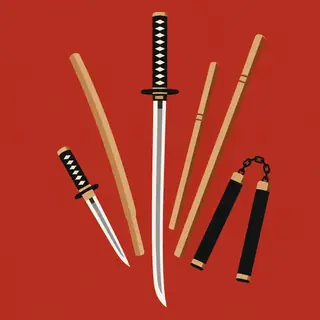
Dive into the heart of Filipino martial arts with our focused study on the iconic weaponry of the Philippines—baston (sticks), daga (knives), and espada (swords). These tools are not mere instruments of combat; they are extensions of a warrior’s body, embodying centuries of efficiency, fluidity, and survival instinct. From the rapid-fire strikes of eskrima to the lethal close-quarters flow of knife defense, mastering these weapons unlocks a deep understanding of angles, distance, and timing that directly enhances your empty-hand skills. Whether you are a history buff tracing the lineage of Magellan’s era or a modern practitioner seeking advanced training techniques, this detailed section breaks down the ergonomic design, grip variations, and tactical applications of each weapon. Learn how the same underlying principles—*the “defanging the snake” strategy and the continuous, seamless motion of the “flow”*—apply across all three, making Filipino weaponry one of the most practical and adaptable systems for self-defense in the world.
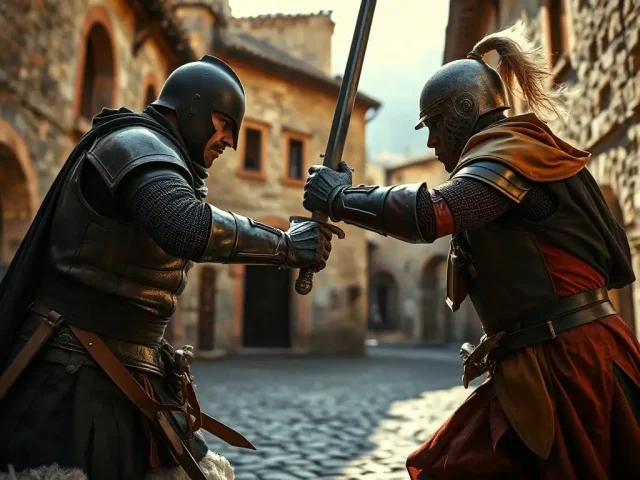
⚔️ Master the intricate dance of "Espada Contra Espada" with our in-depth guide to Spanish swordplay tactics. Learn the duel strategies that…
Read article
🎯 Unlock peak performance in Filipino weapon mastery. Explore how focused concentration and potent Filipino weapon visualization techniques forge a deeper connection…
Read article
🎶 Discover how FMA weapon music rhythm elevates demonstrations, blending martial precision with captivating performance. MartialArtsMastery.org explores the vital connection, unveiling the…
Read article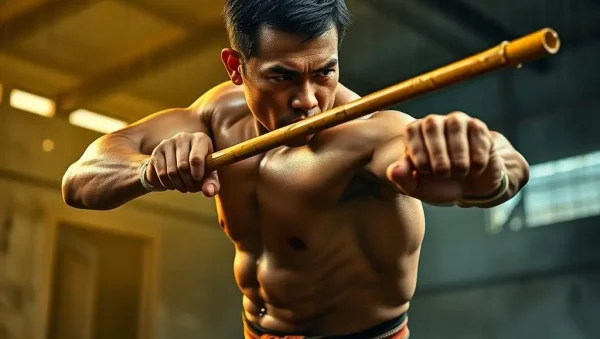
💪 Uncover the hidden power of Filipino stick grappling! Master Dumog with Baston through our exclusive Filipino stick grappling techniques tutorial. Explore…
Read article
👂 Master the nuances of "weaponry training auditory cues" at MartialArtsMastery.org. Sharpen your senses and elevate your combat readiness by understanding the…
Read article
⚔️ Explore the fascinating journey of FMA weapons from battlefield to competitive arenas. Discover how traditional techniques are evolving through sportification training,…
Read article
▲ Discover the profound Filipino triangle symbolism in martial arts, revealing how this ancient geometric form shapes weapon footwork and strikes. Explore…
Read articleDive into the heart of Filipino martial arts (FMA) with a focused study on its three iconic weapons: the baston (stick), the daga (knife), and the espada (sword). This subcategory equips you with the historical context, practical techniques, and training methodologies that define Arnis, Eskrima, and Kali. Whether you’re a beginner or a seasoned practitioner, you’ll uncover how these tools are inseparable from empty-hand movements, footwork, and the “flow” that makes FMA globally respected. From stick disarms to bladed-edge awareness, each weapon reveals a layer of efficiency and adaptability rooted in decades of conflict-tested combat.
The baston is the fundamental entry point in FMA, typically a rattan stick around 28 inches long. Here, you’ll learn the core 12 striking angles that form the backbone of Arnis and Eskrima. Expect detailed breakdowns of how each angle transitions into disarms, locks, and throws, all while maintaining a relaxed but explosive motion. We emphasize the “defanging the snake” concept—targeting the hands to neutralize an opponent’s weapon-bearing limb before finishing with a decisive counterstrike.
Beyond basic strikes, you’ll explore sinawali (double-stick weaving drills) and single-stick sparring tactics. These drills train both coordination and the ability to adapt under pressure, teaching you to blend offense and defense seamlessly. We also cover grip variations, power generation from the hips, and how to use the stick as a training surrogate for the blade, preparing you for the next tier of weaponry.
The daga represents the most immediate and dangerous range in Filipino combat. This section focuses on blade awareness, proper grip (icepick vs. hammer), and the “point in line” principle. You’ll practice intricate abaniko (fanning) motions and corta (cut) patterns, which teach you to slash and stab from unexpected angles. Emphasis is placed on footwork to safely enter and exit striking range, ever mindful of the knife’s edge.
We also dissect knife vs. knife drills, knife vs. empty-hand defenses, and how to control a knife hand without losing your own digits. Expect practical scenarios drawn from street-defense realities, where the daga serves as a force-multiplier in tight spaces. The goal isn’t just to strike but to survive, using the blade to create openings for disengagement or a final, decisive angle.
The espada in FMA often refers to the Filipino kampilan, bolo, or the Spanish-influenced espada y daga (sword and dagger) system. Here, we explore the historical evolution from pre-colonial warfare to Spanish-era adjustments, highlighting how the blade’s length alters footwork and timing. You’ll study espada y daga as a paired-weapon drill, integrating the long reach of the sword with the sharp control of the dagger for both offense and defense.
Practical training includes cutting mechanics for the bolo and kampilan, focusing on body mechanics that generate powerful, slicing blows. We also address blade training safety, using padded sticks and wooden trainers before transitioning to live steel under supervision. For collectors and historians, we provide insight into regional variations, from the Luzon-based kris to Visayan barong, enriching your appreciation of Filipino culture through its martial tools.
Across all three weapons, FMA teaches universal principles that transcend the tool itself. This section hones in on triangulation (angular footwork), cadence (breaking rhythm), and connection (maintaining contact with the opponent’s weapon). You’ll learn how every baston drill translates to daga or espada, creating a seamless skill transfer. This “weapon-agnostic” approach is what makes FMA highly adaptable in unpredictable self-defense situations.
We also cover the philosophical underpinnings—respect for the blade, humility in practice, and the spirit of the warrior. Expect guided mental drills that help you stay calm under the threat of a blade, transforming fear into precise action. By mastering these universal movements, you’ll not only improve your stick, knife, and sword skills but also elevate your empty-hand art, as every FMA technique starts and ends with the same body mechanics.
Safety is paramount when training with weapons, even if they’re made of rattan. This subcategory provides a structured progression path, from solo drills to pair drills to live sparring. We detail gear recommendations, including gloves, padded vests, and fencing masks, to protect you during full-contact practice. You’ll also learn how to choose the right training stick weight based on your strength and skill level, ensuring your joints remain healthy while building endurance.
For those seeking structured advancement, we outline typical belt or rank systems in Arnis-Eskrima, emphasizing that true mastery comes from repetition, not memorization of forms. We also recommend drills to practice at home, using simple equipment like heavy bags or hanging targets. Finally, you’ll discover how to find reputable FMA instructors or online communities that support your journey, whether you’re in a remote area or near a major city with a thriving Filipino martial arts scene.
Arnis, Eskrima, and Kali are regional names for essentially the same martial art, with Arnis popular in the Northern Philippines (Luzon), Eskrima in the Visayas, and Kali often associated with the Southern islands or modern mixed systems. The techniques overlap heavily, but Kali tends to emphasize larger, more fluid weapon movements, while Arnis is often more structured. For practical study, choose one system and stick to its methodology, as cross-training can confuse footwork patterns.
No, you can start from scratch. In fact, many beginners find bangis (stick training) intuitive because it builds on natural hand-eye coordination. Start with a lightweight rattan stick and practice the 12 basic angles slowly, focusing on precision over speed. Pair drills will teach you timing and distance. If you already train in empty-hand arts like Karate or Taekwondo, FMA will enhance your understanding of angles and weapon evasion.
Beginners use rubber knives or training blades with blunt edges to avoid injury. All knife work is performed at slow speed first, with strict adherence to “point control”—never pointing the blade at a partner’s face or vital areas. Protective gloves and forearm guards are recommended for trapping drills. As you progress, you may incorporate shut up knives (non-sharpened metal) under instructor supervision, but live blades are reserved for solo forms only.
Absolutely. Most FMA sword practice uses wooden training swords (like the arnis paddle) or padded sticks called baton. For espada y daga work, use a pair of wooden trainers—one long (around 28 inches) and one short (around 14 inches). This safely replicates the weight and balance of live blades. Live steel cutting is optional and reserved for advanced students with proper facilities and safety protocols.
Proficiency is subjective, but a dedicated student practicing 3-4 times per week can gain basic stick flow in 3-6 months, knife defenses in 6-12 months, and sword-y daga fundamentals in 1-2 years. Mastery, however, is a lifelong journey. The key is consistent drilling of transitions between weapons—the more you practice stick, the easier blade work becomes. Set small, measurable goals like completing 1,000 stick strikes without dropping the weapon, then move to simultaneous weapons.