
Forms as Time Capsules: Unlocking Martial Secrets of the Past

Welcome to Martial Arts Mastery!
Delve into the fascinating world where movement becomes meaning and history is etched in every stance. Are you ready to uncover the secrets hidden within the elegant and powerful sequences of kata? Join us as we explore the depths of traditional forms martial arts history, revealing how these ancient routines act as time capsules, preserving invaluable knowledge and techniques for generations to come. Prepare to unlock the past and enhance your present understanding of martial arts.
- Introduction: Traditional Forms - More Than Just Movements
- The Historical Significance of Traditional Martial Arts Forms
- Decoding the Martial Secrets Embedded in Forms
- Traditional Martial Arts Forms History: A Comparative Analysis
- Preserving and Interpreting Traditional Forms for Modern Practitioners
- The Future of Traditional Forms: Maintaining Relevance in a Changing World
- Conclusion: Embracing the Time Capsule of Traditional Forms
-
Frequently Asked Questions
- What are forms in the context of martial arts, and why are they considered important?
- How does studying traditional forms contribute to understanding the history of a martial art?
- What kind of martial secrets can be unlocked by studying traditional forms?
- How do traditional forms help in developing practical self-defense skills?
- What are some examples of how MartialArtsMastery.org explores the connection between traditional forms and martial arts history?
- Final Reflection: Echoes of Movement, Whispers of Time
- Rediscover the Wisdom: Ignite Your Martial Arts Journey!
Introduction: Traditional Forms - More Than Just Movements
The Enduring Legacy of Martial Arts Forms (Kata, Poomsae, Taolu)
Traditional martial arts forms, known by various names such as Kata in Japanese arts like Karate, Poomsae in Korean Taekwondo, and Taolu in Chinese Wushu, represent much more than mere sequences of choreographed movements. They are the fundamental pillars upon which many martial disciplines are built, serving as repositories of knowledge accumulated over centuries. These intricate patterns encapsulate fighting principles, techniques, and strategies developed by past masters, passed down through generations when written manuals were rare or non-existent.
The practice of these forms is not just physical training; it is a direct connection to the historical development and philosophical underpinnings of a martial art. The study of traditional forms martial arts history reveals how these sequences have preserved combat wisdom across diverse cultures and eras.
The significance of these codified movements lies in their ability to transmit complex information efficiently and reliably. Unlike free-sparring or individual technique practice alone, forms provide a structured curriculum that ensures comprehensive exposure to a style's entire technical repertoire. For instance, a single Karate kata might contain dozens of distinct movements, stances, and transitions, each representing a potential application in self-defense.
Similarly, Taekwondo poomsae encode specific striking and blocking techniques crucial to the style's identity. This systematic preservation method allowed arts to survive political upheaval, changes in weaponry, and the simple passage of time, safeguarding the core essence and historical depth of traditional forms martial arts history.
Unveiling History Through Movement: Forms as Historical Records
Forms function as living historical documents, offering insights into the combat methodologies and even societal contexts of their creation. By analyzing the movements, stances, and transitions within a form, practitioners can infer the type of combat the art was designed for – whether empty-hand defense against unarmed assailants, defense against weapons, or even battlefield applications.
For example, many Okinawan karate kata feature movements applicable in close-quarters fighting, reflecting a time when self-defense often occurred in confined spaces or involved grappling. The evolution of forms can also mirror historical shifts; the development of specific forms might correlate with periods of unrest requiring robust self-protection methods or times of peace allowing for more emphasis on health and discipline.
The study of traditional forms martial arts history through their practice is akin to deciphering an ancient script written in physical language. Each movement, angle, and timing carries potential meaning related to power generation, defense, or attack. Variations between forms or between different schools practicing the same form can highlight divergent interpretations, regional influences, or adaptations made by specific masters.
This comparative analysis helps scholars and practitioners reconstruct the historical pathways and influences that shaped a particular martial art. For instance, comparing early versions of a form with later, more standardized versions can reveal changes made for pedagogical reasons, effectiveness, or even to conform to new competitive rules, providing a tangible link to the art's past.
The Historical Significance of Traditional Martial Arts Forms
Pre-Industrial Documentation: Forms as Preservers of Combat Knowledge
In the centuries before widespread literacy, printing presses, or photographic and video technology, the primary means of transmitting complex physical skills and knowledge was through direct instruction and codified practice. Martial arts forms served as the ultimate pre-industrial documentation system. Masters would create or refine sequences of movements that encapsulated essential principles and techniques.
Students would then learn and endlessly repeat these forms, internalizing the movements and, through explanation (bunkai) and practice, understanding their applications. This method ensured that the core curriculum could be passed down accurately from one generation to the next, even if the number of practitioners or the immediate need for combat skills fluctuated.
Consider the state of knowledge transfer in feudal Japan or ancient China. Detailed written manuals on martial techniques were rare, often kept secret within specific families or schools, and could easily be lost or destroyed. Oral tradition, while important, is prone to alteration and forgetting.
Forms provided a physical, repeatable, and relatively stable format for preserving vast amounts of information. A single kata like Kanku Dai in Karate, for instance, contains a multitude of techniques and strategies, from blocks and strikes to joint locks and throws (though the latter are often less obvious without explicit instruction). This method was so effective that variations of core forms can be found across different styles and even different martial arts that share a common ancestor, demonstrating the resilience and effectiveness of forms as historical archives of traditional forms martial arts history.
Tracing Lineage and Evolution Through Kata
The practice and transmission of specific kata are fundamental to understanding the lineage and evolution of many martial arts styles. Different schools or branches of an art often maintain slightly different versions of the same kata, reflecting the teachings of the master who founded or influenced that particular lineage.
By comparing these variations – perhaps in the height of a stance, the angle of a block, or the sequence of movements – martial arts historians can trace the connections between schools and the developmental path of the art over time. For example, comparing the Pinan kata as taught in Shotokan with those taught in Shito-ryu or Wado-ryu reveals distinct interpretations and emphases introduced by the founders of those styles, who all learned from the same Okinawan masters but adapted the forms according to their own understanding and goals.
Furthermore, the introduction of new kata or the modification of existing ones often marks significant points in a style's history. When Master Gichin Funakoshi introduced Karate to mainland Japan in the early 20th century, he renamed many kata (e.g., changing Pinan to Heian) and modified some movements to make them more accessible to Japanese students and align with his evolving philosophy.
These changes, documented in his writings and the kata themselves, are crucial data points for understanding the transition of Okinawan Te into modern Japanese Karate-do. Studying these lineage-specific variations and historical adaptations is a key aspect of appreciating the rich and complex traditional forms martial arts history.
Pinan/Heian Forms: Okinawan Origins and Japanese Adaptation
The Pinan (peace and tranquility) kata are perhaps one of the most significant sets of forms in traditional martial arts history, specifically within Okinawan Karate and its derivatives. Created by Master Itosu Anko around the turn of the 20th century (circa 1904-1907), these five forms (Pinan Shodan, Nidan, Sandan, Yondan, Godan) were revolutionary.
Itosu, a student of legendary masters like Sokon Matsumura, synthesized techniques from older, more complex kata (such as Kushanku, Passai, and Chinto) into simpler, sequential forms suitable for teaching to Okinawan middle school students as part of a physical education program. His goal was to make Karate accessible and less dangerous for young learners, while still preserving fundamental principles and techniques.
When Master Gichin Funakoshi brought Karate to Japan, he adopted the Pinan kata but renamed them Heian (peaceful mind) and slightly reordered the first two (Pinan Nidan became Heian Shodan, and Pinan Shodan became Heian Nidan) based on pedagogical flow. He also made subtle adjustments to stances and movements to fit his developing Shotokan style.
The widespread adoption of the Pinan/Heian series across numerous Karate styles globally underscores their effectiveness as foundational training tools and highlights a pivotal moment in traditional forms martial arts history: the transition of a secretive self-defense art into a more standardized educational discipline. The enduring presence and slight variations of these five forms across various lineages provide a clear, traceable thread back to Itosu's original vision and the subsequent adaptations by his successors.
Decoding the Martial Secrets Embedded in Forms
Understanding Stance and Body Mechanics: Principles of Combat
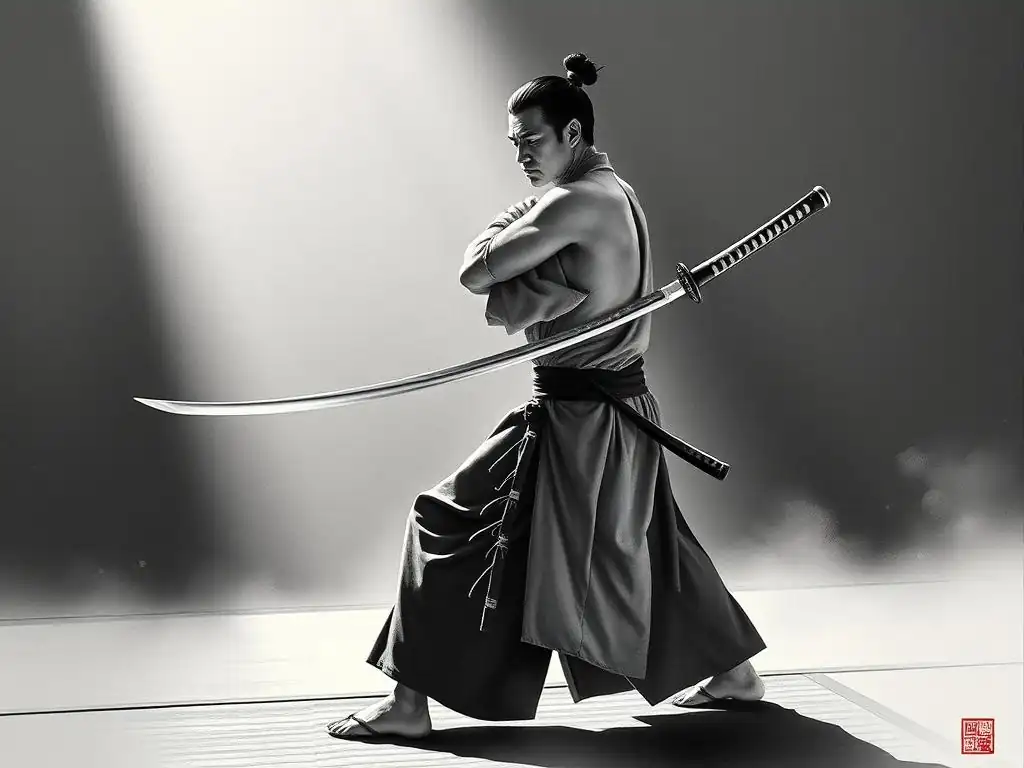
Forms are sophisticated blueprints for effective body use in combat. The stances (dachi in Japanese, seogi in Korean, bu in Chinese) are not merely static positions but dynamic postures that dictate balance, mobility, power generation, and defensive structure.
For instance, deep, wide stances like kiba dachi (horse stance) or shiko dachi (square stance) emphasize rooted stability and powerful hip rotation, often used for generating force in strikes or executing throws and joint locks. Lighter, more mobile stances like zenkutsu dachi (front stance) or neko ashi dachi (cat stance) facilitate forward movement, penetration, and quick retraction, crucial for striking and evasion.
The transitions between stances are equally important, teaching balance, weight transfer, and efficient movement under pressure. Forms meticulously detail how the body should move, coil, and release energy. Principles like using the hips for power (koshi), connecting the entire body chain from the ground up, maintaining a stable center of gravity, and coordinating breath with movement are all embedded within the precise choreography of a form. Mastering the body mechanics within traditional forms is fundamental to unlocking their martial potential and understanding the underlying combat principles that have been refined over centuries of traditional forms martial arts history.
While a form appears as a solo performance, each sequence of movements represents potential applications (known as bunkai in Japanese Karate, poomsae rung in Taekwondo, or yongfa in Chinese arts) against an imagined opponent or multiple opponents. Often, the most direct interpretation is a block followed by a strike.
However, deeper layers of bunkai reveal techniques involving joint manipulation, throws, sweeps, pressure point strikes, and defenses against various grabs or weapons. For example, a seemingly simple rising block might also be interpreted as a defense against a high grab, a joint lock on an attacking arm, or even a strike to the underside of the jaw.
The challenge and depth of bunkai lie in uncovering these less obvious applications. Early forms were often taught with significant oral explanation, but much of this detailed bunkai was either lost, kept secret, or evolved differently within various lineages. Modern practitioners must often work to reconstruct plausible applications based on anatomical principles, historical context, and the form's overall structure.
This process is vital; without understanding the bunkai, a form remains just a dance. With proper interpretation, the form transforms into a comprehensive self-defense manual. Studying the documented bunkai from historical masters, where available, provides invaluable insight into the practical combat intent behind the movements preserved in traditional forms martial arts history.
The Role of Forms in Transmitting Tactical Knowledge
Beyond individual techniques, forms also transmit tactical knowledge, teaching practitioners how to manage distance, control timing, move off the line of attack, and respond to different types of aggression. The structure of a form often dictates patterns of movement that reflect common combat scenarios. For instance, many forms begin with a block or defensive movement, emphasizing the principle of defense before attack. Changes in direction within a form often represent responding to multiple attackers or shifting lines of engagement.
Forms can also teach strategic principles like feinting, trapping, and controlling the opponent's balance. The sequence of movements might guide the practitioner through a complex interaction, such as defending a strike, trapping the opponent's limb, executing a joint lock, and finishing with a disabling strike. While a form is practiced solo, the implicit opponent interactions are key to understanding its purpose.
Learning the form teaches the sequence; studying its bunkai reveals the why behind the sequence – the tactical rationale. This level of tactical instruction, embedded within the physical practice, is a crucial part of the legacy preserved within traditional forms martial arts history.
Traditional Martial Arts Forms History: A Comparative Analysis
Examining Regional Variations and Influences
The history of traditional forms is deeply intertwined with the geographical and cultural contexts in which they developed. Regional variations within a single martial art, or similarities between arts from neighboring regions, highlight the flow of ideas and influences.
For instance, Okinawan Karate, the progenitor of many modern styles, developed distinct regional variations in its forms: Naha-te forms (like Sanchin and Seisan) originating from the Naha region, often emphasize close-quarters combat, strong rooting, and internal power generation, showing clear links to Southern Chinese martial arts. Shuri-te forms (like Kushanku and Passai) from the Shuri region, the capital, tend to feature more dynamic movement, longer stances, and strikes, possibly influenced by Northern Chinese styles and the needs of the Okinawan aristocracy.
Comparing forms across broader regions further illustrates this point. Korean Taekwondo's Poomsae, while developing distinct national characteristics over the 20th century, retain echoes of both Japanese Karate (due to the occupation period) and older Korean martial traditions like Taekkyeon. Chinese Taolu are incredibly diverse, reflecting the vastness of China and its myriad martial traditions – from the long-range, acrobatic forms of the North to the low, powerful stances and intricate hand techniques of the South. Analyzing these regional differences in traditional forms martial arts history provides a map of cultural exchange and independent development.
Comparing Goju-Ryu's Sanchin and Fujian White Crane's San Zhan
A compelling example of cross-cultural influence and regional adaptation is the comparison between the Sanchin kata found in Okinawan Karate styles like Goju-ryu and Uechi-ryu, and the San Zhan form practiced in Southern Chinese Fujian White Crane Kung Fu. The name itself, "San Zhan" (三戦) in Chinese, directly translates to "Three Battles" or "Three Conflicts," which is the same meaning as "Sanchin" (三戦) in Japanese/Okinawan.
This linguistic link, combined with striking similarities in the form's structure, execution, and underlying principles, strongly suggests a shared origin. Both forms are short, performed with tension, emphasize rooted stances, coordinated breathing, and focus on developing internal power (氣, qi or ki).
While sharing a common root, the forms have evolved with distinct characteristics in their respective traditions. Okinawan Sanchin, particularly in Goju-ryu, is often practiced with extreme muscular tension and loud exhalations, focusing on developing a strong, resilient body and rooted stability.
Fujian White Crane's San Zhan, while also emphasizing tension and breath, might incorporate slightly different hand postures or subtle shifts in weight distribution unique to that style's nuances. The existence of such closely related yet distinct forms across the East China Sea provides powerful evidence of the historical exchange of martial knowledge between Fujian province and the Ryukyu Islands (Okinawa), a crucial chapter in traditional forms martial arts history.
The development and evolution of martial arts forms have been significantly shaped by the social and political climates of their times. During periods when martial arts were suppressed or practiced in secret, forms might have been simplified or disguised to appear less overtly combative, focusing more on health or spiritual aspects to avoid drawing unwanted attention. Conversely, times of conflict or military emphasis could lead to the creation of forms focused purely on battlefield effectiveness or public displays of power.
For example, the standardization and popularization of Karate forms in early 20th century Okinawa and Japan were directly influenced by the political climate. Japan's push for national strength and physical education led to Karate being introduced into schools. This required masters like Itosu Anko and Gichin Funakoshi to modify and systematize the forms, making them safer and more accessible for mass instruction, and even renaming them to have more palatable, less "foreign" or "violent" connotations (like changing Naifanchi to Tekki, meaning "iron horseman").
Later, the development of competitive sport Karate led to further modifications in how forms were performed, emphasizing aesthetics and power over practical application in some cases. Understanding these socio-political pressures is essential to fully grasp the trajectory of traditional forms martial arts history.
Preserving and Interpreting Traditional Forms for Modern Practitioners
The Importance of Contextual Understanding
Practicing traditional forms in the modern era requires more than simply mimicking the physical movements. True understanding hinges on grasping the historical, cultural, and martial context in which the forms were created. Without this context, a movement intended as a defense against a specific type of grab might be misinterpreted as just a stylized block. Knowing that a form originated in a time when weapons were common changes the interpretation of many movements. Understanding the typical fighting range or opponents faced by the art's founders is crucial for deciphering the practical applications.
For instance, many older forms contain techniques designed to work against opponents wearing traditional clothing that could be grabbed, or against common period weapons like staffs or knives. A practitioner in the 21st century needs to understand this historical context to either find modern equivalents for the application or appreciate the historical ingenuity even if the specific scenario is less common today. Engaging with historical texts, studying the lives of the masters, and understanding the socio-political landscape of the time are all vital components of gaining a deep, contextual understanding of traditional forms martial arts history.
Avoiding Misinterpretations: The Dangers of Surface-Level Practice
A significant pitfall in modern forms training is practicing at a surface level, focusing solely on external appearance, speed, or power without delving into the underlying meaning and applications. This can lead to misinterpretations where complex sequences are reduced to basic blocks and punches, losing the intricate joint locks, throws, or pressure point strikes they were originally intended to contain. Such practice misses the wealth of self-defense knowledge embedded within the form.
Moreover, prioritizing performance for competition or aesthetic display over functional understanding can distort the form's original intent. Stances might become excessively low for visual effect rather than functional stability, or movements might be exaggerated in ways that wouldn't be practical in a real confrontation. To avoid these misinterpretations, practitioners must actively study bunkai, ideally with experienced instructors who have researched the historical applications, and constantly question why a movement is performed in a particular way. This critical approach is essential for honoring the depth and practicality preserved in traditional forms martial arts history.
Integrating Sport and Self-Defense Applications
Modern martial arts often exist in a dual world: traditional self-defense and competitive sport. Traditional forms can and should bridge these two aspects. While forms competition emphasizes precision, power, and aesthetic performance, the underlying movements are rooted in practical self-defense. Practitioners should train forms rigorously for competition, if that is their goal, but also dedicate time to studying and drilling the bunkai for practical application.
Successfully integrating sport and self-defense means recognizing that the form provides the library of techniques, while bunkai provides the context and method for using those techniques in a dynamic situation. Training the form builds physical attributes like balance, coordination, power, and muscle memory. Training bunkai develops timing, distance management, and tactical decision-making against a partner. Many effective self-defense practitioners today utilize the principles and techniques learned from traditional forms, adapted for modern scenarios. This dual approach ensures that the practice of traditional forms remains relevant and potent, respecting its history while applying its lessons to contemporary needs.
The Future of Traditional Forms: Maintaining Relevance in a Changing World
Adapting Forms for Modern Training Methodologies
The way traditional forms are taught and practiced is evolving to align with modern understanding of exercise science, pedagogy, and practical application. While rote repetition remains fundamental, contemporary instructors often incorporate partner drills, scenario training, and functional fitness exercises to enhance the effectiveness of forms training. For example, instead of just performing a block movement in a form, students might practice that specific block against a partner attacking with a padded weapon or simulated strike, immediately transitioning into the follow-up technique from the form's bunkai.
Furthermore, elements of forms are being integrated into broader physical conditioning programs, recognizing their value in developing balance, proprioception, core strength, and coordination. Some schools break down forms into smaller segments or focus on specific principles (like hip rotation or body connection) across multiple forms, rather than teaching forms strictly in a linear, sequential manner. These adaptations ensure that the profound physical and technical benefits of traditional forms training remain accessible and relevant to today's practitioners, demonstrating the dynamic nature of traditional forms martial arts history.
The Role of Technology in Preserving and Analyzing Forms
Technology offers powerful new tools for preserving and analyzing traditional martial arts forms. High-quality video recording allows for the meticulous documentation of forms from different lineages and masters, creating digital archives that can prevent knowledge loss. Motion capture technology can analyze the biomechanics of form execution with unprecedented precision, helping practitioners optimize power generation, efficiency, and body alignment based on quantifiable data.
Online platforms and resources facilitate the global sharing of information about forms, bunkai, and historical research, connecting practitioners and scholars across continents. While direct, in-person instruction from experienced teachers remains irreplaceable, technology can supplement and enhance the learning process, providing visual aids, detailed breakdowns, and access to interpretations from diverse sources. This technological integration is playing a crucial role in safeguarding the legacy of traditional forms martial arts history for future generations.
Balancing Tradition with Innovation
The future of traditional forms lies in finding a dynamic balance between preserving the integrity of historical practices and innovating to ensure continued relevance. Blindly adhering to rigid tradition without understanding the underlying purpose can lead to stagnation and ritualistic practice devoid of martial meaning. Conversely, abandoning traditional forms entirely in favor of purely sport-based or "street-focused" training risks losing centuries of accumulated knowledge and the unique physical and mental benefits forms provide.
A balanced approach involves deeply studying the historical forms and their intended applications, while simultaneously exploring how those principles and techniques can be applied effectively in a modern context. This might mean adapting stances slightly for better mobility on different surfaces, modifying techniques to account for modern clothing or common attacks, or using contemporary training methods to build the physical attributes necessary for effective bunkai. The goal is not to change the forms arbitrarily, but to understand their timeless principles and apply them intelligently, ensuring that the rich legacy of traditional forms martial arts history continues to thrive.
Conclusion: Embracing the Time Capsule of Traditional Forms
Rediscovering the Depth and Value of Traditional Martial Arts Forms
Traditional martial arts forms are far more than just sets of movements; they are living time capsules, meticulously preserving the knowledge, principles, and history of combat arts developed over centuries. Each stance, strike, block, and transition is a piece of a puzzle, containing valuable insights into effective body mechanics, tactical strategy, and self-defense applications. By engaging deeply with forms, practitioners connect with the lineage of masters who created and refined these sequences, gaining a profound appreciation for the journey of their art.
The value of forms extends beyond physical technique, fostering mental discipline, focus, and a deeper understanding of the art's philosophical underpinnings. Rediscovering the depth within these codified sequences requires diligent study, open-minded interpretation (bunkai), and an appreciation for the historical context. It is an ongoing process of peeling back layers to reveal the practical and intellectual richness embedded within.
The Ongoing Journey of Unlocking Martial Secrets
The study of traditional forms martial arts history is not a destination but a continuous journey. Each form holds secrets waiting to be unlocked through dedicated practice and thoughtful analysis. As practitioners deepen their understanding of body mechanics, refine their physical skills, and explore historical context, new layers of meaning within the forms are revealed.
Embracing forms as time capsules allows modern practitioners to tap into a vast reservoir of martial wisdom. It encourages a holistic approach to training that respects tradition while seeking practical application. By committing to this journey of unlocking the martial secrets of the past, we ensure that the legacy of traditional forms continues to inform, challenge, and empower martial artists for generations to come.
Frequently Asked Questions
What are forms in the context of martial arts, and why are they considered important?
Forms, also known as kata or poomsae, are prearranged sequences of movements that serve as a repository of techniques, principles, and strategies. They are important because they preserve and transmit the core knowledge of a martial art.
How does studying traditional forms contribute to understanding the history of a martial art?
Traditional forms often contain historical techniques and strategies that may no longer be actively used in sparring or self-defense. Analyzing these forms provides insights into the evolution and origins of a martial art.
What kind of martial secrets can be unlocked by studying traditional forms?
Studying traditional forms can reveal hidden applications (bunkai) of movements, insights into fighting strategies used by past masters, and a deeper understanding of the art's philosophical underpinnings.
How do traditional forms help in developing practical self-defense skills?
While not direct self-defense training, traditional forms instill fundamental movement patterns, improve body mechanics and coordination, and develop the physical attributes needed for effective self-defense.
What are some examples of how MartialArtsMastery.org explores the connection between traditional forms and martial arts history?
MartialArtsMastery.org provides historical overviews of different martial arts, traces the evolution of specific forms, and profiles legendary practitioners who shaped the development of traditional forms within their respective disciplines.
Final Reflection: Echoes of Movement, Whispers of Time
The exploration of traditional martial arts forms as time capsules reveals that history isn't confined to books, but lives and breathes within the movements we inherit. The intricate sequences, passed down through generations, are more than just physical exercises; they are living narratives, preserving the wisdom, philosophy, and combat strategies of our ancestors. This understanding reframes our perception of these forms, elevating them from mere routines to invaluable historical artifacts.
The enduring power of these forms lies in their ability to connect us to a lineage, a tradition that transcends time. My own journey through these forms has been a profound experience, a silent conversation with masters long gone, their teachings etched into the very fabric of the movements. The best fighter is never angry.
This simple yet profound quote, often attributed to various martial arts masters, underscores the deeper philosophical underpinnings woven into the physical practice, reminding us that true mastery extends beyond physical prowess.
As we conclude this exploration, I invite you to consider the forms you practice, or any tradition you hold dear. Recognize the layers of history embedded within them. Let us not merely perform these movements, but truly understand them, allowing the echoes of the past to resonate within us, shaping our present and guiding our future. Embrace the legacy, and become a living testament to the enduring power of tradition.
Rediscover the Wisdom: Ignite Your Martial Arts Journey!
Thank you for exploring the fascinating world of martial arts forms and their hidden secrets. Now that you've gained a deeper understanding of their historical significance and practical application, it's time to take action and unlock their power in your own training!
- Immerse yourself: Choose one form you've always been curious about and dedicate the next month to meticulously studying its historical context and variations. Track your findings in a dedicated journal.
- Share your discoveries: Post a video clip on social media ( martialartsmastery.org hashtag #MartialArtsWisdom) demonstrating a single technique from your chosen form, explaining its potential applications in a modern self-defense scenario.
- Connect and collaborate: Reach out to other martial artists in your community and propose a collaborative workshop focused on analyzing and interpreting the historical nuances of a specific form.
What previously overlooked detail within a form will you now explore with newfound intention?