
Nage no Kata Koshi Waza: The Art of Harai Goshi Form, Timing, and Impact

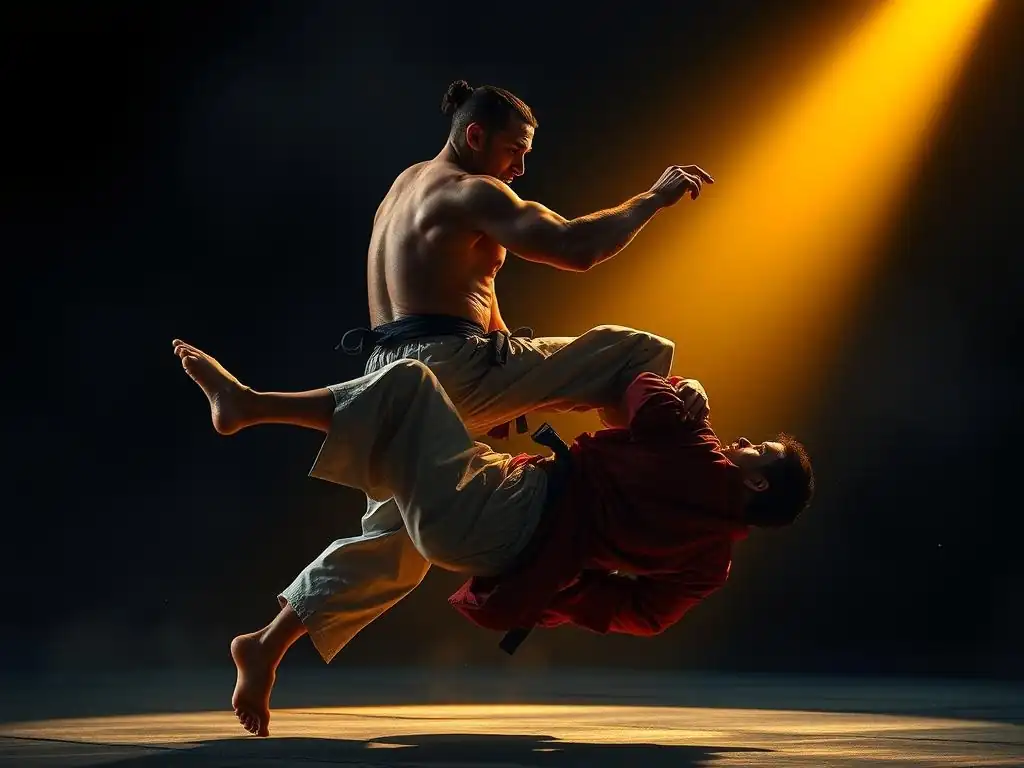
Welcome to Martial Arts Mastery, your gateway to the world's fighting arts!
Delve into the intricate dance of Nage no Kata, where tradition meets technique. This article unravels the secrets of Koshi Waza, focusing specifically on the Harai Goshi technique. But what are the subtle adjustments that transform a mere movement into a devastating throw? Explore the details of form, timing, and impact, and discover how to elevate your understanding of this powerful hip throw. Are you ready to master the art of Harai Goshi?
- Introduction to O Goshi in Nage no Kata
- O Goshi Technique Details: A Step-by-Step Breakdown
- Analyzing O Goshi Form in Nage no Kata
- The Timing of O Goshi: Synchronization and Opportunity
- Impact and Power Generation in O Goshi
- O Goshi Variations within Koshi Waza
- Applying O Goshi in Randori and Shiai
- Conclusion: The Art of O Goshi in Judo
- Frequently Asked Questions
- Final Reflection: Mastering the Sweep of Harai Goshi
- Master the Throw: Ignite Your Harai Goshi!
Introduction to O Goshi in Nage no Kata
O Goshi, often translated as "Major Hip Throw," stands as one of the fundamental and iconic techniques within the art of Judo. It is a foundational koshi waza (hip technique) taught early in a practitioner's journey, revered for its relative simplicity and powerful application.
Its inclusion in the Nage no Kata (Forms of Throwing) underscores its importance, presenting it as the first hip throw in the first set (Dai Ikkyo) of the kata. Mastering O Goshi in the controlled environment of kata provides practitioners with a deep understanding of core Judo principles like kuzushi (breaking balance), tsukuri (entry), and kake (execution of the throw).
The execution of O Goshi in Nage no Kata is highly stylized, emphasizing perfect form and precision over raw power or resistance. This formal presentation allows students to internalize the ideal mechanics: the seamless transition from disrupting uke's posture to establishing a strong connection, and finally, using the hip as a fulcrum to lift and rotate uke off their feet. Studying O Goshi within this kata framework reveals the historical and technical essence of this major hip throw, laying a crucial groundwork for its application in both controlled practice (randori) and competitive settings (shiai).
Understanding Koshi Waza: Hip Techniques in Judo
Koshi waza encompasses a group of Judo throws where the primary point of leverage and power generation comes from the tori's hip. These techniques are characterized by tori entering close to uke, often turning their back or side, and using their hip or lower back to lift, sweep, or reap uke off their balance point. Koshi waza techniques are highly effective because they allow tori to utilize their body weight and structure against uke's, often requiring less upper body strength than some hand or leg techniques.
The diversity within koshi waza is significant, ranging from the foundational O Goshi to more complex techniques like Harai Goshi (Sweeping Hip Throw) and Uchi Mata (Inner Thigh Reaping). While they all utilize the hip, the specific mechanics differ, involving varying degrees of lifting, sweeping, or reaping actions. O Goshi, specifically, is known for its characteristic deep entry and the use of the hip as a solid lifting platform, making it a classic example of how tori can effectively leverage their center of gravity below uke's to achieve a powerful throw.
O Goshi's Significance within Nage no Kata
O Goshi holds a paramount position in the Nage no Kata, serving as the first hip technique demonstrated and the third throw overall in the standard sequence. Its placement immediately after the hand techniques (Te waza) of Tai Otoshi and Seoi Nage introduces the fundamental principles of engaging the opponent's center and using the hips for projection. The kata's emphasis on O Goshi highlights the importance of a deep, committed entry ( tsukuri) where tori's hip is placed low and close to uke's abdomen, creating a stable platform for the subsequent lift and rotation.
The formal execution of O Goshi in Nage no Kata also serves as a template for understanding subsequent, more dynamic hip throws like Harai Goshi or Tsuri Goshi. It teaches the core mechanics of establishing connection, achieving kuzushi in a specific direction (often forward-right or forward-left), and coordinating the body turn with the pull from the hands and the lift from the hip. By perfecting the precise movements of O Goshi within the kata, practitioners build a strong foundation in hip throw mechanics that is transferable to a wide array of other techniques and situations in Judo practice.
O Goshi Technique Details: A Step-by-Step Breakdown
Executing O Goshi effectively involves a precise sequence of movements, beginning with disrupting uke's balance ( kuzushi), establishing proper body positioning and grip ( tsukuri), and finally, applying the lift and rotation ( kake) to complete the throw. Each step is critical and must be performed with correct timing and coordination. A common sequence starts with tori pulling uke forward, stepping in deep, wrapping an arm around uke's waist, and then using the hip as a fulcrum while turning and lifting.
Understanding these O Goshi technique details is vital for both kata performance and practical application. For instance, the angle of the initial pull and the depth of the entry step directly impact the stability of the throw. A shallow entry or insufficient kuzushi will allow uke to easily resist or counter. Conversely, a well-timed, deep entry combined with effective balance breaking sets the stage for a powerful and decisive O Goshi, demonstrating mastery over this fundamental major hip throw.
Initial Kuzushi (Breaking Balance) for O Goshi
The success of O Goshi hinges significantly on the initial phase of kuzushi, or breaking uke's balance. For O Goshi, the primary direction of kuzushi is typically forward and slightly to uke's side (often their front-right corner for a right-handed O Goshi). This action disrupts uke's posture, making them light on their feet and vulnerable to being lifted and rotated over tori's hip. Effective kuzushi is achieved through a coordinated pull from tori's hands and often a step or body movement that draws uke into the desired off-balance position.
Consider a standard grip where tori has a lapel grip with one hand and a sleeve grip with the other. To achieve effective kuzushi for O Goshi, tori might pull uke forward and upwards with both hands, simultaneously stepping back slightly or rotating their body to initiate uke's forward momentum. The goal is to shift uke's weight off their base of support, ideally onto the balls of their feet or even lifting one foot slightly. This momentary instability creates the window of opportunity for tori to enter for tsukuri without facing significant resistance.
Achieving Optimal Kuzushi: Direction and Force
Achieving optimal kuzushi for O Goshi requires applying force in the precise direction that destabilizes uke most effectively. For a right-handed O Goshi against a standard grip, this usually involves pulling uke's right arm forward and upwards with tori's left hand (on the sleeve) while pulling uke's left lapel forward and across with tori's right hand. This combined action rotates and pulls uke onto their right toes, making their right side light and ready to be swung around tori's hip. The force applied doesn't need to be immense, but it must be sudden and timed with tori's entry.
The direction of kuzushi is paramount; pulling uke straight forward might work, but pulling towards their front corner (e.g., 45 degrees forward-right) is generally more effective as it also initiates a rotational imbalance. This angle is often emphasized in Nage no Kata, where the pull is precise and deliberate. The amount of force is relative to uke's size and resistance, but the principle remains constant: sufficient force applied in the correct direction at the right moment creates the necessary vulnerability for the O Goshi technique details to unfold successfully.
Proper Body Positioning and Gripping for O Goshi
Once kuzushi is initiated, the next critical phase is tsukuri, or entry and positioning. For O Goshi, this involves tori stepping in deep alongside uke, turning their body so their back or side is against uke's front, and establishing a strong connection, usually by wrapping an arm around uke's waist. The depth of the step is crucial; tori's lead foot should ideally be placed outside uke's opposite foot, allowing tori's hips to sink below uke's center of gravity. Tori's knees should be bent, and their back should be straight, maintaining a strong, stable posture.
Simultaneously with the step and turn, tori secures the grip necessary for the throw. While various grips can lead to O Goshi, the classic Nage no Kata grip involves tori's right arm wrapping securely around uke's waist, pulling uke tightly into tori's back/hip. Tori's left hand, which likely held the sleeve for kuzushi, might transition to a grip on uke's gi just below the shoulder or remain on the sleeve depending on the specific style or variation. The key is to establish a tight connection, ensuring uke is molded around tori's hip, ready for the lift.
Grip Variations for Effective O Goshi
While the classic waist wrap is the hallmark grip for O Goshi, effective application in randori often utilizes variations. A common alternative is a standard lapel and sleeve grip. From this grip, tori can pull uke forward for kuzushi, step in, and then use the lapel grip to pull uke's upper body tightly against tori's shoulder and back, essentially achieving the same close connection as the waist wrap, albeit with slightly different leverage. This variation is frequently seen when an immediate waist wrap is difficult to secure.
Another variation might involve a grip higher on uke's back or even a belt grip. The choice of grip often depends on the situation, uke's posture, and tori's preference. However, regardless of the specific grip, the objective remains the same: to pull uke's upper body tightly into tori's torso and position uke's center of gravity directly over tori's hip bone. This tight connection is paramount for using the hip effectively as a fulcrum and is a key detail in mastering O Goshi technique.
Maintaining Posture and Balance During Entry
Maintaining strong posture and balance throughout the entry phase ( tsukuri) is non-negotiable for a successful O Goshi. As tori steps and turns, their base must remain solid. Bending the knees lowers tori's center of gravity, making them more stable and allowing their hip to sink below uke's. A bent-knee posture also enables the powerful leg drive needed for the lift. Conversely, standing too tall or having a weak base makes tori susceptible to being pushed over or countered by uke.
Simultaneously, tori must keep their back straight and avoid bending forward at the waist. Bending forward shifts tori's weight onto their toes, compromises their lifting power, and makes it difficult to rotate uke effectively. It also puts tori in a vulnerable position. The ideal posture involves a straight back, engaged core, and bent legs, creating a powerful and balanced structure from which to execute the lift. This attention to personal posture while disrupting uke's is a subtle but crucial detail in O Goshi execution.
Executing the Lift and Throw in O Goshi
With kuzushi established and tsukuri complete, the final phase is kake, the execution of the throw. For O Goshi, this involves using the hip as a fulcrum, lifting uke, and rotating them off their feet and over tori's hip. The power for the lift comes primarily from tori straightening their bent legs, driving upwards and slightly forwards. This leg drive elevates tori's hips, lifting uke who is molded tightly around them.
As the legs straighten, tori simultaneously rotates their body sharply, pulling with their arms to guide uke's trajectory. The direction of rotation is key; for a right-handed O Goshi, tori rotates counter-clockwise. The arm wrapped around uke's waist pulls uke's body tightly around tori's hip, while the other arm pulls downwards and around to facilitate the rotation and control uke's upper body. The throw culminates as uke is projected over tori's hip and lands on their back.
Using the Hip as a Fulcrum: The Core of O Goshi
The central principle of O Goshi is the effective use of tori's hip as a fulcrum. After entering deep and establishing tight contact, tori's hip bone (specifically the area around the iliac crest) is positioned just below uke's center of gravity, often against uke's lower abdomen or hip. As tori extends their legs and rotates, this positioned hip acts as a pivot point. Uke is lifted slightly and then swings over this pivot point due to tori's rotational force and downward pull.
Think of it like a lever. Tori's body is the lever, uke is the load, and tori's hip is the fulcrum. By applying force through leg extension and rotation, tori generates movement around the hip, efficiently transferring energy to project uke. The depth of the entry and the tightness of the connection ensure that uke's weight is effectively supported by tori's hip, allowing even a smaller tori to throw a larger uke by employing superior body mechanics and using the hip effectively as the central lifting point.
Timing the Lift for Maximum Impact
The timing of the lift in O Goshi is paramount for achieving maximum impact and completing the throw successfully. The upward drive from the legs and the rotational pull from the arms must be perfectly synchronized with the moment of maximum kuzushi and the completion of the tsukuri entry. Ideally, tori begins the lift and rotation just as uke is most off-balance and fully committed to the space tori has created with their entry.
If the lift is too early, before kuzushi is complete or tsukuri is tight, uke may still have balance and can resist or step out. If it's too late, uke may regain their balance or posture, making the throw much heavier and more difficult. The sweet spot is that brief instant where uke's weight is shifted, their body is molded onto tori's hip, and tori's base is strong. This precise timing transforms O Goshi from a struggle into a smooth, powerful projection, illustrating the importance of rhythm and opportunity in O Goshi technique details.
Uke's Reaction and Tori's Adjustment: Dynamic O Goshi
While Nage no Kata presents O Goshi in an idealized, cooperative form, application in randori or shiai involves uke's active resistance and reaction. Uke might try to step back, push tori away, stiffen their body, or attempt a counter-throw. Tori must be prepared to adjust their O Goshi execution based on these dynamic responses. For example, if uke pulls back, tori might need to use a stronger forward pull for kuzushi and step deeper or faster. If uke pushes, tori might utilize that forward momentum for their own entry.
This dynamic interplay is where the O Goshi technique details learned in kata are tested and refined. An experienced practitioner doesn't just execute a pre-planned sequence; they feel uke's energy and adjust their timing, angle, and force accordingly. If the initial O Goshi fails to throw, tori might transition to another technique, like sweeping uke's leg (moving towards Harai Goshi principles) or dropping for a different throw. Understanding how to adapt O Goshi based on uke's real-time reaction is a key aspect of moving from formal kata to practical application.
Analyzing O Goshi Form in Nage no Kata
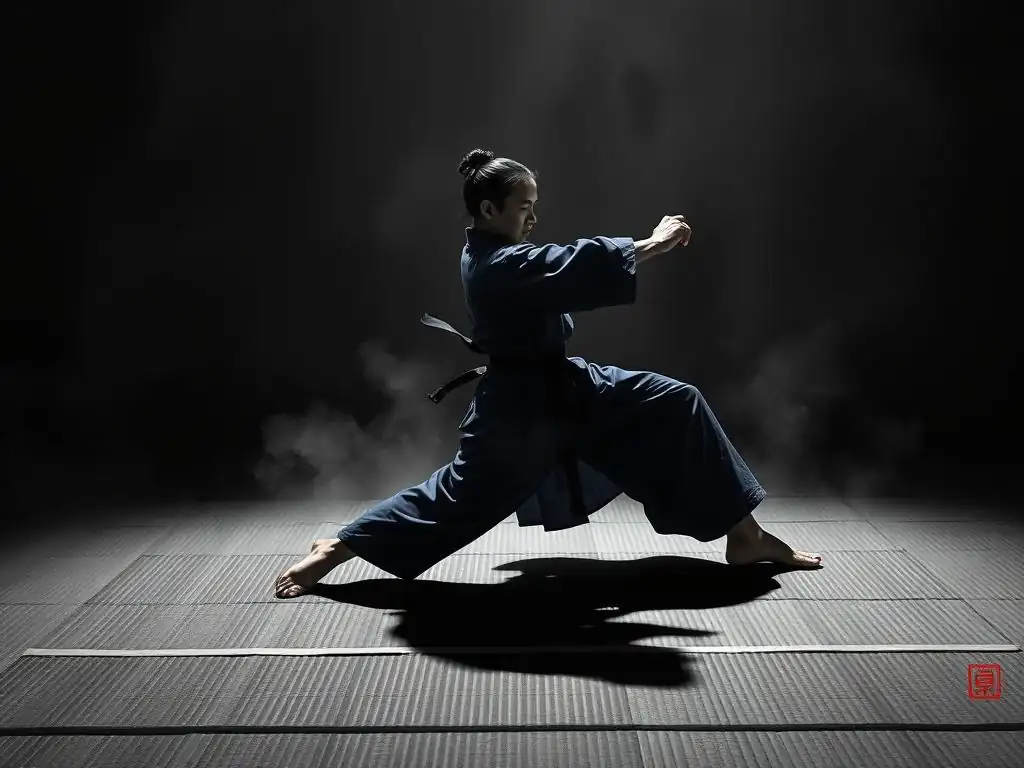
Analyzing O Goshi form within the structured environment of Nage no Kata is essential for understanding its technical ideal. The kata emphasizes precision in every movement: the angle and timing of the kuzushi pull, the depth and direction of the entry step, the exact placement of the hip, the tightness of the connection, and the coordinated action of the legs, hips, and arms during kake. Judges in kata competition often score based on adherence to these specific, prescribed movements and the overall flow and power demonstrated.
For instance, in Nage no Kata, the O Goshi entry typically involves Tori stepping outside Uke's right foot (for a right-handed throw) and turning 180 degrees, placing their right hip deep against Uke's lower abdomen. The pull from the hands is precise, often described as pulling Uke onto their right toes. The lift is smooth and powerful, with Uke being clearly elevated before being rotated over the hip. Studying and practicing these exact movements, as codified in the kata, provides a blueprint for technically correct O Goshi technique details.
Common Mistakes in O Goshi Execution
Several common errors can hinder the effectiveness of O Goshi, preventing a successful throw or leaving tori vulnerable. One frequent mistake is insufficient kuzushi. If uke's balance isn't adequately broken, they remain heavy and rooted, making the lift extremely difficult or impossible. Tori might attempt to compensate with brute force, which is inefficient and tiring. Another common error is a shallow entry; if tori's hip isn't deep enough or low enough, they cannot create a proper fulcrum, and uke will simply sit on tori's hip rather than being lifted over it.
Poor posture during tsukuri is also a significant issue. Bending forward at the waist instead of bending the knees compromises tori's base and lifting power. Similarly, failing to establish a tight connection with uke (e.g., leaving a gap between tori's body and uke's) means uke is not properly molded onto the hip, reducing the effectiveness of the fulcrum. Finally, mistiming the kake – lifting too early or too late relative to kuzushi and tsukuri – is a major pitfall, interrupting the flow and allowing uke to recover.
Preventing Errors in Posture, Grip, and Timing
Preventing common O Goshi errors requires diligent practice focusing on the fundamental O Goshi technique details. To avoid insufficient kuzushi, practice partner drills specifically focused on breaking balance in different directions. Pay attention to how uke's weight shifts and recognize the feeling of them becoming light. For a shallow entry, focus on footwork drills that emphasize stepping deep and rotating the hips fully, ensuring the hip comes into firm contact with uke's lower abdomen.
Maintaining correct posture during entry can be reinforced by practicing the entry motion slowly and deliberately, perhaps in front of a mirror or with feedback from an instructor, ensuring the back remains straight and the knees are bent. To prevent a loose connection, practice pulling uke in tightly during tsukuri, using both the arm around the waist (or lapel pull) and the action of stepping in to eliminate any gap. Finally, improving timing comes with repetition in controlled drills and progressively more dynamic practice, developing the sensitivity to feel the right moment for the lift.
Drills for Perfecting O Goshi Form
Structured drills are invaluable for isolating and perfecting the individual components of O Goshi technique details. One fundamental drill is solo practice of the tsukuri entry, focusing solely on the footwork, body turn, and hip placement. Practicing stepping deep, turning 180 degrees (for the classic kata entry), and sinking the hips while maintaining a straight back helps build muscle memory for the correct body mechanics. This can be done thousands of times to make the entry smooth and automatic.
Partner drills are also crucial. Practice the kuzushi and tsukuri phases separately. One drill involves tori and uke starting in a grip, with tori focusing only on achieving effective kuzushi for O Goshi, receiving feedback from uke on their balance disruption. Another involves practicing the entry and connection without completing the throw; tori steps in, establishes the tight hip contact, and holds the position, focusing on hip depth, posture, and connection tightness. These isolated drills allow practitioners to refine each element before combining them into the full technique.
Footwork Drill: Tai Sabaki for O Goshi Entry
Effective tai sabaki (body movement) is the foundation of a good O Goshi entry. A specific footwork drill for O Goshi involves practicing the stepping pattern without a partner, perhaps marking foot positions on the floor. For a right-handed O Goshi, this typically involves a preparatory step (often the left foot slightly forward or back to initiate movement) followed by a deep pivot step with the right foot, turning the body to face away from the intended direction of the throw, placing the hip in position.
A common pattern involves pulling uke forward with the hands while stepping back slightly with the right foot to create space, then stepping deeply across with the left foot past uke's right foot, and finally pivoting on the balls of both feet to turn the hips in. Another involves stepping directly in with the right foot past uke's right foot and pivoting.
The key is to practice stepping deeply and turning the hips fully so they are positioned correctly relative to where uke will be. Repetitive practice of these specific footwork patterns builds the speed, balance, and spatial awareness needed for a strong O Goshi entry.
Hip Contact Drill: Maintaining Connection with Uke
A critical drill for perfecting O Goshi technique details focuses on achieving and maintaining tight hip contact with uke during the tsukuri phase. In this partner drill, tori practices stepping in for O Goshi and establishing the connection, but instead of throwing, they simply hold the position for a few seconds. Tori focuses on sinking their hips low, pressing their hip bone firmly against uke's lower abdomen, and pulling uke's upper body tightly into their own using the arms.
Uke's role in this drill is to provide light resistance and feedback, indicating if there are gaps, if tori's hip is too high, or if the connection isn't tight. This drill helps tori develop the proprioception needed to feel when their hip is in the correct place and when uke is securely molded onto their body. Practicing this connection repeatedly, even without the throw, is fundamental to ensuring the hip can function correctly as a fulcrum during the actual execution of O Goshi.
The Timing of O Goshi: Synchronization and Opportunity
Timing is arguably the most elusive yet critical element in mastering O Goshi. It's not just about executing the steps correctly; it's about doing them at the precise moment of maximum opportunity. This moment arises when uke's balance is most compromised, their weight is shifting, or they are reacting to tori's previous action. Good timing allows tori to use minimal force for maximum effect, capitalizing on uke's momentum or instability.
In Nage no Kata, the timing is prescribed and cooperative, making it a good starting point for understanding the ideal sequence. However, in randori, tori must develop the sensitivity to feel uke's balance and movement. This involves reading uke's posture, anticipating their reactions, and initiating the O Goshi attack during that fleeting window when they are most vulnerable. Perfect timing transforms O Goshi from a potential struggle into a smooth, almost effortless projection.
Recognizing the Ideal Moment for O Goshi
Recognizing the ideal moment for O Goshi involves reading subtle cues from uke's body. Look for shifts in weight, stepping patterns, or moments when uke is extending their posture or pulling/pushing in a way that creates an opening. For example, if uke is pulling you strongly forward, that forward momentum can be used for your O Goshi entry. If uke steps back quickly, there might be a brief moment of instability on their back foot that you can exploit with a forward pull and entry.
The "ideal moment" is not static; it's a dynamic opportunity that arises within the flow of movement. It requires practitioners to be constantly engaged, feeling their partner's energy and balance. Developing this sensitivity takes thousands of repetitions in randori and specific timing drills. It's about reacting instinctively to the opportunity rather than forcing the technique, a key aspect of advanced O Goshi technique details.
Reading Uke's Movement and Posture
Reading uke's movement and posture is fundamental to finding the right timing for O Goshi. Observe how uke is standing: Are they upright and balanced, or are they leaning slightly? Are their feet wide apart (stable) or closer together (less stable)? Pay attention to their grip and how they are using it – are they pushing, pulling, or static? These visual cues provide information about their current state of balance and potential reactions.
Beyond visual cues, developing tactile sensitivity through the grip is crucial. Feel the pressure and tension in the connection. If uke pushes, you feel pressure towards you. If they pull, you feel tension away. These sensations tell you about their intentions and how their weight is distributed. Learning to interpret these cues allows tori to anticipate uke's next move and initiate the O Goshi attack when uke is transitioning between movements or momentarily off-balance, maximizing the chances of success.
Adapting Timing Based on Uke's Resistance
Uke's resistance is a constant factor in practical Judo. They will attempt to block your entry, regain balance, or counter. Adapting the timing of O Goshi based on this resistance is essential. If you attempt to enter and uke stiffens and pushes back, continuing the O Goshi might be difficult. In this case, you might pause, break their posture differently, or transition to a different technique that exploits their stiffened posture, perhaps a forward throw like Tai Otoshi or Seoi Nage, or even a sweep.
Conversely, if uke tries to pull away or step back, the timing for a quick, deep entry and immediate lift for O Goshi becomes critical. You must move faster than uke can retreat, using their backward momentum against them by pulling them onto your hip. This ability to read and react, adjusting the timing and even the specific application of O Goshi technique details based on uke's dynamic resistance, is a hallmark of a skilled Judoka.
Impact and Power Generation in O Goshi
While timing and technique are paramount, generating sufficient power is necessary to complete the O Goshi throw, especially against a resisting opponent. The power in O Goshi comes primarily from a coordinated effort of the legs, hips, and arms. It's not just about upper body strength; it's about using the body's largest muscle groups (the legs and hips) efficiently. The goal is to transfer the force generated by the legs and hips through the connection with uke, projecting them effectively.
Think of the power generation as a kinetic chain starting from the ground. Tori pushes off the mat with their feet, the force travels up through the legs, is amplified by the rotation and extension of the hips, and is finally transmitted to uke via the tight connection and the pull from the arms. This coordinated action is what gives O Goshi its characteristic power, allowing a smaller tori to throw a larger opponent by utilizing superior mechanics rather than relying solely on strength.
Utilizing Body Mechanics for Maximum Force
Effective body mechanics are the engine of power generation in O Goshi. This involves several key principles:
- Lowering the Center of Gravity: Bending the knees during entry positions tori's hips lower than uke's, creating a mechanical advantage for the lift.
- Straight Back: Maintaining a straight back ensures that the force generated by the legs is efficiently transferred upwards through the torso to the hips.
- Tight Connection: Molding uke securely onto the hip ensures that the lifting and rotational force applied by tori directly impacts uke's balance and position.
- Coordinated Rotation: The simultaneous rotation of the hips and torso with the leg drive maximizes the rotational force applied to uke.
By adhering to these principles, tori creates a stable, powerful platform from which to execute the throw. For example, failing to bend the knees means the lift must come from the back or arms, significantly reducing potential power and increasing risk of injury. Proper body mechanics ensure that the O Goshi technique details are applied in the most physically efficient and powerful way possible.
Transferring Weight and Energy Effectively
Effective weight transfer and energy flow are central to generating power in O Goshi. As tori steps in for tsukuri, their weight shifts onto their supporting leg(s). During kake, the power is generated by transferring weight upwards and rotationally from the legs through the hips to uke. This involves pushing off the mat with the feet, extending the legs, and driving the hips upwards and around.
Consider the moment of the lift: tori's weight shifts from a bent-knee position to a more upright posture (though still maintaining a slight bend to absorb impact and maintain balance). This upward movement of tori's center of gravity lifts uke who is connected to tori's hips. Simultaneously, tori's rotational movement transfers angular momentum to uke, spinning them off their feet. The efficiency of this weight and energy transfer is what makes O Goshi powerful; it's not just about lifting uke's static weight but about using tori's dynamic movement to break uke's balance and project them.
The Role of Leg Drive in O Goshi's Power
The power of O Goshi is heavily reliant on strong leg drive. While the arms establish kuzushi and maintain connection, and the hips act as the fulcrum, the primary lifting force comes from the legs extending from a bent position. Think of it like a squat or a deadlift motion, but integrated into a rotational throw. Tori bends their knees deeply during the entry, positioning their hips low. The subsequent explosive extension of the legs provides the upward thrust needed to lift uke's weight onto and over the hip.
Without sufficient leg drive, the throw becomes a struggle, relying too much on upper body strength to pull uke over a static hip. This is inefficient and less powerful. The legs provide the base and the primary engine for the throw. Training leg strength through exercises like squats and deadlifts, and practicing the O Goshi entry with an emphasis on sinking the hips and driving upwards with the legs, are crucial for maximizing the power generated by this fundamental major hip throw.
O Goshi Variations within Koshi Waza
While the classic O Goshi involves a deep entry and a lift over the hip, the principles of using the hip as a fulcrum are present in many other koshi waza techniques. Understanding these variations and their relationship to O Goshi enhances a practitioner's overall understanding of hip throws. Techniques like Harai Goshi (Sweeping Hip Throw), Tsuri Goshi (Lifting Hip Throw), and Uki Goshi (Floating Hip Throw) share similarities in their use of the hip but differ significantly in their specific mechanics and application.
Exploring these variations also highlights the versatility of the hip as a tool for throwing. Harai Goshi, for instance, adds a significant leg sweep component to the hip action. Tsuri Goshi emphasizes a strong lifting action with the arms before using the hip. Uki Goshi involves less of a deep entry and more of a rotational pull around a hip positioned slightly more to the side. Studying these techniques alongside O Goshi reveals the rich spectrum of koshi waza and how slightly different O Goshi technique details or additions create entirely new throws.
Comparing O Goshi to Other Hip Throws
Comparing O Goshi to other prominent hip throws clarifies the unique characteristics of each technique. O Goshi is often characterized by its deep entry, tight connection, and the use of the hip as a primary lifting and rotating fulcrum. It's a throw where uke is lifted onto the hip and then revolved around it. The emphasis is on getting below uke's center of gravity and projecting them upwards and over.
In contrast, techniques like Harai Goshi or Tsuri Goshi involve different mechanics. Harai Goshi adds a significant sweeping action with one leg across uke's leg while using the hip as a pivot. Tsuri Goshi involves a strong upward pull with the arms (often gripping the belt or gi high up) to break uke's balance vertically before using the hip. Understanding these distinctions helps practitioners choose the appropriate hip throw based on uke's reaction, posture, and grip, moving beyond just O Goshi technique details to a broader understanding of koshi waza.
Harai Goshi vs. O Goshi: Key Differences
While both Harai Goshi and O Goshi are major koshi waza, their execution involves distinct differences, particularly in the action of the legs and the emphasis of the hip's role. O Goshi focuses on a deep entry and a primary lifting action using the hip as a static or rotating fulcrum, with the leg primarily providing the power for the lift. The leg on the side of the hip (e.g., the right leg for right O Goshi) is typically bent and positioned deep, but it doesn't actively sweep uke's leg.
Harai Goshi, on the other hand, incorporates a powerful sweeping action of tori's leg (often the same leg as the hip being used, e.g., right leg for right Harai Goshi) across uke's supporting leg, usually from the outside or inside. The hip in Harai Goshi acts more as a pivot point around which uke is swept, rather than purely a lifting platform. The timing of the sweep and the hip action are critical Harai Goshi technique details.
While O Goshi lifts uke over the hip, Harai Goshi sweeps uke off their base while rotating them over the hip. This sweeping component is the defining difference in Harai Goshi technique details compared to O Goshi.
Tsuri Goshi vs. O Goshi: Strategic Applications
Tsuri Goshi, or "Lifting Hip Throw," differs from O Goshi primarily in the method of achieving kuzushi and the initial lifting action. In Tsuri Goshi, tori often uses a high grip, such as on uke's belt or the back of their gi, and achieves kuzushi by lifting uke upwards forcefully. This vertical lift breaks uke's balance and makes them light on their feet. Only after this initial lift is the hip brought in to rotate uke over.
O Goshi, in contrast, relies more on a forward-rotational pull for kuzushi and uses the leg drive combined with the hip pivot for the primary lift and rotation. The strategic application differs as well. Tsuri Goshi is particularly effective against opponents who are leaning forward or resisting a forward pull by rooting their feet.
The upward lift exploits this posture. O Goshi is often more effective when uke is moving forward or can be easily pulled off balance in a forward or forward-diagonal direction. Understanding these strategic nuances based on O Goshi technique details and Tsuri Goshi variations helps in choosing the best attack.
Applying O Goshi in Randori and Shiai
Transitioning O Goshi from the controlled environment of Nage no Kata to the dynamic context of randori (free practice) and shiai (competition) requires adaptation. In kata, uke is cooperative and follows a prescribed role. In randori, uke actively resists and tries to counter. Therefore, tori must develop the ability to apply O Goshi technique details amidst this resistance, finding or creating opportunities rather than simply executing a sequence.
This adaptation involves refining timing, learning to deal with different grips and postures, and developing combinations. O Goshi is rarely executed in isolation in randori; it's often set up by other movements or grip fighting. Similarly, if the initial O Goshi attempt doesn't succeed, tori might transition immediately to another technique. Applying O Goshi effectively in live practice requires sensitivity, adaptability, and a deep understanding of its core principles.
Adapting Nage no Kata O Goshi to Live Sparring
Adapting the classic Nage no Kata O Goshi to live sparring involves several key adjustments. Firstly, the kuzushi might not be as clean or pronounced as in kata; tori must capitalize on smaller imbalances. Secondly, the entry might need to be faster and more explosive to beat uke's reaction time. Thirdly, the grip might not be the ideal waist wrap; tori must be able to execute O Goshi from standard lapel/sleeve grips or other variations, adjusting the pull and connection accordingly.
Furthermore, in randori, uke will likely try to prevent tori from getting their hip deep enough. Tori must use body manipulation, grip fighting, and feints to create the necessary space and opportunity for the deep entry. The smooth, deliberate movements of kata become sharper, faster, and more reactive in live sparring. While the fundamental O Goshi technique details remain the same (breaking balance, hip as fulcrum, rotation), their execution must be adapted to the unpredictable nature of a resisting opponent.
Strategic Considerations for O Goshi in Competition
In competitive Judo (shiai), strategic considerations for using O Goshi become even more pronounced. Opponents study each other's techniques and tendencies. Therefore, setting up O Goshi is crucial. This might involve establishing a dominant grip, forcing uke's posture, or using feints to draw a reaction that creates an opening. For example, a common setup involves attempting a forward pull to elicit a backward reaction from uke, then using that backward momentum to facilitate a deep, fast O Goshi entry.
Another strategy involves combining O Goshi with other techniques. O Goshi can be used as a primary attack or as part of a sequence. If uke successfully defends against an O Goshi attempt by stepping back, tori might immediately transition to a forward throw like Seoi Nage or a leg sweep like De Ashi Harai. Conversely, attempting other forward throws can sometimes open up opportunities for O Goshi if uke defends in a way that exposes their hip. Mastery in shiai involves not just executing O Goshi technique details perfectly but strategically integrating it into a broader game plan.
Conclusion: The Art of O Goshi in Judo
Mastering O Goshi is a cornerstone of a Judoka's development. From its foundational position in Nage no Kata, teaching the purest form and principles of kuzushi, tsukuri, and kake, to its dynamic application in randori and shiai, O Goshi embodies the essence of koshi waza. It is a technique that beautifully illustrates Judo's principle of using an opponent's weight and momentum against them, leveraging the body's structure to achieve maximum effect with minimum effort (Jita Kyoei, Seiryoku Zenyo).
Perfecting O Goshi technique details requires dedication to drilling, keen observation of uke's movement, and continuous adaptation. It's not just about learning the steps, but understanding the underlying principles of balance, connection, timing, and power generation. Whether practicing the precise form in kata or applying it strategically in competition, O Goshi remains a powerful and fundamental major hip throw, a testament to the elegant effectiveness of Judo's core techniques.
Frequently Asked Questions
What is Harai Goshi and where does it originate?
Harai Goshi is a major hip throw in Judo, part of the Nage no Kata syllabus. It originates from traditional Japanese martial arts and is a fundamental technique.
What are the key elements for successful Harai Goshi execution?
Successful execution relies on proper kuzushi (breaking balance), precise body positioning, and effective kake (execution). The timing of the sweep is also crucial.
What is the 'Koshi Waza' category mentioned in relation to Harai Goshi?
'Koshi Waza' refers to hip techniques in Judo. Harai Goshi falls under this category because it heavily utilizes the hips as a fulcrum to execute the throw.
How does the Nage no Kata help in mastering Harai Goshi?
Nage no Kata provides a structured framework for learning and refining the Harai Goshi. It emphasizes form, balance, and control, essential for effective application.
Can Harai Goshi be used for self-defense, and how?
Yes, Harai Goshi can be adapted for self-defense. Its powerful throwing motion can quickly neutralize an attacker, especially when timing and leverage are properly applied.
Final Reflection: Mastering the Sweep of Harai Goshi
The intricate details of Harai Goshi, as explored in this article, are not merely historical exercises; they represent a living embodiment of Judo's principles in action. Understanding the form, timing, and impact of this sweeping hip throw provides a tangible connection to the core tenets of leverage, balance, and efficient movement, principles that resonate far beyond the dojo and into everyday life.
The enduring appeal of Harai Goshi lies not just in its effectiveness as a technique, but in its elegant simplicity and the profound understanding of body mechanics it demands. Personally, I've always been captivated by the way a seemingly small shift in weight and timing can generate such immense power. Maximum efficiency, minimum effort
- this Judo principle, embodied in Harai Goshi, reminds us to seek leverage and balance in all our endeavors, not just on the mat.
Now, as you reflect on the nuances of Harai Goshi, consider how its principles can inform your own approach to challenges. Embrace the pursuit of perfect form, the importance of precise timing, and the impact of focused effort. Let the art of the sweeping hip throw inspire you to find leverage, maintain balance, and achieve your goals with grace and power, both on and off the mat.
Master the Throw: Ignite Your Harai Goshi!
Thanks for exploring the intricacies of Harai Goshi with us! We hope you've gained valuable insights into perfecting your form, timing, and impact. Now, it's time to translate that knowledge into action.
- Hit the mats! Dedicate your next training session to exclusively practicing Harai Goshi, focusing on the details we discussed.
- Film yourself performing Harai Goshi and compare it to the examples shown. What adjustments do you need to make?
- Share your biggest "aha!" moment about Harai Goshi in the comments below and help other martial artists on their journey!
What small adjustment to your Harai Goshi do you think will make the biggest difference in your success?