
The Nuances of Jian Grips and Their Impact on Form Execution


Welcome to Martial Arts Mastery, where we delve deep into the world of combat arts!
Ever wondered how something as seemingly simple as a grip can fundamentally alter your form and effectiveness? This exploration of Jian grip technique details will unlock a new level of understanding in your practice. Prepare to refine your movements and discover the profound impact of subtle adjustments as we dissect this crucial element of swordsmanship. Read on to elevate your Jian to new heights!
- Introduction to Jian Grips and Form (Taolu) Performance
- Decoding the Different Types of Jian Grips
- Jian Grip Technique Details: A Step-by-Step Breakdown
- The Impact of Jian Grips on Form Execution
- Common Mistakes in Jian Grip and How to Correct Them
- Advanced Jian Grip Techniques for Experienced Practitioners
- Jian Grips and Their Relation to Different Sword Styles
- Maintaining Your Jian and Optimizing Your Grip
- Conclusion: Mastering Jian Grips for Enhanced Swordplay
-
Frequently Asked Questions
- What are the primary types of Jian grips, and how do they differ?
- How does the Jian grip affect the overall form execution in Taijijian?
- Why is a relaxed grip often emphasized in Jian training despite the need for control?
- Can the Jian grip be modified depending on the specific technique being performed?
- How can a beginner improve their Jian grip technique for better form and control?
- Final Reflection: Mastering the Jian's Embrace
- Ignite Your Jian Practice: Unlock Your Full Potential!
Introduction to Jian Grips and Form (Taolu) Performance
Understanding the Importance of Proper Jian Grip Technique
Mastering the Jian, the elegant Chinese straight sword, is a journey that extends far beyond learning sequences of movements. A fundamental, yet often overlooked, aspect is the proper Jian grip technique details. The way you hold the sword dictates everything from the power generated in a cut to the precision of a thrust and the fluidity of transitions within a form (Taolu). An incorrect grip can lead to tension, fatigue, poor control, and even injury, hindering your progress and the aesthetic quality of your performance.
Developing a nuanced understanding of different Jian grip technique details is crucial for any serious practitioner. It's not about holding the sword tightly, but about finding the optimal balance between secure control and relaxed flexibility. This allows the energy of your body to flow through the weapon, making it an extension of yourself rather than a cumbersome object. Paying diligent attention to hand placement, finger pressure, and wrist alignment unlocks the potential for executing techniques with greater effectiveness and expressing the intended spirit of the Taolu.
Jian Grips Within the Martial Arts Mastery Framework: Weapons Forms
At Martial Arts Mastery, our exploration of weapons forms emphasizes the intricate relationship between the practitioner and their chosen tool. Within the context of our Weapons Forms (Kata/Taolu) section, understanding Jian grip technique details is foundational. Whether you are practicing a basic Five Elements Sword form or a complex Wudang sequence, the grip is the primary interface connecting your body's mechanics to the sword's action.
Our detailed analysis of various weapon disciplines, including the Jian, highlights how specific grip techniques are integral to the unique characteristics and applications of each form. We delve into how historical and contemporary styles utilize different grips to achieve distinct martial outcomes. By focusing on Jian grip technique details, practitioners can gain deeper insights into the strategic intent behind movements and refine their execution to truly embody the principles taught within the Martial Arts Mastery curriculum.
Decoding the Different Types of Jian Grips
The Standard Grip: Foundation for Sword Mastery
The standard Jian grip is the most common and foundational hold taught to beginners. It involves placing the hand on the hilt just above the guard, with the thumb resting naturally along the side or slightly angled towards the blade. The fingers wrap around the hilt, providing a secure but not overly tight hold. This grip offers a balanced combination of control, maneuverability, and potential for power generation in various techniques.
Mastering the standard grip is the first step in understanding Jian grip technique details. It establishes the basic principles of hand placement and pressure distribution necessary for all other grips. From this foundation, practitioners learn to maintain wrist flexibility while ensuring the sword remains stable during movements. This grip is versatile, suitable for basic cuts, thrusts, parries, and circles, making it the cornerstone upon which more advanced techniques and grip variations are built.
The Reverse Grip: Power and Control
The reverse grip involves holding the Jian with the hand positioned so the blade extends from the pinky side of the fist, often with the thumb pointing towards the pommel. This grip is less common in traditional Taolu but appears in certain styles or applications, particularly for close-quarters combat or specific defensive maneuvers. It significantly alters the leverage and reach of the sword.
Executing the reverse grip effectively requires precise Jian grip technique details focused on wrist strength and control. While it can feel awkward initially due to the change in leverage, this grip allows for powerful, short-range thrusts or unexpected parries. It is often used in scenarios where the practitioner needs to quickly bring the blade into action from a non-standard position or deliver a concealed strike.
The Supported Grip: Precision and Finesse
The supported grip typically involves using the non-dominant hand to support the blade or the fore-part of the hilt, working in conjunction with the dominant hand on the main grip. This grip is employed for techniques requiring exceptional stability, precision, or increased leverage for specific actions like downward cuts (劈, pi) or presses (壓, ya). It sacrifices speed for enhanced control and power application in a focused direction.
Understanding the Jian grip technique details for the supported grip involves coordinating both hands seamlessly. The supporting hand provides additional force and guidance, ensuring the blade travels along a precise trajectory. This grip is particularly useful when demonstrating the weight and power of the sword in slow, deliberate movements within a form, emphasizing the martial application and control over brute force.
The Dynamic Grip: Fluidity and Speed
The dynamic grip isn't a single static hold but refers to the ability to subtly adjust the standard grip during a sequence of movements. This involves micro-adjustments in finger pressure, hand position, and wrist tension to facilitate rapid transitions, changes in direction, and variations in speed and power. It's about maintaining a 'live' grip that adapts instantly to the demands of the technique being executed.
Mastering dynamic Jian grip technique details allows for the seamless flow characteristic of high-level Jian play. It enables practitioners to execute whipping cuts, lightning-fast thrusts, and intricate circular movements without becoming rigid or losing control. This requires a deep understanding of how each part of the hand contributes to the grip and the ability to relax and tighten muscles precisely when needed, allowing the sword to move with effortless grace.
Jian Grip Technique Details: A Step-by-Step Breakdown
Hand Placement: Finding the Sweet Spot on the Jian Hilt
Proper hand placement is the absolute cornerstone of effective Jian grip technique details. For the standard grip, your dominant hand should be positioned on the hilt just below the guard (護手, hùshǒu). The exact 'sweet spot' can vary slightly depending on the Jian's balance point and the size of your hand, but generally, the base of your index finger should be close to the guard. This placement ensures optimal leverage and control over the blade's movement.
Incorrect hand placement, such as gripping too far down the hilt towards the pommel, significantly reduces your ability to control the tip of the blade and generate power. Conversely, gripping too high onto the guard itself can restrict wrist movement. Experimenting with slight variations within this general area, while maintaining the core principles of Jian grip technique details, will help you find the placement that feels most balanced and allows for free, powerful movement specific to your Jian and body mechanics.
Finger Pressure: Balancing Control and Relaxation
The pressure applied by your fingers is a critical aspect of Jian grip technique details. A common mistake is gripping the hilt too tightly (the "death grip"). This creates tension throughout the arm and shoulder, restricting movement, reducing speed, and leading to rapid fatigue. The ideal pressure is firm enough to maintain secure control of the sword during dynamic movements but relaxed enough to allow the wrist and fingers to make subtle adjustments and absorb shock.
Think of holding a bird: you want to hold it firmly enough so it doesn't escape, but not so tightly that you crush it. Your grip should primarily be maintained by the lower fingers (ring and pinky), with the index finger and thumb providing guidance and fine control. This nuanced application of finger pressure is vital for executing precise Jian grip technique details like tip control in thrusts or subtle adjustments in circular movements.
Wrist Alignment: Maintaining a Stable and Flexible Joint
Wrist alignment is paramount for both effective technique and injury prevention when focusing on Jian grip technique details. The wrist should generally be kept relatively straight and aligned with the forearm, avoiding excessive bending (flexion or extension) or twisting (ulnar or radial deviation) during powerful movements. A straight wrist allows for efficient transfer of force from the body through the arm and into the sword.
However, maintaining a stable wrist does not mean it should be rigid. Flexibility is equally important for executing the fluid, circular movements characteristic of many Jian styles. The ability to relax and flex the wrist slightly for specific techniques, like a flicking thrust or a wrist circle, is an advanced aspect of Jian grip technique details. Proper alignment combined with controlled flexibility prevents strain on the joint and maximizes the potential of each movement.
Grip Variations for Specific Jian Techniques
Beyond the basic standard grip, specific techniques within Taolu demand subtle variations in Jian grip technique details. For example, a powerful downward cut might involve slightly increasing pressure with all fingers for a moment to ensure stability upon impact, while a fast, whipping thrust might require relaxing the lower fingers and focusing pressure more with the thumb and index finger to allow the tip to accelerate.
- Thrusts (刺, ci): Often require slightly more emphasis on the thumb and index finger for directional control and tip precision.
- Cuts (劈, pi; 砍, kan; 撩, liao): May involve a momentary tightening of the entire hand at the point of impact or acceleration for power transfer.
- Circular Movements (點, dian; 掃, sao): Demand a relaxed grip and fluid wrist action, with pressure adjusting dynamically throughout the circle.
- Parries (格, ge; 架, jia): Require a firm but flexible grip to absorb force without losing control or damaging the wrist.
These examples illustrate that mastering Jian grip technique details is an ongoing process of refinement, adapting the fundamental hold to the specific demands of each movement within a form.
The Impact of Jian Grips on Form Execution
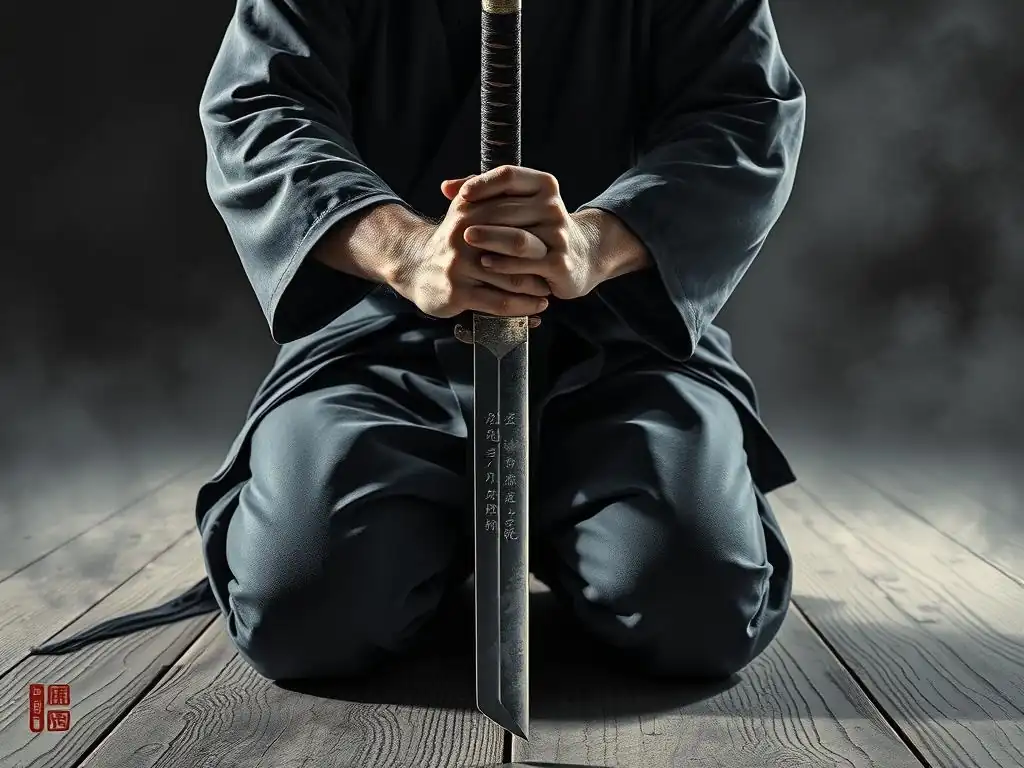
Enhancing Power Generation Through Correct Grip
The grip acts as the conduit for transferring power generated from the legs, waist, and torso through the arm and into the sword. A correct Jian grip technique details allows for efficient kinetic chain transfer. When the grip is too loose, energy dissipates, resulting in weak techniques. When it's too tight, tension blocks the flow of power. The balanced grip allows the sword to move with the body's momentum, maximizing force.
Consider a powerful downward cut. With a proper grip, the force generated by stepping and turning the waist is transmitted through a stable wrist and into the sword, allowing the blade's weight and edge to work effectively. An incorrect grip, like a bent wrist or overly tight fingers, acts like a kink in a hose, preventing the full power potential from reaching the target. Mastering Jian grip technique details is essential for unlocking the full power inherent in Jian movements.
Improving Precision and Control in Sword Movements
Precision in Jian forms is paramount, requiring the ability to control the blade's tip with accuracy. This is directly influenced by Jian grip technique details. A grip that allows for subtle adjustments of finger pressure and wrist angle enables the practitioner to guide the blade along intricate paths, execute small circles (如意圈, rúyì quān), and stop the tip precisely at designated points.
For example, executing a series of rapid thrusts (點劍, diǎn jiàn) requires exceptional tip control. The ability to slightly relax the lower fingers and use the thumb and index finger to guide the point is a crucial Jian grip technique detail for this technique. This allows for quick changes in direction and ensures the thrust lands exactly where intended, showcasing the finesse and control characteristic of skilled Jian play.
Achieving Fluidity and Grace in Taolu Performance
Jian forms are renowned for their flowing, elegant movements. Achieving this fluidity (身法, shēnfǎ) is heavily dependent on a relaxed and dynamic grip. Tension in the grip translates directly to stiffness in the arm and shoulders, making movements jerky and disconnected. A relaxed grip, on the other hand, allows the sword to flow smoothly from one technique to the next, appearing almost weightless despite its steel construction.
The ability to subtly adjust pressure and maintain wrist flexibility while performing complex sequences is a key aspect of advanced Jian grip technique details. This allows for seamless transitions between different types of movements – from powerful cuts to delicate circles and rapid thrusts – creating the visual impression of effortless grace. The sword becomes a natural extension of the body, moving with organic freedom rather than mechanical rigidity.
Preventing Injury with Proper Jian Grip Technique
Improper Jian grip technique details are a significant contributor to training-related injuries, particularly in the wrist, elbow, and shoulder. Gripping too tightly or with poor wrist alignment places undue stress on joints and tendons. For instance, a bent wrist during a powerful impact can lead to sprains, strains, or even more serious long-term issues like tendonitis.
Learning and consistently applying correct Jian grip technique details helps distribute the forces generated by movements and impacts safely. Maintaining a relatively straight wrist during power generation and impact, and using a relaxed grip to absorb shock in parries, protects the joints. Focusing on proper technique is not just about performance; it's a critical aspect of safe and sustainable martial arts training, ensuring longevity in your practice.
Common Mistakes in Jian Grip and How to Correct Them
Over-Gripping: The Tension Trap
One of the most pervasive errors in Jian grip technique details is over-gripping, often referred to as the "death grip." This involves squeezing the hilt with excessive force, creating tension that travels up the arm, shoulder, and even into the neck. This tension severely inhibits speed, fluidity, and power, and leads to rapid fatigue and discomfort. Practitioners often resort to over-gripping out of a fear of dropping the sword, especially beginners.
Correcting over-gripping requires conscious effort and specific drills focused on relaxation. It's important to understand that control comes from leverage and proper body mechanics, not brute force in the hand. Recognizing the signs of tension – white knuckles, trembling, forearm stiffness – is the first step. Regularly checking your grip pressure during practice and actively reminding yourself to relax the non-essential muscles are crucial corrective actions for improving your Jian grip technique details.
Incorrect Hand Placement: Losing Leverage
Placing the hand too far down the hilt towards the pommel is another common error impacting Jian grip technique details. This shifts the pivot point closer to the hand, making the blade feel heavier and significantly reducing leverage, particularly for techniques involving the tip. It makes controlling the far end of the sword much more difficult and diminishes the power of cuts and thrusts.
To correct incorrect hand placement, focus on positioning the hand high on the hilt, with the base of the index finger near the guard. Practice simply holding the Jian and finding the most balanced point where the sword feels light and responsive. Drills that emphasize tip control, like tracing patterns in the air or performing precise thrusts, can help highlight the importance of proper hand placement for effective Jian grip technique details and encourage the correct position.
Ignoring Wrist Alignment: Risking Injury
Failing to maintain proper wrist alignment is detrimental to both performance and safety. Allowing the wrist to bend excessively during powerful movements or impacts places immense strain on the joint. This not only weakens the technique by disrupting force transfer but also significantly increases the risk of sprains, strains, and chronic conditions like carpal tunnel syndrome or tendonitis.
Correcting poor wrist alignment requires awareness and strengthening exercises. Pay close attention to your wrist position during all techniques, especially cuts and parries. Imagine a straight line running from your forearm through your wrist and into the hilt. Strengthening exercises for the wrist and forearm, combined with slow, deliberate practice of techniques focusing solely on maintaining proper alignment, are essential steps for improving this critical aspect of Jian grip technique details.
Finger Extension Exercise: Correcting Over-Gripping
This simple exercise helps combat the tendency to over-grip by promoting relaxation and awareness of finger control.
- Task:
- [ ] Hold your Jian in your standard grip.
- [ ] Practice extending your fingers slightly away from the hilt without letting go of the sword. The sword should still be held securely by the base of your fingers and thumb.
- [ ] Hold this slightly relaxed position for a few seconds.
- [ ] Return to a secure grip.
- [ ] Repeat 10-15 times.
- [ ] Notice the difference in tension between the tight grip and the slightly extended finger grip.
This drill highlights that you can maintain control with less pressure, reinforcing better Jian grip technique details.
Thumb Placement Drill: Correcting Incorrect Hand Placement
This drill helps reinforce the correct high hand placement and the role of the thumb.
- Task:
- [ ] Hold your Jian vertically, blade pointing up.
- [ ] Place your dominant hand on the hilt, ensuring the base of your index finger is right against the guard.
- [ ] Your thumb should rest along the side of the hilt, parallel to the blade, or slightly angled towards it.
- [ ] Practice lifting and lowering the sword slightly using this grip, focusing on the stability provided by the high hand placement and the thumb's position.
- [ ] Perform slow, controlled circles and thrusts, consciously checking that your hand remains high on the hilt.
Consistent practice with this drill helps solidify the proper starting point for effective Jian grip technique details.
Wrist Rotation Exercise: Correcting Wrist Misalignment
This exercise improves wrist flexibility and control while maintaining alignment.
- Task:
- [ ] Hold your Jian horizontally in your standard grip, arm extended forward.
- [ ] Keeping your forearm relatively still and your wrist straight, practice rotating the sword blade up and down, as if nodding or shaking your head slightly, using only subtle wrist movement.
- [ ] Ensure the wrist joint itself remains stable and doesn't buckle.
- [ ] Perform slow, controlled rotations in both directions (up/down, side-to-side).
- [ ] Repeat for several sets, focusing on smooth movement and maintaining alignment.
This drill enhances the subtle control required for advanced Jian grip technique details and promotes healthy wrist mechanics.
Advanced Jian Grip Techniques for Experienced Practitioners
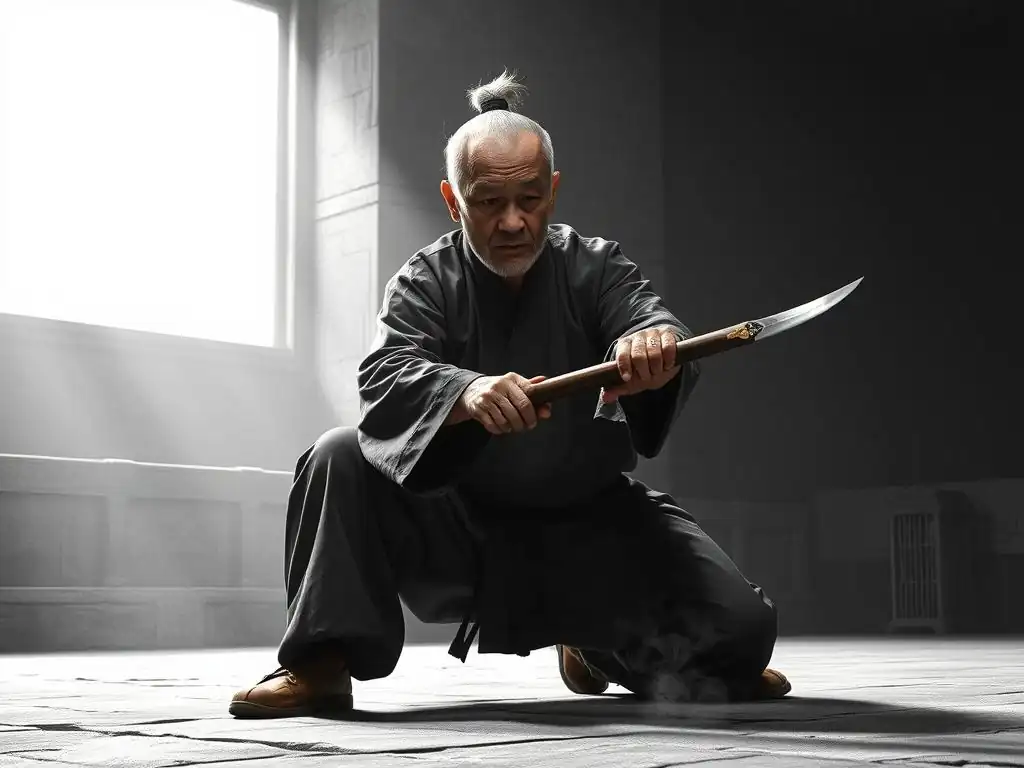
Grip Transitions: Seamless Flow Between Techniques
For experienced practitioners, mastering the art of grip transitions is crucial for executing complex Taolu with speed and fluidity. This involves subtly shifting hand position or finger pressure during a movement to set up the subsequent technique optimally. For instance, slightly adjusting the grip during a circular block might prepare the hand for a rapid follow-up thrust, or loosening the grip slightly allows for a quick change of direction.
Developing seamless grip transitions is a hallmark of advanced Jian grip technique details. It requires an intuitive understanding of how each grip variation influences the sword's movement and the ability to make these changes almost unconsciously. This level of control allows the practitioner to link techniques together smoothly, creating a continuous flow of energy and motion throughout the form, rather than a series of disconnected actions.
Utilizing Grip Changes for Power and Speed Variations
Advanced practitioners learn to leverage subtle changes in grip pressure and hand position to modulate the power and speed of their techniques. A momentary tightening of the grip can add 'snap' to a cut or thrust, while a relaxation allows for whip-like acceleration or a deceptive change in tempo. This dynamic application of Jian grip technique details adds depth and martial effectiveness to the form.
This isn't about switching between entirely different grips mid-form in most cases, but rather about nuanced adjustments within the standard grip framework. For example, a sequence might involve a soft, flowing circle followed by a sudden, powerful thrust. The transition between these requires the grip to shift from a relaxed, fluid hold to a firm, stable platform for force transmission in a fraction of a second, demonstrating sophisticated control over Jian grip technique details.
Flicking Grip: Enhancing Speed and Agility in Thrusts
The flicking grip is a specific, advanced application of Jian grip technique details primarily used to enhance the speed and agility of thrusts (刺, ci). It involves a momentary relaxation of the lower fingers combined with a pushing action from the thumb and a slight whip-like movement from the wrist and forearm. This allows the sword tip to extend rapidly and deceptively, often covering a surprising distance.
Mastering the flicking grip requires significant practice to avoid losing control of the sword. It relies on the ability to quickly transition from a relaxed state to a controlled extension and back. This advanced Jian grip technique detail is particularly effective in styles that emphasize quick, unpredictable linear attacks and adds a layer of sophistication to thrusting techniques within Taolu.
Pressing Grip: Maximizing Power in Cutting Techniques
The pressing grip is another advanced Jian grip technique detail utilized to maximize power, particularly in downward or forward cutting techniques (劈, pi; 砍, kan). It involves applying downward or forward pressure through the hand and forearm onto the hilt, using the body's weight and structure to drive the blade through the target plane. This is often combined with a stable wrist and coordinated body movement.
Unlike the dynamic 'snap' of some cuts, the pressing grip emphasizes sustained force application. It requires a strong connection between the hand, wrist, and the structural alignment of the arm and body. This aspect of Jian grip technique details is crucial for techniques where the goal is to apply significant, directed force, demonstrating the Jian's potential for power despite its relatively light weight compared to other swords.
Jian Grips and Their Relation to Different Sword Styles
Wudang Sword Grips: Emphasizing Flexibility
Wudang sword styles are often characterized by their emphasis on fluidity, circular movements, and integrating internal principles. The Jian grip technique details within Wudang practice reflect this philosophy. While the standard grip is used, there is a strong focus on maintaining a relaxed hold and a highly flexible wrist. This allows for the continuous, flowing circles and intricate changes in direction that are hallmarks of Wudang Jian.
The Wudang approach to grip prioritizes sensitivity and responsiveness over brute force. The grip is 'live,' constantly making micro-adjustments to facilitate smooth transitions and express the internal energy (內勁, nèijìn) of the practitioner. This emphasis on a relaxed, adaptable grip is a core Jian grip technique detail that enables the unique aesthetic and martial applications of Wudang Jian forms.
Kunlun Sword Grips: Focusing on Power
Kunlun sword styles, while sharing some characteristics with other schools, often place a greater emphasis on powerful, direct movements and robust techniques. The Jian grip technique details in Kunlun practice tend to focus on ensuring a stable and powerful connection between the hand and the sword, facilitating strong cuts and impactful blocks. While not rigid, the grip is often firmer than in more purely internal styles when executing power techniques.
The Kunlun approach emphasizes generating force from the body and transmitting it efficiently through a stable grip. This might involve a slightly firmer overall hold during powerful sequences or specific hand placements that maximize leverage for cuts and parries. Understanding these Jian grip technique details is key to performing Kunlun Jian forms with the intended martial vigor and effectiveness.
Emei Sword Grips: Prioritizing Precision and Footwork
Emei sword styles are known for their agility, intricate footwork, and precise, often deceptive, techniques. The Jian grip technique details in Emei practice are geared towards facilitating rapid movements, quick changes in angle, and highly accurate tip control. This requires a grip that is both secure for dynamic footwork and relaxed enough for lightning-fast hand movements.
The Emei grip emphasizes the ability to make rapid micro-adjustments and utilize wrist flexibility for fast thrusts and intricate deflections. The focus is on control and speed, allowing the practitioner to capitalize on openings created by their agile footwork. Mastering the Jian grip technique details specific to Emei style enables the execution of its characteristic rapid, precise, and agile swordplay.
Maintaining Your Jian and Optimizing Your Grip
Jian Handle Material and Grip Enhancement
The material of your Jian's handle significantly impacts the grip feel and performance. Traditional hilts were often wrapped in cord or leather, providing a good balance of grip and comfort. Modern Jian may use wood, metal, or synthetic materials. A smooth, polished handle can be slippery, especially with sweat, hindering effective Jian grip technique details. Conversely, a handle with too much texture can cause discomfort or blisters during extended practice.
Choosing a Jian with a handle material that suits your hand and preferences is important. For materials that are too smooth, options like adding grip tape or a traditional cord wrap can significantly improve the hold. Ensuring the handle is clean and free of oil or debris before practice is also a simple yet effective step to optimize your Jian grip technique details.
Cleaning and Care for Optimal Grip
Maintaining your Jian is essential for its longevity and performance, and cleaning the handle directly impacts your grip. Sweat, dirt, and oil can accumulate on the hilt, making it slippery and compromising your ability to maintain a secure Jian grip technique details. Regular cleaning ensures the handle material retains its intended texture and provides a consistent grip.
After practice, wipe down the hilt with a clean, dry cloth. If the handle is wrapped in cord or leather, allow it to air dry completely to prevent mildew. For wood or metal handles, a slightly damp cloth followed by a dry one can remove grime. Avoid using excessive moisture or harsh chemicals that could damage the material. Proper care ensures your Jian's handle remains in prime condition for executing precise Jian grip technique details.
Grip Tape Application: Enhancing Grip and Comfort
For practitioners who find their Jian handle too smooth or prefer additional cushioning, applying grip tape is a common solution to enhance Jian grip technique details. Athletic grip tape, similar to that used on tennis rackets or hockey sticks, can be wrapped around the hilt to provide a tacky surface and improve friction. This is particularly useful for dynamic forms where the sword is moving rapidly.
Applying grip tape correctly involves starting at the base of the hilt and wrapping upwards towards the guard, overlapping slightly with each turn. Ensure the wrap is smooth and even, without bumps or wrinkles that could interfere with your hold. Grip tape can wear out over time and should be replaced when it loses its tackiness or becomes damaged. This simple addition can make a significant difference in maintaining a secure and comfortable Jian grip technique details throughout your practice session.
Conclusion: Mastering Jian Grips for Enhanced Swordplay
The Path to Jian Mastery: Continuous Practice and Refinement
Mastering the Jian is a lifelong pursuit, and a deep understanding of Jian grip technique details is fundamental to this journey. The grip is not merely how you hold the sword; it is the intimate connection between your body's mechanics, your intention, and the sword's expression. Continuous practice, focusing specifically on grip awareness and refinement, is essential for developing the sensitivity and control required for high-level Jian play.
Regularly evaluate your grip during practice: Are you holding too tightly? Is your wrist aligned? Can you feel the subtle movements of the blade? Incorporate drills focused solely on grip and wrist control. Seek feedback from experienced instructors who can observe your Jian grip technique details and offer specific corrections. This dedicated attention will elevate your performance from merely executing movements to truly embodying the art of the Jian.
Further Resources for Improving Your Jian Technique
Improving your Jian grip technique details is an ongoing process that benefits from diverse learning resources. While direct instruction from a qualified teacher is invaluable, supplementing your training with detailed guides and visual demonstrations can deepen your understanding. Focus on resources that provide specific breakdowns of hand placement, finger pressure points, and wrist mechanics in relation to different Jian techniques and styles.
Look for instructional content that emphasizes the feeling of the grip and how it changes throughout a movement. Understanding the principles behind different grips used in various styles can also broaden your perspective and inform your own practice. By actively seeking out and utilizing these resources, you can continue to refine your Jian grip technique details, unlocking greater power, precision, fluidity, and safety in your Jian forms.
Frequently Asked Questions
What are the primary types of Jian grips, and how do they differ?
The primary Jian grips include the full grip, pinch grip, and floating grip. They differ primarily in the number of fingers engaged and the level of control offered.
How does the Jian grip affect the overall form execution in Taijijian?
The Jian grip significantly impacts form execution by influencing precision and fluidity. A proper grip enables smooth transitions and precise blade control.
Why is a relaxed grip often emphasized in Jian training despite the need for control?
A relaxed grip is crucial to avoid muscle fatigue and allows for greater sensitivity to the Jian's movement. It promotes a more natural and responsive form.
Can the Jian grip be modified depending on the specific technique being performed?
Yes, the Jian grip can and should be modified. Adapting the grip allows for optimal power transfer and control during various stances and cuts, such as thrusts or parries.
How can a beginner improve their Jian grip technique for better form and control?
Beginners should focus on consistent practice with basic grips, paying attention to finger placement and wrist flexibility. Regular feedback from an instructor is invaluable.
Final Reflection: Mastering the Jian's Embrace
The intricate details of Jian grip technique, as explored in this article, are not merely historical curiosities; they are living pathways to unlocking the full potential of the sword. Understanding the nuances of each grip allows practitioners to move beyond rote memorization and truly embody the spirit and power of the Jian.
The impact of mastering these grips extends beyond physical prowess. It fosters a deeper connection to the art form, cultivating discipline, focus, and a profound appreciation for the subtle energies that flow through the body and the blade. This journey of refinement, of constantly seeking to improve one's grip and form, mirrors the broader pursuit of self-mastery. The journey of a thousand miles begins with a single step.
This ancient proverb resonates deeply with the dedication required to truly understand and execute the Jian's techniques.
Now, consider the lessons learned here. How can you apply the principles of mindful grip and precise execution to other areas of your life? Embrace the challenge of refining your own "grip" on your goals, your relationships, and your inner self. Let the Jian's teachings inspire you to cultivate a sharper focus, a deeper connection, and a more powerful presence in all that you do.
Ignite Your Jian Practice: Unlock Your Full Potential!
Thank you for delving into the nuances of Jian grips and their impact on form execution. We hope you've gained valuable insights into refining your technique and enhancing your mastery of this elegant weapon. Now, let's put that knowledge into action and elevate your Jian practice!
- Prioritize Perfect Form: Dedicate your next training session to meticulously practicing the "Cloud Piercing" form, consciously applying the insights from this article to refine your grip and movements. This singular action can dramatically impact your overall technique and prevent future bad habits.
- Explore Alternative Grips: Experiment with different Jian grips beyond the standard "Handshake" grip. Discover how varying your hand placement can unlock new dimensions in your form.
- Share your insights and tips on the Martial Arts Mastery forums: Help others by showcasing the differences you see from applying the correct grip.
What subtle changes in your Jian form execution did you notice after focusing on your grip, and how did it impact your power and precision?