
Taolu in Motion: The Diverse Styles and Rich Applications of Chinese Kung Fu Forms

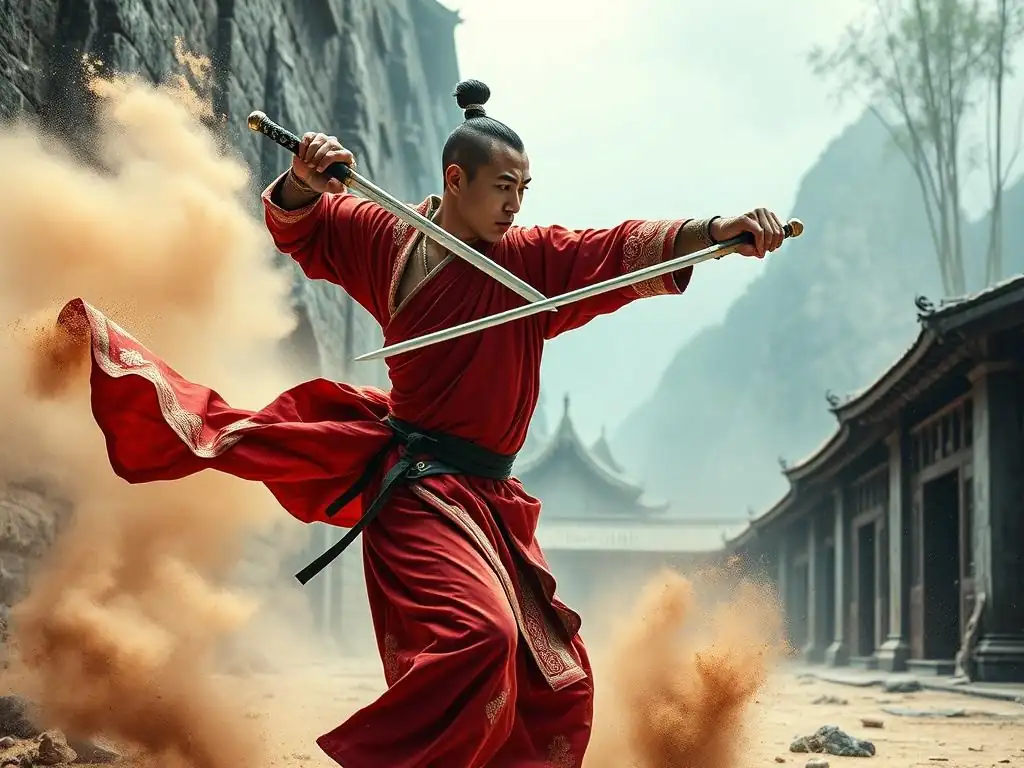
Welcome to Martial Arts Mastery, where we unlock the secrets behind the world's most captivating combat disciplines. Prepare to delve deep into the heart of martial arts, starting with an exploration of the dynamic world of Chinese Kung Fu Taolu forms. But what exactly are these intricate sequences, and how do they translate to real-world applications? Join us as we unravel the history, diverse styles, and practical applications of these captivating patterns, sparking a deeper understanding of their profound significance.
What is Taolu in Kung Fu? Defining Forms and Their Significance
Taolu (套路) are prearranged sequences of movements in Chinese martial arts, often referred to as forms. These sequences consolidate fundamental techniques, stances, footwork, and principles into a cohesive routine that can be practiced solo or sometimes with a partner. Far from being mere performance pieces, Taolu are considered the 'textbooks' of traditional Chinese Kung Fu, encoding generations of martial knowledge within their intricate patterns. Each movement within a Taolu typically represents a specific application or principle, intended for self-defense or combat, though the explicit combative context might not be immediately obvious without proper instruction.
The significance of Taolu within the vast landscape of Chinese martial arts cannot be overstated. Historically, before widespread literacy or standardized training manuals, Taolu served as the primary method for preserving and transmitting entire fighting systems. A master would teach a student a Taolu, and through diligent practice and application drills derived from it, the student would internalize the style's techniques, strategies, and underlying philosophy. Practicing these Chinese Kung Fu Taolu forms allows practitioners to develop muscle memory, coordination, and timing, essential skills for effective self-defense and martial application.
The Purpose of Taolu in Chinese Martial Arts Training
The practice of Taolu serves multiple crucial purposes in the development of a Chinese martial artist. Primarily, it is a method for learning and refining techniques. A single Taolu might contain dozens or even hundreds of individual movements, ranging from basic stances and strikes to complex joint locks and throws. By repeatedly practicing these sequences, the practitioner embeds the correct posture, angle, and power generation into their physical being, making techniques instinctive under pressure. This systematic approach ensures that fundamental skills are not overlooked and provides a comprehensive curriculum for progression through a style.
Beyond technical acquisition, Taolu practice is also vital for cultivating internal attributes and physical conditioning. The dynamic movements build strength, flexibility, stamina, and balance. Certain Taolu, particularly those from internal styles, emphasize breath control ( Qi) and mental focus, promoting internal health and rootedness. Furthermore, the complex choreography of many Chinese Kung Fu Taolu forms demands significant concentration and spatial awareness, sharpening the mind-body connection. Practicing Taolu is therefore not just about learning to fight, but about holistic physical, mental, and spiritual development within the tradition of Chinese martial arts.
- What is Taolu in Kung Fu? Defining Forms and Their Significance
- The Purpose of Taolu in Chinese Martial Arts Training
- What exactly are Taolu forms in Chinese Kung Fu?
- Why are Taolu forms considered important in Chinese Kung Fu training?
- What are some examples of different styles of Taolu forms within Chinese Kung Fu?
- Do Taolu forms have any practical self-defense applications?
- Where can I learn more about the history and philosophy behind Taolu forms?
Exploring the Diverse Styles of Kung Fu Taolu
Northern Kung Fu Forms: Characteristics and Examples
Northern Chinese Kung Fu styles are often characterized by their emphasis on long-range techniques, dynamic footwork, and powerful kicks. The terrain of Northern China, with its vast plains, is often cited as an influence on these styles, encouraging wide stances and expansive movements suitable for open ground. Taolu from Northern styles frequently feature high kicks, acrobatic leaps, and rapid transitions, demanding significant athleticism and flexibility from the practitioner. Styles like Changquan (Long Fist), Shaolinquan, and Bājíquán are prominent examples, their forms showcasing speed, reach, and explosive power.
For instance, a typical Changquan Taolu might include movements like the "Whirlwind Kick" (旋風腿, Xuànfēng Tuǐ) or "Lotus Kick" (旋子腿, Xuànzi Tuǐ), requiring impressive flexibility and balance. Shaolin Taolu, originating from the Shaolin Monastery in Henan province, are renowned for their practical combat applications and diverse range of movements, including many low stances and powerful strikes.
Bājíquán forms, while less acrobatic than Changquan, are known for their short, explosive power and emphasis on close-range combat, often incorporating shoulder and elbow strikes, yet still maintaining dynamic footwork to close distance rapidly. Practicing these Chinese Kung Fu Taolu forms develops powerful legs, flexible joints, and dynamic body coordination.
Southern Kung Fu Forms: Power, Precision, and Distinctive Techniques
Southern Chinese Kung Fu styles, in contrast to their northern counterparts, often focus on close-range combat, strong stances, and powerful hand techniques. The geography of Southern China, with its crowded cities, winding rivers, and mountainous terrain, is thought to have influenced a preference for compact, rooted movements suitable for fighting in confined spaces or on uneven ground.
Southern Taolu are characterized by stable, low stances (like the Horse Stance, Mǎbù), powerful short-range strikes, and intricate hand movements. Styles such as Hung Gar, Wing Chun, Choy Li Fut, and Mok Gar are classic examples, their forms emphasizing structural integrity and devastating close-quarters power.
Hung Gar Taolu, such as the famous "Tiger Crane Double Form" (虎鶴雙形拳, Fū Hok Seung Ying Kùhn), are celebrated for their deep stances and powerful hand techniques that mimic the movements of animals like the tiger and crane. Wing Chun forms, like Siu Lim Tao (小念頭, "Little Idea"), are highly structured and focus on developing proper centerline defense, simultaneous blocking and striking, and efficient energy transfer through relaxation and structure.
Choy Li Fut Taolu are known for their wide, sweeping hand movements and dynamic footwork, blending long and short-range techniques. These Chinese Kung Fu Taolu forms build immense lower body strength, powerful forearms, and precise hand-eye coordination for close-range engagements.
Internal Kung Fu Forms: Cultivating Qi through Movement
Internal Kung Fu styles, often referred to as Neijia (內家, "Internal Family"), place a significant emphasis on cultivating internal energy ( Qi), mind-intent ( Yi), and structural alignment rather than overt muscular strength. Their Taolu are typically performed slowly and smoothly, focusing on relaxed, continuous movement, proper breathing, and the connection between mind and body.
While their martial applications may be less immediately apparent to the untrained eye, these forms are deeply rooted in combat principles, utilizing leverage, sensitivity, and internal force ( Jing) generated from the core and directed through the limbs. Tai Chi Chuan, Baguazhang, and Xingyiquan are the most prominent of these internal styles, their unique Chinese Kung Fu Taolu forms offering profound benefits for health, meditation, and sophisticated martial skill.
The practice of internal Taolu is a moving meditation, promoting circulation, reducing stress, and improving balance and proprioception. The slow, deliberate movements allow practitioners to become acutely aware of their body's structure and alignment, identifying and releasing tension. This focus on internal mechanics is crucial for developing the unique power generation characteristic of internal styles, which relies on the coordinated movement of the entire body rather than isolated muscular effort. Mastering these Chinese Kung Fu Taolu forms requires patience, sensitivity, and a deep understanding of the underlying principles of energy flow and structural integrity.
Tai Chi Chuan Forms: Health, Meditation, and Martial Application
Tai Chi Chuan ( Tàijí Quán, 太極拳) forms are perhaps the most widely recognized internal martial art Taolu, known globally for their health benefits and meditative qualities. Originally developed as sophisticated fighting systems, Tai Chi forms emphasize yielding, softness, and using an opponent's force against them. The slow, continuous movements promote relaxation, improve circulation, and cultivate Qi.
Popular styles include Yang, Wu, Chen, and Sun, each with its own distinct forms and emphasis. For example, the widely practiced Yang Style 24-movement form (簡化太極拳, Jiǎnhuà Tàijí Quán) was standardized in the 1950s for health promotion, while Chen Style forms (like Lǎojià Yīlù, 老架一路) retain more of the original martial explosiveness ( fājìng, 發勁) and dynamic transitions between slow and fast movements.
Practicing Tai Chi forms is a holistic exercise that integrates body, mind, and spirit. The focus on maintaining a relaxed yet rooted posture, coordinating breath with movement, and directing intention through the form cultivates internal calmness and external fluidity. While many practice Tai Chi solely for health, the underlying principles within the Taolu are directly applicable to push hands (Tuī Shǒu) and self-defense, teaching sensitivity, balance disruption, and the ability to generate significant power from seemingly gentle movements. Mastering these Chinese Kung Fu Taolu forms unlocks deep levels of physical control and internal energy.
Baguazhang Forms: Circular Movement and Evasive Strategies
Baguazhang ( Bāguà Zhǎng, 八卦掌, "Eight Trigram Palm") forms are unique for their foundational practice of "circle walking" (走圈, Zǒu Quān). Practitioners walk continuously in a circle while performing various palm changes and body movements. This circular motion is not merely a training method but is fundamental to the style's combat strategy, which emphasizes evasion, circling the opponent, and striking from oblique angles. Baguazhang Taolu are characterized by flowing, interconnected movements that are constantly changing and adapting, reflecting the principles of the I Ching (Book of Changes), from which the style draws its name and philosophical underpinnings.
The Taolu in Baguazhang, such as the "Eight Mother Palms" (八母掌, Bā Mǔ Zhǎng) or the diverse forms associated with different lineage holders, are complex and require significant spatial awareness and coordination. The continuous turning and twisting movements develop flexibility in the waist and spine, crucial for generating the style's characteristic spiraling power. Evasive footwork and simultaneous striking and stepping are key components embedded within these Chinese Kung Fu Taolu forms. Mastery allows a practitioner to constantly shift positions, making them a difficult target while creating opportunities for devastating strikes from unexpected angles.
Xingyiquan Forms: Linear Power and Explosive Force
Xingyiquan ( Xíngyì Quán, 形意拳, "Form-Intention Fist") forms are known for their directness, linear movements, and explosive power. Unlike the circularity of Bagua or the yielding of Tai Chi, Xingyi emphasizes forward intent and simultaneous attack and defense.
The style is based on the "Five Elements" (五行, Wǔ Xíng) and "Twelve Animals" (十二形, Shí Èr Xíng), with distinct Taolu representing the energetic qualities and movements of each. The Five Element forms (Pī Quán - Splitting, Bēng Quán - Crushing, Zuān Quán - Drilling, Pào Quán - Cannon, Héng Quán - Crossing) are foundational, teaching core principles of power generation and structure.
Xingyi Taolu are practiced with intent and focus, generating short, sharp bursts of power ( fājìng). The movements are typically straightforward and economical, designed for maximum efficiency in overwhelming an opponent. For example, Bēng Quán is a simple forward punch often likened to an arrow shooting forward, embodying linear penetration. The animal forms, such as the Dragon, Tiger, or Eagle, build upon the elemental principles, adding specific strategies and body mechanics. Practicing these Chinese Kung Fu Taolu forms cultivates rootedness, explosive power, and unwavering forward momentum, making Xingyi a formidable and direct fighting system.
Key Elements and Principles in Kung Fu Taolu Practice
Stance Work (Zhan Zhuang) in Kung Fu Forms
Fundamental to the effective execution of any Chinese Kung Fu Taolu form is solid stance work, often rooted in the practice of Zhan Zhuang (站樁, "Standing Post"). Zhan Zhuang is a static training method where practitioners hold specific postures for extended periods, focusing on relaxation, alignment, and cultivating internal energy. While seemingly simple, consistent Zhan Zhuang practice develops incredible leg strength, stability, and rootedness, which translates directly into the dynamic stances used within Taolu. A strong foundation allows for powerful techniques and rapid, stable transitions between movements.
Within Taolu itself, various stances like the Horse Stance (Mǎbù), Bow Stance (Gōngbù), Empty Stance (Xūbù), and Drop Stance (Pūbù) are utilized. Each stance has specific requirements for weight distribution, knee and hip alignment, and back posture, designed to provide stability, facilitate power generation, or prepare for the next movement. Incorrect stance work undermines the entire form, leading to poor balance, reduced power, and increased risk of injury. Dedicated practice of Chinese Kung Fu Taolu forms emphasizes precision in every stance, ensuring that the body is structurally sound and ready for action.
Hand Techniques (Shou Fa) and Footwork (Bu Fa) in Taolu
Hand techniques ( Shǒu Fǎ, 手法) and footwork ( Bù Fǎ, 步法) are the dynamic components that make up the bulk of any Taolu. Hand techniques encompass a vast array of strikes (punches, palms, fingers, elbows), blocks, parries, grabs, and joint locks. Each technique is executed with specific angles, trajectories, and power generation methods depending on the style and intended application. The Taolu provides a framework for practicing these techniques in various combinations and sequences, ensuring that practitioners develop proficiency in their style's repertoire.
Footwork, or Bu Fa, is equally critical, providing the mobility and positioning necessary for executing hand techniques effectively. Different styles utilize distinct footwork patterns, such as the linear steps of Xingyi, the circular walking of Bagua, or the rooted, short steps of Southern styles. Taolu integrate hand techniques and footwork seamlessly, training the practitioner to move the entire body as a coordinated unit.
For example, a powerful punch often requires stepping forward to generate bodyweight transfer, while a block might involve a side step to evade simultaneously. Practicing these Chinese Kung Fu Taolu forms synchronizes the movement of the hands and feet, making actions fluid and powerful.
Eye Contact (Yan Fa) and Body Coordination (Shen Fa) in Kung Fu Forms
Beyond the physical mechanics of stances, hands, and feet, effective Taolu performance involves integrating the entire body and focusing the mind. Eye contact ( Yǎn Fǎ, 眼法), or eye focus, is crucial. The eyes should typically look in the direction of the intended technique or opponent, conveying intent and maintaining awareness. Proper eye focus adds realism to the form and trains the practitioner to keep their gaze steady under dynamic conditions. It is not just about looking, but about projecting intent through the eyes.
Body coordination ( Shēn Fǎ, 身法), refers to the integrated movement of the torso, waist, shoulders, and hips, which connects the power generated from the ground through the legs and torso to the extremities. It's the principle of moving the "whole body as one unit" (全身一家, Quánshēn Yījiā). The waist is often considered the "command center," initiating movements and coordinating the upper and lower body.
Taolu practice emphasizes relaxed yet connected movement throughout the body, ensuring that power flows efficiently and techniques are executed with full bodily support. Mastering these elements within Chinese Kung Fu Taolu forms transforms individual movements into a powerful, cohesive whole.
Breathing Techniques (Qi) in Taolu Practice
Breathing techniques ( Qì, 氣) are an integral, though often subtle, element of Taolu practice, particularly in internal styles but present in varying degrees in all Kung Fu. Proper breathing supports physical exertion, helps maintain relaxation, and is fundamental to the cultivation and projection of internal energy ( Qi). Generally, movements that require power or expulsion of force are coordinated with exhalation, while movements involving receiving or gathering force are coordinated with inhalation. Deep, abdominal breathing (Dān Tián breathing) is often emphasized, promoting stability and internal calm.
In some advanced Taolu, specific breathing sounds or methods might be incorporated, such as the forceful exhalation ( hēng, 哼 or hā, 哈) used in certain Shaolin or Xingyi techniques to focus power and intimidate an opponent. Conscious control of breath helps regulate the practitioner's rhythm, manage energy levels throughout a long form, and enhance the mind-body connection. Integrating mindful breathing into the execution of Chinese Kung Fu Taolu forms deepens the practice, making it not just a physical exercise but an internal cultivation method.
The Rich Applications of Chinese Kung Fu Forms
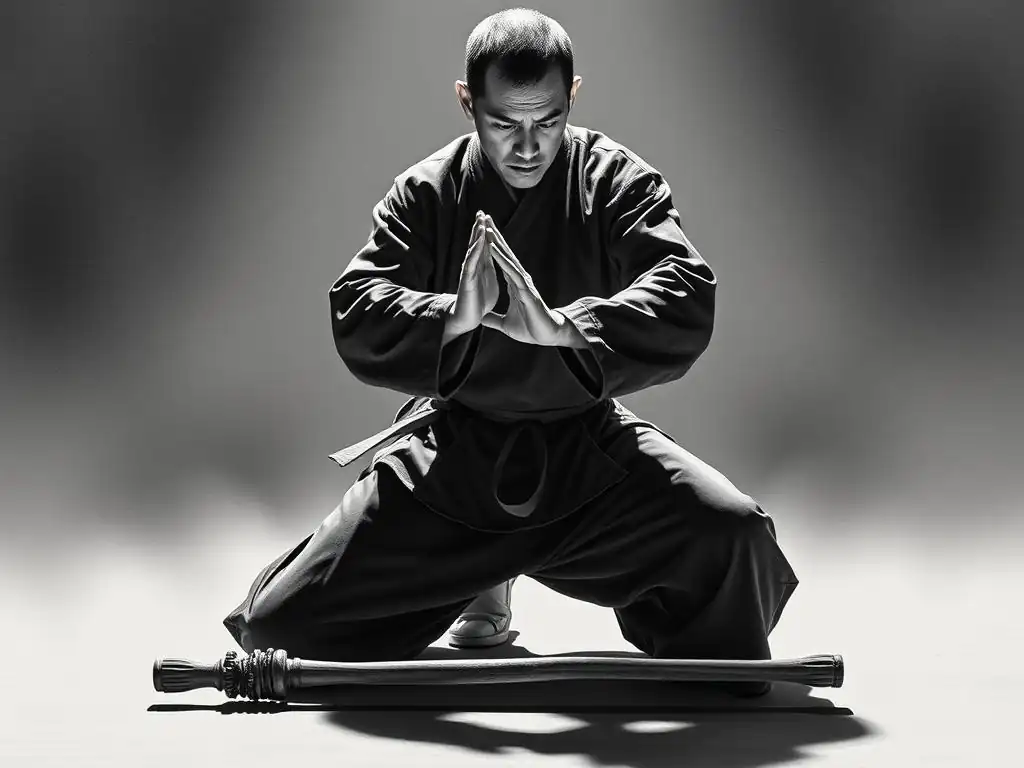
Taolu as a Method for Practicing and Perfecting Techniques
At its core, Taolu serves as the primary training method for practicing and perfecting the vast array of techniques that constitute a Kung Fu style. Each block, strike, kick, or throw is embedded within the sequence, allowing practitioners to perform it repeatedly in different contexts and combinations. This systematic repetition builds muscle memory and refines the practitioner's execution, ensuring techniques are performed correctly with optimal structure and power generation. It's akin to a musician practicing scales and études before performing a complex piece.
Consider a specific technique like the "Phoenix Eye Fist" (鳳眼拳, Fèngyǎn Quán) used in some Southern styles. A Taolu might feature this strike multiple times, from different stances or angles, perhaps combined with a specific step or block. By practicing the Taolu, the student drills this technique within a dynamic sequence, learning not just how to form the fist and strike, but when and how to apply it in conjunction with other movements. This contextual practice within Chinese Kung Fu Taolu forms is crucial for developing practical skill.
Taolu as a Way to Develop Strength, Flexibility, and Coordination
Beyond technical skill, regular Taolu practice is a comprehensive physical conditioning program. The demanding stances build incredible lower body strength and endurance. Dynamic movements, kicks, and stretches improve flexibility and range of motion throughout the body. The complex choreography requires precise timing and coordination between the hands, feet, torso, and eyes, significantly enhancing overall body control and agility.
For example, practicing a Northern style Taolu with its high kicks and jumping techniques develops explosive power and flexibility in the legs and hips. A Southern style Taolu with its deep, rooted stances builds immense strength in the quadriceps, hamstrings, and core. Internal style Taolu, though often slow, demand sustained muscular engagement and fine motor control for balance and smooth transitions. Consistent practice of Chinese Kung Fu Taolu forms provides a rigorous full-body workout that is both physically demanding and functionally beneficial for martial arts and general health.
Taolu as a Tool for Understanding and Applying Kung Fu Principles
Taolu forms are not just collections of techniques; they are living embodiments of the underlying principles and strategies of a Kung Fu style. Principles such as yielding and redirecting force (as in Tai Chi), simultaneous attack and defense (as in Wing Chun or Xingyi), or using the opponent's balance against them are woven into the fabric of the Taolu movements. By understanding the combat applications ( Yòng Fǎ, 用法) of each movement and sequence, the practitioner gains deeper insight into the style's martial philosophy and how it intends to engage in combat.
A master teaching a Taolu will often break down sequences to show their practical applications, demonstrating how a seemingly abstract movement could be used as a block, strike, throw, or joint lock. Through this process, the student learns why movements are performed in a certain way and how they connect to combat scenarios. This understanding elevates the practice from rote memorization to intelligent application. Analyzing and applying the principles embedded within Chinese Kung Fu Taolu forms is essential for bridging the gap between solo practice and effective self-defense.
Taolu as a Means of Preserving and Transmitting Kung Fu Heritage
Historically, Taolu were the primary means by which entire Kung Fu systems were preserved and passed down through generations. Before the advent of widespread video recording or detailed written manuals, a master's knowledge was contained within the forms they taught. Learning the Taolu of a particular style was synonymous with learning the style itself. This function remains vital in the preservation of traditional Kung Fu, many styles of which have ancient lineages.
By diligently practicing and accurately transmitting the Taolu of their lineage, practitioners contribute to the continuation of centuries-old martial traditions. Many Taolu are named after their founders, key techniques, or symbolic representations (like animal forms), carrying historical and cultural significance.
For example, the "Small and Large Arhat Forms" (小羅漢拳, Xiǎo Luóhàn Quán; 大羅漢拳, Dà Luóhàn Quán) in Shaolinquan are said to date back over a thousand years, embodying the core principles of the monastery's fighting system. Preserving and practicing these traditional Chinese Kung Fu Taolu forms is a way of honoring the past and ensuring that the rich heritage of Chinese martial arts endures.
From Solo Practice to Partnered Applications: Taolu's Role in Combat
Drills and Applications Derived from Taolu Sequences
While Taolu are typically practiced solo, their ultimate purpose is rooted in combat. The transition from solo form to practical application is facilitated through various drills and exercises derived directly from the Taolu sequences. Instructors will break down segments of a form, demonstrating potential applications against a partner. These drills, often called Taolu Yongfa (套路用法, "Taolu Applications"), allow practitioners to practice specific techniques and combinations in a semi-live context, learning timing, distance, and sensitivity.
For instance, a defensive movement in a Taolu might be practiced as a block followed by a counter-strike drill with a partner. A sequence involving a step and a punch might be drilled as an entry technique against a static or moving target. By repeatedly practicing these derived applications, students begin to see the form not just as a dance, but as a library of combative responses.
This process bridges the gap between the abstract movements of the solo form and their practical use in self-defense. Effective training in Chinese Kung Fu Taolu forms must always include the exploration and practice of their combat applications.
Bridging the Gap Between Form and Fighting in Kung Fu
Bridging the gap between Taolu practice and free fighting (Sǎndǎ, 散打) or self-defense is a critical stage in a practitioner's development. While Taolu provides the technical foundation and principles, it is not a substitute for sparring or application practice. The structured nature of Taolu must be internalized to the point where the techniques and principles can be applied spontaneously and adaptably in the unpredictable environment of a real confrontation. This requires dedicated training that connects the learned movements to live scenarios.
Training methods like partner drills, sticky hands (Tuī Shǒu in Tai Chi), chi sao (粘手 in Wing Chun), and controlled sparring sessions help practitioners transition from the fixed patterns of Taolu to fluid, responsive combat. These exercises force the practitioner to apply techniques under pressure, against resistance, and in response to an opponent's actions. The goal is for the movements and principles learned in Chinese Kung Fu Taolu forms to become second nature, accessible and effective when needed in a dynamic situation, demonstrating the form's true martial value.
The Evolution and Modern Practice of Chinese Kung Fu Taolu Forms
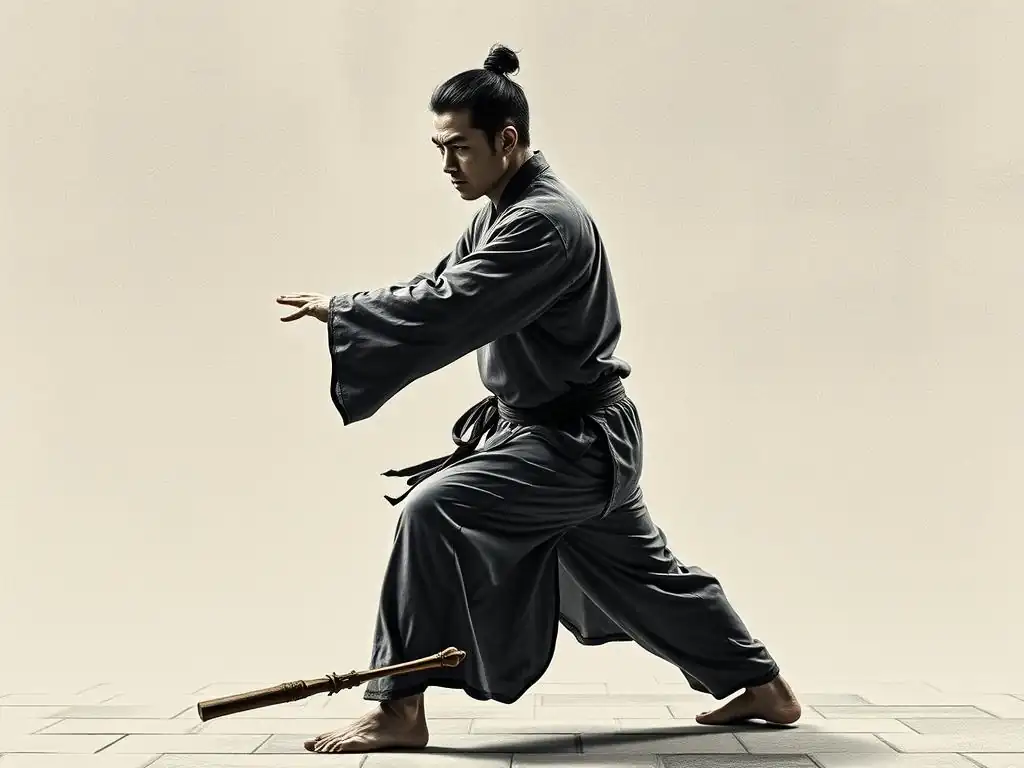
Historical Development of Taolu Across Different Dynasties
The history of Taolu development is deeply intertwined with the history of Chinese martial arts, spanning centuries and dynasties. Early forms likely evolved from battlefield tactics, military drills, and individual fighting techniques. During the Song and Ming dynasties (960-1644 AD), martial arts became more formalized, with distinct styles emerging and forms becoming more complex and systematized as methods of preservation and transmission. The Qing dynasty (1644-1912 AD) saw further refinement and diversification of Taolu, with many famous family styles solidifying their unique forms during this period.
The 20th century brought significant changes, including efforts to standardize and categorize the vast number of existing forms. In the mid-20th century, the Chinese government promoted Wushu (武術, a modern competitive and performance-oriented sport derived from traditional martial arts), developing standardized Taolu for competition. These "modern Wushu" forms often feature highly acrobatic and visually spectacular movements, differing significantly in emphasis from traditional combat-focused Taolu. Understanding this historical evolution helps appreciate the different purposes and characteristics of various Chinese Kung Fu Taolu forms practiced today.
Contemporary Taolu Competitions and Performance
In the modern era, Taolu is a central component of Wushu competitions at national and international levels. These competitions judge practitioners on the difficulty of their movements, execution quality, and overall performance energy ( Shen 神). Standardized Taolu for various styles (like Changquan, Nanquan, Taijiquan) are used, as well as optional or self-choreographed forms. Competitive Taolu often includes high-difficulty jumps, spins, and acrobatics that may not have direct combative application but showcase the practitioner's athleticism and technical skill.
While modern competitive Taolu focuses on performance and aesthetics, it has played a significant role in promoting Chinese martial arts globally and preserving the forms themselves, even if their interpretation shifts towards sport. Major events like the World Wushu Championships feature Taolu as a key discipline, attracting athletes from around the world. This performance aspect of Chinese Kung Fu Taolu forms is distinct from traditional training but represents a significant part of their contemporary identity and global reach.
The Future of Taolu: Preserving Tradition and Embracing Innovation
The future of Chinese Kung Fu Taolu forms lies in balancing the preservation of their rich traditional heritage with thoughtful innovation. For traditionalists, the focus remains on the Taolu's role as a repository of combat knowledge and a method for holistic self-cultivation. This involves studying the historical context, delving into the practical applications, and maintaining the integrity of forms passed down through specific lineages. The challenge is to keep these traditional practices alive and relevant in a rapidly changing world.
Simultaneously, innovation is occurring in areas like sports science analysis of Taolu movements, cross-training methodologies that integrate Taolu with other forms of physical conditioning, and the use of technology (like motion capture) for analysis and teaching. The popularity of modern Wushu competitions also continues to drive the evolution of performance Taolu. The key is ensuring that as Taolu evolves, its connection to its martial roots and cultural significance is not lost. The enduring appeal of Chinese Kung Fu Taolu forms suggests they will continue to adapt and thrive in various forms for generations to come.
Mastering Chinese Kung Fu Taolu: Tips and Recommendations
Finding a Qualified Instructor for Taolu Training
One of the most critical steps in mastering Chinese Kung Fu Taolu forms is finding a qualified instructor. A good teacher provides not just the sequence of movements but also the crucial details: the correct stances, angles, power generation methods, breathing coordination, and the underlying martial applications. Without proper guidance, a practitioner might simply be going through the motions without understanding the form's true purpose or mechanics, potentially developing bad habits that are difficult to correct later.
Look for instructors with verifiable lineage or significant experience under recognized masters. Observe classes to see if the instruction emphasizes not just the choreography but also the principles and applications. Ask questions about the style's history and training methodology. A dedicated teacher will invest time in correcting your posture, body alignment, and movement quality, ensuring that your practice of Chinese Kung Fu Taolu forms is effective and meaningful.
Structuring Your Taolu Practice for Optimal Results
Effective Taolu practice requires structure and discipline. Simply running through a form multiple times is not sufficient for mastery. A structured practice session might include:
- Warm-up and Conditioning: Prepare the body with stretches, basic stances ( Zhan Zhuang), and fundamental movements.
- Sectional Practice: Break down the Taolu into smaller sections. Focus on perfecting the details of each section before linking them together.
- Application Drills: Practice the combat applications derived from the section or form being worked on, ideally with a partner.
- Full Form Practice: Perform the entire Taolu, focusing on linking sections smoothly, maintaining energy flow, and coordinating breath and intent.
- Cool-down: Gentle stretches and relaxation exercises.
Consistency is paramount. Aim for regular practice sessions, even if they are short. Focused, mindful practice of Chinese Kung Fu Taolu forms, paying attention to detail and underlying principles, is far more beneficial than rushing through the movements.
Considerations for Choosing a Taolu Style Based on Body Type and Personal Preferences
With the vast diversity of Chinese Kung Fu Taolu forms, choosing a style that suits your body type and personal preferences can enhance your training journey. While any style can be adapted to some degree, certain body types may naturally excel in particular areas. For example, individuals with a naturally flexible and agile build might find Northern styles with their high kicks and acrobatic movements more immediately accessible. Those with a more robust or compact build might feel more at home in Southern styles emphasizing rooted stances and powerful short-range techniques.
However, it's more important to consider your interests and training goals. Are you drawn to the acrobatic performance aspects, the health and meditative benefits, the directness of linear combat, or the subtlety of internal power? Trying introductory classes in different styles can help you find a connection with the movements, principles, and community. Ultimately, dedication and diligent practice are more important than inherent physical predisposition, but finding a style of Chinese Kung Fu Taolu forms that resonates with you can make the journey more rewarding.
The Enduring Legacy of Chinese Kung Fu Taolu Forms
Taolu's Influence on Chinese Cinema and Global Martial Arts Culture
Chinese Kung Fu Taolu forms have had a profound and lasting impact on Chinese cinema and global martial arts culture. From the early martial arts films featuring legendary practitioners performing traditional forms to the stylized fight choreography of modern blockbusters, Taolu has provided a visual language for depicting martial arts prowess. Iconic forms and techniques from styles like Shaolinquan, Wing Chun, and Tai Chi are instantly recognizable symbols of Chinese martial arts around the world, thanks in large part to their portrayal in film and television.
This cinematic representation, while often exaggerated for dramatic effect, has inspired countless individuals globally to seek out authentic Kung Fu training. It has also influenced the development of other martial arts and performance arts that draw upon the aesthetic and movement principles of Taolu. The dynamic and visually appealing nature of many Chinese Kung Fu Taolu forms makes them ideal for performance, ensuring their visibility and cultural relevance continue to spread far beyond the traditional training hall.
Resources for Further Exploration of Kung Fu Taolu
For those interested in delving deeper into the world of Chinese Kung Fu Taolu forms, numerous resources are available. Traditional schools and instructors remain the primary source for learning authentic forms and their applications. Many schools offer introductory classes or workshops specifically focused on Taolu.
Beyond direct instruction, a wealth of books and historical texts discuss the philosophy, history, and techniques of various styles and their forms. While written descriptions cannot replace physical practice, they offer valuable context and theoretical understanding. Documentary films and reputable online platforms (though caution is advised regarding accuracy online) can provide visual examples of different styles and performances. Exploring these resources can enrich your understanding and appreciation of the complexity and depth contained within Chinese Kung Fu Taolu forms.
Frequently Asked Questions
What exactly are Taolu forms in Chinese Kung Fu?
Taolu forms are prearranged sequences of movements in Chinese Kung Fu, often described as choreographed fights against imaginary opponents. They serve as a way to practice techniques, develop coordination, and build muscle memory.
Why are Taolu forms considered important in Chinese Kung Fu training?
Taolu forms are crucial for developing fundamental skills, such as stances, footwork, and proper body mechanics. They also help practitioners understand the application of techniques in a controlled and safe environment.
What are some examples of different styles of Taolu forms within Chinese Kung Fu?
Examples include Changquan (Long Fist), known for its extended movements and dynamic techniques, Nanquan (Southern Fist), emphasizing powerful stances and close-range fighting, and Taijiquan (Tai Chi), valued for its slow, flowing movements and internal energy cultivation.
Do Taolu forms have any practical self-defense applications?
While Taolu forms themselves aren't direct self-defense techniques, they provide a foundation of skills and principles that can be applied in real-world situations. They improve reaction time, coordination, and body awareness, all of which are beneficial in self-defense.
Where can I learn more about the history and philosophy behind Taolu forms?
Websites like MartialArtsMastery.org offer historical overviews and philosophical underpinnings of various martial arts, including Chinese Kung Fu and its Taolu forms, exploring the cultural significance and evolution of these practices.
Final Reflection: The Enduring Dance of Kung Fu
The preceding exploration of Chinese Kung Fu Taolu forms reveals not just a collection of movements, but a living testament to centuries of tradition, discipline, and artistic expression. These forms, far from being relics of the past, continue to resonate powerfully today, offering a unique pathway to physical and mental well-being, and serving as a vibrant bridge connecting us to the heart of Chinese culture.
The influence of Taolu extends beyond the dojo, shaping our understanding of movement, balance, and the interconnectedness of mind and body. My own journey into understanding these forms has revealed a depth of history and philosophy that I never anticipated, a journey that continues to inspire. The highest form of warfare is to attack [the enemy's] strategy.
This quote, often attributed to Sun Tzu, speaks volumes about the strategic thinking embedded within Taolu, a philosophy applicable not just to combat, but to navigating the challenges of everyday life.
As we conclude this exploration, I invite you to consider the profound lessons embedded within the graceful yet powerful movements of Chinese Kung Fu Taolu forms. How can the principles of discipline, focus, and mindful movement enhance your own life? Embrace the enduring dance of Kung Fu, and discover the strength, balance, and inner peace that awaits within.
Ignite Your Inner Kung Fu Master!
Thank you for exploring the fascinating world of Taolu! Now that you've uncovered the diversity and power within Kung Fu forms, it's time to translate that knowledge into action.
- Begin your Taolu journey by selecting one style discussed and dedicate time to learning its basic movements. Find a reputable instructor or explore online resources to guide your practice.
- Share this article with fellow martial arts enthusiasts and spark conversations about their favorite Taolu styles.
- Consider attending a local martial arts demonstration or workshop to witness the beauty and power of Taolu firsthand.
What Taolu style are you most excited to explore, and what is the first movement you plan to master?