
The Seed Sower: [Pioneer's Name]'s Early Efforts in Cultivating [Specific Martial Art] in [City/Region]

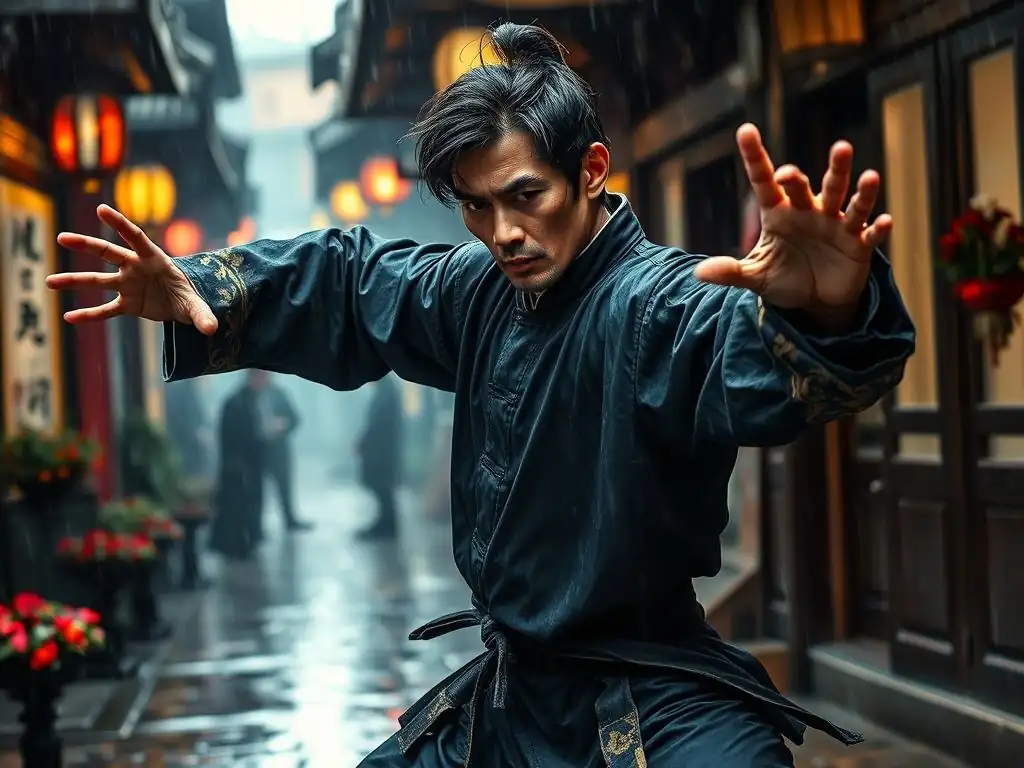
Welcome to Martial Arts Mastery, where we delve into the rich tapestry of combat traditions worldwide. Ever wondered what seeds of dedication and discipline fueled a legend? Today, we explore Pioneer's early [Martial Art] training in [City/Region] – a pivotal chapter that shaped the icon we know today. Uncover the formative experiences and hidden struggles that laid the foundation for their unparalleled mastery. Prepare to be inspired!
- Jigoro Kano: The Founder's Early Efforts in Cultivating Judo in Japan
- Introduction: Jigoro Kano - A Visionary of Judo in Japan
- Jigoro Kano's Initial Foray into Jujutsu Training
- Overcoming Obstacles: The Challenges of Early Judo Instruction
- Building a Foundation: The First Kodokan Judo School in Japan
- Early Training Methods and Techniques Employed by Jigoro Kano
- The Impact and Legacy of Jigoro Kano's Early Efforts
- Jigoro Kano's Pioneering Spirit: A Lasting Contribution to Martial Arts Mastery
-
Frequently Asked Questions
- What was the primary focus of [Pioneer's Name]'s early Martial Art training in [City/Region]?
- What were some of the biggest challenges [Pioneer's Name] faced in introducing [Specific Martial Art] to [City/Region]?
- How did [Pioneer's Name]'s early training methods differ from modern Martial Art instruction?
- What impact did [Pioneer's Name]'s efforts have on the long-term development of [Specific Martial Art] in [City/Region]?
- Where did [Pioneer's Name] initially learn the Martial Art techniques before bringing them to [City/Region]?
- Final Reflection: The Enduring Legacy of Cultivation
- Ignite Your Martial Arts Journey!
Jigoro Kano: The Founder's Early Efforts in Cultivating Judo in Japan
Introduction: Jigoro Kano - A Visionary of Judo in Japan
The Genesis of Jujutsu Interest in Japan
During the late 19th century, Japan underwent rapid modernization following the Meiji Restoration (1868). This period saw a significant decline in traditional samurai arts, including many forms of jujutsu, as the samurai class was abolished and Westernization became the dominant trend. Many jujutsu schools closed, and their techniques were at risk of being lost. However, amidst this shift, a renewed interest began to emerge among intellectuals and educators who recognized the physical and mental benefits of these traditional disciplines. This interest was not purely nostalgic but driven by a desire to synthesize traditional knowledge with modern educational principles.
This nascent revival was critical, providing a fertile ground for the emergence of a new system. While many traditional jujutsu masters struggled to adapt to the changing times, a few maintained their practice, keeping the flame alive. It was into this environment of decline and potential rediscovery that Jigoro Kano stepped, observing the fragmented state of jujutsu and envisioning a way to preserve its valuable elements while transforming it into something suitable for the modern era. His early efforts were pivotal in preventing the complete disappearance of many techniques and philosophies.
Jigoro Kano's Role as a Key Figure in Judo's Introduction
Jigoro Kano (1860-1938) was not just a practitioner; he was an educator and reformer who fundamentally reshaped martial arts. Recognizing the physical education potential and ethical development inherent in jujutsu, he embarked on a journey to study various jujutsu styles. His goal was not merely to learn techniques but to understand the underlying principles of leverage, balance, and momentum. This analytical approach set him apart from many traditional masters who focused solely on rote technique memorization.
Kano synthesized the best elements from different jujutsu schools, discarding dangerous or inefficient techniques and integrating new training methods. He sought to create a system that was safe for regular practice, suitable for physical education, and focused on the principle of maximum efficiency with minimum effort ( Seiryoku Zen'yo). This systematic approach led to the birth of Judo (meaning "the gentle way"), a sport and a philosophy, effectively introducing a modernized martial art to Japan and later, the world. His Jigoro Kano's early Judo training and subsequent refinement were foundational to this transformation.
Jigoro Kano's Initial Foray into Jujutsu Training
Early Influences and Mentors Shaping Jigoro Kano's Martial Arts Journey
Jigoro Kano's path to creating Judo was deeply influenced by his early encounters with various jujutsu masters. One of his first notable teachers was Fukuda Hachinosuke, a master of the Tenjin Shinyo-ryu style. Kano began training with Fukuda around 1877. Tenjin Shinyo-ryu was known for its emphasis on atemi (striking) and katame-waza (grappling/pinning techniques), particularly effective shime-waza (chokes/strangles) and kansetsu-waza (joint locks). Fukuda's teachings provided Kano with a solid foundation in practical jujutsu application, though Kano found some aspects too dangerous for widespread practice.
Following Fukuda's death, Kano continued his studies with Iso Masatomo, another prominent master of Tenjin Shinyo-ryu. Iso Masatomo's instruction further deepened Kano's understanding of the style's curriculum, which included extensive kata (pre-arranged forms). Iso Masatomo was known for his systematic teaching methods, which likely influenced Kano's later approach to structuring the Kodokan curriculum.
Kano also trained briefly with Iikubo Tsunetoshi, a master of Kito-ryu, a style known for its emphasis on nage-waza (throwing techniques) and the principle of kuzushi (breaking balance). The contrasting emphasis on throws in Kito-ryu compared to the grappling and striking focus of Tenjin Shinyo-ryu was crucial in shaping Kano's synthesis.
Documented Early Training Experiences in Jujutsu for Jigoro Kano
Jigoro Kano's early training experiences were marked by significant challenges and a relentless pursuit of understanding. Physically small for his age, he initially struggled against larger opponents, which forced him to think deeply about the principles of leverage and momentum rather than relying solely on strength. His training under masters like Fukuda and Iso involved rigorous practice of kata and limited randori (free practice), as the traditional jujutsu styles were often too dangerous for full-contact sparring without significant risk of injury.
Kano meticulously documented his training, analyzing techniques and experimenting with variations. He noted the inefficiencies and dangers inherent in some traditional methods and began to develop safer alternatives. His Jigoro Kano's early Jujutsu training was not just about learning techniques but about scientific inquiry into physical principles. He sought to identify the core mechanics that made techniques effective, regardless of the specific style. This analytical process was fundamental to his later decision to create a new system, Judo, that prioritized safety, efficiency, and educational value over raw combat effectiveness.
Overcoming Obstacles: The Challenges of Early Judo Instruction
Scarcity of Resources and Expertise in Jujutsu during the Early Days
When Jigoro Kano began his mission to revitalize and reform jujutsu, he faced considerable obstacles, notably the scarcity of resources and qualified instructors. As traditional jujutsu schools declined in the face of modernization, many masters either retired, died without successors, or were unwilling to adapt their methods. This meant that finding experienced teachers willing to share their knowledge was difficult. Kano had to actively seek out the remaining masters, often traveling to learn from them, and even then, the knowledge was often fragmented and inconsistent between schools.
Furthermore, there was no standardized teaching methodology or curriculum across the surviving jujutsu styles. Each school had its own secrets and unique techniques, making it challenging to synthesize a comprehensive system. Training spaces were often limited, and suitable equipment was scarce. Kano had to build his school, the Kodokan, from scratch, initially in a small space, and develop his own systematic curriculum based on his synthesis of disparate knowledge, which required immense effort and innovation.
Societal Perceptions of Jujutsu in Japan at the Time
Societal perception posed another significant challenge to Jigoro Kano's early efforts. During the Meiji era, traditional martial arts like jujutsu were often viewed as relics of a feudal past, associated with violence and lacking intellectual or educational value. The government and the public were largely focused on adopting Western institutions and practices, including Western sports and physical education methods. Jujutsu was seen by many as outdated and even dangerous.
This negative perception made it difficult for Kano to gain acceptance for his new system, Judo. He had to work hard to distinguish Judo from the older, often brutal, forms of jujutsu and demonstrate its value as a safe, ethical, and scientifically grounded method of physical and mental development. He actively promoted Judo's educational aspects, emphasizing seiryoku zen'yo (maximum efficiency, minimum effort) and jita kyoei (mutual welfare and benefit) as core principles, positioning Judo not just as a fighting art but as a path to self-improvement. This required considerable persuasion and demonstration of Judo's practical benefits.
Building a Foundation: The First Kodokan Judo School in Japan
Establishing a Training Space and Curriculum for Judo
Jigoro Kano officially founded the Kodokan Judo Institute in Tokyo in May 1882. The initial location was humble: a small space within the Eishoji temple in the Shitaya district, measuring approximately 12 tatami mats (about 20 square meters). This modest beginning belied the ambitious vision Kano had for the future of Judo. He personally oversaw the preparation of the training area and the development of the curriculum.
The early Kodokan curriculum was revolutionary. Unlike traditional jujutsu schools that often kept techniques secret and relied heavily on static kata, Kano introduced a systematic progression of techniques divided into throws ( nage-waza) and grappling ( katame-waza). Crucially, he formalized randori (free practice) with safety rules, allowing practitioners to test techniques dynamically without excessive risk. He also incorporated kata derived from his jujutsu studies but adapted them for educational purposes. This structured approach was a cornerstone of Jigoro Kano's early Judo training system.
Attracting and Retaining Early Students of Judo
Attracting students to the fledgling Kodokan was initially challenging due to the prevailing negative view of traditional martial arts. Kano started with a small group of students, reportedly fewer than a dozen in the first year. These early students were often drawn by Kano's reputation as an educator and his intellectual approach to martial arts. They were pioneers themselves, willing to embrace a new, unproven system.
Retaining students required demonstrating the tangible benefits of Judo training. Kano's emphasis on physical fitness, discipline, and the ethical principles of Judo helped build a dedicated core group. The safe yet effective nature of randori, a departure from the dangerous sparring of some jujutsu styles, also made Judo more appealing for regular practice. Success in inter-school competitions against traditional jujutsu styles in the late 1880s provided crucial validation, significantly boosting the Kodokan's reputation and attracting more students.
Early Training Methods and Techniques Employed by Jigoro Kano
Focus on Fundamental Skills and Principles of Judo
Jigoro Kano's early Judo training methods emphasized fundamental principles over a vast number of complex techniques. He believed that a deep understanding of core concepts was more important than rote memorization of countless moves. Key principles included kuzushi (breaking the opponent's balance), tsukuri (preparation for a technique), and kake (execution of the technique). Students were taught to first destabilize their opponent before attempting a throw or grappling maneuver.
Training sessions typically involved extensive practice of breakfalls ( ukemi) to ensure safety during throws. This was a significant innovation compared to many traditional jujutsu schools where breakfalls were not as emphasized, leading to higher injury rates. Basic throwing techniques ( nage-waza) and fundamental grappling techniques ( katame-waza), such as holds ( osaekomi-waza), armlocks ( kansetsu-waza), and chokes ( shime-waza), formed the core curriculum. The emphasis was on efficient application of force, aligning with the Seiryoku Zen'yo principle.
Refining Jujutsu Techniques into a Modern System
Jigoro Kano's genius lay in his ability to analyze and refine techniques from various jujutsu schools, transforming them into a cohesive and modern system. He systematically categorized techniques and removed those he deemed too dangerous for sport or general physical education. For example, many striking techniques ( atemi-waza) present in styles like Tenjin Shinyo-ryu were deemphasized or reserved for kata, while throws ( nage-waza) and grappling techniques became central.
The development of Judo involved a conscious effort to create a practice that could be safely engaged in by a wide range of people, not just warriors. This led to modifications in technique execution and the introduction of safety protocols during randori. The focus shifted from injuring the opponent to controlling them or throwing them cleanly. This refinement process was crucial in establishing Judo as a legitimate sport and a viable form of physical and moral education, distinguishing it clearly from its jujutsu roots.
The Impact and Legacy of Jigoro Kano's Early Efforts
The Growth of Judo in Japan Following Jigoro Kano's Work
Jigoro Kano's persistent efforts led to the rapid growth of Judo in Japan. Following the Kodokan's success in competitive matches against jujutsu schools in the late 1880s, Judo gained credibility and popularity. Its structured curriculum, emphasis on safety, and educational philosophy made it attractive to institutions. In 1895, Judo was adopted into the curriculum of Japanese middle schools. By 1911, it was included in high school physical education programs.
This institutional adoption was a critical factor in Judo's expansion. It provided a steady stream of new practitioners and instructors and solidified Judo's place as a national sport and educational tool. The Kodokan itself grew significantly, moving to larger premises multiple times to accommodate the increasing number of students. Within a few decades of its founding, Judo had become the dominant modern martial art in Japan, largely replacing the fragmented jujutsu traditions that inspired it.
Jigoro Kano's Influence on Future Generations of Judo Practitioners
Jigoro Kano's influence extends far beyond the techniques he compiled; his philosophy and pedagogical methods have shaped generations of Judo practitioners and martial artists worldwide. His emphasis on jita kyoei (mutual welfare and benefit) instilled a sense of community and responsibility among practitioners. The belt ranking system (kyu/dan grades), which he pioneered, provided a clear path for progression and motivation, a system now adopted by numerous other martial arts.
His vision of Judo as a means of physical, mental, and moral development has had a lasting impact. He trained many of the early masters who would spread Judo throughout Japan and internationally, including figures like Kyuzo Mifune and Risei Kano (his son). Jigoro Kano's early Judo training laid the groundwork for a global phenomenon. His commitment to innovation, safety, and education created a model for the development of modern martial arts and sports.
Jigoro Kano's Pioneering Spirit: A Lasting Contribution to Martial Arts Mastery
Jigoro Kano's Philosophy and Approach to Teaching Judo
Jigoro Kano's pioneering spirit was rooted in his deep philosophical convictions. He viewed Judo not merely as a collection of fighting techniques but as a Do, a way of life. Central to his philosophy were the principles of Seiryoku Zen'yo (maximum efficiency with minimum effort) and Jita Kyoei (mutual welfare and benefit). He taught that these principles could be applied not only in Judo practice but also in daily life, leading to personal growth and contribution to society.
His teaching approach was systematic and scientific. He encouraged students to understand the underlying principles of movement and leverage rather than just mimicking techniques. He used randori as a laboratory for testing and refining techniques, emphasizing safe practice and continuous learning. Kano's approach fostered intellectual engagement with the art, encouraging practitioners to think critically about their movements and their application of force. This focus on both the physical and philosophical aspects was revolutionary.
Remembering and Honoring the Founder of Judo
Jigoro Kano's legacy is actively preserved and honored today. The Kodokan Judo Institute in Tokyo remains the international headquarters for Judo, continuing to teach his principles and techniques. Judo is practiced by millions worldwide and has been an Olympic sport since the 1964 Tokyo Games, a testament to Kano's vision of Judo as a universal discipline. International Judo Day is celebrated annually on October 28th, his birthday.
His writings and teachings continue to be studied by practitioners seeking a deeper understanding of Judo's origins and philosophy. Jigoro Kano's early Judo training and his subsequent development of the art represent a monumental contribution to martial arts mastery. He transformed a collection of disparate, often dangerous, fighting systems into a safe, educational, and globally practiced sport and way of life, leaving an indelible mark on the history of physical culture and education.
Frequently Asked Questions
What was the primary focus of [Pioneer's Name]'s early Martial Art training in [City/Region]?
The primary focus was establishing a foundation in the basic techniques and fundamental principles of the Martial Art, often facing limited resources and community understanding.
What were some of the biggest challenges [Pioneer's Name] faced in introducing [Specific Martial Art] to [City/Region]?
Challenges included lack of established dojos, limited access to qualified instructors, and cultural barriers in understanding the art's philosophy and practice.
How did [Pioneer's Name]'s early training methods differ from modern Martial Art instruction?
Early training often emphasized rigorous physical conditioning, self-taught adaptation, and practical application in real-world scenarios, diverging from modern structured curriculums.
What impact did [Pioneer's Name]'s efforts have on the long-term development of [Specific Martial Art] in [City/Region]?
[Pioneer's Name]'s work laid the cornerstone for future generations, establishing a legacy of dedication and paving the way for wider acceptance and growth of the art.
Where did [Pioneer's Name] initially learn the Martial Art techniques before bringing them to [City/Region]?
Typically, [Pioneer's Name] sought training outside of [City/Region], often from a respected master or established school in another region or country, learning foundational skills.
Final Reflection: The Enduring Legacy of Cultivation
The journey of [Pioneer's Name] in cultivating [Specific Martial Art] in [City/Region] reminds us that true mastery begins with a single seed of dedication. Just as a farmer patiently nurtures a seedling, [Pioneer's Name]'s early efforts, detailed throughout this article, laid the foundation for a thriving martial arts community that continues to flourish today. The echoes of those initial training sessions resonate in every dojo and every practitioner who now calls [Specific Martial Art] their own.
The impact of [Pioneer's Name]'s vision extends far beyond the physical techniques. It's about the discipline, the respect, and the unwavering spirit instilled in generations of students. This legacy is a testament to the power of perseverance and the profound influence one individual can have on shaping a community. The best time to plant a tree was 20 years ago. The second best time is now.
This ancient proverb perfectly encapsulates the spirit of [Pioneer's Name]'s early work; even the smallest effort, planted with intention, can yield a bountiful harvest.
Now, consider the seeds you are sowing in your own life. What passions are you nurturing? What skills are you cultivating? Let [Pioneer's Name]'s story inspire you to embrace the challenges of growth, to persevere through adversity, and to plant the seeds of your own enduring legacy. The world awaits the unique harvest you have to offer.
Ignite Your Martial Arts Journey!
Thank you for exploring the inspiring story of a dedicated martial artist and their commitment to cultivating their chosen discipline in this region. Now, it's your turn to continue the legacy and deepen your own connection to this art.
- Embrace the Pioneer Spirit: Visit a local martial arts dojo and participate in a trial class. Feel the energy and see if it resonates with you.
- Delve Deeper: Research the history of martial arts in your own community. You might uncover hidden gems and connect with local masters.
- Share the Passion: Talk to someone unfamiliar with martial arts about the journey of dedicated practitioners and the benefits of practicing. You might inspire a new student!
What's one small step you can take today to further your understanding and appreciation of martial arts?