
How to Truly Understand Your Kata: Beyond Memorization

Welcome to Martial Arts Mastery, your gateway to unlocking the secrets of combat traditions worldwide. Are you ready to move beyond mere repetition and delve into the true essence of kata? This article, " How to Truly Understand Your Kata: Beyond Memorization," will challenge your assumptions and reveal how to unlock the deeper meaning hidden within these ancient forms. Prepare to transform your practice and discover the profound wisdom embedded in every movement.
- Martial Arts Kata: Moving Beyond Rote Memorization for True Understanding
- The Problem with Simply Memorizing Kata: The Illusion of Knowledge
- Unlocking the Secrets of Kata: A Multifaceted Approach
- Step 1: Deciphering the Bunkai: Understanding Kata Applications
- Step 2: Exploring the History and Origins of Your Kata
- Step 3: Mastering Proper Stance and Posture: The Foundation of Effective Kata
- Step 4: Embodying the Spirit of the Kata: Intent and Focus
- Step 5: Connecting Kata to Sparring (Kumite) and Real-World Self-Defense
- Step 6: Seeking Guidance from Experienced Instructors: The Value of Mentorship
- Step 7: Continuous Refinement and Exploration: A Lifelong Journey
- Karate Kata In-Depth Analysis: Moving Towards True Understanding
-
Frequently Asked Questions
- What is Kata in martial arts, and why is understanding it beyond mere memorization important?
- How does MartialArtsMastery.org approach the teaching of Kata understanding?
- What are some practical ways to move beyond memorization and achieve a deeper Kata understanding?
- How does a deeper Kata understanding improve my overall martial arts proficiency?
- Can Kata understanding be beneficial for self-defense, even if I don't plan on competing?
- Final Reflection: Embracing the Spirit of Kata
- Unlock Your Kata's Hidden Power!
Martial Arts Kata: Moving Beyond Rote Memorization for True Understanding
Understanding Kata: A Deep Dive into Karate Forms
Understanding Kata in Karate is far more than simply memorizing a sequence of movements. It is about grasping the underlying principles of body mechanics, power generation, timing, and strategy embedded within each form. While rote memorization might allow a practitioner to perform a Kata technically, true Kata understanding involves deciphering the martial applications (bunkai), appreciating the historical context, and embodying the spirit and intent of every technique. This deeper level of engagement transforms Kata from a mere physical exercise into a dynamic exploration of martial science, revealing layers of knowledge accumulated over centuries by masters.
Achieving this level of Kata understanding requires dedicated study and practice that goes beyond surface-level performance. It involves analyzing each stance, block, strike, and transition, asking "why" it is performed in a specific way and "how" it relates to practical self-defense scenarios. For instance, the subtle weight shifts or hip rotations are not arbitrary; they are crucial for generating power or facilitating rapid movement. Without this critical analysis and physical embodiment of the principles, the practitioner is merely going through the motions, missing the essence of the Kata and limiting their overall martial development.
The Problem with Simply Memorizing Kata: The Illusion of Knowledge
Why Rote Memorization Fails to Unlock Kata's Potential
Rote memorization, while a necessary first step to learn the sequence of movements, fundamentally fails to unlock the true potential of Kata. When a student focuses solely on remembering the next step, they often neglect the critical details: the angle of a block, the precise timing of a strike, the tension and relaxation cycles, or the proper breathing.
This superficial approach creates an illusion of knowledge; the practitioner can perform the Kata from beginning to end, but they lack the deeper Kata understanding required to apply the techniques effectively or adapt them to real-world situations. It's like memorizing a foreign language phrasebook without understanding the grammar or context – you can say the words, but you can't truly communicate.
Furthermore, relying solely on memorization hinders the development of essential martial attributes such as balance, coordination, power generation through the kinetic chain, and spatial awareness. The movements become robotic and disconnected, lacking the fluidity and dynamic tension that characterize proficient Kata performance. Without understanding why a movement is done, the practitioner cannot adjust their body optimally.
This leads to inefficient technique and limits the ability to perform bunkai effectively, as the movements practiced lack the necessary power, stability, or timing for practical application. True Kata understanding demands engagement of both the mind and body in a profound way that simple memorization cannot achieve.
The Dangers of Superficial Kata Practice
Practicing Kata superficially, without striving for genuine Kata understanding, carries significant dangers for the martial artist's progress. One of the primary risks is the development of poor habits and incorrect muscle memory. If stances are shallow, blocks lack proper structure, or strikes lack intent and focus ( kime), these flaws become ingrained through repetition. Correcting these deeply rooted errors later becomes significantly more difficult than learning the techniques correctly from the outset. A practitioner might spend years practicing a Kata incorrectly, solidifying inefficient or even harmful movement patterns that undermine their ability to generate power or defend themselves effectively.
Beyond physical inefficiencies, superficial Kata practice also stunts mental and strategic growth. The practitioner misses the opportunity to analyze the tactical scenarios implied by the Kata's sequence – how to deal with multiple opponents, how to use body positioning for advantage, or how to transition seamlessly between offensive and defensive actions. This lack of strategic insight leaves the practitioner unprepared for the dynamic and unpredictable nature of sparring or self-defense. Ultimately, superficial practice means the Kata remains a performance rather than a practical tool, creating a significant disconnect between the training hall and real-world application, hindering overall Kata understanding.
Unlocking the Secrets of Kata: A Multifaceted Approach
Kata Understanding: A Holistic View
Achieving true Kata understanding requires embracing a holistic view that integrates multiple dimensions of practice and study. It is not enough to focus solely on the physical execution of movements; one must also delve into the intellectual, historical, and philosophical aspects.
This means exploring the practical applications (bunkai), researching the history and lineage of the specific Kata, refining fundamental body mechanics like stance and posture, cultivating mental attributes like intent and focus, and actively seeking connections between Kata practice and live application in sparring or simulated self-defense scenarios. Viewing Kata through this multifaceted lens reveals its complexity and richness, showing it to be a complete martial system in itself, not just a series of steps.
This comprehensive approach ensures that the practitioner develops a deep, internalized knowledge rather than mere external imitation. By studying bunkai, they understand the purpose behind the movements. By exploring history, they grasp the context and evolution. By refining basics, they build a solid physical foundation. By focusing intent, they infuse techniques with power and spirit. By connecting to application, they validate and adapt their practice. This integrated path is the only way to move beyond the limitations of memorization and cultivate genuine Kata understanding, transforming the practitioner's ability to perform, analyze, and apply their art effectively.
Step 1: Deciphering the Bunkai: Understanding Kata Applications
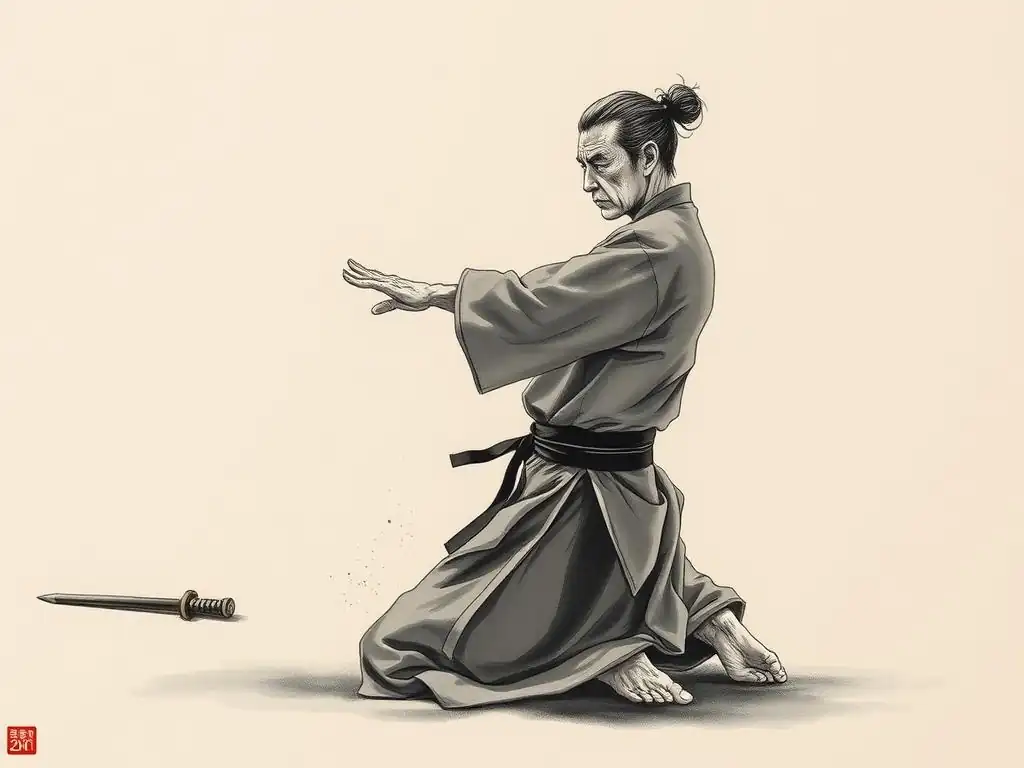
Analyzing the practical self-defense techniques hidden within Kata, known as Bunkai, is a crucial step towards true Kata understanding. Every movement, no matter how abstract it may appear in the Kata's sequence, is designed to have a specific martial application against an opponent. This might involve blocks, strikes, joint locks, throws, or controlling techniques. The challenge lies in deciphering these applications, as they are often condensed or stylized within the Kata for efficiency and mnemonic purposes. A single movement in Kata might represent a complex exchange involving multiple actions against an aggressor.
Dedicated Bunkai practice involves taking the Kata apart, movement by movement, and exploring plausible scenarios with a partner. This process moves the technique out of the solo, abstract realm of Kata performance and into the dynamic, interactive world of self-defense. For example, a seemingly simple downward block might be interpreted not just as blocking a punch, but as a simultaneous block and joint control, or even part of a takedown sequence. Exploring these various interpretations, often with guidance from experienced instructors, is vital for unlocking the practical value and achieving deeper Kata understanding.
Bunkai Examples: Utilizing the Age-Uke (Rising Block) in Heian Shodan for a Headbutt Defense
A common example to illustrate Bunkai is the Age-Uke (rising block), frequently the first technique in Kata like Heian Shodan. While often taught initially as a defense against a high punch, a deeper Bunkai reveals more nuanced applications. Consider its use against a headbutt or an upward striking attack. As an opponent lunges forward with their head, the Age-Uke is not just a block; it can be used forcefully to impact the attacker's head or face, disrupting their balance and intent.
In this specific Bunkai, the lead leg might simultaneously step back slightly ( hikite) to create space and generate power, while the rising arm strikes upwards with significant force using the forearm or wrist area. The hikite (pulling hand) can be used to grab or control the opponent's arm or collar. This application transforms the Age-Uke from a static block into a dynamic counter-attack and control technique, demonstrating how a single Kata movement can embody multiple defensive and offensive actions. Understanding this practical application significantly deepens the practitioner's Kata understanding beyond the simple physical movement.
Step 2: Exploring the History and Origins of Your Kata
Delving into the Historical Context of Gojushiho Sho
Delving into the historical context of a Kata like Gojushiho Sho provides invaluable insight into its structure, techniques, and underlying principles, fostering a deeper Kata understanding. This specific Kata, meaning "54 steps," is known for its complexity and advanced techniques. Tracing its lineage often leads back to Okinawan masters and potentially influences from Chinese martial arts. Understanding that this Kata likely evolved over generations, refined by masters like Sokon Matsumura or Anko Itosu (depending on the specific lineage), helps explain its sophisticated movements and strategic depth.
Knowing the historical period and the martial environment in which a Kata was developed also sheds light on its intended applications. For instance, Kata developed during periods when weapons were prevalent might contain movements designed to defend against or even utilize improvised weapons, or movements that are less focused on sport kumite and more on vital point strikes or joint manipulation. Exploring the history helps practitioners understand the original intent and context of the techniques, preventing them from viewing them solely through a modern, sport-oriented lens and enriching their Kata understanding.
Understanding the Lineage and Evolution of the Kata
Understanding the lineage and evolution of a Kata is crucial for grasping why different schools or styles might perform the "same" Kata with subtle variations. Kata were historically transmitted from master to student, and over time, different teachers emphasized certain aspects or adapted movements based on their own understanding, physical attributes, or the specific needs of their students. For example, while Shotokan, Wado-ryu, and Shito-ryu might all have a version of Pinan/Heian Kata, the nuances in stances, hand positions, and transitions reflect the distinct emphasis of each style's founder (e.g., Gichin Funakoshi, Hironori Otsuka, Kenwa Mabuni).
Researching the specific lineage of the Kata you practice – who taught whom, and what were their martial priorities – provides context for the way your style executes the form. It explains why a block might be performed with a specific angle or why a particular stance is emphasized. This historical perspective moves beyond simply learning how to do the Kata to understanding why it is done that way within your tradition, significantly contributing to a more profound Kata understanding.
Step 3: Mastering Proper Stance and Posture: The Foundation of Effective Kata
The Importance of Foundational Stances in Kata Execution
Mastering proper stance ( tachi) and posture ( shisei) is absolutely fundamental to effective Kata execution and achieving true Kata understanding. Stances are not merely stationary positions; they are dynamic platforms that provide stability, allow for powerful movement, facilitate rapid transitions, and protect vital areas. A deep Zenkutsu-dachi (front stance) provides forward stability and power generation, while a Kokutsu-dachi (back stance) offers rearward stability and adaptability. Incorrect stances compromise balance, reduce the potential for power generation, and make techniques less effective.
The correct posture, involving proper spinal alignment, engaged core muscles, and relaxed shoulders, ensures that power generated from the lower body can be efficiently transmitted through the torso to the extremities. Without this foundational stability and correct body structure, even perfectly memorized movements will lack substance and effectiveness. A practitioner with weak stances and poor posture cannot generate the kime (focused power) required for impactful techniques, nor can they maintain balance during rapid transitions or when applying bunkai. Therefore, consistent drilling and refinement of basic stances are non-negotiable for developing genuine Kata understanding.
Refining Your Stance: Techniques for Improved Stability and Power
Refining your stances involves dedicated, focused practice that goes beyond simply adopting the outward shape. Techniques for improvement include holding stances for extended periods to build muscular endurance and identify points of instability. Practicing transitions between stances slowly and deliberately helps ensure smooth weight transfer and maintaining a low center of gravity. Paying close attention to the alignment of your joints – knees over ankles, hips aligned – is crucial for both power and preventing injury.
Incorporating exercises that strengthen the legs and core, such as squats, lunges, and planks, directly supports the ability to maintain strong, stable stances. Furthermore, practicing Kata movements within a stance, focusing on the rootedness and connection to the ground before moving, helps integrate stance work into the overall Kata performance. Seeking feedback from instructors on subtle corrections to weight distribution or hip position is vital. This continuous refinement of foundational stances directly translates to improved power, balance, and overall effectiveness in Kata, deepening your Kata understanding.
Step 4: Embodying the Spirit of the Kata: Intent and Focus
Cultivating "Zanshin": Maintaining Awareness in Kata Practice
Cultivating "Zanshin," often translated as "lingering awareness" or " 잔심" in some traditions, is a crucial element in embodying the spirit of Kata and achieving true Kata understanding. Zanshin refers to a state of continuous, relaxed alertness that is maintained not just during the execution of a technique, but also before, after, and in between movements.
In Kata, this means performing each sequence with the mindset that an opponent is present. Every block is a defense against a real attack, every strike is aimed at a specific target, and the awareness extends outwards, scanning for potential threats even when stationary.
Practicing with Zanshin prevents Kata from becoming a disconnected series of physical actions. It instills a sense of readiness and presence that is vital for self-defense. This heightened state of awareness also applies internally, allowing the practitioner to be mindful of their own body mechanics, breathing, and energy flow throughout the form. Developing Zanshin in Kata builds the mental discipline necessary to remain calm and aware under pressure in sparring or real-life situations, significantly enhancing the practical value and depth of Kata understanding.
Developing "Kime": Focusing Power and Intent in Each Movement
Developing "Kime" (決め), the focused power and intent applied at the culmination of a technique, is another vital component of embodying the spirit of Kata and achieving meaningful Kata understanding. Kime is not just about muscle tension; it is the instantaneous, coordinated effort of the entire body, directed through a single point of impact, accompanied by sharp exhalation ( kiai) and unwavering mental focus. It represents the moment where all the energy generated through body mechanics is unleashed effectively.
In Kata, each technique should be executed with appropriate Kime, whether it's a punch, block, or kick. This requires understanding when and how to apply this focused energy. Practicing Kata slowly initially can help isolate and understand the points where Kime is needed. Gradually increasing speed while maintaining the quality and timing of Kime is key. Developing Kime transforms movements from mere gestures into powerful, effective martial techniques, demonstrating a level of commitment and understanding that goes far beyond physical execution, solidifying one's Kata understanding.
Step 5: Connecting Kata to Sparring (Kumite) and Real-World Self-Defense
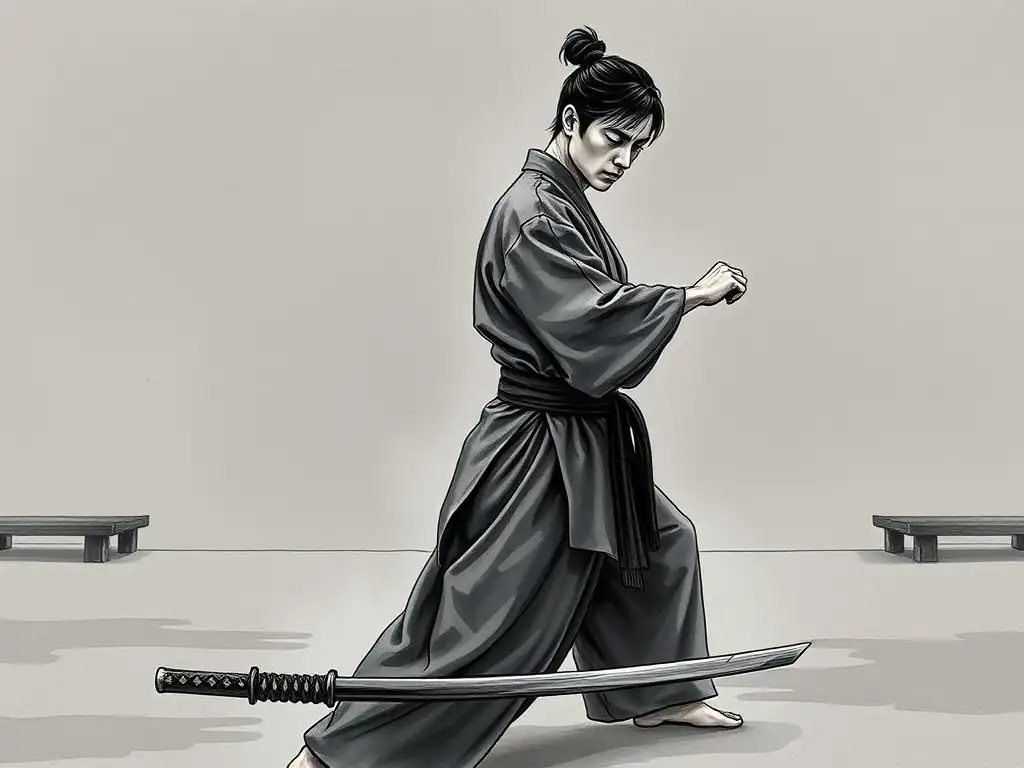
Bridging the Gap Between Kata and Practical Application
Bridging the gap between Kata and practical application in sparring ( Kumite) and real-world self-defense scenarios is essential for validating and deepening Kata understanding. While Kata provides a structured environment to practice fundamental techniques and principles, Kumite and self-defense situations are dynamic and unpredictable. The challenge is to recognize how the movements, strategies, and principles learned in Kata translate to live interaction. For instance, a stepping block and counter-strike sequence from a Kata might be applied directly against an opponent's attack in sparring.
This connection is not always immediately obvious, particularly when Kata movements are complex or stylized. Dedicated training in Bunkai, as discussed earlier, is the primary method for making these connections explicit. However, practitioners should also actively look for opportunities to apply Kata principles in their Kumite practice. This might involve using the body evasion taught in Kata, applying principles of timing and distance, or recognizing opportunities to use techniques from Kata that are less common in sport sparring but highly effective in self-defense. This active exploration solidifies Kata understanding by demonstrating its practical relevance.
Using Kata Principles in Sparring Scenarios
Using Kata principles in sparring scenarios goes beyond simply attempting to perform entire Kata sequences in a fight. It involves internalizing the underlying mechanics and strategies so they manifest spontaneously. For example, the principle of generating power from the hips and core, emphasized in nearly every Kata technique, is directly applicable to throwing a powerful punch or kick in Kumite. The rapid weight shifts and body rotations practiced in Kata are vital for quick movement, evasion, and counter-attacking in a live exchange.
Furthermore, Kata often contains sequences that teach how to deal with specific types of attacks or positions, such as being grabbed or facing multiple opponents. While these might be practiced as formal Bunkai, understanding the core principle – like using joint manipulation to escape a grab or positioning to manage space – can be applied flexibly in a sparring context. Actively seeking to integrate these principles, rather than just the isolated techniques, transforms Kata practice from a solo drill into a foundation for effective combat, significantly advancing the practitioner's Kata understanding and practical skill.
Step 6: Seeking Guidance from Experienced Instructors: The Value of Mentorship
Finding a Qualified Instructor to Guide Your Kata Journey
Finding a qualified instructor is paramount for anyone serious about achieving true Kata understanding. While books and videos can provide basic information, they cannot offer the personalized feedback, nuanced corrections, and deeper insights that an experienced sensei can provide. A good instructor has not only mastered the physical movements but also possesses a deep understanding of the Bunkai, history, and underlying principles of the Kata taught within their lineage. They can identify subtle flaws in a student's posture, timing, or technique that the student might not even be aware of.
A qualified instructor can also guide the student through the complexities of Bunkai, offering multiple interpretations and explaining their relevance. They can share historical context passed down through their own training and lineage, enriching the student's appreciation for the Kata's heritage. Their experience allows them to tailor guidance to the individual student's needs and body type, ensuring safe and effective practice. The mentorship provided by a knowledgeable sensei is indispensable for navigating the path towards deep Kata understanding.
The Importance of Feedback and Correction in Kata Development
The importance of feedback and correction from an experienced instructor in Kata development cannot be overstated. Without external guidance, a practitioner can easily develop incorrect habits or plateau in their understanding. An instructor's eye can spot issues like improper weight distribution in a stance (e.g., 70/30 split in Kokutsu-dachi being off by 10%), insufficient hip rotation in a strike, or a lack of structural integrity in a block. These subtle errors significantly impact the effectiveness of the technique and hinder the development of power and stability.
Constructive criticism helps the student refine their movements, improve body mechanics, and deepen their physical understanding of the principles. Furthermore, an instructor can challenge the student's interpretation of Bunkai, offering alternative perspectives or revealing applications that are not immediately obvious. This iterative process of practice, feedback, correction, and refinement is cyclical and essential. It ensures that the student's Kata understanding is not based on self-deception but on accurate, effective application of martial principles.
Step 7: Continuous Refinement and Exploration: A Lifelong Journey
Adapting and Evolving Your Understanding of Kata Over Time
Achieving true Kata understanding is not a destination but a continuous process of adaptation and evolution that spans a lifetime of training. As a practitioner's body changes, their physical capabilities evolve, and their overall martial experience grows through sparring and self-defense practice, their understanding of Kata deepens and shifts. Techniques that seemed straightforward at a beginner level reveal layers of complexity at advanced stages. Bunkai interpretations might be revisited and refined based on new insights or experiences.
For example, an Age-Uke initially understood as a simple block might, years later, be explored for its potential as a joint lock or control technique depending on the opponent's reaction. This continuous refinement involves revisiting fundamental techniques, exploring subtle nuances in movement, and seeking deeper connections between different Kata within a system. The practitioner learns to see the Kata not as static forms, but as living documents of martial knowledge that can be interpreted and applied in increasingly sophisticated ways, reflecting a mature and evolving Kata understanding.
The Never-Ending Quest for Kata Mastery
The quest for Kata mastery is a never-ending journey characterized by continuous exploration and dedicated practice. There is always more to learn, more to refine, and deeper levels of Kata understanding to uncover. As one masters the outward form, the focus shifts inward to the internal dynamics – breathing, tension/relaxation, energy flow ( kime). As the basic bunkai becomes clear, one explores omote (surface) and ura (hidden) applications, or variations based on different opponent reactions.
This ongoing process involves not just physical repetition but also intellectual study, critical analysis, and mindful practice. It requires humility to accept that there is always room for improvement and dedication to consistently revisit the basics. True Kata mastery is not about perfect performance for a judge, but about integrating the principles of the form into one's very being, allowing the wisdom of the Kata to inform every aspect of one's martial art and life. This continuous pursuit embodies the spirit of martial arts itself.
Karate Kata In-Depth Analysis: Moving Towards True Understanding
Achieving Kata Mastery: A Commitment to Deep Study and Practice
Achieving true Kata understanding and moving towards mastery in Karate requires a profound commitment to deep study and dedicated practice that transcends simple physical drills. It necessitates engaging with the Kata on multiple levels: physical execution, practical application (bunkai), historical context, and underlying principles of body mechanics and strategy. Merely memorizing the sequence of movements is only the first, most basic step.
The real journey involves dissecting each technique, exploring its potential uses against an opponent, understanding its origins and evolution within the art, and refining its execution to embody maximum efficiency and power. This holistic approach ensures that the Kata becomes a living, functional part of the practitioner's martial skill set.
The path to deep Kata understanding is challenging but immensely rewarding. It demands patience, persistence, and a willingness to constantly analyze and refine one's own performance.
By seeking guidance from experienced instructors, actively exploring bunkai with training partners, researching the history of specific forms like Gojushiho Sho or Heian Shodan, and diligently practicing foundational elements like stances and posture, the practitioner gradually unlocks the layers of knowledge embedded within the Kata. This level of engagement transforms Kata from a performance piece into a powerful tool for self-defense and a profound method for cultivating physical and mental discipline, leading to a truly comprehensive Kata understanding.
Frequently Asked Questions
What is Kata in martial arts, and why is understanding it beyond mere memorization important?
Kata are prearranged forms or sequences of movements that embody the principles and techniques of a martial art. Understanding them goes beyond rote learning, enabling you to apply the underlying principles in real-world situations.
How does MartialArtsMastery.org approach the teaching of Kata understanding?
We focus on providing historical context, analyzing the purpose of each movement, and exploring the philosophical underpinnings of the Kata. We emphasize applying Kata principles to practical self-defense.
What are some practical ways to move beyond memorization and achieve a deeper Kata understanding?
Focus on understanding the bunkai (applications) of each movement, visualizing the opponent you're facing, and practicing with a partner to test your understanding. Also, consider the Kata's historical context and purpose.
How does a deeper Kata understanding improve my overall martial arts proficiency?
It develops muscle memory, enhances reaction time, and provides a framework for adapting to various combat scenarios. A strong understanding of Kata principles will allow you to improvise effectively.
Can Kata understanding be beneficial for self-defense, even if I don't plan on competing?
Absolutely. Kata teaches fundamental principles of movement, distancing, and timing that are crucial for self-defense. Understanding the applications of Kata can drastically improve your ability to react effectively in dangerous situations.
Final Reflection: Embracing the Spirit of Kata
The journey through understanding kata, as we've explored, transcends mere rote memorization and unlocks a deeper connection to its essence. This shift from mechanical repetition to mindful practice is not just relevant to martial arts, but to any discipline requiring mastery and nuanced understanding. It's about moving beyond the surface and truly internalizing the principles that underpin the form.
The influence of kata extends far beyond the dojo, shaping our approach to learning and problem-solving in all aspects of life. The discipline and focus cultivated through dedicated kata practice instill a profound sense of self-awareness and resilience. It is not daily increase, but daily decrease; hack away the unessential.
- Bruce Lee. This quote perfectly encapsulates the essence of kata: stripping away the unnecessary to reveal the core principles and inner strength.
Now, consider how you can apply this principle of deep understanding to your own pursuits. What "kata" are you currently memorizing without truly understanding? Take a moment to reflect on the underlying principles, the history, and the intent behind your actions. By embracing the spirit of kata, you can unlock a new level of mastery and find a deeper connection to your craft, transforming rote learning into a journey of profound personal growth.
Thank you for diving deep into the world of kata with us! We hope this article has illuminated new perspectives on how to truly understand and appreciate these powerful forms. Now it's time to put that knowledge into action.
Here's how you can take your kata practice to the next level:
- Record yourself performing your kata and critically analyze your form against established principles. This is the single most impactful step you can take towards mastery.
- Explore the historical and cultural context of your kata – understanding its origins can deepen your appreciation and understanding. Try researching the founder or influential practitioners.
- Share your insights and struggles with your dojo or online martial arts community to foster learning and growth.
What specific nuance or hidden detail will you uncover in your kata practice this week?