
Western Disciples, Eastern Traditions: The Students Who Became Masters in Their Own Right

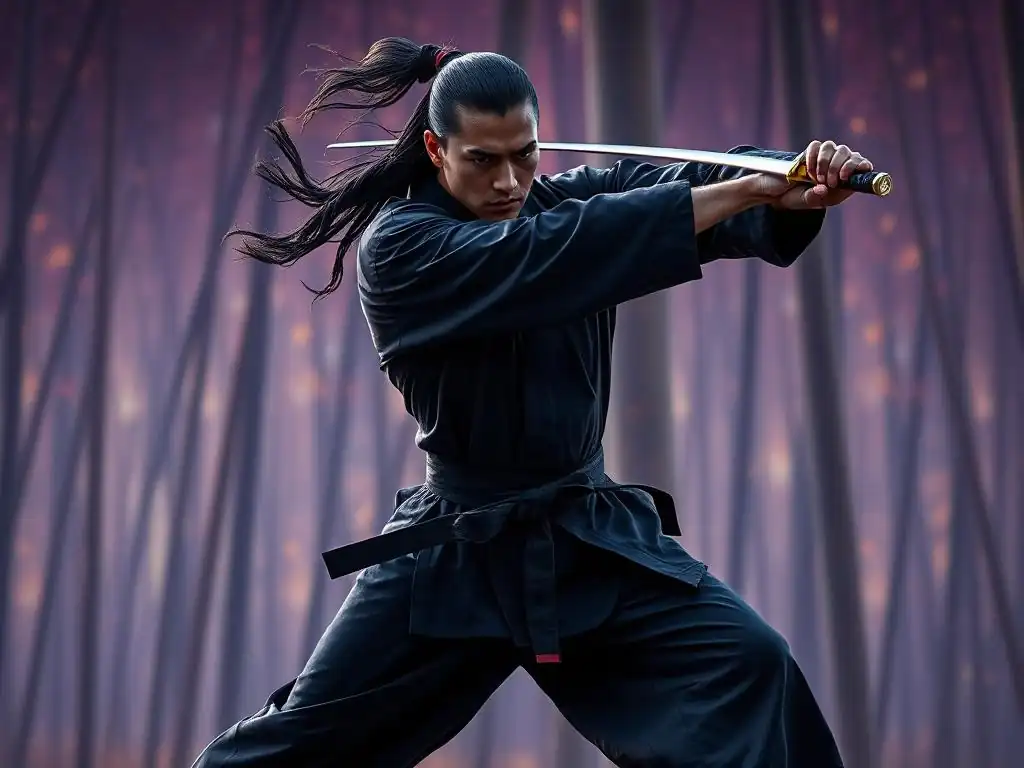
Welcome to Martial Arts Mastery, your gateway to the world's fighting traditions. Prepare to be enlightened as we delve into the fascinating intersection of East and West. Ever wondered how Eastern martial arts transformed the lives and skills of Western practitioners? Today, we explore the captivating stories of Western martial arts masters who transcended cultural boundaries to achieve mastery, leaving an indelible mark on the art itself. Read on to discover their journeys, their challenges, and their enduring legacies within the history of martial arts.
- The Rise of Western Martial Arts Masters: Bridging East and West
- Pioneering Figures: Westerners Who Mastered Eastern Martial Arts
- Key Disciplines and Western Adaptation
- Challenges and Triumphs: Becoming a Master in a Foreign Tradition
- The Impact of Western Masters on Eastern Martial Arts
- The Future of Western Martial Arts Masters
-
Frequently Asked Questions
- What defines a "Western martial arts master" in the context of MartialArtsMastery.org?
- How does MartialArtsMastery.org approach the historical overview of Westerners studying Eastern martial arts?
- What kind of training techniques or insights might MartialArtsMastery.org offer regarding Westerners mastering Eastern martial arts?
- Does MartialArtsMastery.org delve into the philosophical aspects of Eastern martial arts as they relate to Western practitioners?
- What practical self-defense strategies might MartialArtsMastery.org highlight that are relevant to Western martial arts masters of Eastern disciplines?
- Final Reflection: Bridging Worlds, Forging Legacies
- Embrace the Path: Start Your Martial Arts Journey Today!
The Rise of Western Martial Arts Masters: Bridging East and West
From Student to Sensei: The Journey of Western Practitioners
The path from a curious Western student to a recognized master in an Eastern martial art is a journey marked by intense dedication, profound respect for tradition, and often, significant personal sacrifice. These individuals typically begin their training in local dojos or kwoons, often with instructors who were themselves early pioneers bringing these arts to the West. Initial training focuses on fundamental techniques, kata or forms, and the basic philosophical tenets of the discipline. This foundational period can last years, requiring consistent practice and a deep commitment to the art's physical and mental demands.
As students progress, their training often deepens, involving more advanced techniques, weapon study, and a greater immersion in the cultural context from which the martial art originated. For many aspiring Western martial arts masters, this necessitates traveling to the art's homeland, spending extended periods studying under lineage holders or grandmasters.
This immersive experience allows for a more nuanced understanding of the art's history, philosophy, and subtle applications that might not be fully transmitted in a Western setting. Achieving the rank of master (often denoted by high dan grades or titles like Sensei, Sifu, or Master) signifies not just technical proficiency but also the capability to teach, preserve, and sometimes even contribute to the evolution of the art, becoming a true Western martial arts master in their own right.
The Growing Popularity of Eastern Martial Arts in the West
The latter half of the 20th century saw an explosion in the popularity of Eastern martial arts across North America, Europe, and other Western regions. Driven initially by returning servicemen from post-WWII Japan and Korea, and later amplified by popular culture, including films and television shows, arts like Karate, Judo, Taekwondo, and Kung Fu captured the imagination of millions. This widespread interest created a fertile ground for dedicated practitioners to emerge, individuals willing to go beyond casual participation and commit to the rigorous path of mastery.
This surge in popularity led to the establishment of countless dojos, schools, and training centers, making Eastern martial arts more accessible than ever before. While many joined for fitness, self-defense, or sport, a significant number embraced the arts as a way of life, seeking the discipline, philosophical depth, and personal development they offered. It was from this dedicated pool of students that the first generation of prominent Western martial arts masters began to rise, demonstrating that the profound wisdom and technical skill of these ancient traditions could be successfully cultivated outside their original cultural boundaries.
Pioneering Figures: Westerners Who Mastered Eastern Martial Arts
Donn Draeger: A Case Study in Dedication and Skill
Donn F. Draeger (1922-1982) stands as one of the preeminent Western martial arts masters and researchers of the 20th century. An American by birth, his life became a testament to the serious study and preservation of traditional Asian martial disciplines.
Unlike many who focused on a single art, Draeger dedicated himself to mastering multiple classical Japanese martial ways, achieving high dan ranks in arts such as Judo (5th Dan Kodokan), Kendo (Menkyo Kaiden or equivalent), Jodo (Menkyo Kaiden), and Aikido (significant rank, though often debated specifically). His approach was academic and immersive, treating martial arts as living historical and cultural phenomena.
Draeger's influence extended far beyond his personal technical skill. Based primarily in Japan for decades, he conducted extensive research into koryu (old school) martial arts, many of which were little known even within Japan at the time. He authored several seminal books, including works on Japanese swordsmanship, Judo, and the martial arts of the world, providing invaluable historical and technical insights to a Western audience. His work legitimized the academic study of martial arts and inspired countless Westerners to pursue deeper understanding and mastery, solidifying his legacy as a foundational Western martial arts master and scholar.
Early Influences and Training in Judo and Other Martial Arts
Donn Draeger's martial arts journey began in the United States during his youth, where he first encountered Judo. His early aptitude and serious demeanor were evident, leading him to achieve significant rank even before his extensive immersion in Asia. Serving in the U.S. Marine Corps during WWII provided exposure to different cultures and likely reinforced his interest in physical discipline and combat systems. Following the war, he was stationed in Japan during the occupation, a pivotal period that allowed him direct access to the heartland of numerous martial traditions.
This period in Japan marked the true beginning of his lifelong dedication. He trained relentlessly in Kodokan Judo under prominent instructors, rapidly advancing in rank. Simultaneously, his insatiable curiosity led him to seek out masters in other disciplines, including Kendo, Iaijutsu, Jojutsu, and later, Aikido. His training was characterized by an unwavering commitment to the traditional methods and philosophies of each art, often training for hours daily across multiple disciplines, demonstrating a level of dedication rarely seen among Western practitioners at the time.
Adapting Eastern Techniques to Western Culture
While deeply respectful of tradition, Draeger also understood the challenge of transmitting complex Eastern martial arts concepts and techniques to a Western audience. His adaptation wasn't about altering the techniques themselves but rather about how they were presented and understood. Through his writings and teaching, he emphasized the underlying principles and historical context, making the arts accessible without diluting their essence. He provided clear, systematic explanations of movements, principles, and philosophical underpinnings, bridging the cultural gap.
He focused on the practical application and historical validity of techniques, appealing to a Western mindset often seeking efficacy and rational explanation. By meticulously documenting koryu systems, he provided a framework for understanding the historical evolution of techniques that resonated with academic Western approaches to history and physical culture. His ability to translate complex, often culturally embedded, practices into understandable terms was crucial in fostering serious study of traditional Japanese martial arts among Westerners, contributing significantly to the rise of knowledgeable Western martial arts masters.
Legacy and Contributions to Western Martial Arts Research and Practice
Donn Draeger's legacy is profound and multifaceted. His books, such as "Comprehensive Asian Fighting Arts" and "Classical Budo," remain foundational texts for serious students and scholars worldwide. He didn't just practice; he documented, analyzed, and explained, providing a scholarly basis for martial arts study that was previously lacking in the West. He established study groups and associations dedicated to the preservation and practice of classical arts, ensuring their continuation outside Japan.
His personal example of achieving high mastery across diverse, demanding disciplines inspired countless individuals to pursue martial arts with similar rigor and intellectual curiosity. He demonstrated that a Westerner could not only learn but also deeply understand and embody the principles of Eastern traditions. His work laid much of the groundwork for the subsequent generations of Western martial arts masters and researchers, providing a standard of excellence and a wealth of information that continues to shape the landscape of martial arts study and practice in the West today.
Robert Mustard: Achieving Mastery Through Internal Strength Development
Robert Mustard is a prominent example of a Western martial arts master who dedicated himself to a less widely known, complex art: Daito-ryu Aikijujutsu. Based in Canada, he is one of the few non-Japanese practitioners to achieve a high rank (7th Dan Kyoju Dairi) under Katsuyuki Kondo Sensei, the head of the Daito-ryu Aikijujutsu Kon do-ha. Mustard's journey highlights the possibility of mastering intricate internal arts outside their country of origin through dedicated, long-term study directly under top lineage holders.
Mustard Sensei's teaching focuses heavily on the internal principles of Daito-ryu, particularly the development and application of aiki, the principle of blending with and controlling an opponent's energy. His approach emphasizes subtle body mechanics, posture, and internal connection rather than brute force, reflecting the advanced teachings of his master. His success in both learning and effectively transmitting these complex concepts demonstrates the potential for Western practitioners to not only replicate but deeply understand and embody the sophisticated nuances of traditional Japanese internal martial arts, becoming respected Western martial arts masters in a demanding discipline.
Overcoming Challenges in Learning Daito-ryu Aikijujutsu
Learning Daito-ryu Aikijujutsu presents significant challenges, especially for a Westerner. The art is known for its subtle, often counter-intuitive body mechanics and the emphasis on aiki, a concept notoriously difficult to grasp and apply. Unlike more overtly physical arts, Daito-ryu relies on precise timing, angle, and internal coordination that often requires years of patient, repetitive practice under expert guidance. Language and cultural barriers inherent in studying a classical Japanese art under a Japanese master also add layers of complexity, requiring perseverance and a deep commitment to understanding more than just technique.
Mustard Sensei overcame these hurdles through persistent travel to Japan, spending extended periods training intensely under Kondo Sensei. This required significant financial and personal commitment over decades. He had to adapt his physical understanding and learn to perceive and utilize internal energy and connection, moving beyond a purely external, strength-based approach. His journey exemplifies the dedication required for Westerners to achieve high levels of mastery in traditional, internally focused Eastern martial arts, proving that the path is arduous but achievable.
Developing a Unique Teaching Style Focused on Practical Application
Upon establishing his own dojo in Vancouver, Canada, Robert Mustard developed a teaching style designed to effectively transmit the principles of Daito-ryu to Western students. While remaining faithful to the techniques and curriculum inherited from Kondo Sensei, he emphasizes clear, practical explanations of the underlying mechanics and principles, making the complex internal aspects more accessible. He breaks down movements into fundamental components and provides detailed instruction on body alignment, weight transfer, and the generation of power without relying on muscular strength.
His approach focuses on demonstrating the practical application of Daito-ryu techniques in realistic scenarios, ensuring students understand why the techniques work beyond mere physical execution. He uses clear language and provides constant, hands-on correction to help students develop the subtle physical awareness required for aiki. This blend of traditional technique with a clear, practical teaching methodology has made him one of the most respected Western martial arts masters in Daito-ryu, attracting students from around the world seeking authentic, understandable instruction in this complex art.
Inspiring a New Generation of Western Martial Artists in Daito-ryu
Through his dedicated practice, teaching, and international seminars, Robert Mustard has become a significant inspiration for a new generation of Western martial artists interested in Daito-ryu Aikijujutsu and similar internal arts. His visible success in achieving mastery under a top Japanese sensei demonstrates that this path is open to committed non-Japanese practitioners. He has cultivated a thriving dojo in Canada and regularly travels globally, teaching seminars that expose many to Daito-ryu who might otherwise never encounter it.
By producing skilled practitioners and instructors from his own student base, Mustard Sensei is actively contributing to the growth and perpetuation of Daito-ryu in the West. His accessible teaching style demystifies some of the art's complexities, encouraging students to persevere through the challenging initial stages. As a respected Western martial arts master, he serves as a vital bridge between the traditional Japanese lineage and the growing community of Western practitioners, ensuring that the intricate principles and techniques of Daito-ryu are preserved and continue to spread.
Key Disciplines and Western Adaptation
Karate: Western Interpretations and Evolution
Karate, particularly styles like Shotokan, Wado-ryu, and Goju-ryu, was one of the first Eastern martial arts to gain widespread popularity in the West, especially after WWII. Its structured curriculum of kihon (basics), kata (forms), and kumite (sparring) provided a clear training path that resonated with Western sensibilities. While early Western dojos often adhered strictly to the methods taught by Japanese pioneers, over time, Western practitioners began to interpret and adapt the art, leading to various evolutions, particularly in the realm of sport competition.
The drive for competitive success in formats like point sparring and later, knockdown rules, led some Western practitioners and instructors to emphasize speed, power, and specific tournament strategies, sometimes at the expense of traditional kata application or philosophical depth. This adaptation wasn't necessarily a degradation but a natural evolution driven by the cultural context and goals of Western students. However, many dedicated Western martial arts masters in Karate have also worked tirelessly to preserve the traditional aspects, ensuring that the art's rich history and deeper principles are not lost in the focus on sport.
The Influence of Shotokan Karate on Western Practitioners
Shotokan Karate, founded by Gichin Funakoshi, had a particularly significant impact on the development of Western martial arts. Its emphasis on strong stances, powerful linear movements, and a clear progression through kata and kumite made it highly teachable and accessible. Early Japanese instructors sent abroad by organizations like the Japan Karate Association (JKA), including figures like Masatoshi Nakayama, Hidetaka Nishiyama, and Teruyuki Okazaki, established influential dojos and training programs in the West, laying the groundwork for generations of practitioners.
These pioneers attracted dedicated students who, through years of rigorous training, eventually became prominent instructors themselves. The structured nature of Shotokan provided a solid foundation upon which Westerners could build their understanding and skill. Its popularity in universities and community centers further broadened its reach. The discipline and clear path to advancement offered by Shotokan were highly appealing, directly contributing to the emergence of many early Western martial arts masters in the Karate landscape.
Notable Western Karate Masters and Their Achievements
The Western world has produced numerous highly respected Karate masters across various styles. Figures like Peter Urban (Goju-ryu, USA), who was one of the first Americans to achieve high rank in Japan and establish a significant organization, or Enoeda Keinosuke (Shotokan, UK), though Japanese, trained and influenced a generation of Western shodan and beyond who became masters themselves, like Dave Hazard or Terry O'Neill. Bill Wallace, known for his exceptional speed and competitive success in point fighting, represents a different kind of Western achievement, demonstrating mastery in a sport context derived from Karate principles.
More traditional Western martial arts masters in Karate, such as Stan Schmidt (Shotokan, South Africa/Australia) or Seikichi Iha (Shidokan, USA), have dedicated their lives to preserving the art's classical forms and principles, establishing strong dojos and organizations that maintain close ties to Okinawan or Japanese roots. Their achievements lie not just in personal technical skill but in their ability to build lasting institutions and mentor future generations, ensuring the continued authentic practice of Karate in the West.
Judo: Western Adaptations for Competition and Self-Defense
Judo, founded by Jigoro Kano, was one of the earliest Eastern martial arts to be systematically introduced to the West, largely through educational institutions and military exchanges. Kano himself envisioned Judo as a method of physical education and moral training applicable globally, which facilitated its relatively smooth integration into Western society. While its self-defense aspects were recognized, Judo's development in the West quickly became strongly oriented towards sport competition, aligning with existing Western athletic traditions.
This emphasis on competitive Judo led to specific training methodologies focused on tournament rules, strategy, and physical conditioning tailored for sport performance. Western judoka excelled on the international stage, participating in and winning medals at the Olympics and World Championships, proving the effectiveness of Western training adaptations. Simultaneously, many Western martial arts masters in Judo have continued to teach the art's broader principles, including katame-waza (grappling techniques) and nage-waza (throwing techniques) for self-defense, and the underlying philosophy of maximum efficiency ( Seiryoku Zenyo) and mutual welfare ( Jita Kyoei).
The Spread of Judo in Western Educational Institutions
Judo's philosophical underpinnings and its potential as a form of physical and moral education made it a natural fit for Western schools and universities. Kano Sensei himself promoted Judo's integration into educational curricula. In the United States, figures like Professor Philip S. Haragei at Columbia University were instrumental in establishing college Judo programs early on. Similarly, Judo clubs and courses became common in universities across Europe and other Western countries.
This institutional adoption provided a stable environment for Judo to grow and develop. It introduced the art to a wide audience of young people and provided a structured pathway for training and rank progression outside of traditional, private dojos. University clubs often served as hubs for competitive development, producing many of the early Western champions and, subsequently, Western martial arts masters who emerged from the academic environment. The educational framework helped legitimize Judo as a serious discipline in the Western mind.
Western Judo Masters and Their Competitive Success
Western judoka have achieved remarkable success in international competition, demonstrating high levels of mastery forged in Western training environments. Figures like Anton Geesink from the Netherlands famously broke the Japanese dominance in the open weight category at the 1964 Tokyo Olympics. Other notable Western champions include David Starbrook (UK), Rusty Kanokogi (USA, a pioneer for women's Judo), and Kayla Harrison (USA, multiple Olympic gold medalist). These athletes, often holding high dan ranks, represent a form of Western martial arts masters whose expertise is proven on the global competitive stage.
Beyond competition, Western masters like the aforementioned Philip S. Haragei contributed significantly through teaching and organizational leadership. Others have focused on coaching, developing innovative training methods, or promoting Judo for self-defense and law enforcement. The success of Western judoka in both sport and broader instruction highlights the art's adaptability and the capability of Western practitioners to achieve profound skill and recognition within this discipline.
Aikido: Western Philosophies and Harmonious Application
Aikido, founded by Morihei Ueshiba, presented a different set of challenges and appeals to Western practitioners. Its emphasis on blending, harmony ( aiki), and resolving conflict non-violently resonated with some, while its less linear, more philosophical nature sometimes made it harder for others accustomed to the more direct methods of Karate or Judo. Early Western students were often drawn to the art's graceful movements and its stated goal of personal development and universal harmony.
Adapting Aikido to Western culture involved interpreting its deeply spiritual and philosophical roots in ways that were meaningful to a non-Japanese audience. Western martial arts masters in Aikido have played a crucial role in making the art's core principles understandable and applicable, not just in the physical techniques but also in daily life. They have had to navigate the balance between preserving the founder's vision and making the art accessible and relevant to students from diverse backgrounds.
Adapting Aikido's Principles to Western Conflict Resolution
Aikido's core principle is not to meet force with force but to blend with an attacker's energy and redirect it, ultimately neutralizing the threat without unnecessary harm. This concept of non-violent resolution and harmonious blending resonated with Westerners interested in alternatives to combative approaches. Western Aikido masters have often emphasized the applicability of these principles beyond the dojo, in interpersonal relationships, business negotiations, and conflict resolution.
Teaching Aikido in the West involves explaining aiki in terms of physics, psychology, and body mechanics, making the abstract concept more concrete. Instructors often use analogies and practical exercises to illustrate how blending and redirecting energy can be applied to verbal or emotional confrontations as well as physical ones. This focus on the broader life applications of Aikido's principles has been a key factor in its adaptation and appeal in the West, fostered by insightful Western martial arts masters.
Western Aikido Masters and Their Contributions to the Art
Numerous Western practitioners have achieved significant mastery in Aikido and made substantial contributions to its growth outside Japan. Figures like Kenneth Westbrook (USA), one of the early high-ranking non-Japanese students of Koichi Tohei; Frank Doran (USA), a long-time student of Karl Geis and Yoshimitsu Yamada; and Christian Tissier (France), a highly respected master known for his dynamic technique, are examples of Western martial arts masters who have dedicated decades to the art.
Their contributions include establishing large, influential dojos and organizations, developing systematic teaching methodologies, and producing instructional materials that have helped spread Aikido globally. They have interpreted and transmitted the art's complex principles, often bridging cultural divides through clear explanation and technical demonstration. Their dedication has ensured that Aikido's unique approach to conflict and self-development continues to flourish and evolve in the Western world.
Kung Fu: Diverse Styles and Western Integration
Kung Fu, an umbrella term encompassing hundreds of Chinese martial arts styles, arrived in the West through various waves of immigration and, dramatically, via popular culture in the 1970s. The diversity of Kung Fu styles, from external systems like Shaolin and Choy Li Fut to internal arts like Tai Chi Chuan, Baguazhang, and Wing Chun, offered Westerners a vast landscape of techniques, philosophies, and training methods to explore. Integration involved not only learning complex forms and applications but also understanding the deep historical, philosophical, and often spiritual roots embedded within these traditions.
Western practitioners often had to seek out masters within specific, sometimes secretive, lineages. The challenge was compounded by the sheer variety of styles and the difficulty in verifying authenticity. However, dedicated Western students persevered, traveling to China, Hong Kong, or Taiwan, or seeking out immigrant masters in their own countries. The result has been the emergence of Western martial arts masters in a wide array of Kung Fu systems, each carrying forward a unique piece of Chinese martial heritage.
The Impact of Wing Chun Kung Fu on Western Martial Arts
Wing Chun Kung Fu, a relatively younger Southern Chinese style, had a particularly significant impact on Western martial arts, largely due to the global fame of Bruce Lee, who trained initially in Wing Chun under Yip Man. Lee's demonstrations and philosophy, though he later developed Jeet Kune Do, drew immense attention to his foundational art. Wing Chun's principles of structure, centerline defense, simultaneous block-and-strike, and efficiency appealed to a practical Western mindset.
Following Lee's popularity, many sought out Wing Chun training. Masters like Leung Ting, a student of Yip Man, established international organizations that facilitated the spread of the style. Western practitioners dedicated themselves to mastering Wing Chun's forms (Siu Lim Tao, Chum Kiu, Bil Jee), its unique training methods (Chi Sao or "sticky hands"), and its applications. This focus on directness and efficiency influenced not only those who practiced Wing Chun but also practitioners of other styles, contributing to a more direct approach in some Western martial arts training.
Western Kung Fu Masters and Their Unique Approaches
The landscape of Western Kung Fu masters is incredibly varied due to the multitude of styles. Some, like Augustine Fong (Wing Chun, USA), a student of Ho Kam Ming (another Yip Man student), represent direct lineage holders establishing authentic schools in the West. Others, like Dan Inosanto (USA), while known for Jeet Kune Do and Filipino Kali, also hold expertise in various Kung Fu styles and have influenced countless Western martial artists through their eclectic approach.
Many Western martial arts masters in Kung Fu have dedicated themselves to specific, sometimes lesser-known, family styles, spending decades learning complex forms and internal practices. Their unique approaches often involve interpreting traditional forms for practical self-defense, integrating conditioning methods, or focusing on the health aspects of arts like Tai Chi. These masters play a vital role in preserving and transmitting diverse Chinese martial heritage, adapting ancient wisdom for contemporary Western students while maintaining respect for tradition.
Challenges and Triumphs: Becoming a Master in a Foreign Tradition
Becoming a Western martial arts master in an Eastern tradition is fraught with challenges that go beyond mastering physical techniques. It requires navigating deep cultural differences, overcoming language barriers, and submitting to a rigorous path of physical and mental discipline that can be demanding in ways unfamiliar to Westerners.
Eastern martial arts are deeply intertwined with philosophy, history, and cultural norms that can be vastly different from Western perspectives. Concepts like mushin (no mind), zanshin (lingering mind/awareness), chi or ki (internal energy), and the intricate relationship between student and teacher ( sempai-kohai in Japan, Sifu-student in China) require significant effort to understand and internalize. Western students may initially struggle with the emphasis on humility, strict etiquette, and the indirect methods of teaching often employed by traditional masters.
Successfully navigating these cultural waters requires patience, open-mindedness, and a willingness to step outside one's comfort zone. Western martial arts masters who succeed in this area demonstrate a profound respect for the traditions they study, often adopting aspects of the associated culture into their lives and teaching. Their triumph lies in bridging this cultural gap, embodying the spirit of the art authentically while teaching it effectively to a Western audience, proving that the philosophy is universal.
Language Barriers: Mastering the Nuances of Training Terminology
Eastern martial arts, particularly those from Japan and China, use terminology rooted in their native languages. Techniques, stances, body parts, philosophical concepts, and ranks are often referred to by their original names (e.g., uke, nage, kiai in Japanese; * stances*, forms, applications in Chinese). While many schools use translations, understanding the original terms and the cultural context they carry adds significant depth to one's practice.
For Western students aiming for mastery, this often necessitates learning at least the basic operational vocabulary of the art's language, and sometimes pursuing more extensive language study. Misunderstanding a term can lead to incorrect technique or a superficial grasp of a principle. Western martial arts masters who have overcome this barrier possess a linguistic fluency, or at least a deep familiarity with the terminology, that allows them direct access to traditional teachings and texts, enriching their own practice and their ability to teach with accuracy and nuance.
Physical and Mental Discipline: The Rigorous Path to Mastery
The path to becoming a recognized master in traditional Eastern martial arts is notoriously demanding, requiring years, often decades, of consistent, rigorous training. This involves not just learning techniques but developing physical conditioning, flexibility, coordination, and resilience. Sessions can be long, physically exhausting, and involve repetitive practice of fundamentals that can test patience.
Beyond the physical, the mental discipline required is immense. It involves cultivating focus, perseverance, humility, and the ability to accept correction and failure as part of the learning process. Students must often put aside ego and embrace the long, slow grind of incremental improvement. Western martial arts masters who reach high levels demonstrate exceptional mental fortitude, having weathered years of intense physical training, self-doubt, and the challenges of balancing their martial arts life with other responsibilities. Their triumph is a testament to their unwavering commitment to the demanding physical and mental standards set by these ancient disciplines.
The Impact of Western Masters on Eastern Martial Arts
Western martial arts masters have not merely been recipients of Eastern traditions; they have also had a significant impact on the arts themselves, contributing to their evolution, preservation, and global spread.
Cross-Cultural Exchange: Enriching Traditional Techniques
The interaction between Western practitioners and Eastern martial arts has fostered a valuable cross-cultural exchange. Westerners, often bringing backgrounds in Western sports science, pedagogy, or different physical disciplines, have sometimes introduced new training methods or analytical approaches that complement traditional Eastern methods. Discussions between Western students and Eastern masters can lead to deeper insights into the universal principles underlying techniques, transcending specific cultural expressions.
While respecting the established forms and lineages, Western martial arts masters have sometimes developed innovative ways to explain or practice techniques that resonate more effectively with a Western mindset, without altering the core principles. This exchange can lead to a richer understanding of the art on both sides, ensuring that the traditions remain vibrant and adaptable while maintaining their historical integrity.
Innovation and Adaptation: Expanding the Boundaries of Martial Arts
While adherence to tradition is paramount, Western martial arts masters have also contributed to innovation and adaptation within Eastern arts. This is often seen in how arts are taught, organized, or applied. For example, Westerners were instrumental in developing standardized sport competition rules for Judo and Karate that gained international acceptance. In training, Western understanding of biomechanics or exercise physiology might lead to new conditioning drills or injury prevention strategies.
Furthermore, the need to teach students with diverse body types and learning styles in the West has sometimes led masters to refine teaching methodologies, making complex movements more accessible. While these adaptations are typically made within the framework of the traditional art, they represent a natural evolution driven by the global context. These innovations, guided by experienced Western martial arts masters, help ensure the arts remain relevant and effective in a changing world.
Global Community: Fostering Understanding and Respect
Perhaps one of the most significant impacts of Western martial arts masters is their role in building a truly global martial arts community. By achieving mastery and establishing schools outside of the arts' countries of origin, they create centers for practice and learning that are accessible to millions. They organize international seminars, tournaments, and cultural exchanges that bring practitioners from different countries and backgrounds together.
These interactions foster mutual understanding and respect, breaking down national and cultural barriers. Western martial arts masters serve as ambassadors for their chosen disciplines, sharing not just techniques but also the philosophies and values embedded within them. Their efforts contribute to a worldwide network of practitioners united by their shared passion for martial arts, promoting peace, discipline, and cross-cultural appreciation on a global scale.
The Future of Western Martial Arts Masters
The journey of Western practitioners becoming masters in Eastern traditions is far from over. As martial arts continue to spread and evolve globally, the role of Western masters will become increasingly important.
Continued Growth and Influence: Shaping the Landscape of Martial Arts
The number of dedicated Western practitioners pursuing mastery in Eastern arts continues to grow. As these individuals attain high levels of skill and understanding, their influence on the global martial arts landscape will expand. They will continue to establish schools, develop curricula, and lead organizations, shaping how these arts are taught and practiced in the West and beyond.
Future Western martial arts masters will likely continue to bridge the gap between tradition and modernity, finding innovative ways to preserve the core principles while adapting to new challenges and opportunities, including leveraging technology for teaching and communication. Their expertise and leadership will be crucial in navigating the complexities of cultural transmission in an increasingly interconnected world.
Inspiring Future Generations: Passing on the Legacy of Mastery
One of the most vital roles of current Western martial arts masters is to inspire and train the next generation. By demonstrating that achieving high levels of skill and understanding in Eastern traditions is possible for Westerners, they encourage new students to embark on this challenging path. Their schools and seminars serve as training grounds for future instructors and potential masters.
The legacy passed on includes not just techniques and forms but also the discipline, ethical values, and philosophical insights that are integral to the arts. Western masters are responsible for ensuring that this rich heritage is transmitted accurately and authentically, fostering a deep respect for the origins and traditions among their students.
The Importance of Respect and Authenticity in Martial Arts Training
As Western martial arts continue to develop, maintaining respect for the origins and authenticity of the traditions remains paramount. True mastery involves not just technical skill but also a deep understanding and embodiment of the art's history, philosophy, and ethical code. Western martial arts masters have a particular responsibility to uphold these standards.
This involves continuous personal training, seeking guidance from higher-ranked practitioners or lineage holders when possible, and teaching with integrity. It means prioritizing the art itself over ego or commercial gain. By emphasizing respect and authenticity, Western masters ensure that the profound benefits and rich heritage of Eastern martial arts continue to enrich the lives of practitioners around the world for generations to come.
Frequently Asked Questions
What defines a "Western martial arts master" in the context of MartialArtsMastery.org?
A Western martial arts master, as defined by the site, is someone from a Western background who has achieved a high level of proficiency and recognition in an Eastern martial art, often contributing significantly to its development or adaptation in the West.
How does MartialArtsMastery.org approach the historical overview of Westerners studying Eastern martial arts?
The site aims to provide a balanced and nuanced historical perspective, acknowledging both the positive contributions of Western practitioners and the potential for cultural appropriation or misrepresentation.
What kind of training techniques or insights might MartialArtsMastery.org offer regarding Westerners mastering Eastern martial arts?
The site may explore training methodologies, adaptation of techniques to Western physiques, and overcoming cultural barriers in learning and teaching Eastern martial arts.
Does MartialArtsMastery.org delve into the philosophical aspects of Eastern martial arts as they relate to Western practitioners?
Yes, the website explores the philosophical underpinnings of various martial arts and how Western practitioners engage with and internalize these concepts, sometimes adapting them to their own cultural contexts.
What practical self-defense strategies might MartialArtsMastery.org highlight that are relevant to Western martial arts masters of Eastern disciplines?
The site focuses on the application of Eastern martial arts principles in practical self-defense scenarios, often highlighting how Western masters have adapted and refined these techniques for real-world situations.
Final Reflection: Bridging Worlds, Forging Legacies
The journey of Western martial arts masters, as explored in this article, highlights a profound truth: cultural exchange enriches and transforms. The dedication and perseverance of these individuals, who sought wisdom and skill from Eastern traditions, ultimately forged new paths and redefined the landscape of martial arts in the West. Their stories are a testament to the power of open minds and the enduring human desire for self-improvement and mastery.
This cross-cultural pollination has not only shaped the evolution of martial arts but also fostered a deeper understanding and appreciation between East and West. The impact of these Western masters extends beyond the dojo; they have become cultural ambassadors, promoting respect, discipline, and the pursuit of excellence. The best fighter is never angry,
Bruce Lee famously said. This sentiment, embraced by many Western disciples, underscores the holistic approach to martial arts that transcends mere physical prowess and emphasizes mental and spiritual development.
As we reflect on the legacies of these Western martial arts masters, let us consider the lessons they offer us all. What boundaries can we break down in our own lives? What traditions can we learn from to enrich our understanding of the world and ourselves? Embrace the spirit of these pioneers, and strive to become masters in your own right, forging your own unique path with dedication, respect, and a thirst for knowledge.
Embrace the Path: Start Your Martial Arts Journey Today!
Thank you for exploring the captivating stories of Westerners who mastered Eastern martial arts. You've witnessed their dedication and transformation, and now it's your turn to discover the power within you. Ready to begin?
- Take the First Step: Identify a local martial arts school that resonates with you and attend a trial class. It's time to experience the art firsthand.
- Delve Deeper: Research the history and philosophy of your chosen martial art to enrich your understanding.
- Share Your Inspiration: Discuss this article with a friend who is also interested in martial arts to spark a joint journey.
Which martial art sparks your curiosity the most, and what's the first action you'll take to explore it further?