
Kyudo: The Way of the Bow as a Path to Zen Enlightenment

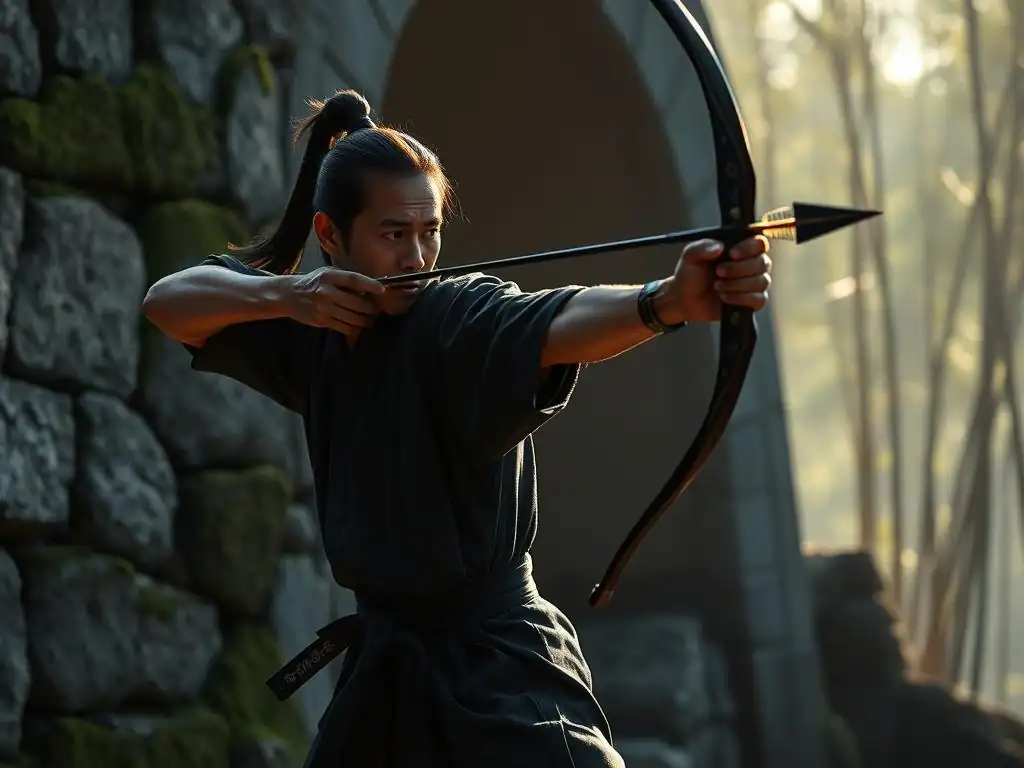
Welcome to Martial Arts Mastery, your gateway to unlocking the secrets of combat and self-discovery.
Delve into the rich tapestry of martial traditions, from ancient philosophies to cutting-edge techniques. Are you ready to explore how Kyudo, The Way of the Bow, transcends mere archery and becomes a profound path to inner peace? Discover the surprising Kyudo meditation techniques benefits that await within this ancient practice and embark on a journey of focused intention and Zen enlightenment. The secrets are waiting to be revealed...
- Introduction to Kyudo: More Than Just Archery
- The Historical Roots of Kyudo and Zen
- Kyudo Meditation Techniques: Cultivating Mindfulness
- Kyudo Techniques: Form, Precision, and Intent
- Benefits of Kyudo Meditation for Mental and Physical Well-being
- Kyudo as a Path to Zen Enlightenment: Seeking Inner Peace
- Kyudo vs. Other Forms of Meditation: Unique Advantages
- Finding a Kyudo Dojo: Starting Your Journey
- Conclusion: Kyudo - A Lifelong Path of Self-Improvement Through Archery and Zen
-
Frequently Asked Questions
- What is Kyudo and how does it relate to meditation?
- How do Kyudo meditation techniques specifically benefit practitioners?
- What are some key elements of Kyudo that promote a meditative state?
- How does the philosophy of Zen Buddhism influence Kyudo practice?
- Can Kyudo meditation techniques be beneficial for individuals who are not interested in archery?
- Final Reflection: Finding Zen in the Flight of an Arrow
- Embrace Zen: Begin Your Kyudo Journey Today!
Introduction to Kyudo: More Than Just Archery
Kyudo, meaning "The Way of the Bow," is a Japanese martial art rooted in traditional archery. Unlike modern competitive archery which focuses primarily on hitting a target with precision and speed, Kyudo emphasizes the process, the form, and the spiritual state of the practitioner. It is often described as a standing form of Zen meditation, where the act of shooting an arrow becomes a moving contemplation.
The goal extends beyond mere technical proficiency; it is about cultivating inner peace, self-discipline, and a profound connection between mind, body, and bow. This ancient practice offers a unique path for those seeking not just martial skill, but also a deeper understanding of themselves and their place in the world.
At its core, Kyudo is a discipline that requires immense patience, focus, and dedication. Practitioners spend years refining their form, not just for aesthetic reasons, but because the correct execution of the movements is believed to align the body and mind, allowing for a state of heightened awareness.
The simple act of drawing and releasing the bow becomes a ritual, a moment of truth that reflects the practitioner's inner state. It is this emphasis on the internal journey, rather than just the external result, that distinguishes Kyudo from many other forms of archery and links it intrinsically to meditative practices.
Kyudo's Place Within Martial Arts History & Culture
Kyudo boasts a rich history deeply intertwined with the development of Japanese martial arts (budo) and culture. Its origins can be traced back thousands of years to prehistoric times when the bow was essential for hunting and warfare. During the feudal era, particularly under the samurai class, archery evolved into a highly respected martial skill, crucial in battles and ceremonial events.
Famous battles, such as the Battle of Dan-no-ura in 1185, saw archery play a decisive role, solidifying its importance in military strategy. By the Kamakura period (1185-1333), mounted archery (Yabusame) was a popular discipline and a demonstration of samurai prowess, blending martial skill with ritualistic elements.
As the era of warfare waned with the advent of firearms and the establishment of the Edo period (1603-1868), the practical combat application of archery diminished. However, instead of disappearing, Kyudo transformed. It shifted from a purely battlefield skill to a discipline focused on character development, spiritual growth, and physical conditioning.
Various schools (ryu) developed distinct styles and philosophies, emphasizing the internal aspects of practice. This transition marked Kyudo's evolution from kyujutsu (the technique of the bow) to kyudo (the way of the bow), firmly establishing its place not just as a martial art, but as a path for self-cultivation alongside disciplines like Kendo and Aikido, which also underwent similar transformations.
Understanding Kyudo's Connection to Zen Buddhism
The profound connection between Kyudo and Zen Buddhism is a defining characteristic of the modern practice. While archery existed in Japan long before the widespread influence of Zen, particularly during the Kamakura period when Zen was embraced by the samurai, the philosophical underpinnings of Zen became increasingly integrated into Kyudo as it evolved beyond warfare. Zen's emphasis on mindfulness, meditation, and the concept of 'no-mind' (mushin) found fertile ground in the disciplined and focused nature of Kyudo training. The repetitive, ritualistic movements of shooting became a form of moving meditation, a physical expression of Zen principles.
This connection is perhaps best exemplified by the teachings of figures like Awa Kenzo (1880-1939), whose philosophy greatly influenced Eugen Herrigel's famous book "Zen in the Art of Archery." Awa Kenzo taught that the target was not the true goal; the true goal was the state of mind achieved during the process of shooting.
He emphasized that when the mind was free from ego, intention, and distraction – a state akin to Zen's mushin – the arrow would naturally find its mark. This perspective highlights how Kyudo practice can serve as a practical vehicle for understanding and experiencing Zen concepts, making the dojo a space for both physical training and spiritual discipline.
The Historical Roots of Kyudo and Zen
From Samurai Warfare to Spiritual Practice
The transformation of Japanese archery from a vital military skill to a spiritual discipline mirrors broader shifts in Japanese society and the evolution of its martial arts. During the Heian period (794-1185), archery was a key component of cavalry training and battlefield tactics. The rise of the samurai class in the Kamakura period solidified its status, with archery contests and demonstrations becoming central to military culture.
The famous Genpei War (1180-1185) saw many legendary archers whose feats were recorded in historical epics, underscoring the bow's importance in combat. Archery schools focused intensely on accuracy, power, and speed under combat conditions.
However, the relative peace of the Edo period (1603-1868) and the introduction of firearms gradually diminished the bow's role on the battlefield. This period saw a significant shift in the focus of many martial arts. Instead of solely preparing warriors for combat, disciplines like archery began to emphasize self-cultivation, etiquette, and philosophical depth.
Masters started codifying techniques not just for efficiency in killing, but for perfecting form, developing character, and achieving a state of mental composure. This era saw the formalization of many kyudo schools, each with its own unique kata (forms) and teachings that moved beyond mere kyujutsu, laying the groundwork for the spiritual path Kyudo represents today.
The Influence of Zen Philosophy on Kyudo's Development
Zen Buddhism, introduced to Japan primarily from China, gained significant traction among the samurai class during the Kamakura period. Its emphasis on discipline, austerity, meditation, and the pursuit of sudden enlightenment through rigorous practice resonated deeply with the warrior ethos. While archery existed before Zen's widespread influence, the philosophical principles of Zen began to permeate its practice, particularly as Kyudo evolved away from purely military applications. Zen masters and archery instructors increasingly recognized the parallels between achieving a focused, egoless state of mind in meditation and the ideal mental state required for effective and meaningful archery.
Key Zen concepts became integral to Kyudo pedagogy. The idea of mushin (no-mind), a state of spontaneous action free from conscious thought or deliberation, became the ultimate goal in shooting. The focus shifted from consciously aiming and calculating to allowing the shot to happen naturally from a state of complete presence and readiness.
Similarly, the concept of zanshin (remaining mind), the sustained awareness that continues even after the action is completed, became vital. Zen temples sometimes incorporated archery ranges, and Zen monks occasionally practiced Kyudo as a form of active meditation. This symbiosis allowed Kyudo to develop into a discipline where the physical act of drawing and releasing the bow became a direct path to experiencing Zen principles.
Kyudo Meditation Techniques: Cultivating Mindfulness
Kyudo is often referred to as a form of standing meditation because the entire process, from approaching the shooting line to retrieving the arrow, is performed with mindful intention and precise movements. The practice cultivates awareness not through stillness, but through controlled, deliberate action. Unlike seated meditation (zazen) where the focus might be solely on breath or internal sensations, Kyudo meditation techniques involve integrating heightened awareness with complex physical coordination and mental composure. The sequence of drawing and releasing the bow becomes a moving mandala, requiring the practitioner to be fully present in each moment.
The goal of Kyudo meditation techniques is not to empty the mind completely, but to achieve a state of mushin, where the mind is free from distraction, anxiety, or conscious effort to hit the target. This state allows the shot to occur naturally and spontaneously. The ritualistic nature of the movements, repeated thousands of times, helps to quiet the internal chatter and develop deep concentration.
Practitioners learn to observe their thoughts and feelings without judgment, allowing them to pass while maintaining focus on the present action. This cultivation of mindfulness through movement is a key aspect of the Kyudo meditation techniques benefits.
The Importance of Posture and Breathing in Kyudo Meditation
Posture and breathing are fundamental pillars in Kyudo, serving as essential components of its meditative aspect. The correct posture, known as shizentai (natural stance), provides a stable foundation, aligning the body in a way that promotes balance and groundedness. The feet are typically placed shoulder-width apart, forming a stable base, while the back is kept straight but relaxed. This physical alignment is not merely for aesthetics or stability; it is believed to help align the practitioner's internal energy and mental state, creating a sense of rootedness and readiness.
Breathing in Kyudo is deeply connected to the movements and the state of mind, much like in Zen meditation. Practitioners are taught to breathe deeply and rhythmically, often coordinating their breath with specific stages of the shooting process. For example, the inhalation might accompany the raising of the bow, and a controlled exhalation might precede or accompany the release. This conscious control of breath helps to regulate the nervous system, reduce tension, and maintain focus. Mastering the coordination of posture, breathing, and movement is crucial for achieving the meditative state required for effective and meaningful Kyudo practice.
Achieving Mushin (No-Mind) Through Kyudo Practice
Achieving mushin, the state of "no-mind," is a central aim in the spiritual dimension of Kyudo. It doesn't mean having no thoughts, but rather a state where the mind is not fixed on any particular thought, emotion, or intention, allowing for spontaneous and natural action. In Kyudo, this translates to performing the shooting sequence without conscious effort, doubt, or the desire to hit the target. The practitioner becomes one with the action, the bow, and the arrow, releasing the shot from a state of complete presence and freedom from ego.
The path to mushin in Kyudo is long and requires rigorous practice. It involves countless repetitions of the hassetsu (eight stages of shooting) until the movements become second nature, performed without conscious deliberation. Practitioners learn to quiet the internal dialogue, letting go of anxieties about performance or results. When mushin is achieved, the shooting process feels effortless and natural, and the arrow's release is a spontaneous expression of the practitioner's aligned body and mind. This state is not forced; it arises from deep training and a willingness to surrender conscious control, embodying a core principle of Zen practice.
Kyudo and the Development of Zanshin (Remaining Mind)
Zanshin, often translated as "remaining mind" or "lingering awareness," is another vital concept in Kyudo with strong ties to Zen. It refers to the sustained state of awareness and readiness that continues even after the immediate action – the release of the arrow – is completed. In a martial context, zanshin meant remaining alert and prepared for any follow-up action or threat. In Kyudo, its meaning extends to maintaining mental and physical composure after the shot, observing the result without attachment, and remaining fully present until the entire sequence is finished and the practitioner returns to the starting position.
Developing zanshin in Kyudo cultivates a continuous state of mindfulness. It teaches the practitioner to not only be present during the peak of the action but to carry that awareness through the entire process. This practice helps to integrate the lessons learned during the shot into the practitioner's overall state of being.
It reinforces the idea that the practice is not just about the moment the arrow flies, but about the entire journey, from the initial stance to the final bow. Zanshin ensures that the focus and energy cultivated during the draw are not dissipated after the release, but maintained as a continuous flow of mindful presence.
Kyudo Techniques: Form, Precision, and Intent
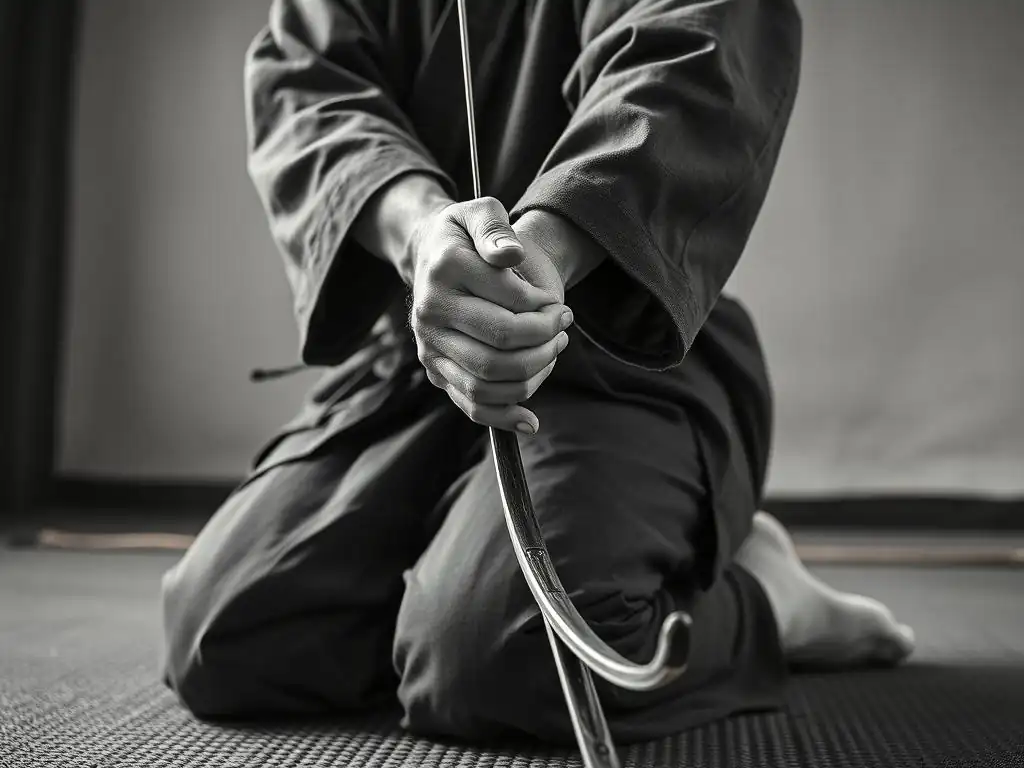
Kyudo technique is highly formalized and precise, following ancient traditions passed down through generations. The emphasis is not on developing brute strength, but on achieving perfect form ( kata) and harmony of movement. Every step, from walking to the shooting line to retrieving the arrow, is prescribed and practiced meticulously. This focus on form is not arbitrary; it is believed that the correct execution of the kata allows the practitioner's energy to flow freely and enables the achievement of the desired mental state. Precision in movement becomes a reflection of precision in mind.
The technical aspect of Kyudo is rigorous and requires years of dedicated practice under the guidance of an experienced instructor. Beginners spend considerable time learning the basic posture, how to handle the equipment safely, and the fundamental sequence of movements before even attempting to shoot at a target. The process is slow and deliberate, demanding patience and attention to detail. This deliberate pace reinforces the meditative aspect of Kyudo, ensuring that technique is not just about hitting the target, but about cultivating the inner state necessary for "right shooting."
The Eight Stages of Shooting (Hassetsu) Explained
The core technical sequence in Kyudo is known as Hassetsu, the Eight Stages of Shooting. This is a standardized sequence of movements performed by practitioners of most modern Kyudo schools, though minor variations may exist. Mastering Hassetsu is fundamental to Kyudo practice. The stages are:
- Ashibumi (Footing): Taking the correct stance, with feet placed at the proper angle (typically 60 degrees) and distance apart, establishing a stable base.
- Dozukuri (Body Formation): Straightening and centering the body over the base, ensuring proper alignment and posture.
- Yugamae (Readying the Bow): Preparing the bow and arrow, including setting the arrow on the string and gripping the bow correctly. This involves three sub-stages: Torikake (gripping the string), Tenouchi (gripping the bow), and Monomi (gazing at the target).
- Uchiokoshi (Raising the Bow): Raising the bow and arrow above the head in a smooth, controlled movement, preparing for the draw.
- Hikiwake (Drawing Apart): Simultaneously drawing the bowstring with the drawing hand and pushing the bow away with the bow hand, expanding the chest and back. This is a two-stage process: Daisan (large third) and Tsumeai (bringing together).
- Kai (Meeting/Holding the Full Draw): Holding the bow at full draw, maintaining expansion and tension throughout the body. This is the peak of the draw and a crucial moment for mental composure. It is characterized by Tsumeai (bringing together) and Nobiai (expanding).
- Hanare (Release): The spontaneous release of the arrow, occurring naturally from the state of full draw and expansion. This should not be a conscious effort to release.
- Zanshin (Remaining Mind): Maintaining physical and mental composure after the release, holding the posture and awareness until the arrow strikes the target or passes. This is followed by Yudaoshi (lowering the bow).
Each of these stages is practiced meticulously, with attention paid to every subtle movement and internal sensation. The goal is to perform Hassetsu as a seamless, integrated flow, not as eight separate actions.
Mastering the Kyudo Bow: Tools and Equipment
The Kyudo bow ( yumi) is a unique and iconic instrument, distinct from bows used in Western or other forms of archery. Traditionally made from laminated bamboo, wood, and leather, it is asymmetrical, with the grip positioned about one-third of the way up from the bottom. This design is believed to be optimized for use from horseback and reflects centuries of refinement. Modern bows may also be made from synthetic materials like fiberglass or carbon fiber, offering greater durability and consistency, but traditional bamboo bows are still highly valued for their feel and connection to the art's history.
Mastering the yumi involves understanding its properties, how it behaves under tension, and how to handle it safely and correctly. The bow is typically very long, often over two meters, requiring significant strength and technique to draw fully. The arrows ( ya) are traditionally made from bamboo, fletched with bird feathers (often eagle or hawk, though turkey is common today) and tipped with a horn or metal point.
Other essential equipment includes the glove ( yugake), a specialized three-fingered or four-fingered glove used to draw the string, and the clothing ( kyudogi), which includes a kimono-like top ( uwagi), hakama (wide trousers), and a chest protector ( muneate) for women. Learning to care for and respect one's equipment is an integral part of the Kyudo path.
The Role of Precision and Focus in Kyudo Training
Precision and focus are paramount in Kyudo training, not just in aiming at the target, but in the execution of every movement. The emphasis on precise form ( kata) ensures that the practitioner develops a deep understanding of their body mechanics and how they interact with the bow. Even slight deviations in posture, grip, or drawing technique can significantly affect the shot. This constant attention to detail cultivates a profound level of physical awareness and control, contributing significantly to the Kyudo meditation techniques benefits related to body-mind connection.
Beyond physical precision, Kyudo demands intense mental focus. The practitioner must maintain concentration throughout the entire Hassetsu sequence, shutting out distractions and internal chatter. This unwavering focus is essential for achieving the state of mushin and allowing the shot to happen naturally. Training involves developing the ability to focus not just on the external target, but on the internal state, the breath, and the subtle sensations of the body and bow. This rigorous mental discipline is a core component of Kyudo's effectiveness as a meditative practice, enhancing concentration skills that can be applied to all areas of life.
Benefits of Kyudo Meditation for Mental and Physical Well-being
The benefits of practicing Kyudo extend far beyond the ability to shoot an arrow accurately. As a discipline that integrates physical movement with deep mental concentration and a philosophical approach, Kyudo offers significant advantages for both mental and physical well-being. The structured, repetitive nature of the practice provides a stable framework for developing mindfulness and emotional regulation, while the physical demands improve posture, strength, and coordination. Exploring Kyudo meditation techniques benefits individuals seeking a holistic approach to self-improvement.
Regular Kyudo practice has been linked to reduced stress levels, improved focus and concentration, and a greater sense of calm. The physical act of drawing and holding the bow requires muscular effort, but the emphasis on relaxation and proper breathing prevents excessive tension. The mental discipline required to maintain focus and composure during the shooting process trains the mind to be present and less reactive to distractions or anxieties. These combined effects make Kyudo a powerful tool for enhancing overall well-being.
Kyudo for Stress Reduction and Emotional Regulation
One of the significant Kyudo meditation techniques benefits is its effectiveness in stress reduction and emotional regulation. The ritualistic nature of Kyudo, with its prescribed movements and emphasis on mindfulness, provides a structured way to step away from the stresses of daily life. Entering the dojo and engaging in the practice creates a mental space dedicated solely to the present moment and the interaction with the bow. This focused activity helps to quiet the 'monkey mind' that often contributes to stress and anxiety.
Moreover, the discipline required in Kyudo teaches practitioners to observe their emotional state without being overwhelmed by it. Frustration when a shot goes wrong, anxiety about performance, or impatience with the slow pace of progress are all emotions that arise during practice. Kyudo training encourages acknowledging these feelings but returning focus to the breath, posture, and the present stage of Hassetsu. This repeated practice of emotional observation and redirection builds resilience and improves the ability to manage emotional responses in other aspects of life, similar to the effects observed in traditional seated meditation practices.
Enhancing Concentration and Focus Through Kyudo
The rigorous demand for focus in Kyudo directly translates into enhanced concentration skills. From the moment the practitioner steps onto the shooting line, intense concentration is required to perform the Hassetsu correctly, maintain posture, control breathing, and manage the powerful bow. Any lapse in focus can result in a poor shot or even potential safety issues. This constant need for attention trains the mind to sustain focus over extended periods, a skill increasingly valuable in our distraction-filled world.
The process of achieving mushin further refines concentration. It moves beyond simply focusing on something to achieving a state of focused being. Practitioners learn to quiet internal distractions – worries, plans, self-judgment – that impede concentration. This mental discipline, honed through thousands of repetitions and the mindful practice of Kyudo meditation techniques benefits, allows individuals to apply a higher level of focus and presence to their studies, work, and other activities. The ability to enter a state of flow, where action and awareness merge, is a direct outcome of this enhanced concentration.
Physical Benefits of Kyudo: Posture, Strength, and Coordination
While often highlighted for its mental and spiritual aspects, Kyudo practice also offers tangible physical benefits. The foundational posture ( ashibumi and dozukuri) requires and builds core strength and stability. Maintaining the correct alignment throughout the Hassetsu sequence strengthens back, shoulder, and leg muscles. The act of drawing the long, powerful yumi develops significant upper body strength, particularly in the back, shoulders, and arms, in a balanced and controlled manner.
Beyond strength, Kyudo significantly improves coordination, balance, and body awareness. The complex sequence of movements in Hassetsu requires precise coordination between the hands, arms, shoulders, core, and legs, all while maintaining posture and controlling breath. Practitioners develop a refined sense of their body in space and how its different parts work together. The practice also improves flexibility, particularly in the shoulders and chest, due to the expansion required during the draw. The combination of strength, flexibility, and coordination contributes to improved overall physical health and a more upright, balanced posture in daily life.
Kyudo as a Path to Zen Enlightenment: Seeking Inner Peace
For many practitioners, Kyudo is not just a sport or a hobby; it is a dedicated path ( do) towards self-mastery and inner peace, deeply intertwined with the principles of Zen. The pursuit of "enlightenment" in this context is less about sudden spiritual awakening and more about a continuous process of refining oneself, letting go of ego, and achieving a state of harmonious being. The bow becomes a mirror reflecting the practitioner's internal state, and each shot is an opportunity for self-discovery and growth.
The journey in Kyudo is often described as a spiral rather than a straight line, with periods of progress and regression. This mirrors the unpredictable nature of the path to self-realization. The challenges encountered – frustrating plateaus, inconsistent shots, physical discomfort – become opportunities to practice patience, perseverance, and non-attachment. Through these challenges, practitioners learn to confront their limitations, fears, and egoistic desires, gradually moving towards a state of greater inner freedom and peace.
The Concept of "Seisha Hitchu": Right Shooting is Right Hitting
The phrase Seisha Hitchu (正射必中) is a central tenet in Kyudo, translating roughly to "Right Shooting is Right Hitting." On the surface, it might seem to imply that if your technique is perfect, you will always hit the target.
However, within the context of Kyudo's connection to Zen, its meaning is far deeper. It suggests that when the practitioner's body, mind, and spirit are correctly aligned and in harmony – a state achieved through diligent practice, mindfulness, and letting go of ego – the arrow will naturally find its mark, not because of conscious effort to aim, but as a spontaneous outcome of that perfect state.
This concept shifts the focus away from the external result (hitting the target) to the internal process (achieving Seisha, or "right shooting"). The target becomes merely a gauge of the practitioner's internal state. If the shot is "right" in terms of form, spirit, and intention (or lack thereof, i.e., mushin), then hitting the target is a natural consequence.
Conversely, if the shot misses, it's seen not as a failure of aiming, but as an indication that the practitioner's internal state or execution was not fully aligned. This philosophy encourages practitioners to focus on perfecting themselves and their process, trusting that the results will follow, embodying a core principle of non-striving found in Zen.
Kyudo's Role in Self-Discovery and Personal Growth
Kyudo serves as a powerful vehicle for self-discovery and personal growth precisely because it strips away external distractions and forces the practitioner to confront their inner landscape. The rigorous discipline reveals tendencies towards impatience, frustration, self-criticism, or attachment to results. By observing these patterns without judgment, practitioners gain deeper insight into their own minds and emotional habits. The repetitive nature of the practice provides ample opportunity to work through these challenges, cultivating self-awareness and emotional intelligence.
The journey in Kyudo is profoundly personal. While practiced in a group setting, the act of shooting the bow is a solitary one, a dialogue between the practitioner and themselves. The dojo becomes a safe space to explore one's limitations and capabilities, both physical and mental. Over time, practitioners often report increased confidence, resilience, and a greater sense of presence in their daily lives. The lessons learned on the shooting line about focus, patience, and letting go of attachment are directly applicable to navigating the complexities of modern life, making Kyudo a true path of personal transformation.
Kyudo and the Pursuit of Perfection: Beyond Technical Skill
The pursuit of perfection in Kyudo is not about flawless execution every single time or achieving a perfect score. Instead, it is about the continuous striving towards the ideal state of Seisha – right shooting – which encompasses not just technical proficiency but also mental composure, spiritual alignment, and ethical conduct. The ideal shot is one that is born from a state of harmony, where the practitioner is fully present, free from ego, and in complete accord with the bow and arrow. This pursuit is lifelong, as there is always room for deeper understanding and refinement.
This concept moves Kyudo beyond mere technical skill and into the realm of art and spiritual practice. The beauty of a Kyudo shot lies not just in its accuracy, but in the grace, presence, and intention (or lack of conscious intention) with which it is performed. The pursuit of this kind of perfection requires humility, perseverance, and a willingness to constantly learn and evolve. It embodies the Zen principle of continuous practice ( shoshin - beginner's mind), recognizing that mastery is not a destination but an ongoing journey of refinement and self-improvement.
Kyudo vs. Other Forms of Meditation: Unique Advantages
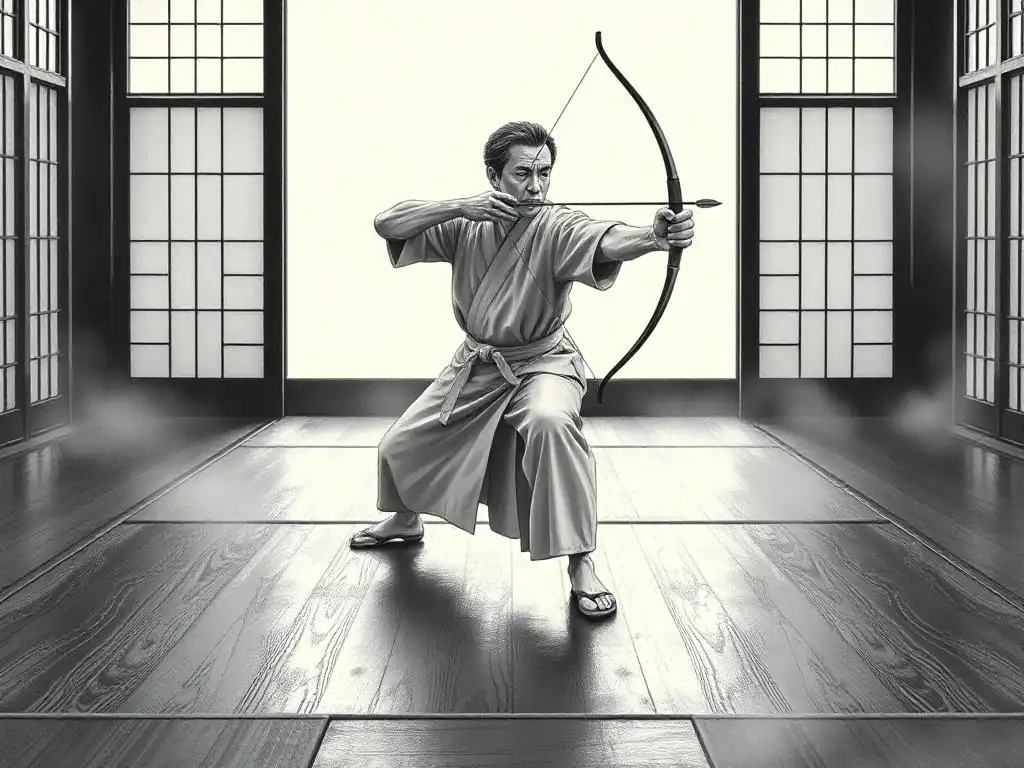
While Kyudo shares fundamental goals with other meditative practices, such as cultivating mindfulness, focus, and inner peace, it offers unique advantages due to its active, physical nature. Unlike seated meditation (zazen) or walking meditation, Kyudo integrates complex physical movements with intense mental concentration and the use of a powerful tool. This dynamic combination engages the practitioner on multiple levels simultaneously, providing a different pathway to meditative states.
The interaction with the yumi introduces an external element that serves as both a challenge and a teacher. The inherent difficulty and potential danger of handling a powerful bow demand complete presence and respect, immediately pulling the practitioner into the moment. This active engagement can be particularly beneficial for individuals who find it difficult to quiet their minds in stillness. The structure and ritual of Kyudo provide a tangible framework for practice, making the abstract concepts of mindfulness and mushin more accessible through physical action.
Comparing Kyudo Meditation with Seated Zen Meditation (Zazen)
Kyudo meditation and seated Zen meditation ( zazen) share the core aim of cultivating mindfulness and achieving a state of focused awareness, but they approach it through different means. Zazen emphasizes stillness, focusing on breath and observing thoughts pass without engagement. The discipline lies in maintaining physical stillness and mental non-reactivity in a seated posture, often for extended periods. The primary 'tool' is the breath and the internal landscape of the mind.
Kyudo meditation, on the other hand, is a form of active meditation. While posture and breath are crucial, the practice involves a complex sequence of dynamic movements using a powerful external object (the bow). The discipline comes from performing these movements with precision, intention, and a state of relaxed alertness, while simultaneously managing the physical forces of the bow and the mental challenges of performance and expectation.
For some individuals, the physical engagement and the external focus provided by the bow can make it easier to enter a meditative state than the pure internal focus of zazen. Both practices aim for mushin, but one seeks it through stillness, the other through dynamic action and interaction with the world (represented by the bow and target).
How Kyudo Integrates Movement and Mindfulness
Kyudo uniquely integrates movement and mindfulness by making the physical act of shooting the vehicle for meditative practice. Every stage of Hassetsu requires conscious presence and precise execution. The practitioner must be fully aware of their body's alignment, the tension in the bow, the rhythm of their breath, and the state of their mind, all while performing a complex sequence of movements. This multi-layered awareness prevents the mind from wandering, anchoring it firmly in the present moment.
The challenge of coordinating physical action with mental composure and breath control is where the integration of movement and mindfulness truly shines in Kyudo. The powerful energy of the bow demands respect and focus; it is unforgiving of inattention.
This inherent challenge forces the practitioner to be fully present, transforming what could be a purely physical exercise into a profound practice of embodied mindfulness. The fluidity and grace that emerge from years of dedicated practice are not just physical accomplishments but are seen as outward expressions of an inner state of harmony and integration, demonstrating the deep Kyudo meditation techniques benefits.
Finding a Kyudo Dojo: Starting Your Journey
Embarking on the path of Kyudo requires finding a suitable dojo and instructor. Kyudo is a traditional discipline that is best learned through direct, in-person instruction from experienced teachers. While resources like books and videos can provide introductory information, the subtle nuances of posture, movement, and the feel of the bow can only be properly conveyed through hands-on guidance. Finding a dojo affiliated with a recognized Kyudo organization, such as the All Nippon Kyudo Federation (ANKF) or its international counterparts, is a good starting point to ensure adherence to standardized teaching methods and safety protocols.
Many dojos welcome beginners and offer introductory courses. These initial classes are crucial for understanding the basics of the art, experiencing the practice firsthand, and determining if Kyudo is the right path for you. Be prepared for a slow and deliberate learning process; mastery in Kyudo is measured in years, not months. The journey begins with mastering fundamental movements and etiquette before even attempting to shoot a live arrow.
What to Expect in Your First Kyudo Class
Your first Kyudo class will likely involve very little, if any, actual shooting. Beginners typically spend significant time learning the fundamental posture ( ashibumi, dozukuri), how to handle the bow and arrows safely, and the basic sequence of Hassetsu movements without a bow or using a very light practice bow ( gomuyumi). Expect detailed instruction on etiquette and safety rules, which are paramount in a practice involving powerful weapons. You will learn the proper way to walk in the dojo, bow to the mat ( makiwara) or target ( mato), and handle the equipment with respect.
The focus will be on building a stable foundation through repetitive practice of basic movements. You will likely practice drawing the bowstring without an arrow ( karabiki) or using a resistance band to build strength and proper form. The atmosphere in a dojo is usually quiet and focused, emphasizing concentration and discipline. Be prepared to be patient with yourself and the process. The initial stages can feel slow, but they are essential for developing the muscle memory and mental discipline required for the more advanced aspects of Kyudo.
Key Considerations When Choosing a Kyudo Instructor
Choosing the right Kyudo instructor is vital for a positive and effective learning experience. Look for an instructor with recognized rank (dan or renshi/kyoshi/hanshi titles) within a reputable Kyudo organization. Experience is important, but equally crucial is their teaching style and philosophy. A good instructor should be patient, knowledgeable, and able to clearly explain both the technical aspects of Kyudo and its deeper philosophical and meditative dimensions.
Consider observing a class before joining if possible. Pay attention to how the instructor interacts with students, the atmosphere in the dojo, and whether the teaching approach resonates with you. Do they emphasize safety, fundamental technique, and the spiritual aspects of Kyudo? A good instructor will guide you not just in hitting the target, but in using the practice as a means for self-improvement and cultivating inner peace. They should embody the principles of respect, discipline, and mindfulness that are central to the art.
Conclusion: Kyudo - A Lifelong Path of Self-Improvement Through Archery and Zen
Kyudo, the Way of the Bow, offers a profound and unique path to self-improvement, blending the discipline of traditional Japanese archery with the meditative principles of Zen Buddhism. It is a practice that transcends mere sport or combat technique, inviting practitioners on a lifelong journey of self-discovery, mental cultivation, and the pursuit of inner harmony. Through the rigorous and mindful execution of each movement, from the initial stance to the final release, individuals learn to quiet the mind, cultivate focus, and achieve a state of presence that permeates beyond the shooting line.
The Kyudo meditation techniques benefits are numerous, contributing significantly to mental and physical well-being by reducing stress, enhancing concentration, and improving posture, strength, and coordination. More importantly, Kyudo teaches patience, perseverance, and the value of process over outcome, embodied in the concept of Seisha Hitchu.
It is a demanding yet deeply rewarding discipline that uses the ancient art of archery as a living meditation, guiding practitioners towards a state of mushin and a deeper understanding of themselves and the world around them. For those seeking a martial art that nurtures both the body and the spirit, Kyudo stands as a powerful testament to the enduring connection between the path of the warrior and the path of inner peace.
Frequently Asked Questions
What is Kyudo and how does it relate to meditation?
Kyudo, the Way of the Bow, is a traditional Japanese martial art focused on archery. It's deeply connected to meditation because its practice emphasizes mindfulness, precision, and inner peace, aiming to cultivate a Zen-like state of being.
How do Kyudo meditation techniques specifically benefit practitioners?
Kyudo meditation techniques offer several benefits, including improved focus and concentration, enhanced self-discipline, and a deeper sense of inner calm and self-awareness, mirroring the benefits of traditional Zen meditation.
What are some key elements of Kyudo that promote a meditative state?
The deliberate and precise movements, the focus on shaho (correct shooting method), and the emphasis on being present in the moment during each shot all contribute to a meditative state. The ritualistic nature of the practice helps silence the inner critic and promotes mindful action.
How does the philosophy of Zen Buddhism influence Kyudo practice?
Zen Buddhism's emphasis on emptiness (sunyata), non-attachment, and living in the present moment profoundly influences Kyudo. Practitioners aim to achieve a state of mushin (no-mind), where actions flow naturally without conscious effort, guided by intuition and instinct.
Can Kyudo meditation techniques be beneficial for individuals who are not interested in archery?
While learning Kyudo requires archery, the principles of mindfulness, focus, and self-discipline cultivated through its meditative aspects can be applied to other areas of life, even for those not directly practicing the art.
Final Reflection: Finding Zen in the Flight of an Arrow
The journey through Kyudo, as explored in this article, reveals far more than just archery techniques; it illuminates a path to inner peace and self-discovery. The principles of seisha hitchu, shooting correctly is hitting, resonate profoundly in our modern world, where mindfulness and focus are increasingly sought after as antidotes to the constant distractions of daily life. Kyudo, therefore, offers a tangible, actionable framework for cultivating these essential qualities.
The influence of Kyudo extends beyond the dojo, subtly shaping our understanding of discipline, perseverance, and the interconnectedness of mind, body, and spirit. Personally, I find the emphasis on process over outcome deeply compelling, a reminder that true mastery lies not in achieving a specific result, but in dedicating oneself fully to the present moment. The target is not the point. The point is the process.
This sentiment encapsulates the essence of Kyudo's meditative benefits, urging us to embrace the journey of self-improvement with patience and unwavering commitment.
Now, as you reflect on the principles and practices of Kyudo, consider how you might integrate its wisdom into your own life. Can you find moments of stillness amidst the chaos, opportunities to cultivate focus and presence? Let the image of the archer, drawing back the bow with unwavering intention, inspire you to approach your own challenges with the same dedication and grace. Embrace the "Way of the Bow" not just as a physical discipline, but as a path to unlocking your inner potential and achieving a deeper understanding of yourself.
Embrace Zen: Begin Your Kyudo Journey Today!
Thank you for exploring the profound connection between Kyudo and Zen philosophy! We hope you’ve gained a new appreciation for this unique martial art and its potential for personal growth. Ready to take the next step?
Here are a few ways to integrate the principles of Kyudo into your life:
- Find a local Kyudo dojo: Start with an introductory lesson to experience the art firsthand and connect with experienced practitioners.
- Meditate on stillness: Dedicate just 10 minutes each day to seated meditation to bring the principle of "Metsuke" into your daily life.
- Share your thoughts: Post your insights on Kyudo's principles on social media, using #KyudoZen, and discuss how they apply to other areas of your life!
What aspects of Kyudo resonate most with your own path to mindfulness?