
Understanding the Structure and Sequence of a Basic Yang Tai Chi Form

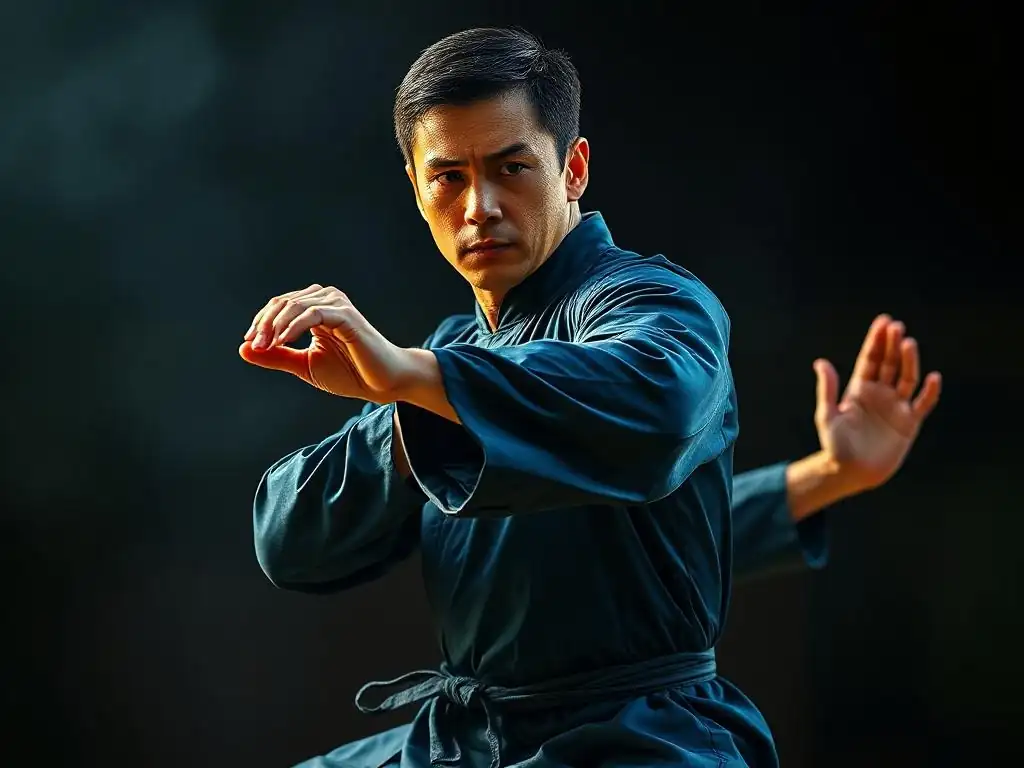
Welcome to Martial Arts Mastery, your gateway to unlocking the secrets of combat traditions worldwide. Delve into the graceful power and profound health benefits of Tai Chi, and discover the intricate choreography that lies beneath its flowing movements. Are you ready to unravel the mysteries of the Yang Tai Chi form sequence? Continue reading to explore the fundamental structure and key principles that define this foundational practice.
- Introduction to Yang Style Tai Chi Form Sequence
- Breaking Down the Yang Tai Chi Form: A Step-by-Step Sequence Guide
- Key Principles for Learning the Yang Tai Chi Routine
- Common Mistakes in Yang Tai Chi Form Practice and How to Avoid Them
- The Benefits of Consistent Yang Tai Chi Form Practice
- Resources for Further Learning of Yang Tai Chi Form
- Conclusion: Mastering the Yang Tai Chi Form Sequence
-
Frequently Asked Questions
- What is a "Yang Tai Chi form sequence" and why is it important?
- What are some of the key principles to keep in mind when learning the Yang Tai Chi form sequence?
- How does the Yang Tai Chi form sequence relate to self-defense?
- How long does it typically take to learn a basic Yang Tai Chi form sequence?
- Where can I find more information about the history and philosophy behind the Yang Tai Chi form sequence?
- Final Reflection: Embracing the Flow of Tai Chi
- Embrace the Flow: Begin Your Tai Chi Journey Today!
Introduction to Yang Style Tai Chi Form Sequence
The Importance of Form in Yang Tai Chi Training
The practice of the Yang Tai Chi form sequence is fundamental to developing skill and understanding in this martial art. The form, a prearranged series of movements performed slowly and continuously, serves as a moving meditation and a vehicle for cultivating internal energy (Qi). Through consistent repetition of the sequence, practitioners learn proper body alignment, weight distribution, and coordination between mind, body, and breath. This methodical approach builds a strong foundation, improving balance, flexibility, and overall physical well-being.
Furthermore, the form encapsulates the core principles of Yang style Tai Chi, such as relaxation (Song), rooting (Gen), and movement originating from the waist. Each movement, though appearing gentle, contains underlying martial applications, training the practitioner in sensitivity, yielding, and issuing power (Fa Jing). Mastering the Yang form sequence is not merely memorizing steps; it is about embodying these principles, allowing the practitioner to move with grace, stability, and internal strength, which are essential for both health cultivation and potential self-defense applications.
Overview of the Basic Yang Tai Chi Form
While the Yang family tradition includes various forms, such as the Long Form (often cited as 103 or 108 movements), shorter, more accessible forms have become widely popular for beginners. The most common basic Yang Tai Chi form sequence taught globally is the 24-movement form, often referred to as the "Beijing 24" or "Simplified Tai Chi Chuan." This sequence was compiled in 1956 and draws core movements from the traditional Yang family long form, making it an excellent entry point for learning the fundamental principles and movements of Yang style Tai Chi.
Another frequently practiced basic Yang Tai Chi form sequence is the 48-movement form, which expands upon the 24-movement sequence by incorporating more complex transitions and a wider range of movements, including elements from other Tai Chi styles. Regardless of the specific length, the basic Yang form sequence emphasizes smooth, continuous motion, relaxed joints, and a calm mind. The focus is on internal awareness, feeling the flow of energy, and maintaining correct structure throughout the entire routine, from the initial preparation to the final closing.
Breaking Down the Yang Tai Chi Form: A Step-by-Step Sequence Guide
Section 1: Preparation and Beginning Movements of the Yang Form
Movement 1: Preparation - Correct Posture and Alignment
The Yang Tai Chi form sequence begins with preparation, emphasizing correct standing posture. The practitioner stands with feet parallel, approximately shoulder-width apart. Knees are slightly bent, hips are relaxed and slightly tucked under, and the spine is gently lengthened upwards as if suspended from the crown of the head. Shoulders are relaxed and sunk, and the elbows are slightly bent. The chin is slightly tucked, and the gaze is soft and forward.
This initial posture, often called Wu Ji (Empty State), is crucial as it establishes the foundation for all subsequent movements in the Yang form sequence. It promotes relaxation throughout the body, allowing energy to sink and the practitioner to feel rooted to the earth. Proper alignment ensures efficient movement and prevents tension, setting the stage for the smooth, continuous flow characteristic of the Yang Tai Chi form sequence.
Movement 2: Commencement - Initiating the Flow
Following the preparation, the Yang Tai Chi form sequence formally begins with "Commencement" or "Beginning" (Qi Shi). From the Wu Ji stance, the practitioner gently lifts both arms forward and upward to approximately shoulder height, keeping shoulders relaxed and elbows slightly bent. The wrists are relaxed, and the fingers are gently extended. As the arms rise, the weight remains centered or slightly shifts back, and the knees remain softly bent.
This movement is performed slowly and smoothly, coordinating the gentle rise of the arms with a subtle shift in weight and breath. It symbolizes the activation of energy and the initiation of the flow of the Yang Tai Chi form sequence. The movement is simple yet profound, requiring full body coordination and mental focus, setting the pace and internal state for the entire routine.
Section 2: The Core Sequence of the Yang Tai Chi Form
Movement 3 - 10: Grasp Sparrow's Tail - Understanding the Core Principles
Movements 3 through 10 in the 24-movement Yang Tai Chi form sequence are collectively known as "Grasp Sparrow's Tail" (Lan Que Wei), a foundational sequence that embodies the four primary energies or techniques of Tai Chi: Peng (Ward-off), Lu (Rollback), Ji (Press), and An (Push). This section is performed on both the left and right sides, illustrating symmetry and balance within the Yang form sequence.
Peng involves an expanding energy, like a warding-off force, expressed through the arms and body structure. Lu is a yielding, deflecting energy, drawing the opponent's force away. Ji is a pressing energy, combining forces from both hands and the body. An is a pushing energy, issuing force forward from the core. Practicing these movements within "Grasp Sparrow's Tail" allows students to deeply understand these fundamental principles and how they are integrated into the continuous flow of the Yang Tai Chi form sequence, developing sensitivity and connection throughout the body.
Movement 11 - 20: Single Whip to Wave Hands Like Clouds - Refining Body Mechanics
Following "Grasp Sparrow's Tail," the Yang Tai Chi form sequence continues with a series of movements that further refine body mechanics and coordination. Movements 11 through 20 often include "Single Whip" (Dan Bian), a distinctive posture with one arm extended like a whip and the other hand forming a "hook," and the flowing "Wave Hands Like Clouds" (Yun Shou). This section emphasizes the connection between the waist and the limbs, illustrating how all movement originates from the core.
"Wave Hands Like Clouds" is a particularly important part of the Yang form sequence, involving continuous circular motions of the arms coordinated with shifting weight and turning the waist. It cultivates smooth transitions, improves balance, and teaches the practitioner to move as a single, integrated unit. These movements, appearing simple externally, require precise internal coordination and relaxation, building endurance and deepening the understanding of the continuous, circular nature of the Yang Tai Chi form sequence.
Section 3: Continuing the Yang Tai Chi Sequence
Movement 21 - 30: High Pat on Horse to Separate Right Foot - Cultivating Internal Energy (Qi)
As the Yang Tai Chi form sequence progresses, movements like "High Pat on Horse" (Gao Tan Ma) and "Separate Right Foot" (You Deng Jiao) introduce more complex postures and actions that further cultivate and direct internal energy (Qi). "High Pat on Horse" often involves a forward stance with one hand raised, potentially representing a checking or striking movement. "Separate Right Foot" is a kicking motion, requiring significant balance and coordination.
Performing these movements with correct internal awareness helps the practitioner feel the flow of Qi through the body. The stability required for the kick in "Separate Right Foot," for instance, relies on deep rooting and the ability to gather and release energy from the core. This section of the Yang form sequence challenges the practitioner to maintain relaxation and connection while executing more dynamic actions, refining their ability to move energy smoothly and powerfully throughout the routine.
Movement 31 - 40: Turning Body to Kick with Heel to Snake Creeps Down - Integrating Martial Applications
Movements 31 through 40 in the Yang Tai Chi form sequence often include actions like "Turning Body and Kick with Heel" (Zhuan Shen Deng Jiao) and "Snake Creeps Down" (She Shen Xia Shi). These movements explicitly highlight the martial applications inherent within the form. The turning kick demonstrates the use of rotational power from the waist, while "Snake Creeps Down" is a low stance that can be used for sweeping, tripping, or evading.
Integrating the understanding of these martial applications enriches the practice of the Yang form sequence. It's not about fighting, but about understanding the intent behind the movements, which deepens the internal connection and the quality of the energy expressed. Practicing these more complex or lower stances also builds leg strength, flexibility, and balance, demonstrating the dual purpose of the Yang Tai Chi form sequence for both health and self-defense principles.
Section 4: Concluding the Yang Tai Chi Form Sequence
Movement 41 - 50: Step Forward to Seven Stars to Retreat and Ride the Tiger - Maintaining Focus and Balance
Towards the end of the basic Yang Tai Chi form sequence, movements like "Step Forward to Seven Stars" (Jin Bu Qi Xing) and "Retreat and Ride the Tiger" (Dao Nian Hou) appear, challenging the practitioner's balance and focus as the routine nears its conclusion. "Seven Stars" often involves a specific hand and foot position, potentially symbolizing a final defensive posture. "Retreat and Ride the Tiger" involves stepping back while maintaining stability and control.
These movements require significant concentration to execute smoothly while maintaining the principles of relaxation and alignment developed throughout the Yang form sequence. They test the practitioner's ability to remain rooted during transitions and maintain composure in more dynamic or retreating steps. Successfully navigating this section demonstrates improved balance, coordination, and the mental discipline cultivated through consistent practice of the Yang Tai Chi form sequence.
Movement 51 - 60: Closing Form - Completing the Energy Cycle
The Yang Tai Chi form sequence concludes with the "Closing Form" (He Tai Ji), mirroring the opening "Commencement" movement but in reverse. The practitioner brings the hands down slowly and smoothly to the sides, returning to the initial standing posture. This final movement signifies the completion of the routine and the settling of the energy that has been circulated throughout the form.
The closing is just as important as the opening. It allows the practitioner to integrate the benefits of the practice, feeling the energy settle within the body. It should be performed with the same relaxed focus and internal awareness as the rest of the Yang form sequence, bringing the mind and body back to a state of calm equilibrium. This final step completes the cycle of energy cultivation and movement, leaving the practitioner feeling centered and refreshed.
Key Principles for Learning the Yang Tai Chi Routine
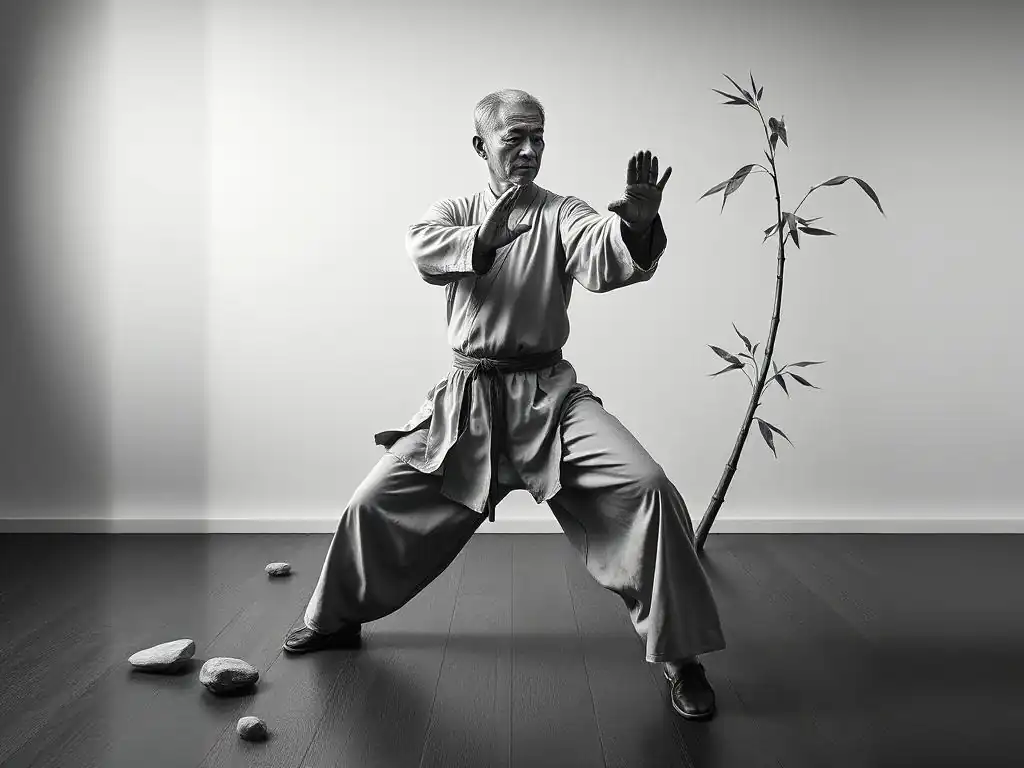
Body Alignment and Posture in Yang Style Tai Chi
Correct body alignment is a cornerstone of effective Yang Tai Chi form practice. The principle of 'Song' (relaxation) is paramount, but it's not limpness; it's a dynamic relaxation that allows energy to flow unimpeded. Key alignment points include keeping the head suspended from the crown, relaxing the neck, sinking the shoulders and elbows, relaxing the chest and rounding the back slightly (Hao Xiong Ba Bei), and tucking the tailbone slightly (Liu Tun).
Maintaining these postural alignments throughout the entire Yang Tai Chi form sequence ensures that the skeletal structure supports the body efficiently, reducing muscular tension and allowing for proper weight transfer. For example, keeping the knees tracking over the toes and the hips relaxed facilitates smooth transitions between stances and promotes rooting. A study published in the Journal of Bodywork and Movement Therapies in 2015, for instance, discussed how Tai Chi's focus on posture and slow movement significantly improves proprioception and balance in older adults, directly relating to the emphasis on precise alignment within the Yang form sequence.
Breath Control and Coordination in the Form Sequence
Breath is intricately linked with movement in the Yang Tai Chi form sequence. The ideal is slow, deep, abdominal breathing that is coordinated with the physical actions. Generally, movements that involve expanding or rising are accompanied by inhalation, while movements that involve contracting or sinking are accompanied by exhalation. However, the breath should always be natural and comfortable, never forced.
Coordinating breath with the movements of the Yang Tai Chi form sequence helps to calm the mind, regulate the nervous system, and facilitate the smooth flow of Qi. Over time, practitioners develop a natural rhythm where movement and breath become unified, enhancing both the physical and meditative aspects of the practice. For example, in "Wave Hands Like Clouds," the breath flows continuously, matching the circular motion of the arms and the subtle shifts in weight, creating a seamless integration of internal and external movement.
Understanding the Martial Applications Behind Each Movement
While many practice Tai Chi primarily for health, understanding the underlying martial applications of each movement in the Yang Tai Chi form sequence adds depth and meaning to the practice. Each posture and transition, from "Ward Off" to "Single Whip," originates from martial necessity – blocking, striking, throwing, joint locking, or evading. Recognizing these applications helps the practitioner understand the why behind the movements and principles.
For instance, the seemingly simple movement of "Step Back and Repulse Monkey" (Dao Juan Hong) contains clear applications for deflecting an attack and countering. "Punch Under Elbow" (Zhou Di Kan Quan) suggests a close-range strike. This awareness informs how the movements are executed, adding internal intent (Yi) and rooting the practice in its origins. Acknowledging the martial aspect within the Yang form sequence transforms it from just a series of exercises into a dynamic expression of energy and principle, enhancing focus and power generation.
Common Mistakes in Yang Tai Chi Form Practice and How to Avoid Them
Rushing the Sequence: The Importance of Slow, Deliberate Movements
One of the most common errors when learning the Yang Tai Chi form sequence is performing it too quickly. Tai Chi is meant to be practiced slowly and deliberately. Rushing prevents the practitioner from fully understanding and embodying the principles of relaxation, rooting, and coordinated movement. It also hinders the cultivation of internal awareness and the smooth flow of Qi.
To avoid this, consciously slow down your movements. Focus on the transitions between postures, ensuring they are smooth and continuous, like water flowing. Pay attention to the feeling of weight shifting and the connection between your core and limbs. A good guideline is to aim for a pace where the entire 24-movement Yang Tai Chi form sequence takes between 6 to 8 minutes to complete, though some practitioners may go even slower, taking 10-15 minutes or more for the same sequence depending on their focus and level. Using a timer or practicing with an instructor can help regulate pace.
Incorrect Stance and Weight Distribution
Incorrect stance work and improper weight distribution significantly undermine the effectiveness of the Yang Tai Chi form sequence. Common issues include standing too high, locking the knees, having feet pointed incorrectly, or failing to fully shift weight between stances. This leads to instability, poor balance, and prevents the proper flow of energy.
To correct this, focus on keeping the knees softly bent (but not collapsing below the level of the ankle), ensuring the weight is truly 100% on one leg before transitioning to the next step in the Yang form sequence, and keeping the hips relaxed. Practice individual stances slowly, feeling the connection to the ground. Regularly check your posture in a mirror or have an instructor observe you. The principle of "separating the clear from the turbid" (distinguishing weighted from unweighted legs) is crucial here.
Neglecting the Internal Aspects of Tai Chi
Many beginners focus solely on the external movements of the Yang Tai Chi form sequence, neglecting the internal components like breath, intent (Yi), and energy (Qi). This results in a practice that is merely physical exercise rather than the integrated mind-body-spirit cultivation that Tai Chi is intended to be.
To address this, consciously bring your awareness inwards. Focus on your breath, coordinating it with the movements. Use your intent to guide the movement, imagining the energy flowing through your body. Understand the potential applications of each movement, even if you are not practicing for self-defense. This internal focus transforms the physical execution of the Yang form sequence into a powerful practice for cultivating internal health and vitality.
The Benefits of Consistent Yang Tai Chi Form Practice
Physical Health and Flexibility
Consistent practice of the Yang Tai Chi form sequence offers numerous physical benefits. The slow, gentle movements improve flexibility and range of motion in joints and muscles without putting excessive strain on the body. The continuous, fluid transitions enhance coordination, balance, and stability, significantly reducing the risk of falls, particularly in older adults.
Furthermore, Tai Chi is a moderate-intensity exercise that can improve cardiovascular health. Studies have shown that regular Tai Chi practice can lower blood pressure and improve circulation. The weight-bearing nature of the stances also contributes to bone density. For example, a meta-analysis published in the British Journal of Sports Medicine in 2015 reviewed multiple studies and concluded that Tai Chi practice is effective in improving balance and preventing falls in older people, demonstrating a tangible benefit of mastering the Yang Tai Chi form sequence.
Mental Clarity and Stress Reduction
The meditative nature of the Yang Tai Chi form sequence promotes mental clarity and significantly reduces stress. The requirement to focus on the sequence, breathing, and internal sensations quiets the mind, providing a respite from daily worries and anxieties. The slow, rhythmic movements induce a state of relaxation, lowering stress hormones like cortisol.
Regular practice cultivates mindfulness, improving concentration and focus not just during the form but also in daily life. The combination of gentle physical activity and mental calmness makes the Yang form sequence an effective tool for managing stress, improving mood, and enhancing overall psychological well-being. Many practitioners report feeling calmer, more centered, and better equipped to handle challenges after incorporating the Yang Tai Chi routine into their lives.
Cultivating Internal Power (Jing) and Energy (Qi)
Beyond the physical and mental benefits, the ultimate goal of consistent Yang Tai Chi form practice is the cultivation of internal power (Jing) and energy (Qi). Jing refers to refined physical power that is not just muscular strength but integrated whole-body power generated from the core and expressed through the limbs. Qi is the vital life energy that flows through the body's meridians, according to traditional Chinese medicine principles.
Through correct alignment, relaxed movement, and coordinated breath, the Yang form sequence teaches practitioners to develop rooting and to move from the waist, generating integrated power rather than isolated muscular force. The continuous flow and internal focus facilitate the circulation of Qi, promoting health and vitality. While subtle and requiring dedicated practice, developing Jing and cultivating Qi are profound benefits of mastering the internal aspects of the Yang Tai Chi form sequence.
Resources for Further Learning of Yang Tai Chi Form
Recommended Books and Videos on Yang Style Tai Chi
To deepen your understanding of the Yang Tai Chi form sequence, several excellent resources are available. Classic texts by Yang Chengfu, a key figure in popularizing Yang style, offer foundational insights into the principles and movements. More modern authors provide detailed breakdowns of specific forms, like the 24 or 48 movements.
Look for books that provide clear explanations of each movement, including photographs or diagrams, and discuss the underlying principles and applications. For visual learning, instructional videos are invaluable. Many videos demonstrate the Yang Tai Chi form sequence from multiple angles and speeds, often with detailed commentary on posture, transitions, and internal focus. Searching for resources specifically on the "Beijing 24-movement Yang Tai Chi form sequence" is a good starting point.
Finding a Qualified Yang Tai Chi Instructor
Learning the Yang Tai Chi form sequence is best done under the guidance of a qualified instructor. An experienced teacher can provide personalized feedback on your posture, alignment, and movement, correcting subtle errors that are difficult to identify on your own. They can also explain the principles and applications in a way that resonates with your individual learning style.
Look for instructors with a strong lineage within the Yang family tradition or reputable schools. Attend a trial class if possible to assess the teaching style and the atmosphere of the class. Learning directly from a teacher ensures you build a solid foundation and avoid developing bad habits in your Yang Tai Chi routine, which can be challenging to correct later.
Online Resources and Communities for Tai Chi Practitioners
In addition to traditional resources, the internet offers a wealth of information for those learning the Yang Tai Chi form sequence. Many reputable websites and online platforms provide instructional videos, articles, and forums dedicated to Tai Chi. These resources can supplement in-person instruction or provide introductory guidance.
Online communities and forums allow practitioners to connect with others, ask questions, and share experiences. While online resources can be helpful, it's important to be discerning about the quality of information and to remember that they cannot fully replace the guidance of a qualified instructor, especially when learning the intricate details of the Yang Tai Chi form sequence.
Conclusion: Mastering the Yang Tai Chi Form Sequence
The Path to Deeper Understanding in Yang Style Tai Chi
Mastering the Yang Tai Chi form sequence is a journey, not a destination. It requires patience, persistence, and a willingness to delve beyond the superficial movements into the deeper principles of relaxation, rooting, and internal energy cultivation. Consistent, mindful practice is key to unlocking the profound physical, mental, and energetic benefits that Tai Chi offers.
By understanding the structure and sequence of the basic Yang Tai Chi form, focusing on correct body mechanics and breath, and integrating the internal aspects and martial intent, practitioners can transform their routine into a truly transformative discipline. The path to deeper understanding involves continuous refinement, learning from a qualified teacher, and dedicating time to the practice, allowing the principles of the Yang form sequence to permeate all aspects of life.
Frequently Asked Questions
What is a "Yang Tai Chi form sequence" and why is it important?
A Yang Tai Chi form sequence is a predefined series of movements performed in a slow, deliberate manner. It is crucial for developing balance, coordination, and internal energy (qi).
What are some of the key principles to keep in mind when learning the Yang Tai Chi form sequence?
Focus on proper posture and alignment, maintaining a relaxed and fluid movement, and cultivating mindfulness and breath control throughout the sequence.
How does the Yang Tai Chi form sequence relate to self-defense?
While primarily focused on health and well-being, the Yang Tai Chi form sequence contains movements that, when understood deeply, can be applied to practical self-defense strategies involving yielding and redirection.
How long does it typically take to learn a basic Yang Tai Chi form sequence?
The time varies depending on individual learning styles and dedication, but it generally takes several months of consistent practice to become proficient in a basic Yang Tai Chi form sequence.
Where can I find more information about the history and philosophy behind the Yang Tai Chi form sequence?
MartialArtsMastery.org offers historical overviews, philosophical underpinnings, and profiles of legendary practitioners related to Yang Tai Chi and other martial arts disciplines, providing a comprehensive resource for further learning.
Final Reflection: Embracing the Flow of Tai Chi
The journey through understanding the Yang Tai Chi form sequence is more than just memorizing movements; it's about connecting with a tradition that promotes balance and harmony in a world often characterized by chaos. The principles of structure and sequence, meticulously outlined in this article, offer a pathway to not only master the form but also to cultivate inner peace and physical well-being, a need that resonates deeply in our increasingly fast-paced modern lives.
The gentle, flowing movements of Tai Chi have profoundly influenced the cultural landscape, offering a meditative practice accessible to all ages and abilities. This connection to mindful movement, something I've personally experienced, is a powerful antidote to the stresses of daily life. The mind is like water. When it's turbulent, it's difficult to see. When it's calm, everything becomes clear.
- Prasad Mahes. This quote encapsulates the essence of Tai Chi, reminding us that through disciplined practice, we can achieve clarity and inner stillness.
Now, as you conclude this exploration of the Yang Tai Chi form sequence, I invite you to consider how these principles of structure, sequence, and mindful movement can be applied beyond the practice itself. Can you find moments of stillness amidst the storm? Can you approach challenges with the same grace and balance that you cultivate on the Tai Chi mat? Embrace the flow, find your center, and let the wisdom of Tai Chi guide you towards a more balanced and fulfilling life.
Embrace the Flow: Begin Your Tai Chi Journey Today!
Thank you for exploring the foundational principles of the Yang Tai Chi form with us. We hope you've gained valuable insights into its structure and sequence. Now, let's put that knowledge into action!
Here's how you can continue your Tai Chi adventure:
- Commit to practicing the first sequence of the Yang form three times a week. Consistency is key to building muscle memory and experiencing the flow.
- Share your initial experiences or challenges in the comments below. Helping each other through the learning process can enhance your understanding.
- Consider exploring the historical roots of Yang Tai Chi on martialartsmastery.org to deepen your appreciation of the art.
What subtle shifts do you feel within yourself after practicing just one sequence?