
Punic Wars: Roman vs. Carthaginian Martial Systems in Deadly Conflict

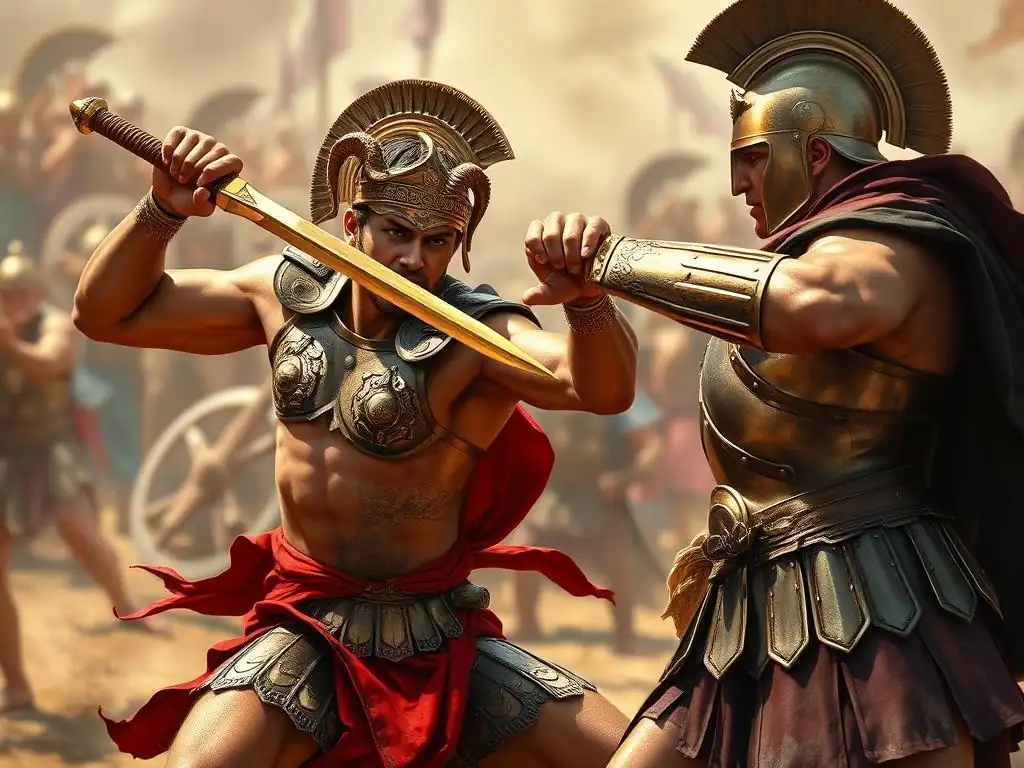
Welcome to Martial Arts Mastery, where we delve into the heart of combat traditions! Are you ready to explore the clash of empires and martial prowess? This week, we journey back to the Punic Wars, dissecting the brutal and brilliant Roman Carthaginian martial tactics that defined an era. Discover the innovative strategies and battlefield adaptations that fueled this epic struggle, and consider how these ancient lessons resonate even today. Intrigued? Read on to uncover the secrets of these deadly systems!
The Battle of Trebia
Fought in December 218 BC, the Battle of Trebia was Hannibal's first major engagement on Italian soil and a stark demonstration of his tactical genius against the Roman legions. Located near the Trebia River in northern Italy, this battle pitted Hannibal's Carthaginian forces, estimated around 30,000-40,000 men, against a larger Roman army led by Consuls Publius Cornelius Scipio and Tiberius Sempronius Longus, likely exceeding 40,000 soldiers.
Hannibal, having recently crossed the Alps, needed a decisive victory to solidify his position in Italy and gain allies among the local tribes. He masterfully used the terrain and the harsh winter conditions to set a cunning trap, exploiting the impetuous nature of the Roman commander Sempronius Longus and showcasing the contrasting Roman Carthaginian martial tactics of the era.
Hannibal's plan was audacious and relied heavily on deception and environmental factors. He sent out Numidian cavalry to provoke the Roman camp early in the morning, luring the legions across the freezing Trebia River without breakfast or proper preparation. While the Roman infantry was cold, wet, and hungry, Hannibal's troops were fed, warmed, and ready.
Crucially, Hannibal had hidden a force of about 2,000 men, led by his brother Mago, in a ravine near the battlefield. As the main Carthaginian line engaged the Romans, Mago's hidden force emerged to attack the Roman rear, causing panic and collapse.
The superior Carthaginian cavalry, particularly the Numidians, also outmaneuvered and routed the Roman and allied cavalry, allowing them to then flank the Roman infantry. This coordinated assault, combining a frontal stand with devastating attacks on the flanks and rear, shattered the Roman formation, resulting in a catastrophic defeat for Rome and highlighting the strategic depth of Hannibal's Roman Carthaginian martial tactics.
- How did Roman and Carthaginian martial tactics differ during the Punic Wars?
- What role did naval power play in the Roman and Carthaginian martial systems?
- How did Hannibal's strategies challenge Roman martial dominance?
- What were some key advantages and disadvantages of the Carthaginian reliance on mercenary armies?
- Did the Punic Wars influence the development of Roman martial arts or self-defense techniques?
Frequently Asked Questions
How did Roman and Carthaginian martial tactics differ during the Punic Wars?
The Romans favored heavy infantry formations and disciplined close-quarters combat, while the Carthaginians often employed diverse mercenary armies relying on cavalry and elephants for shock power.
Naval dominance was crucial. The Romans eventually developed a superior navy, enabling them to control sea lanes and cut off Carthaginian supply lines, a key factor in their victories.
How did Hannibal's strategies challenge Roman martial dominance?
Hannibal's innovative tactics, such as the double envelopment at Cannae, exposed weaknesses in Roman formations and demonstrated the effectiveness of superior battlefield maneuverability and deception.
What were some key advantages and disadvantages of the Carthaginian reliance on mercenary armies?
Advantages included access to diverse skills and troops from various regions. Disadvantages involved potential loyalty issues and inconsistent performance compared to a unified, national army like Rome's.
Did the Punic Wars influence the development of Roman martial arts or self-defense techniques?
While not directly a "martial art", the Punic Wars refined Roman military doctrine, emphasizing logistics, engineering, and adaptability, influencing subsequent Roman military strategies and power projection.
Final Reflection: Echoes of Ancient Strategy
The echoes of the Punic Wars, though centuries distant, resonate even today, offering invaluable lessons in strategic thinking and adaptability. The clash between Roman and Carthaginian martial systems wasn't merely a historical event; it was a crucible forging the very foundations of Western military doctrine. Understanding the nuances of their tactics, their strengths and weaknesses, provides a powerful lens through which to analyze contemporary conflicts and anticipate future challenges.
The enduring influence of these ancient battles is undeniable, shaping our understanding of logistics, leadership, and the importance of innovation in warfare. Personally, I find the Carthaginian reliance on diverse mercenary forces and innovative naval strategies particularly compelling, highlighting the necessity of thinking outside conventional boundaries. Fortune favors the bold,
as Virgil famously wrote, a sentiment perfectly embodied by both Rome and Carthage in their relentless pursuit of dominance. Their struggles remind us that even the most formidable power can be challenged by ingenuity and unwavering resolve.
Now, consider the lessons gleaned from this exploration of Roman and Carthaginian martial tactics. How can you apply the principles of adaptability, strategic foresight, and resource management to your own endeavors, whether in your professional life or personal pursuits? Let the echoes of these ancient conflicts inspire you to embrace innovation, anticipate challenges, and strive for excellence in all that you do.
Unleash Your Inner Strategist: Embrace the Lessons of Ancient Warfare!
Thank you for diving deep into the clash of empires and martial prowess during the Punic Wars. We hope you’ve gained valuable insights into the innovative strategies and brutal realities of Roman and Carthaginian combat. Now, it's time to translate that knowledge into action.
- Craft your own war game: Design a tabletop strategy game incorporating tactics and units inspired by the Punic Wars. Document your process and share it online!
- Delve deeper: Research lesser-known aspects of Punic military technology, like Carthaginian war elephants or Roman siege tactics.
- Spark the debate: Discuss your favorite Punic War strategies and figures in our Martial Arts Mastery forum.
What unconventional Punic War tactic do you think could be adapted to modern-day competitive strategy?