
Forms / Kata / Patterns (Detailed Analysis)
Dive deep into the soul of martial arts with our comprehensive analysis of forms, kata, and patterns. From the flowing grace of Tai Chi’s 24 Yang to the explosive power of Karate’s Bassai Dai, we decode every stance, strike, and transition. Explore the hidden bunkai (practical applications) behind traditional movements, uncovering the combat logic and historical context that transforms rote repetition into living knowledge. Whether it’s Aikido’s paired blending, Taekwondo’s dynamic poomsae, or the disciplined mastery of Judo’s Nage no Kata, our detailed breakdowns reveal the purpose and significance of each sequence. Discover how weapon forms—from bo staff to nunchaku—amplify your understanding of distance and timing, and learn why these structured patterns remain the backbone of true martial arts mastery. Perfect for practitioners seeking deeper insight, instructors designing curriculum, or enthusiasts wanting to appreciate the art behind the movement. Unlock the secrets, refine your technique, and elevate your practice today.
 The Purpose and Significance of Forms (Kata/Poomsae/Taolu) in Martial Arts
 Karate Kata Bunkai: Practical Applications of Form Movements
 Weapons Forms (Kata/Taolu): Bo Staff, Sword, Nunchaku Sequences
 Judo Kata: Nage no Kata, Katame no Kata - Execution and Meaning
 Chinese Kung Fu Forms (Taolu): Analysis of Shaolin Sets
 Taekwondo Poomsae/Hyung: Detailed Breakdown and Applications
 Karate Kata In-Depth Analysis (e.g., Bassai Dai, Kanku Dai, Seipai)
 Aikido Kata and Paired Forms: Understanding Principles through Movement
 Chinese Kung Fu Forms (Taolu): Analysis of Tai Chi Chuan Forms (e.g., 24 Yang, Chen Laojia)
Deep Dive into Forms, Kata & Patterns: Detailed Analysis
Welcome to our comprehensive library on martial arts forms—the living textbooks of combat. Here, we dissect the geometry, rhythm, and hidden applications within traditional sequences. Whether you study Chinese Taolu, Japanese Kata, or Korean Poomsae, our detailed breakdowns transform rote repetition into profound understanding. Explore technical execution, historical context, and practical combat logic.
🥋 Chinese Kung Fu Forms (Taolu): Analysis of Tai Chi Chuan Forms (e.g., 24 Yang, Chen Laojia)
Tai Chi forms are slow-motion combat blueprints emphasizing root, structure, and internal power. In this section, we deconstruct the 24 Yang Form posture-by-posture, noting weight shifts, breathing coordination, and martial intent behind each "cloud hands" or "parting wild horse's mane." For the Chen Laojia style, expect analyses of silk-reeling energy (Chan Si Jin), explosive fa-jin bursts, and spiral footwork that differ dramatically from Yang's softness.
We also explore common alignment errors that break internal connection, and how each transition prepares you for a specific takedown or strike. Discover why Tai Chi forms are not just exercise—they are sophisticated grappling and striking drills encoded into graceful motion.
🥋 Aikido Kata and Paired Forms: Understanding Principles through Movement
Aikido forms (kata) are always paired, teaching timing, distance, and the flow of redirecting an attacker's energy. Our analysis focuses on kokyu nage and irimi nage patterns, emphasizing entering (irimi) and turning (tenkan) as whole-body movements. We break down the role of ma-ai (combat distance) and how each kata's rhythm trains you to blend rather than block.
Expect explanations of how empty-hand kata translate to weapons work (jo and bokken), and how the same circular principles apply. We highlight common misconceptions, such as relying on physical strength versus mental control, ensuring your practice reflects the art's philosophical core—harmony over conflict.
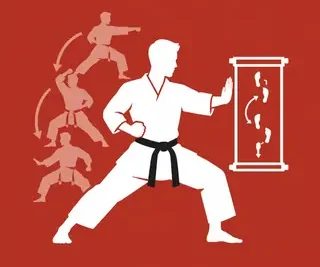
🥋 Karate Kata In-Depth Analysis (e.g., Bassai Dai, Kanku Dai, Seipai)
This subcategory dives into Okinawan and Japanese kata, focusing on embusen (performance lines) and bunkai (application). For Bassai Dai, we examine the fortress-like stance transitions and powerful side strikes, revealing defenses against grabs and multiple attackers. Kanku Dai is analyzed for its sweeping movements, looking-to-the-sky opening, and advanced weight-shifting that mimics throwing and joint locks.
Seipai, a Naha-te kata, receives attention for its short, muscular stances and Sanchin breathing principles. Each analysis details hip rotation, tension-release points, and the hidden low-line kicks. We map every move to a realistic self-defense scenario, transforming mechanical recitation into applicable combat technique.
🥋 Taekwondo Poomsae/Hyung: Detailed Breakdown and Applications
Taekwondo forms (Poomsae in Kukkiwon, Hyung in ITF) are linear and dynamic, emphasizing explosive kicks and speed. We break down the Taeguek series and Koryo, explaining the meaning behind each movement's angle and height. Analysis includes correct sine wave motion (up-down-up) for ITF styles, and the walking and L-stances that generate power for side kicks and knife-hand strikes.
Our application breakdown reveals that "blocking" movements are often deflecting or breaking arm techniques, and preparatory kicks are actually low-line sweeps. We connect each Poomsae to traditional Korean historical battles and modern Olympic sparring strategies, proving these forms are not just patterns but strategic drills for ring dominance.
🥋 Chinese Kung Fu Forms (Taolu): Analysis of Shaolin Sets
Shaolin Taolu are explosive and acrobatic, requiring lightning-fast footwork and powerful stances. This section deconstructs classic sets like Xiao Hong Quan and Lian Huan Quan, explaining their role in developing tendon strength, baoding-style rooting, and striking power. We analyze the famous "five animal" postures (tiger, crane, leopard, snake, dragon), showing how each mimics a predator's mechanics for fighting.
We also cover the transition from solo form to partner drills (dui da), revealing how every mid-air jump or tornado kick sets up a closing arm break. Historical context includes how Shaolin monks used these sequences to condition bone density and neural response. Discover how to read the "enemy" hidden in every palm change.
🥋 Judo Kata: Nage no Kata, Katame no Kata - Execution and Meaning
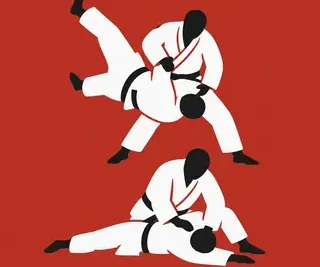
Judo kata is thrown and grappling philosophy in motion, performed with a partner to perfect biomechanics. We break down Nage no Kata (throwing forms) into its five groups—hand, hip, foot, sacrifice, and side—explaining each waza's specific breaking of balance (kuzushi) and body positioning. Katame no Kata (grappling forms) is analyzed for transitions among pins, chokes, and arm locks, emphasizing control and escape denial.
Our guidance covers the hidden competitive applications: how the ukes attack patterns simulate real opponents, and how the tori's entry sequences are direct throws used in randori. We also explain the role of ma-ai and rhythm in making kata a dynamic, living practice rather than a stale routine.
🥋 Weapons Forms (Kata/Taolu): Bo Staff, Sword, Nunchaku Sequences
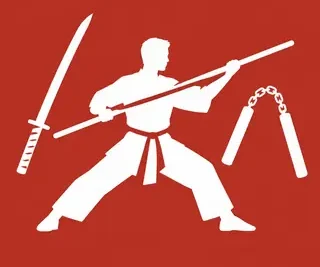
Weapon forms amplify body mechanics with extension, teaching reach and fluidity. For Bo staff (kon), we analyze spinning sequences, thrusts, and blocks, focusing on grip timing and the "whipping" power derived from centrifugal force. Sword (Jian/Ken) forms are broken down for precision cuts, thrusts, and the circular parries that guide off-line. Nunchaku sequences are examined for speed generation, recoil control, and the transition between pinch and loose grips.
Each analysis explains the weapon's historical use (farm tools, samurai steel, etc.) and how form practice develops hand-eye coordination and mental focus transferable to empty-hand combat. We highlight common errors—overcommitting swings, gripping too tight—that reduce efficiency. Master the hardware, and your empty hands become weapons too.
🥋 Karate Kata Bunkai: Practical Applications of Form Movements
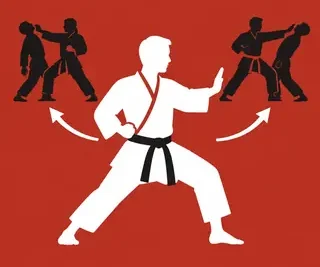
Bunkai is the heart of kata—turning dance into grappling and striking. This section focuses on extracting practical defense from any movement. Using Bassai Dai as our template, we show how a rising block is actually a wrist grab release, and a "X-block" becomes a head throw. For Kanku Dai, we demonstrate how the opening "look to the sky" is a takedown and eye-gouge defense.
We use line-by-line translation, pairing each sequence with a realistic attacker (grab, punch, kick, knife). Expect detailed photos of joint locks, pressure points, and the optimum angles to avoid power. This is not about memorizing pre-packaged "this move means that block"—instead, we teach you to see the multiple plausible applications within each mindset, making every repetition a scientific exploration.
🥋 The Purpose and Significance of Forms (Kata/Poomsae/Taolu) in Martial Arts
Why do we repeat these patterns? This foundational section tackles the "why." We argue that forms preserve historical techniques, serve as a library of self-defense scenarios, and force body alignment corrections that free sparring does not. Breathing coordination and kiai (focus shout) are examined as tools for internal pressure and power generation.
We also discuss the modern controversy—are forms outdated for MMA? Our answer is that they are essential for mindset, balance, and creativity. They teach rhythm (hyogo), distance management, and the mental state of zanshin (awareness). Read how great masters, from Funakoshi to the Shaolin abbots, viewed forms not as ritual but as dynamic research into combat physics.
Frequently Asked Questions
What is the difference between Kata, Poomsae, and Taolu?
All three are scripted sequences of techniques, but they originate from different cultures. Kata is Japanese, used in Karate, Aikido, and Judo, focusing on solo practice of blocks, strikes, and stances. Poomsae is Korean (Taekwondo), emphasizing dynamic kicking and stepping patterns. Taolu is Chinese (Kung Fu), often longer and more acrobatic, including weaponry. All share the purpose of engraining technique and body mechanics.
How do I find the practical applications (bunkai) in my kata?
Start by looking at each movement's natural endpoint—where do your hands land? Ask what a "block" would mean if you didn't have an arm (e.g., a strike). Then, partner up: have a friend grab your wrist, collar, or punch slowly, and adapt the kata motion to escape and counter. Use slow speed first. Research different masters' interpretations, but always test the logic against your own body.
Is practicing forms (kata) helpful for real street self-defense?
Yes, if you train with bunkai (application) and pressure testing. Forms alone are not enough, but they condition your body to move correctly under adrenaline—rooting your stance, breathing, and unleashing natural strikes. The hidden throws, joint locks, and pressure point attacks are highly practical when extracted. However, also spar and drill with resistant partners to transition from form to functional.
How often should I practice forms to see improvement?
Daily immersion of even 15-20 minutes is more effective than one long weekly session. Focus on quality: perfect one movement, your balance, and your breath before adding speed. Slow practice builds proprioception; fast practice builds timing and power. Use a mirror or film yourself weekly to correct postural flaws. Consistency and mindful repetition are the keys—not blind endurance.
Do all martial arts styles have weapons forms, and are they necessary?
Most traditional arts (Kung Fu, Karate (kobudo), Taekwondo, Aikido) include weapons forms. They are essential for understanding range, leverage, and body mechanics that empty-hand forms sometimes hide. A bo staff form teaches high/low angles and following through—a principle transferable to a baseball bat. While not necessary for beginners, advanced practitioners should study at least one weapon to deepen their empty-hand connections.