Taekwondo Poomsae/Hyung: Detailed Breakdown and Applications
Dive deep into the heart of traditional Taekwondo with our comprehensive guide to Poomsae (or Hyung), the fundamental forms that encode centuries of martial wisdom. Unlike simple choreography, these patterns are living blueprints for combat, balance, and mental focus. Here, we dissect each movement, explore its historical roots, and reveal its practical self-defense applications, bridging the gap between solo practice and real-world effectiveness. Whether you are a beginner seeking clarity or a black belt refining nuance, this resource transforms your understanding of Taekwondo's most iconic sequences.
🟢 The Philosophical and Historical Roots of Poomsae
Every Poomsae is a narrative of martial philosophy, often named after historical figures, Korean dynasties, or natural elements like mountains and rivers. For example, the Koryo form honors the ancient Koryo dynasty, while Taegeuk Il Jang symbolizes the beginning of all creation. Understanding this context elevates your practice from mere repetition to meaningful meditation. The stances, transitions, and breathing patterns are not random; they reflect the yin-yang principle of balance (Um/Yang) and the pursuit of harmony between mind and body.
Historically, Poomsae served as a structured curriculum, allowing students to progress without a teacher physically present for every move. In modern Taekwondo, they remain a key ranking criterion. By learning the why behind each form, you boost retention and develop a deeper appreciation for the art’s legacy. This foundational knowledge also enriches your performance, as judges and instructors look for authenticity, not just mechanical precision. Use this section to connect your practice to the wider Korean cultural tapestry and martial lineage.
🥋 Visual Breakdown: Stances, Blocks, and Strikes in Key Forms
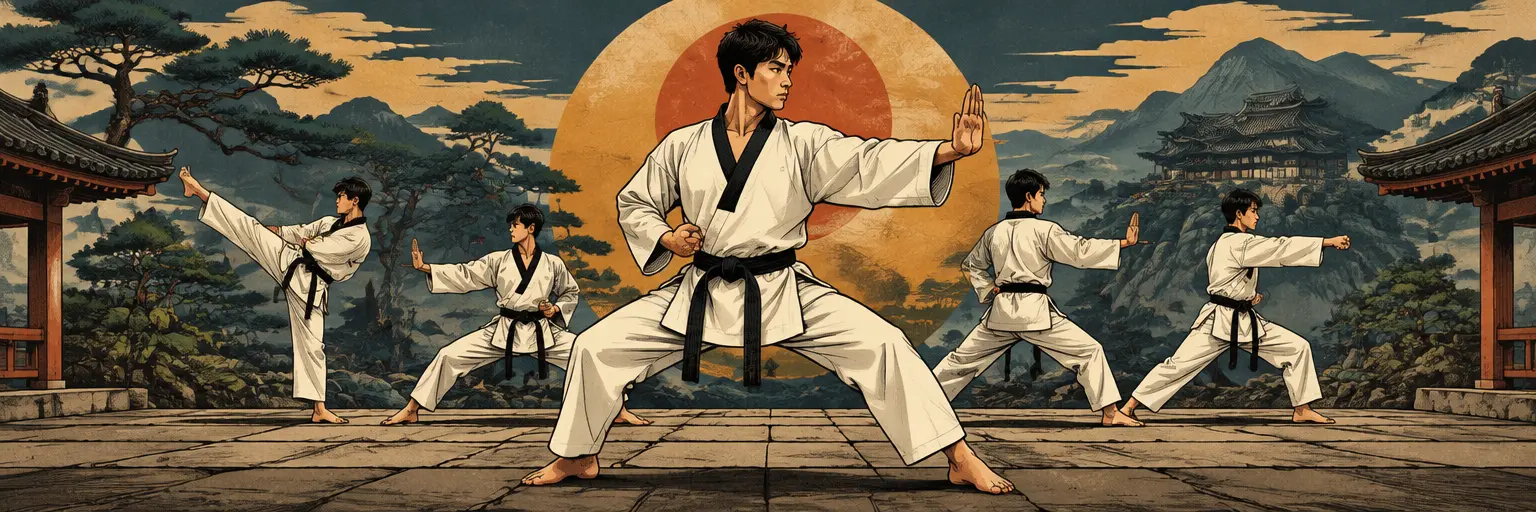
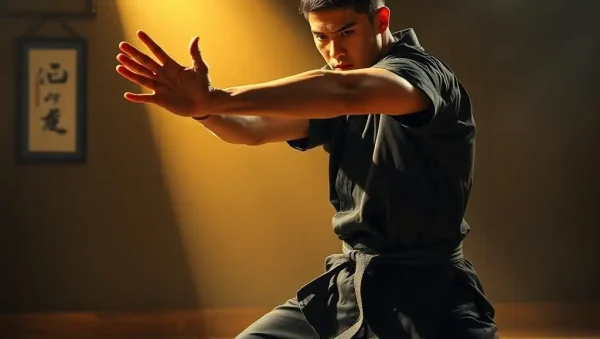
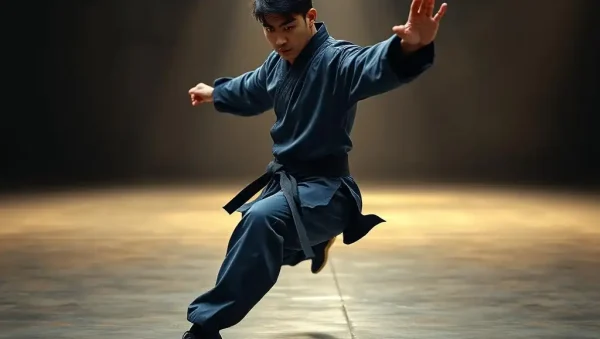
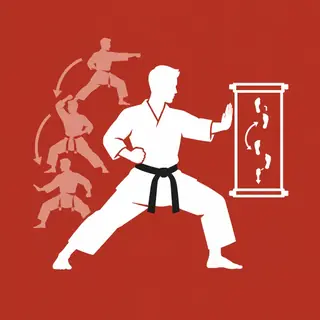
We provide a step-by-step visual and verbal dissection of essential Poomsae, including Taegeuk Il-Jang through Pal-Jang and the black belt forms like Koryo, Keumgang, and Taebaek. Each movement is broken down into its initiation, execution, and finishing position, emphasizing critical details like hip rotation, knee alignment, and foot placement. For instance, in Taegeuk Sam-Jang, the transition from a walking stance to a back stance requires precise weight distribution to maximize power in the ensuing side kick.
Our guides highlight common mistakes—such as shifting shoulders during a block or exposing the torso during a turn—and offer corrective drills. We also explain the tension and relaxation cycle (shin-sool) that generates explosive force. Unlike other tutorials, we incorporate multi-angle photography and slow-motion cues, but here we focus on written clarity. This ensures you can self-correct at home, making each rep more productive. Whether you are preparing for promotion or perfecting your competition routine, this breakdown is your technical blueprint.
⚔️ Practical Self-Defense Applications (Bunkai/Hoshinsul)
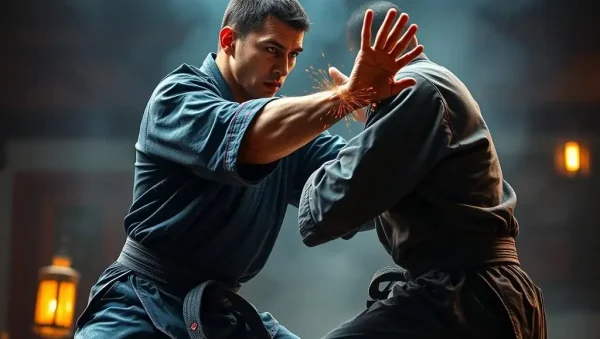
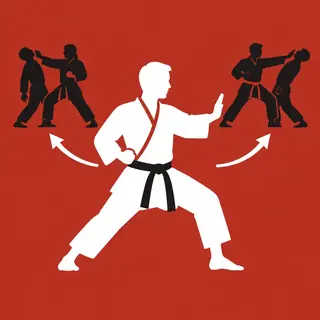
Every Poomsae exists to teach combat applications called Ho Sin Sul or bunkai. A movement that looks like a high block actually works as a wrist-release or a joint-lock against a grab. For example, the opening moves of Taegeuk Il-Jang simulate blocking a low punch while simultaneously striking the attacker's groin, then transitioning to an arm-bar. This section decodes these hidden techniques, showing you how to extract practical self-defense from every sequence.
We systematically analyze each major movement pattern, explaining the offensive and defensive possibilities against strikes, grabs, and multiple attackers. You will learn how the front kick in a form is not just a groin strike but also a defensive wedge to stop an advancing opponent, and how the knife-hand strike can target the neck, ribs, or femoral nerve. By understanding the intent behind each technique, you transition from performing kata to applying its wisdom. This transforms your Poomsae practice into a live, adaptive combat system, enhancing both your confidence and your real-world preparedness.
🧠 Mental Focus, Breathing, and Performance Enhancement
Poomsae is as much a mental discipline as a physical one. The breathing rhythm is synchronized with movement: inhale during preparation, exhale explosively on impact, and hold a steady breath during transitions. This proper breathing not only oxygenates muscles but also calms the nervous system, allowing for sharper focus and reduced anxiety in competitions. We guide you through specific breathing patterns for each form, improving your stamina and composure.
Beyond breath, you’ll develop ki-cho (focus) by practicing mindfulness techniques—visualizing your belt level, the opponent's motion, and your flow. We also cover competition strategy, including how to emphasize speed, power, and rhythm to impress judges. You’ll learn to avoid common mental pitfalls like rushing through a slow section or hesitating on a turn. By integrating these psychological tactics, you’ll turn a routine performance into a commanding martial statement, boosting your score and your personal satisfaction.
📈 Training Tips, Error Correction, and Progression Drills
Perfecting Poomsae requires targeted drills beyond repeating the form. We offer progressive training methods: practicing in slow motion to perfect balance, using resistance bands for explosive power, and performing mirror practice to check alignment. For example, to improve your turning kick in Keumgang, we recommend shadow-kicking against a wall to train the pivot. We also provide checklists for each belt level, so you know exactly what to master before promotion.
Common errors like sloppy foot transitions or improper chambering are addressed with specific correction methods. We suggest recording yourself and comparing against a video reference, then focusing on one element per session. Pair drills with partners to simulate applications, reinforcing muscle memory. Additionally, we emphasize the importance of physical conditioning—ankle strength for stances, core stability for turns, and flexibility for high kicks. With these drills, your Poomsae will become sharper, faster, and more fluid, winning high marks in poomsae competition or simply enriching your solo practice.
Frequently Asked Questions
What is the difference between Poomsae and Hyung?
Poomsae and Hyung are essentially the same concept—a set sequence of martial arts movements—but the terminology differs by origin. Poomsae is used primarily by Kukkiwon/WT Taekwondo, while Hyung is more common in ITF (International Taekwondo Federation) and older Karate-influenced styles. Both serve as forms for solo training.
How many Poomsae are there in World Taekwondo?
In the World Taekwondo (WT) system, there are nine Taegeuk Poomsae (the color-belt forms) and eight black belt forms (such as Koryo, Keumgang, Taebaek, and others). These 17 official Poomsae are the standard for belt promotions and competition.
Can you use Poomsae moves for real self-defense?
Absolutely. Each Poomsae contains explosive applications (Ho Sin Sul) like joint locks, throws, and striking vital areas. With practice, you can interpret moves as defenses against grabs, punches, or weapons. However, you must practice with a partner to refine timing and leverage.
How long does it take to master a Poomsae?
Basic forms like Taegeuk Il-Jang can be learned in 2-4 weeks of daily practice, but mastery takes months to perfect balance, speed, and applications. Advanced forms (e.g., Koryo) may require 6 months or more. Consistent, focused practice is key.
Does Poomsae practice build physical fitness?
Yes, Poomsae improves core strength, leg endurance, and flexibility. The slow, controlled movements build isometric strength, while fast sequences develop explosive power and cardiovascular stamina. Regular practice also enhances proprioception and coordination.