Karate Kata Bunkai: Unlocking the Hidden Combat Logic in Every Movement
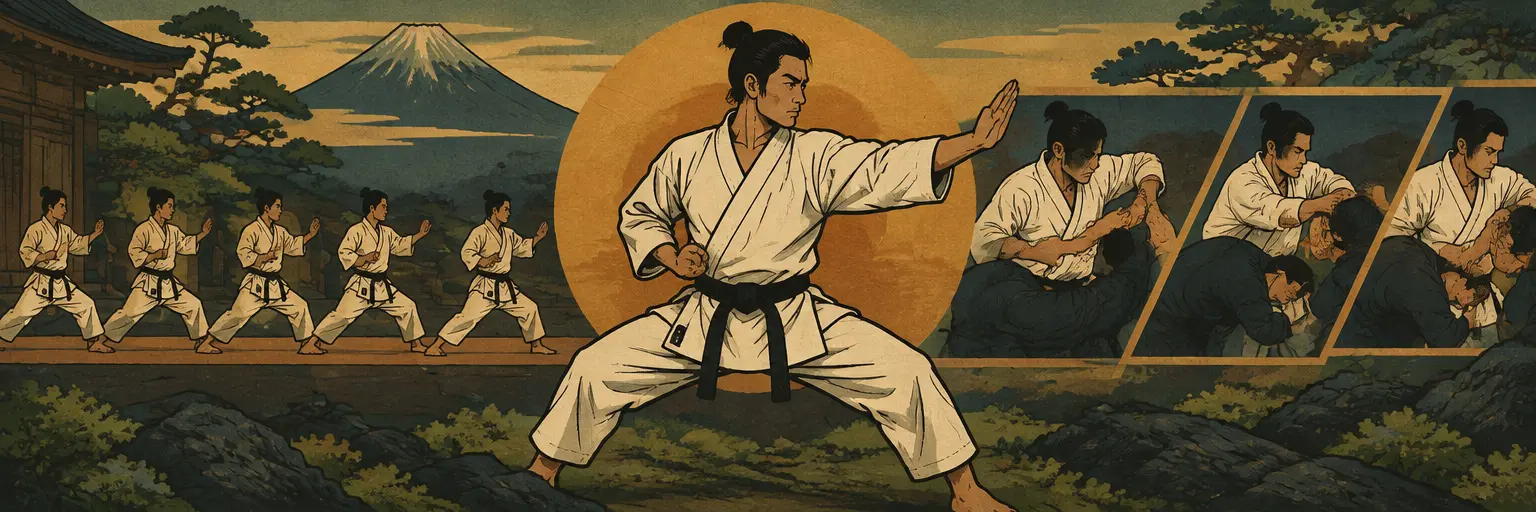
Karate kata are far more than choreographed sequences of strikes and blocks—they are living manuals of combat strategy. Kata bunkai is the critical process of dissecting these forms to reveal the practical self-defense applications embedded within each posture, turn, and technique. This subcategory focuses on translating traditional forms, such as Heian, Bassai, and Naihanchi, into real-world defensive and offensive scenarios. Whether you are a white belt struggling with stances or a black belt seeking to deepen your interpretations, this resource bridges solo practice and realistic partner application, enhancing your martial arts IQ through historical context, physical mechanics, and adaptive problem-solving. Dive into the layers of omote (surface), ura (hidden), and honto (true) applications to transform rigid forms into fluid combat responses.
🔍 Decoding Stance Transitions: The Bridge Between Form and Fight
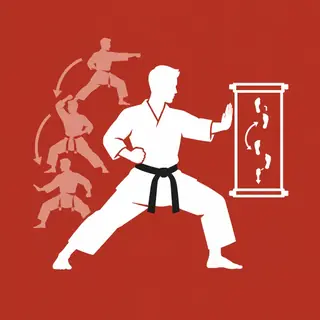
Every footwork shift in a kata—from zenkutsu-dachi (front stance) to kokutsu-dachi (back stance)—is not merely aesthetic but a tactical response to an opponent’s attack. Through targeted bunkai, you will learn to interpret these transitions as methods of evasion, weight shifting, and grappling entries. For example, the back stance often signals a pulling motion to off-balance an attacker, while a front stance clears the hip for an explosive hip strike or throw. This section dissects each common stance change, explaining the biomechanics of torque generation and angle creation that make these movements effective in close-quarters combat.
Peeling back the surface layer, these transitions also function as defensive responses to grabs, pushes, or multiple attackers. By applying pressure testing in drills, you can discover that a stance shift is not a static pose but a continuous, flowing response to dynamic force. This analysis emphasizes the importance of body connection (tanden) and rhythm, showing how a subtle lateral step can create the necessary distance to break an opponent’s grip and set up a counter-strike. Expect slow-motion breakdowns, shadow drills, and partner exercises that recontextualize your footwork as a live communication tool rather than a dead-end sequence.
🥊 Upper Body Mechanics: Blocks Become Seizing and Strikes Become Joint Locks
Traditional karate blocks, or uke, are rarely simple parries when viewed through bunkai. For instance, age-uke (rising block) often reveals itself as a forearm strike to the neck or chin, while soto-uke (outside forearm block) can morph into a wrist lock or arm break. This H3 explores the alternative functions of every common upper-body motion, focusing on how circular or linear paths on the surface translate into direct attacks, elbow manipulations, or throws. You will learn to view each technique as a weapon with multiple edges, dependent on the attacker’s force direction and your positioning.
The deeper ura applications frequently involve joint manipulation—twisting the forearm, locking the elbow, or controlling the shoulder. Through progressive resistance drills, you will practice transitioning from a “block” to a kote-gaeshi (wrist twist) or an armbar in a fluid motion. This section emphasizes leverage and structural alignment, ensuring that you are not overpowering but redirecting your attacker’s own momentum. Partner work becomes essential here, as you test each application against realistic punches, grabs, and clothing pulls, revealing why traditional forms prioritize certain angles over others.
🦵 Low-Level Bunkai: Kicks, Sweeps, and the Forgotten Footwork
Kata may appear upper-body dominant, but the lower limbs are often the unsung heroes of effective bunkai. Movements like the mae-geri (front kick) are frequently reinterpreted as knee strikes, stomps, or even tripwire sweeps to unbalance an opponent. Similarly, the hip rotation in a horse stance may hide a hip throw or a crescent kick target. This subheading focuses on dissecting the leg techniques within forms, showing how they serve to disrupt the opponent’s base, control distance, and set up a finishing strike. Expect analysis of short-range kicks,joint-breaking kicks, and the use of the shin or heel as primary weapons.
Low bunkai also covers stances as stance-destruction tools—stepping directly onto an opponent’s foot to prevent movement or pushing off the instep to break balance before a throw. You will explore sweeping angles drawn from the kata’s direction changes, learning how each pivot is a potential trip against a rushing attacker. By pairing these lower-body movements with hand techniques, you can create an unbroken chain of offense and defense. Practical drills include shadow sweeping with an imaginary opponent, knee-strike variations against shield pads, and partner exercises to correlate the hip snap with leg extension, proving that footwork is not just for repositioning but is a direct offensive asset.
🧠 Multiple Interpretation Frameworks: From Slow to Explosive
A single kata passage can yield dozens of interpretations depending on the speed of execution. Slow, deliberate movements often represent grappling or grappling defenses, while explosive transitions may indicate strikes or sudden takedowns. This section introduces structured analysis methods, such as the happo-ku (eight-directional) approach and the yomi (reading) technique, which encourage martial artists to map every limb movement across potential attacker positions. You will learn to shift from the literal “block then punch” sequence to a layered understanding where each hand action counters a different threat simultaneously.
Bunkai is not one static truth but a multi-layered paradigm. Here, we use historical references and combat logic to propose the most plausible applications for each sequence, explaining why certain movements work against specific attack vectors. By practicing kata as a sequence of responses, you can also identify the missing strikes (atemi) that preempt the form’s techniques. This often reveals that kata are structured around juxtaposition—natural punches or groin kicks are implied but not shown—allowing you to fill in the gaps for realism. Expect flow drills, slow-speed proprioception exercises, and paired contact drills to build the foundation for dynamic application.
🛡️ Pressure Testing and Reality-Based Application
No bunkai is useful unless it holds up against non-cooperative resistance. This final body section emphasizes the shift from presumption to pressure-validated movement. You will learn to test your interpretations under moderate to full resistance, using protective gear when necessary, to ensure the technique works on opponents of varying sizes and aggression levels. Session examples include a partner pushing through your “block,” throwing fast but controlled punches, or attempting a grab mid-kata, forcing you to adapt the bunkai on the fly. The goal is to turn static memorization into adaptive problem-solving.
Here, we highlight the importance of maai (distance) and ma (timing) as variables that affect application success. You will practice variations—starting from a short range where the technique becomes a close-quarter trap or committing to a long range where a rising block truly deflects a straight punch. More importantly, you will learn to identify when a technique fails and transition to a secondary interpretation without losing flow. This is the heart of real martial arts: blending tradition with effective self-defense. Videos and detailed step-by-step adjustments are provided, along with “what if” scenarios to sharpen your reactive mindset and ensure your kata vocabulary is combat-ready.
Frequently Asked Questions
What is the difference between omote bunkai and ura bunkai?
Omote bunkai refers to the surface-level, literal application of techniques as they appear in the kata—often block, punch, kick. Ura bunkai is the hidden or alternative interpretation, where a movement that looks like a block is actually a strike, joint lock, or throw. Ura applications require a deeper understanding of body mechanics and opponent reactions, and they are the focus of advanced karate training.
Can I practice bunkai without a sparring partner?
Yes, many aspects can be drilled solo. You can shadow-freestyle, visualizing an opponent’s attack and adjusting your stance or technique accordingly. Using a heavy bag or a makiwara, you can test impact-based applications. For grappling or joint locks, a partner is essential, but you can practice the mechanics on a compliant household object or a wall to perfect angles and leverage before partner work.
Is bunkai the same for all martial arts styles?
No, bunkai is specific to each karate style (e.g., Shotokan, Goju-ryu) and even each individual teacher. While core principles like body connection and distance apply universally, the exact interpretations vary. Furthermore, other martial arts with kata or forms, such as Taekwondo’s poomsae, have their own similar but unique analysis systems. Always adapt bunkai to your own style’s historical context.
How do I know if my bunkai is correct?
Correctness is validated through pressure testing. If a technique fails against a resisting partner, you likely misread the movement’s objective. Consult multiple senseis and histories to see common interpretations, then test with realistic speed and intensity. The best bunkai is not the “only” answer but the one that works consistently and aligns with the kata’s flow and intent. Always prioritize functionality over tradition for its own sake.
How can I start learning bunkai as a beginner?
Begin with the first five movements of your basic kata, like Heian Shodan. Focus on each technique’s obvious block and strike, then ask your instructor to show one hidden lock or throw for that sequence. Practice slowly, emphasizing weight distribution and transition fluidity. Partner at 50% speed, then gradually add resistance. The key is repetition and curiosity—never hesitate to ask “What if this happens?” during class.