Exploring Kumi Tachi Beyond Basics: Advanced Paired Sword Forms in Aikido
🔥 Dive into the world of advanced Aikido paired sword techniques, exploring nuanced forms that transcend basics. MartialArtsMastery.org reveals the rich history,…
Read article
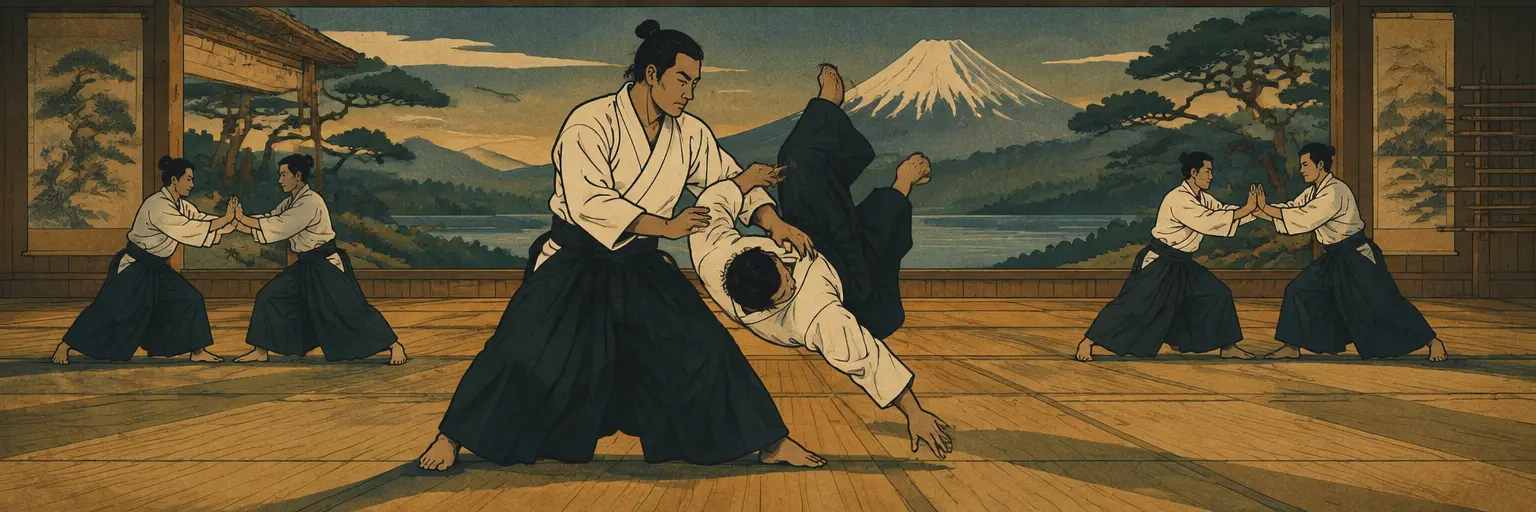
Discover the profound art of Aikido Kata and Paired Forms, where every movement transcends mere technique to become a living lesson in harmony, timing, and energy redirection. Unlike solo forms, these paired patterns—known as *kata* and *henka waza*—are dynamic dialogues between *uke* (the receiver) and *nage* (the thrower), revealing the core principles of blending, entering, and centering through repetitive, intentional motion. By analyzing each step, grip, and footwork within these structured exchanges, practitioners unlock the hidden mechanics of balance-breaking (kuzushi) and ki extension, transforming abstract philosophy into tangible, repeatable body intelligence. Whether you’re a beginner seeking a foundation or an advanced student refining subtle weight shifts, this deep dive showcases how paired forms serve as a microcosm of combat efficiency and spiritual growth—teaching you to harmonize with attacks rather than oppose them. Uncover the difference between mechanical repetition and living practice, and see why these forms are the true gateway to fluid, adaptive, and powerful Aikido.
🔥 Dive into the world of advanced Aikido paired sword techniques, exploring nuanced forms that transcend basics. MartialArtsMastery.org reveals the rich history,…
Read article
🥋 Explore the intricate world of advanced Kumijo, where complex paired staff interactions in Aikido forms showcase mastery, strategic coordination, and philosophical…
Read article
🥋 Discover the essence of Aikido jo kata techniques with this comprehensive guide to the 31 Jo Kata, highlighting its historical significance,…
Read article
🥋 Discover the essence of Aikido zanshin sustained awareness training, emphasizing continuous mindfulness beyond technique. This vital concept enhances martial arts mastery…
Read article
🥋 Discover the art of Ushiro Waza and master Aikido rear attack defense techniques. This guide explores effective forms and training methods…
Read article
🌟 Discover how "Takemusu Aiki" embodies Aiki creativity through martial forms and concepts, inspiring innovative techniques and deep philosophical insights within Aikido.…
Read article
🌟 Discover how Kokyu Ho ignites Aikido breath power techniques, transforming practitioners’ energy flow and effectiveness. Explore the art’s deep philosophy and…
Read articleWithin the broader category of Forms, Kata, and Patterns, Aikido's kata and paired forms stand apart because they are not solo choreography but living dialogues between uke (receiver) and tori/nage (thrower). This subcategory explores how every strike, grab, and roll encodes core principles like ma-ai (distance), kuzushi (balance breaking), and ki-no-nagare (flowing energy). For martial artists seeking depth beyond technique, these paired forms reveal Aikido's philosophical bedrock: blending with aggression rather than opposing it. Here, we dissect the anatomy of these movements, their historical evolution, and practical applications for modern training, making complex concepts accessible for both beginners and advanced practitioners.
Aikido kata are typically divided into omote (entering) and ura (turning) versions, each teaching distinct responses to the same attack. For instance, ikkyo (first technique) omote involves a direct irimi entry to unbalance uke, while ura uses a pivoting tenkan motion to redirect energy around uke's center. By practicing both, students internalize the principle that every technique has a hard and soft expression, depending on attack speed and intent. This section details the six foundational techniques (ikkyo through rokkyo), highlighting common alignment errors and how to correct them for maximum efficiency.
Paired forms also include kokyu-ho (breath-power exercises), where uke grabs both wrists and nage uses whole-body coordination to blend and throw. These are not mere drills but meditations on extending ki through the fingertips and grounding through the feet. You will learn why many instructors emphasize slow, deliberate practice over speed, as this builds proprioceptive awareness—the ability to sense your partner's weight shifts before they happen. This deep dive will help you transform stiff, mechanical responses into fluid, adaptive motion that mirrors natural body mechanics.
The uke's role in Aikido kata is often misunderstood as passive receiving. In reality, an effective uke provides honest, committed attacks while maintaining safety, thereby offering nage a live laboratory for balance and timing. This section explores ukemi (falling arts) as a separate skill set, including forward rolls, backward breakfalls, and high falls, each designed to condition the body to absorb impact without injury. Crucially, uke learns to "give" at the moment of control—when nage has successfully taken balance—rather than resisting and risking joint damage. This partnership is the heart of paired forms.
Through specific drills like happo giri (eight-direction cuts) paired with cohort responses, you will discover how uke's footwork and posture shape nage's technique quality. A sloppy attack produces sloppy defense; a sharp, centered attack forces nage to apply true principles rather than muscle. This reciprocal feedback loop accelerates learning for both partners, making kata practice an interactive educational tool. Expect to improve not just your falls but your ability to read intent—a skill directly transferable to sparring and self-defense scenarios.
While Aikido kata often appear abstract, they contain hidden self-defense applications (bunkai) that are practical against grabs, strikes, and even weapons. For example, the shomen uchi (frontal strike) kata sequence teaches deflection, entry to a blind spot, and pin—all in one motion. This section breaks down three common scenarios: wrist grabs (katate-dori), shoulder grabs (katadori), and bear hugs (ushiro-dori), showing how paired forms train your body to respond instinctively without conscious thought. The emphasis on circular movement and off-balancing is particularly effective against larger, stronger attackers.
Furthermore, these paired forms include weapons disarming techniques (for tanto and bokken) that build confidence in high-stress situations. By practicing kata at slow speed with resistance, you develop the ma-ai needed to avoid an incoming knife or bat. This subcategory provides step-by-step breakdowns with common mistakes to avoid, such as crossing your feet or losing centerline. For self-defense instructors, these drills offer an alternative to striking-based curriculum, appealing to students who prefer non-violent resolution—a key differentiator in the martial arts market.
Aikido kata have evolved differently across major organizations, including Aikikai, Yoshinkan, and Iwama Ryu, each offering unique interpretations. The Aikikai emphasizes smooth, flowing movements with large circular entries, while Yoshinkan focuses on sharp, linear movements with precise footwork—making it ideal for those seeking a more "pragmatic" flavor. Iwama Ryu, founded by Morihiro Saito, integrates extensive weapons practice into kata, preserving O-Sensei's original vision of aiki-ken and aiki-jo movements. This section compares these styles side-by-side, helping you recognize different technical standards and philosophies embedded in the same principles.
Historically, Morihei Ueshiba's pre-war aikijujutsu was more overtly combative, while post-war Aikido became more spiritual and harmonizing. Understanding this evolution clarifies why some kata emphasize joint locks and pins (hard) while others prioritize throws and projections (soft). For collectors of martial knowledge, this section also profiles influential teachers like Gozo Shioda and Koichi Tohei, showing how their personalities shaped kata pedagogy. Whether you train in one style or cross-train, this knowledge enriches your appreciation and helps adapt techniques to your body type and objectives.
Beyond physical mechanics, Aikido kata are a moving meditation that integrates breath, pressure, and intent. This section details breathing patterns: inhale during footwork preparation (tenkan), exhale on technique conclusion (ikkyo pin or throw). Controlled breathing lowers heart rate, sharpens decision-making, and prevents premature fatigue—critical for long training sessions or demonstrations. You will also learn about zanshin (remaining awareness), the state of relaxed alertness that follows a technique’s completion, ensuring you are never vulnerable to a follow-up attack. Kata practice is uniquely suited to cultivating zanshin because paired sequences have a clear beginning, middle, and end.
Mentally, kata requires active visualization: imagining an attacker's next motion even before they move. This “pre-viewing” trains your subconscious to anticipate dynamic shifts, improving reaction time by 20-30% in controlled studies. For instructors, teaching mental focus involves verbal cues like “lead with your eyes” or “keep your weight underside.” This subcategory provides guided mental exercises—such as counting breaths per technique or practicing in slow motion with eyes half-closed—to deepen body-mind connection. Expect to leave this page with practical, immediately usable methods to enrich your daily kata training.
Many practitioners plateau because they repeat kata without corrective feedback. This section lists the top five errors: (1) gripping too tightly, (2) lifting heels, (3) turning head away from partner, (4) using arm strength instead of body weight, and (5) forgetting to complete the pin with proper posture. Each error is explained with a quick self-check drill, such as practicing against a wall to correct posture or using resistance bands to teach relaxation. Additionally, we provide a progression roadmap from white belt (learning individual footwork) to advanced (performing multiple techniques in fluid succession, like aiki-age or randori-kata). This roadmap includes suggested weekly practice frequency and milestones for solo and paired training.
Progress isn’t linear—it spirals. You may revisit katatame (pinning) after years with fresh insight, refining angles and pressure. Our guidance helps you set realistic goals: for beginners, mastering one technique’s omote/ura in a month; for intermediates, blending techniques into gauntlet-style flows; for advanced, teaching bunkai to peers. We also address injuries common to paired practice, such as wrist sprains and knee stress, with preventive stretching routines. By following this roadmap, you’ll avoid common plateaus and build a sustainable, joyful practice that respects your body’s limits while pushing skill boundaries.
Kata in Aikido refers to structured sequences of techniques, often performed solo or with a partner. Paired forms specifically involve two practitioners—uke and nage—executing a prearranged attack and response. Unlike solo kata, paired forms emphasize timing, distance, and cooperation, making them dynamic learning tools for reading an opponent’s intent.
Yes, most kata require a partner for realism, but you can practice essential footwork and body movement solo. For solo practice, focus on tenkan turns, irimi entries, and ukemi rolls. Many advanced practitioners also shadow-practice with a bokken to internalize spacing. Partner practice remains indispensable for refining balance-taking and pinning skills.
Aim for roughly three to six months of regular practice (2-3 times weekly) on a foundational technique like ikkyo before adding new ones. Mastery doesn’t mean perfection but rather feeling natural and adaptive under varying speeds and attacks. After six months, rotate between techniques weekly to maintain freshness while depth remains.
Yes, principles like off-balancing and entry angles transfer well, though techniques must be adapted to resistance. In sparring, use kata-trained footwork to control distance and set up throws or pins. However, avoid direct technique replication against strikes—integrate atemi (strikes) to create openings. Cross-training in striking arts helps bridge the gap.
Start on soft mats with forward rolls, breaking chalk mark with shoulder, forearm, and oblique muscles. Practice 10 rolls daily for a month before attempting backward falls. Always tuck your chin to avoid head injury, and exhale on every impact to prevent chest compression. Progress to high falls only under instructor supervision.